Last updated: March 10, 2026
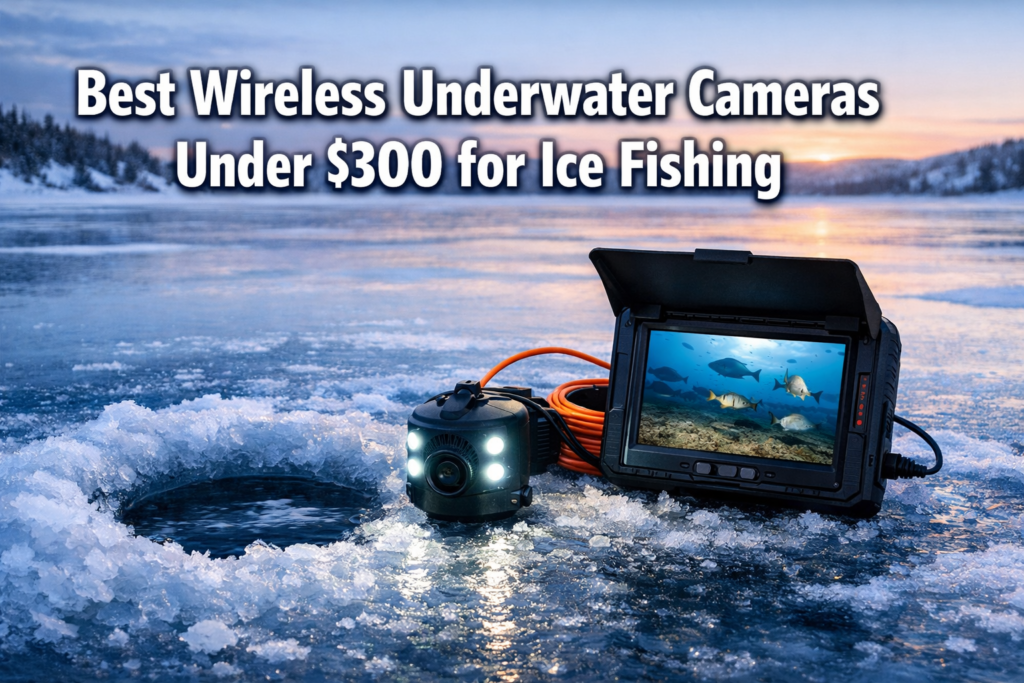
You do not need to spend $500 or more to see what's happening below the ice. The best wireless underwater cameras under $300 for ice fishing in 2026 deliver clear footage, reliable battery life, and cold-weather durability at a fraction of what premium units cost. After reviewing field tests, hands-on footage, and angler feedback from the 2025-2026 hardwater season, this guide breaks down the top budget picks and explains what separates a smart buy from wasted money.
Key Takeaways
- The FishPRO HD1080P leads the sub-$300 category with 1080p resolution, a 20-hour battery, and dual IR/LED lighting [2].
- The Eyoyo 9-inch model offers the best value under $200 with 1000TVL resolution, DVR recording, and a large screen [4].
- Super-budget options like the Blu7ive (under $75) work for beginners but lack DVR and struggle past 50 feet in murky water [4].
- Battery life varies widely, from 6 hours on budget units to 20 hours on the FishPRO. Plan your sessions accordingly.
- Infrared (IR) lighting outperforms white LEDs in murky or stained water common under ice.
- “Wireless” in this price range typically means wireless monitor connectivity, not a fully cable-free camera. Every camera here uses a drop cable.
- DVR recording adds value for reviewing fish behavior and improving your jigging technique over time.
Quick Answer
For most ice anglers on a budget in 2026, the FishPRO HD1080P (around $200 USD) offers the strongest combination of image quality, battery endurance, and cold-weather performance under $300. If you want a larger screen and built-in recording for under $200, the Eyoyo 9-inch is a proven alternative. Choose the Blu7ive if you need a starter camera under $75 and fish shallow water.
What Makes a Good Budget Underwater Camera for Ice Fishing?
A good ice fishing camera needs to perform in cold, dark, often murky conditions. Price alone does not determine quality. Focus on these five factors when shopping under $300:
Resolution and clarity. Look for 1000TVL or 1080p minimum. Lower resolution cameras produce grainy footage that makes species identification difficult below 15 feet.
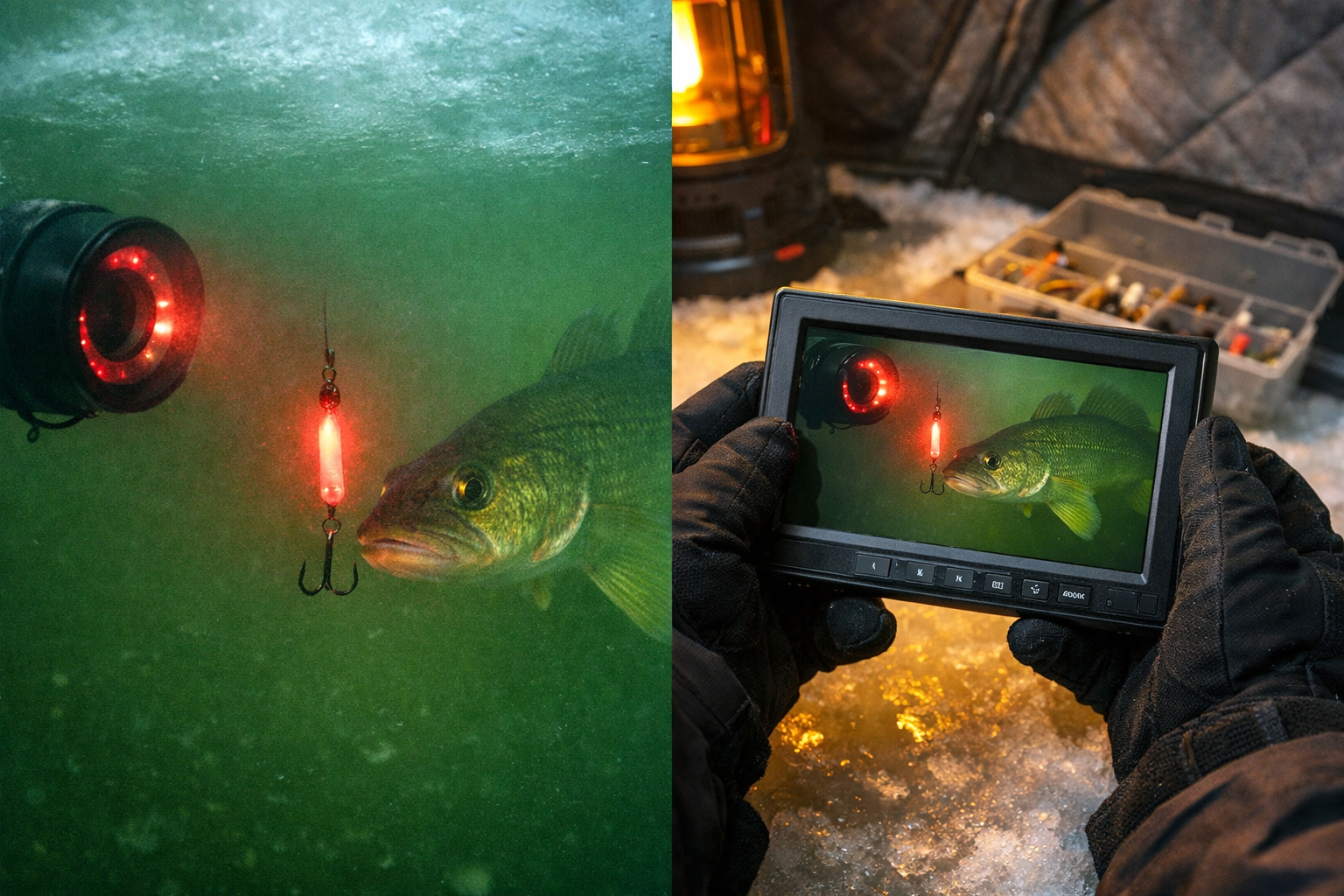
Infrared vs. white LED lighting. IR LEDs illuminate fish without spooking them. White LEDs work in clear water but create glare and scatter in stained or cloudy conditions. For murky water performance, check out our head-to-head test of top IR underwater cameras for detailed comparisons.
Battery life. Cold temperatures drain batteries faster. A camera rated for 8 hours at room temperature might deliver 5 hours at 10°F. The FishPRO's 20-hour rating gives a significant margin of safety.
Cable length. Most budget cameras include 30 to 82 feet of cable. Match cable length to your typical fishing depth. For panfish in shallow bluegill hotspots under 10 feet, 30 feet is plenty. For deep-water walleye, you need 50 feet or more.
Portability. Ice fishing demands mobility, especially if you hole-hop. A compact, lightweight camera with a carrying case saves time and energy on the ice.
Top Budget Cameras Tested: Best Wireless Underwater Cameras Under $300 for Ice Fishing in 2026
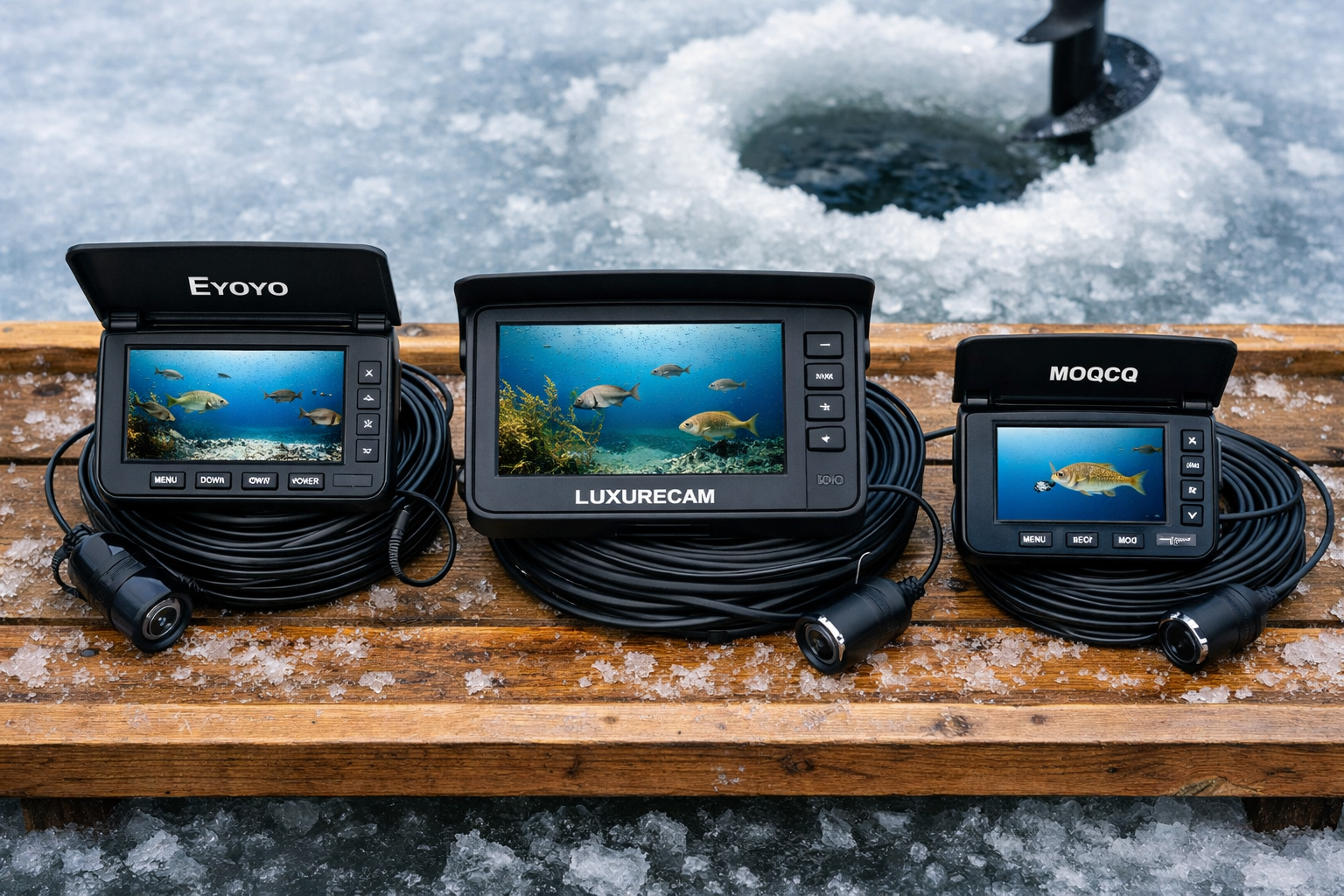
Here are the three standout performers at different price points, each tested during the 2025-2026 ice season.
FishPRO HD1080P (Around $200 USD)
The FishPRO HD1080P earned the top spot on multiple 2026 rankings and serves as the official camera of the USA Ice Fishing Team. The 2026 Focus Pro model features an adjustable focal length from 2 to 40 inches, which gives you sharp views of jig presentations and fish reactions at close range [5].
Key specs:
- 1080p resolution with zero-delay live feed
- 82-foot cable
- 20-hour battery life
- Dual IR and LED lighting modes
- 7-inch monitor
Field testers noted the 20-hour battery as a standout advantage for all-day sessions and overnight bites. The adjustable focus is a feature typically found on cameras costing $400 or more. For a deeper look at this model, read our FishPro 1080P MF 2026 unboxing and murky water performance review.
Eyoyo 9-Inch (Around $150-$180 USD)
The Eyoyo 9-inch model delivers the largest screen in this price range and includes built-in DVR recording to an SD card. A January 2026 hands-on review confirmed solid performance in low-light conditions with real underwater fish footage.
Key specs:
- 1000TVL resolution
- 9-inch TFT color monitor
- Built-in DVR with SD card slot
- 6 to 8 hour battery life
- IR LED array
The trade-off is bulk. The 9-inch screen makes this unit heavier and less portable than the FishPRO. Battery life also falls short at 6-8 hours, which limits extended sessions in frigid conditions. The Eyoyo performs well in moderate murk but shows some IR reflection artifacts in heavily clouded water.
Blu7ive (Under $75 USD)
The Blu7ive is the entry point for anglers who want to try underwater viewing without a significant investment [4]. At under $75, expectations should be realistic.
Key specs:
- 1000TVL resolution
- 4.3-inch screen
- 6 to 8 hour battery life
- No DVR capability
- 30-foot cable
This camera works for shallow panfish in relatively clear water. Past 50 feet or in heavy murk, image quality drops off noticeably [4]. There is no recording function and no app connectivity. Think of this as a scouting tool for beginners, not a tournament-ready setup.
How Do These Cameras Compare Side by Side?
| Feature | FishPRO HD1080P | Eyoyo 9-Inch | Blu7ive |
|---|---|---|---|
| Price (USD) | ~$200 | ~$150-$180 | ~$75 |
| Resolution | 1080p | 1000TVL | 1000TVL |
| Screen Size | 7 inches | 9 inches | 4.3 inches |
| Battery Life | 20 hours | 6-8 hours | 6-8 hours |
| Cable Length | 82 feet | 30-50 feet | 30 feet |
| DVR Recording | Yes (SD card) | Yes (SD card) | No |
| IR Lighting | Yes (dual IR/LED) | Yes | Limited |
| Adjustable Focus | Yes (2-40 inches) | No | No |
Choose the FishPRO if you fish deep water, need all-day battery, or want the sharpest jig-level detail for tactical angling.
Choose the Eyoyo if you want the biggest screen for the money and plan sessions under 6 hours.
Choose the Blu7ive if you fish shallow, clear water and want to test whether an underwater camera fits your approach before spending more.
What About the Vexilar FS800IR and Other Premium Options?
The Vexilar FS800IR sits above the $300 budget at around $400, but it deserves mention as a reference point. Outdoor Life named it the best underwater camera for ice fishing, citing its 7-inch 420-line resolution screen, 90-foot cable, and rugged portable case. For anglers ready to invest more, our Vexilar FS800IR Fish Scout review covers its performance in murky ice holes.
The Aqua-Vu HD71-125 Pro is another strong performer above $300. Read our Aqua-Vu HD71-125 Pro review if you want to compare premium IR camera performance against the budget picks listed here.
The gap between a $200 camera and a $400 camera has narrowed significantly in 2026. The FishPRO HD1080P matches or beats older premium models in resolution and battery life. Where premium units still win is in build quality, cable durability, and performance in extreme murk below 60 feet.
Does “Wireless” Mean Fully Cable-Free?
No. In the sub-$300 range, “wireless” refers to the connection between the camera's receiver and the monitor or your phone. Every camera in this category still uses a physical drop cable from the camera head to the surface unit. A fully wireless, cable-free underwater camera that transmits through water does not exist at this price point due to the physics of radio signal transmission through water.
What you get with wireless-capable models:
- Wi-Fi or Bluetooth connection from the surface receiver to a phone or tablet
- Freedom to position your viewing screen away from the hole
- App-based viewing on some models (useful inside a shelter)
The cable itself is a feature, not a limitation. A cable delivers stable, zero-delay video and powers the camera's lights. Manage your cable by coiling it neatly on a spool and keeping it free of ice buildup between holes.
How to Get the Best Performance From a Budget Camera on the Ice
Buying the right camera is step one. Getting the best footage from it requires attention to setup and technique.
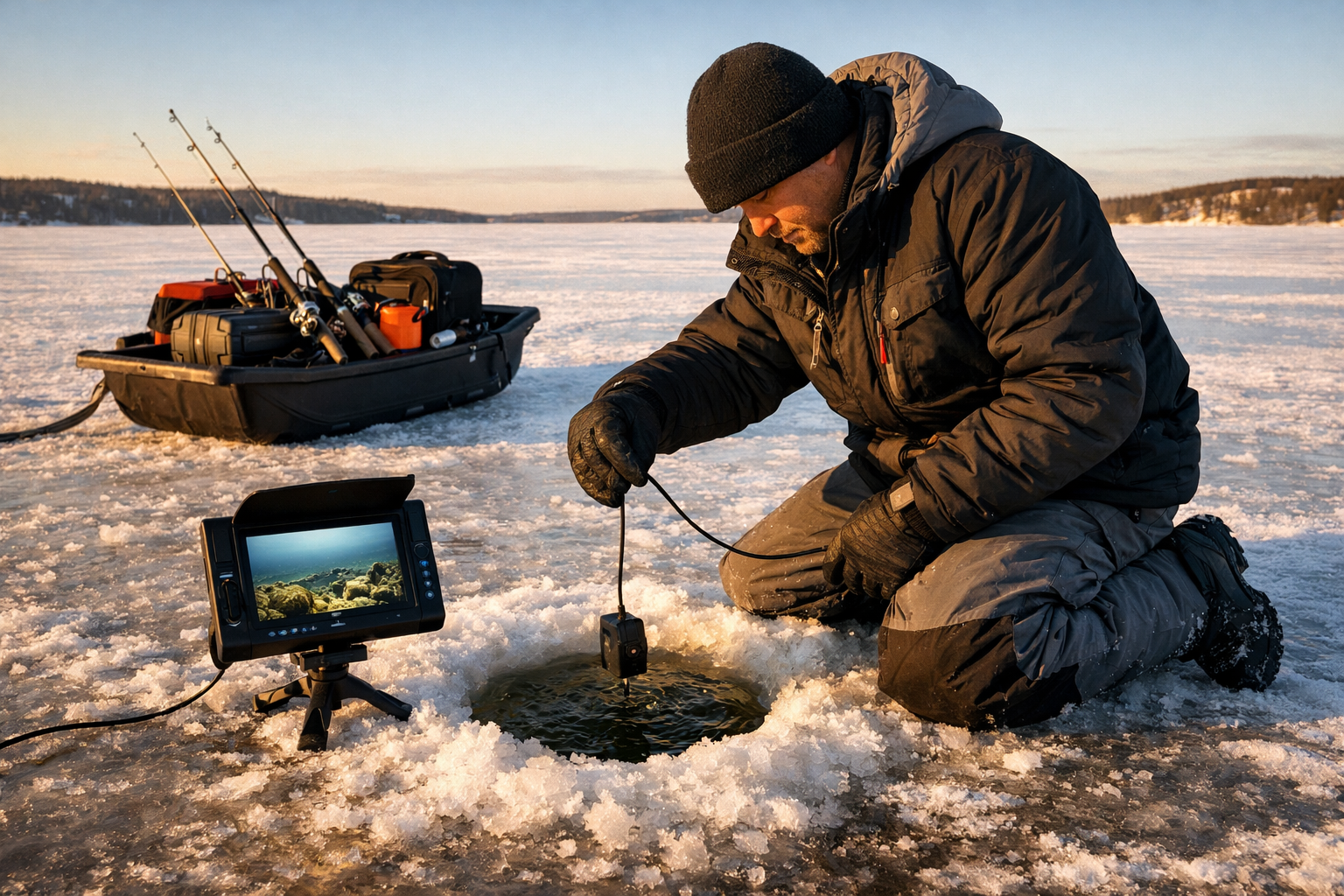
Lower the camera slowly. Fast drops create turbulence that clouds the water around the lens. Give sediment 30 to 60 seconds to settle before judging clarity.
Position the camera 6 to 12 inches off bottom. This angle captures approaching fish and your jig presentation in the same frame. The FishPRO's adjustable focus (2-40 inches) helps fine-tune this view.
Use IR mode in stained water. Switch to infrared LEDs when white light creates backscatter. This is standard practice in the murky conditions found on many northern lakes.
Protect your battery. Keep the monitor and battery pack inside your jacket or shelter when temperatures drop below 0°F. Staying warm on the ice matters for your gear and for you. Check our guide on pairing ice fishing jackets with heaters for sub-zero shelters to keep your setup running longer.
Review your DVR footage. Recording your sessions lets you study fish reactions to different jig colors, cadences, and depths. This review process builds pattern recognition that translates directly to more fish caught. For jigging technique refinement, see our breakdown of deadsticking and subtle jigging techniques for mid-winter walleye.
Common Mistakes When Buying a Budget Underwater Camera
Prioritizing screen size over image quality. A 9-inch screen showing 480p footage looks worse than a 7-inch screen at 1080p. Resolution matters more than screen real estate.
Ignoring battery ratings in cold weather. Manufacturer battery ratings assume room temperature. Expect 30-40% less runtime in sub-zero conditions. The FishPRO's 20-hour rating gives you roughly 12-14 hours of real-world ice time, which still beats most competitors.
Buying too short a cable. A 30-foot cable limits you to shallow water. If you fish lakes with 40-foot walleye structure, you need at least 50 feet of cable. Upgrading cable later is often impossible on budget models.
Skipping the carrying case. Budget cameras sometimes ship without a protective case. A hard-sided case prevents screen cracks and cable tangles during transport. Add one if your camera does not include it.
Who Should Buy a Budget Underwater Camera for Ice Fishing?
Beginners exploring underwater viewing for the first time. Start with the Blu7ive or Eyoyo to learn how fish respond to your presentations without a large financial commitment.
Mobile anglers who hole-hop. A compact, lightweight camera like the FishPRO fits in a sled or backpack and deploys fast. Pair it with a lightweight jacket for hole-hopping and you stay agile all day.
Multi-season adventurers. These cameras work for open-water dock fishing, kayak fishing, and boat fishing during warmer months. Your investment serves you year-round. Kayak. Drill. Catch. Repeat.
Tournament anglers on a budget. The FishPRO HD1080P's designation as the USA Ice Fishing Team's official camera validates its performance at a competitive level. You do not need a $500 unit to fish at a high standard.
Best Wireless Underwater Cameras Under $300 for Ice Fishing – FAQ
What is the best underwater camera for ice fishing under $300 in 2026? The FishPRO HD1080P offers the best overall performance under $300 with 1080p resolution, 20-hour battery, 82-foot cable, and adjustable focus.
Are budget underwater cameras worth buying for ice fishing? Yes. Cameras in the $150-$250 range now deliver resolution and features that matched $400+ models from two years ago. The technology has improved significantly at every price point.
How deep do budget underwater cameras work? Most budget cameras function well to 30-50 feet. The FishPRO HD1080P includes 82 feet of cable and performs reliably at depth. The Blu7ive is limited to about 30 feet.
Do underwater cameras scare fish? White LED lights spook fish in clear, shallow water. Infrared LEDs are invisible to fish and produce better results in most ice fishing conditions.
How long do batteries last in cold weather? Expect 30-40% less battery life than the manufacturer's rating. The FishPRO's 20-hour rating translates to roughly 12-14 hours in sub-zero conditions. The Eyoyo's 6-8 hour rating drops to about 4-5 hours.
Do any budget cameras connect to a phone app? Some models offer Wi-Fi connectivity to a phone app, but the experience varies. Dedicated monitors provide more reliable, zero-delay viewing. Phone screens also drain phone battery fast in cold weather.
What is the difference between TVL and 1080p resolution? TVL (television lines) measures analog resolution. 1000TVL is roughly equivalent to 720p digital. A 1080p camera provides noticeably sharper detail, especially for identifying species and reading fish behavior at close range.
Are these cameras useful outside of ice fishing? Yes. Every camera listed here works for dock scouting, kayak fishing, boat fishing, and structure mapping during open water season.
Conclusion
Budget underwater cameras for ice fishing have reached a performance level in 2026 that makes them practical tools for anglers at every skill level. The FishPRO HD1080P stands as the top pick under $300 with its combination of 1080p clarity, 20-hour battery, and adjustable focus. The Eyoyo 9-inch delivers strong value under $200 for anglers who want a large screen and DVR. The Blu7ive gets beginners started for under $75.
Pick the camera that matches your fishing depth, session length, and budget. Lower it slow, use IR in murky water, and review your footage to sharpen your presentations. The fish are down there. Now you get to watch them eat.
See you on the water.
References
[1] Best Underwater Fishing Cameras – https://www.outdoorlife.com/gear/best-underwater-fishing-cameras/
[2] Watch – https://www.youtube.com/watch?v=AJS0dGYq_58
[4] Best Ice Fishing Cameras Budget Night – https://bestcameralens.photography/2025/10/23/best-ice-fishing-cameras-budget-night/
[5] Watch – https://www.youtube.com/watch?v=dY1xKPmG0tw
[6] Watch – https://www.youtube.com/watch?v=FMF4LYyD6cI
[7] Watch – https://www.youtube.com/watch?v=YUBv3jen5Tg