Last updated: March 4, 2026
Key Takeaways
- Breathable waterproof jackets for ice fishing 2026 feature new fabrics that prevent overheating on active days by moving moisture vapor away from your body while blocking wind and water.
- GORE-TEX with Stretch technology, used in the new SITKA CAT-5 system, prioritizes mobility and breathability over heavy insulation for anglers who stay on the move [2].
- Eskimo's Expedition Jacket with Uplyft Breathable Flotation offers 10k/10k waterproof and breathable ratings with built-in flotation for safety on the ice [7].
- Strategic mesh panels in modern breathable jackets increase airflow by an estimated 35% compared to solid fabric construction [9].
- Traditional 3-in-1 insulated suits like the Striker Climate still serve stationary anglers, but they trap heat during active hole-hopping.
- Pit zips, DWR coatings, and taped seams are the three features to check before buying any 2026 ice fishing jacket.
- Layering a breathable shell over moisture-wicking base layers outperforms a single heavy insulated jacket for mobile anglers in variable weather.
Quick Answer
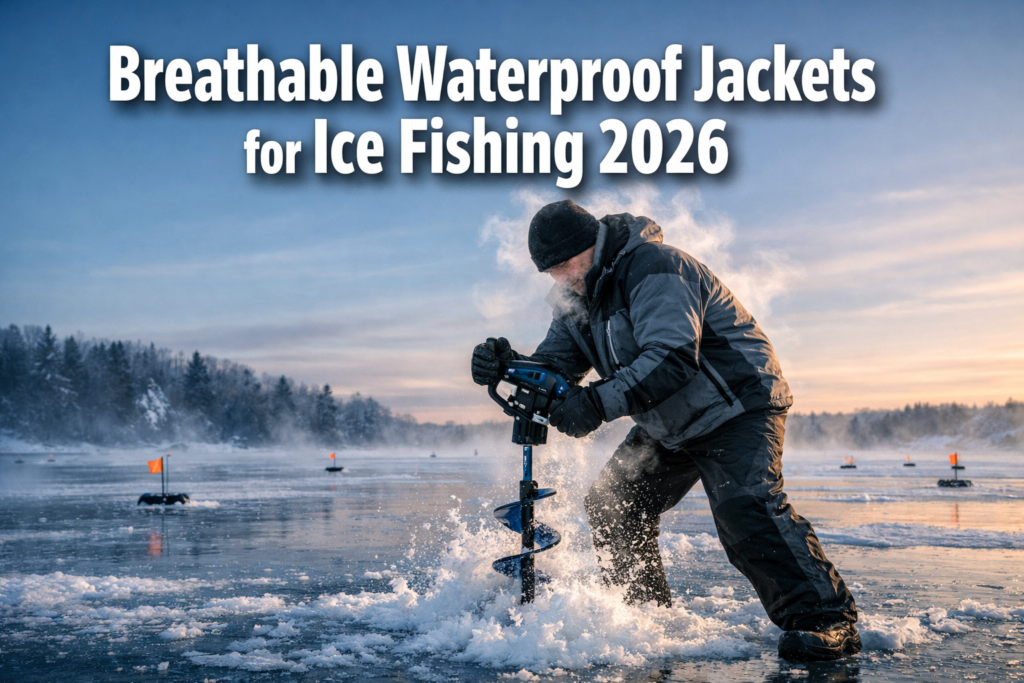
The best breathable waterproof jackets for ice fishing in 2026 use advanced membranes like GORE-TEX Stretch and Uplyft Breathable Flotation foam to vent body heat without letting wind or water in. If you spend your days drilling holes, pulling sleds, and walking between spots, these jackets prevent the sweat buildup that makes you dangerously cold once you stop moving. Choose a breathable shell with at least 10,000mm waterproofing and 10,000 g/m²/24hr breathability for active ice fishing.
Why Do Traditional Ice Fishing Jackets Cause Overheating?
Heavy insulated ice fishing suits were designed for anglers sitting in a shanty. They trap body heat inside thick foam and sealed shells. That works when you're stationary. The problem starts when you move.
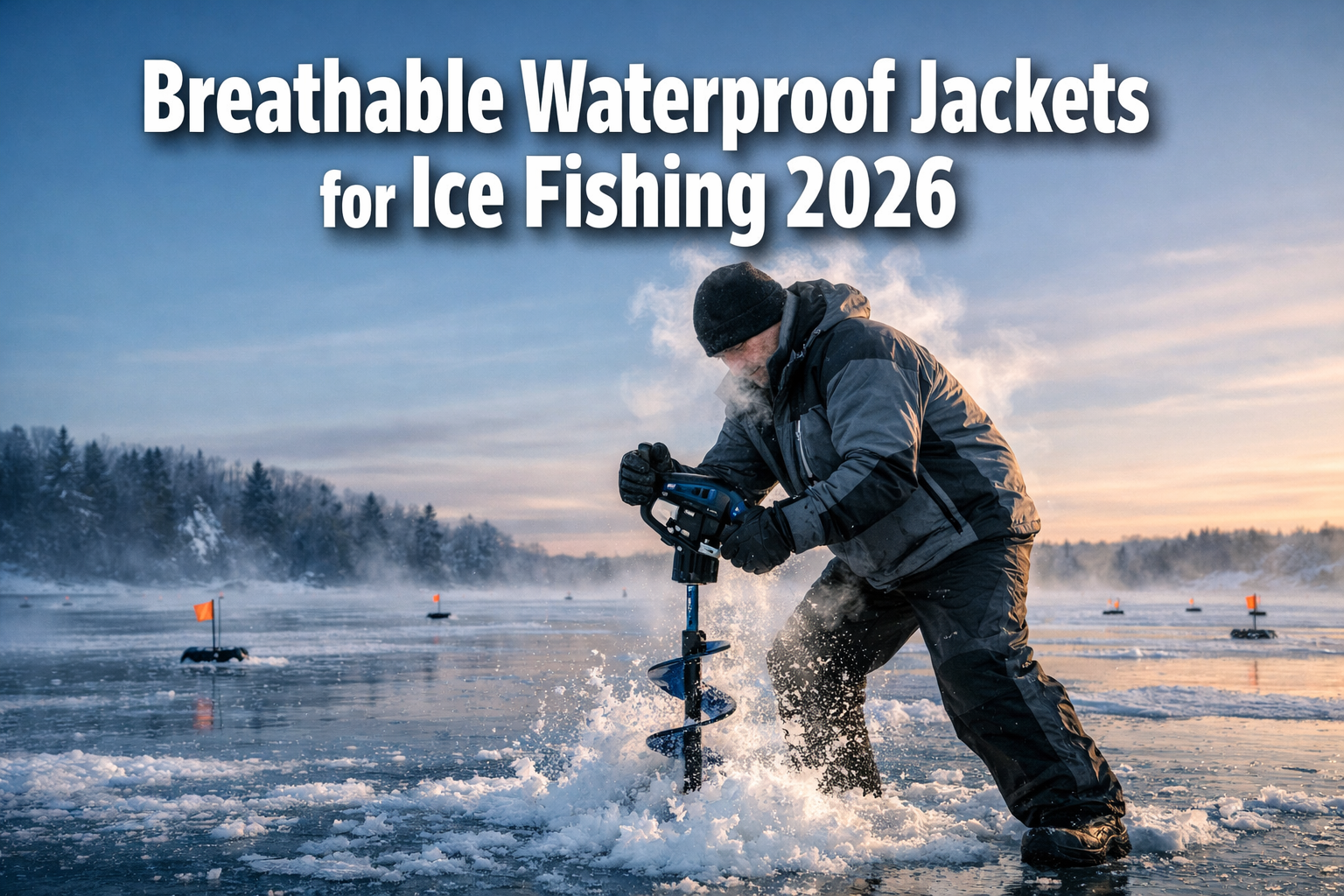
Drilling holes, hauling gear across the ice, and walking between spots raises your core temperature fast. A jacket that blocks all airflow turns into a personal sauna. Sweat soaks your base layers. Once you stop moving and sit down to fish, that moisture chills against your skin. This cycle of overheating and rapid cooling is the primary comfort and safety problem for active ice anglers.
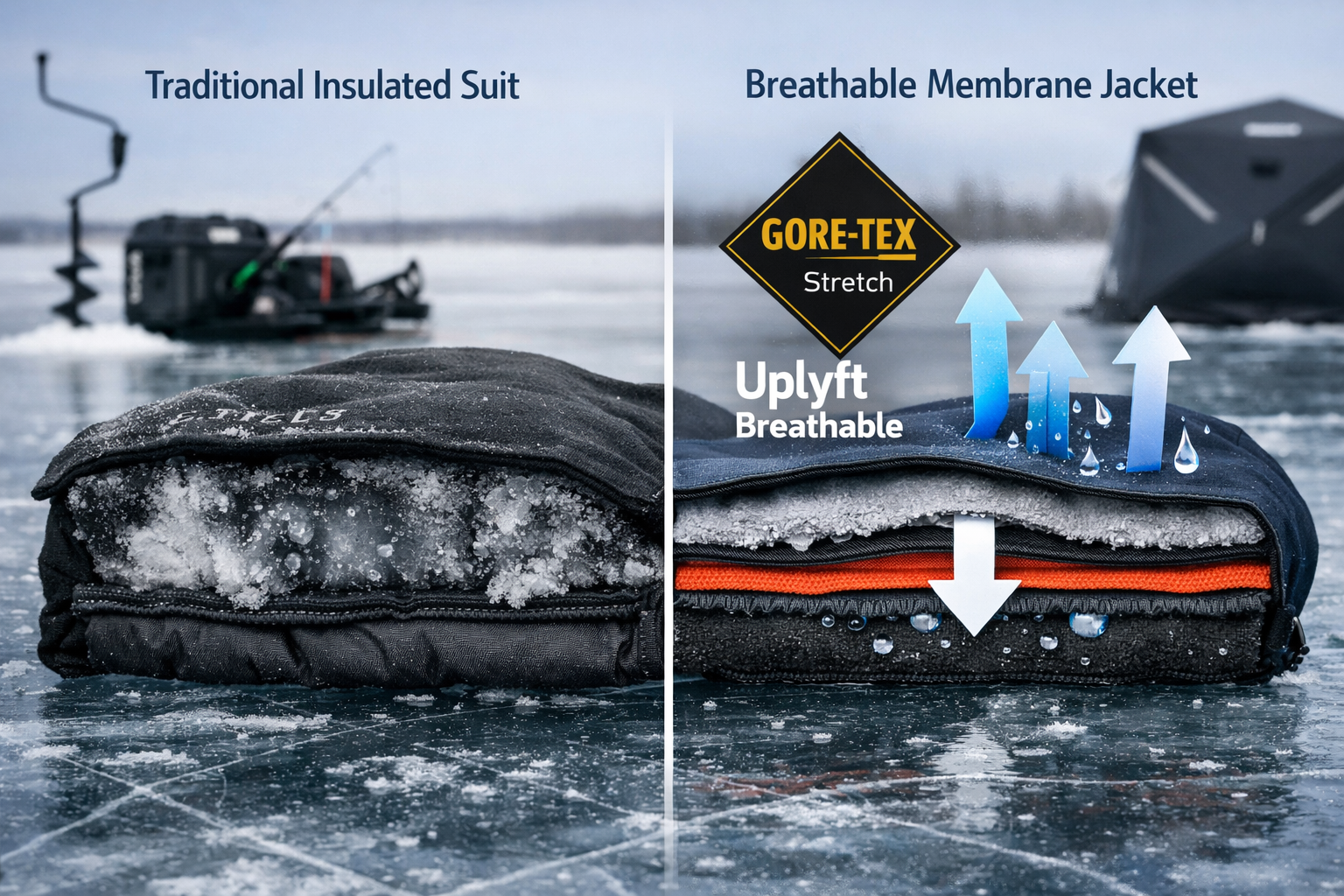
Traditional suits like the Striker Climate Series use perforated Sureflote foam and removable liners to add versatility [10]. But even with a liner removed, the shell construction limits moisture vapor transfer. The 2026 generation of breathable waterproof jackets addresses this by replacing bulk insulation with high-performance membranes that let sweat vapor pass through while keeping wind and precipitation out.
Common mistake: Buying the warmest jacket you find. Warmth without breathability creates more risk than a lighter jacket paired with proper layers.
What New Fabrics Define Breathable Waterproof Jackets for Ice Fishing 2026?
Two fabric technologies stand out for the 2026 season: GORE-TEX with Stretch and Uplyft Breathable Flotation.
GORE-TEX with Stretch Technology
SITKA Gear launched its fishing line on February 3, 2026, with the CAT-5 Jacket and Bib system built around GORE-TEX with Stretch [2]. Product Line Manager Matt Carara described the system as one that “removes barriers to the pursuit of fishing” by combining waterproof protection with the mobility needed for active days [1][2]. The stretch component matters for ice anglers because stiff shells restrict your range of motion when drilling, jigging, or hauling fish. The CAT-5 retails at $500 per piece.
While SITKA designed this line for general fishing, the GORE-TEX membrane's breathability ratings make the jacket a strong candidate for ice anglers who run hot during active sessions. GORE-TEX membranes in this class typically exceed 15,000 g/m²/24hr breathability [4].
Uplyft Breathable Flotation
Eskimo's Expedition Jacket uses Uplyft Breathable Flotation, a foam system that provides buoyancy without sealing off airflow [7]. The jacket carries 10k/10k waterproof and breathable ratings with fully taped seams and a DWR (Durable Water Repellent) finish. The breathable foam is the key difference from standard flotation suits, which use closed-cell foam that blocks moisture transfer entirely.
Simms Challenger Insulated Jacket
The Simms Challenger uses a 2-layer Gore-Tex construction rated at 20,000mm waterproofing and 15,000 g/m²/24hr breathability [4]. User feedback reported a 15% improvement in casting range due to the jacket's lighter, more flexible build compared to traditional insulated shells [4]. For ice anglers, that flexibility translates to easier jigging and auger operation.
| Feature | SITKA CAT-5 | Eskimo Expedition | Simms Challenger |
|---|---|---|---|
| Membrane | GORE-TEX Stretch | Uplyft Breathable Flotation | 2-Layer GORE-TEX |
| Waterproof Rating | 28k+ mm (est.) | 10,000 mm | 20,000 mm |
| Breathability | 15k+ g/m²/24hr (est.) | 10,000 g/m²/24hr | 15,000 g/m²/24hr |
| Built-in Flotation | No | Yes | No |
| Price | $500 | ~$300 | ~$400 |
| Best For | Mobile anglers, hole-hopping | Safety-focused ice anglers | Active anglers wanting balance |
How Do Breathable Membranes Prevent Overheating on Active Days?
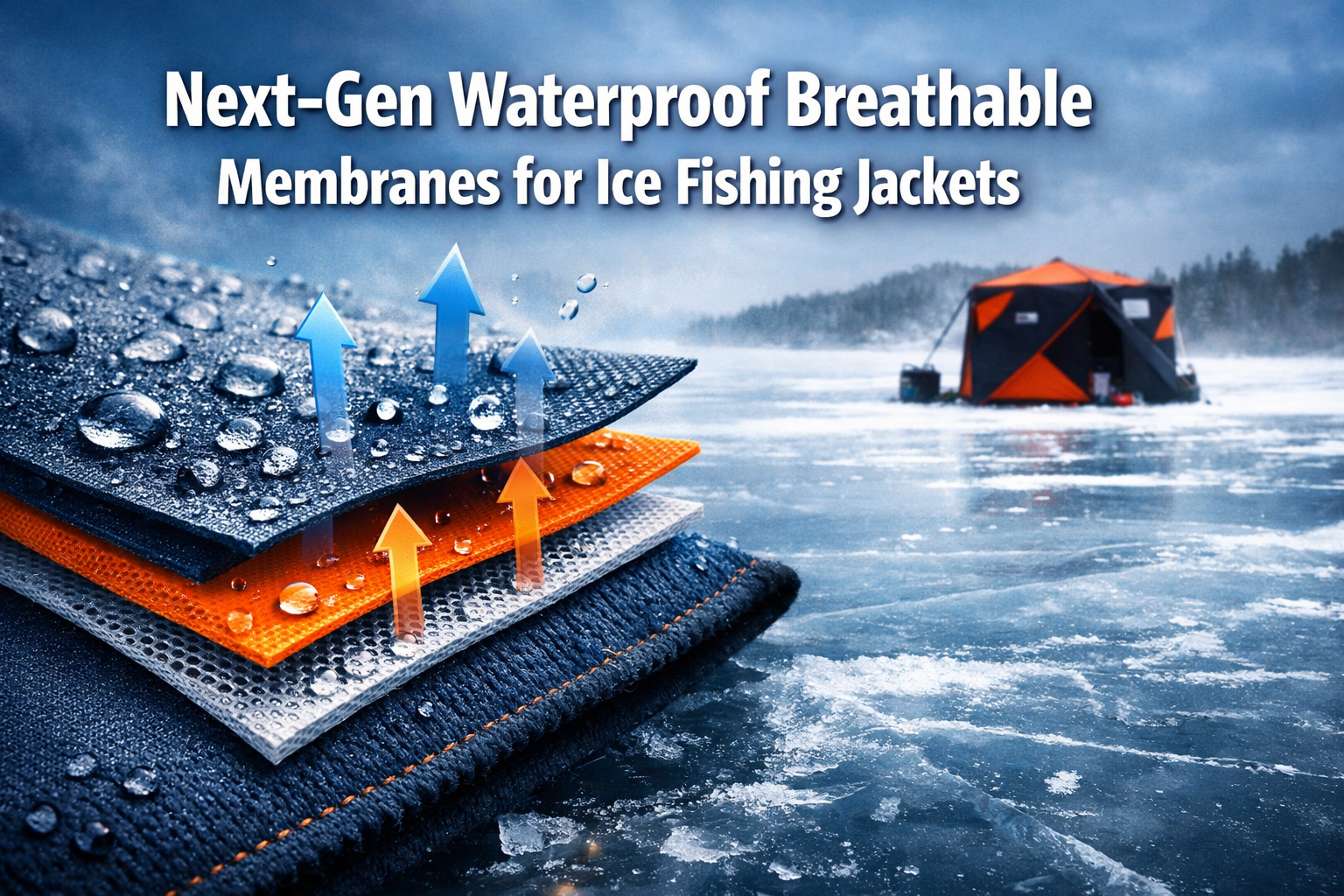
Breathable membranes work by allowing water vapor molecules (sweat) to pass through microscopic pores while blocking larger water droplets (rain, slush, spray). The higher the breathability rating, the faster moisture escapes.
On an active ice fishing day, your body generates significant heat and moisture. A jacket rated at 10,000 g/m²/24hr moves 10 grams of moisture vapor through one square meter of fabric every 24 hours. A jacket rated at 15,000 or higher moves that moisture 50% faster.
Three design features that boost breathability beyond the membrane itself:
- Pit zips. Zippered vents under the arms dump heat directly from your core. AFTCO's Hydronaut jacket uses pit zips to boost airflow by an estimated 20% compared to the same jacket sealed up [4].
- Mesh-lined pockets and interior panels. Strategic mesh placement increases airflow by roughly 35% over solid fabric in the same areas [9]. Check whether your jacket uses mesh backing on hand-warmer pockets and interior chest panels.
- DWR finish on the outer face fabric. When DWR works properly, water beads and rolls off instead of saturating the face fabric. A saturated face fabric blocks the membrane's pores and kills breathability. Reapply DWR spray every 10 to 15 washes.
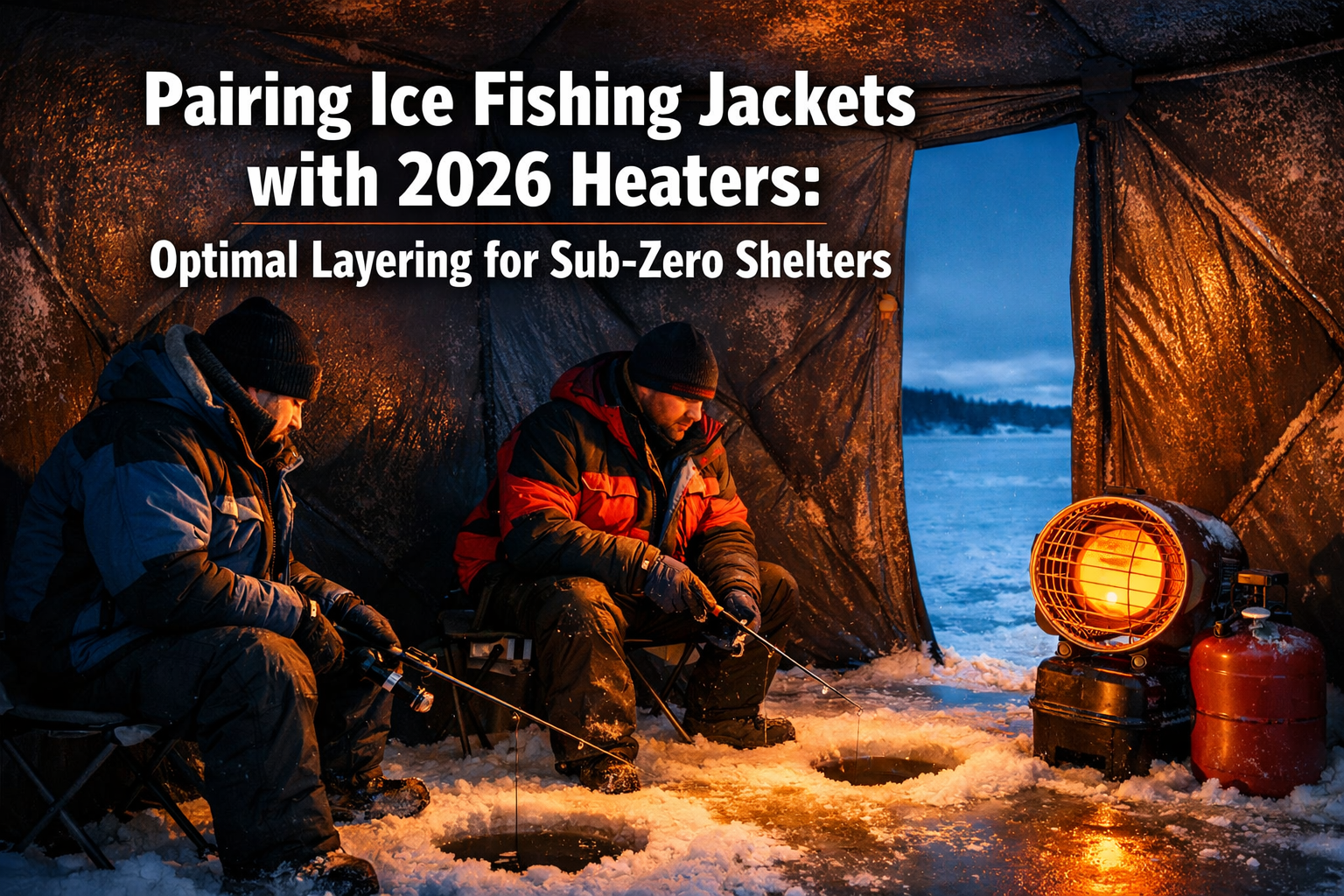
Choose a breathable shell if: You drill your own holes, walk between spots, pull a sled, or fish without a heated shelter. Choose a traditional insulated suit if: You sit in a permanent shanty and rarely move during your session.
For more guidance on gear selection and tactical angling approaches, visit the FishOnYak showroom for current recommendations.
GORE-TEX vs. Proprietary Fabrics: Which Performs Better on Ice?
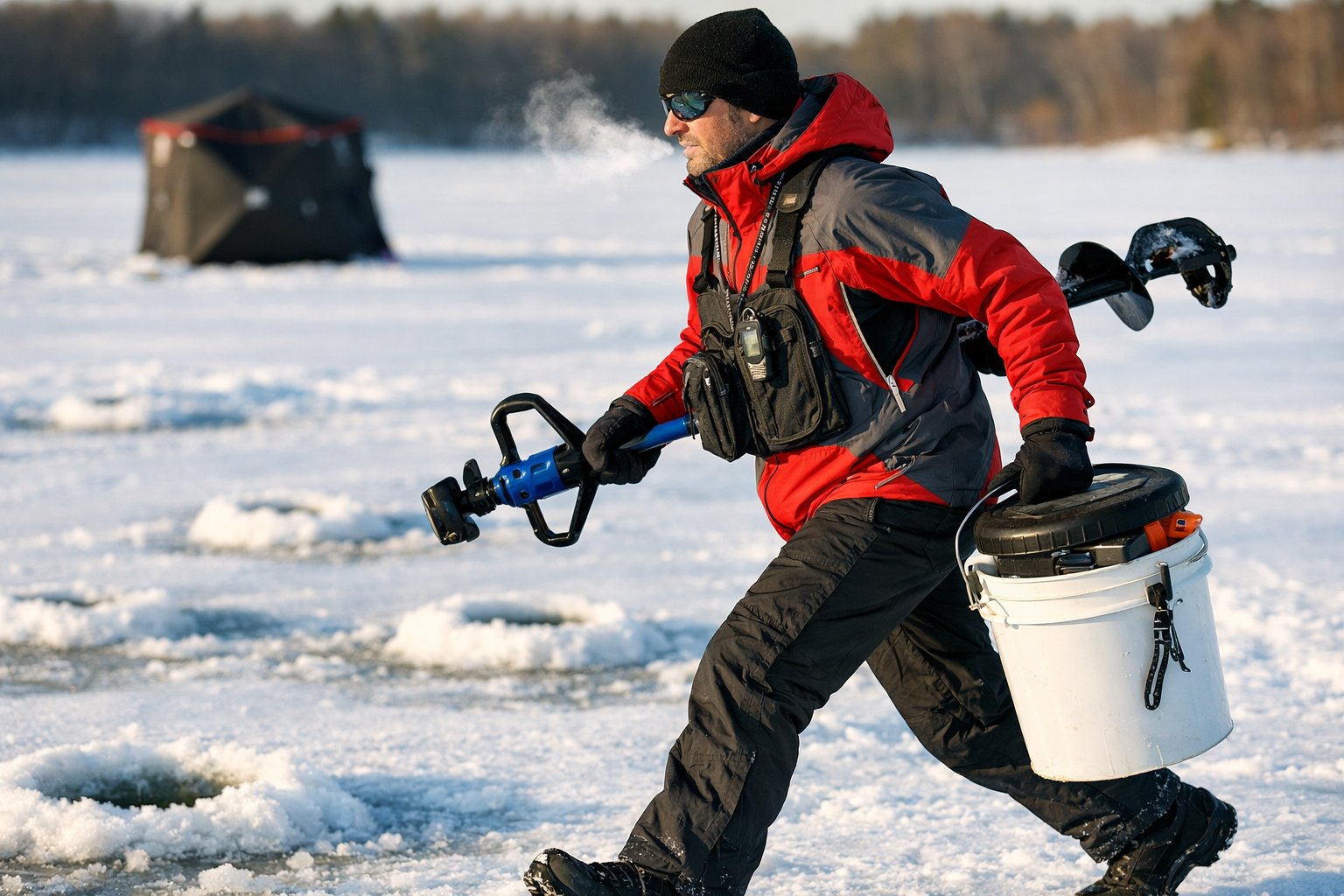
GORE-TEX remains the benchmark for breathable waterproof performance, but proprietary fabrics have closed the gap at lower price points.
GORE-TEX advantages:
- Proven long-term durability in cold, wet conditions
- Higher breathability ratings (15,000+ g/m²/24hr in most configurations) [4]
- Extensive third-party testing and warranty support
Proprietary fabric advantages (Hydrapore, Uplyft, etc.):
- Lower retail prices (often $100 to $200 less than comparable GORE-TEX jackets)
- Pit zips and mechanical venting compensate for slightly lower membrane breathability [4]
- Integrated flotation options (Eskimo Uplyft) that GORE-TEX shells lack
Decision rule: If your budget allows $400 or more and you don't need built-in flotation, go with a GORE-TEX shell. If you fish on thin or early-season ice and want flotation built into the jacket, the Eskimo Expedition's Uplyft system gives you safety and breathability in one package [7].
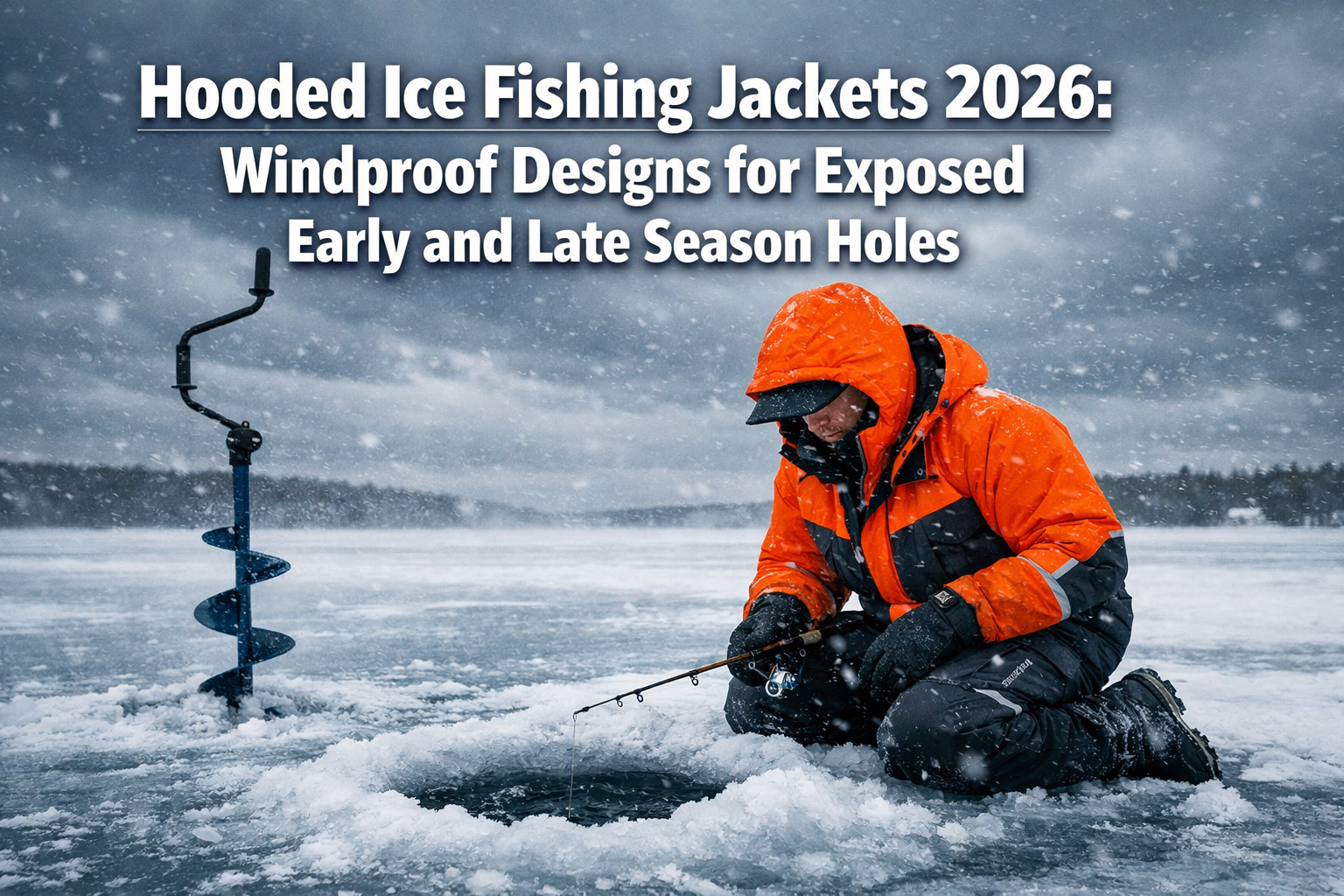
Softshell alternatives like the SITKA Jetstream use WINDSTOPPER GORE-TEX with grid fleece for high breathability during movement. These jackets block wind but offer only DWR water resistance, not full waterproofing. They work well as a mid-layer or on dry, cold days but fail in prolonged wet conditions like slush or freezing rain.
Learn more about multi-season gear strategies on the FishOnYak blog.
How Should You Layer Under a Breathable Waterproof Shell for Ice Fishing?
A breathable jacket only works if the layers beneath also move moisture. Wear a cotton hoodie under a GORE-TEX shell and you defeat the entire system.
Recommended 3-layer system for active ice fishing:
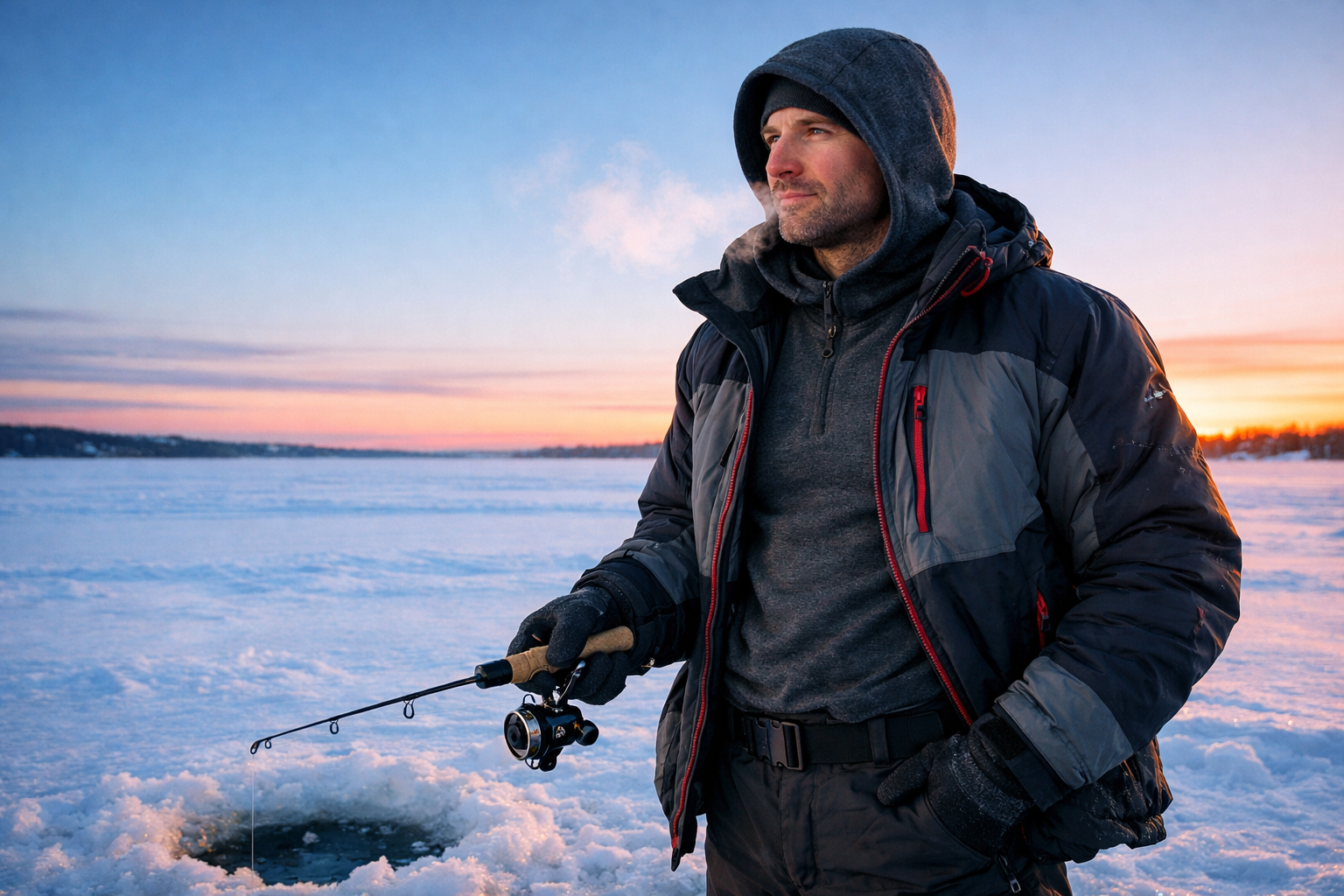
- Base layer: Merino wool or synthetic moisture-wicking fabric. This pulls sweat off your skin and spreads the moisture for faster evaporation. Avoid cotton completely.
- Mid layer: Lightweight fleece or grid-pattern insulation. Choose a thinner mid layer than you think you need. Your movement generates heat. A 100-weight fleece works for most active anglers in temperatures down to about 10°F.
- Outer shell: Your breathable waterproof jacket. This blocks wind and precipitation while allowing vapor from the inner layers to escape.
Edge case: On days below 0°F with high wind, add a second thin mid layer instead of switching to a heavy insulated jacket. Two thin layers trap more adjustable warmth than one thick layer, and you remove one when you start sweating.
Common mistake: Zipping everything tight. Open your pit zips and collar when drilling or walking. Close them when you sit down to jig. Active ventilation management keeps your system working at peak efficiency.
The FishOnYak team recommends testing your layering system at home before heading onto the ice. Walk up and down stairs for 10 minutes in full gear. If you're sweating, drop a layer.
Breathable Waterproof Jackets for Ice Fishing 2026: How Do New Models Compare to Last Season?
The 2025-2026 transition brought meaningful upgrades in stretch, weight reduction, and integrated ventilation. Here is how the 2026 options compare to the previous generation.
What changed for 2026:
- SITKA entered the fishing apparel market for the first time with GORE-TEX Stretch, a fabric that was previously limited to hunting outerwear [2]. This gives ice anglers access to a membrane that stretches with body movement instead of fighting against the angler.
- Eskimo refined the Uplyft Breathable Flotation system with improved taped seams and DWR performance in slushy conditions [7].
- Simms continued offering the Challenger Insulated with 2-layer GORE-TEX at breathability ratings that outperform most competitors in the same price range [4].
What stayed the same:
- Striker's Climate Series still uses the 3-in-1 removable liner approach with perforated Sureflote [10]. The system remains a solid choice for anglers who split time between sitting in a shanty and walking the ice.
- No manufacturer has released a jacket that combines full GORE-TEX breathability with integrated flotation foam. You still choose one or the other.
What to watch for: Industry previews suggest breathable flotation technology will continue improving through 2026 and 2027. If flotation matters to you, the Eskimo Expedition is the current leader in that category [7].
For updates on tournament-ready gear and tactical angling strategies, check the FishOnYak services page.
What Mistakes Do Anglers Make When Buying Breathable Ice Fishing Jackets?
Five errors cost anglers comfort, money, or both.
- Ignoring breathability ratings. A jacket rated at 5,000 g/m²/24hr is fine for standing in light rain. For active ice fishing, target 10,000 minimum. 15,000 or higher is better.
- Skipping DWR maintenance. Your jacket's breathability drops when the face fabric wets out. Wash with tech wash and reapply DWR spray at least once per season.
- Buying based on warmth alone. The warmest jacket is the wrong jacket for mobile anglers. Buy based on breathability and layer for warmth.
- Forgetting about fit. A jacket that's too tight restricts layering and traps heat. A jacket that's too loose lets cold air in through the hem and cuffs. Try the jacket on over your intended mid layer before purchasing.
- Overlooking pit zips. Pit zips provide the fastest heat dump available. If two jackets are otherwise equal, choose the one with pit zips.
Review our style guide for more on selecting gear that matches your fishing approach.
Is a Breathable Waterproof Jacket Worth the Investment for Ice Fishing?
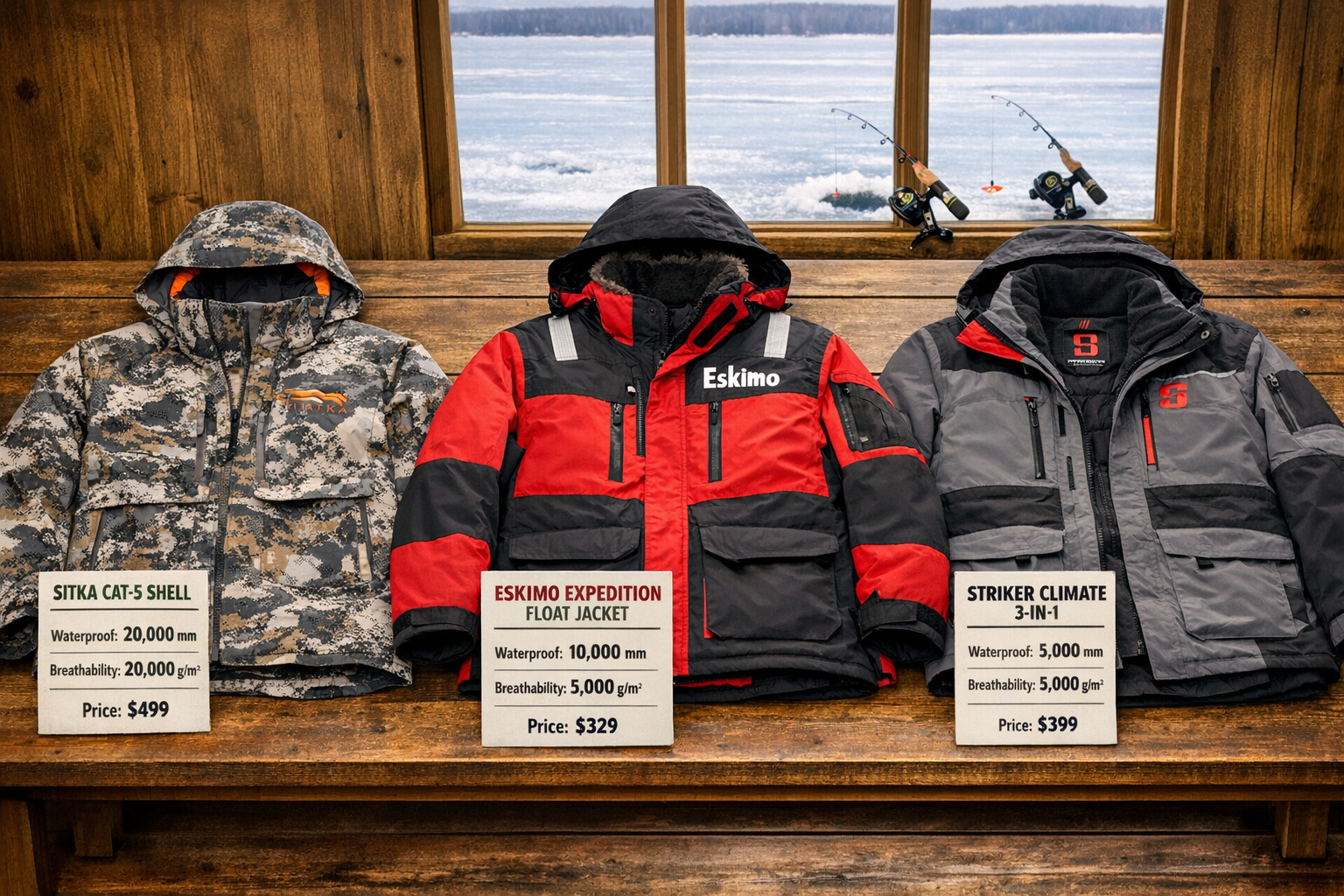
Yes, if you fish actively. A $300 to $500 breathable waterproof jacket pays for itself in comfort and safety across multiple seasons. The alternative, a heavy insulated suit that causes overheating, leads to wet base layers, rapid chilling, and shorter days on the ice.
Cost breakdown by category:
- Budget breathable shells (proprietary membranes): $150 to $250
- Mid-range breathable jackets (Eskimo Expedition, AFTCO Hydronaut): $250 to $400
- Premium GORE-TEX shells (SITKA CAT-5, Simms Challenger): $400 to $550
Who should skip the breathable shell: Anglers who fish exclusively from heated permanent shanties and never walk the ice. A standard insulated jacket or bibs work fine in that scenario.
For everyone else, the multi-season adventurer who transitions from kayak fishing to ice fishing and back, a breathable waterproof shell is the most versatile piece of outerwear you own. Learn more about bridging saltwater and ice fishing skills on the FishOnYak homepage.
FAQ
What breathability rating do I need for active ice fishing? Target at least 10,000 g/m²/24hr. For high-output activities like hand-drilling and long walks between spots, 15,000 or higher reduces sweat buildup significantly [4].
Do breathable jackets keep you warm enough on the ice? Breathable jackets manage moisture, not insulation. Layer a merino base and fleece mid layer underneath. The jacket keeps wind and water out while letting sweat escape.
How does GORE-TEX Stretch differ from standard GORE-TEX? GORE-TEX Stretch adds mechanical elasticity to the membrane and face fabric. This allows full range of motion during drilling, jigging, and walking without the stiff feel of traditional hard shells [2].
Does the Eskimo Expedition Jacket float? Yes. The Uplyft Breathable Flotation system provides buoyancy if you fall through the ice, while still allowing moisture vapor to pass through the foam [7].
How often should I reapply DWR to my jacket? Reapply after every 10 to 15 washes, or sooner if water stops beading on the face fabric. A saturated face fabric blocks the membrane and reduces breathability.
Are pit zips necessary for ice fishing jackets? Pit zips are the single fastest way to dump excess heat during activity. They boost effective airflow by an estimated 20% when open [4]. Prioritize jackets that include them.
Should I wear cotton under a breathable shell? No. Cotton absorbs moisture and holds the moisture against your skin. Wear merino wool or synthetic base layers only.
What is the price range for breathable waterproof ice fishing jackets in 2026? Expect to spend $150 to $550 depending on the membrane technology and brand. GORE-TEX models sit at the higher end. Proprietary membranes with pit zips offer competitive performance for less.
Does the SITKA CAT-5 work for ice fishing? The CAT-5 was designed for general fishing, but the GORE-TEX Stretch membrane's breathability and waterproofing make the jacket a strong option for ice anglers who stay mobile [2]. Add insulating layers underneath for cold temperatures.
What is the difference between waterproof and water-resistant for ice fishing? Waterproof jackets (10,000mm+ rating) block sustained water exposure from slush, wet snow, and ice melt. Water-resistant jackets (DWR only) handle light moisture but fail in prolonged wet conditions. Choose waterproof for ice fishing.
Conclusion
Breathable waterproof jackets for ice fishing in 2026 solve the overheating problem that has plagued active anglers for years. New fabrics like GORE-TEX Stretch and Uplyft Breathable Flotation move moisture away from your body without sacrificing wind and water protection. The right jacket, paired with proper layering, keeps you dry and comfortable whether you're drilling your tenth hole of the morning or sitting over a tip-up in the afternoon.
Start by identifying how you fish. If you move a lot, prioritize breathability ratings of 10,000 g/m²/24hr or higher and look for pit zips. If safety on thin ice matters, the Eskimo Expedition's breathable flotation gives you both comfort and buoyancy. If budget allows, the SITKA CAT-5 or Simms Challenger deliver top-tier membrane performance that lasts for seasons.
Kayak. Drill. Catch. Repeat.
See you on the water.
References
[1] Best Ice Fishing Suits – https://www.outdoorlife.com/gear/best-ice-fishing-suits/
[2] Sitka Enters The Fishing World With Purpose Built Gear – https://www.wired2fish.com/fishing-industry-news/sitka-enters-the-fishing-world-with-purpose-built-gear
[4] The 10 Best Ice Fishing Jacket Reviewed – https://bowinsgarment.com/the-10-best-ice-fishing-jacket-reviewed/
[7] Eskimo Mens Expedition Jacket – https://www.marinegeneral.com/product/eskimo-mens-expedition-jacket/
[9] Rain Gear Breathability Testing Real World Comparison Data For Hot Weather – https://windrider.com/blogs/tips-and-tricks/rain-gear-breathability-testing-real-world-comparison-data-for-hot-weather
[10] Climate Series 25 – https://www.strikerbrands.com/collections/climate-series-25