Last updated: February 26, 2026
Mid-winter walleye slow down. Their metabolism drops, their strikes get lighter, and aggressive presentations that worked during early ice stop producing. Mastering deadsticking and subtle jigging: 2026 techniques for sluggish mid-winter walleye comes down to one core principle. Match your presentation speed to the fish's energy level. That means gentle lifts, extended pauses, and passive setups that let a cautious walleye commit on its own terms.
This guide breaks down the specific rod setups, jigging cadences, bait choices, and location strategies that convert neutral mid-winter walleye into fish on the ice. Whether you're running a two-rod system or working a single hole, these 2026 approaches address the toughest bite windows of the season.
Kayak. Drill. Catch. Repeat.
Key Takeaways
- Deadsticking outperforms active jigging when water clarity increases and fish density drops during mid-winter.
- A fiberglass parabolic rod propped on a bucket (no bobber) provides better bite detection than traditional bobber-minnow setups.
- Pair an aggressive jigging rod with a passive deadstick rod to call fish in and then convert followers.
- Shallow water under 20 feet holds mid-winter walleye more often than anglers assume, especially on pressured lakes.
- Glow-colored tungsten jigs produce during low-light windows at dawn, dusk, and after dark.
- Vary your deadstick height off bottom based on what your flasher shows. Rising fish respond to baits set 18 to 24 inches up.
- A plain hook, split shot, and small live minnow remain the most consistent deadstick rig in 2026.
- Subtle jigging means lifts of 1 to 3 inches with pauses of 5 to 15 seconds, not the 12-inch rips that work in early ice.
Quick Answer
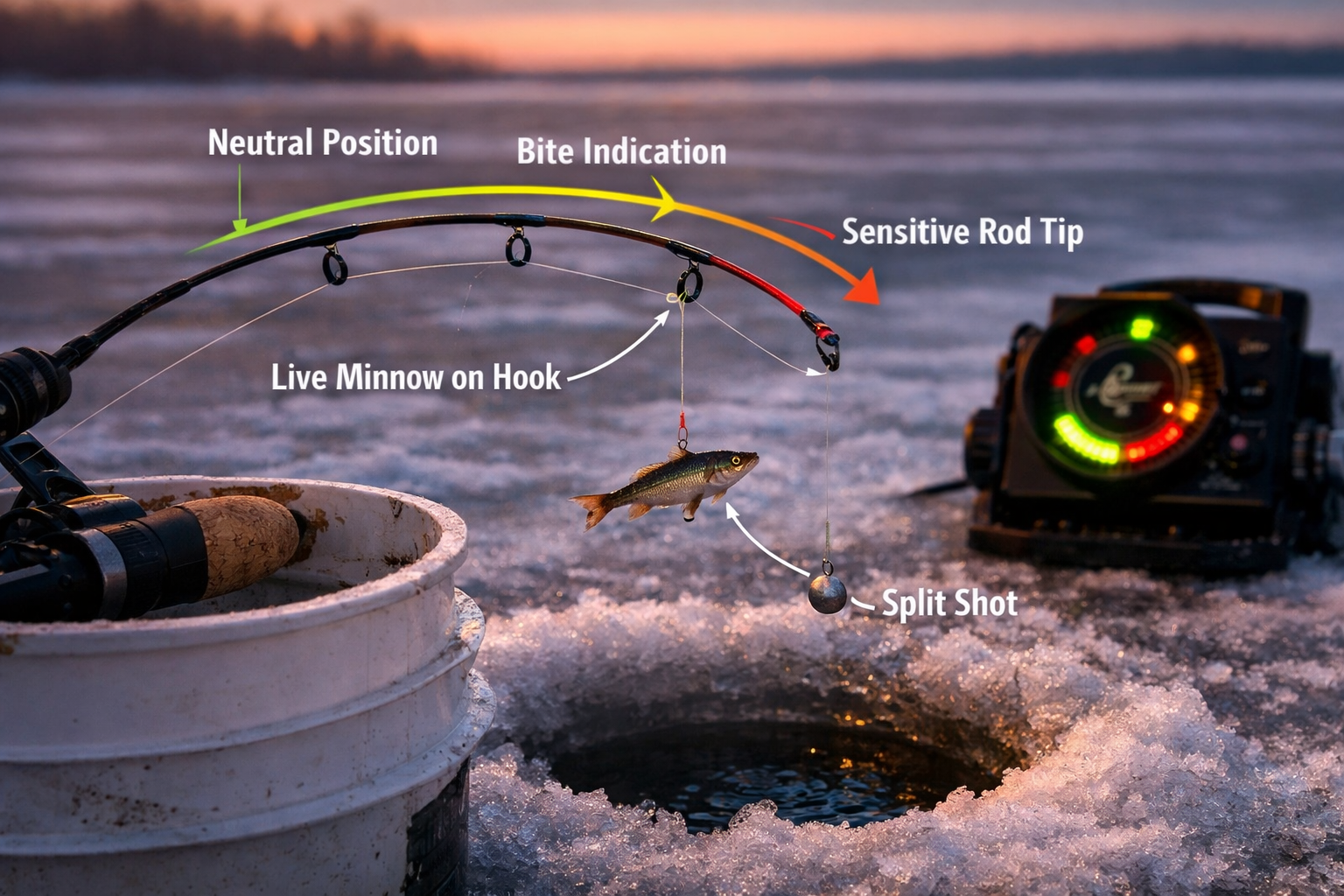
Mid-winter walleye respond best to a two-rod approach: one aggressive jigging rod to attract fish from a distance, and one deadstick rod to close the deal on neutral biters. The jigging rod uses rattling spoons or lipless cranks with short, gentle lifts. The deadstick rod sits motionless with a live minnow on a plain hook, positioned 6 to 18 inches off bottom. This combination accounts for the full range of walleye activity levels you'll encounter from late January through early March.
Why Do Mid-Winter Walleye Become So Difficult to Catch?
Walleye metabolism slows as water temperatures drop to their lowest point of the year, typically between 33 and 35 degrees Fahrenheit under the ice. Fish feed less frequently and move shorter distances to eat. A walleye that chased a jigging spoon 10 feet in December will barely track a bait 2 feet in February.
Several factors compound this challenge in 2026:
- Increased fishing pressure on popular lakes pushes walleye away from traditional mid-lake structure toward less obvious spots.
- Clearer water under thickening ice makes fish more line-shy and suspicious of aggressive presentations.
- Lower fish density per area means fewer competition-driven feeding events. Fish have less reason to commit quickly.
- Reduced dissolved oxygen in some basins forces walleye into specific depth zones, narrowing your target area but also concentrating wary fish.
The fix is straightforward. Slow everything down. Use lighter line, smaller profiles, and presentations that give a hesitant walleye time to approach and eat without spooking.
What Gear Do You Need for Deadsticking Mid-Winter Walleye?
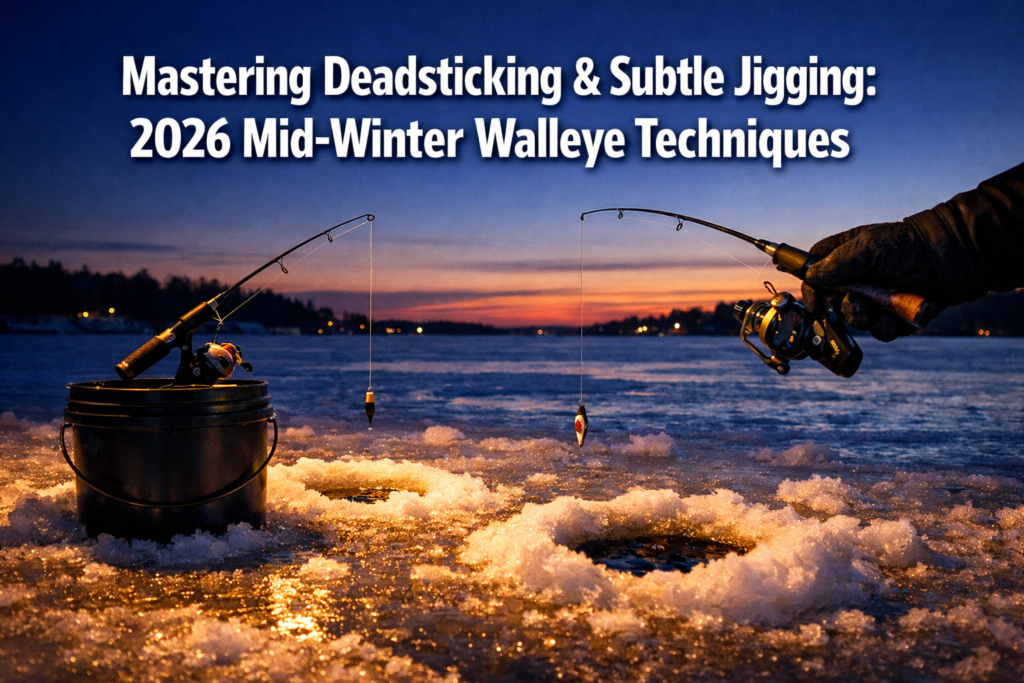
The right deadstick rod does most of the work for you. Choose a fiberglass parabolic-action rod in the 28 to 32 inch range. Fiberglass flexes gradually from tip to butt, which serves two purposes: the soft tip shows the lightest bites, and the parabolic bend sets the hook automatically when a fish pulls down and moves off. The Clam Predator series is a proven option that many anglers on the tournament circuit rely on for this exact application.
Deadstick Rod Setup Checklist:
- Fiberglass parabolic rod, 28 to 32 inches
- Small spinning reel spooled with 4 to 6 pound fluorocarbon or monofilament
- Plain octopus hook, size 4 or 6
- Single split shot pinched 4 to 6 inches above the hook
- Small live fathead minnow or shiner, hooked through the tail for maximum movement
- No bobber. Prop the rod across a bucket rim and watch the tip.
Why skip the bobber? Steve Carney, a veteran Minnesota ice angler and outdoor writer, has detailed in 2026 how a rod-tip-over-bucket setup outperforms bobber rigs in finicky conditions. The rod tip registers subtle weight changes and lateral movement that a bobber absorbs. You see the bite sooner and lose fewer fish.
For your jigging rod, pair a medium-light graphite rod (30 to 36 inches) with 6 to 8 pound fluorocarbon. Graphite transmits vibration to your hand, letting you feel a walleye bump or mouth the jig during a pause.
For more on building a tactical angling setup from the ground up, visit the FishOnYak.com services page for coaching options.
How Does the One-Two Punch Strategy Work for Mastering Deadsticking and Subtle Jigging?
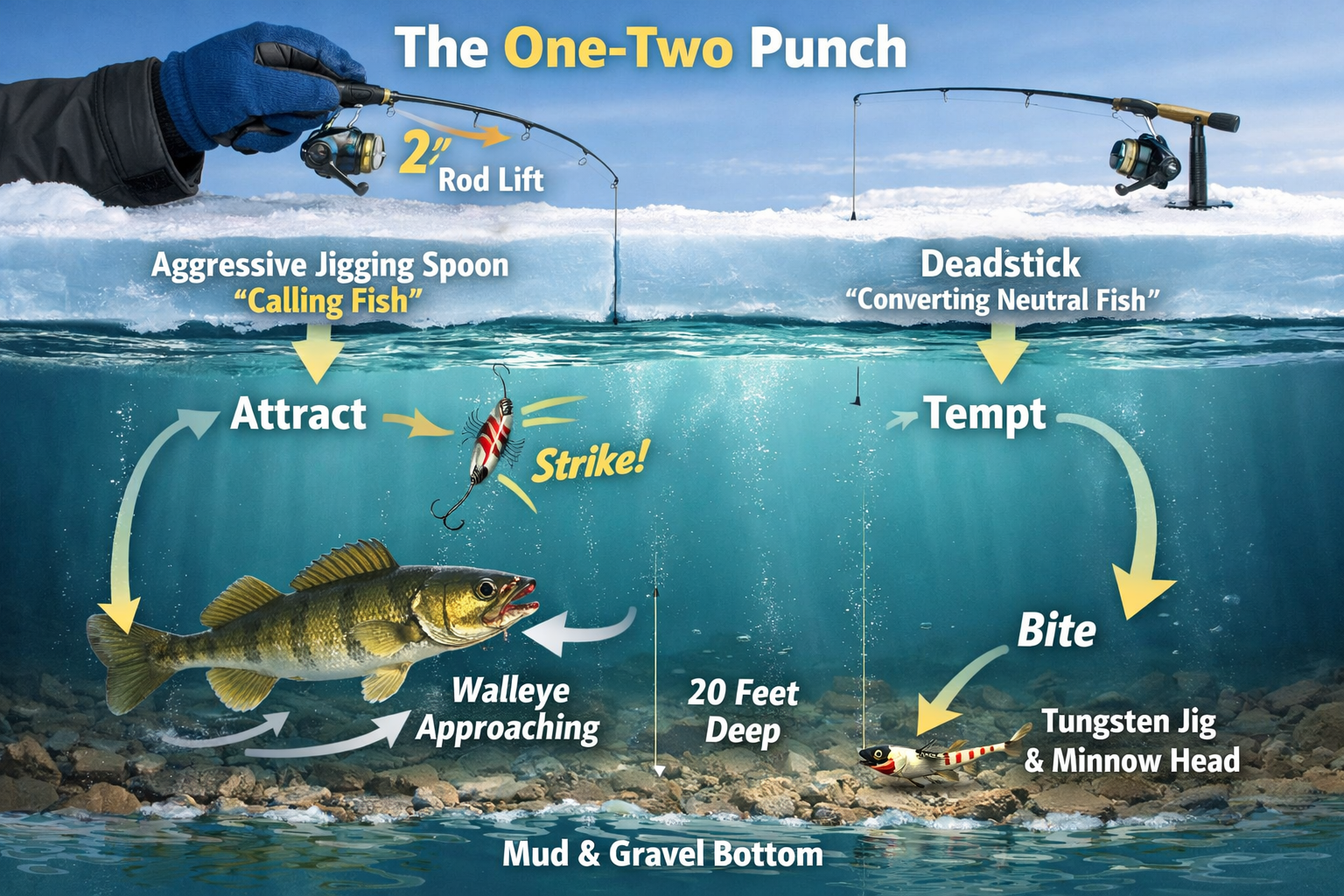
The one-two punch is the foundation of mastering deadsticking and subtle jigging: 2026 techniques for sluggish mid-winter walleye rely on using two rods with opposite personalities. One rod makes noise. The other stays quiet.
Step 1: Attract with the jigging rod. Drop a rattling spoon (Buck-Shot Rattle Spoon, 1/8 oz glow pink) or a lipless crankbait (Rippin' Rap size 4 or 5) to within 12 inches of bottom. Rip the bait up 6 to 12 inches aggressively a few times to send vibration and flash through the water column. This calls walleye in from 20 to 30 feet away.
Step 2: Transition to subtle jigging. Once your flasher shows a mark rising off bottom or moving toward your bait, shift to micro-lifts of 1 to 3 inches. Pause 5 to 15 seconds between lifts. Hold the bait dead still for 10 seconds, then twitch the rod tip a quarter inch. This mimics a dying baitfish, which is the easiest meal a cold walleye will find.
Step 3: Let the deadstick convert. Set your deadstick rod 3 to 6 feet away in a second hole. Position the minnow 6 to 18 inches off bottom. Fish that follow your jigging spoon but refuse to commit will often drift over to the deadstick and eat the live minnow without hesitation.
Jon Thelen, host of “Destination Fish,” demonstrated this approach during a January 2026 episode. He paired a 1/8 oz glow pink rattling spoon on the jigging rod with a size 6 tungsten toad jig tipped with a full minnow on the deadstick. Both baits sat within 12 inches of bottom in water under 20 feet. The deadstick produced the majority of his fish during low-light windows.
“The jigging rod is the dinner bell. The deadstick is the table.” This sums up the two-rod philosophy that defines mid-winter walleye success.
Check out the FishOnYak.com blog for more tactical breakdowns on species-specific approaches.
Should You Fish Shallow or Deep for Mid-Winter Walleye?
Fish shallow first. This runs against the common belief that mid-winter walleye stack in deep basins, but 2026 field reports from experienced anglers like Jon Thelen confirm that pressured walleye move to shallower flats and breaks under 20 feet.
Choose shallow water (8 to 20 feet) if:
- The lake receives heavy fishing pressure on main-lake structure
- You're targeting low-light feeding windows (first and last 90 minutes of light, or after dark)
- Forage species like perch have shifted to mid-depth flats (common starting mid-January)
- The lake has stained or moderately clear water
Choose deeper water (20 to 35 feet) if:
- The lake has minimal pressure and fish hold on traditional structure
- Dissolved oxygen levels are healthy throughout the water column
- Your flasher shows active baitfish schools at depth
A common mistake is drilling all your holes on the deepest spot on the map. Mid-winter walleye on pressured lakes often slide to secondary structure: inside turns on weed edges, subtle mud-to-gravel transitions, and shallow points adjacent to deep water. Drill a spread of holes across multiple depths and let the fish tell you where they want to be.
For guidance on building your skills across seasons, explore FishOnYak.com's practice resources.
What Are the Best Jigging Cadences for Neutral Walleye?
Neutral walleye will not chase. Your cadence needs to trigger a reaction bite at close range or give the fish enough time to slowly approach and eat.
Three cadences that produce in mid-winter 2026:
| Cadence Name | Rod Movement | Pause Length | Best For |
|---|---|---|---|
| Micro-lift | 1 to 2 inch lift, slow drop | 10 to 15 seconds | Neutral fish on flasher that won't commit |
| Quiver | Hold bait still, vibrate rod tip with fingertip | 5 to 8 seconds between quivers | Fish sitting directly below your bait |
| Dead drop | Lift 3 inches, let bait free-fall on slack line | 15 to 30 seconds | Triggering reaction from fish that followed your initial rips |
The dead drop deserves special attention. When you lift and release on slack line, the jig spirals or flutters unpredictably. This erratic movement triggers a reflex strike from walleye that have been watching your bait but refusing to eat. After the drop, let the bait sit motionless. Count to 15 before moving again.
Common mistake: Jigging too aggressively after marking a fish. Your instinct says “do more.” The fish wants you to do less. When a mark appears on your flasher, reduce your movement by half. If the fish still won't eat, stop moving entirely for 30 seconds. Many mid-winter walleye eat a bait that has gone completely still.
How Do You Adjust Deadstick Height and Bait Selection?
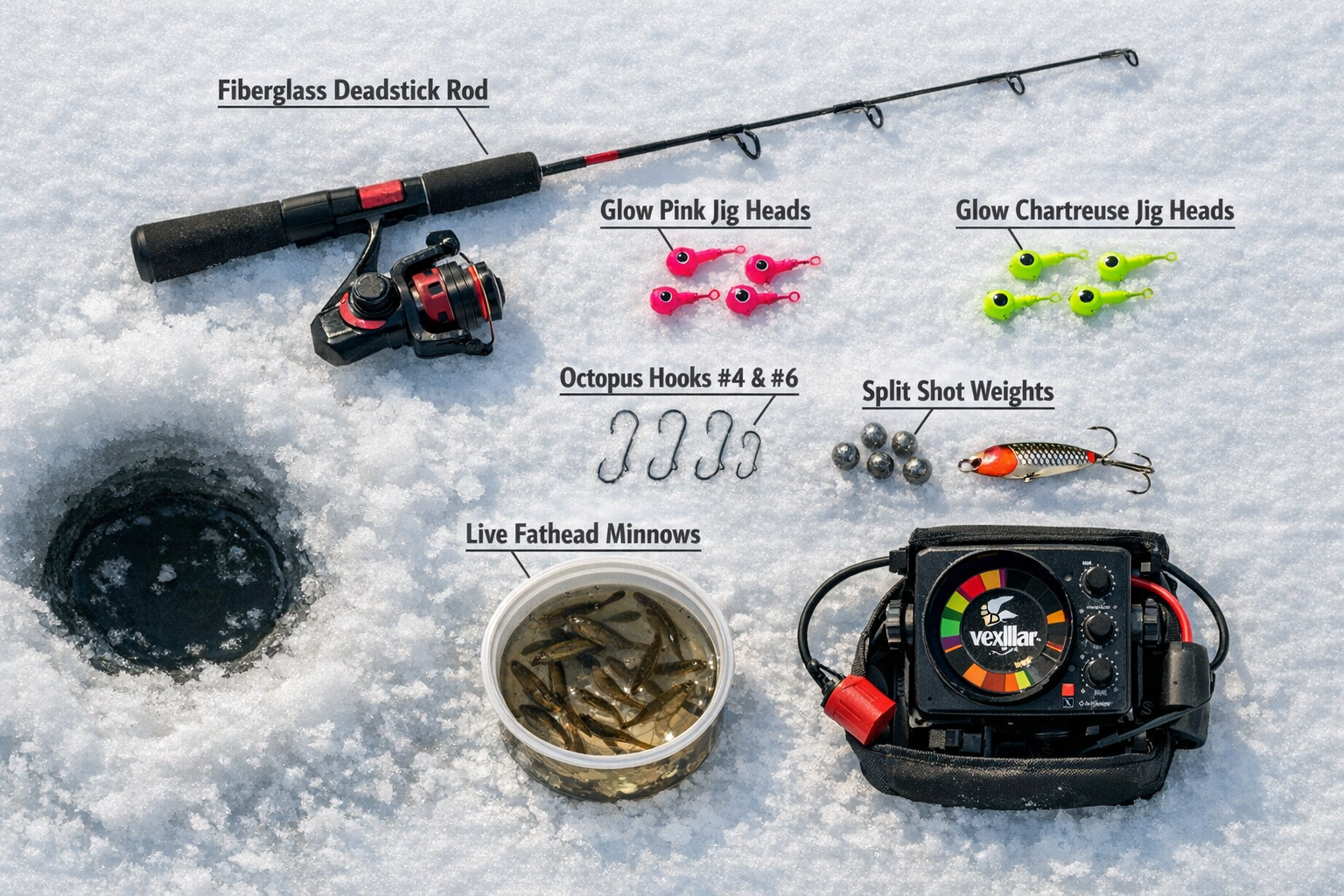
Your deadstick bait height off bottom matters more than most anglers realize. A Vexilar or similar flasher unit shows you where fish are sitting in the water column, and you should adjust your deadstick to meet them.
Height guidelines:
- 6 to 12 inches off bottom: Default starting position. Works for walleye hugging structure.
- 18 to 24 inches off bottom: Use when your flasher shows fish rising or suspending. This is common during low-light periods when walleye become slightly more active.
- On bottom: Effective with a dead minnow or minnow head in areas with soft mud substrate. The scent trail draws fish in.
Bait selection for deadsticking:
- Live fathead minnow (hooked through tail): Best all-around choice. The tail hook lets the minnow swim naturally.
- Live shiner (hooked through back behind dorsal): Produces more flash and movement. Works well in stained water.
- Dead minnow: Effective when live bait gets hit repeatedly without hookups. Dead bait sits still and lets fish eat without resistance.
- Wax worms on a small jig: Downsized option for extremely finicky fish or when targeting walleye feeding on invertebrates.
Joe Henry, fishing Lake of the Woods, has shared that glow-colored jig heads on the deadstick produce better in stained water, while plain hooks with natural bait work best in clear water. Match your approach to visibility conditions.
Learn more about building a tournament-ready approach at the FishOnYak.com home page.
What Mistakes Should You Avoid When Mastering Deadsticking and Subtle Jigging in 2026?
Mastering deadsticking and subtle jigging: 2026 techniques for sluggish mid-winter walleye require discipline. Here are the mistakes that cost anglers fish.
- Moving too often. Mid-winter walleye roam slowly. Give a spot 45 to 60 minutes before relocating, especially during prime low-light windows.
- Using too heavy a line on the deadstick. Eight-pound fluorocarbon is too stiff for a natural minnow presentation. Drop to 4 or 5 pound test.
- Setting the hook on the deadstick too early. Let the rod load. A parabolic fiberglass rod sets itself when the fish turns and swims. Grabbing the rod and yanking at the first tip movement pulls the bait away from a fish that hasn't fully committed.
- Ignoring glow baits after dark. Night deadsticking on mud flats with glow jigs produces walleye that refuse to bite during daylight. Charge your glow jig with a UV light every 15 to 20 minutes.
- Placing both holes too close together. Keep your deadstick hole 3 to 6 feet from your jigging hole. Closer than 3 feet, and your jigging action spooks fish off the deadstick. Farther than 6 feet, and the two rods stop working as a team.
- Fishing only one depth. Drill holes across a depth range (10, 15, 20 feet) along a single structural element. Walleye slide up and down during a session.
For more on refining your approach and building confidence on the ice, check out FishOnYak.com's about page to learn how the team supports anglers at every level.
Mid-Winter Walleye Gear Comparison: Deadstick vs. Jigging Rod
| Feature | Deadstick Rod | Jigging Rod |
|---|---|---|
| Rod material | Fiberglass | Graphite |
| Action | Parabolic (slow) | Medium-light (fast tip) |
| Length | 28 to 32 inches | 30 to 36 inches |
| Line | 4 to 6 lb fluorocarbon or mono | 6 to 8 lb fluorocarbon |
| Terminal tackle | Plain hook, split shot | Tungsten jig, rattling spoon, or lipless crank |
| Bait | Live or dead minnow | Minnow head, wax worm, or artificial |
| Angler involvement | Passive (watch rod tip) | Active (constant cadence adjustments) |
| Primary role | Convert neutral fish | Attract fish from distance |
Frequently Asked Questions
What is deadsticking for walleye? Deadsticking is a passive ice fishing technique where you set a rod with a live minnow near the bottom and let the bait do the work. The rod sits unattended (or lightly monitored) while the minnow's natural movement attracts and hooks walleye.
Do you need a bobber for deadsticking? No. A rod propped across a bucket or rod holder without a bobber provides better bite detection. The rod tip shows subtle weight changes and lateral pulls that a bobber absorbs.
How far off bottom should a deadstick bait sit? Start at 6 to 12 inches off bottom. Raise the bait to 18 to 24 inches if your flasher shows fish suspending or rising in the water column.
What size minnow works best for mid-winter walleye deadsticking? Small minnows under 3 inches, such as fatheads or small shiners, produce better than large bait during mid-winter. Walleye conserve energy and prefer easy meals.
Is deadsticking legal everywhere? Regulations vary by state and province. Some areas allow two lines through the ice, and some require attended lines only. Check your local regulations before setting up a deadstick rod.
When is the best time to deadstick for walleye? Low-light periods produce the most consistent deadstick bites. Focus on the first 90 minutes after sunrise, the last 90 minutes before sunset, and after dark.
What color jig works best on a deadstick? Glow pink and glow chartreuse produce in stained water and low-light conditions. In clear water, use natural colors or a plain hook with no jig head.
How long should you wait before moving to a new spot? Give each location 45 to 60 minutes during prime feeding windows. Outside of low-light periods, 20 to 30 minutes without a mark on your flasher is enough reason to move.
Does deadsticking work better than jigging in mid-winter? They work best together. Jigging attracts fish. Deadsticking converts fish that won't commit to an active presentation. Running both rods simultaneously (where legal) covers the full spectrum of walleye mood.
What pound test line should you use for deadsticking walleye? Four to six pound fluorocarbon or monofilament. Lighter line allows the minnow to swim naturally and reduces visibility in clear mid-winter water.
Putting These Techniques to Work
The path to consistent mid-winter walleye starts with slowing down. Set up your two-rod system. Prop the deadstick on a bucket. Work the jigging rod with patience and restraint. Watch your flasher. Adjust bait height based on what the fish show you.
These 2026 techniques for sluggish mid-winter walleye reward anglers who resist the urge to do more. Less movement, lighter line, smaller baits, and longer pauses will put fish on the ice when others go home empty.
Drill your holes across multiple depths. Start shallow. Trust the deadstick. And when that rod tip dips and loads, let the fish hook itself.
See you on the water.
For the latest guides and coaching resources, visit FishOnYak.com.