Last updated: March 7, 2026
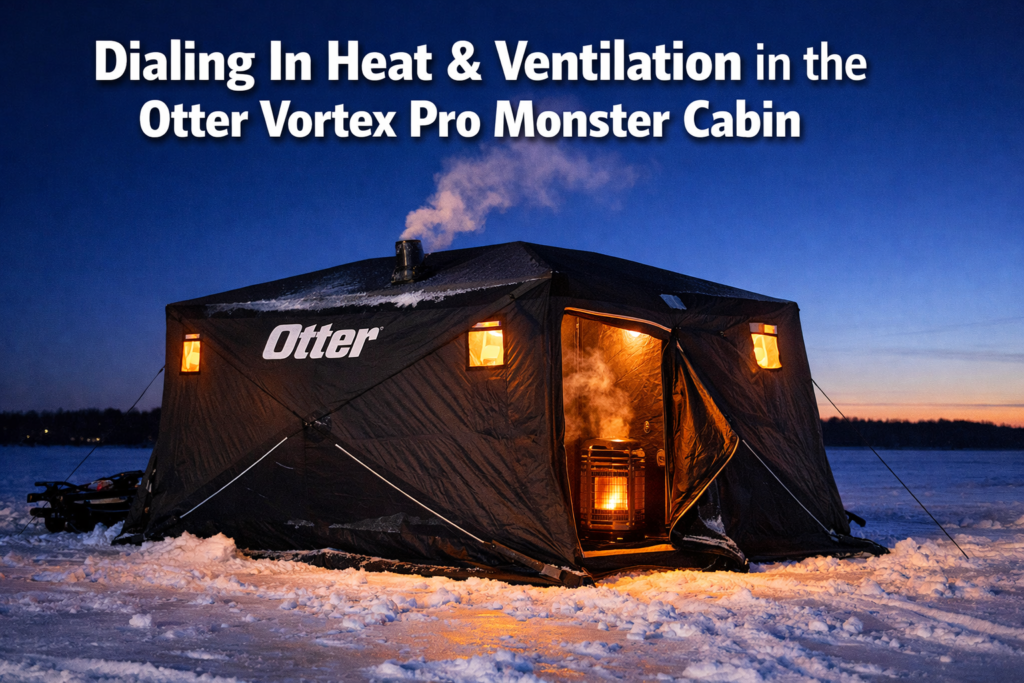
The Otter Vortex Pro Monster Cabin gives you 82 square feet of fishable space, a 75-inch ceiling, and triple-layer THERMALTEC 600D insulation. That is a lot of air to heat. Dialing in heat and ventilation in the Otter Vortex Pro Monster Cabin requires matching your heater's BTU output to the shelter's cubic volume, managing the moisture that propane combustion dumps into the air, and keeping carbon monoxide levels at zero. Get these three things right and you fish comfortably all day. Get them wrong and you deal with dripping gear, fogged electronics, or worse.
This guide covers BTU sizing, condensation control, and safety for the Monster Cabin based on verified specs, real-world heater tests, and state agency CO guidance. Every recommendation is specific to this shelter's dimensions and insulation rating.
Key Takeaways
- The Monster Cabin's interior volume is roughly 425 cubic feet (82 sq ft floor, 75 in ceiling). That number drives every heater decision.
- A 9,000 BTU propane heater run on medium covers most conditions. You need 12,000 to 18,000 BTU only in extreme cold below minus 20F.
- Propane heaters produce “wet heat.” Each pound of propane burned releases about 1.6 pounds of water vapor into the shelter.
- Condensation drips on rods, reels, and fish finders when warm moist air hits cold fabric. Active ventilation is the fix, not more heat.
- A battery-powered CO detector rated for enclosed spaces is mandatory. Do not rely on the heater's low-oxygen shutoff alone.
- Keep at least two vent openings cracked at all times when running any combustion heater inside the Monster Cabin.
- Oversizing your heater wastes fuel, increases humidity, and raises CO risk. Match the heater to the shelter, not the other way around.
Quick Answer
For the Otter Vortex Pro Monster Cabin, run a Mr. Heater Portable Buddy (4,000/9,000 BTU) or Big Buddy on low-to-medium settings (4,000 to 9,000 BTU) for temperatures down to about 0F. Crack two vents to manage condensation and CO. Mount a battery CO detector at head height. This setup keeps the interior 40 to 50 degrees warmer than outside air without soaking your gear in drip water.
How Many BTUs Does the Otter Vortex Pro Monster Cabin Need?
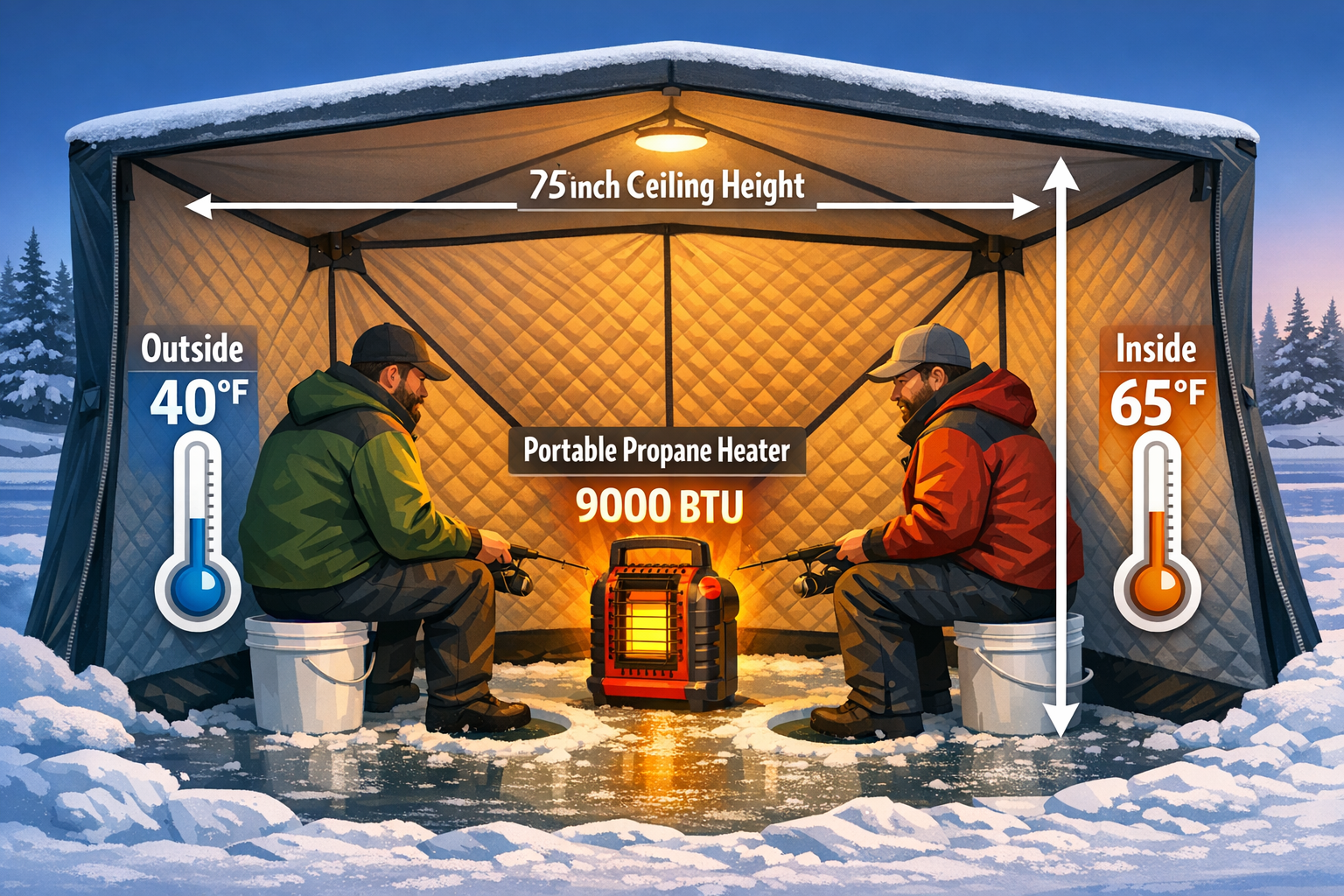
The answer depends on outside temperature, wind speed, and how many anglers are inside. For most ice fishing conditions (0F to 20F outside), 9,000 BTU on a propane Buddy-style heater keeps the Monster Cabin between 50F and 65F interior.
Here is the math. The Monster Cabin has roughly 82 square feet of floor space and a 75-inch (6.25 ft) ceiling. That gives you about 512 cubic feet of total volume, but the tapered hub shape reduces effective heated volume to approximately 425 cubic feet. Pop-up hub shelters need more BTU per square foot than flip-overs because of the taller ceiling and larger air mass. A flip-over with similar floor space gets by on 3,000 to 5,000 BTU. The Monster Cabin needs 4,000 to 9,000 BTU for the same comfort level.
BTU sizing by outside temperature for the Monster Cabin (82 sq ft, insulated):
| Outside Temp | Recommended BTU Setting | Heater Example | Fuel Use (est.) |
|---|---|---|---|
| 20F to 32F | 4,000 BTU (low) | Portable Buddy low | ~0.5 lb propane/hr |
| 0F to 20F | 9,000 BTU (medium) | Portable Buddy high or Big Buddy medium | ~1.0 lb propane/hr |
| Minus 10F to 0F | 9,000 to 12,000 BTU | Big Buddy medium-high | ~1.2 lb propane/hr |
| Below minus 20F | 12,000 to 18,000 BTU | Big Buddy high | ~1.5 lb propane/hr |
Sources: Heater coverage ratings from String Theory Angling and Fishing Duo.
Common mistake: Running a Big Buddy on full 18,000 BTU blast in moderate cold. This overheats the shelter fast, burns through propane, dumps excessive moisture, and forces you to open vents so wide you lose most of the heat anyway. Start on the lowest setting and adjust up.
Choose the Portable Buddy if you fish with one to three people in mild cold (above 10F). Choose the Big Buddy if you regularly fish in subzero conditions or fill the shelter with five to seven anglers.
For a deeper look at keeping your fishing space organized and functional, check out essential tips for a clean cabin interior.
Why Does Condensation Build Up Inside the Monster Cabin?
Propane combustion produces water vapor. Every pound of propane you burn releases approximately 1.6 pounds of water into the shelter air. Add the moisture from breathing (five anglers produce a surprising amount), and the air inside the Monster Cabin gets humid fast.
The THERMALTEC 600D triple-layer fabric slows heat loss and reduces the temperature difference between the inner wall surface and the interior air. That helps. But condensation still forms when warm, moist air contacts any surface that is cooler than the dew point. Seams, window panels, and the ceiling peak are the first spots to drip.
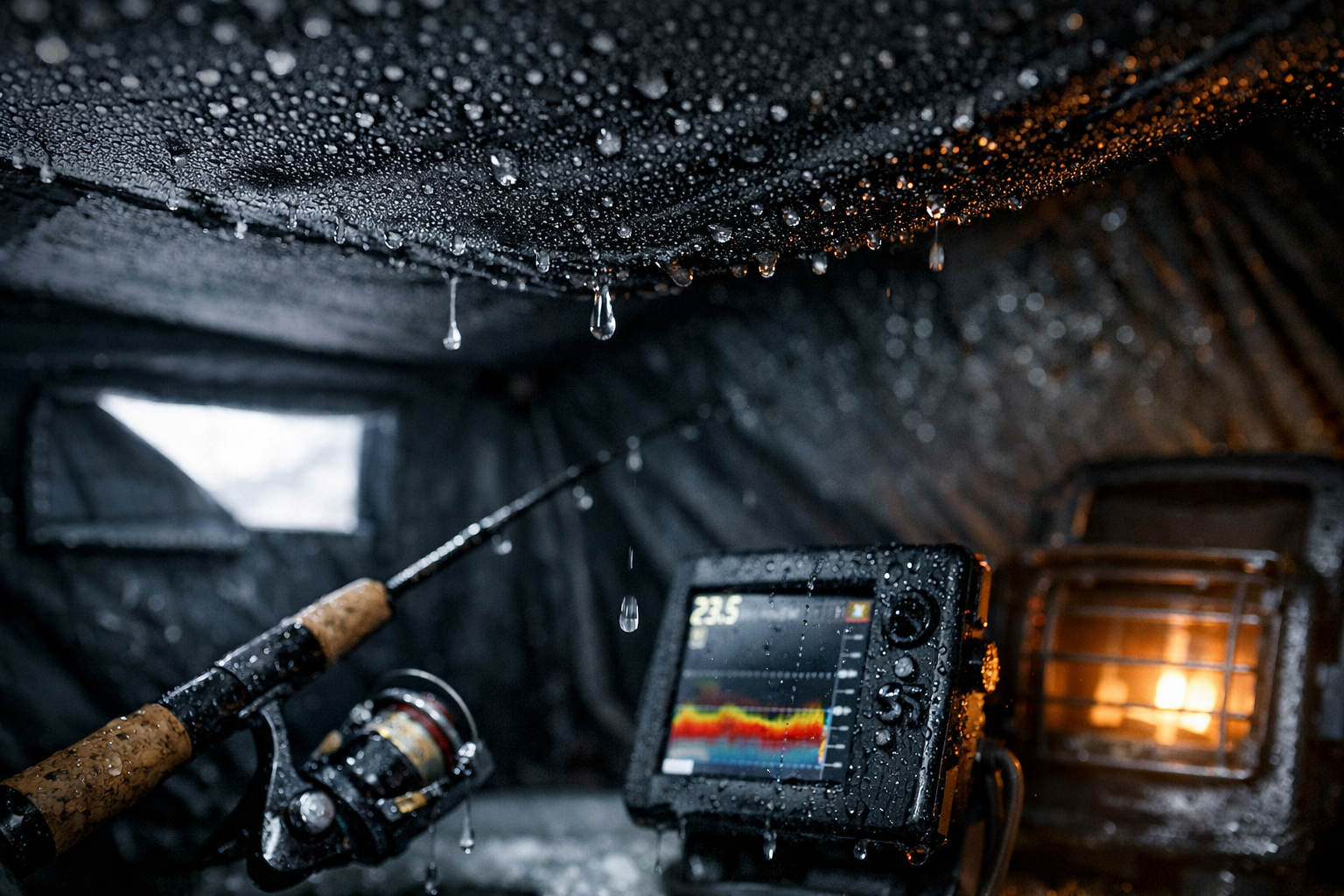
The real problem is not the cold walls. The problem is too much moisture in the air with too little ventilation.
A side-by-side test of propane versus wood stove heating in a hub shelter found that the propane heater produced noticeably more condensation and dripping than the wood stove, because propane combustion adds moisture directly to the interior air while a wood stove vents combustion gases outside through a stove jack. Wood stoves produce drier heat, but they add complexity and require a stove jack installation that the Monster Cabin does not support out of the box.
If you run propane (and most Monster Cabin users do), condensation management comes down to ventilation. Period.
How Do You Control Condensation and Protect Rods, Reels, and Electronics?
Open at least two vents on opposite sides of the shelter to create cross-flow ventilation. This moves humid air out and pulls drier outside air in. The Monster Cabin has adjustable vent openings. Use them.
Step-by-step condensation control for the Monster Cabin:
- Set up the shelter and open two opposing vent flaps about three to four inches before lighting the heater.
- Light the heater on its lowest setting. Let the shelter warm for 10 minutes.
- Check the ceiling and upper walls for moisture. If you see droplets forming, open vents wider.
- Increase heater output only after ventilation is stable. The goal is warm, moving air, not hot, stagnant air.
- Position the heater near the center of the shelter, not against a wall. This distributes heat more evenly and reduces cold spots where condensation concentrates.
- Wipe down electronics (fish finders, flashers, phone screens) with a microfiber cloth every 30 to 60 minutes during heavy condensation periods.
- Store rods tip-down when not in use so water runs off the blank instead of pooling at the reel seat.
Edge case: On days with high humidity and temperatures near 25F to 32F, condensation gets worse because the air holds more moisture at those temperatures than at subzero. You need more ventilation on “warm” ice days than on bitter cold days. This surprises a lot of anglers.
Forum discussions among hub shelter users confirm that condensation problems are most severe when anglers seal up every vent to trap heat. The instinct to close everything makes the problem worse.
For multi-season anglers who transition between saltwater kayak fishing and ice fishing, protecting electronics from moisture is a familiar challenge. Browse the FishOnYak showroom for gear that handles wet environments.
What Are the Safety Rules for Heating the Monster Cabin?
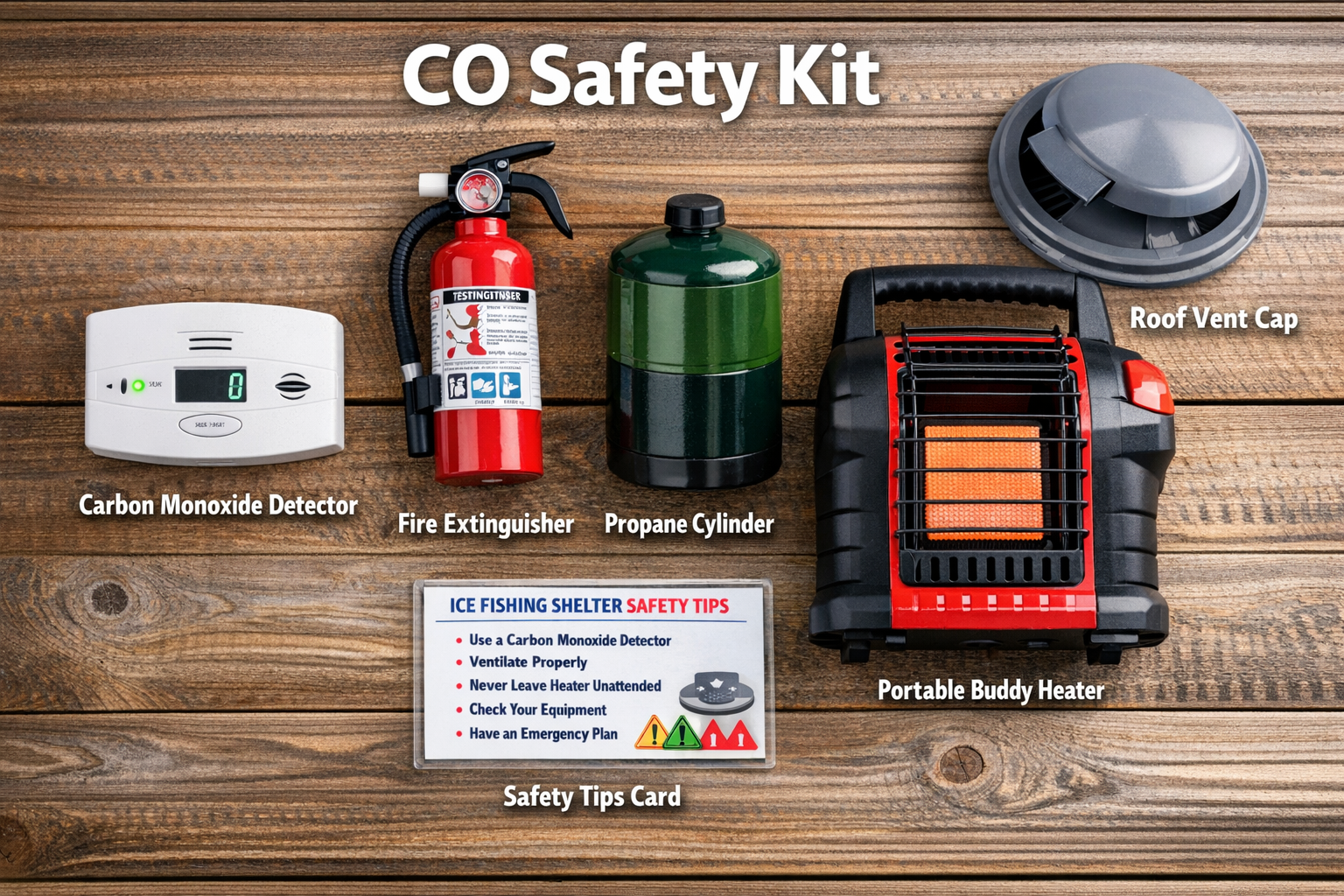
Install a battery-powered carbon monoxide detector at seated head height before you light any heater. This is the single most important safety step. The Minnesota DNR warns that low-oxygen shutoff devices on portable heaters do not detect CO and should not be treated as CO detectors.
CO is odorless and colorless. In an enclosed 425-cubic-foot shelter, dangerous levels build fast if ventilation is blocked.
Safety checklist for heating the Otter Vortex Pro Monster Cabin:
- Mount a CO detector rated for enclosed spaces at head height (not on the floor, where CO concentrations lag).
- Open at least two vents before lighting the heater. Never run a combustion heater in a fully sealed shelter.
- Keep 1-pound propane cylinders inside the shelter. Store 20-pound bulk tanks outside and run a hose through a vent opening.
- Position the heater on a stable, flat surface away from fabric walls. Maintain at least 18 inches of clearance from any shelter material.
- Bring a small fire extinguisher rated for Class B (flammable liquid/gas) fires.
- If the CO alarm sounds, shut off the heater immediately, open all vents and the door, and exit the shelter.
- Never sleep in the shelter with a heater running.
No new regulations targeting portable ice shelter heaters have been issued in early 2026. The governing framework remains the Minnesota DNR's existing CO safety guidance, which applies to all enclosed ice shelters including the Monster Cabin.
Decision rule: If you fish alone, a Portable Buddy on low with two vents cracked is the safest setup. If you fish with a full crew of five to seven, run a Big Buddy on medium with three or four vents open and check the CO detector every 30 minutes.
Learn more about the team and philosophy behind FishOnYak's safety-first approach on the About page.
Propane vs. Diesel vs. Wood: Which Heater Type Fits the Monster Cabin Best?
Propane Buddy-style heaters dominate ice fishing shelters for good reasons: they are simple, affordable, indoor-rated, and produce instant heat. For the Monster Cabin, propane is the default recommendation.
Comparison of heater types for the Monster Cabin:
| Feature | Propane (Buddy) | Diesel Air Heater | Wood Stove |
|---|---|---|---|
| BTU range | 4,000 to 18,000 | 17,000 to 27,000 [2][8] | Variable |
| Moisture output | High (wet heat) | Low (vented outside) | Low (vented outside) |
| CO risk inside | Moderate (needs venting) | Low (exhaust piped out) | Low (exhaust piped out) |
| Setup complexity | Low | Medium (12V battery, fuel tank, exhaust pipe) | High (stove jack, shielding, chimney) |
| Cost | $75 to $150 | $150 to $400 | $200 to $500+ |
| Monster Cabin compatible? | Yes, out of the box | Yes, with exhaust routing | Requires stove jack modification |
Choose propane if you want the simplest, most portable setup and you commit to active ventilation and a CO detector.
Choose a diesel air heater if condensation is your primary concern. Diesel heaters pipe exhaust outside, so they add zero combustion moisture to the interior. The tradeoff is a 12V battery requirement and more setup time. Be cautious of inflated BTU claims from some diesel heater brands. A 5 kW diesel heater outputs roughly 17,000 BTU per hour, which is more than enough for the Monster Cabin.
Choose a wood stove if you want the driest heat and are willing to modify the shelter with a stove jack. This is the most complex option and requires fire-resistant shielding around the jack.
For more content on tactical gear decisions and fishing strategy, visit the FishOnYak blog.
How Much Fuel Should You Bring for a Full Day?
Plan for 8 to 10 hours on the ice. A Portable Buddy on high (9,000 BTU) burns about 1 pound of propane per hour. A standard 1-pound cylinder lasts roughly one hour at full output. For a full day, bring 8 to 10 one-pound cylinders or connect a 20-pound bulk tank (which holds about 20 hours of run time at 9,000 BTU).
Fuel planning for the Monster Cabin:
| Heater Setting | BTU Output | Fuel Consumption | 10-Hour Supply |
|---|---|---|---|
| Portable Buddy low | 4,000 | ~0.5 lb/hr | 5 lbs (five 1-lb cylinders) |
| Portable Buddy high | 9,000 | ~1.0 lb/hr | 10 lbs (ten 1-lb cylinders or one 20-lb tank) |
| Big Buddy medium | 9,000 | ~1.0 lb/hr | 10 lbs |
| Big Buddy high | 18,000 | ~1.5 lb/hr | 15 lbs (one 20-lb tank) |
Practical tip: You will not run the heater at full blast all day. Once the Monster Cabin's insulated walls warm up, drop to low and cycle as needed. Most anglers use 5 to 7 pounds of propane for a 10-hour day in moderate cold.
Keep bulk propane tanks outside the shelter and run an approved hose through a vent opening. This reduces fire risk and frees up interior space.
What Are the Most Common Mistakes When Heating a Hub Shelter?
- Sealing all vents to “trap heat.” This causes CO buildup and severe condensation. You lose more comfort to dripping water than you gain from the extra few degrees.
- Oversizing the heater. Running 18,000 BTU in a 425-cubic-foot insulated shelter turns the space into a sauna. You burn fuel fast, dump moisture, and still end up opening vents to cool down.
- Placing the heater against a wall. Fabric scorching is a real risk. Maintain 18 inches of clearance minimum.
- Skipping the CO detector. The heater's tip-over shutoff and low-oxygen sensor do not measure CO. A $25 battery CO detector is cheap insurance.
- Ignoring condensation on electronics. Water dripping onto a fish finder screen or into a reel drag system causes damage over a season. Wipe gear regularly and position sensitive electronics away from the ceiling peak where drips concentrate.
Check out FishOnYak's services for coaching on gear protection and ice fishing preparation.
Dialing In Heat and Ventilation in the Otter Vortex Pro Monster Cabin: A Quick-Reference Checklist
Print this and keep a copy in your shelter bag.
- Set up the Monster Cabin and stake all corners.
- Open two opposing vents 3 to 4 inches.
- Place the CO detector at seated head height and turn it on.
- Position the heater in the center of the shelter with 18 inches of clearance from walls.
- Light the heater on the lowest setting.
- Wait 10 minutes. Check for condensation on the ceiling.
- Adjust vents wider if moisture appears. Increase heater output only after ventilation is stable.
- Check the CO detector every 30 minutes.
- Wipe down electronics hourly.
- Shut off the heater and open all vents before packing up.
FAQ
How many BTUs do I need for the Otter Vortex Pro Monster Cabin? For most conditions (0F to 20F outside), 9,000 BTU from a Portable Buddy or Big Buddy on medium keeps the shelter comfortable. Drop to 4,000 BTU on milder days above 20F.
Does the THERMALTEC insulation eliminate condensation? No. The triple-layer 600D fabric reduces condensation compared to single-layer shelters, but any combustion heater (especially propane) adds moisture to the air that will condense without active ventilation.
Where should I place my CO detector in the Monster Cabin? Mount the detector at seated head height, roughly 3 to 4 feet off the ice. CO mixes with air at roughly the same density, so head height gives the most relevant reading for your breathing zone.
Is a diesel air heater better than propane for the Monster Cabin? Diesel heaters produce drier heat because exhaust vents outside, reducing condensation. They need a 12V battery and more setup time. For anglers who prioritize low condensation, diesel is a strong option.
How many propane cylinders do I need for a full day? Plan for 8 to 10 one-pound cylinders if running a Portable Buddy on high, or connect a single 20-pound bulk tank stored outside the shelter.
Should I keep the 20-pound propane tank inside the shelter? No. The Minnesota DNR recommends keeping large propane cylinders outside and running an approved hose through a vent opening.
What temperature should I target inside the Monster Cabin? Aim for 50F to 65F interior. This keeps you comfortable without excessive moisture production or fuel waste. Going above 70F in an enclosed shelter dramatically increases condensation.
Do I need a vent open if my heater has a low-oxygen shutoff? Yes. The low-oxygen shutoff does not detect CO. You need open vents for fresh air exchange regardless of the heater's built-in safety features.
What causes the most condensation dripping in hub shelters? Running a propane heater on high with all vents closed. Propane combustion adds water vapor directly to the air. Without ventilation, that moisture condenses on every cold surface.
How do I protect my fish finder from condensation? Position the unit away from the ceiling peak where drips concentrate. Wipe the screen with a microfiber cloth every 30 to 60 minutes. Consider a waterproof case or cover when the unit is not in active use.
Kayak. Drill. Catch. Repeat. For more tactical angling content and tournament-ready guidance, visit FishOnYak.com.
See you on the water.
References
[1] Otter Vortex Pro Monster Cabin Thermal Hub Ice House – https://www.glensoutdoors.com/otter-vortex-pro-monster-cabin-thermal-hub-ice-house.html [2] Btu Calculator – https://thermdynamics.com/btu-calculator/ [3] Best Heaters Anglers Trust For Their Ice Fishing Shelters – https://www.fishingduo.com/best-heaters-anglers-trust-for-their-ice-fishing-shelters/ [4] Watch – https://www.youtube.com/watch?v=v3VESclAv0c [6] Carbon Monoxide Poisoning Ice Shelters – https://www.dnr.state.mn.us/safety/ice/carbon-monoxide-poisoning-ice-shelters.html [7] Otter Outdoors Vortex Pro Monster Cabin 201742 – https://rpmoutdoors.ca/products/otter-outdoors-vortex-pro-monster-cabin-201742 [8] Watch – https://www.youtube.com/watch?v=gUsLqdDIdA4 [9] 156051 Hub Shelter Condensation Problems – https://hotspotoutdoors.com/forums/topic/156051-hub-shelter-condensation-problems/