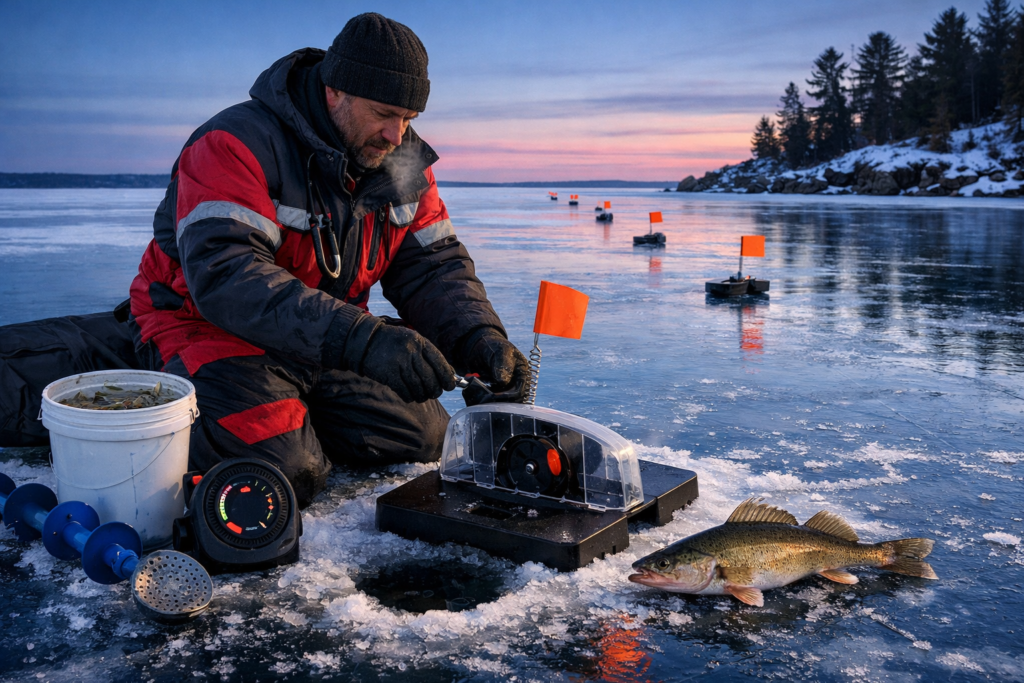
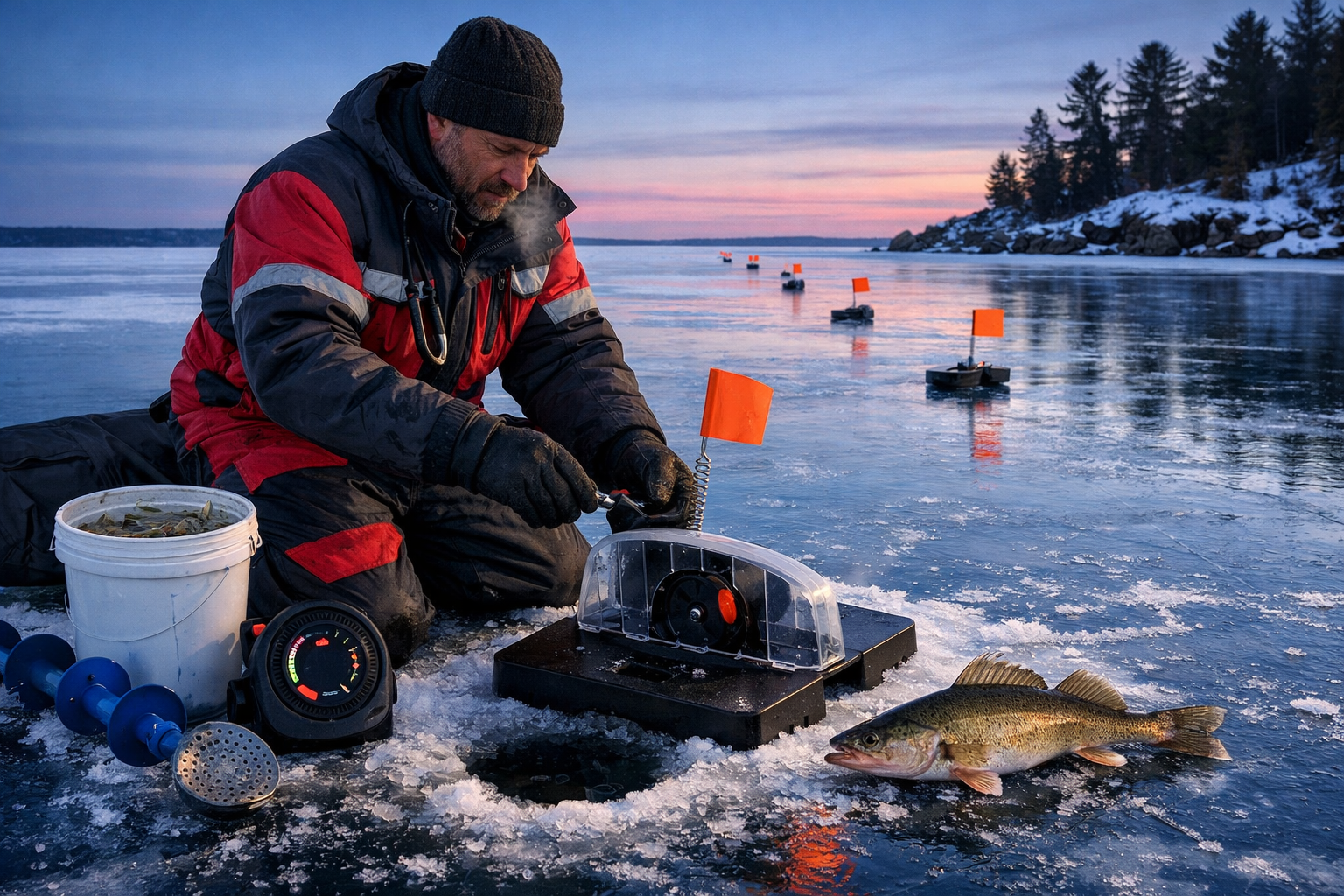
First ice changes the whole lake. Walleyes slide shallow, bait tightens up, and every flag feels like a shot at your best fish of the season. A strong Diy ice fishing walleye tip up setup gives you reach, stealth, and repeatable depth control, which is why I keep tip-ups in play every early-ice trip.
At FishOnYak.com, we treat hardwater the same way we treat saltwater rigging. Build with purpose. Fish with discipline. Stay safe. Kayak. Drill. Catch. Repeat.
Key Takeaways
- Use a simple, repeatable rig with braid, a fluorocarbon leader, split shot, and live bait to match how walleyes feed.
- Set tip-ups in a shallow-to-deep line or along key contour edges during early ice to cover active fish lanes.
- Mark depth on your line with a float or depth marker so every reset stays fast and exact.
- Choose ice-blocking tip-ups that cover the hole to reduce freeze-up and block light.
- Carry safety gear first. Check the ice, wear flotation, and fish first safe ice with a plan.
Why a Diy ice fishing walleye tip up setup works so well on first ice
First ice creates short feeding windows and tight travel routes. Walleyes often push onto flats, weed edges, and breaks in low light. Your job is simple. Put live bait in those lanes and keep that bait at the right depth.
A good tip-up for walleye does three things well:
- Holds exact depth
- Presents bait with low resistance
- Lets you fish more water than one jig alone
I still carry a jig rod in one hand and a fishing rod rigged for hole-hopping in the sled. But when I want an effective walleye spread, I start by setting up a tip-up system. One active jigging hole calls fish. The nearby tip-ups seal the deal.
“The best rig for walleyes is the one you reset fast, fish clean, and trust in low light.”
For a detailed breakdown of line choices and terminal tackle, see this complete guide on how to set up tip-up line for walleye ice fishing.
The core rig that matches how walleyes feed
You need a rig that matches how walleyes feed. They often inspect bait before they commit. That means your tip-up rig should stay clean and light.
Here is my standard rig for walleyes:
| Component | Best Choice | Why it matters |
|---|---|---|
| Main line | 20-30 lb braided line | Resists coil memory, handles cold, easy to grab by hand |
| Leader | 4-6 ft, 10-12 lb fluorocarbon leader | Low visibility for clear ice and pressured fish |
| Weight | 1 small split shot, 6 inches to 18 inches above hook | Keeps bait down without killing action |
| Hook | #6 to #10 treble hook or single live bait hook | Small profile fits shiner, sucker, or minnow |
| Bait | Shiner, small sucker, or lively minnow | Natural movement pulls bites |
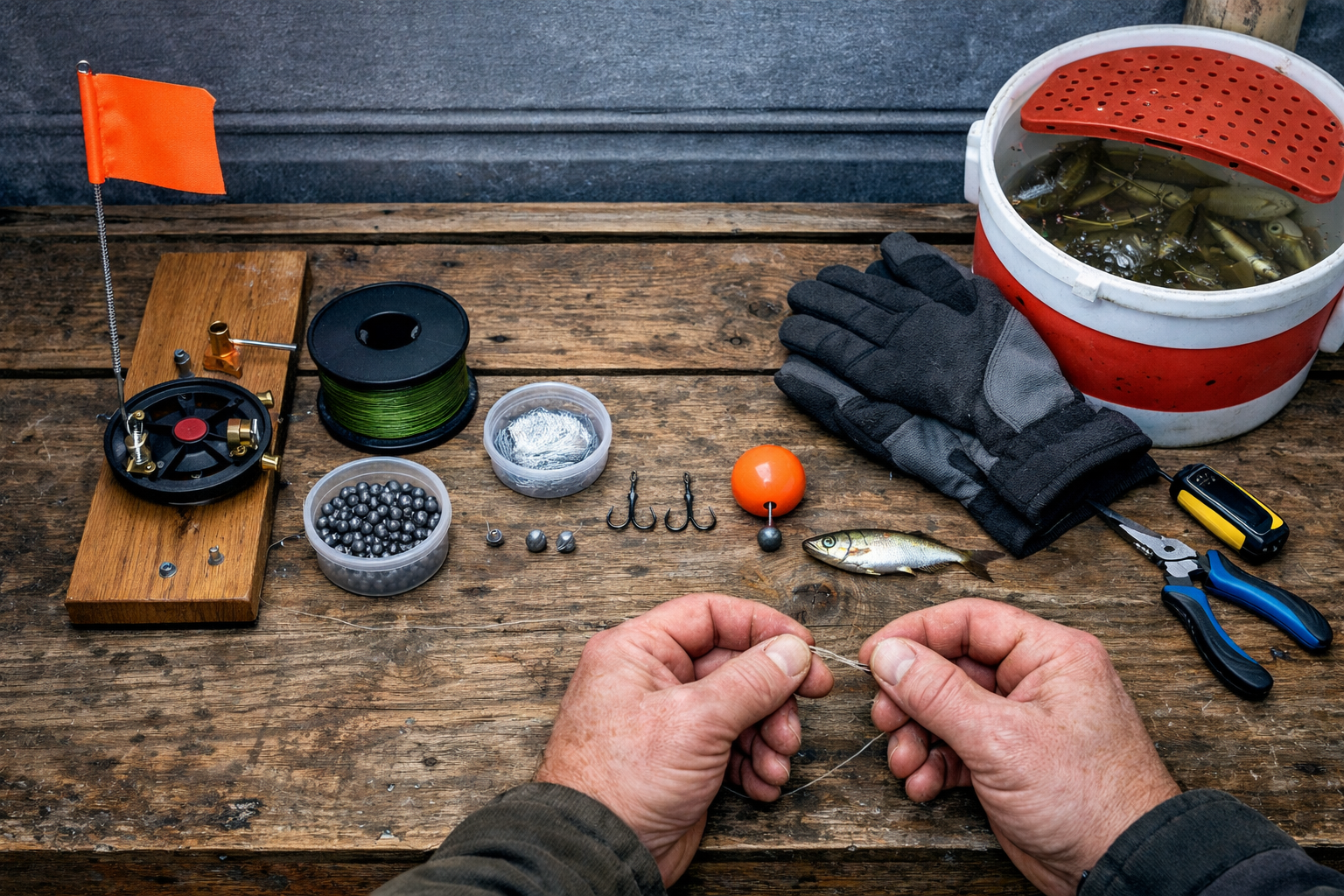
This line for walleye ice fishing keeps bait active without adding too much hardware. I like braid on the spool because it handles cold well and gives a clean hand-line feel. I tie the braid to the fluorocarbon leader with a small swivel or a low-profile knot. Then I add one split shot above the hook.
Some anglers run a quick-strike rig. I reserve that more for fishing for pike or oversized bait. For standard walleye fishing, a lighter single-hook or treble presentation often stays cleaner.
Best bait choices for first ice walleye
Bait matters. A lively shiner gets attention fast. A small sucker holds up well in cold water. A medium minnow fits neutral fish.
Recent field reports highlighted live walleye suckers as a top producer during January trips. Still, local forage should guide your pick. If your lake has perch and shiner forage, match that size and shape.
My usual order:
- Shiner for clear, shallow water
- Sucker for bigger walleyes
- Fathead minnow when fish want a smaller meal
- Perch head or dead bait only if live bait stalls
Set your bait through the back, just behind the dorsal, or lightly through the lips when you want a nose-down posture. Set the bait so it swims, not spins.
Building the Diy ice fishing walleye tip up setup step by step
Setting up a tip-up should feel simple in the dark with gloves on. That is the standard. If your system takes too long to reset, you lose bites during a prime window.
Step 1: Spool the tip-up line right
Use 20 to 30 yards of braid as your main line. That gives enough room for shallow flats and deeper water edges. Your tip-up line should pack tightly on the spool so it feeds smooth on the strike.
Then add:
- Small barrel swivel
- 4 to 6 feet of fluorocarbon leader
- One split shot
- Hook sized to your bait
This is a solid walleye tip-up setup for most northern lakes. If pike are mixed in, keep spare leaders in your pocket. Modern rigging systems let you swap leaders fast when you switch from tip-ups for walleye to tactics for pike.
Step 2: Add a depth marker
Depth control wins. Northern Ontario anglers have long used small floats on the main line as a depth marking system. Recent videos also show a depth bomb clipped to one point of a treble hook to mark repeat depth fast across several holes.
You have two good options:
- Small foam float pegged on the line at surface level
- Clip-on depth marker used after you touch bottom
This is how I set up tip-up line for repeat depth:
- Drop the bait to bottom.
- Pull up to your target zone.
- Mark that point on the line.
- Move to the next hole.
- Repeat the same lead every time.
That one move saves time and sharpens your whole spread.
Step 3: Pick the right tip-up body
I prefer modern ice fishing tip ups that cover the hole. Those models block light and slow freeze-up, which improves bait presentation and keeps the spool working longer.[2] Stackable designs also ride clean in a bucket and cut down on tangles.
Beaver Dam tip-ups remain a common choice, and anglers have paired them with brighter aftermarket flags for better visibility in snow and flat light.
Step 4: Set depth for walleye
For first ice, I usually set the bait:
- 6 inches to 18 inches off bottom on soft flats
- 1 to 3 feet above weeds
- Slightly above fish marks on a break
If fish roam a hard-to-soft transition in 8 to 12 feet of water, I start one tip-up close to bottom, one higher, and one on the edge. If walleyes suspend over deeper water, I adjust fast.
For more early-season positioning ideas, read Mastering Tip-Up Setups For First Ice Walleye.
Diy ice fishing walleye tip up setup patterns that find fish faster
A clean rig is only half the job. Placement matters more.
Shallow-to-deep formation for first ice
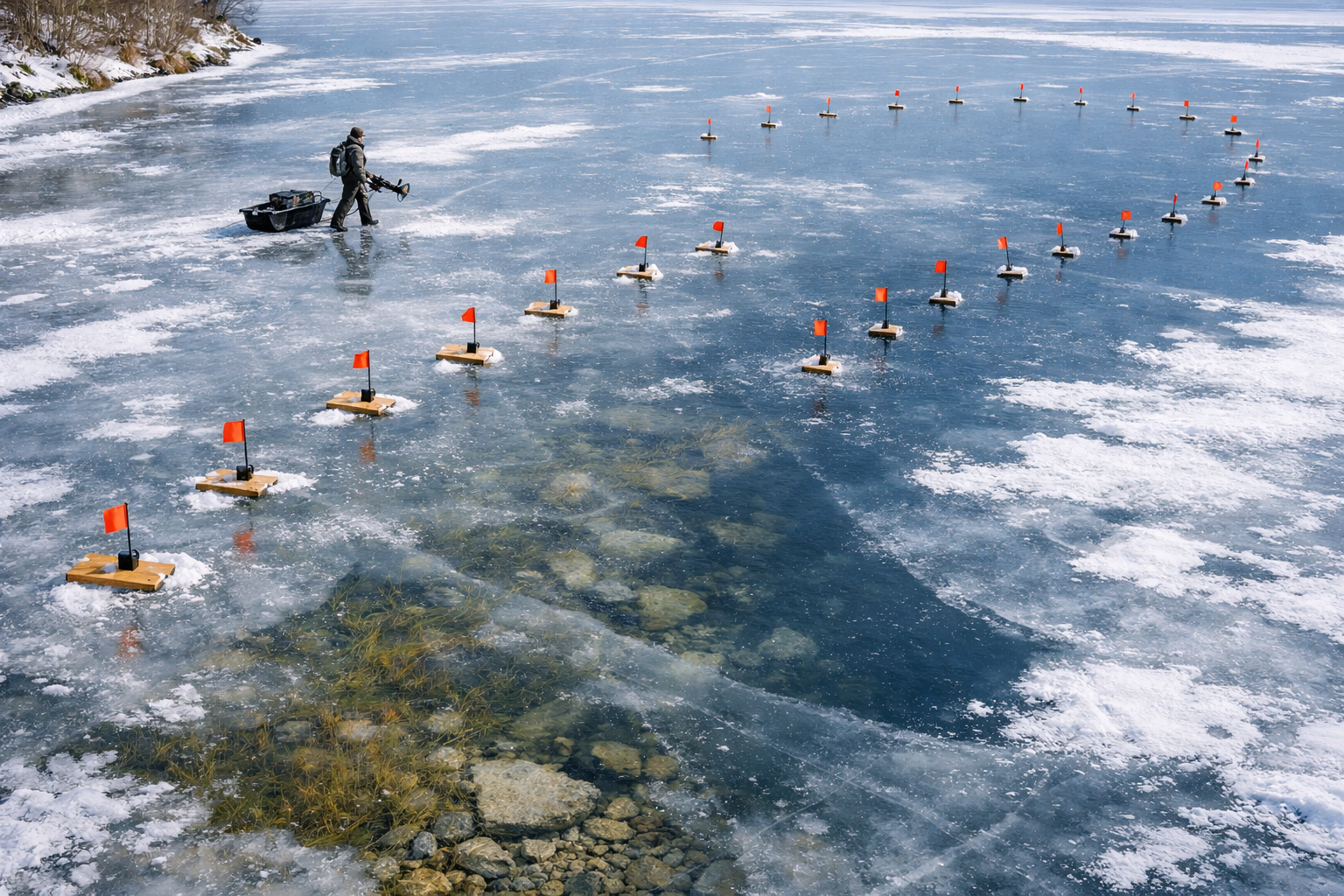
This is one of the best ice fishing patterns when fish slide between a shoreline flat and a nearby break. Drill your first hole at the shallowest fishable water, often 3 to 5 feet, then keep drilling in a straight line into deeper water. Space holes so each bait fishes about 12 to 24 inches deeper than the one before it.
This setup helps you fish through the ice with purpose. You are not guessing. You are mapping a feeding lane.
Use this pattern around:
- Sand-to-weed edges
- Rock points
- Inside turns
- Small saddles
This is a strong setup for scattered walleyes on early ice.
Spread-the-edge contour setup
If the lake has a contour edge about 50 yards from shore where 10 to 20 feet of water drops toward 6 to 7 feet or less, set your tip-ups along that break. Drill alternating holes about 30 feet apart and vary bait size and placement.
I like this tip-up spread when fishing walleye near evening. The edge concentrates travel. One side often fires first. Once that pattern shows up, move the rest.
3-2-3 pattern on multiple structures
The 3-2-3 pattern is simple and smart. Drill three holes over your top area, two on the fringe where the depth changes, and three more on a nearby area with similar features.
This pattern helps if you are between:
- Weed bed and rock
- Flat and lip
- Main basin edge and perch flat
If one side starts producing bigger walleyes, slide your set tip-ups that way.
How many tip ups should you use?
Follow your local regulations. In many places, one tip-up is legal. In others, you can run several. If your state allows multiple lines, spread them with a purpose. Do not cluster all of them in one small patch unless active fish force that move.
A good beginner rule:
- One active jig hole
- Two to four tip-ups on likely travel lanes
That gives enough water coverage without turning the day into line management.
Fishing with tip-ups: strike response, hook-up timing, and bait control
Flags pop fast at first ice. The fish often move with confidence. Your response should stay calm and repeatable.
What to do when the flag trips
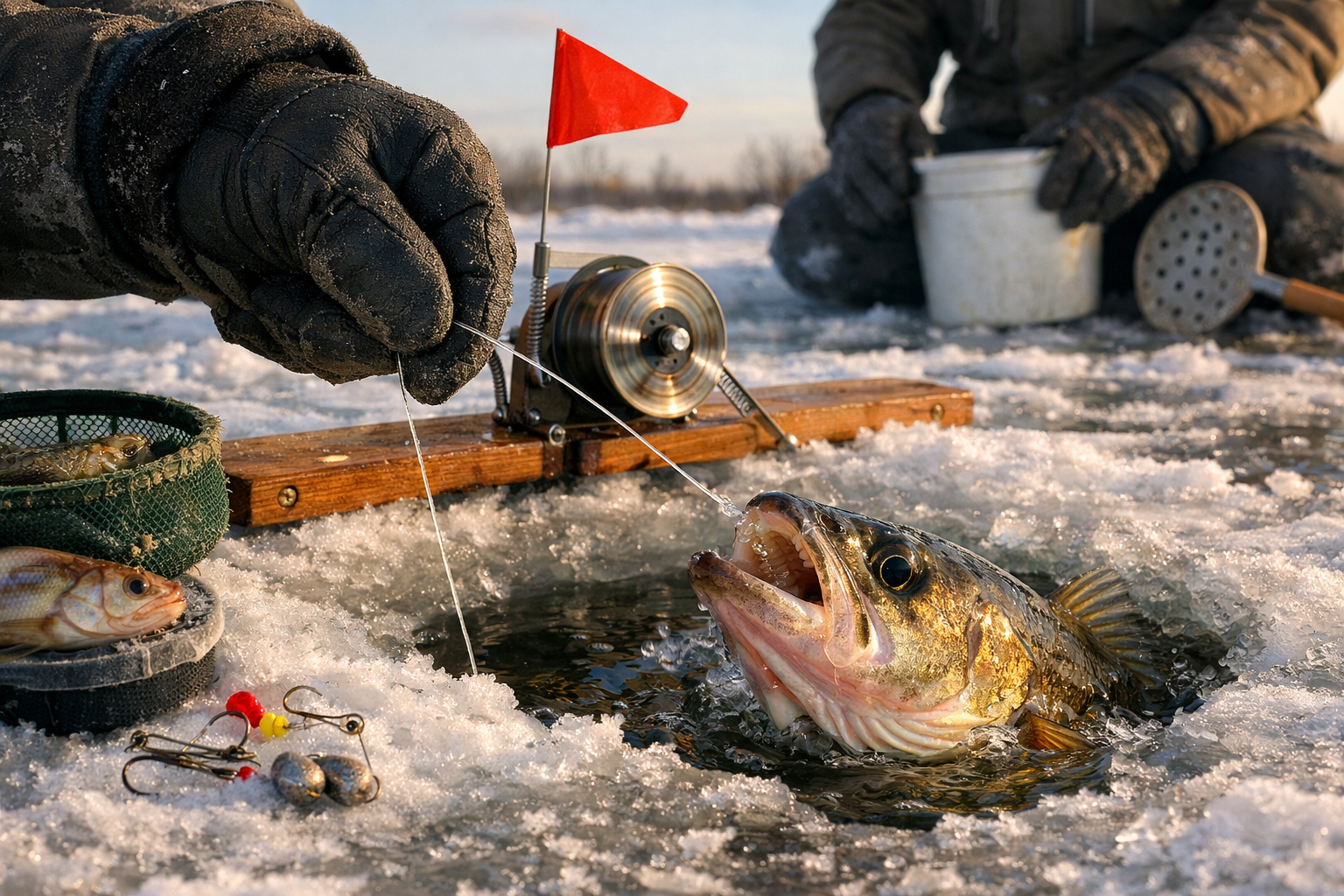
Walk up quietly. Look at the spool.
- If the spool spins, the fish is moving
- If it stops, wait a beat and check again
- If the line hangs still, lift steady and feel for weight
With a treble hook and live bait, many anglers set the hook after the fish takes and turns. With a single hook, I prefer a firm sweep once I feel steady pressure. This is one place where your hook style matters.
Bait size and control
Match bait to water clarity, pressure, and forage.
Use smaller bait when:
- Water is clear
- Fish inspect the bait
- You are in shallow flats
- Midday bites get tough
Use larger bait when:
- You want best walleye size, not numbers
- You are targeting bigger walleyes at dusk
- Pike are present and you want a more durable bait
If bait spins, your rig is wrong. Reset the hook placement. Reduce weight. Check if the minnow is weak.
Pair tip-ups with electronics the smart way
A sonar flasher helps with set depth and bait checks. An underwater camera setup helps with weed height, bottom type, and fish behavior. If you want to refine a camera setup guide for ice fishing, FishOnYak has a strong wireless underwater camera setup guide for ice fishing.
I use a camera setup when I need answers fast:
- How high are the weeds?
- Are perch stealing bait?
- Are walleyes coming in and fading away?
- Is my bait too high or low?
That turns random drilling into Tactical Angling.
Safety, organization, and first-ice mistakes to avoid
FishOnYak.com pushes Fluid Safety in every season. Hardwater demands the same discipline. Early ice gives up big fish, but only if you respect conditions.
Safety protocol for first safe ice
Before anything else:
- Check the ice with a spud bar
- Watch ice thickness at every move
- Focus on clear ice, not snow ice
- Wear ice picks around your neck
- Fish with a partner
- Carry a throw rope
- Wear flotation or a float suit
For cold-weather clothing systems, start with our professional ice fishing float suit setup for mobile anglers and best ice fishing float suit 2026. Good gear keeps you mobile and sharp.
You should also keep gloves dry and dexterous. See our best ice fishing gloves for 2026 if your hands struggle on resets.
Common mistakes that cost fish
Here are the errors I see most:
- Setting bait on bottom instead of above it
- Using oversized hooks with small minnow bait
- Ignoring light penetration in shallow water
- Failing to mark depth and wasting time on each reset
- Spreading lines too wide with no relation to structure
- Fishing one depth all day
- Letting holes freeze and bind the spool
Smart organization for mobile anglers
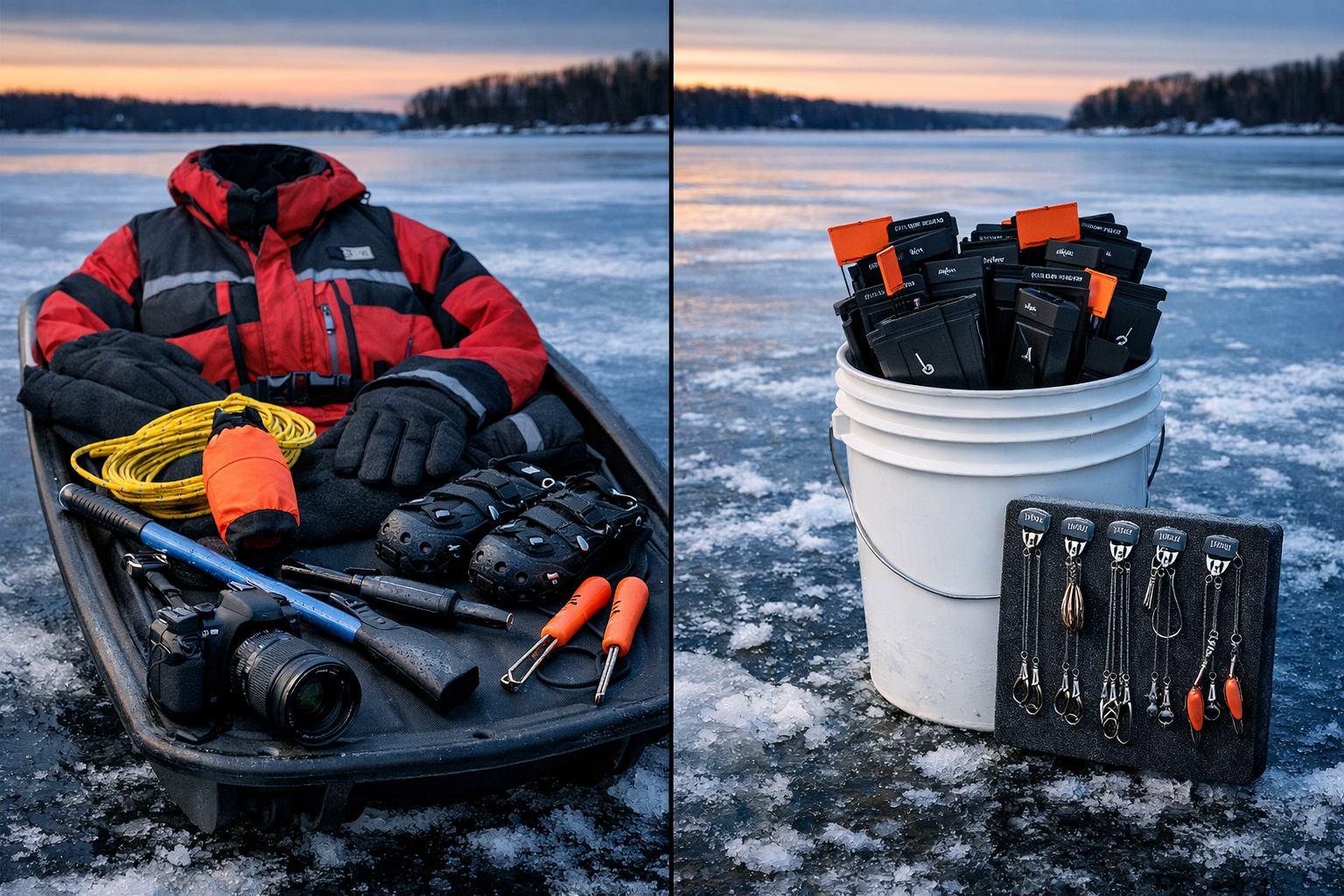
I keep each tip-up stored with leader wrapped clean and hooks pinned safe. Ice-covering models stack well in a five-gallon pail. That matters when you move a lot.
My sled loadout stays simple:
- Tip-ups in bucket
- Bait in insulated pail
- Skimmer
- Pliers
- Spare fluorocarbon leader rolls
- Split shot and hooks
- Headlamp
- Ice picks
- Small towel
- Thermos
If I plan to keep fish, I also think ahead about care. Our guide on how to keep a fish fresh after catching covers clean handling.
Conclusion
A Diy ice fishing walleye tip up setup does not need a pile of hardware. It needs clean rigging, exact depth control, and smart placement over fish travel lanes. Start with braid, add a fluorocarbon leader, set one split shot above the hook, and fish lively bait. Then place your tip-ups along a shallow-to-deep line, a contour edge, or a 3-2-3 spread based on the structure in front of you.
Your next steps are simple:
- Build two or three identical rigs at home.
- Add a depth marker system before you hit the lake.
- Start on first safe ice near weeds, points, and breaks.
- Adjust bait height until one depth wins.
- Keep safety gear on your body, not buried in the sled.
DIY Ice Fishing Walleye Tip-Up Setup Selector
DIY Ice Fishing Walleye Tip-Up Setup Selector
Choose your conditions. Get a fast starting plan for depth, bait, and spread on first ice.
Your Conditions
How this helps
Fast starting point
- Suggests a spread pattern
- Recommends bait size
- Sets starting bait height
- Adjusts leader advice if pike are mixed in
- Gives a clean, field-ready first move
Recommended setup
Select your conditions and click the button.
That is Rigging Mastery. That is Tournament-Ready discipline. See you on the water.
References
[1] 3 Tip Up Setups To Catch More Fish Through The Ice – https://www.themeateater.com/fish/ice-fishing/3-tip-up-setups-to-catch-more-fish-through-the-ice
[2] Fine Tuning Tip Ups Target Walleye Pike And Trout Winter – https://northernontario.travel/algoma-country/fine-tuning-tip-ups-target-walleye-pike-and-trout-winter
[3] Watch – https://www.youtube.com/watch?v=l9rv_neSlCM