Last updated: February 24, 2026
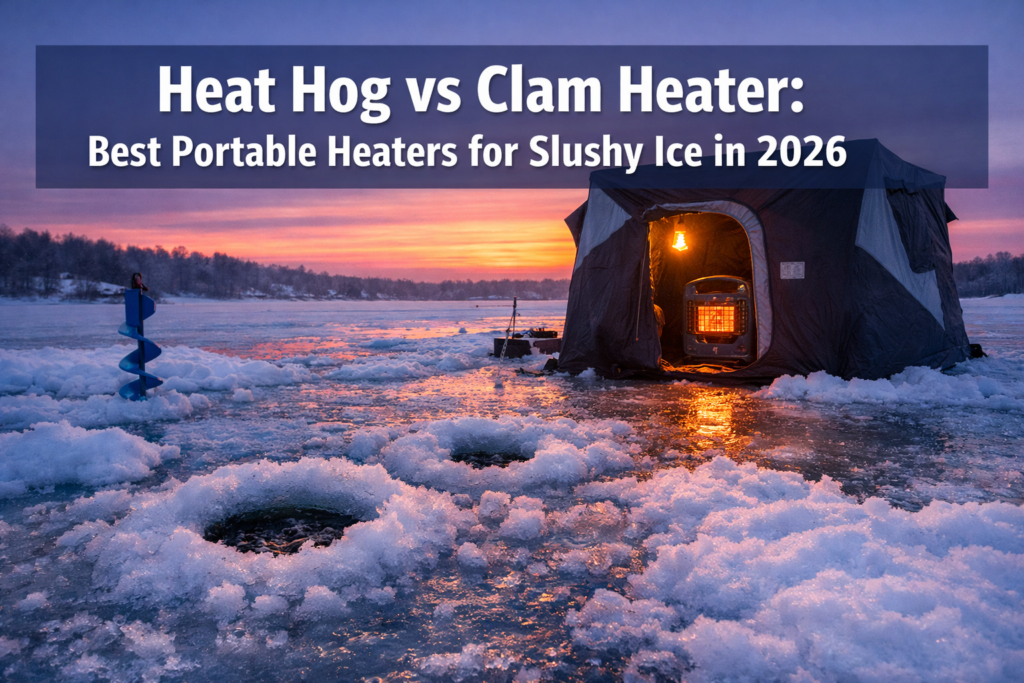
When you're fishing 8 to 12 inches of slushy ice, your heater choice directly affects whether you stay comfortable or spend the day fighting puddles and cold feet. The Heat Hog and Clam Heater Showdown: Best Portable Heaters for Slushy 8-12 Inch Ice in 2026 comes down to one core question: do you need directional heat control to avoid melting through soft ice, or do you need variable BTU output for all-day fuel efficiency in a hub shelter? Both brands solve different problems.
This guide breaks down fuel use, setup speed, safety features, and real-world performance on snow-covered low spots so you pick the right heater for your setup.
Key Takeaways
- Heat Hog's patented tilt feature lets you angle heat upward and away from slushy ice, reducing melt-through risk in 8 to 12 inch conditions.
- Clam's CH-16000VH offers variable BTU output (6,000 to 16,000), giving you precise temperature control and better fuel economy during long sessions.
- Heat Hog runs lighter and sets up faster, making it the better pick for mobile anglers who move between spots on soft ice.
- Clam heaters pair well with Clam hub shelters, and the CH-16000VH heats spaces up to 400 square feet.
- Heat Hog lacks a thermal shut-off safety feature, which matters in enclosed shelters with limited ventilation.
- The Clam CH-4200 works for solo flip-up shelters but underpowers larger setups on slushy ice.
- For snow-covered low spots, fuel efficiency and setup speed matter more than raw BTU output.
- Mr. Heater Big Buddy remains a strong alternative if safety features outweigh tilt functionality for your needs.
Quick Answer
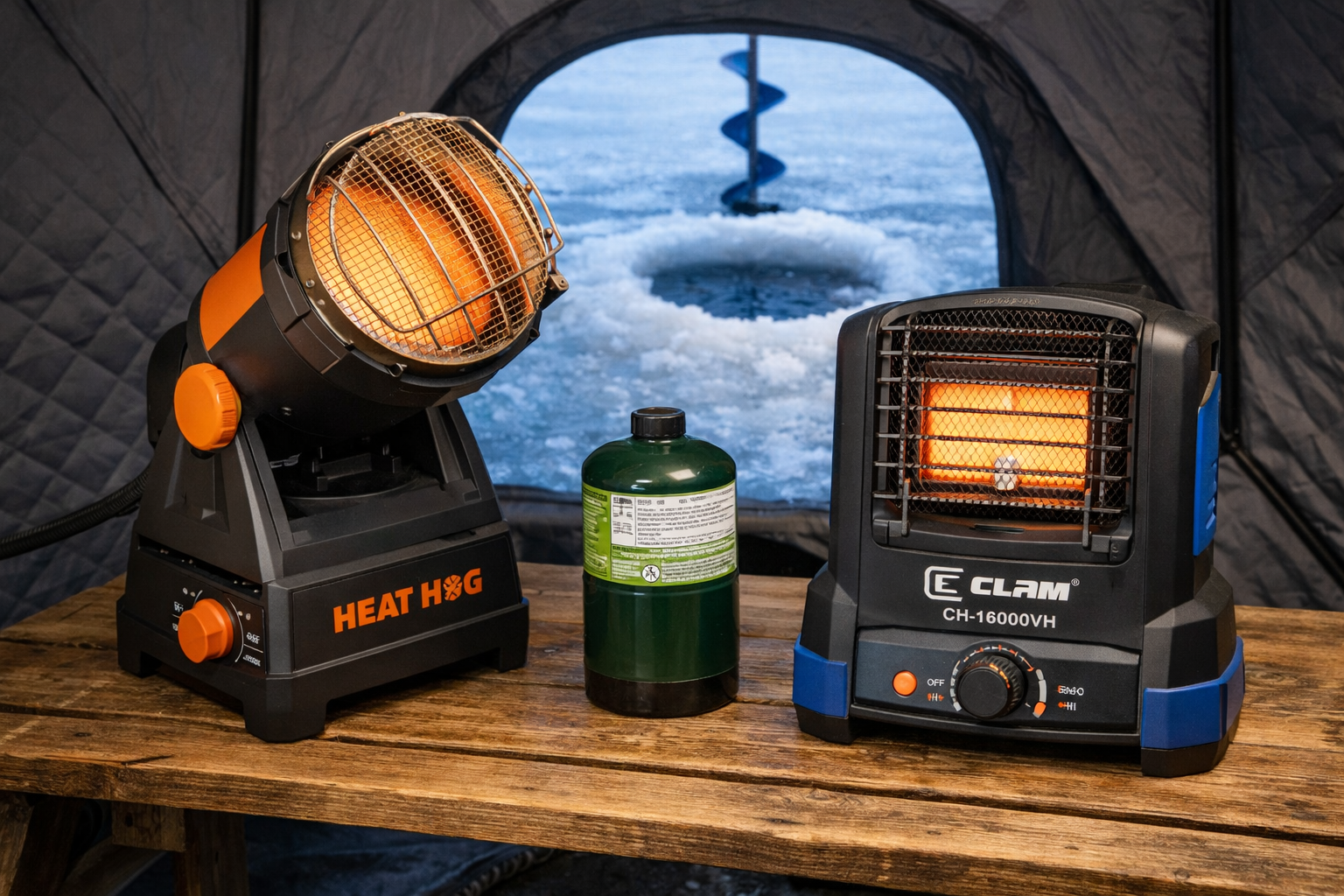
For slushy 8 to 12 inch ice in 2026, choose the Heat Hog 18,000 BTU if you need directional heat that angles away from soft ice surfaces. Choose the Clam CH-16000VH if you fish from a hub shelter and want adjustable output for all-day comfort without burning through propane. Both outperform in their specific use cases, but neither is a universal winner.
Why Does Slushy 8 to 12 Inch Ice Change Your Heater Requirements?
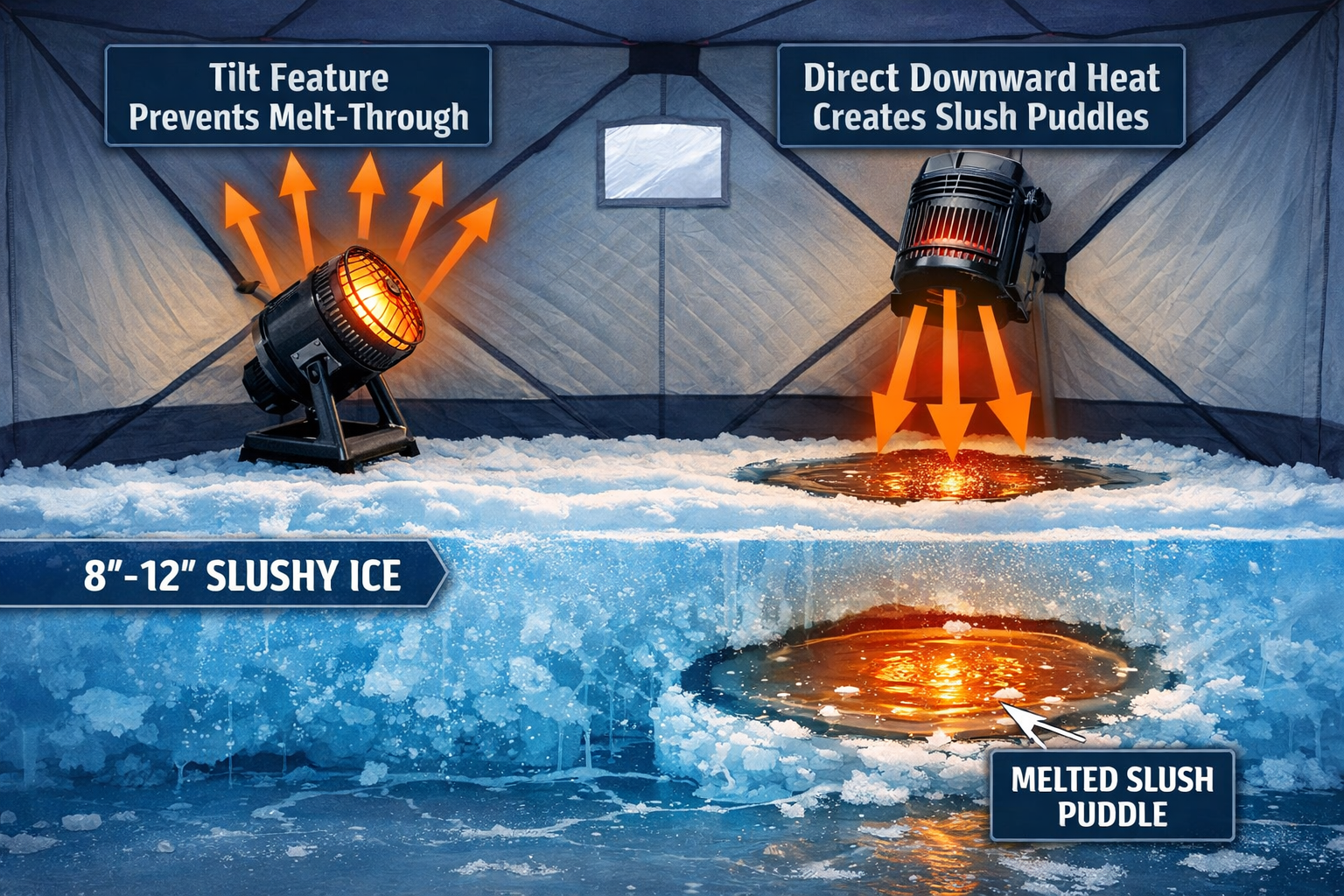
Standard ice heater advice assumes hard, thick ice. Slushy conditions between 8 and 12 inches create a different set of problems. Downward-facing radiant heat melts through soft ice faster, creating puddles inside your shelter. Those puddles weaken the ice surface directly under your setup.
Here is what changes on slushy ice:
- Heat directed straight down accelerates surface melt, especially in snow-covered low spots where water already pools.
- Thinner slushy ice (8 inches) has less structural margin, so you want to minimize any thermal impact on the surface.
- Wet conditions inside the shelter make gear management harder and increase the chance of slipping.
- Fuel consumption goes up because you're fighting moisture-laden cold air, which absorbs heat faster than dry cold.
The takeaway: your heater needs to warm the air inside the shelter without cooking the ice under your feet. This single requirement is what makes the Heat Hog vs. Clam comparison relevant for the 2026 season.
Heat Hog and Clam Heater Showdown: Best Portable Heaters for Slushy 8-12 Inch Ice in 2026, Feature by Feature
Here is a direct comparison of the two primary models that matter for slushy ice conditions.
| Feature | Heat Hog 18,000 BTU | Clam CH-16000VH |
|---|---|---|
| BTU Output | 18,000 (fixed settings) | 6,000 to 16,000 (variable) |
| Coverage Area | Up to 450 sq ft | Up to 400 sq ft |
| Weight | Lighter build (approx. 10 lbs) | Approx. 15 lbs |
| Tilt Feature | Yes, patented adjustable angle | No |
| Electronic Ignition | No (piezo) | Yes |
| Thermal Shut-Off | No | Yes |
| Fuel Compatibility | 1 lb or 20 lb propane | 1 lb or 20 lb propane |
| Best For | Mobile setups, slushy ice, targeted heat | Hub shelters, long sessions, variable conditions |
Choose the Heat Hog if you move between spots during the day and need a lighter heater that angles heat away from soft ice. The tilt feature, protected by U.S. patents issued in September 2024, lets you direct the radiant heat toward your upper body and shelter walls instead of the ice floor.
Choose the Clam CH-16000VH if you set up a hub shelter for an all-day session and want to dial in your heat output. Running at 6,000 BTU during mild stretches and ramping up to 16,000 BTU when temperatures drop saves propane and extends your fishing time.
A common mistake: buying the highest BTU heater available. On slushy ice, more heat often means more problems. Variable output gives you control.
How Does the Heat Hog Tilt Feature Perform on Slushy Ice?
The Heat Hog's tilt mechanism is the single feature that separates this heater from every competitor in the portable ice heater category. By angling the heating element upward, you redirect radiant energy toward the shelter canopy and your seating area. The ice surface below receives less direct heat.
Ice fishing content creators tested this in early 2025 on slushy conditions and confirmed that the tilt prevents the melt puddles that form under standard downward-facing heaters. On 8 to 12 inch slush, that difference matters. A puddle under your shelter weakens the ice and soaks your gear.
Here is how to get the most from the tilt feature:
- Set the heater on a stable, flat surface away from the edge of your auger holes.
- Angle the heat element upward at roughly 30 to 45 degrees.
- Position yourself so the radiant heat hits your torso and legs, not the ice floor.
- Keep the heater at least 18 inches from shelter walls and fabric.
- Monitor the ice surface under and around the heater every 30 minutes.
The downside: Heat Hog does not include a thermal shut-off. In an enclosed shelter, this is a safety gap. Pair the heater with a battery-operated carbon monoxide detector. No exceptions.
For more gear insights and tactical approaches to demanding conditions, check out the FishOnYak blog for updated guides.
How Does the Clam CH-16000VH Handle All-Day Sessions in Hub Shelters?
The Clam CH-16000VH is built for anglers who set up a hub shelter at dawn and fish until dark. Variable BTU output between 6,000 and 16,000 means you adjust heat based on conditions throughout the day.
Morning temperatures in the single digits demand higher output. By midday, when the sun warms the shelter fabric, you dial back to 6,000 BTU and conserve fuel. This approach stretches a 20-pound propane tank significantly compared to running a fixed-output heater at full blast.
On slushy ice, the Clam's lack of a tilt feature means you need to manage heat direction manually. Place the heater on an insulated pad or a small plywood square to create a barrier between the heat source and the ice surface. This simple step reduces melt-through.
The electronic ignition is a practical advantage in cold conditions. Gloved hands struggle with manual piezo igniters. One-button start gets you warm faster, especially when you're setting up in snow-covered low spots where wind and moisture make everything harder.
The Clam CH-16000VH pairs naturally with Clam's hub shelter lineup. The mounting points and dimensions align with their shelter designs, which reduces setup time. If you already run a Clam shelter, this heater fits into your system without modification.
For smaller setups, the Clam CH-4200 produces 4,200 BTU and covers about 105 square feet. This works for solo flip-up shelters on short trips. For slushy ice all-day sessions, the CH-4200 underpowers. Stick with the CH-16000VH or pair two CH-4200 units if weight is a concern.
What About Fuel Efficiency on Snow-Covered Low Spots?
Snow-covered low spots on the ice create unique heating challenges. These depressions trap cold air and moisture, making your shelter colder than surrounding areas. Your heater works harder, burns more fuel, and runs less efficiently.
Here is how fuel consumption compares in these conditions:
Heat Hog 18,000 BTU: Running at full output on a 1-pound propane canister, expect roughly 3 to 4 hours of runtime. On a 20-pound tank with a hose adapter, you get a full day. The fixed output means you burn propane at a constant rate regardless of conditions.
Clam CH-16000VH: Variable output extends runtime. At 6,000 BTU, a 1-pound canister lasts approximately 5 hours. At full 16,000 BTU, runtime drops to around 3 hours on the same canister. The ability to throttle back during warmer periods saves fuel over a full day.
Fuel efficiency tips for slushy ice:
- Bring one extra 1-pound canister for every 4 hours of planned fishing time.
- Use a 20-pound tank with a hose and adapter for sessions longer than 6 hours.
- Insulate the shelter floor with a foam pad or tarp to reduce heat loss into the ice.
- Close shelter vents partially (never fully) to retain warm air while maintaining ventilation.
- Pre-warm the shelter for 10 minutes before opening auger holes, which release cold air from below.
If you're the type of angler who takes pride in dialing in every detail of your setup, this kind of tactical fuel management separates a good day from a great one. Explore more about optimizing your approach on the FishOnYak services page.
Heat Hog and Clam Heater Showdown: Best Portable Heaters for Slushy 8-12 Inch Ice in 2026, Setup Speed Compared
Setup speed matters when you're standing on slushy ice in 15-degree wind. Every minute spent fumbling with gear is a minute you're losing body heat.
Heat Hog setup process:
- Remove heater from transport bag.
- Attach 1-pound propane canister (twist-on).
- Set heater on flat surface.
- Adjust tilt angle.
- Light with piezo igniter.
Total time: approximately 2 minutes.
Clam CH-16000VH setup process:
- Remove heater from transport bag (heavier at 15 lbs).
- Attach propane canister or connect hose to 20-pound tank.
- Position heater inside shelter.
- Press electronic ignition button.
- Adjust BTU dial to desired output.
Total time: approximately 3 minutes.
The Heat Hog wins on setup speed due to lighter weight and simpler operation. The Clam adds a minute because of the heavier unit and the BTU adjustment step. On stable ice, that extra minute means nothing. On slushy, shifting ice where you want to get inside a shelter fast, the Heat Hog's speed advantage is worth noting.
Edge case: If you're running a hose to a 20-pound tank, both heaters take roughly the same time. The hose connection adds 30 to 60 seconds regardless of brand.
Should You Consider Mr. Heater as an Alternative?
Yes, depending on your priorities. The Mr. Heater Big Buddy (18,000 BTU) and Portable Buddy (9,000 BTU) remain the most popular portable heaters among ice anglers for good reason.
Mr. Heater Big Buddy advantages over Heat Hog and Clam:
- Triple safety system: tip-over shut-off, low oxygen shut-off, and thermal shut-off.
- Built-in blower fan distributes heat more evenly across the shelter.
- Covers up to 450 square feet.
- Widely available replacement parts and accessories.
Mr. Heater Big Buddy disadvantages on slushy ice:
- No tilt feature. Heat radiates outward and downward, increasing melt-through risk on soft ice.
- Heavier than Heat Hog.
- Fixed heat settings (low, medium, high) with no true variable control like the Clam.
Choose Mr. Heater if safety is your top priority and you fish in enclosed shelters with limited ventilation. The triple safety system provides protection that neither Heat Hog nor Clam matches at the same price point.
Skip Mr. Heater if you specifically need directional heat control on slushy ice. The tilt feature on the Heat Hog solves a problem that Mr. Heater does not address.
For anglers new to ice fishing who want step-by-step guidance on gear selection and safety, the FishOnYak practice page offers resources to build your confidence before heading out.
What Safety Precautions Apply to Portable Heaters on Slushy Ice?
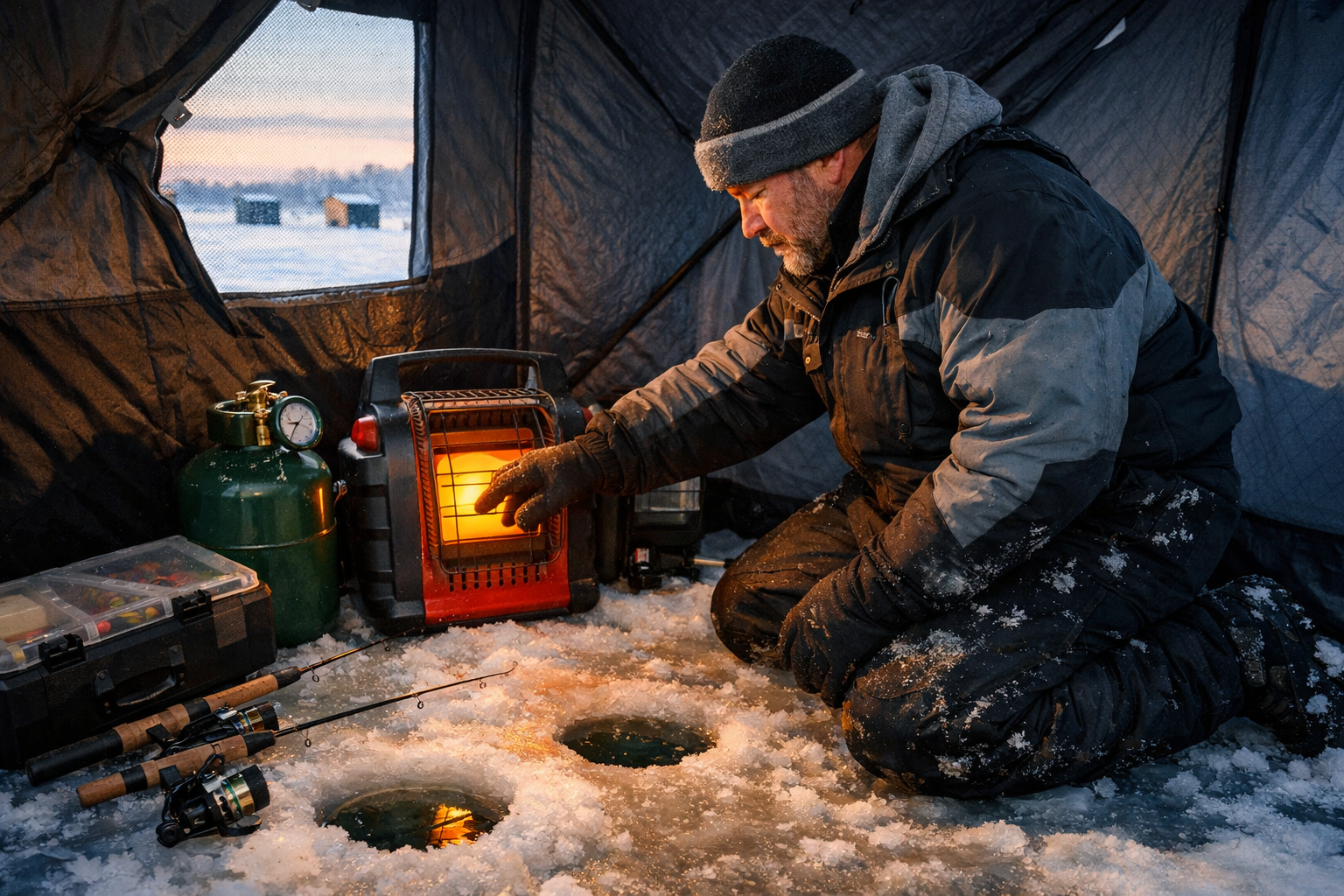
Running a propane heater inside an enclosed shelter on unstable ice demands attention to safety. No heater brand eliminates risk entirely.
Required safety gear for every ice shelter heater setup:
- Battery-operated carbon monoxide (CO) detector. Mount at head height inside the shelter.
- Fire extinguisher rated for propane fires (Class B). Keep within arm's reach.
- Ventilation opening. Never seal a shelter completely. Leave at least one vent or window cracked.
- Stable heater placement. Slushy ice shifts. Place the heater on a flat, rigid surface like a small plywood board.
- Propane leak check. Before igniting, smell for propane. Apply soapy water to connections and watch for bubbles.
Heat Hog safety gap: No thermal shut-off. If the heater overheats, you need to manually turn off the gas. This is a known limitation noted in independent reviews, including a November 2025 Car and Driver garage heater test.
Clam safety advantage: The CH-16000VH includes a thermal shut-off, adding a layer of automated protection.
Fluid Safety protocol for slushy conditions:
- Check ice thickness at your setup location and 10 feet in every direction before deploying a shelter.
- Monitor ice surface under the heater throughout the session.
- If you see standing water forming under the heater, reduce output or reposition.
- Never leave a heater running unattended inside a shelter.
Safety is non-negotiable. Review the FishOnYak about page for the team's approach to safety-first fishing practices.
How to Pair Your Heater with a Hub Shelter for Maximum Comfort
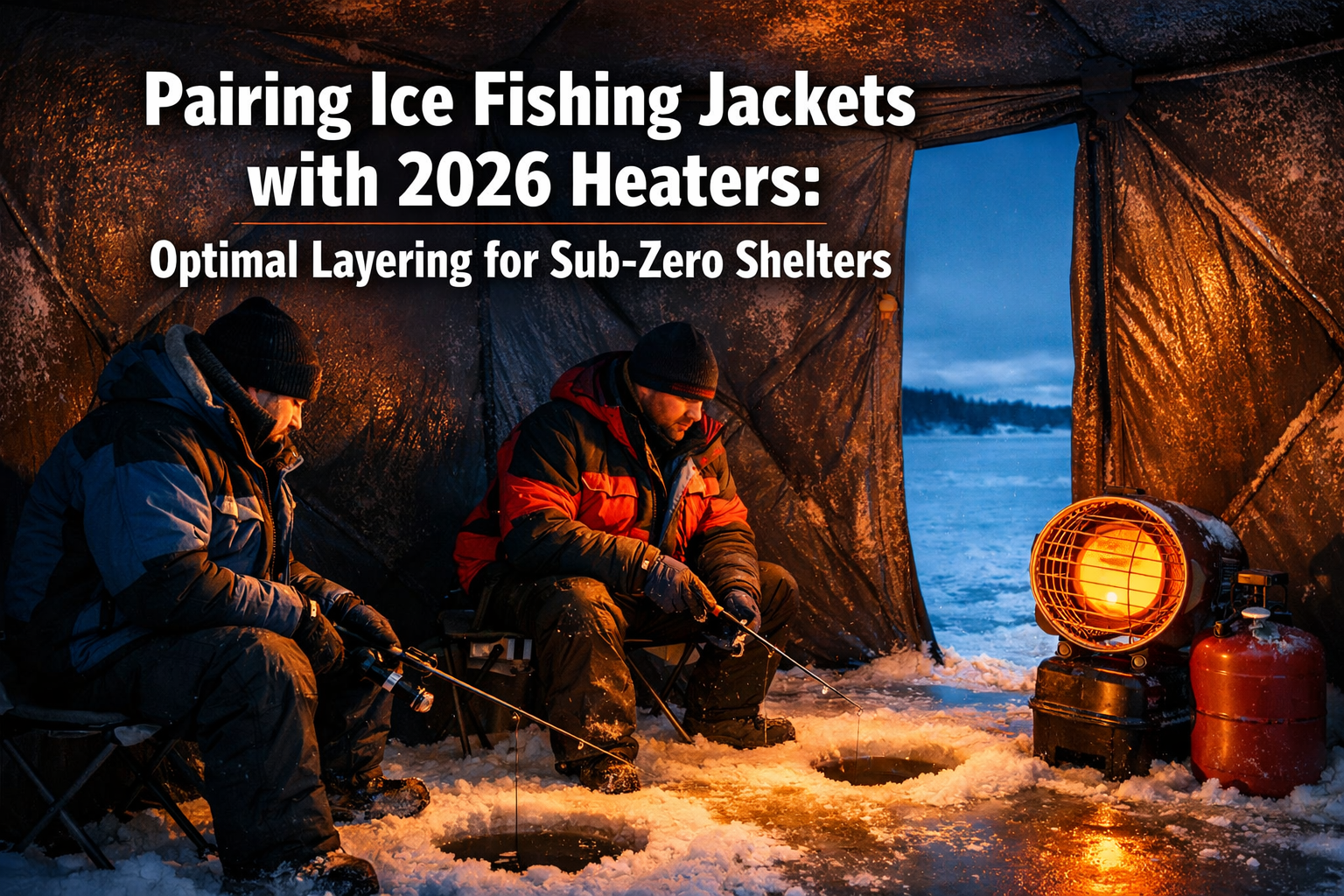
The heater and shelter work as a system. Choosing one without considering the other leads to wasted fuel, uneven heating, or safety issues.
For Heat Hog users:
- Choose a shelter with a higher peak height. The tilt feature works best when you angle heat upward into open space above your head.
- Smaller shelters (2 to 3 person) concentrate heat faster and reduce fuel consumption.
- Position the heater near the shelter entrance so fresh air feeds the flame and combustion gases exit naturally.
For Clam CH-16000VH users:
- Clam hub shelters in the 4 to 6 person range match the heater's 400 square foot coverage.
- Use the variable output to maintain a steady temperature rather than cycling the heater on and off.
- Place the heater centrally for even distribution since there is no tilt to direct heat.
General shelter tips for slushy ice:
- Anchor the shelter securely. Slushy ice holds anchors poorly. Use wider ice anchors or T-bar stakes.
- Clear snow from the shelter footprint before setup. Snow under the shelter floor melts from body and heater heat, creating a wet, slippery surface.
- Bring a foam floor mat. This insulates your feet from the ice and provides traction on wet surfaces.
Dialing in your shelter and heater combination is the kind of rigging mastery that separates a comfortable all-day session from a miserable one. For more on getting your setup tournament-ready, visit the FishOnYak showroom for gear breakdowns.
Buying Guide: Which Heater Fits Your 2026 Ice Season?
Match the heater to your fishing style. Here is a decision framework:
You fish solo in a flip-up shelter for 2 to 4 hours: Pick the Clam CH-4200. Low BTU output, light weight, and a 5-hour runtime on a 1-pound canister. Adequate for small spaces on short trips.
You fish with a partner in a hub shelter for 6 or more hours on slushy ice: Pick the Heat Hog 18,000 BTU. The tilt feature protects soft ice, and the high output warms a 2-person shelter fast. Pair with a CO detector to offset the missing thermal shut-off.
You fish in a large hub shelter (4 to 6 person) and want all-day comfort: Pick the Clam CH-16000VH. Variable output saves fuel, electronic ignition works with gloves, and the thermal shut-off adds safety in a larger enclosed space.
You prioritize safety above all other features: Pick the Mr. Heater Big Buddy. Triple safety system. Accept the trade-off of no tilt feature and manage ice melt manually with insulated pads.
You move between multiple spots during a session: Pick the Heat Hog 9,000 BTU. Lighter, faster to set up and break down, and the tilt feature works in any shelter size. Lower BTU output means less ice melt risk when you're on thin slushy ice.
Check the FishOnYak blog for seasonal gear updates and field-tested recommendations throughout the 2026 ice season.
FAQ
Q: Does the Heat Hog tilt feature work on all models? A: The tilt feature with curved plaque design is available on the Heat Hog 9,000 BTU and 18,000 BTU models. Both received U.S. patents in September 2024 covering this design.
Q: Is the Clam CH-16000VH compatible with non-Clam shelters? A: Yes. The heater works in any portable ice shelter. Clam shelters offer the best fit due to matched dimensions, but the heater functions independently of shelter brand.
Q: How thick should ice be before using a portable heater in a shelter? A: A minimum of 4 inches of clear, solid ice supports a person on foot. For a shelter with gear and a heater, 5 to 6 inches of solid ice is the standard recommendation. Slushy ice at 8 to 12 inches provides adequate support but requires monitoring under the heater.
Q: Do portable propane heaters produce carbon monoxide? A: Yes. All propane heaters produce CO as a byproduct of combustion. Always use a CO detector inside enclosed shelters and maintain ventilation.
Q: How do you prevent ice melt under a heater without a tilt feature? A: Place the heater on an insulated pad, plywood square, or foam board. This creates a thermal barrier between the heater and the ice surface.
Q: Is the Clam CH-4200 enough for slushy ice fishing? A: For a solo flip-up shelter under 105 square feet, yes. For larger shelters or extended sessions in cold, wet conditions, the CH-4200 underpowers. Step up to the CH-16000VH.
Q: How long does a 1-pound propane canister last in the Heat Hog 18,000 BTU? A: Approximately 3 to 4 hours at full output. Use a 20-pound tank with a hose adapter for all-day sessions.
Q: Does wind affect heater performance inside a shelter? A: Wind does not directly affect the flame inside a closed shelter, but wind increases heat loss through shelter fabric. On windy days, expect higher fuel consumption to maintain temperature.
Q: Are there 2026 model updates for Heat Hog or Clam heaters? A: As of February 2026, no new heater models have been announced by either brand beyond the 2025/2026 lineup. Clam's current lineup was announced in August 2025. Heat Hog's patented designs from 2024 remain current.
Q: What is the best heater for a beginner ice angler? A: The Mr. Heater Portable Buddy (9,000 BTU) offers the best combination of safety features, ease of use, and adequate heat output for beginners. Once you're comfortable with shelter heating, consider the Heat Hog or Clam for specialized slushy ice performance.
Kayak. Drill. Catch. Repeat.
See you on the water.
For questions about gear, rigging, or ice fishing preparation, reach out through the FishOnYak contact page.