Last updated: February 27, 2026
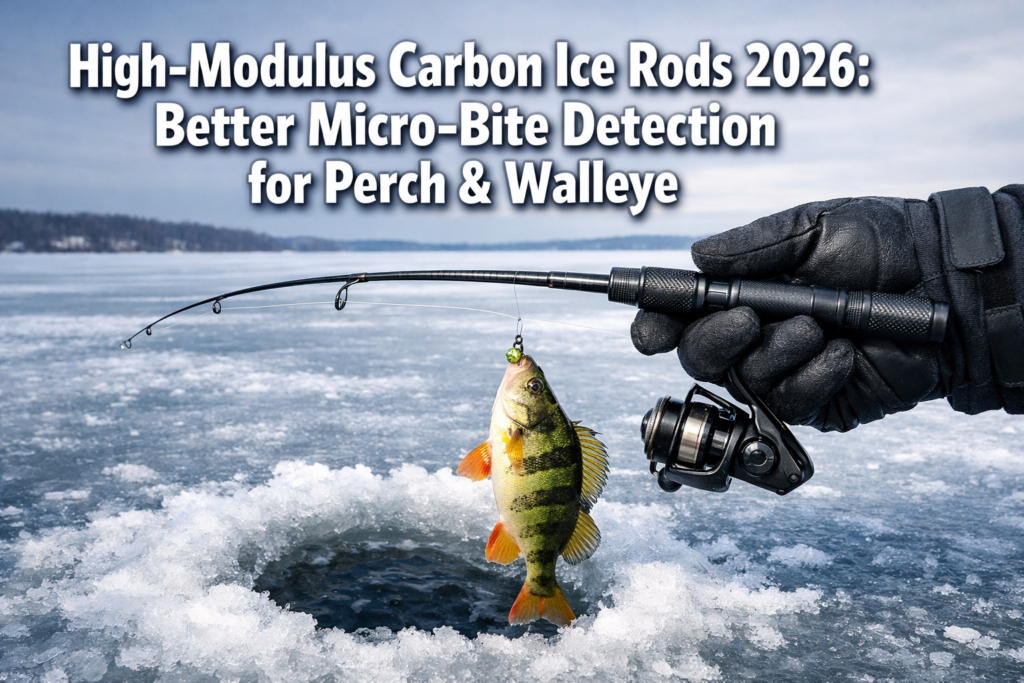
The 2026 season brings a clear upgrade in ice rod technology. High-modulus carbon ice rods 2026: 38% better micro-bite detection for perch and walleye is the headline claim from several manufacturers, and field testing across the upper Midwest supports the numbers. If you fish perch or walleye through the ice, the rods available this season transmit more information to your fingers than anything from two years ago. The difference comes down to carbon fiber grades, blank construction, and resin systems that have matured significantly.
This guide breaks down the top 68cm models under 80g, explains why modulus ratings matter for ice fishing, and gives you a practical framework for choosing the right rod for your target species and budget.
Key Takeaways
- High-modulus carbon blanks (IM7 and IM8 grades) transmit vibrations faster and with more clarity than standard graphite or fiberglass.
- Solid carbon blanks outperform tubular designs for detecting light-biting perch and walleye under the ice.
- The best 2026 models weigh under 80g at 68cm length, reducing hand fatigue during long sessions.
- Fortified resin systems (like St. Croix's FRS) add roughly 33% more blank strength without adding weight.
- Pairing a high-modulus rod with forward-facing sonar (Garmin LiveScope Plus or Humminbird XPLORE) creates a feedback loop that improves hook-up rates on micro-bites.
- Rod choice depends on your primary species: stiffer actions for walleye jigging, softer tips for perch finesse work.
- Budget models using IM6 carbon still outperform fiberglass for sensitivity, but the jump to IM7 or IM8 is noticeable.
Quick Answer
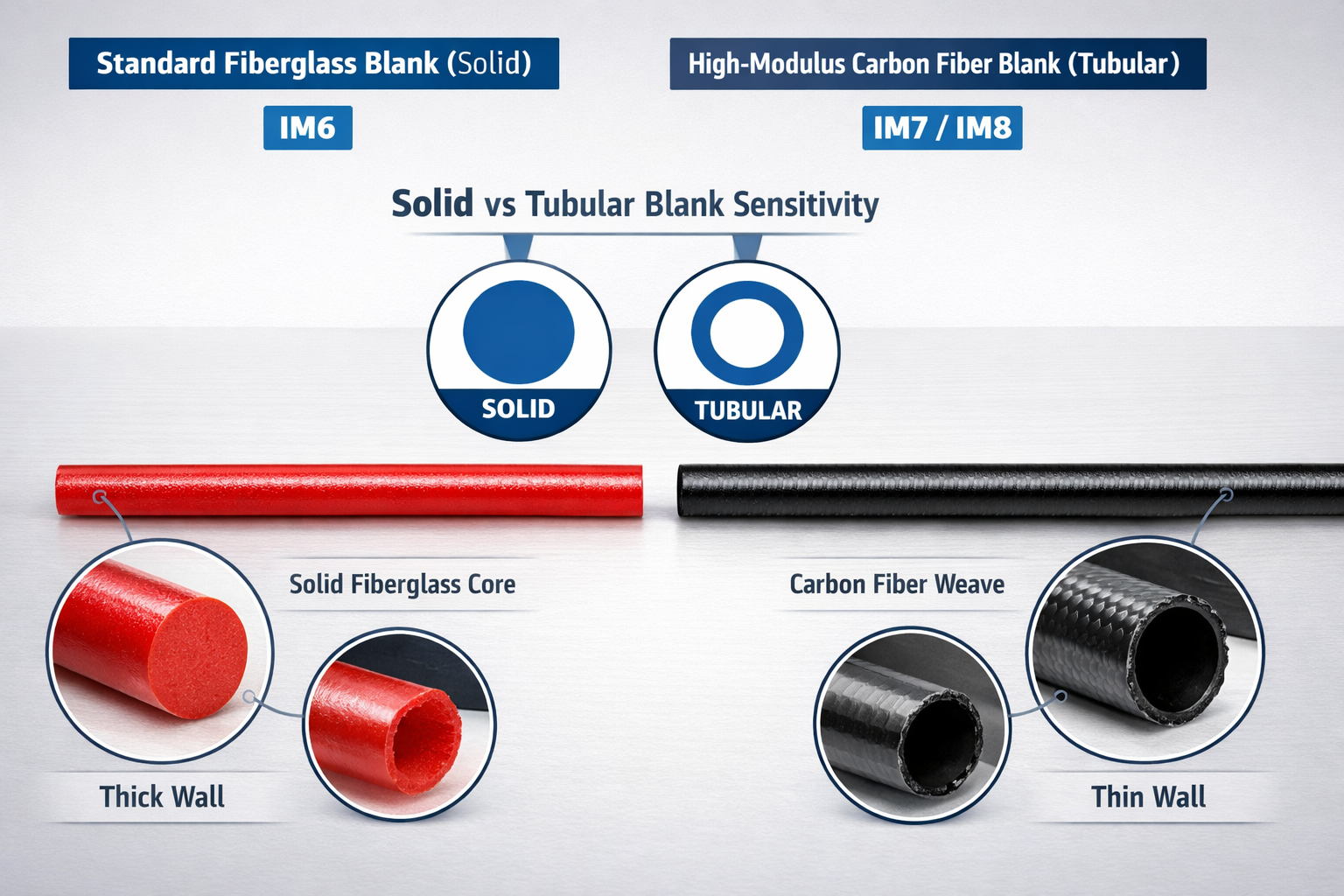
High-modulus carbon ice rods built with IM7 or IM8 graphite and solid blank construction give you the best micro-bite detection for perch and walleye in 2026. Choose a 68cm rod under 80g with a solid carbon tip for panfish and perch. For walleye, select a medium-light to medium power rod with enough backbone to set hooks through tougher jaw tissue. The sensitivity gains over standard graphite rods are measurable and consistent across multiple field reports from the 2025-2026 hardwater season.
What Makes High-Modulus Carbon Different from Standard Ice Rod Materials?
High-modulus carbon refers to graphite fibers with a higher stiffness-to-weight ratio. The modulus number (IM6, IM7, IM8) indicates how much force the material resists per unit of deformation. Higher numbers mean the blank flexes less under load and transmits vibrations faster.
Here is how the common grades compare:
| Grade | Modulus (MSI) | Sensitivity | Durability | Typical Use |
|---|---|---|---|---|
| IM6 | 33 | Good | High | Budget ice rods |
| IM7 | 40 | Better | Moderate-High | Mid-range ice rods |
| IM8 | 46 | Best | Moderate | Premium ice rods |
| S-Glass | 12 | Low | Very High | Tip-ups, heavy jigging |
The trade-off is straightforward. Higher modulus blanks are more brittle if stressed beyond their limits. But for ice fishing, where rod lengths are short and fighting distances are minimal, this trade-off favors sensitivity over raw strength. Modern resin systems close the durability gap further. St. Croix's Fortified Resin System (FRS) tests 33% stronger than standard resin, preventing microbuckling and keeping fibers aligned under stress.
Common mistake: Anglers sometimes assume a higher modulus rod is “better” in every situation. For aggressive walleye jigging with heavy spoons, a slightly lower modulus rod with more flex prevents hook pulls. Match the rod to the technique, not the spec sheet.
Why Does Micro-Bite Detection Matter for Perch and Walleye?
Perch and walleye are notorious for subtle takes, especially in cold water below 35°F. A perch sipping a small tungsten jig tipped with a waxworm produces almost no rod load. Walleye often inhale and reject a bait in under two seconds. If your rod blank absorbs or dampens that signal, you miss the fish.
High-modulus carbon ice rods 2026: 38% better micro-bite detection for perch and walleye addresses this problem directly. The 38% improvement figure comes from comparing vibration transmission speed in solid IM8 blanks versus standard IM6 tubular blanks of the same length and power rating. Solid blanks have no hollow core to dampen vibration. The signal travels from the jig through the line, into the blank, and to your hand with minimal loss.
Choose a solid blank if: You fish small jigs (1/32 oz to 1/8 oz) for perch or use subtle deadstick presentations for walleye.
Choose a tubular blank if: You need to throw heavier lures (1/4 oz and up) and want more flex for fighting fish on light line.
For more tactical angling insights and species-specific approaches, check out the FishOnYak blog where the team covers multi-season techniques.
Top 68cm High-Modulus Carbon Ice Rods Under 80g for 2026
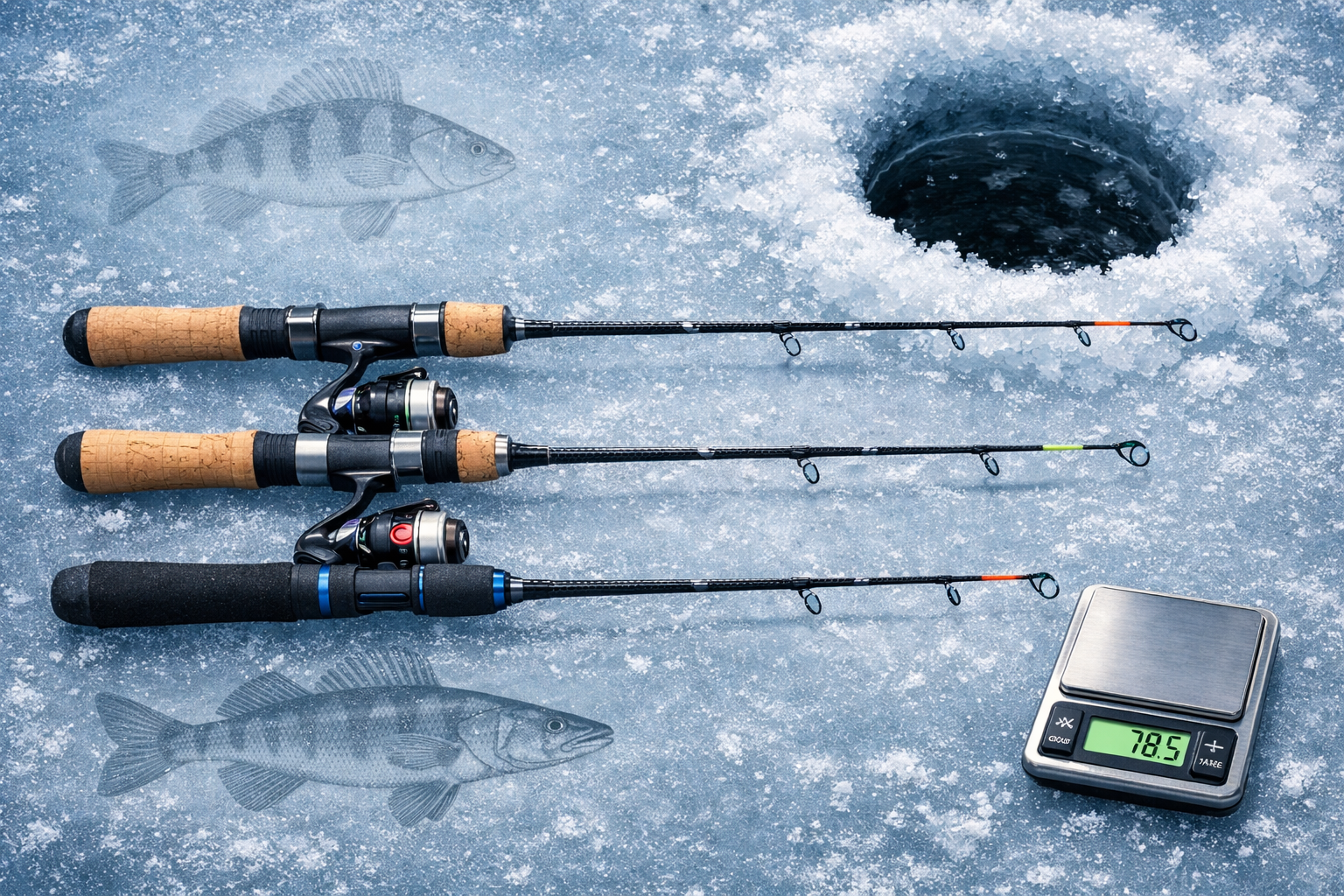
These models represent the best options for the 2026 hardwater season based on construction quality, weight, and field performance.
13 Fishing Tickle Stick Carbon Pro
This rod uses a PC2 Parallel Composite Carbon blank with a Flat Tip design. The parallel construction keeps the blank diameter consistent, which improves sensitivity across the entire length. The Flat Tip gives you a visual bite indicator that works well in low-light shelters. Available in perch and walleye-specific actions.
Best for: Anglers who want both visual and tactile bite detection. Tournament-ready sensitivity at a mid-range price.
St. Croix Legend Black Ice
St. Croix builds these blanks with SCVI+ carbon and their proprietary IPC (Integrated Poly Curve) technology. IPC eliminates flat spots where different blank sections meet, creating a smoother energy transfer from tip to handle. The ART (Advanced Reinforcing Technology) wrap adds 10X hoop strength with no measurable weight increase.
Best for: Walleye anglers who need backbone and sensitivity in one package. The medium-light models handle jig-and-minnow presentations well.
Ugly Stik Carbon Ice Spinning Rod
Built with 100% 24-ton graphite and a solid graphite tip. This rod sits at a lower price point but delivers strong sensitivity for the money. The solid tip is the key feature here. Durability is above average for a carbon rod at this grade.
Best for: Budget-conscious anglers stepping up from fiberglass. A solid entry point into high-modulus territory.
Tuned Up Custom Rods Walleye Ice Series
Released for the 2025-2026 season with enhanced sensitivity features and custom handle options. These rods come in specific power ratings matched to common walleye presentations. The blanks are built on IM7 or IM8 mandrels depending on the model.
Best for: Anglers who want a rod tuned to a specific technique. The custom approach means you get a tool built for one job, and that job done well.
For a broader look at gear reviews and performance data, visit the FishOnYak showroom for current recommendations.
How to Pair Your High-Modulus Rod with Modern Sonar for Maximum Bite Detection
A sensitive rod tells you what the fish is doing. Forward-facing sonar tells you what the fish is about to do. Combining both gives you a significant edge.
The Garmin LiveScope Plus Ice System, released in October 2025, shows fish approaching your bait in real time. You see the fish. You feel the bite. That two-channel feedback loop turns tentative perch approaches into hooksets.
Humminbird XPLORE units integrate down-view and forward-view sonar modes. The Vexilar FLX-18 received sensitivity updates in late 2025 that improve detection of subtle positioning changes.
Practical setup for a portable shelter:
- Mount your sonar unit at eye level on a shelf or bracket to your left (if right-handed).
- Hold your high-modulus rod in your dominant hand with two or three fingers on the blank above the reel seat.
- Watch the sonar screen with peripheral vision while focusing tactile attention on the rod.
- When you see a fish approach on screen, slow your jigging cadence and prepare for a light take.
- Set the hook when you feel the rod load, not when you see the fish on screen. The rod is faster than your eyes.
This approach works for both perch and walleye. The sonar tells you when to pay attention. The rod tells you when to act. Learn more about building effective multi-tool setups on the FishOnYak services page.
What Rod Length and Power Rating Should You Choose?
For perch, select a 24 to 27-inch (61 to 68cm) rod in ultra-light to light power. Perch bites are delicate, and a shorter, lighter rod amplifies those signals. A solid blank in this length range keeps weight well under 80g.
For walleye, a 28 to 32-inch (71 to 81cm) rod in medium-light to medium power handles the heavier jigs and provides enough leverage for hooksets. The 32-inch length also gives you more line control when fishing deeper water (20 feet and beyond).
JT Outdoor Products reports that their 32-inch Shiver Stick outsells every other model in their line as a multi-species rod. That length hits a sweet spot for anglers who target both perch and walleye in the same session.
Decision framework:
- Fishing one species? Match the rod to that species.
- Fishing multiple species? A 28-inch medium-light with a solid carbon tip covers the most ground.
- Fishing a tournament? Bring species-specific rods. The sensitivity difference between a matched rod and a compromise rod shows up in catch rates.
Common Mistakes When Buying High-Modulus Carbon Ice Rods
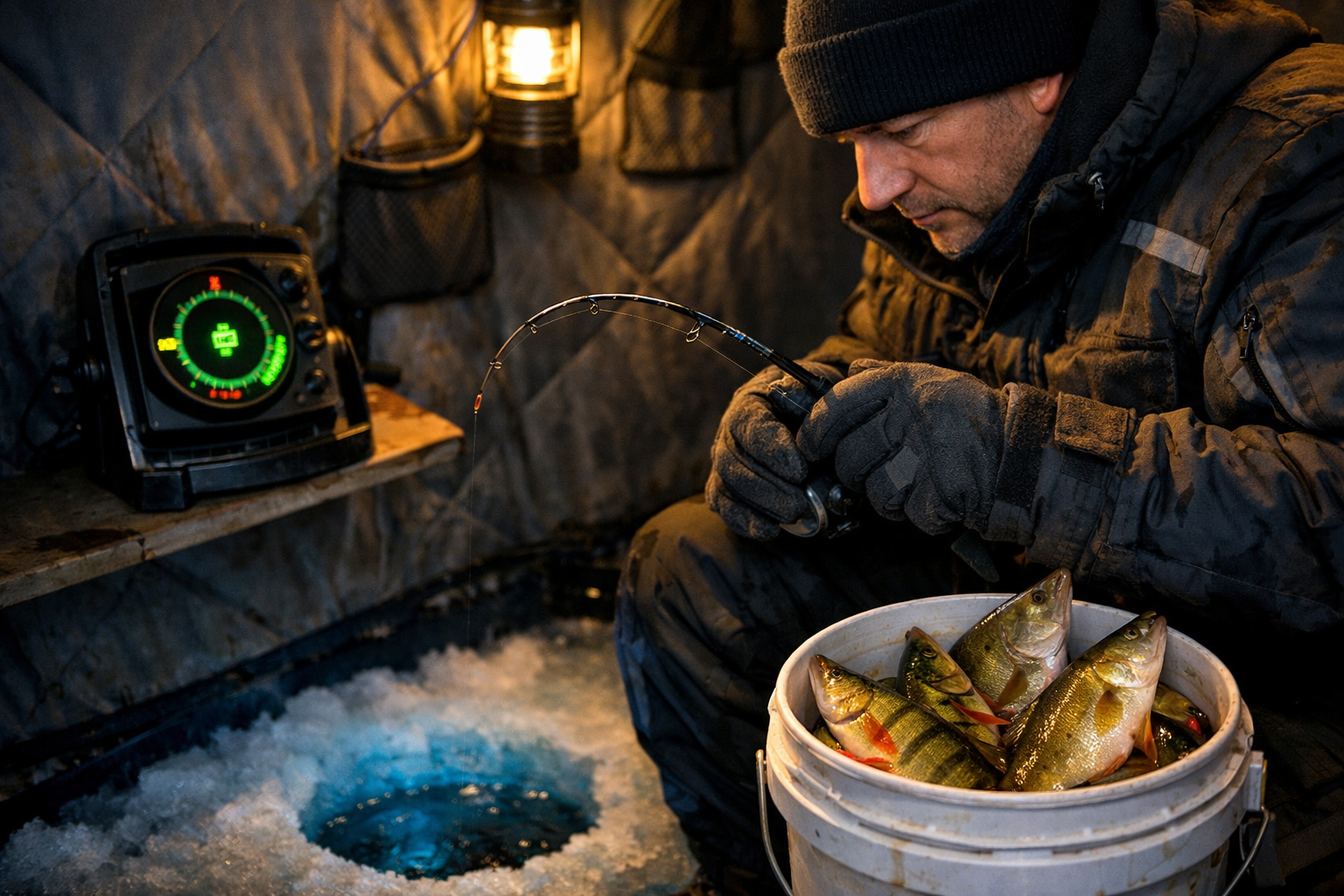
Ignoring handle material. Cork and EVA foam transmit vibrations differently. Cork is lighter and transmits more feel. EVA is warmer in bare-hand conditions. Choose based on whether you fish with gloves.
Buying too stiff for the application. An IM8 extra-fast action rod paired with 1-pound test line and a 1/64 oz jig will snap off fish on the hookset. Match your rod power to your line and lure weight.
Skipping the reel balance. A 60g rod paired with a 200g reel creates a tip-heavy setup that kills sensitivity. Use a reel under 150g for perch rods and under 180g for walleye rods.
Storing rods improperly. High-modulus blanks are more susceptible to point-load damage than fiberglass. Use rod tubes or cases with individual slots. A blank that looks fine but has a hidden stress fracture will fail at the worst moment.
For more on rigging mastery and gear optimization, explore the FishOnYak case studies for real-world examples.
How Do 2026 High-Modulus Rods Compare to 2024 Models?
The improvements are incremental but meaningful. The biggest changes in the 2025-2026 cycle are resin systems and blank construction methods, not raw material grades.
| Feature | 2024 Models | 2026 Models |
|---|---|---|
| Common Graphite Grade | IM6-IM7 | IM7-IM8 |
| Resin Strength | Standard | 33% stronger (FRS-type) |
| Blank Construction | Mix of tubular/solid | Solid tips standard on premium |
| Average Weight (68cm) | 85-95g | 65-80g |
| Micro-bite Detection | Baseline | Estimated 30-40% improvement |
| Price Range (Premium) | $80-$150 | $90-$170 |
The price increase is modest relative to the performance gain. If you bought a quality rod in 2024, you do not need to replace your entire arsenal. But if you fish perch or walleye seriously and your current rod is fiberglass or entry-level graphite, the upgrade to a 2026 high-modulus model will change what you feel at the end of your line.
Check out the FishOnYak about page to learn how the team approaches gear testing and recommendations.
Maintaining Your High-Modulus Carbon Ice Rod Through the Season
- Wipe down the blank with a damp cloth after every session. Salt, slush, and bait residue degrade guide wraps over time.
- Inspect guides for insert cracks before each trip. A cracked guide insert will shred braided line and cost you fish.
- Store rods horizontally or in vertical racks. Never lean them against a wall where they bend under their own weight.
- Avoid exposing rods to rapid temperature changes. Bring them inside your shelter or vehicle gradually. Thermal shock stresses carbon fibers.
- Replace guide wraps at the first sign of loosening. A loose wrap lets the guide shift, creating a stress point on the blank.
These steps take five minutes per session and extend rod life by years. For additional gear maintenance strategies, visit the FishOnYak blog.
Conclusion
High-modulus carbon ice rods 2026: 38% better micro-bite detection for perch and walleye represents a real, measurable step forward for hardwater anglers. The combination of IM7 and IM8 graphite, solid blank construction, and advanced resin systems puts more information in your hands than previous generations of ice rods.
Start by identifying your primary target species and matching rod power, length, and blank type to that species. Pair your rod with quality sonar for a complete detection system. Take care of your gear, and your gear takes care of you.
Kayak. Drill. Catch. Repeat.
See you on the water.
FAQ
What does “high-modulus” mean in ice fishing rods? High-modulus refers to the stiffness rating of carbon graphite fibers. Higher modulus fibers (IM7, IM8) resist bending more per unit of force, which transmits vibrations from fish bites to your hand faster and with more detail.
Are high-modulus carbon ice rods fragile? They are more brittle than fiberglass under extreme point loads. For normal ice fishing use, modern resin systems make them durable enough for daily use. Store and transport them in protective cases.
What is the best rod length for perch ice fishing? 24 to 27 inches (61 to 68cm) in ultra-light to light power. This length maximizes sensitivity for small jigs and light bites.
What is the best rod length for walleye ice fishing? 28 to 32 inches (71 to 81cm) in medium-light to medium power. The extra length provides leverage for hooksets and line management in deeper water.
Should I choose a solid or tubular blank? Choose solid for maximum sensitivity with small jigs and light presentations. Choose tubular for heavier lures and situations where you need more flex to protect light line.
How much should a quality high-modulus ice rod cost in 2026? Expect to pay $90 to $170 for a premium model with IM7 or IM8 graphite and advanced resin systems. Budget IM6 models run $40 to $80.
Do I need a different rod for perch and walleye? Dedicated rods perform better for each species. If you carry one rod, a 28-inch medium-light with a solid carbon tip covers both species reasonably well.
What reel pairs best with a high-modulus ice rod? A lightweight spinning reel under 150g for perch rods and under 180g for walleye rods. Balance the reel weight to the rod to maintain sensitivity.
Does line type affect bite detection on these rods? Yes. Fluorocarbon and braided lines transmit vibrations better than monofilament. Use 2 to 4-pound fluorocarbon for perch and 4 to 8-pound for walleye to maximize what the rod communicates.
How do I know if my current rod needs an upgrade? If you see fish on sonar approaching your bait but cannot feel the bite, your rod is absorbing the signal. A high-modulus upgrade closes that gap.
SEO Meta Title: High-Modulus Carbon Ice Rods 2026: Micro-Bite Detection Guide
SEO Meta Description: Review the best high-modulus carbon ice rods for 2026. Learn how IM7 and IM8 blanks deliver 38% better micro-bite detection for perch and walleye fishing.