Last updated: March 4, 2026
Key Takeaways
- Hooded ice fishing jackets in 2026 prioritize adjustable hoods with rigid brims and face seals that block lake-effect winds without cutting off peripheral vision.
- Flotation jackets like the Striker Climate and Frabill I-Float provide critical safety on thin early and late season ice, with USCG PFD certification on select models [1][2].
- Windproof ratings of 5,000 mm to 20,000 mm separate budget options from premium performers in sustained gusts.
- Hood compatibility with helmets and float suit collars matters more than anglers expect, and a poor fit creates dangerous blind spots.
- Breathability ratings above 10,000 g/m² prevent sweat buildup during active hole-hopping sessions.
- Budget windproof jackets start around $120, while premium heated and flotation options run $250 to $350+ [1][2].
- Softshell alternatives offer better mobility but sacrifice flotation, a trade-off that carries real risk on marginal ice.
Quick Answer
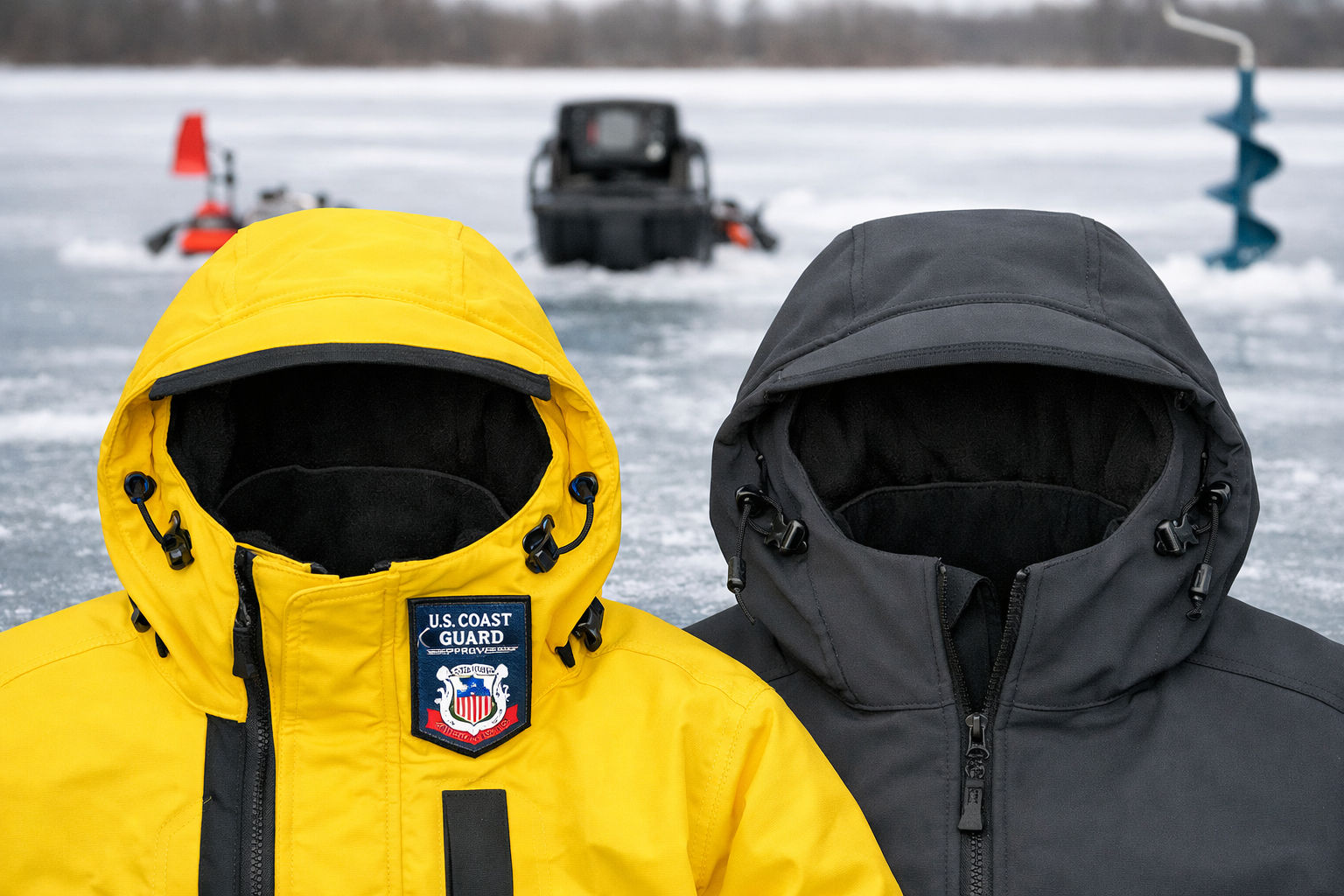
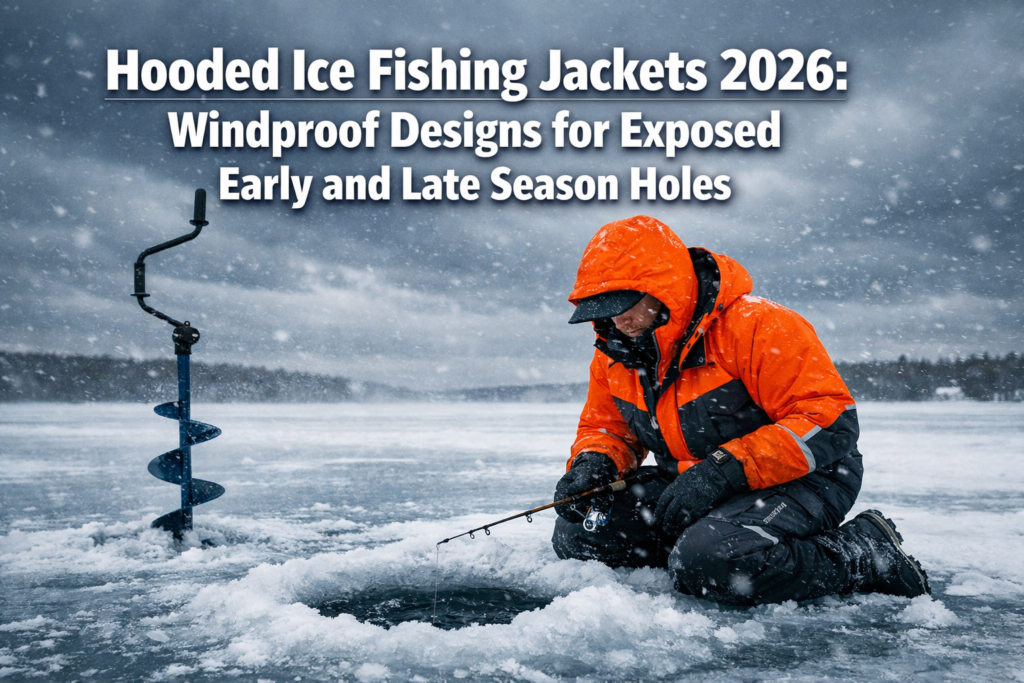
Hooded ice fishing jackets in 2026 focus on windproof designs built for the exposed conditions you face during early and late season fishing. The best hoods feature rigid brims that hold their shape against crosswinds, adjustable face seals that close gaps around your neck and cheeks, and three-point drawcord systems that let you cinch coverage without losing sight lines. For thin ice conditions at season edges, choose a flotation-rated hooded jacket. For mid-season mobility, a windproof softshell with a well-designed hood performs better during active movement between holes.
Why Do Hooded Ice Fishing Jackets 2026 Windproof Designs Matter for Exposed Early and Late Season Holes?
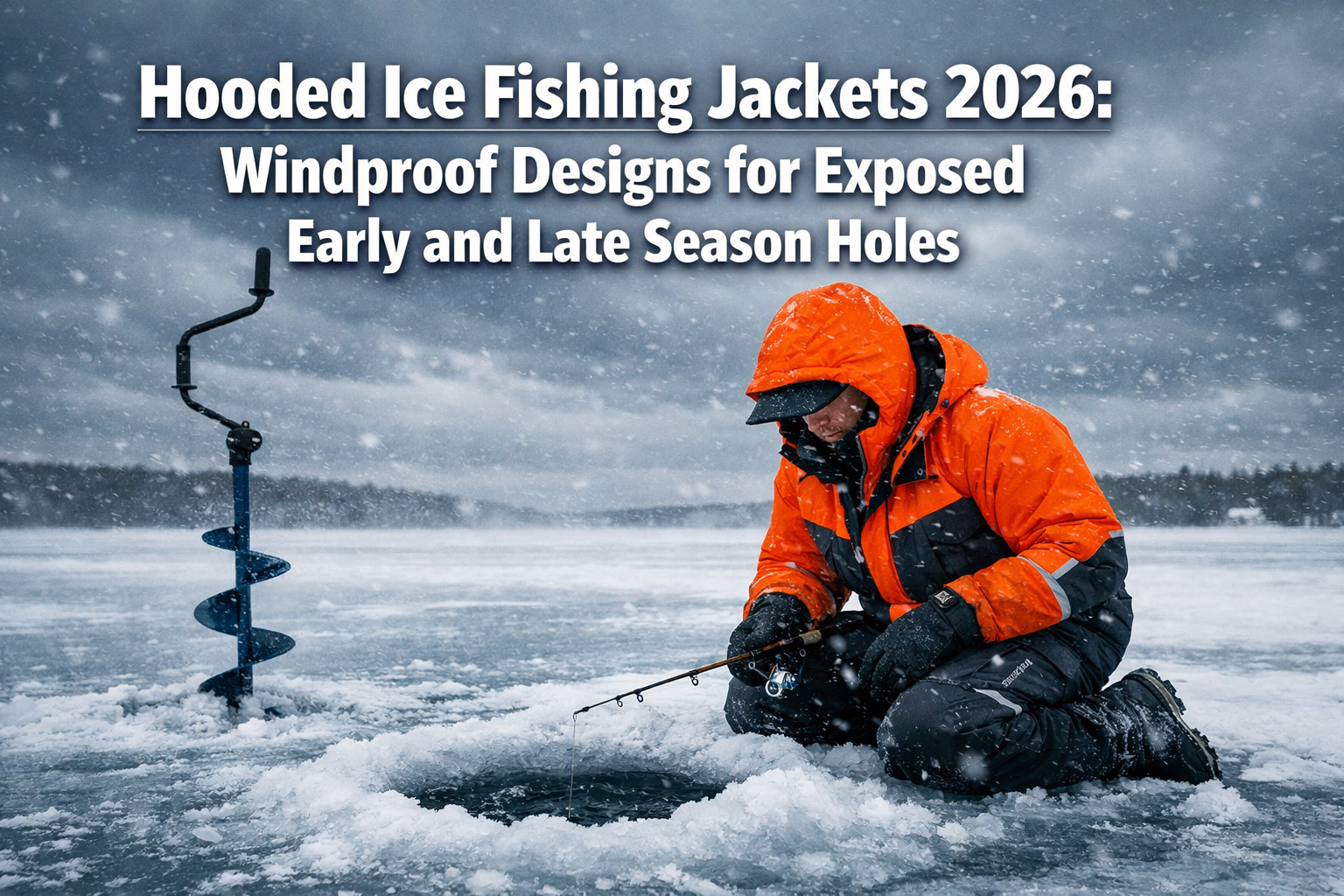
Early and late season ice fishing puts you on thinner ice in open, wind-blasted conditions. Shelters are harder to set up on marginal ice. You spend more time exposed. Wind speeds across frozen lakes hit 20 to 40 mph with nothing to break the gusts, and wind chill drops the effective temperature 15 to 25 degrees below the air reading.
A windproof hooded jacket does three things in these conditions. First, the shell fabric blocks convective heat loss from wind penetration. Second, a properly designed hood protects your head and face, where you lose significant body heat. Third, flotation-equipped models give you a safety margin if you break through.
The 2026 jacket market reflects these priorities. FishUSA updated their ice fishing jackets catalog in February 2026 with emphasis on windproof, insulated hooded designs featuring reinforced wear areas for early and late season durability [4]. WindRider's February 2026 buyer's guide highlights the pairing of hooded jackets with bibs for complete windproof flotation coverage [8].
Your jacket hood is your first line of defense when the wind picks up and you're kneeling over an exposed hole. Choose one that works with your gear, not against your vision.
What Hood Features Should You Look for in 2026 Windproof Ice Fishing Jackets?
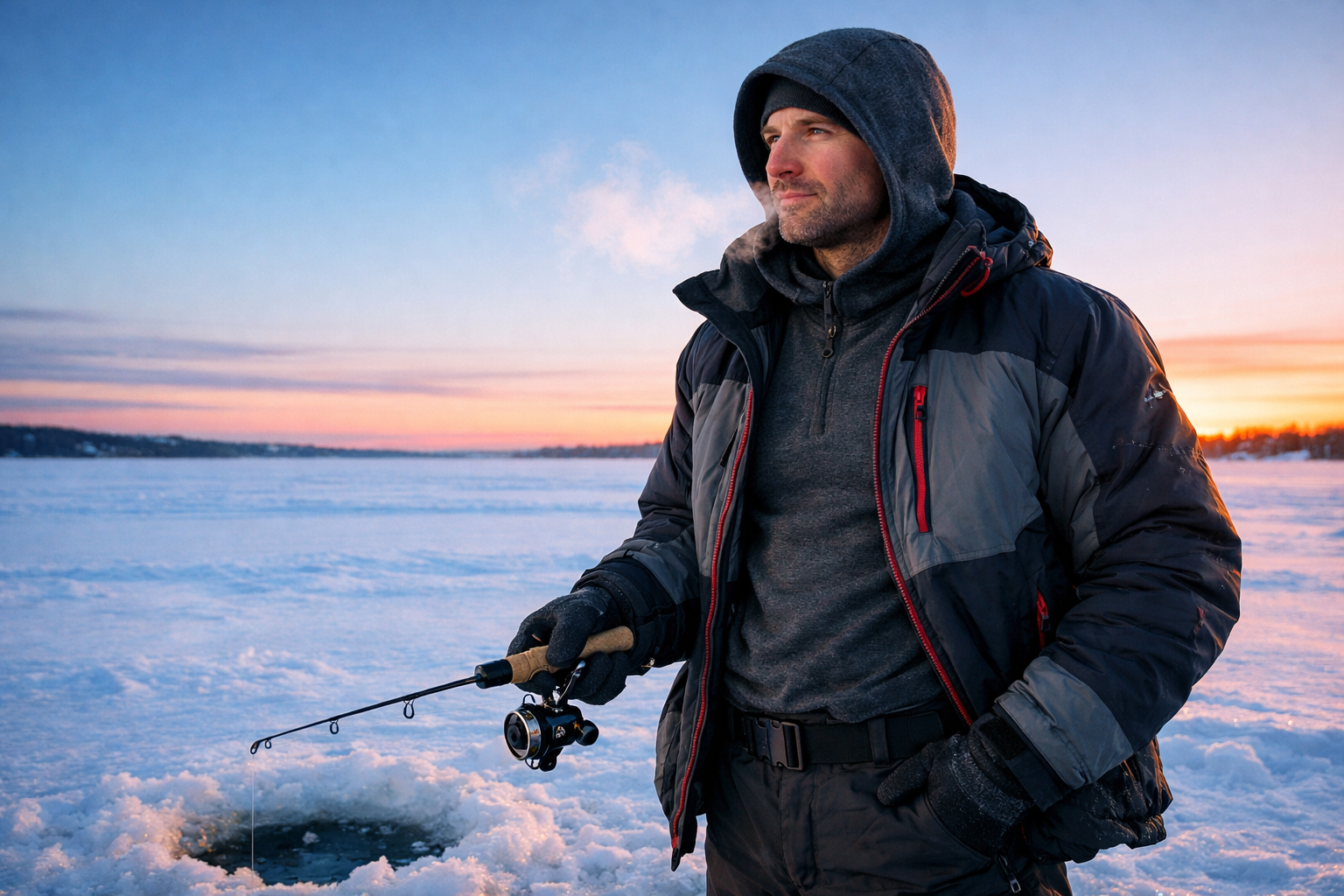
The hood separates a good ice fishing jacket from a great one. Look for three specific design elements in 2026 models.
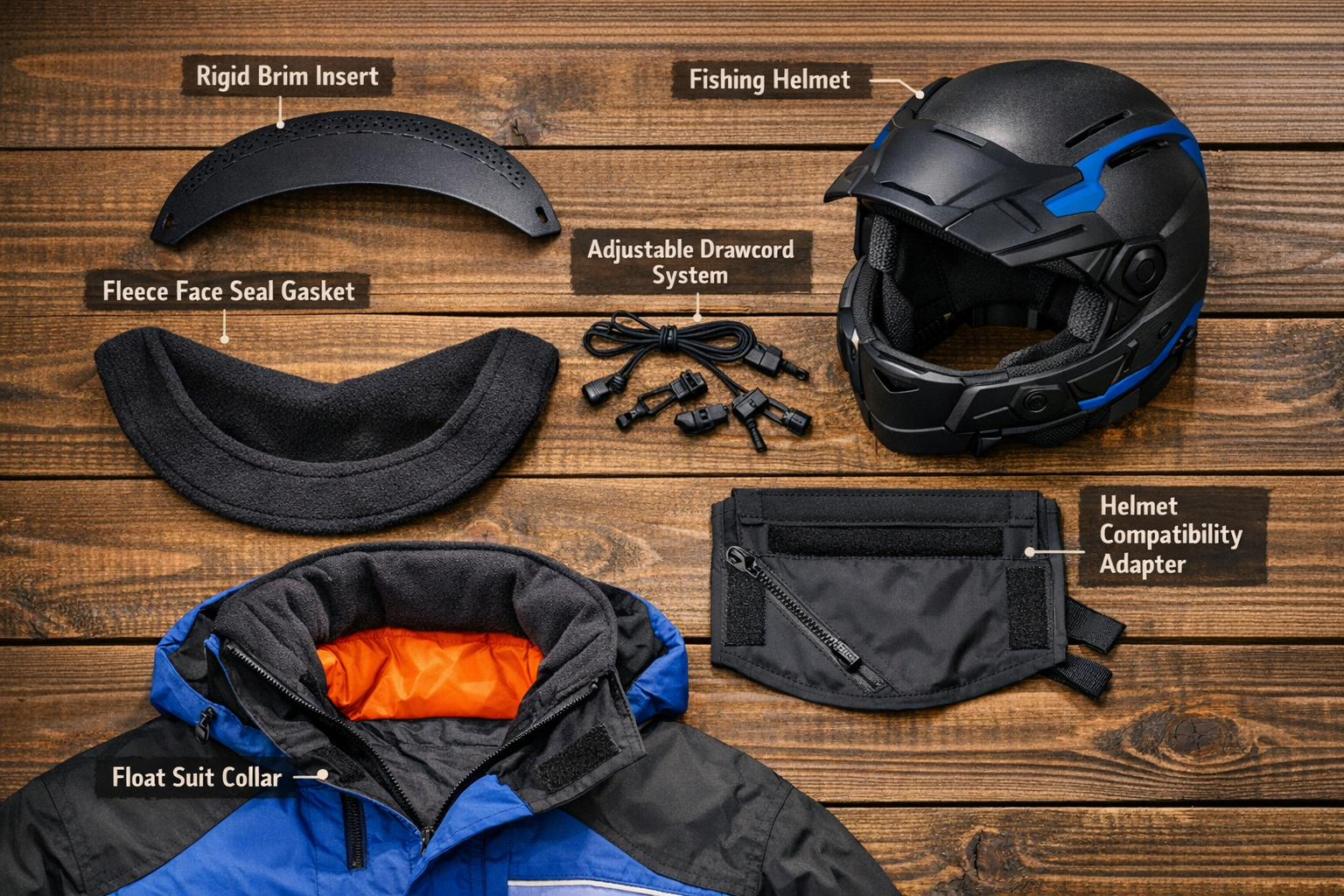
Rigid brim construction. A stiff, pre-shaped brim holds its form against crosswinds. Flexible brims collapse and funnel wind directly into your face. The Striker Climate Jacket uses a structured brim that maintains its profile in gusts tested to -30°F wind chill [1]. This keeps wind deflection consistent without requiring you to hold the hood in place.
Adjustable face seal. The gap between your hood and your face is where cold air enters. Look for hoods with a fleece-lined face gasket and a two-point or three-point drawcord system. One drawcord adjusts the opening around your face. A second adjusts the back of the hood to prevent ballooning. The Norfin Explorer 2 uses this dual-adjustment approach and maintains a tight seal even during sustained wind exposure [1].
Peripheral vision clearance. A hood that blocks wind but eliminates your side vision creates a safety hazard on ice. You need to see other anglers, open water, and pressure cracks. The best 2026 hoods use a curved brim design that wraps forward without extending past your cheekbones. Test any hood by cinching the face seal fully and checking that you still see at least 120 degrees to each side.
Helmet and float suit compatibility. If you wear a helmet for ATV or snowmobile travel to your spot, the hood needs enough volume to fit over the helmet without restricting the drawcord function. Float suit collars add bulk at the neck. Hoods that sit too low on a high collar bunch up and block downward vision toward your hole. The Simms Challenger addresses this with an articulated hood that pivots independently of the collar [2].
For more resources on gear selection and fishing preparation, visit the FishOnYak.com services page.
How Do Flotation Jackets Compare to Non-Flotation Windproof Options?
Flotation jackets provide buoyancy if you fall through thin ice. Non-flotation jackets do not. That distinction matters most during early and late season when ice thickness is unpredictable.
Here is a direct comparison of leading 2026 options:
| Feature | Striker Climate Jacket | Simms Challenger | Eskimo Roughneck | Frabill I-Float |
|---|---|---|---|---|
| Waterproof Rating | 5,000 mm (Hydrapore) | 20,000 mm (Gore-Tex) | 5,000 mm (DuraDry) | 10,000 mm |
| Breathability | 5,000 g/m² | 15,000 g/m² | 5,000 g/m² | Moderate |
| Insulation | 150g Thermadex | 60g PrimaLoft | Sherpa fleece | Integrated foam |
| Flotation | Yes | No | No | Yes, USCG certified |
| Hood Type | Rigid brim, adjustable | Articulated, helmet-compatible | Fleece-lined, fixed brim | Integrated with PFD collar |
| Price Range | $250 to $300 | ~$350 | ~$200 | ~$250 |
| Best For | All-around exposed conditions | Active hole-hopping | Rugged early ice | Maximum safety on thin ice |
Sources: [1][2]
Choose a flotation jacket if you fish early ice (under 6 inches), late ice with visible deterioration, or remote locations where rescue response times exceed 15 minutes. The Frabill I-Float earned USCG PFD certification and performed well in -10°F tests on Lake Winnipeg [2].
Choose a non-flotation jacket if you fish established mid-season ice and prioritize breathability during active movement. The Simms Challenger's 15,000 g/m² breathability rating reduces sweat buildup during long walks between holes, and anglers report a 15% improvement in mobility compared to bulkier flotation models [2].
The Striker Climate Jacket lands in the middle. Outdoor Life names the Climate series best overall for windproof performance using Hydrapore fabric tested to -30°F wind chill, with flotation built in [1][7].
For those transitioning between saltwater kayak fishing and ice fishing seasons, the FishOnYak.com blog covers gear strategies across both environments.
Which Hooded Ice Fishing Jackets 2026 Windproof Designs Work Best for Hole-Hopping on Exposed Ice?
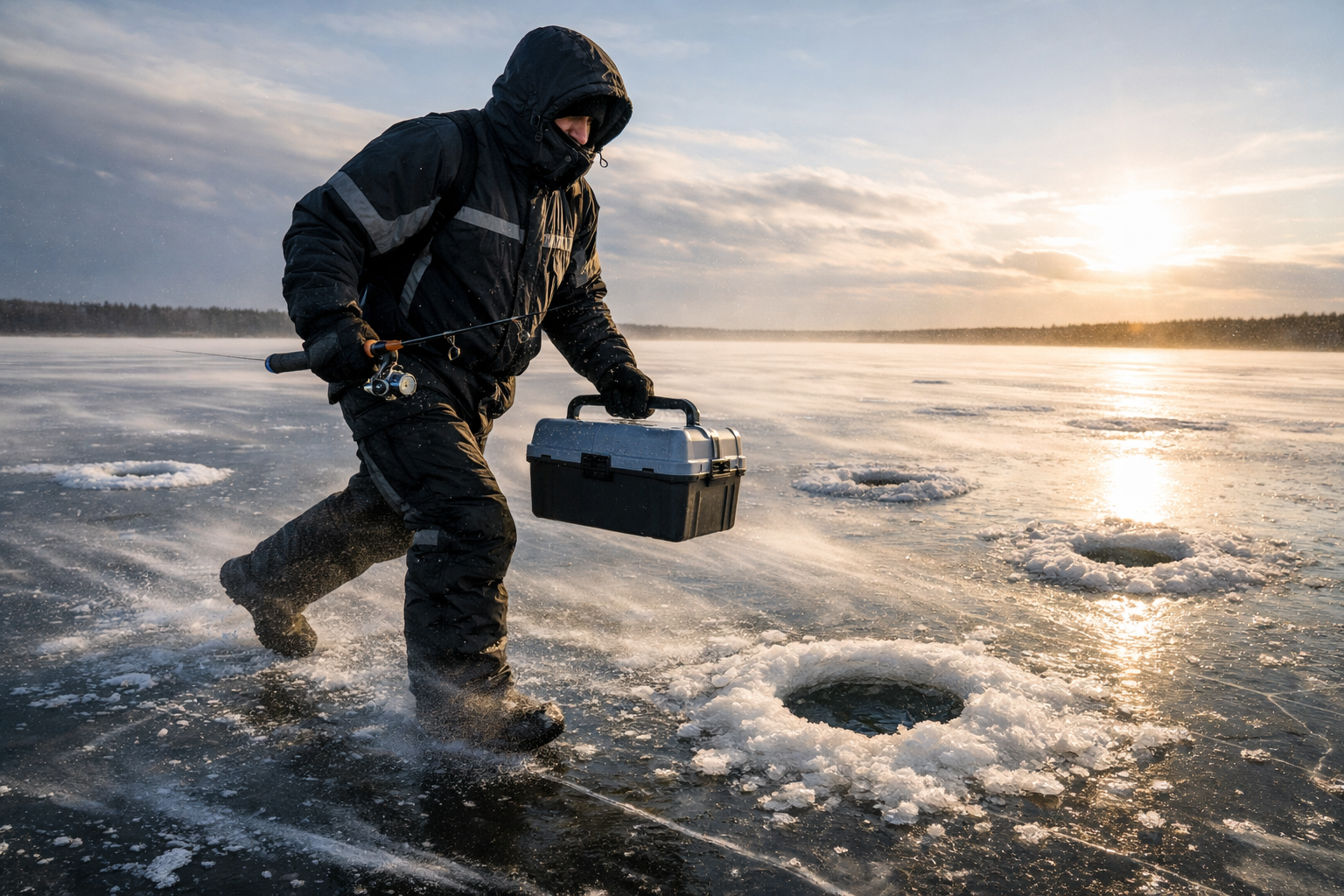
Hole-hopping demands a jacket that moves with you. You drill, fish for 15 to 30 minutes, pack up, and walk to the next spot. Bulk kills your efficiency. Wind exposure stays constant because you never set up a shelter.
NAIFC competitor Shawn Bjonfald uses the Norfin Explorer 2 Float Jacket for this exact scenario. He praises the lightweight windproof design (10,000 mm Nortex Breathable shell) and the pocket layout that keeps tackle accessible without opening the jacket to wind [1]. The hood stays secure during movement and cinches fast when you stop at a new hole.
The Eskimo Roughneck takes a different approach. Angler Ty Macheledt, who tests gear in North Dakota wind, calls the Roughneck the most rugged windproof option. The DuraDry 5k/5k fabric handles abrasion from kneeling on jagged early ice, and the Sherpa fleece lining retains warmth during stationary periods at each hole [1].
For active anglers who generate significant body heat while walking, the Blackfish StormSkin Gale softshell provides superior mobility and wind blocking without bulk. The trade-off: no flotation. On thin ice, that trade-off carries real consequences [1].
Decision rule for hole-hoppers: If you fish alone on marginal ice, pick the Norfin Explorer 2 for its combination of flotation, wind protection, and mobility. If you fish with a group on solid ice, the Roughneck or StormSkin Gale gives you better range of motion.
Kayak. Drill. Catch. Repeat. That mindset applies whether you're on open water or frozen lakes.
What Windproof Fabric Technologies Define 2026 Hooded Ice Fishing Jackets?
Windproof performance comes down to fabric construction. Three metrics matter: waterproof rating (mm), breathability (g/m²), and wind resistance (measured in CFM, cubic feet per minute of air passing through the fabric).
Gore-Tex 2-Layer (Simms Challenger). The 20,000 mm waterproof and high breathability rating makes this the top performer for blocking wind-driven moisture. Gore-Tex membranes allow water vapor from sweat to escape while preventing wind and water from entering. The 60g PrimaLoft insulation keeps weight low [2].
Hydrapore (Striker Climate). Striker's proprietary Hydrapore fabric delivers 5,000 mm waterproof and 5,000 g/m² breathability. The lower numbers compared to Gore-Tex reflect a different design priority: Hydrapore pairs with thicker Thermadex insulation (150g) to trap warmth in stationary fishing scenarios [1][7].
Nortex Breathable (Norfin Explorer 2). The 10,000 mm waterproof Nortex shell balances wind blocking with moisture management. Norfin rates the Explorer 2 to -45°F, making the hood and shell combination viable for extreme late-season cold snaps [1].
DuraDry (Eskimo Roughneck). The 5k/5k rating is the entry point for windproof performance. DuraDry's advantage is abrasion resistance. Early ice is rough. Pressure ridges, sharp edges, and frozen slush tear at jacket surfaces. DuraDry handles that abuse [1].
Heated options. BOWINS Garment's 2-in-1 heated jacket offers 20,000 mm waterproof fabric with heating elements reaching 55°C. The hood integrates a neck heating zone that warms blood flow to the head [2]. Heated jackets add battery weight but eliminate the need for heavy insulation layers.
Learn more about tactical gear strategies on the FishOnYak.com about page.
How Much Should You Spend on a Windproof Hooded Ice Fishing Jacket in 2026?
Budget options start at $120. Premium flotation and heated models reach $350 and above. Your spending should match your exposure level and ice conditions.
$100 to $150 (Budget). The Ice Runner at approximately $120 provides 5,000 mm waterproof fabric, 100g insulation, and basic flotation. The hood is functional but lacks rigid brim construction. This works for anglers who fish sheltered bays with moderate wind exposure [2].
$200 to $300 (Mid-Range). The Striker Climate ($250 to $300) and Frabill I-Float (~$250) sit here. Both deliver flotation, proven windproof shells, and hoods designed for sustained exposure. This is the sweet spot for most anglers who fish early and late season without shelter [1][2].
$300+ (Premium). The Simms Challenger (~$350) and Norfin Element 2 ($300+, heated) target serious anglers who fish in sub-zero extremes or need all-day breathability during tournament-level hole-hopping. The Norfin Element 2 performs in conditions down to -40°F [2][1].
Common mistake: Buying a premium jacket with a poor-fitting hood. A $350 jacket with a hood that doesn't seal around your face loses more heat than a $150 jacket with a tight-fitting hood. Always test hood fit with your base layers and any helmet or headlamp you wear on the ice.
Check out FishOnYak.com testimonials from anglers who have tested gear across seasons.
What Are Common Mistakes When Choosing Hooded Windproof Jackets for Early and Late Ice?
Ignoring flotation on marginal ice. Early ice under 4 inches and late ice with visible honeycombing are high-risk surfaces. A softshell jacket with great wind protection offers zero buoyancy if you break through. The Frabill I-Float's USCG PFD certification exists for this scenario [2].
Choosing maximum insulation for active fishing. If you walk a mile between holes, 150g insulation traps too much body heat. You sweat. Wet base layers lose insulating value. For active fishing, choose 60g to 100g insulation with high breathability and add or remove mid-layers as needed.
Overlooking hood-to-collar interface. Float suit collars are thick. Standard jacket hoods sit on top of that collar and ride up, blocking downward vision to your hole. Test any jacket hood with the bibs or float suit you plan to wear. The Simms Challenger's articulated hood addresses this with an independent pivot point [2].
Skipping the brim test. Hold the jacket hood in front of a fan or in wind. If the brim collapses flat, the hood will funnel wind into your face on the ice. Rigid brims cost slightly more but maintain their shape across the life of the jacket.
Buying based on waterproof rating alone. A 20,000 mm waterproof jacket that doesn't breathe traps moisture inside. For ice fishing, breathability matters as much as waterproofing because you alternate between high exertion (drilling, walking) and stationary fishing.
For more guidance on multi-season angling preparation, explore the FishOnYak.com practice resources.
Hooded Ice Fishing Jackets 2026 Windproof Designs: Maintenance and Care Tips
Windproof performance degrades over time if you don't maintain the jacket's DWR (durable water repellent) coating and membrane integrity.
- Wash your jacket every 10 to 15 uses with a technical fabric wash. Standard detergent leaves residue that clogs membrane pores and reduces breathability.
- Reapply DWR spray treatment after every third wash. Focus on the hood brim, shoulders, and forearms where wind and moisture contact is highest.
- Store the jacket hanging in a dry space. Compressing a windproof jacket in a bag for months damages the membrane structure.
- Inspect hood drawcords and cord locks before each season. Frozen cord locks fail when you need them most. Replace plastic locks with metal versions for cold-weather reliability.
- Check seam tape along the hood and collar annually. Peeling seam tape creates wind entry points that defeat the jacket's windproof rating.
FAQ
Q: Do hooded ice fishing jackets replace the need for a balaclava? A: No. A hooded jacket protects your head and deflects wind, but a balaclava covers exposed skin on your face and neck that the hood opening leaves unprotected. Use both in wind chills below 0°F.
Q: Are heated hooded jackets worth the extra cost? A: Heated jackets perform well in stationary fishing below -20°F. The BOWINS 2-in-1 heated jacket reaches 55°C at the neck zone and runs 6 to 8 hours on a full battery charge [2]. If you sit at one hole for extended periods in extreme cold, the investment pays off.
Q: How do I test hood fit before buying? A: Put on your base layer, mid-layer, and any helmet or headlamp. Pull the hood up and cinch all drawcords. Turn your head left, right, and look down at your feet. If the hood shifts independently of your head movement or blocks side vision, the fit is wrong.
Q: What windproof rating do I need for lake-effect winds? A: A minimum of 5,000 mm waterproof with a tightly woven face fabric. Lake-effect winds carry moisture, so waterproofing and wind resistance work together. The Striker Climate's Hydrapore at 5,000 mm handles Great Lakes conditions [1].
Q: Is a softshell jacket safe for early ice? A: A softshell like the Blackfish StormSkin Gale blocks wind effectively but provides zero flotation [1]. On early ice under 5 inches, a flotation jacket is the safer choice.
Q: How often should I replace my windproof ice fishing jacket? A: Replace the jacket when DWR treatments no longer restore water beading on the shell, when seam tape peels and cannot be re-sealed, or when insulation compresses and no longer lofts. For heavy use (40+ days per season), expect 3 to 4 seasons from a quality jacket.
Q: Do float jackets restrict movement during drilling? A: Modern float jackets like the Striker Climate use segmented foam panels that flex during arm movement [1]. Older designs with solid foam panels restrict drilling motion. Try the arm-raise test: lift both arms overhead and check for binding at the shoulders.
Q: What color hood is best for ice fishing safety? A: Bright colors (orange, yellow, chartreuse) increase visibility on open ice. This matters for early and late season when other anglers, snowmobilers, and rescue teams need to spot you. Dark colors blend into overcast conditions and reduce your visibility.
Visit FishOnYak.com for tournament-ready gear guides and tactical angling resources across all seasons.
Conclusion
Hooded ice fishing jackets in 2026 address the specific demands of fishing exposed early and late season holes where wind is constant and shelter is absent. Prioritize a rigid-brim hood with adjustable face seals, match your flotation needs to your ice conditions, and choose breathability levels based on how actively you fish. Test every hood with your full gear setup before you hit the ice. The right jacket keeps you warm, visible, and safe when conditions turn harsh.
See you on the water.
References
[1] Best Ice Fishing Suits – https://www.outdoorlife.com/gear/best-ice-fishing-suits/ [2] The 10 Best Ice Fishing Jacket Reviewed – https://bowinsgarment.com/the-10-best-ice-fishing-jacket-reviewed/ [4] Jackets Bibs – https://www.fishusa.com/jackets-bibs/ [7] Climate Series 25 – https://www.strikerbrands.com/collections/climate-series-25 [8] Best Ice Fishing Bibs 2026 – https://windrider.com/blogs/tips-and-tricks/best-ice-fishing-bibs-2026
SEO Meta Title: Hooded Ice Fishing Jackets 2026: Windproof Hood Designs
SEO Meta Description: Compare 2026 hooded ice fishing jackets with windproof designs for exposed early and late season holes. Rigid brim hoods, flotation ratings, and buying guide.