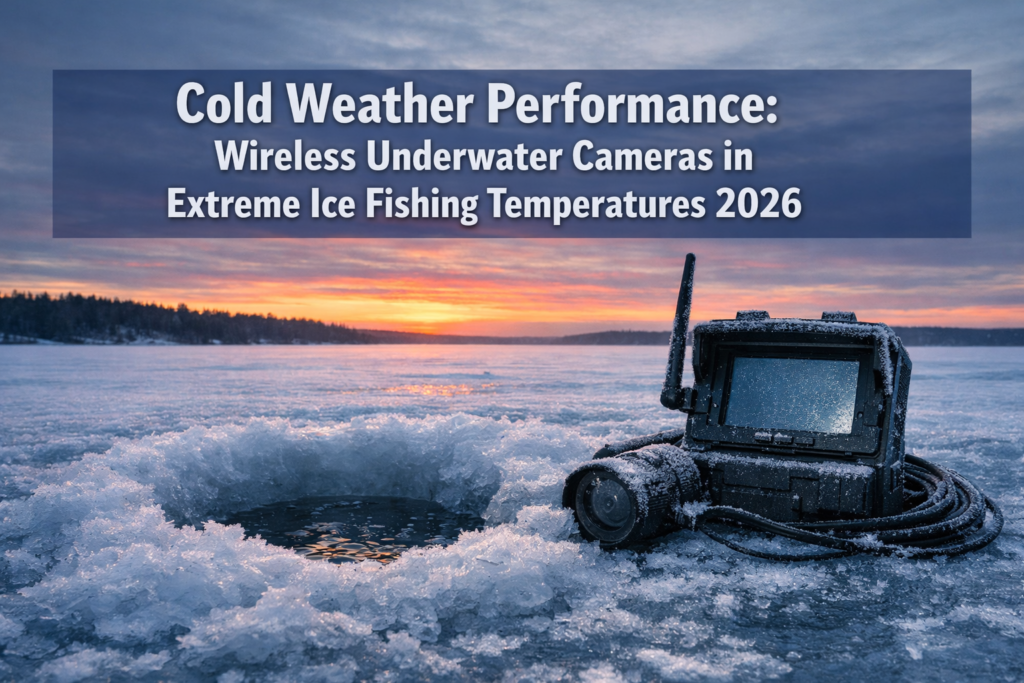
Last updated: March 10, 2026
Key Takeaways
- Wireless underwater cameras lose 20 to 40 percent of battery life below freezing, with lithium batteries holding 70 to 80 percent capacity at -20°F compared to 30 to 40 percent for sealed lead-acid batteries.
- Screen visibility degrades fast in sub-zero conditions. Cameras without heated displays suffer from slow pixel response and condensation buildup.
- Wireless signal range, often rated at 50 meters in ideal conditions, shrinks in extreme cold due to transmitter battery drain.
- Modern underwater cameras increase catch rates by 40 to 60 percent in field studies, but those gains disappear if the camera fails in the cold.
- FishPRO's 2026 Focus Pro introduced adjustable focal length technology, a first for ice fishing cameras.
- Wired camera systems remain more reliable than wireless in temperatures below -10°F.
- Smartphone-dependent wireless systems face a secondary failure point: phone batteries shut down around -4°F without insulation.
- Proper preparation (insulated cases, lithium batteries, anti-fog measures) extends camera performance by hours in harsh conditions.
To understand how wireless underwater cameras handle extreme ice fishing temperatures, look at internal heating elements; 2026 flagship models now utilize micro-heating circuits to maintain a stable internal temperature of 40°F, preventing sensor lag.
Quick Answer
Wireless underwater cameras work well for ice fishing in moderate cold (down to about 10°F). Below that, battery drain, screen lag, and wireless signal loss become serious problems. Lithium batteries outperform lead-acid by a wide margin in extreme cold, maintaining 70 to 80 percent capacity at -20°F. If you fish in sub-zero conditions regularly, choose a camera with a wired backup option and invest in insulated battery housing.
How Wireless Underwater Cameras Handle Extreme Ice Fishing Temperatures in 2026?
Wireless underwater cameras in 2026 handle cold better than previous generations, but they still have hard limits. The underwater portion of the camera (the submersible unit) performs fine in near-freezing water, which stays around 32°F below the ice. The problems happen above the ice, where air temperatures of -10°F to -30°F attack batteries, screens, and wireless transmitters.
Three components fail first in extreme cold:
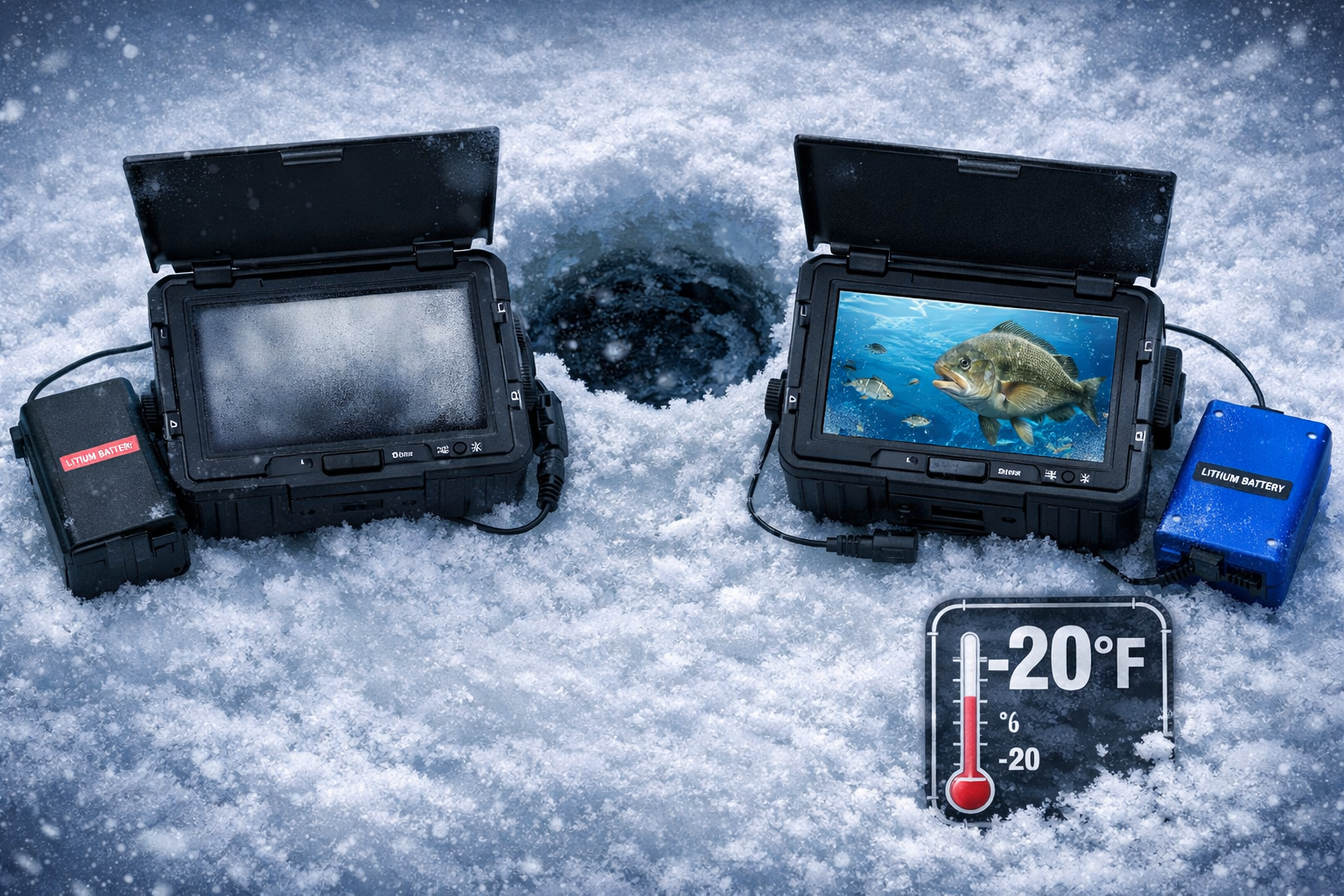
- Batteries: Lithium-ion cells lose 20 to 40 percent capacity below freezing. Standard lead-acid batteries lose 60 to 70 percent at -20°F.
- LCD screens: Liquid crystal displays slow down in cold. Pixel response time increases, creating ghosting and blur. Colors wash out.
- Wireless transmitters: The radio module draws extra power when the battery voltage drops, reducing effective range from the rated 50 meters to as little as 15 to 20 meters.
The FishPRO 2026 Focus Pro addresses one major frustration by adding adjustable focal length, keeping fish in focus at varying distances. But the cold weather challenges remain hardware-level issues that no firmware update fixes.
Choose a wireless camera if you fish in sheltered conditions above 0°F. Choose a wired system or a hybrid (wireless with wired backup) if you regularly fish exposed holes in sub-zero air.
What Happens to Battery Life in Sub-Zero Ice Fishing Conditions?
Battery failure is the number one reason wireless cameras stop working on the ice. Lithium batteries hold 70 to 80 percent of their rated capacity at -20°F. Sealed lead-acid batteries drop to 30 to 40 percent at the same temperature.
Here is a comparison of battery performance by type:
| Battery Type | Capacity at 32°F | Capacity at 0°F | Capacity at -20°F | Weight (typical) |
|---|---|---|---|---|
| Lithium-ion (18650 cells) | 90-95% | 75-85% | 70-80% | Light |
| Lithium iron phosphate (LiFePO4) | 85-90% | 70-80% | 60-70% | Medium |
| Sealed lead-acid (SLA) | 80-85% | 50-60% | 30-40% | Heavy |
Flasher units with LED displays consume only 0.4 to 0.6 amps per hour, while camera systems draw 0.8 to 1.2 amps per hour. That means a camera drains batteries roughly twice as fast as a flasher in the same conditions.
Common mistake: Carrying a single battery pack for an all-day session. Bring at least two lithium battery packs. Keep the spare inside your jacket, close to your body. A warm battery inserted at the four-hour mark gives you a full second session.
Smartphone-connected wireless cameras face a secondary problem. Your phone's lithium-ion battery loses 20 to 40 percent capacity below freezing, with protective shutdowns kicking in around -4°F. If your camera relies on a phone app for viewing, keep the phone in an insulated pocket and pull it out only when needed.
For gear that keeps your hands functional while managing batteries and electronics, check out our guide to the best ice fishing gloves for 2026.
Does Screen Visibility Degrade in Cold Weather Performance for Wireless Underwater Cameras?
Yes. LCD screens perform poorly below 0°F. The liquid crystals in the display move slower as temperature drops, causing visible ghosting when fish swim through the frame. Colors shift toward grey. Contrast drops. At -20°F, some budget screens become nearly unreadable.
Three factors affect screen visibility in cold:
- Pixel response time: Increases from 5 to 8 milliseconds (at room temperature) to 30+ milliseconds below 0°F. Moving fish appear as smeared streaks.
- Condensation: Bringing a cold camera into a heated shelter creates instant fog on the screen and lens. This moisture then freezes when you move back outside.
- Backlight brightness: LED backlights dim slightly in extreme cold, reducing visibility in bright daylight on open ice.
Cameras with heated display housings (like some Marcum models) address this directly. Marcum cameras also offer a color-kill black and white mode that improves contrast in low-light and cold conditions. The Aqua-Vu HD71-125 Pro handles shallow to mid-depth clarity well in the 5 to 40 foot range. For a closer look at that model, read our Aqua-Vu HD71-125 Pro review.
Decision rule: If you fish inside a heated shelter, screen visibility is manageable with most cameras. If you fish exposed holes in sub-zero wind, choose a camera with a heated display or use a wired monitor that you keep inside an insulated viewing hood.
How Do the Top 2026 Wireless Camera Models Compare in Cold Weather?
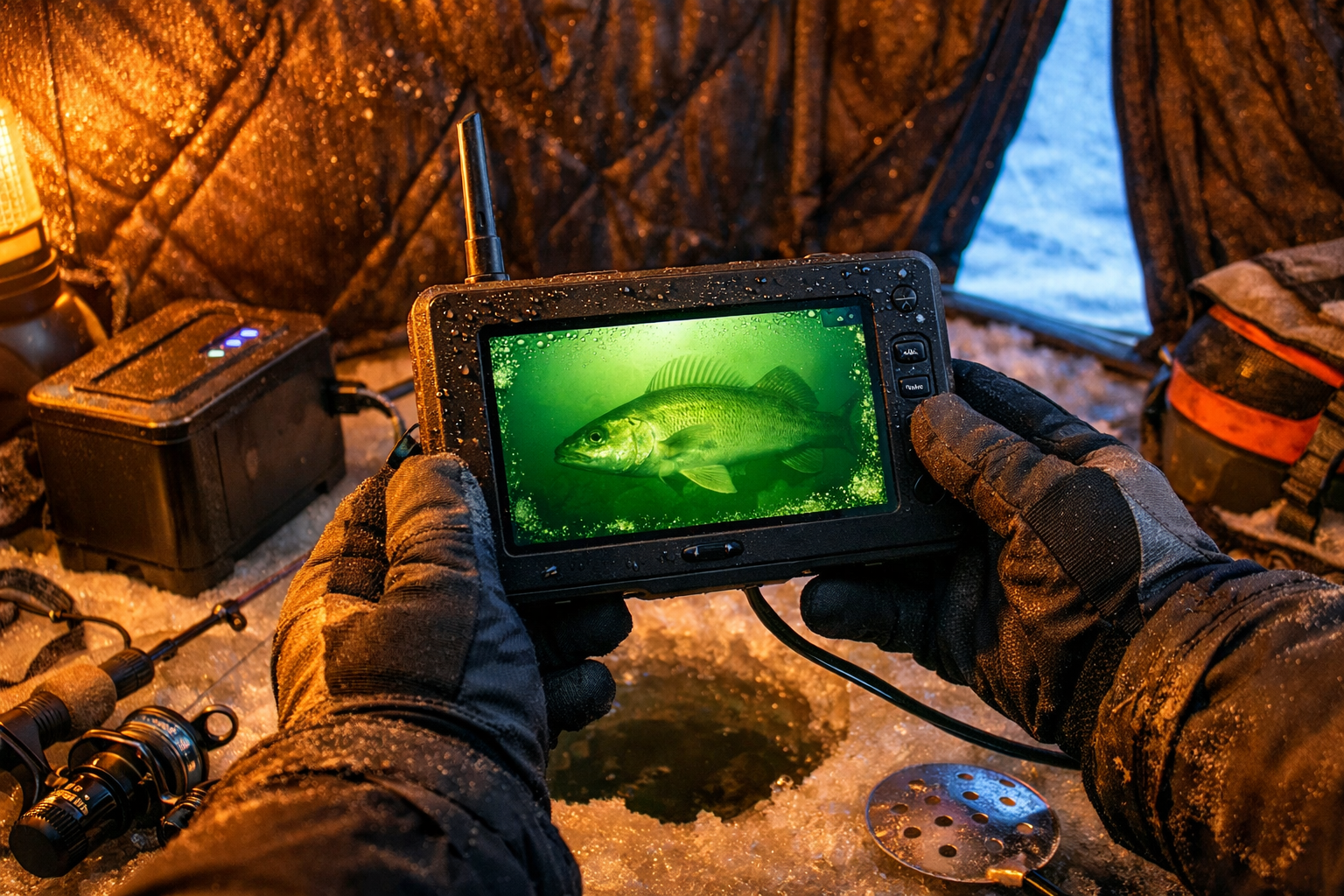
The 2026 market has four main contenders for ice fishing underwater cameras. Each handles cold differently.
FishPRO 2026 Focus Pro The standout feature is adjustable focal length, a first for ice fishing cameras. FishPRO has served over 200,000 anglers since 2017. The Focus Pro uses lithium battery packs and a wired monitor option. Cold weather rating is solid for moderate conditions. The adjustable focus means you spend less time repositioning the camera, which means less time with your hands exposed.
Chasing CanFish CF1 This wireless model offers 1080P HD imaging, 8+ hours runtime at room temperature, and 50-meter wireless range. In practice, expect 4 to 5 hours of runtime and 15 to 25 meters of wireless range at -15°F. The CF1 works well in sheltered setups. For exposed fishing, the wireless range limitation becomes a real problem.
Eyoyo 7-inch Underwater Camera A budget option with a 7-inch wired monitor. The wired connection eliminates wireless signal loss. The larger screen helps with visibility in cold. The trade-off is portability. This is a better choice for anglers who set up in one spot rather than hole-hopping.
Marcum Models Marcum cameras outperform competitors in murky water and low-light conditions due to higher sensor sensitivity [8]. The color-kill mode is a genuine advantage for dusk and night fishing. Marcum units tend to have better cold-rated housings. For a detailed comparison of camera brands, see our Eyoyo vs FishPro vs FourQ head-to-head test.
| Feature | FishPRO Focus Pro | CanFish CF1 | Eyoyo 7″ | Marcum |
|---|---|---|---|---|
| Connection | Wired + wireless | Wireless | Wired | Wired |
| Resolution | 1080P | 1080P | 1000TVL | 1080P |
| Cold rating | Moderate | Moderate | Moderate | Strong |
| Battery type | Lithium | Lithium | 12V SLA/Lithium | Lithium |
| Best for | Adjustable focus | Shelter fishing | Budget setups | Murky/low-light |
Should You Use a Camera or Sonar in Extreme Cold?
Sonar systems work regardless of water clarity or light conditions. Cameras do not. This is the fundamental trade-off.
In extreme cold (below -15°F), sonar has three advantages over cameras:
- No screen visibility issues. Flasher LEDs stay bright and responsive at any temperature.
- Lower power draw. Flashers use 0.4 to 0.6 amps per hour versus 0.8 to 1.2 for cameras.
- No lens fogging. Sonar transducers have no optical components to fog or freeze.
Cameras have one advantage sonar lacks: you see the fish. You see species, size, and behavior. Field studies show underwater cameras increase catch rates by 40 to 60 percent. That advantage matters.
The tactical approach for 2026: Run both. Use a flasher (like the Vexilar FLX-18) as your primary fish-finding tool. Deploy the camera when you've located fish and want to confirm species or observe how they respond to your presentation. This keeps the camera off for most of the day, preserving battery life for when visual confirmation matters most.
How to Protect Your Wireless Camera in Extreme Cold
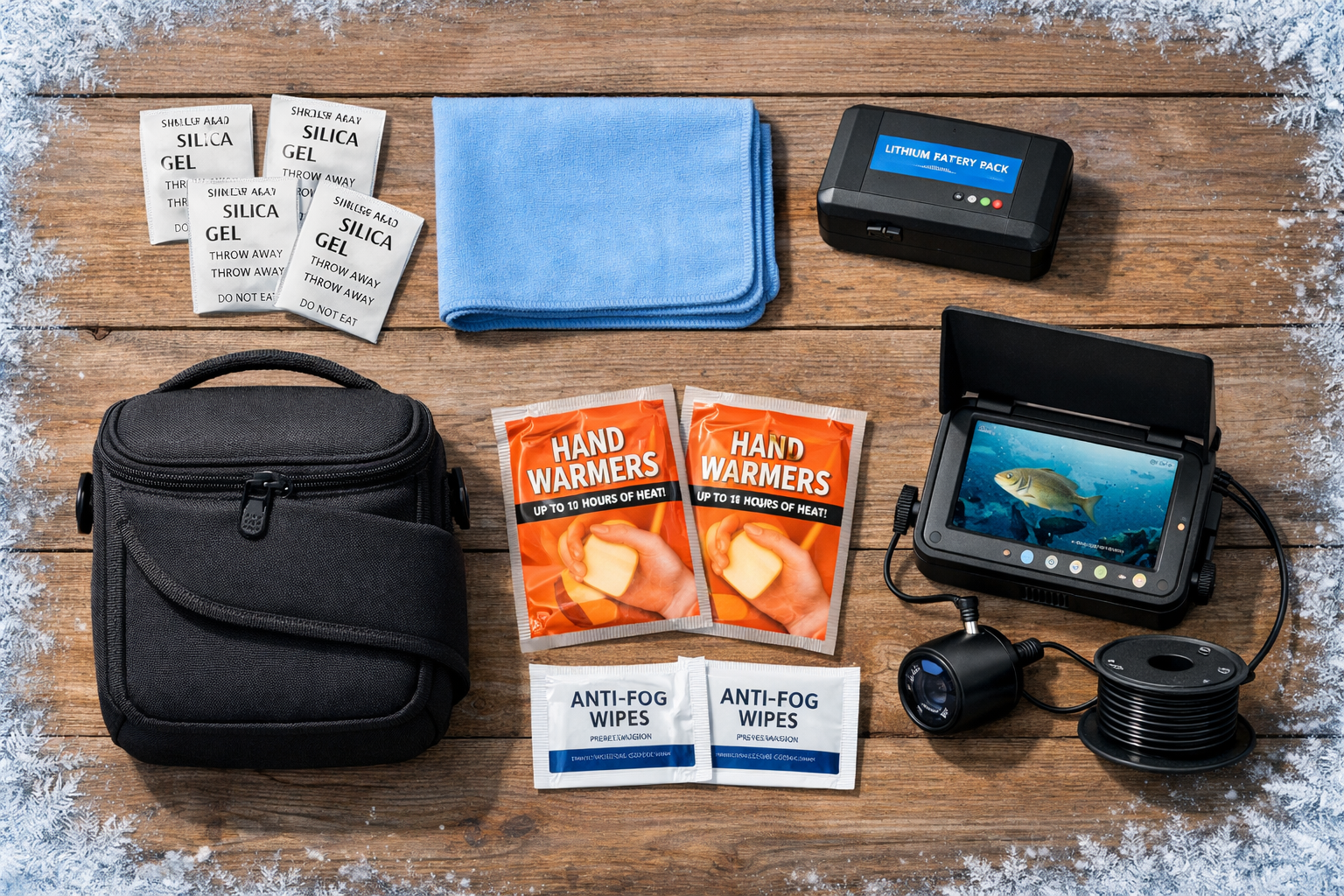
Preparation determines whether your camera lasts two hours or ten hours on the ice. Follow these steps before every sub-zero session.
Battery preparation:
- Charge lithium batteries to 100 percent the night before. Store them at room temperature until you leave.
- Carry batteries in an inside jacket pocket during transit. Body heat keeps them warm.
- Bring two battery packs minimum. Rotate them every 3 to 4 hours.
Screen protection:
- Apply an anti-fog treatment to the monitor screen before heading out.
- Carry a microfiber cloth for wiping condensation.
- If moving between a heated shelter and open air, seal the camera in a zip-lock bag before transitioning. This prevents condensation from forming on cold internal components.
Housing and cable care:
- Inspect rubber seals and O-rings before the season. Cold makes rubber brittle. Replace cracked seals.
- Use a neoprene sleeve over the camera housing when stored on the ice surface.
- Coil cables loosely. Cold cables become stiff and crack if bent sharply.
Wireless signal optimization:
- Position the transmitter unit above the ice surface, not buried in snow.
- Keep the receiving device (phone or tablet) within 10 meters in sub-zero conditions, regardless of the rated range.
- Switch to wired mode when temperatures drop below -10°F.
Staying warm while managing gear is half the battle. Layer properly with ice fishing hoodies and base layers under a quality outer shell. If you need a full breakdown of cold weather clothing systems, our ice fishing bibs vs full float suit comparison covers the options.
What Are the Biggest Mistakes Anglers Make with Cameras in Cold Weather?
Mistake 1: Relying on wireless-only in extreme cold. Wireless range shrinks dramatically below -10°F. Always have a wired backup cable.
Mistake 2: Using SLA batteries. Sealed lead-acid batteries lose 60 to 70 percent capacity at -20°F. Switch to lithium. The upfront cost pays for itself in reliability.
Mistake 3: Leaving the camera running all day. Camera systems draw twice the power of flashers. Turn the camera on when you need visual confirmation. Turn it off when scouting.
Mistake 4: Ignoring condensation management. Moving a camera between warm and cold environments without a sealed bag creates internal moisture. That moisture freezes on the lens and circuit boards. Over time, this damages electronics permanently.
Mistake 5: Expecting phone apps to work in the cold. Smartphone batteries shut down around -4°F. If your camera system depends on a phone for viewing, you need an insulated phone case with a hand warmer insert.
Frequently Asked Questions
At what temperature do wireless underwater cameras stop working? Most wireless cameras function down to about 0°F to -10°F. Below -10°F, battery drain and wireless signal loss make them unreliable without insulation and backup power.
Do underwater cameras work under the ice? Yes. The water beneath ice stays at approximately 32°F, which is within normal operating range for submersible camera units. The problems occur with above-ice components (batteries, screens, transmitters).
How long do camera batteries last in extreme cold? Lithium batteries provide 4 to 6 hours of continuous use at -10°F to -20°F. SLA batteries provide 2 to 3 hours in the same conditions.
Is a wired or wireless camera better for ice fishing? Wired cameras are more reliable in extreme cold. Wireless cameras offer more convenience in moderate cold (above 0°F) and inside heated shelters.
Do underwater cameras increase catch rates? Field studies show a 40 to 60 percent increase in catch rates when using underwater cameras. The advantage is largest when targeting specific species in clear to moderately clear water.
What is the best underwater camera for murky water ice fishing? Marcum cameras outperform competitors in murky water due to higher sensor sensitivity and color-kill black and white mode [8]. For a full review of murky water options, read our FishPro 1080P MF 2026 murky water performance review.
Does the FishPRO 2026 Focus Pro work in extreme cold? The Focus Pro handles moderate cold well and its adjustable focal length reduces the need to reposition the camera. For sub-zero conditions, use the wired connection option and lithium batteries.
Should I use a camera or a flasher for ice fishing? Use both. A flasher for primary fish detection (lower power draw, works in all conditions) and a camera for species identification and behavior observation.
How do I prevent my camera screen from fogging? Apply anti-fog treatment before heading out. When moving between warm and cold environments, seal the camera in a plastic bag to prevent condensation from forming on internal components.
What is the wireless range of ice fishing cameras in cold weather? Rated ranges (often 50 meters) drop to 15 to 25 meters in sub-zero conditions due to battery voltage drops in the transmitter unit.
Kayak. Drill. Catch. Repeat. The right camera setup, properly prepared for the cold, gives you a tactical edge that sonar alone does not provide. Invest in lithium batteries, protect your screen, and always carry a wired backup for the coldest days. Your gear should work as hard as you do out there.
See you on the water.
References
[1] Ice Fishing Through Ice Vision Underwater Cameras And Float Suit Mobility – https://windrider.com/blogs/tips-and-tricks/ice-fishing-through-ice-vision-underwater-cameras-and-float-suit-mobility
[2] How An Underwater Camera Changed My Ice Fishing Season A Real Cf1 User Story – https://www.canfishcam.com/blogs/how-an-underwater-camera-changed-my-ice-fishing-season-a-real-cf1-user-story
[3] Best 5 Underwater Cameras For Ice Fishing Of 2025 Crystal Clear Vision Beneath The Ice – https://www.bestpickinsider.com/list/best-5-underwater-cameras-for-ice-fishing-of-2025-crystal-clear-vision-beneath-the-ice/
[4] Ice Fishing Electronics Flasher Vs Sonar Setup In Extreme Cold Conditions – https://windrider.com/blogs/tips-and-tricks/ice-fishing-electronics-flasher-vs-sonar-setup-in-extreme-cold-conditions
[5] fishprocam – https://fishprocam.com
[6] Best Underwater Cameras For Ice Fishing Unbiased Reviews – https://www.fishfinders.info/best-underwater-cameras-for-ice-fishing-unbiased-reviews
[7] Best Underwater Fishing Cameras – https://www.outdoorlife.com/gear/best-underwater-fishing-cameras/