Last updated: February 21, 2026
Ice fishing bibs give you better mobility and lower cost. Full float suits give you better flotation and thermal coverage. The right choice depends on where you fish, how far you travel from shore, and your tolerance for risk. This ice fishing bibs vs full float suit comparison 2026 breaks down the differences in safety, warmth, mobility, and value so you make the right call before your next trip on hard water.
Key Takeaways
- Full float suits provide 360-degree flotation and eliminate the thermal gap at the waist that bibs leave exposed.
- Ice fishing bibs cost less upfront and offer greater freedom of movement for active anglers who drill many holes.
- Float bibs (a hybrid category) bridge the gap between standard bibs and full suits, adding buoyancy panels without the bulk of a one-piece.
- Professional guides report fewer cold-water emergencies when anglers wear full float suits, especially on early and late ice.
- Your fishing style, ice conditions, and budget should drive the decision. There is no single best option for every angler.
Quick Answer
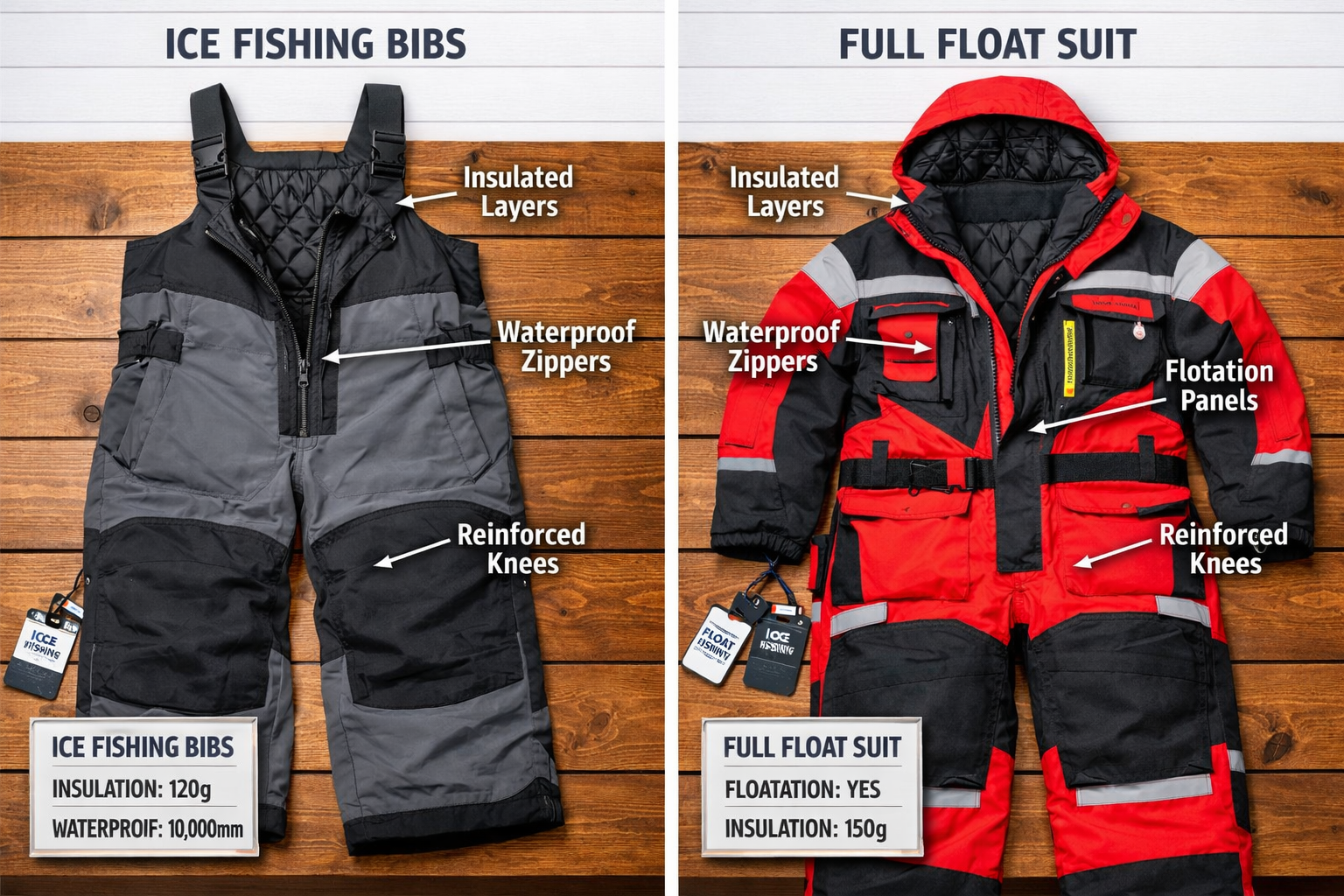
Choose a full float suit if you fish early ice, late ice, or large bodies of water where a breakthrough is a real threat. Choose bibs if you fish mid-season on thick, stable ice within a shelter and want maximum mobility at a lower price. Float bibs (like the WindRider Boreas Pro or IceArmor Rise) offer a middle path with built-in buoyancy at a moderate cost. Read the full breakdown below to match your gear to your conditions.
What Are Ice Fishing Bibs and How Do They Differ from Full Float Suits?
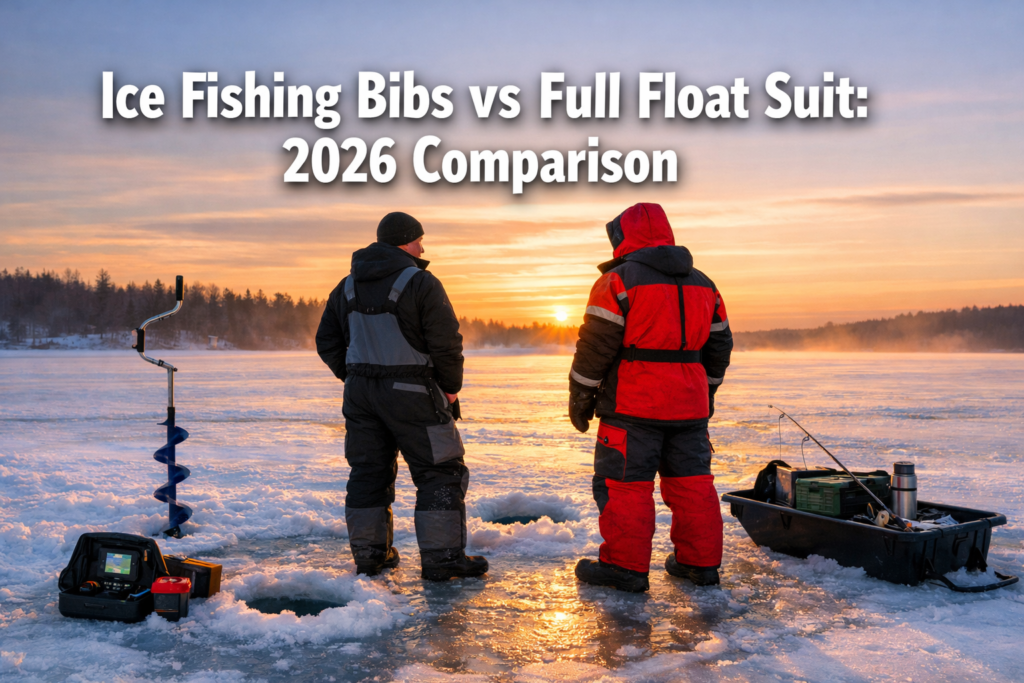
Ice fishing bibs are insulated, waterproof overalls with shoulder straps. They cover your legs and torso up to the chest. You pair them with a separate jacket. Full float suits are one-piece or matched jacket-and-bib systems with sealed flotation foam throughout. The foam keeps you on the surface if you fall through the ice.
The core difference is flotation. Standard bibs have zero buoyancy. If you go through the ice, they become dead weight. Full float suits contain closed-cell foam panels that provide positive buoyancy, keeping your head above water long enough to self-rescue or wait for help.
Here is a quick feature breakdown:
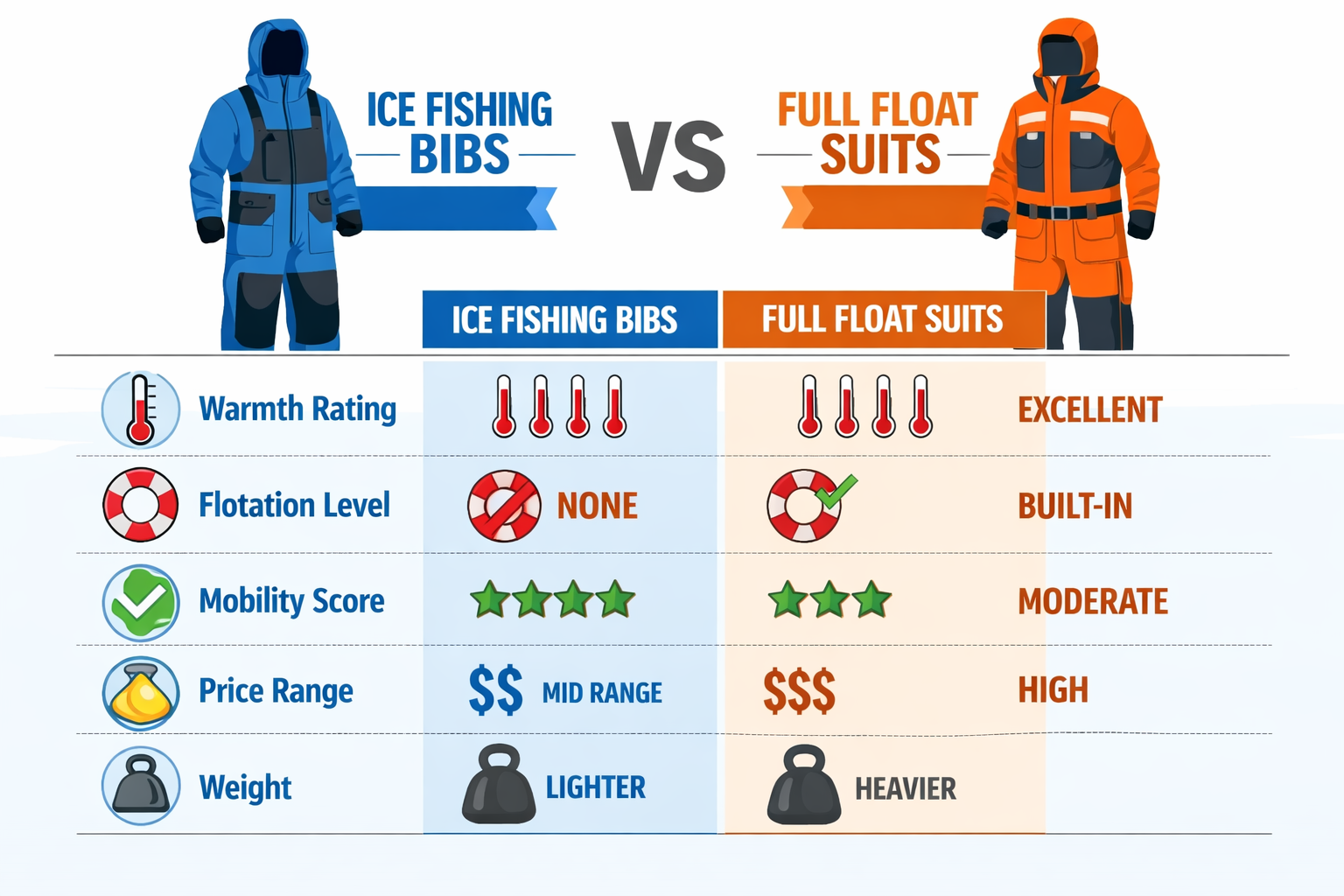
| Feature | Standard Ice Bibs | Float Bibs | Full Float Suit |
|---|---|---|---|
| Flotation | None | Partial (torso panels) | Full body (jacket + bib) |
| Thermal coverage | Legs and lower torso | Legs and lower torso | Head to toe (no waist gap) |
| Typical insulation | 100g to 200g | 100g to 150g | 100g to 200g |
| Mobility | High | Moderate to high | Moderate |
| Average price (2026) | $100 to $300 | $200 to $400 | $350 to $700+ |
| Weight | Light | Moderate | Heavier |
Common mistake: Many anglers assume any bib labeled “waterproof” will save them in a breakthrough. Waterproofing keeps moisture out during normal use. Flotation keeps you alive in the water. These are two different functions.
For more resources on gear selection and fishing preparation, check out the FishOnYak blog where the team covers seasonal transitions and tactical angling strategies.
Ice Fishing Bibs vs Full Float Suit Comparison 2026: Safety and Flotation
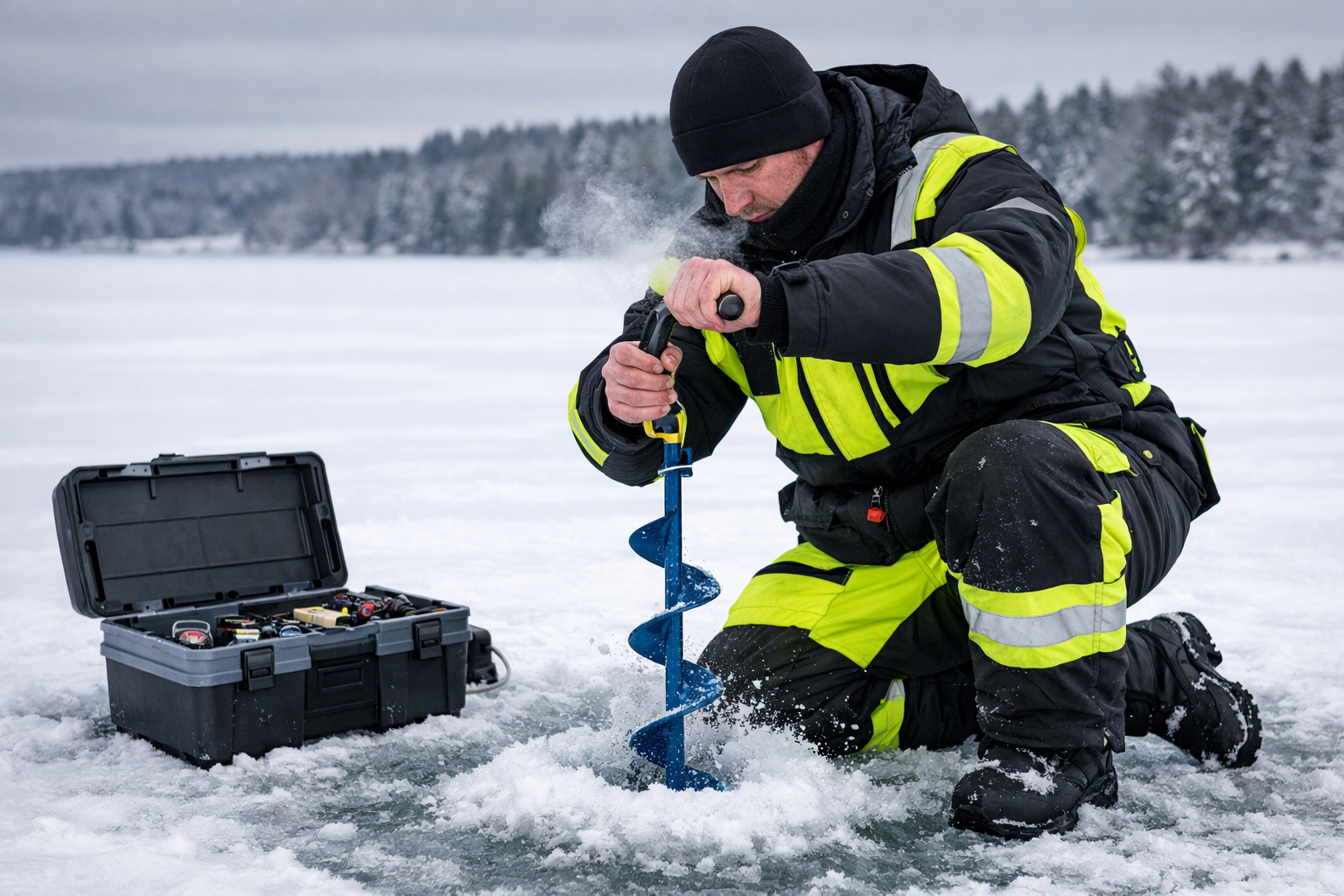
Full float suits are the safer option. Period. A matched float suit system provides 360-degree buoyancy. The jacket and bib work together to keep your airway above the waterline even if you lose consciousness from cold shock.
Standard bibs offer no flotation. If you break through, wet insulation pulls you down. Cold water saps your strength in under two minutes. Without buoyancy, self-rescue becomes extremely difficult.
Float bibs (the hybrid category) add foam panels to the chest and back of the bib portion. They provide partial buoyancy. This helps, but your arms and shoulders still lack flotation. In a face-down entry, a float bib alone does not guarantee your head stays above water the way a full suit does.
Key safety facts for 2026:
- WindRider's analysis indicates full suits offer roughly 67% better safety performance compared to bibs in cold-water immersion scenarios.
- Thermal imaging research from the Arctic Research Institute showed 15 to 20 percent more heat loss from bibs compared to full suits due to the exposed waist gap between jacket and bib.
- Professional ice guides who mandate full float suits for clients report significantly fewer emergency incidents on the ice.
Choose a full float suit if:
- You fish early ice (under 4 inches) or late ice (deteriorating conditions).
- You cross large expanses of open ice on foot or by snowmobile.
- You fish alone.
- You fish on rivers or current-affected ice where thickness varies.
Choose bibs (standard or float) if:
- You fish mid-season on well-established ice (8 inches or more).
- You fish inside a heated shelter and need to shed layers.
- You stay close to shore and fish with a partner who carries rescue gear.
Fluid Safety is a core principle at FishOnYak.com. No piece of gear replaces good judgment, but the right gear gives you a margin of error when conditions change fast. Learn more about the FishOnYak approach to safety-first fishing.
How Warm Are Bibs Compared to Full Float Suits in 2026?
Full float suits retain more body heat because they eliminate the thermal gap at the waist. Bibs paired with a jacket leave a seam where cold air infiltrates during movement, bending, or reaching.
Most 2026 bibs and suits use 100-gram to 200-gram synthetic insulation (Thinsulate or equivalent). The insulation weight alone does not tell the full story. Suit design matters more than fill weight.
Thermal performance factors:
- Waist seal: Full suits overlap or integrate at the waist. Bibs rely on your jacket to cover the gap. Wind and movement break that seal repeatedly.
- Insulation continuity: Full suits distribute insulation evenly from shoulders to ankles. Bibs concentrate insulation in the lower body, leaving upper-body warmth dependent on your jacket choice.
- Moisture management: Sweat buildup kills warmth. Both bibs and suits need breathable membranes. The Norfin Explorer 2 (named warmest in Outdoor Life's 2026 guide) includes electric heating zones powered by external battery packs for extreme cold.
Practical warmth tips:
- Layer a moisture-wicking base layer under either option. Merino wool or synthetic blends work best.
- Add a mid-layer fleece for sub-zero days.
- Avoid cotton. Wet cotton accelerates heat loss.
- If you run hot while drilling holes, bibs let you strip your jacket faster than a one-piece suit.
Edge case: If you fish in a heated portable shelter, a full float suit becomes uncomfortably warm. Many shelter anglers prefer bibs because they strip down to a base layer on top while keeping their legs insulated. Choose bibs if you spend most of your time inside a heated hub.
Ice Fishing Bibs vs Full Float Suit Comparison 2026: Mobility and Comfort
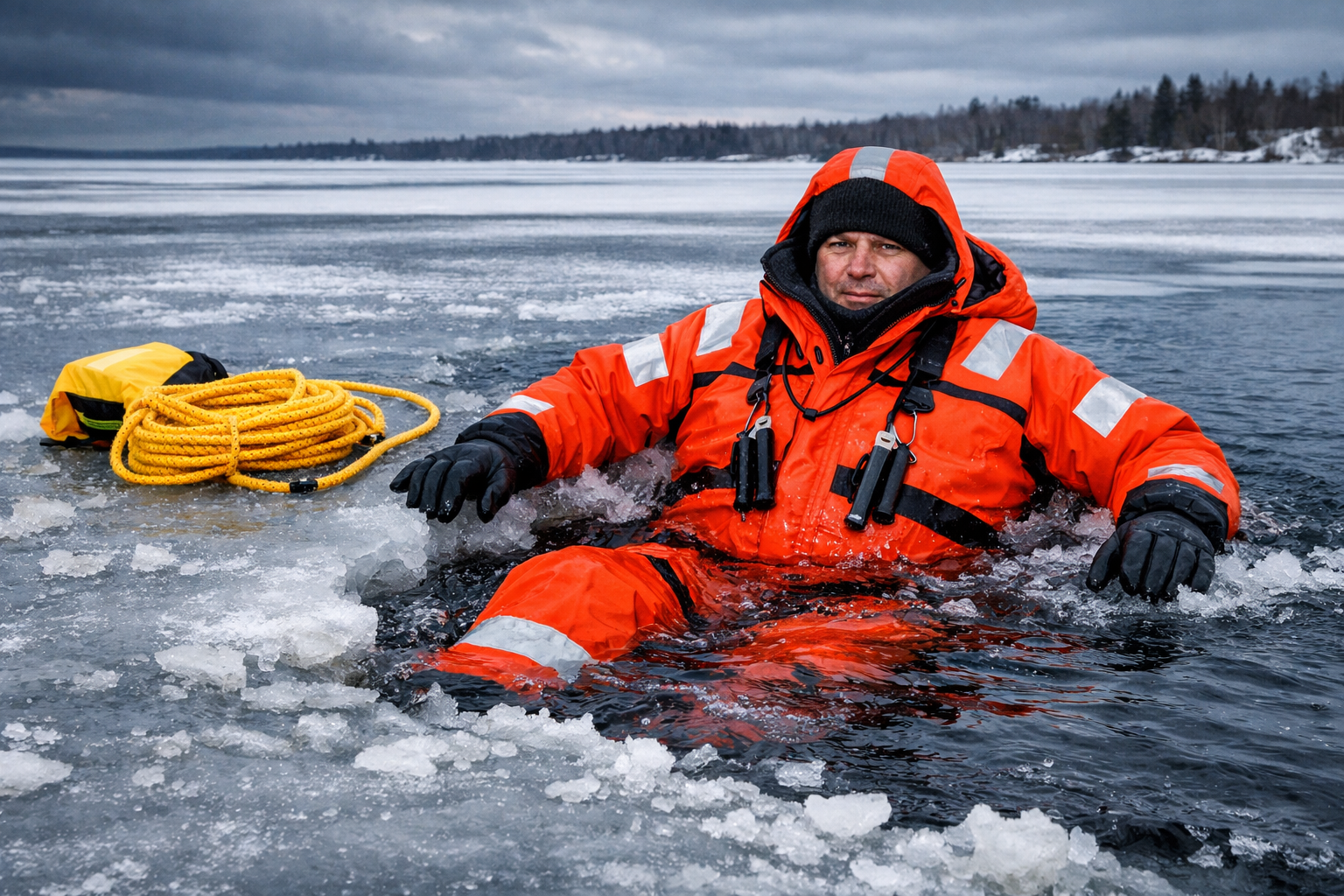
Bibs win on mobility. The separate jacket-and-bib setup gives you a wider range of motion in your shoulders, arms, and torso. You bend, kneel, and reach more freely.
Full float suits add bulk. The foam flotation panels restrict movement, especially through the chest and back. Drilling holes, setting tip-ups, and fighting fish all require upper-body rotation. A stiff suit slows you down.
Mobility comparison:
- Drilling: Bibs allow a full range of arm motion. Float suits restrict shoulder rotation by 10 to 15 percent depending on foam thickness.
- Kneeling: Both options perform well if they have reinforced knees. The IceRunner Float Bib and Eskimo Roughneck both feature knee padding for extended kneeling on hard ice.
- Jigging: Bibs give you better wrist-to-shoulder freedom for finesse jigging. Suits work fine for aggressive jigging but feel bulkier during subtle presentations.
- Walking long distances: Full suits add 2 to 4 pounds of weight from foam panels. On a long walk to a remote spot, that weight adds up. Bibs keep you lighter on your feet.
Comfort features to look for in 2026 models:
- Adjustable shoulder straps with quick-release buckles
- Zippered fly for convenience without removing layers
- Hand-warmer pockets with fleece lining
- Boot gaiters to seal out snow
- D-ring attachment points for tools and safety gear
The WindRider Boreas Pro Floating Ice Fishing Bibs (released February 2, 2026, at $249) include many of these features while adding flotation panels. Available in grey, wetlands camo, and twilight, the Boreas Pro targets anglers who want float-bib safety without sacrificing too much mobility.
For anglers who value a tournament-ready setup, mobility matters. If you compete in ice fishing derbies, bibs let you move between holes faster and fish more aggressively. Check out the FishOnYak case studies for examples of how gear choices affect performance in competitive settings.
Which 2026 Models Stand Out for Bibs and Float Suits?
Several manufacturers released updated models for the 2026 ice season. Here are the top performers based on published reviews and expert assessments.
Best overall flotation system: Striker Climate Jacket and Bib combo. Outdoor Life's 2026 guide named this the best overall flotation option. The matched system provides full-body buoyancy with a proven track record among Great Lakes anglers.
Best floating bib: IceArmor Rise Float Bibs. Field and Stream ranked these the best floating bib option. They add buoyancy panels without the weight of a full suit.
Best value float suit: IceRunner Fall/Spring Float Bib. Priced well below competitors, the IceRunner uses 228T Tussor nylon with 100g insulation. Eddie Stein of flyfishtraveler.com noted the IceRunner saves roughly 50% compared to premium float suits while delivering solid waterproofing and buoyancy. Sizing runs up to 4XL with features like knee padding and D-rings for multi-season use.
Best overall bib (non-floating): Striker Apex Bibs. Field and Stream's December 2025 ranking placed these as the best overall bib for warmth, durability, and fit.
Warmest option: Norfin Explorer 2. This suit includes electric heating zones. You supply a power bank separately. For anglers who fish in extreme cold (negative 20°F and below), the active heating system extends your time on the ice.
Best budget bib: Arctix Avalanche. Covered in the “6 Best Ice Fishing Bibs 2026” review, the Avalanche offers basic insulation and waterproofing at an entry-level price. No flotation, but a solid starter bib for shelter fishing.
Best new release: WindRider Boreas Pro Floating Ice Fishing Bibs ($249, released February 2026). Positioned as the best overall bib for 2026 by WindRider, the Boreas Pro combines flotation, insulation, and a competitive price.
| Model | Type | Price Range | Flotation | Best For |
|---|---|---|---|---|
| Striker Climate Combo | Full float suit | $500 to $650 | Full body | Open ice, early/late season |
| IceArmor Rise | Float bib | $250 to $350 | Partial (torso) | Versatile all-season use |
| IceRunner Float Bib | Float bib | $150 to $250 | Partial (torso) | Budget-conscious anglers |
| Striker Apex | Standard bib | $200 to $300 | None | Shelter fishing, mid-season |
| Norfin Explorer 2 | Full float suit | $400 to $600 | Full body | Extreme cold |
| WindRider Boreas Pro | Float bib | $249 | Partial (torso) | Best value float bib |
| Arctix Avalanche | Standard bib | $80 to $130 | None | Beginners, tight budgets |
Visit the FishOnYak showroom for visual breakdowns of gear setups and rigging configurations that pair well with these systems.
How Do 2026 Ice Fishing Regulations Affect Your Gear Choice?
New regulations for the 2025-26 and 2026 seasons affect where and how you fish, which in turn affects the gear you need.
Minnesota DNR announced (November 2025, effective for the 2025-26 season) that non-motorized automatic hook-setting devices are now legal for ice fishing. John Dunn, the state's fisheries rules coordinator, confirmed public input drove this change. More automation at the hole means less time actively jigging and more time monitoring multiple setups. If you spend more time walking between tip-ups spread across open ice, a float suit provides better protection during transit.
State-specific slot limits also changed for 2026. WindRider published a comprehensive breakdown of ice fishing slot limits by state in February 2026. Tighter slot limits on certain species mean anglers travel farther to find legal fish, often venturing onto less-trafficked (and less-tested) ice. The farther you go from shore, the stronger the case for full flotation.
Decision rule: If new regulations push you to fish new water, unfamiliar structure, or remote locations, upgrade your safety gear. A float suit or float bib provides a margin of error on ice you have not tested before.
Stay current on regulation changes and fishing strategy by reading the latest posts on the FishOnYak blog.
What Mistakes Do Anglers Make When Choosing Between Bibs and Float Suits?
Mistake 1: Buying based on price alone. A $100 bib saves money upfront but offers zero flotation. If you fish early ice or travel far from shore, the savings disappear the moment you need buoyancy you do not have.
Mistake 2: Assuming “waterproof” means “safe.” Waterproof fabric keeps you dry in snow and slush. Flotation foam keeps you alive in water. These are separate features. Read product specs carefully. Look for the word “flotation” or “float” in the product name and description.
Mistake 3: Ignoring fit. A float suit that restricts your movement leads to fatigue. A bib that sags at the shoulders lets cold air in. Try gear on over your base and mid layers before buying. Move your arms overhead. Kneel down. Twist at the waist. If any motion feels restricted, size up or try a different model.
Mistake 4: Overdressing for shelter fishing. If you fish inside a heated hub, a full float suit will overheat you within 30 minutes. Bibs with a removable jacket give you temperature control. Save the float suit for the walk to and from the shelter.
Mistake 5: Skipping ice picks and a rescue plan. No suit replaces ice picks, a throw rope, and a buddy system. Even the best float suit only buys you time. You still need a plan to get out of the water.
For step-by-step guidance on building a complete safety system for ice fishing, explore the FishOnYak services page for coaching options and tactical angling resources.
How to Decide: A Step-by-Step Checklist
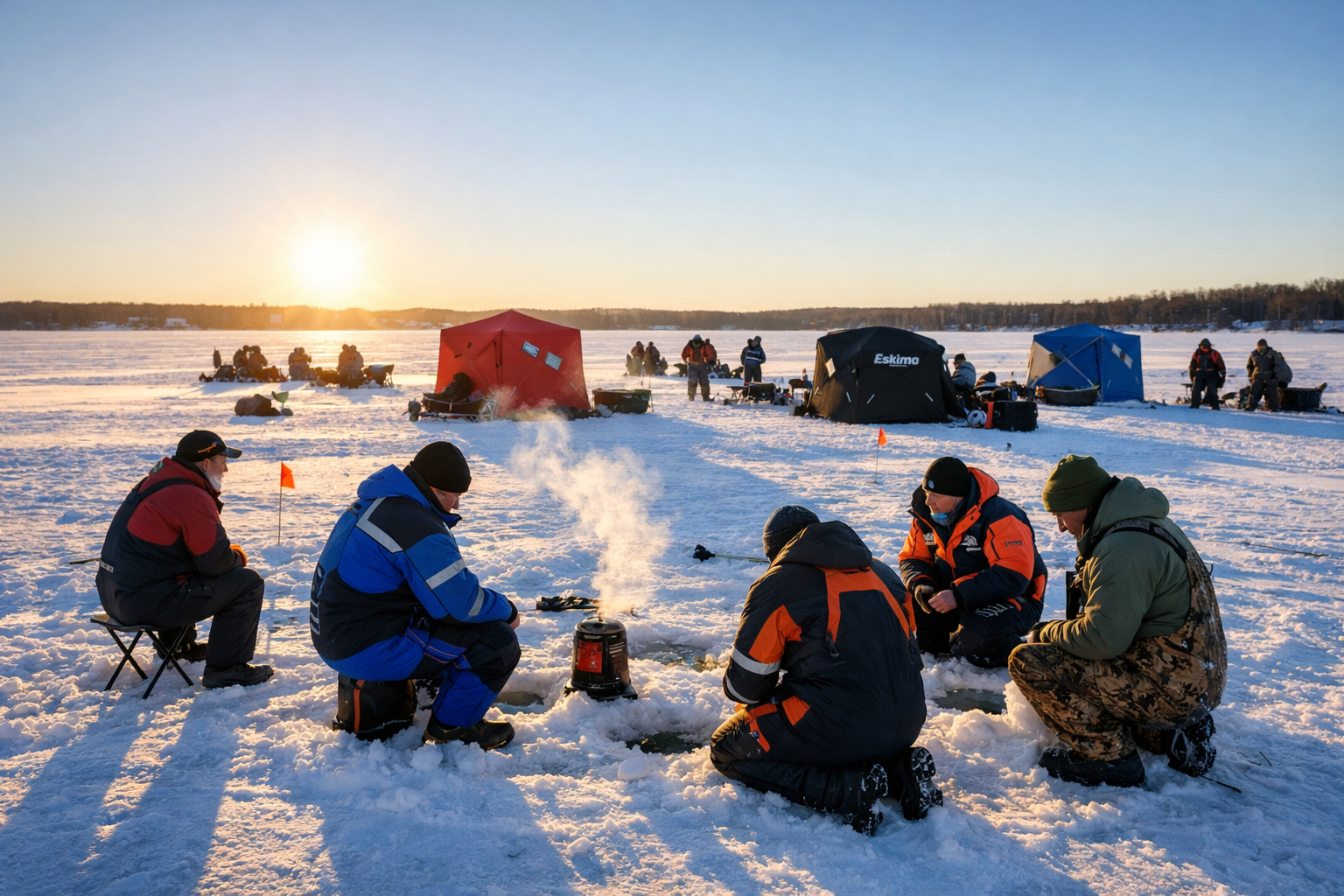
Use this checklist before your next ice fishing trip to determine the right outerwear system.
- Assess ice conditions. Early ice (under 4 inches of clear ice) or late ice (honeycombed, deteriorating) demands flotation. Choose a float suit or float bib.
- Measure your distance from shore. Fishing within 100 yards of a solid shoreline on thick ice? Bibs work. Fishing a mile out on a big lake? Float suit.
- Count your fishing partners. Solo anglers need more self-rescue capability. A float suit gives you buoyancy while you use your ice picks to pull yourself out.
- Check your shelter setup. Heated shelter? Bibs. Open-air fishing all day? Float suit for sustained warmth.
- Set your budget. Under $150: standard bibs (Arctix Avalanche). $150 to $300: float bibs (IceRunner, WindRider Boreas Pro). $350 and up: full float suit (Striker Climate, Norfin Explorer 2).
- Try before you buy. Visit a retailer and move in the gear. Drill an imaginary hole. Kneel. Reach overhead. Comfort matters over a 10-hour day on the ice.
- Pack supplemental safety. Regardless of your choice, carry ice picks on a neck lanyard, a throw rope, and a fully charged phone in a waterproof case.
Kayak. Drill. Catch. Repeat. The same preparation mindset that keeps you safe on saltwater applies on the ice.
FAQ: Ice Fishing Bibs vs Full Float Suit Comparison 2026
Do ice fishing bibs float? Standard bibs do not float. Float bibs (like the WindRider Boreas Pro or IceArmor Rise) contain foam panels that provide partial buoyancy. Always check the product description for the word “float” or “flotation.”
Are full float suits worth the extra cost? Yes, if you fish early ice, late ice, large lakes, or alone. The added buoyancy and thermal coverage reduce your risk of hypothermia and drowning. For mid-season shelter fishing on thick ice, bibs offer better value.
How much do full float suits weigh compared to bibs? Full float suits weigh 2 to 4 pounds more than standard bibs due to closed-cell foam panels. Float bibs fall in between. The extra weight is noticeable on long walks but manageable for most anglers.
Do float suits restrict movement? Yes, to a degree. Foam panels add stiffness through the chest and back. Modern designs (2026 models) minimize this with articulated foam placement, but you will notice reduced shoulder rotation compared to standard bibs.
What temperature rating should I look for? Most 2026 bibs and suits use 100g to 200g insulation rated for 0°F to negative 30°F. Layer underneath for extreme cold. The Norfin Explorer 2 adds electric heating for the coldest conditions.
Are float bibs a good compromise? Float bibs offer partial buoyancy at a lower cost and weight than full suits. They work well for anglers who want some flotation without committing to a one-piece system. They do not provide the same level of protection as a matched float suit.
How long does a float suit keep you alive in cold water? A quality float suit keeps your head above water and slows heat loss. In 32°F water, an unprotected person loses useful muscle function in about 10 minutes. A float suit extends that window, but exact times vary by suit design, water temperature, and individual physiology. Self-rescue within 5 minutes remains the goal.
Do I need a float suit if I fish inside a shelter? You still walk to and from the shelter across ice. If that walk crosses questionable ice, wear flotation for the transit. Once inside a heated shelter, bibs are more comfortable.
What is the best float suit for the money in 2026? The IceRunner Fall/Spring Float Bib offers the best value, saving roughly 50% compared to premium options while providing solid waterproofing and buoyancy. For a full suit system, the Striker Climate combo leads the category.
Do I need ice picks if I wear a float suit? Yes. A float suit keeps you on the surface. Ice picks give you the grip to pull yourself back onto the ice. Always carry picks on a neck lanyard, even in a float suit.
Are there new regulations affecting ice fishing gear in 2026? Minnesota now allows non-motorized automatic hook-setting devices as of the 2025-26 season. Several states updated slot limits for 2026. No states currently mandate flotation gear, but conditions on unfamiliar water always warrant it.
How do I care for a float suit to maintain buoyancy? Rinse with fresh water after each season. Hang dry completely before storage. Do not compress foam panels in a tight storage bag. Inspect seams and zippers annually for wear. Replace the suit if foam becomes waterlogged or compressed.
Actionable Next Steps
Your gear choice comes down to conditions, distance from shore, and fishing style. Here is what to do now:
- Audit your current setup. If you own standard bibs and fish early or late ice, add a float bib or full float suit to your rotation.
- Check your state's 2026 regulations. New slot limits and rule changes affect where you fish, which affects the ice you cross.
- Test gear in person. Visit a retailer, try on the Striker Climate, WindRider Boreas Pro, or IceRunner. Move in them. The best suit is the one you will wear every trip.
- Build a rescue kit. Ice picks, throw rope, waterproof phone case, and a whistle. Carry these regardless of what you wear.
- Plan your season. Match your gear to your calendar. Bibs for mid-winter shelter days. Float suit for first ice and last ice adventures.
The ice does not care about your experience level. Prepare like a pro. Fish with confidence. Stay safe out there.
See you on the water.
For more tactical angling content, coaching resources, and rigging guides, visit FishOnYak.com and explore the FishOnYak testimonials from anglers who trust preparation over luck.