Last updated: March 2, 2026
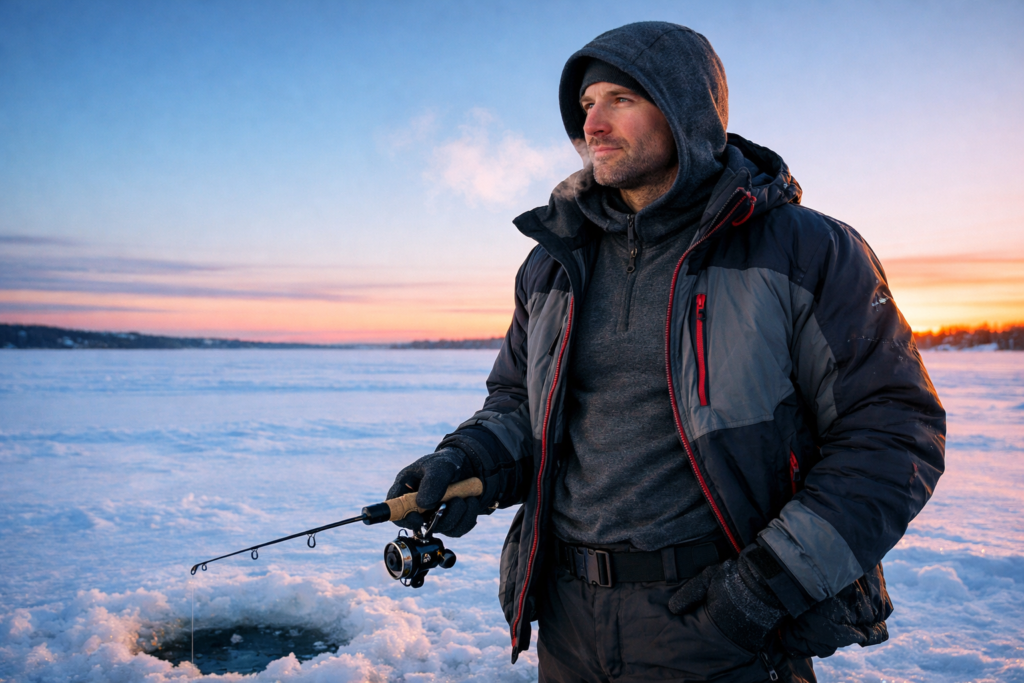
The right base layer and hoodie pairing under your ice jacket determines whether you fish for 2 hours or 12. Ice fishing hoodies and base layers 2026: optimal pairings under jackets for extreme cold comes down to choosing fabrics that wick sweat during active jigging, retain heat during long static waits, and lay flat enough to avoid bulk under your outer shell. This guide breaks down the top merino wool and synthetic options tested for layering efficiency in temperatures reaching -20°F and below.
Key Takeaways
- Merino wool base layers retain warmth even when damp, making them the top choice for anglers who sweat during active jigging and then sit still.
- Synthetic base layers (polyester blends) dry 30-40% faster than merino and cost less, but they hold odor after multi-day trips.
- A midweight base layer (150-250 g/m²) paired with a fleece-lined hoodie covers the widest temperature range for ice fishing.
- Hooded midlayers add critical head and neck coverage but need a slim fit to avoid bunching under jackets.
- Flatlock seams and four-way stretch are non-negotiable features for all-day comfort under bibs and jackets.
- Layering order matters: moisture-wicking base layer first, insulating hoodie second, windproof/waterproof jacket third.
- Cotton kills warmth. Avoid any cotton blend in your ice fishing layering system.
Quick Answer
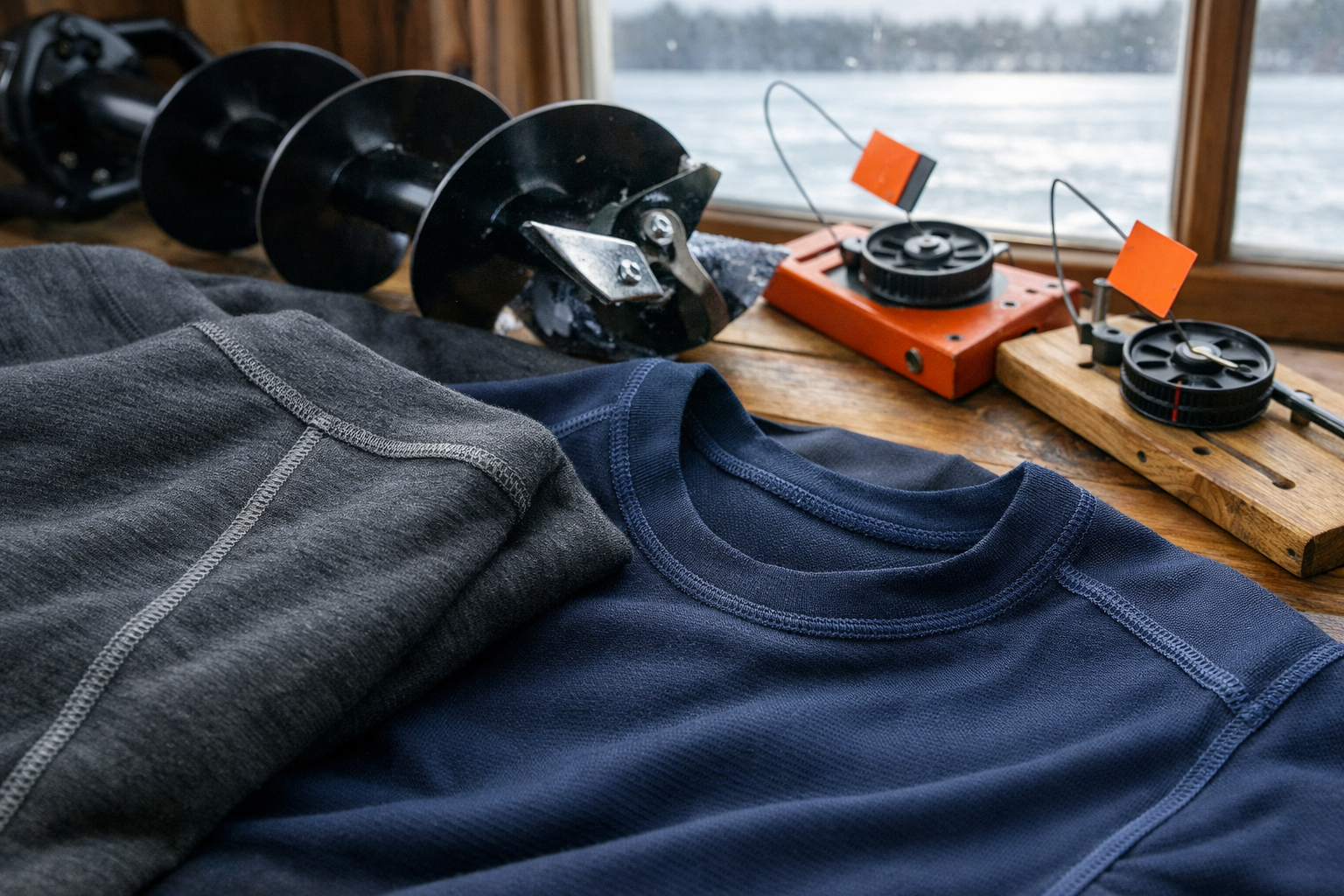
Pair a midweight merino wool or synthetic base layer (150-250 g/m²) with a slim-fit fleece or merino hoodie under your insulated ice jacket. The base layer handles moisture management. The hoodie adds insulation and head coverage. Together, they create a modular system you adjust based on activity level and temperature, from 0°F down to -40°F.
Why Do Base Layers Matter More Than Your Jacket on the Ice?
Your jacket stops wind and snow. Your base layer stops hypothermia. Sweat that sits against your skin in sub-zero temperatures drops your core body temperature fast. A proper base layer pulls moisture away from skin and spreads it across the fabric surface where it evaporates. Without this moisture management layer, even the best $400 insulated jacket fails to keep you warm.
Ice fishing demands a unique combination of high-output activity (drilling holes, hauling fish, setting up shelters) and long periods of sitting still. This cycle of sweating and cooling is the primary threat to your comfort and safety. A base layer designed for consistent aerobic activity, like running, won't perform the same way on the ice.
Choose a base layer with these features for ice fishing:
- Moisture-wicking fabric (merino wool or polyester blend)
- Flatlock seams to prevent chafing under bibs
- Anti-microbial treatment for extended wear
- Four-way stretch for unrestricted arm movement during jigging
- Snug fit against skin without compression
For more fishing-focused gear guidance and seasonal content, check out the FishOnYak blog.
What Are the Best Base Layer Fabrics for Ice Fishing in 2026?
Merino wool and synthetic polyester blends dominate the ice fishing base layer market in 2026. Each has clear strengths depending on your fishing style and budget.
Merino Wool
Merino fibers regulate temperature naturally. They trap warm air in crimped fiber structures and release moisture as vapor. Merino stays warm even when wet, which gives it a significant edge during the sweat-then-sit cycle of ice fishing. The Outdoor Research Alpine Onset Merino 150 Hoodie (approximately $119, 7.8 oz) stands out in 2026 for its built-in balaclava design that adds warmth under jacket hoods without extra bulk.
Best for: Anglers who fish long static sessions, multi-day trips (odor resistance), and those sensitive to synthetic fabrics.
Drawback: Higher cost per garment. Less durable than synthetics over repeated wash cycles.
Synthetic Polyester Blends
Synthetics like the Arc'teryx Rho LT Crew and Patagonia Capilene Midweight dry faster than merino. They wick aggressively and hold their shape wash after wash. The Rho LT Crew earned top marks in 2026 testing for its warmth-to-weight ratio in extreme cold layering setups.
Best for: Anglers who drill multiple holes, move between spots frequently, and need fast-drying performance.
Drawback: Holds odor after a few days of wear. Requires anti-microbial treatment to extend freshness.
Wool-Synthetic Hybrids
The Mammut Trift base layer blends merino and synthetic fibers with body-mapped ventilation zones. This hybrid approach puts merino where you need warmth (chest, back) and synthetic panels where you generate the most sweat (underarms, sides). For ice anglers who alternate between active drilling and patient jigging, hybrids offer the best of both worlds.
| Feature | Merino Wool | Synthetic | Wool-Synthetic Hybrid |
|---|---|---|---|
| Warmth when wet | High | Low | Moderate |
| Dry time | Slow | Fast | Moderate |
| Odor resistance | High | Low | Moderate |
| Durability | Moderate | High | High |
| Price range | $80-$150 | $40-$100 | $90-$140 |
| Best temperature range | -10°F to -40°F | 10°F to -20°F | 0°F to -30°F |
How Should You Pair Ice Fishing Hoodies and Base Layers Under Jackets for Extreme Cold?
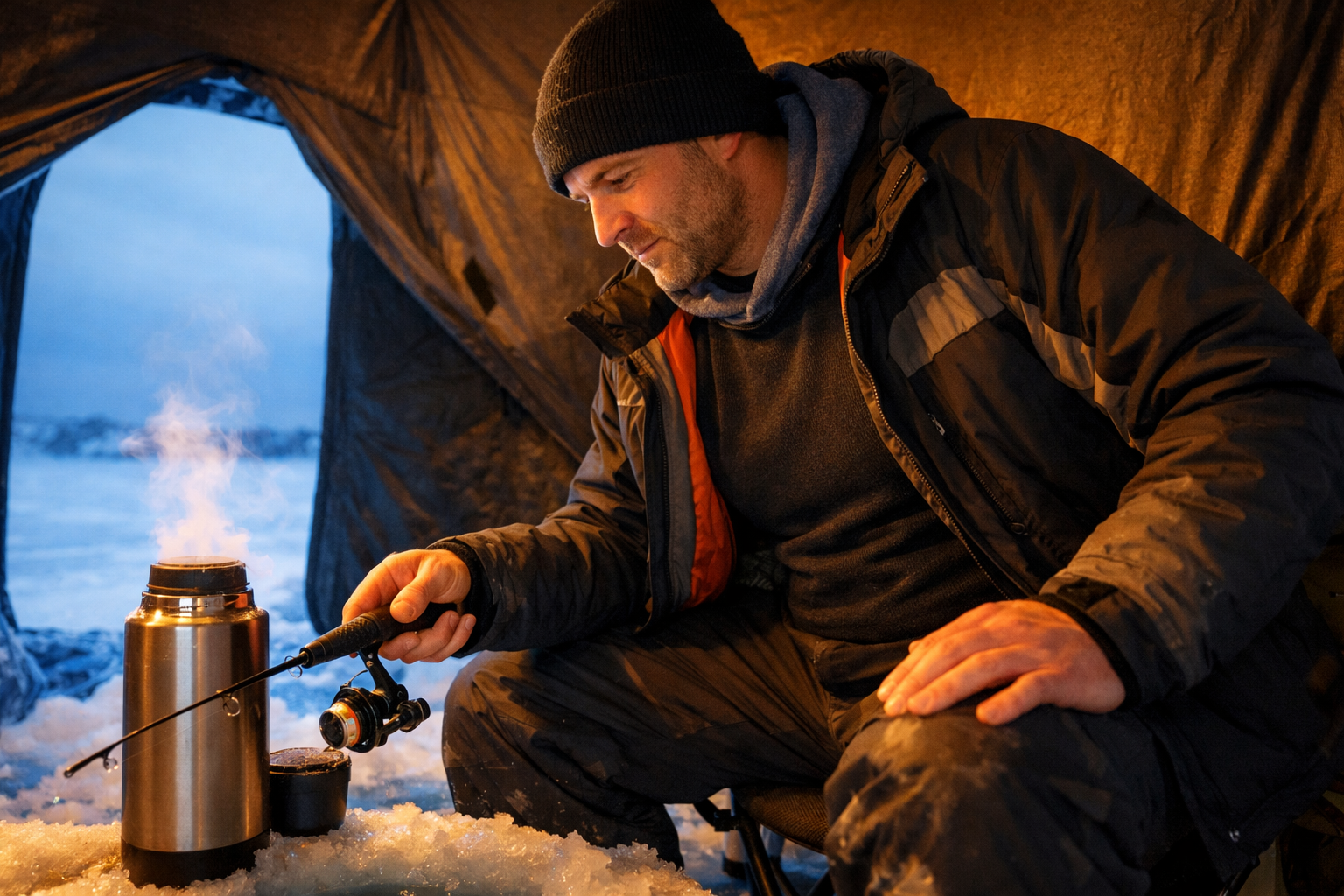
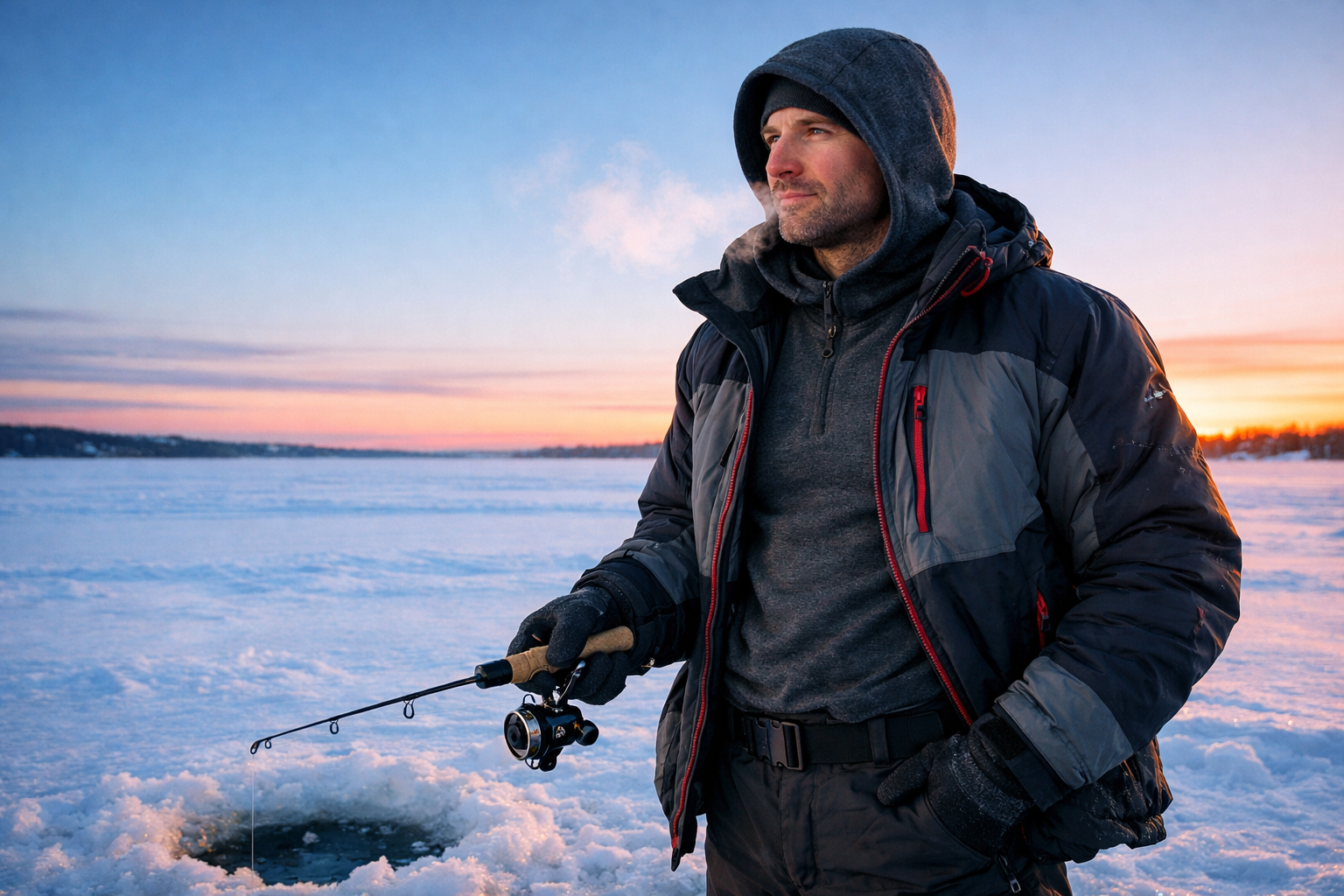
The three-layer system is the standard for ice fishing: base layer, insulating midlayer (hoodie), and outer shell. Getting the pairing right between layers one and two determines your thermal efficiency.
Pairing Rule 1: Match Fabric Weight to Temperature
- 0°F to -10°F: Lightweight base (< 150 g/m²) plus midweight hoodie
- -10°F to -25°F: Midweight base (150-250 g/m²) plus heavyweight hoodie or fleece
- -25°F to -40°F: Heavyweight base (> 250 g/m²) plus insulated hoodie, such as the Kora Xenolith
Pairing Rule 2: Fit the Base Tight, Fit the Hoodie Slim
Your base layer should sit snug against your skin with no air gaps. This direct contact is what allows moisture wicking to work. Your hoodie midlayer should fit slim over the base without compression. Loose hoodies create cold air pockets. Tight hoodies restrict blood flow and reduce insulation.
Pairing Rule 3: Avoid Hood Stacking Problems
A hooded base layer under a hooded midlayer under a hooded jacket creates a bulky mess at the neck and restricts head movement. Choose one hooded layer and make the others crewneck or quarter-zip. Most experienced ice anglers prefer a crewneck base layer with a hooded midlayer. This gives you the option to pull the hood up inside your jacket hood for added warmth or push it down when temperatures rise.
Common mistake: Wearing a thick cotton hoodie from home as a midlayer. Cotton absorbs sweat, holds it against your body, and loses all insulating value. On the ice, this creates a dangerous cooling effect. Stick to merino, fleece, or synthetic hoodies designed for cold-weather performance.
Which Hoodie Midlayers Work Best for Ice Fishing in 2026?
A dedicated ice fishing hoodie bridges the gap between your moisture-wicking base and your windproof outer jacket. The best options in 2026 prioritize warmth without bulk.
Top performers for ice fishing hoodies and base layers 2026: optimal pairings under jackets for extreme cold:
Outdoor Research Alpine Onset Merino 150 Hoodie This 7.8 oz midweight merino blend includes a built-in balaclava that tucks under jacket collars without bunching. The 150 g/m² weight makes it versatile across a wide temperature range. Priced around $119.
AFTCO Armorloft Sweatshirt AFTCO recommends pairing their Samurai base layer with the Armorloft hooded midlayer under the Hydronaut Insulated Jacket. The tight base fit maximizes warmth transfer to the insulating midlayer. This is a purpose-built fishing layering system.
Blackfish Command Hoodie Designed for ice anglers. Fleece-lined interior with a slim cut that sits flat under bibs and jackets. The hood fits under helmet-style jacket hoods without restricting peripheral vision.
Kora Xenolith Heavyweight For static warmth during long sits in a portable shelter, the Xenolith adds significant insulation as a midlayer hoodie equivalent over a lightweight base. Best suited for temperatures below -20°F when you're not moving between holes.
Choose a crewneck midlayer if your outer jacket has a well-insulated hood with a built-in gaiter. Choose a hooded midlayer if your jacket hood is minimal or if you fish without a shelter.
How Do You Prevent Overheating During Active Jigging?
Overheating on the ice is as dangerous as getting too cold. When you sweat heavily and then stop moving, that moisture chills rapidly. Managing heat output during active jigging sessions requires intentional layering choices.
Step 1: Start your session slightly cool. If you feel warm when you step onto the ice, you're overdressed. You'll generate significant body heat within the first 10 minutes of drilling and setting up.
Step 2: Use quarter-zip or full-zip midlayers instead of pullover hoodies. Zipping down vents heat from your chest and neck without removing a layer.
Step 3: Choose base layers with mesh ventilation panels in high-sweat zones. The Mammut Trift uses body-mapped venting at the underarms and sides for this reason.
Step 4: Remove your outer jacket during high-output activities like augering. Your base layer and hoodie midlayer should handle moderate cold exposure for 5-10 minutes while you work.
Step 5: Carry a dry base layer in your gear bag. If you soak through your first base layer during setup, swap it out before your long sit begins. This single habit prevents more cold-related discomfort than any piece of gear.
For anglers transitioning between saltwater kayak seasons and ice fishing, this kind of layering discipline carries over directly. Learn more about the FishOnYak approach to multi-season angling preparation.
Crewneck vs. Hoodie Base Layers: When Does Each Make Sense?
Crewneck base layers sit flatter under jackets and create fewer pressure points at the neck and shoulders. Hoodies add warmth to your head and neck but introduce potential bunching problems under tight jacket collars.
Choose a crewneck base layer when:
- Your jacket has a high, insulated collar
- You wear a separate balaclava or neck gaiter
- You prefer a clean, flat layering profile under bibs
- You run warm and want maximum neck ventilation
Choose a hooded base layer when:
- Your jacket hood is thin or uninsulated
- You fish without a portable shelter
- Temperatures drop below -25°F
- You want integrated head coverage without carrying extra accessories
The OR Alpine Onset Merino 150 Hoodie works well as a base-layer-with-hood option because its balaclava design sits thin and flat against the head. Thicker hooded base layers from brands like Smartwool Intraknit add more warmth but create more bulk.
What Does a Complete Ice Fishing Layering System Look Like?
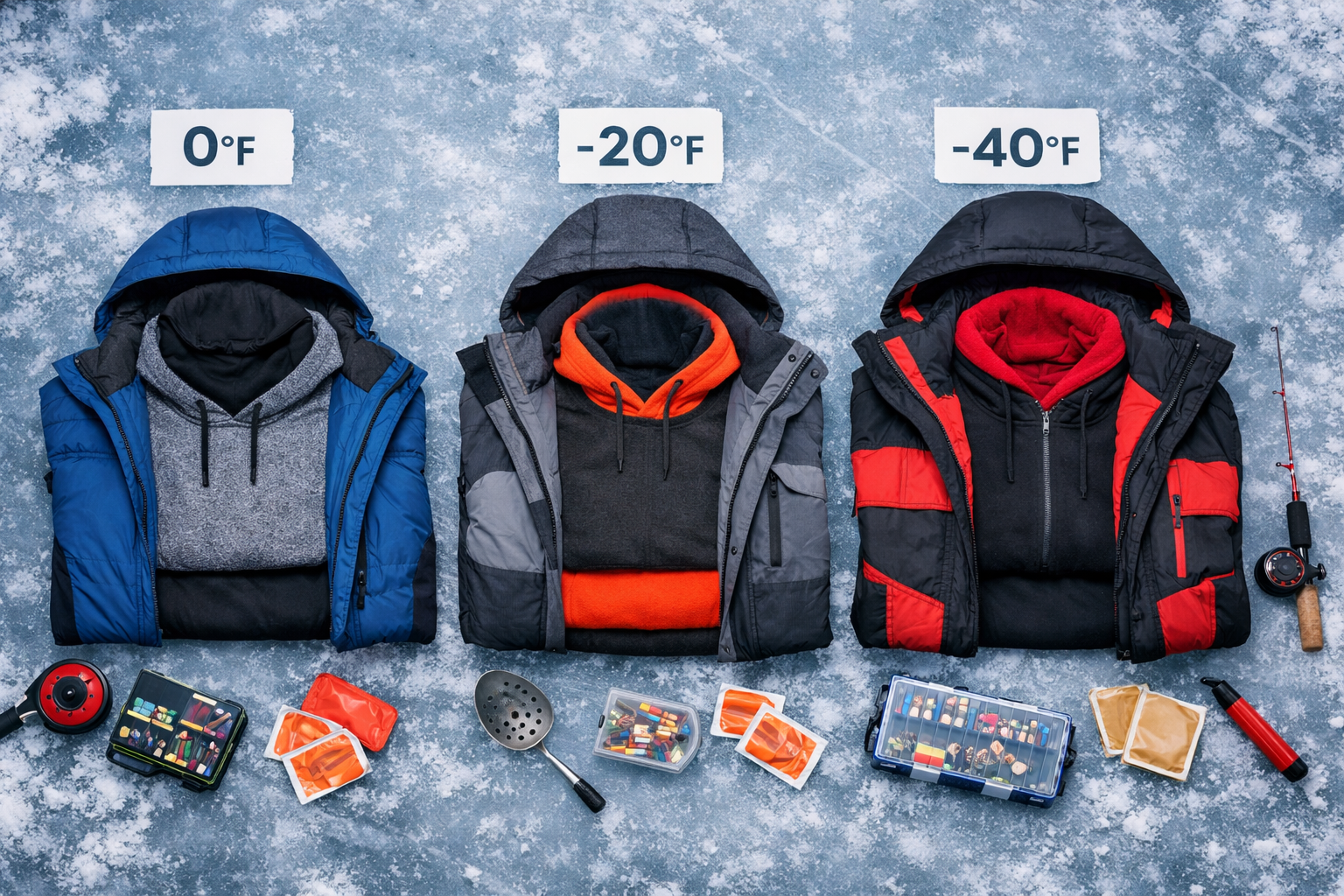
Here are three tested layering setups for different temperature ranges, built around the ice fishing hoodies and base layers 2026: optimal pairings under jackets for extreme cold.
Setup 1: Moderate Cold (0°F to -10°F)
- Lightweight synthetic crewneck base layer (Patagonia Capilene Midweight)
- Fleece-lined quarter-zip hoodie (Blackfish Command)
- Insulated waterproof jacket
- Insulated bibs
Setup 2: Severe Cold (-10°F to -25°F)
- Midweight merino crewneck base layer (Smartwool Intraknit 200)
- Merino hoodie midlayer (OR Alpine Onset 150)
- Heavily insulated jacket (AFTCO Hydronaut or equivalent)
- Insulated bibs with suspenders
Setup 3: Extreme Cold (-25°F to -40°F)
- Heavyweight merino base layer (250+ g/m²)
- Insulated hoodie midlayer (Kora Xenolith)
- Expedition-weight insulated jacket
- Insulated bibs
- Heated vest (optional, battery-powered)
Each setup follows the same principle: wick, insulate, protect. The base layer wicks. The hoodie insulates. The jacket protects from wind and precipitation. Adjust by adding or removing the midlayer based on your activity level.
For more seasonal fishing content and gear breakdowns, visit the FishOnYak blog.
What Mistakes Do Anglers Make with Ice Fishing Base Layers?
Wearing cotton. This is the most common and most dangerous mistake. Cotton holds moisture against skin and provides zero insulation when wet.
Sizing too loose. A baggy base layer traps cold air pockets between fabric and skin. The wicking process requires direct skin contact.
Ignoring seam construction. Standard stitched seams create raised ridges that chafe during 8-12 hour sessions. Flatlock seams sit flat and prevent irritation, especially under bib straps.
Layering too many thin layers instead of fewer proper layers. Three thin cotton t-shirts do not equal one midweight merino base layer. More layers create more interfaces where cold air infiltrates.
Forgetting the lower body. Base layer bottoms matter as much as tops. Pair merino or synthetic base layer pants under your insulated bibs for full-body thermal management.
FAQ
What fabric is best for ice fishing base layers? Merino wool performs best for most ice anglers because it retains warmth when damp and resists odor. Synthetic polyester blends work better for anglers who move frequently and need fast drying.
How tight should an ice fishing base layer fit? Snug against skin without restricting movement. You should feel the fabric touching your body at all points, but you should still raise your arms overhead and bend at the waist without restriction.
Do I need a hooded base layer for ice fishing? Only if your jacket hood lacks insulation or if you fish without a shelter in extreme cold. A crewneck base with a hooded midlayer gives you more versatility.
How many layers should I wear ice fishing? Three layers on your upper body: base layer, insulating midlayer, and outer jacket. Two layers on your lower body: base layer pants and insulated bibs. Adjust based on temperature and activity level.
Is merino wool worth the higher price for ice fishing? Yes, for anglers who fish long sessions or multi-day trips. Merino's warmth-when-wet property and odor resistance justify the investment. Budget-conscious anglers get strong performance from synthetic alternatives.
Should I bring a spare base layer on the ice? Absolutely. A dry backup base layer stored in a waterproof bag is one of the most valuable safety items you carry. Swap into it if you soak through your first layer during setup.
What weight base layer do I need for -20°F? A midweight base layer (150-250 g/m²) paired with an insulating hoodie midlayer handles -20°F effectively. Below -25°F, step up to a heavyweight base layer (250+ g/m²).
Do heated base layers replace traditional layering? No. Battery-powered heated layers supplement a proper layering system but should not replace moisture-wicking base layers. Heated elements without a wicking layer trap sweat against skin.
How do I wash merino wool base layers? Machine wash cold on a gentle cycle with a merino-specific or mild detergent. Hang dry or tumble dry on low heat. Avoid fabric softener, which clogs merino fibers and reduces wicking performance.
What is the best hoodie midlayer for ice fishing in 2026? The Outdoor Research Alpine Onset Merino 150 Hoodie leads for its balaclava design, light weight, and merino warmth. The AFTCO Armorloft Sweatshirt and Blackfish Command Hoodie are strong alternatives depending on your jacket pairing.
Proper Layering Keeps You on the Ice Longer
Your base layer and hoodie pairing determines how long you fish, how comfortable you stay, and how safely you handle sub-zero temperatures. Invest in a midweight merino or synthetic base layer with flatlock seams and a slim-fit hoodie midlayer that sits flat under your jacket. Test your layering system at home before heading out. Adjust for temperature and activity level. Carry a dry backup. The anglers who fish the longest and catch the most are the ones who manage their body temperature with precision, not luck.
Kayak. Drill. Catch. Repeat. See you on the water.
For more expert guidance on multi-season angling, visit FishOnYak.com or reach out to the team directly.