Last updated: March 2, 2026
Key Takeaways
- The best lightweight ice fishing jackets for mobile anglers 2026 weigh under 38 oz and prioritize windproofing, breathability, and stretch over heavy insulation.
- SITKA's new CAT-5 Jacket with GORE-TEX Stretch ($500) leads the 2026 class for waterproof flexibility during active hole-hopping.
- The StrikeMaster Surface Jacket offers flotation safety at under 5 lbs total suit weight, the lightest flotation option tested this season.
- Simms Challenger Jacket (24 oz, 120g PrimaLoft) delivers sub-zero warmth without layering and strong range of motion.
- Blackfish StormSkin Gale Pullover stays under 3 lbs and prevents overheating during high-output movement between holes.
- Striker Climate with 150g Thermadex insulation rates highest for windchills below -30°F among mobile-focused jackets.
- Flotation suits like Norfin Explorer 2 provide safety but add weight and bulk that slows hole-hopping pace.
- Packability, quick-dry linings, and articulated fits matter more than raw insulation weight for anglers covering ground on foot or ATV.
Quick Answer
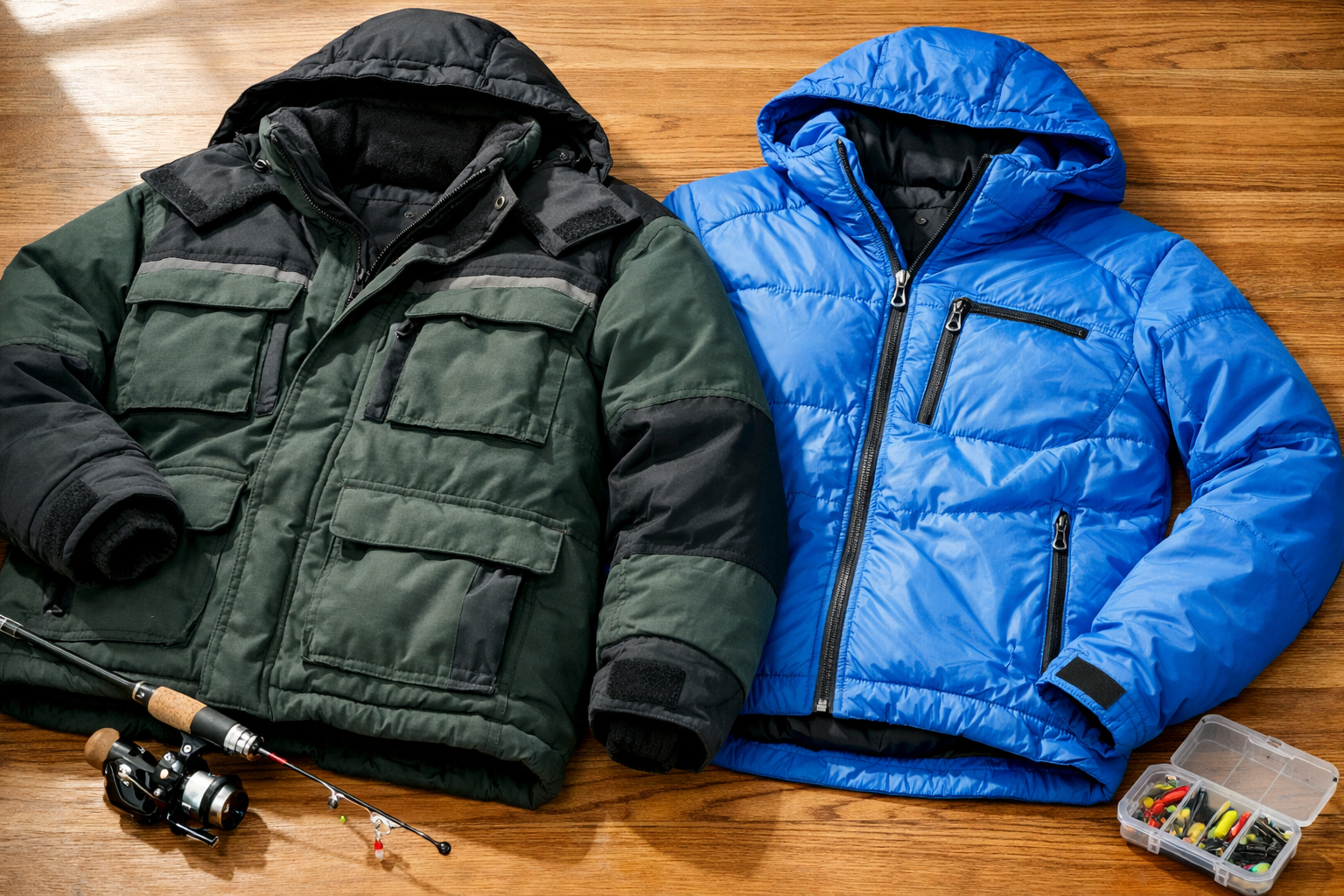
Mobile ice anglers who hop between holes need jackets that cut wind, shed moisture, and allow full arm rotation without restricting a jigging stroke. The top picks for 2026 include the SITKA CAT-5 Jacket for stretch and waterproofing, the Simms Challenger for warmth-to-weight ratio, and the Blackfish StormSkin Gale for pure lightness. Choose based on your conditions: windchill severity, whether you walk or ride an ATV, and how many holes you drill per session.
Why Do Mobile Anglers Need Lightweight Ice Fishing Jackets in 2026?
Hole-hopping demands constant movement. You drill, jig, pack up, and move to the next spot. Traditional heavy insulated suits trap heat during these bursts of activity, then leave you soaked in sweat when you stop to fish. That cycle of overheating and cooling creates discomfort and increases cold injury risk.
Lightweight ice fishing jackets for mobile anglers in 2026 solve this problem by shifting the insulation strategy. Instead of relying on thick fill, these jackets use windproof membranes, stretch fabrics, and targeted insulation zones. The result: you stay warm at the hole and dry between moves.
Three factors drive the 2026 shift toward lighter outerwear on the ice:
- Fabric technology improvements. GORE-TEX Stretch, PrimaLoft synthetic fills, and Thermadex insulation deliver warmth at a fraction of the weight compared to five years ago.
- Base layer pairing. Modern merino and synthetic base layers handle moisture so well that your jacket no longer needs to do all the thermal work.
- ATV and sled access. More anglers cover miles of ice on machines, meaning they generate body heat during transit and need breathability on arrival.
If you fish from a permanent shanty and sit in one spot all day, a heavy flotation suit still makes sense. But if you move between 5, 10, or 20 holes per outing, a lightweight jacket with a smart layering system outperforms bulk every time. For more on building a tactical approach to your fishing setup, check out the FishOnYak blog for gear and technique breakdowns.
How Do the Top 2026 Lightweight Ice Fishing Jackets Compare?
Here's a side-by-side look at the six jackets earning the most attention from mobile anglers this season.
| Jacket | Weight (est.) | Insulation | Waterproof Rating | Flotation | Best For | Price (est.) |
|---|---|---|---|---|---|---|
| SITKA CAT-5 | ~34 oz | GORE-TEX Stretch shell | Submersible | No | Wet/windy transitions | $500 |
| Simms Challenger | ~24 oz | 120g PrimaLoft | Water-resistant | No | Sub-zero mobility | $300-400 |
| Blackfish StormSkin Gale | Under 48 oz (3 lbs) | Windproof membrane | Water-resistant | No | Warm-day active fishing | $200-300 |
| Striker Climate | ~32 oz | 150g Thermadex | Water-resistant | No | Extreme windchill (-30°F+) | $250-350 |
| StrikeMaster Surface | Under 5 lbs (suit) | Flotation foam + shell | Waterproof | Yes | Safety-first mobile anglers | $400-500 |
| Norfin Explorer 2 | ~38 oz (jacket) | Heavy fill, rated -45°F | 10,000mm | Yes | Stationary + safety priority | $350-450 |
Decision rule: Choose the Simms Challenger or Blackfish Gale if you prioritize pure weight savings. Choose the SITKA CAT-5 if you fish in rain, sleet, or slushy spring ice. Choose the StrikeMaster Surface if you need flotation without giving up too much mobility.
A common mistake: buying the warmest jacket available and assuming you'll be comfortable. On active days, you'll overheat in anything rated below -40°F unless you're standing still. Match your jacket to your activity level, not the coldest possible temperature.
What Makes the SITKA CAT-5 Jacket Stand Out for Hole-Hopping?
SITKA Gear launched its first fishing apparel line, SITKA Fish, on February 3, 2026. The CAT-5 Jacket anchors that lineup. Product Line Manager Matt Carara described the system as designed to “remove barriers to pursuit” for hard-fishing anglers.
The CAT-5 stands apart for three reasons:
- GORE-TEX Stretch membrane. This fabric moves with your body during overhead auger pulls and aggressive jigging strokes. Traditional waterproof shells restrict shoulder rotation. The CAT-5 does not.
- Submersible cuffs. When you reach into slush or grab a fish from the hole, water stays out. This feature matters most during late-season ice when meltwater pools on the surface.
- Storm hood design. The hood fits over a beanie or helmet without blocking peripheral vision. You keep full awareness of your surroundings while blocking wind.
At $500, the CAT-5 sits at the top of the price range. The investment makes sense if you fish 30+ days per season in mixed precipitation. For anglers who fish in dry, stable cold, the Simms Challenger delivers comparable mobility at a lower price.
The CAT-5 pairs with a matching bib ($500) for a full system. That's a $1,000 commitment. Consider whether your conditions demand full waterproof submersibility or whether a water-resistant shell with a good base layer setup covers your needs.
Which Lightweight Jacket Works Best in Extreme Cold?
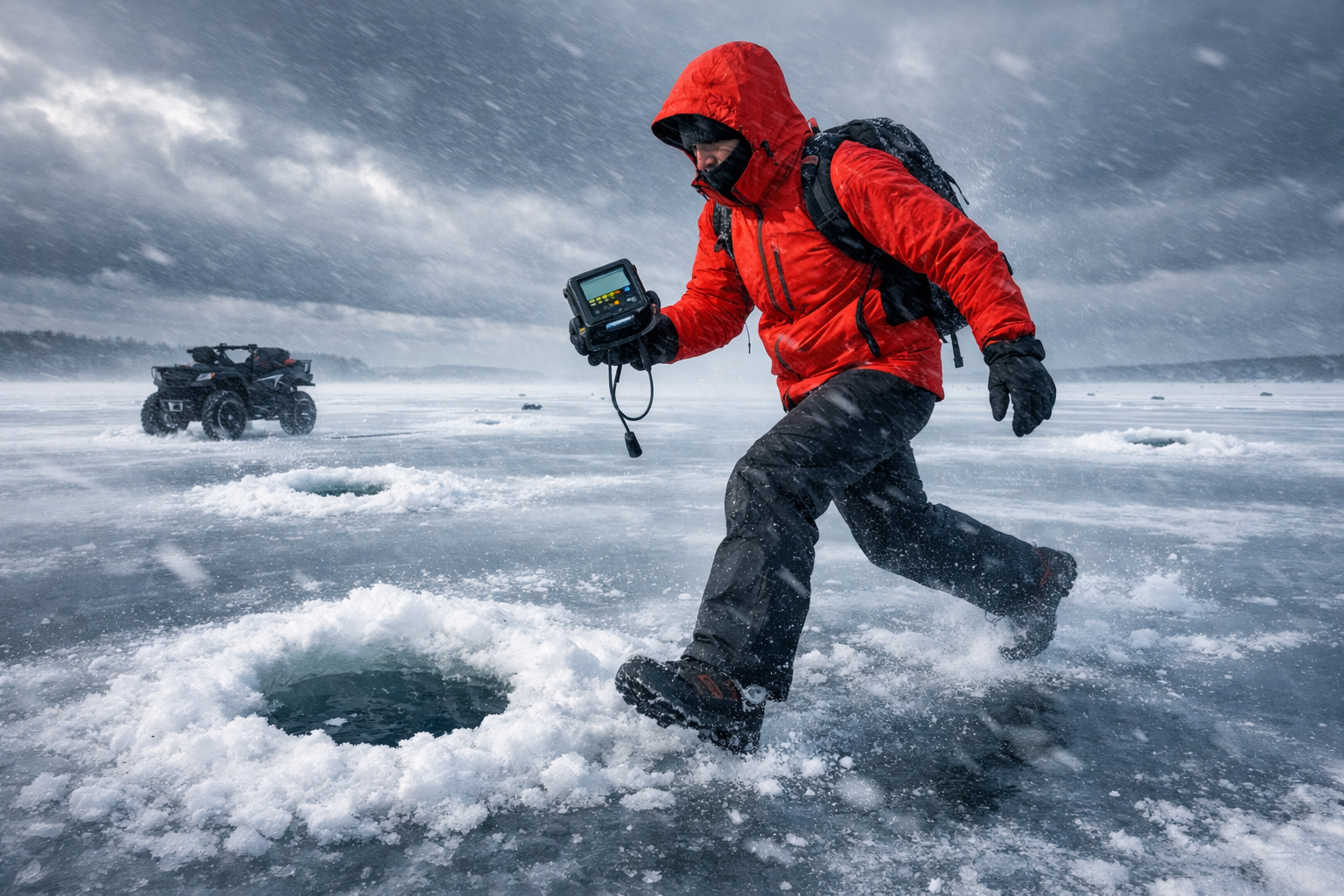
The Striker Climate jacket with 150g Thermadex insulation handles the harshest conditions among mobile-focused options. Field evaluations from BW Fishing Clothing in February 2026 rated the Striker Climate highest for windchills below -30°F. The review highlighted YKK zippers and an articulated fit that maintains range of motion even with heavy insulation.
For extreme cold hole-hopping, follow this layering approach:
- Base layer. Wear a moisture-wicking merino or synthetic top. Avoid cotton.
- Mid layer. Add a thin fleece or active insulation piece on days below -15°F.
- Shell. The Striker Climate or similar windproof jacket goes on top.
This three-layer system lets you vent heat by unzipping or removing the mid layer between moves. A single heavy jacket offers no such adjustment.
Edge case: If you fish in sustained winds above 25 mph with temps below -20°F, even the Striker Climate benefits from a windproof face covering and insulated bib to protect your core from below. The jacket alone handles upper body protection, but wind finds gaps at the waist if your lower half isn't sealed. Explore the FishOnYak services page for coaching on cold-weather gear systems tailored to your fishing style.
Should Mobile Anglers Choose Flotation Jackets or Non-Flotation?
Non-flotation jackets win for pure mobility. Flotation jackets win for safety on early and late season ice. Your choice depends on ice conditions and risk tolerance.
Choose flotation if:
- You fish ice thinner than 6 inches.
- You cross pressure ridges, river mouths, or current areas.
- You fish alone without a rescue partner nearby.
Choose non-flotation if:
- You fish solid mid-season ice (8+ inches).
- You prioritize speed and range of motion for covering ground.
- You wear a separate flotation device (float-assist suspenders or PFD under your jacket).
The StrikeMaster Surface Jacket offers the best compromise. At under 5 lbs for the full suit, tester Bjonfald praised the minimal bulk during slushy hole-hopping sessions. Compare that to the Norfin Explorer 2 at 38 oz for the jacket alone, rated to -45°F with 10,000mm waterproofing. The Norfin provides superior warmth and buoyancy but restricts the fast-paced movement that defines hole-hopping.
A practical middle ground: wear a non-flotation lightweight jacket with float-assist suspenders underneath. You get the mobility of a 24 oz shell with backup buoyancy if you break through. This setup weighs less than any flotation suit and keeps your arms free for drilling and jigging. Learn more about building a safety-focused approach to your fishing practice at FishOnYak.
How Do You Test a Jacket's Mobility Before Buying?
Do not buy an ice fishing jacket based on specs alone. Perform these five tests in the store or at home before cutting the tags:
- Overhead reach test. Raise both arms straight above your head. The jacket hem should stay below your waist. If the jacket rides up and exposes your lower back, the cut is wrong for drilling.
- Cross-body rotation. Simulate a jigging motion with your dominant arm while holding an imaginary auger with the other. Check for binding at the shoulders and elbows.
- Squat test. Drop into a full squat as if sitting on a bucket. The jacket should not bunch at your hips or restrict your breathing.
- Layer test. Wear the base and mid layers you plan to fish in. The jacket should fit over them without feeling tight across the chest.
- Pack test. Stuff the jacket into its own pocket or a compression sack. If the jacket packs down to the size of a football or smaller, you gain storage flexibility on your sled or ATV.
The Blackfish StormSkin Gale Pullover passes all five tests for most body types. At under 3 lbs, the pullover design eliminates a front zipper, which reduces wind entry points but makes venting harder. If you run hot, a full-zip option like the Simms Challenger gives you more temperature control. Visit the FishOnYak about page to understand the team's approach to testing and recommending gear.
What Features Matter Most for Quick-Dry Performance?
Sweat is the enemy of warmth on ice. When you drill six holes, haul gear 200 yards, and then sit still to jig, a jacket that holds moisture will chill you within minutes. Quick-dry performance depends on three jacket features:
- Breathability rating. Look for jackets rated above 10,000g/m² MVTR (moisture vapor transmission rate). The SITKA CAT-5 and Simms Challenger both meet this threshold. Lower-rated jackets trap sweat vapor inside.
- Liner material. Mesh or taffeta liners dry faster than fleece-backed liners. Fleece feels warmer at first but holds moisture longer after exertion.
- Pit zips or venting panels. Underarm vents let you dump heat during high-output phases without removing the jacket. The Striker Climate includes pit zips. The Blackfish Gale does not, relying instead on its breathable membrane.
Common mistake: Wearing a cotton hoodie under a high-performance shell. The jacket performs as designed, but the cotton base layer absorbs sweat and defeats the entire system. Pair your jacket with synthetic or merino layers from skin out.
For anglers who transition between kayak fishing and ice fishing across seasons, the same quick-dry principles apply. Paddle spray and ice melt create similar moisture challenges. A jacket that performs well on the ice often works on the water too.
How to Pack and Transport Your Jacket for ATV or Sled Travel
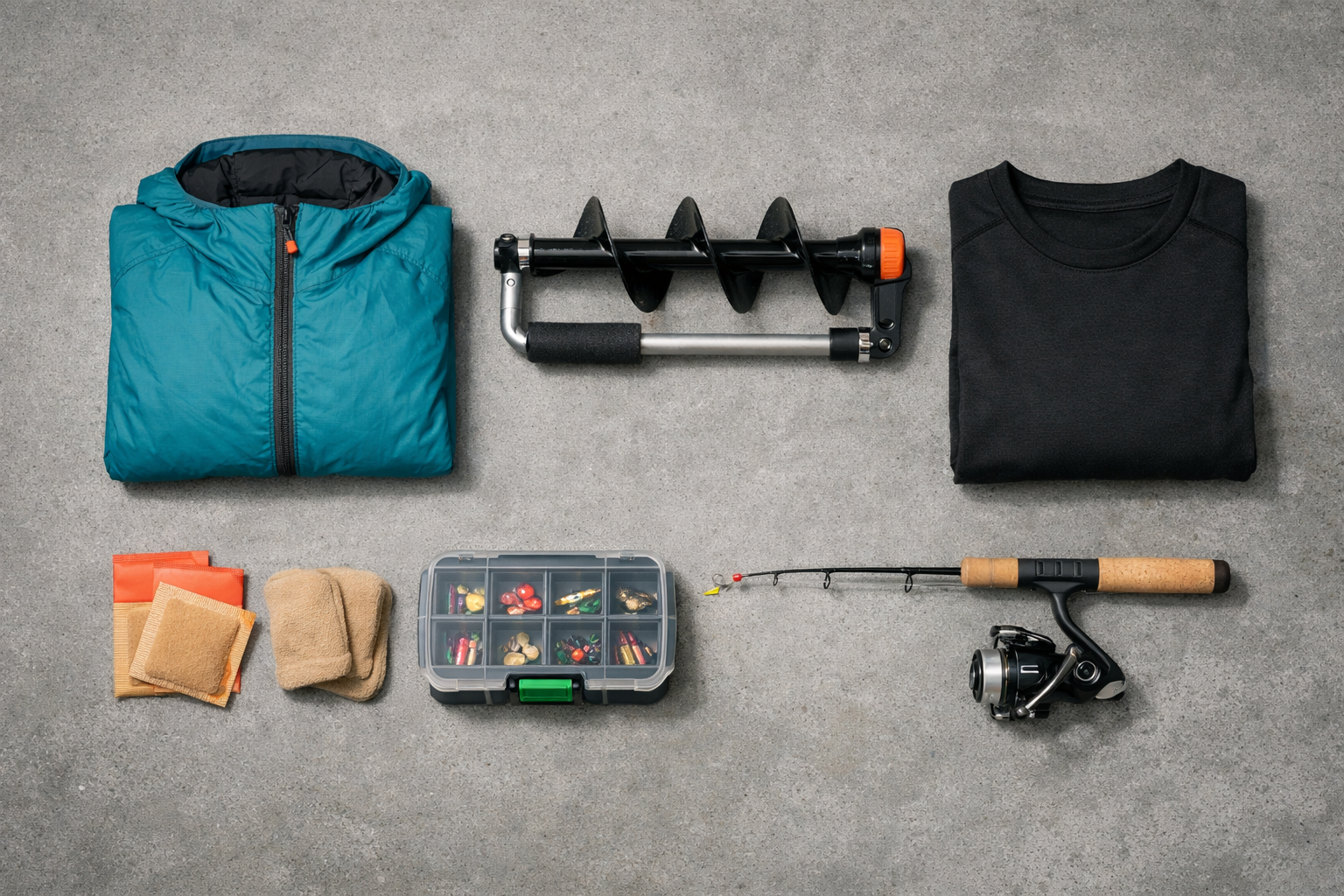
Mobile anglers who cover miles of ice need a jacket that transitions between packed and worn without hassle. Here's the system that works:
- Start your ride with the jacket unzipped or stowed. ATV travel generates wind and body heat. Wearing a sealed jacket during a 20-minute ride soaks you before you fish.
- Pack the jacket in a dry bag or compression sack on your sled. Arrive at your first spot, pull the jacket on, and start fishing dry.
- Between spots, unzip fully and push the hood back. This vents trapped heat during short walks of 50 to 200 yards.
- For longer moves, stow the jacket again. Repeat the cycle.
Jackets that compress well for transport: the Simms Challenger packs down to roughly the size of a rolled sleeping pad. The Blackfish Gale Pullover compresses even smaller. The SITKA CAT-5 is bulkier due to the GORE-TEX membrane but still manageable in a sled bag.
Avoid leaving your jacket crumpled in a sled box for weeks. Compressed insulation loses loft over time. Hang the jacket or store it loosely between trips. Check the FishOnYak gear care resources for tips on maintaining performance apparel across seasons.
Lightweight Ice Fishing Jackets for Mobile Anglers 2026: Buyer's Checklist
Use this checklist before your next purchase:
- Weight under 36 oz for non-flotation, under 5 lbs for flotation
- Windproof membrane or shell rated for 25+ mph gusts
- Breathability above 10,000g/m² MVTR
- Articulated elbows and shoulders for drilling and jigging
- YKK or equivalent heavy-duty zippers that work with gloves
- Storm hood that fits over a beanie without blocking vision
- At least two zippered chest or hand pockets accessible with gloves
- Quick-dry liner material (mesh or taffeta, not fleece-backed)
- Packability: compresses to fit in a sled bag or ATV rack box
- Compatible with your existing bib or pant system at the waist seal
Skip jackets that check fewer than seven of these boxes. The 2026 market offers enough options that you should not compromise on core features.
FAQ
What is the lightest ice fishing jacket with flotation in 2026? The StrikeMaster Surface Jacket comes in under 5 lbs for the full suit, making the lightest flotation option tested this season.
How much should a good lightweight ice fishing jacket cost? Expect to spend between $200 and $500. The Blackfish StormSkin Gale starts around $200. The SITKA CAT-5 tops out at $500. Price tracks closely with waterproofing level and fabric technology.
Do I need a waterproof jacket for ice fishing? Water-resistant works for most mid-season conditions. Waterproof (like the SITKA CAT-5) matters if you fish in rain, sleet, or heavy slush during early and late ice.
What insulation weight works best for hole-hopping? Between 100g and 150g of synthetic insulation (PrimaLoft or Thermadex) provides warmth without trapping excess heat during movement. Pair with a proper base layer for sub-zero days.
Is the SITKA CAT-5 worth $500? For anglers who fish 30+ days per season in mixed wet and cold conditions, the GORE-TEX Stretch membrane and submersible cuffs justify the price. Weekend anglers get strong value from the Simms Challenger at $300-400.
What's the biggest mistake anglers make when choosing ice fishing jackets? Buying the warmest jacket available without accounting for activity level. Overheating during movement causes sweat buildup, which leads to dangerous chilling when you stop.
How do I prevent my jacket from losing insulation loft? Hang the jacket or store loosely between trips. Avoid long-term compression in a sled box or gear bag. Wash according to manufacturer instructions to maintain DWR coatings.
What base layer pairs best with a lightweight ice fishing jacket? Merino wool or synthetic moisture-wicking tops. Avoid cotton in all conditions. A 200-weight merino base layer handles most sub-zero days under a windproof shell.
Do lightweight jackets work in portable shelters? Yes. The Blackfish StormSkin Gale performs well inside portables because the breathable membrane prevents overheating when a heater runs. Heavy insulated jackets cause sweating in heated shelters.
What jacket features help when fishing from an ATV? Packability, quick-dry liners, and full-length front zippers for venting during rides. Avoid pullover designs if you transition frequently between riding and fishing.
Conclusion
The best lightweight ice fishing jackets for mobile anglers 2026 share common traits: windproof membranes, articulated fits, quick-dry liners, and weights under 36 oz. Match your jacket to your activity level and conditions rather than buying the warmest option on the shelf. Pair your shell with a proper base layer system, test mobility before you commit, and store the jacket properly between outings. The right jacket lets you cover more ice, drill more holes, and fish more water without the penalty of bulk and sweat. Kayak. Drill. Catch. Repeat. See you on the water.
Resource Link
- Best Ice Fishing Suits of 2026 – Outdoor Life
https://www.outdoorlife.com/gear/best-ice-fishing-suits/
(Multiple lightweight, non‑bulky jackets and suits highlighted for mobility and hole‑hopping.) - 11 Best Ice Fishing Jackets – Tackle Box Talk
https://tackleboxtalk.com/best-ice-fishing-jackets/
(Roundup of dedicated ice fishing jackets with emphasis on warmth, weather protection, and practical on‑ice features.) - Best Ice Fishing Suits 2026: Top 4 Jackets & Bibs Reviewed – Fishing Refined
https://fishingrefined.com/best-ice-fishing-suits/
(Focus on jackets and bibs that are lightweight, comfortable, and mobile while still insulating.) - The 10 Best Ice Fishing Jacket Reviewed – BOWINS Garment
https://bowinsgarment.com/the-10-best-ice-fishing-jacket-reviewed/
(Highlights specific jackets with reduced bulk and good mobility for active anglers.) - Beginner’s Guide to Ice Fishing Gear – Outside Online
https://www.outsideonline.com/outdoor-gear/water-sports-gear/best-ice-fishing-gear/
(Section on clothing layers and jackets for staying warm yet mobile on the ice.)