Last updated: February 23, 2026
Key Takeaways
- Northern pike hold along fading weedlines in 10 to 15 feet of water through February 2026, making weed edges the primary target zone for tip-up anglers.
- Large shiners and suckers produce the most consistent pike action during stable weather patterns on weed edges.
- Dead baits like smelt, cisco, and herring outperform live bait during cold fronts when pike aggression drops.
- Set your bait 6 to 18 inches above the remaining weed tops to stay in the pike's strike zone.
- Space tip-up holes 20 to 30 feet apart along 200 to 300 yards of weedline to cover productive water.
- Focus on inside turns, points, and sharp depth transitions where fading weeds create natural ambush spots.
- As weeds die off completely, pike spread outward toward deeper structure, requiring adjustments in hole placement.
- Ice thickness in northern regions has varied between 8 and 12 inches this season. Check conditions before every outing.
Quick Answer
February 2026 Northern pike fishing on fading weedlines centers on tip-ups rigged with large shiners or suckers, set 6 to 18 inches above weed tops in 10 to 15 feet of water. As vegetation dies back, pike shift their positioning toward the sharpest remaining weed edges and transition zones. Match your bait choice to weather conditions: live bait for stable days, dead bait for cold fronts.
Why Do Northern Pike Hold on Fading Weedlines in February 2026?
Pike stay near fading weedlines because these zones still concentrate baitfish. Green vegetation produces oxygen and attracts panfish, perch, and shiners. Pike follow that food. In February, weeds that were thick in December have thinned considerably, but the remaining green patches act as magnets for the entire food chain.
As weeds die, the edges become more defined. A weedline that once stretched across a broad flat now shrinks to a narrow band. This compression forces baitfish into tighter corridors, and pike position themselves along these edges to ambush prey with minimal effort.
What changes in February compared to January:
- Weed coverage shrinks by 30 to 50 percent in many lakes, concentrating fish along the surviving green edges.
- Pike that held in 3 to 8 feet of water during early ice now push to 10 to 15 feet as shallow weeds die first.
- Roaming behavior increases. Pike patrol longer stretches of weedline rather than sitting in one spot.
- Light penetration decreases under snow cover, accelerating weed die-off and shifting the productive zone deeper.
A common mistake is fishing the same spots that produced in December. Those shallow weed flats are often barren by mid-February. Move deeper along the weed edge, and target the sharpest transitions where green meets bare bottom. That is where pike set up in February 2026.
For anglers transitioning between seasons and fishing styles, the FishOnYak.com team provides coaching that bridges the gap between open-water tactics and ice fishing precision.
What Are the Best Tip-Up Bait Choices for Northern Pike on Fading Weedlines in February 2026?
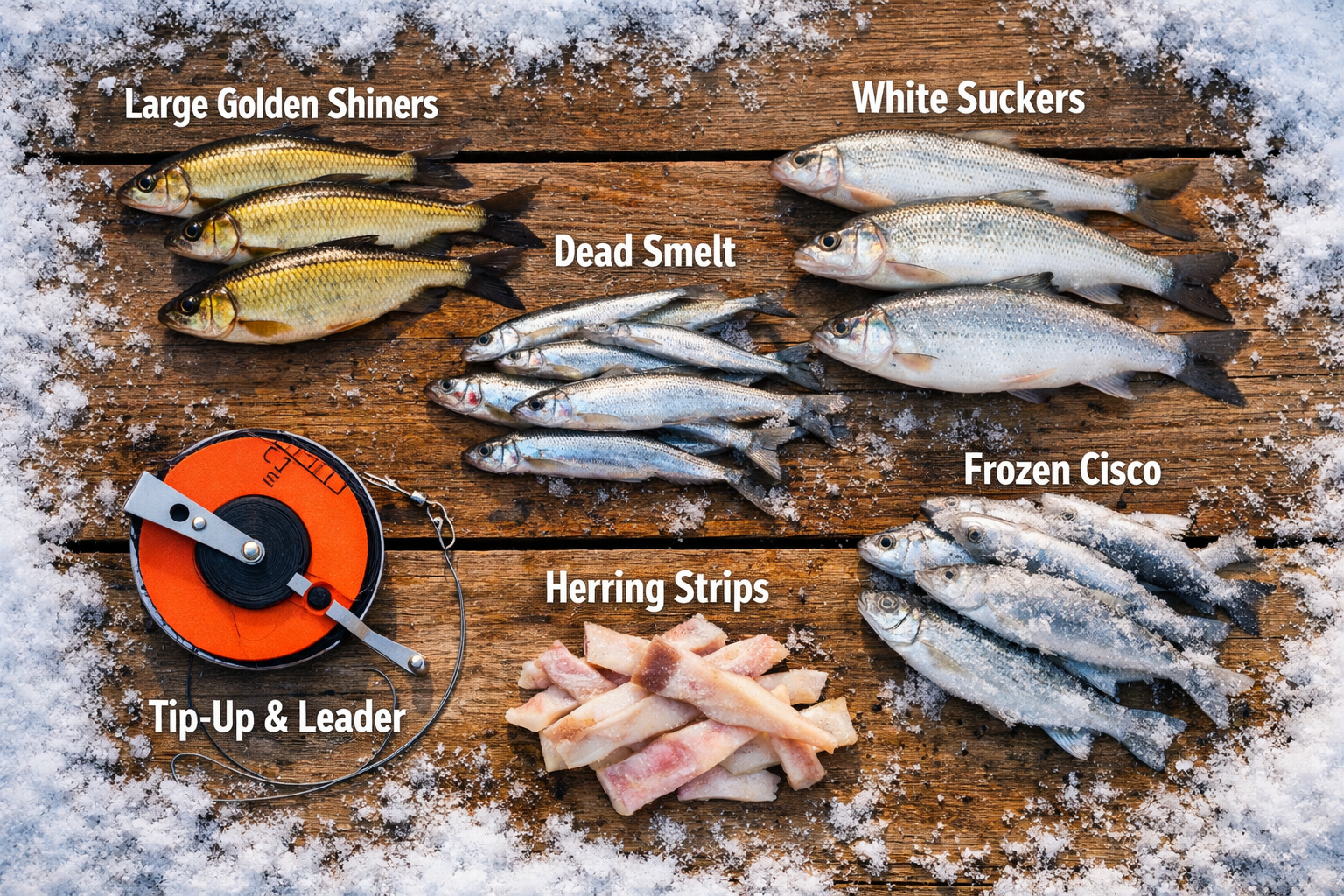
Large shiners and suckers remain the top producers for tip-up pike fishing on fading weedlines during stable weather. When cold fronts move through, dead baits like smelt, cisco, and herring strips take over as the better option.
Live Bait Options
| Bait Type | Size Range | Best Conditions | Hook Placement |
|---|---|---|---|
| Golden Shiner | 6 to 10 inches | Stable barometer, mild temps | Through back, behind dorsal fin |
| White Sucker | 6 to 12 inches | Stable to rising pressure | Through lips or behind dorsal |
| Large Fathead Minnow | 3 to 4 inches | Backup option for smaller pike | Through lips |
Why shiners and suckers work: These baits swim actively on the hook, sending vibrations through the water that pike detect with their lateral line. A lively 8-inch shiner suspended above a weed edge is hard for any pike to ignore.
Dead Bait Options
| Bait Type | Size Range | Best Conditions | Presentation |
|---|---|---|---|
| Smelt | 6 to 8 inches | Cold fronts, falling pressure | Suspended motionless or slow-spin rig |
| Cisco (Tullibee) | 6 to 10 inches | Post-front, low activity periods | Suspended near bottom |
| Herring | 6 to 8 inches | Extreme cold, sluggish pike | Cut strips or whole on quick-strike rig |
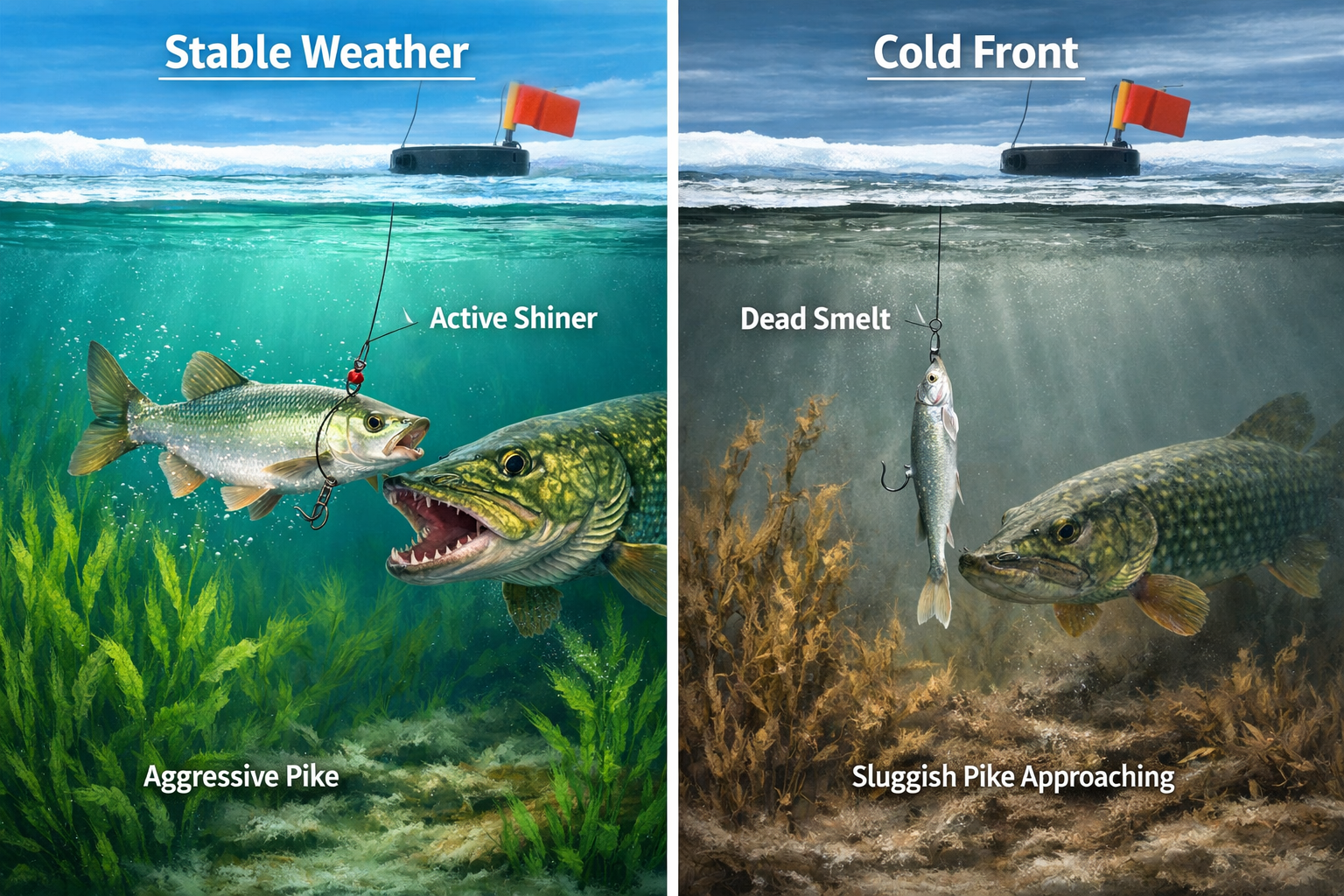
Why dead bait works during cold fronts: Pike aggression drops sharply when barometric pressure falls. A dead smelt hanging motionless above the weeds gives a sluggish pike an easy meal. The oily scent of smelt and cisco disperses through cold water slowly, drawing pike from farther away than a live bait's vibration alone.
Decision rule: Choose live shiners or suckers when the barometer is stable or rising and daytime temperatures stay consistent. Switch to dead smelt or cisco when a front pushes through, temperatures drop sharply, or you notice flags popping but fish not committing to live bait.
A quick-strike rig with two treble hooks (size 6 or 8) gives you the best hookup ratio on both live and dead baits. Set the hooks 2 to 3 inches apart along the bait's body. This rig allows a fast hook set, reducing deep hooking and improving catch-and-release survival.
How Deep Should You Set Tip-Ups Along Fading Weedlines?
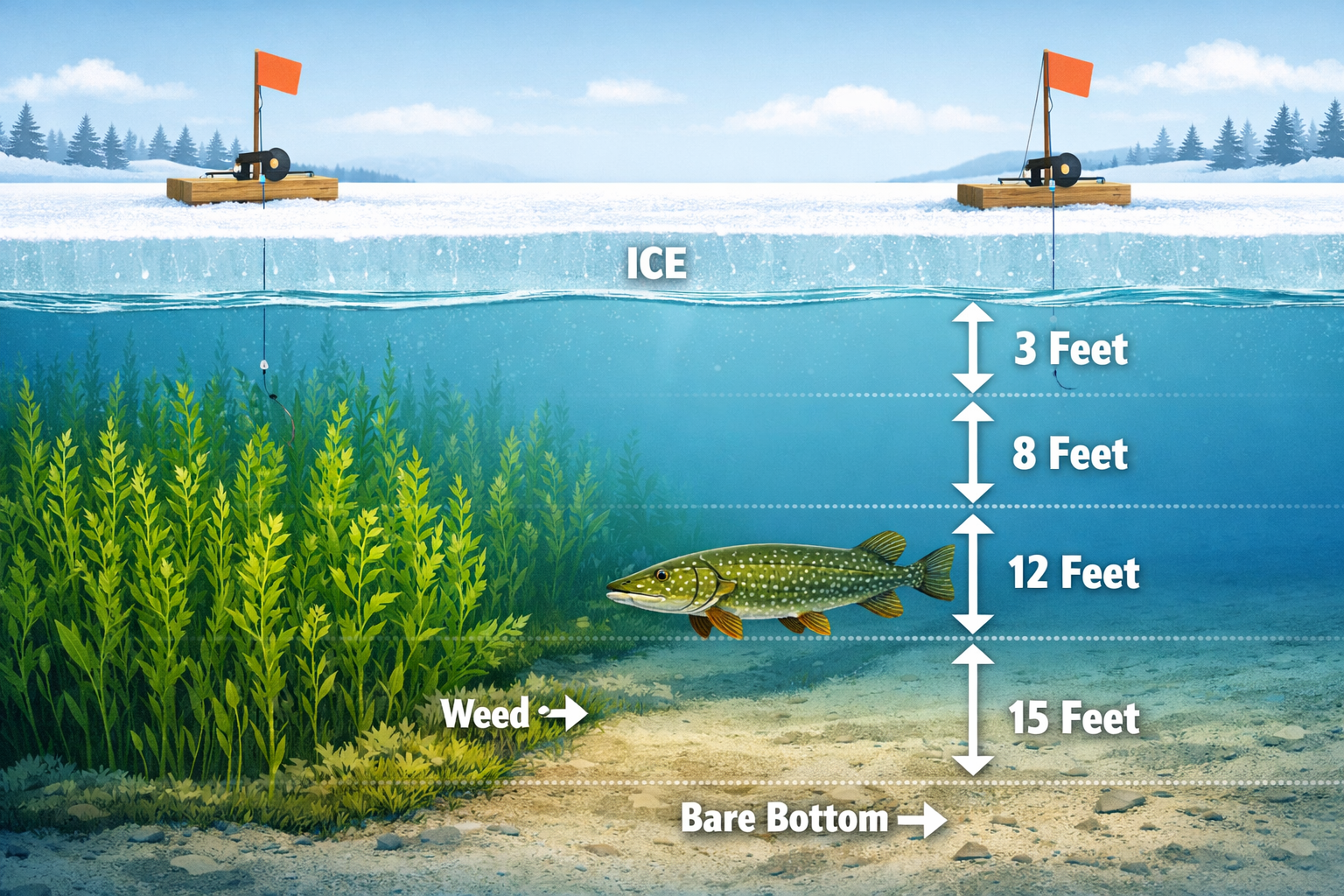
Set your tip-ups in 10 to 15 feet of water along the deepest remaining green weed edges. Position your bait 6 to 18 inches above the top of the weeds.
Depth Strategy Breakdown
Shallow zone (3 to 8 feet): This depth produced well during early ice when weeds were still thick. By February 2026, most shallow vegetation has died. Skip this zone unless you find isolated green patches near warm-water springs or current areas.
Primary zone (10 to 15 feet): This is your bread-and-butter depth for February pike on fading weedlines. The deepest weeds survive the longest because they receive consistent light through clearer, deeper water. Pike concentrate here as shallower weeds fade.
Transition zone (15 to 18 feet): As weeds disappear entirely from the 10 to 15 foot range, pike push to the outer edge where weeds meet open basin. Set a few tip-ups at this depth as scouts. If these flags start popping before your shallower sets, the weedline has shifted, and you need to adjust.
Bait height above weeds matters. Set your bait too low and pike miss the visual profile against the weed background. Set the bait too high and you lose the association with the weed edge that pike patrol. The 6 to 18 inch window above weed tops puts your bait right in the strike lane.
How to find the weed top: Drop a heavy jig or weight to the bottom. Slowly raise the line until you feel the weight clear the vegetation. Mark that depth on your line. Set your bait 6 to 18 inches above that mark.
Use a portable sonar unit to map the weed edge before drilling your tip-up holes. Spend 15 to 20 minutes scouting with electronics before committing to a spread. This saves time and puts your baits on productive structure from the start.
For those who want to sharpen their approach to tactical angling across seasons, check out the services offered at FishOnYak.com for coaching that builds on these principles.
Where Should You Place Tip-Up Holes Along a Fading Weedline?
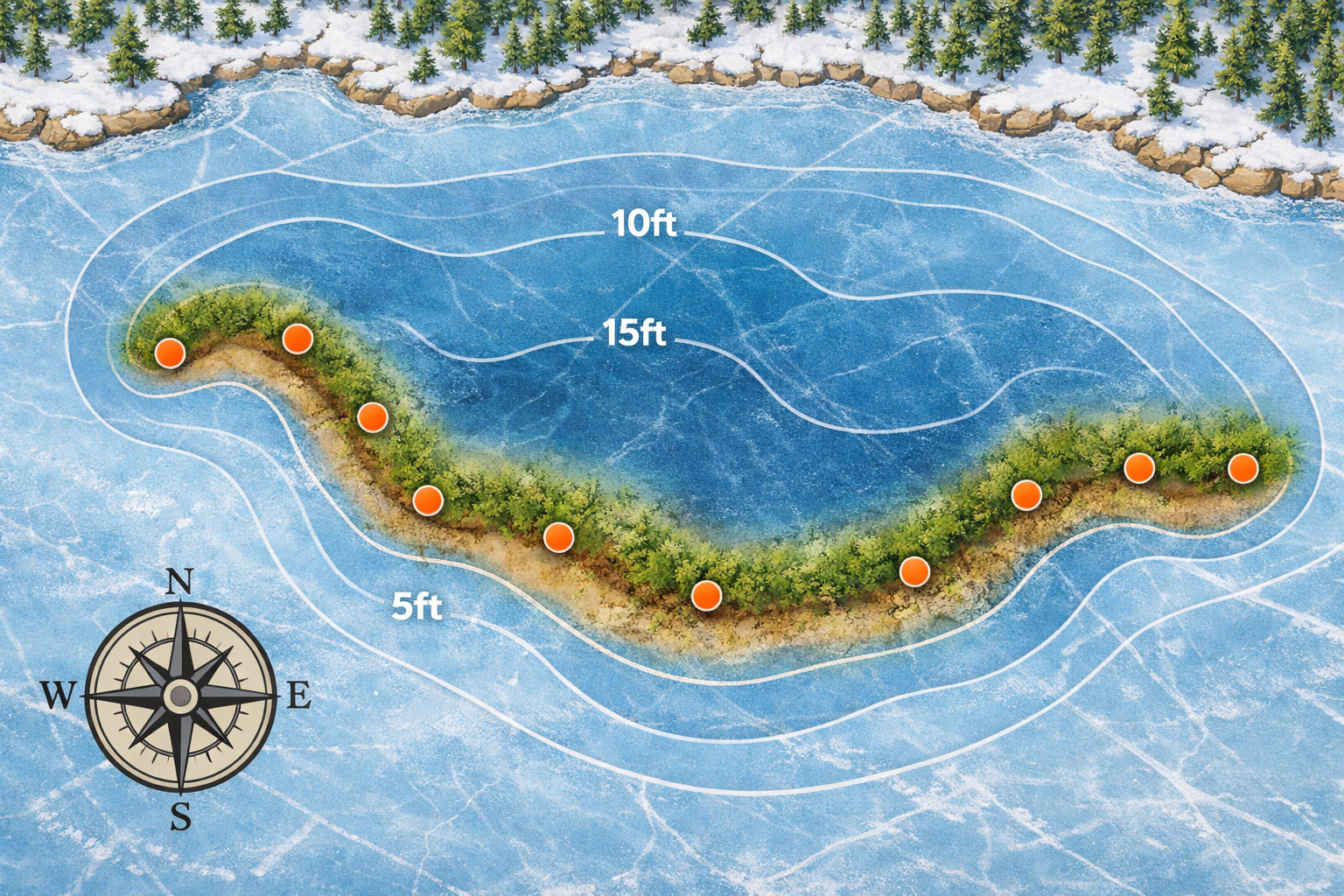
Target inside turns, points, and sharp transitions along the weed edge. Space your holes 20 to 30 feet apart across 200 to 300 yards of weedline to cover the most productive water.
Hole Placement Strategy
Inside turns: Where the weedline curves inward toward shore, baitfish funnel into a pocket. Pike sit at the mouth of these turns and pick off prey moving through. Place two tip-ups at the mouth of each inside turn.
Weedline points: Where vegetation juts out toward deeper water, pike use these as staging areas. A single tip-up on the tip of a weed point and one on each side covers this structure well.
Sharp depth transitions: Where the bottom drops from 10 feet to 15 feet over a short distance, weeds end abruptly. This hard edge gives pike a defined patrol route. Line your tip-ups along this break.
Current-influenced edges: Inflows, narrows between lake basins, and areas near creek mouths create subtle current that keeps weeds greener longer. These spots hold pike later into February than still-water flats.
Common Placement Mistakes
- Setting all tip-ups in a straight line. Weedlines curve and undulate. Follow the contour.
- Clustering holes too tightly. Pike patrol. A spread-out line of tip-ups intercepts more fish than a tight cluster.
- Ignoring the deep side. Place at least two tip-ups 10 to 15 feet beyond the weed edge to catch roaming pike that have left the vegetation entirely.
A good February spread for pike on fading weedlines looks like this: 6 to 8 tip-ups spread along 200 yards of weed edge, with 2 tip-ups pushed out to the deep side as scouts. Adjust the spread every 60 to 90 minutes if flags are not popping. Move toward the fish, not away from them.
Learn more about the FishOnYak.com approach to coaching and preparation that applies to both open-water and ice fishing scenarios.
How Do Weather and Conditions Affect Northern Pike on Fading Weedlines in February 2026?
Stable weather keeps pike active and feeding along weed edges. Cold fronts push pike deeper and reduce their willingness to chase live bait.
Weather Pattern Responses
Stable high pressure (3+ days): Pike feed aggressively along weed edges during low-light periods. Morning and late afternoon produce the most flags. Use large, lively shiners or suckers. Set baits higher in the water column, 12 to 18 inches above weeds.
Approaching front: The 12 to 24 hours before a front arrives often triggers a feeding burst. This is your best window for trophy pike. Run your full spread of tip-ups with the liveliest bait you have.
Post-front (cold front arrival): Pike pull tight to cover or drop to the deep side of the weed edge. Switch to dead baits. Lower your bait closer to the weeds, 6 to 10 inches above the tops. Expect fewer flags, but the fish that do bite tend to be larger.
Snow events: Heavy snowfall reduces light penetration, accelerating weed die-off. After a major snow, scout your weedline again with electronics. The productive edge shifts deeper after each significant snow event.
Temperature swings: February 2026 has seen variable conditions across northern pike waters. Rapid temperature swings cause pike to become neutral. During these periods, dead bait fished low and slow produces better than any active presentation.
Edge Case: When Weeds Fully Die Off
On some lakes, weeds fade entirely by late February. When this happens, pike scatter across flats and suspend over deep basins. Tip-ups still work, but you need to shift your approach:
- Move tip-ups to the last known weed edge, even if no green remains. The bottom structure still funnels baitfish.
- Add active jigging with heavy spoons or jerkbaits to trigger reaction strikes from suspended pike.
- Increase your search area. Pike that roam open water cover more ground, so spread your tip-ups wider.
What Rigging Details Make the Difference for Tip-Up Pike in February?
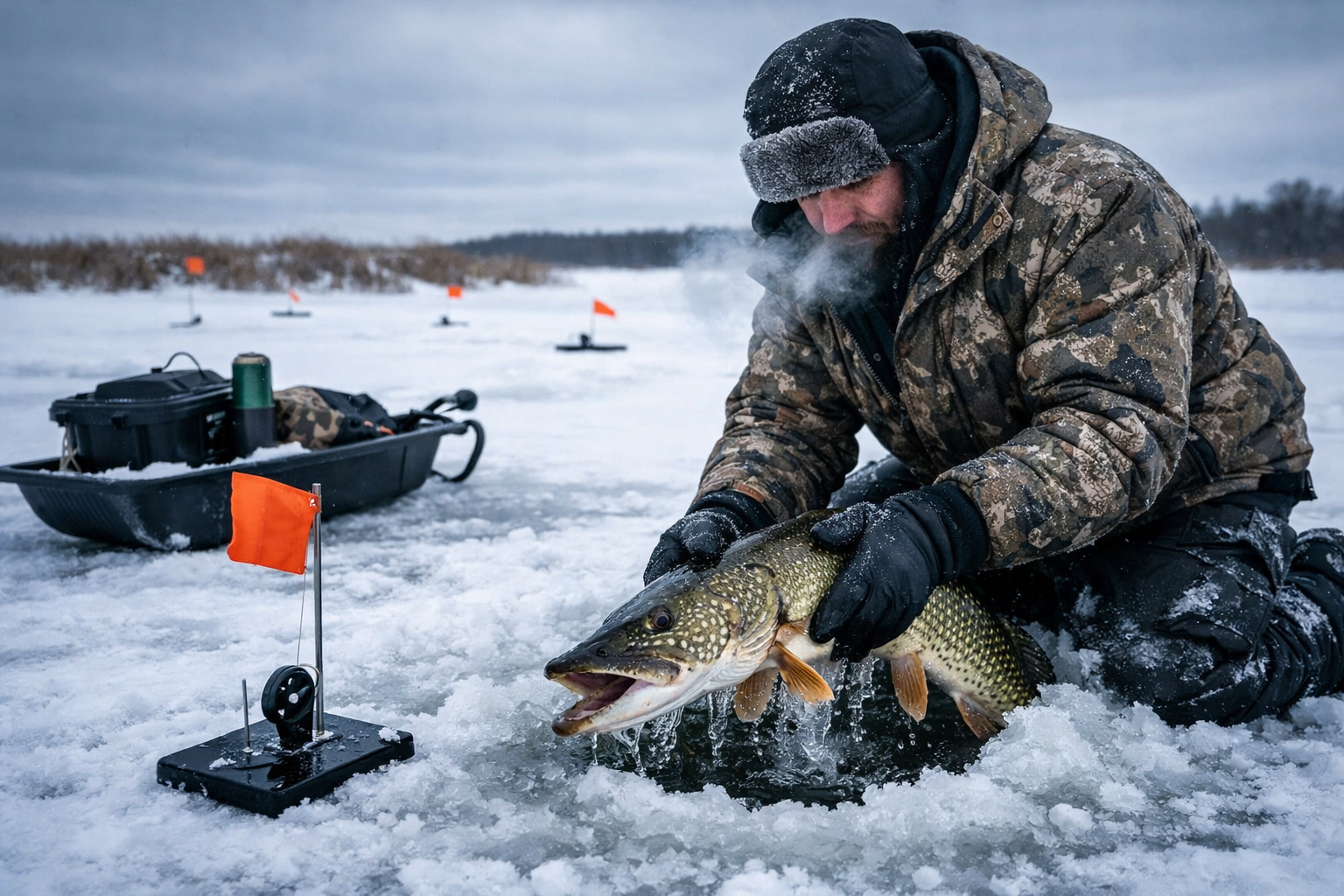
The right leader, hook setup, and line choice separate consistent pike catchers from anglers who watch flags pop without landing fish.
Quick-Strike Rig Setup
- Tie a 12 to 18 inch fluorocarbon or wire leader (30 to 50 pound test) to your tip-up line using a barrel swivel.
- Attach two size 6 or 8 treble hooks to the leader, spaced 2 to 3 inches apart.
- Pin the front hook through the bait's back, behind the dorsal fin. Let the rear hook hang free or lightly pin the tail.
- Add a small split shot 6 inches above the top hook to keep the bait at your target depth.
Why wire vs. fluorocarbon matters: Wire leaders (27 to 45 pound) prevent bite-offs from pike teeth. Fluorocarbon leaders (40 to 50 pound) offer lower visibility in clear water but risk cut-offs from larger pike. Choose wire when targeting trophy fish. Choose fluorocarbon on pressured lakes with clear water and smaller average pike size.
Tip-Up Line Selection
Use 20 to 30 pound braided or Dacron tip-up line. Braided line resists freezing better than monofilament. Spool at least 75 yards to handle long runs from big pike.
Rigging Mastery Checklist
- Check your tip-up mechanisms before each trip. Frozen or sticky spindles cause missed flags.
- Wax your tip-up spindle with a light coating of silicone spray to prevent freeze-up.
- Carry backup leaders pre-tied and stored in a small tackle box. Retying on the ice in cold wind wastes fishing time.
- Set your flag tension light enough to trigger on a pike's initial run but heavy enough to resist wind false flags.
This level of preparation reflects the tournament-ready mindset that separates casual anglers from those who consistently put fish on the ice.
Ice Safety Considerations for February 2026 Pike Fishing
Ice conditions in northern pike waters have shown 8 to 12 inches of thickness through January 2026, but variable temperatures create inconsistent conditions. Check ice thickness at multiple points along your fishing route, especially near current areas and weed edges where ice thins.
Safety protocol for weedline fishing:
- Carry ice picks around your neck and a throw rope in your sled.
- Test ice every 50 feet when moving along a weedline toward deeper water.
- Avoid areas where current from inflows or narrows thins the ice near productive weed edges.
- Fish with a partner. Spread out to distribute weight, but stay within visual and voice contact.
- Bring a charged phone in a waterproof case. Share your GPS location with someone onshore.
Weed edges near current areas are among the most productive pike spots and the most dangerous for ice integrity. Respect both realities. The FishOnYak.com commitment to fluid safety applies on ice as much as on open water.
Active Jigging vs. Tip-Ups: When to Switch Tactics
Tip-ups dominate weedline pike fishing in February, but active jigging fills gaps when weeds fully fade or pike suspend away from structure.
| Factor | Tip-Ups | Active Jigging |
|---|---|---|
| Best scenario | Pike holding on defined weed edges | Pike suspended or roaming open water |
| Bait type | Live shiners, suckers, dead smelt | Heavy spoons, jerkbaits, lipless cranks |
| Coverage | Wide area, passive monitoring | Single hole, active engagement |
| Cold front performance | Strong with dead bait | Weaker, pike less reactive |
| Effort level | Low after setup | High, constant rod work |
Decision rule: Run tip-ups as your primary spread along the weedline. Drill one or two extra holes on the deep side of the weed edge for active jigging. If your tip-up flags go quiet for 90 minutes, pick up a rod and work a heavy spoon aggressively. The flash and vibration from a jigged spoon triggers reaction strikes from pike that ignore a stationary dead bait.
Combine both approaches for the best results. Kayak. Drill. Catch. Repeat.
Explore more about building a multi-season angling skill set on the FishOnYak.com blog.
Frequently Asked Questions
What size bait works best for pike on fading weedlines in February? Use 6 to 10 inch shiners or suckers for live bait, and 6 to 8 inch smelt or cisco for dead bait. Larger baits attract larger pike and filter out smaller fish.
How far above the weeds should you set your tip-up bait? Set your bait 6 to 18 inches above the weed tops. Use the lower end of that range during cold fronts and the higher end during stable weather.
Do pike feed at night on fading weedlines in February? Pike feed during low-light periods, including dawn and dusk. Night feeding occurs but is less consistent in February than during early ice. Focus your effort on the first and last two hours of daylight.
How often should you check and move tip-ups? Check your bait every 45 to 60 minutes to confirm the bait is lively and the hole is not frozen over. Move unproductive tip-ups every 90 minutes to a new position along the weedline.
Should you use a wire leader or fluorocarbon for pike tip-ups? Use wire (27 to 45 pound) when targeting trophy pike or fishing stained water. Use fluorocarbon (40 to 50 pound) in clear, pressured lakes where pike are leader-shy.
What depth range holds the most pike in February on fading weedlines? The 10 to 15 foot range along the deepest surviving green weed edges holds the most pike in February 2026. Shallower weeds have largely died off by this point in the season.
How many tip-ups should you set for pike on a weedline? Check your local regulations for the maximum number of lines allowed. In most northern states, 6 to 8 tip-ups per angler is standard. Spread them across 200 to 300 yards of weed edge.
When do pike leave fading weedlines entirely? Pike leave weedlines when the vegetation dies off completely and baitfish disperse. This happens in late February to early March on most northern lakes. At that point, pike move to deep flats, points, and basin edges.
Does barometric pressure affect pike feeding on weedlines? Stable or slowly rising barometric pressure produces the best tip-up action. Rapidly falling pressure (approaching fronts) triggers short feeding bursts. Post-front high pressure with clear skies slows pike feeding for 12 to 24 hours.
What is the best time of day for pike on fading weedlines in February? The first two hours after sunrise and the last two hours before sunset produce the most consistent flag action. Midday fishing works during overcast conditions or when a front is approaching.
Targeting northern pike on fading weedlines in February 2026 comes down to three things: finding the deepest surviving green weeds, matching your bait to the weather, and placing your tip-ups on the sharpest transitions along the weed edge. Set your spread in 10 to 15 feet, run large shiners during stable weather, switch to dead smelt when fronts push through, and keep your baits 6 to 18 inches above the weed tops. Scout with electronics before you commit, move unproductive holes every 90 minutes, and respect the ice. The pike are there. Put in the work, and you will find them.
See you on the water.
For personalized coaching on pike tactics and multi-season angling strategies, reach out to the FishOnYak.com team.
SEO Meta Title: Pike on Fading Weedlines: Tip-Up Baits & Depth for Feb 2026
SEO Meta Description: Target northern pike on fading weedlines in February 2026 with the right tip-up bait choices and depth strategies. Shiners, dead bait, and 10-15 ft tactics covered.