Last updated: February 21, 2026
Your ice fishing suit took a beating all season. Saltwater spray, fish slime, sweat, and sub-zero temps all wear down fabric, zippers, and waterproof coatings. A proper off-season ice fishing suit storage checklist protects your investment and keeps your gear tournament-ready for next season. Skip these steps, and you risk mildew, delaminated waterproofing, corroded zippers, and a suit that fails when you need buoyancy most.
This guide walks you through every step, from post-season cleaning to pre-season retrieval. Follow the process once and your suit will last five years or longer.
Key Takeaways
- Clean your suit with a technical fabric wash (not regular detergent) before storing to preserve waterproof coatings.
- Dry your suit for 24 to 48 hours in a ventilated space before putting anything into storage.
- Never store a suit in a sealed plastic bag. Trapped moisture breeds mildew and degrades materials.
- Inspect and lubricate all zippers with non-petroleum wax before the off-season.
- Hang your suit on a wide hanger in a cool, dry, dark space with at least 12 inches of clearance on each side.
Quick Answer
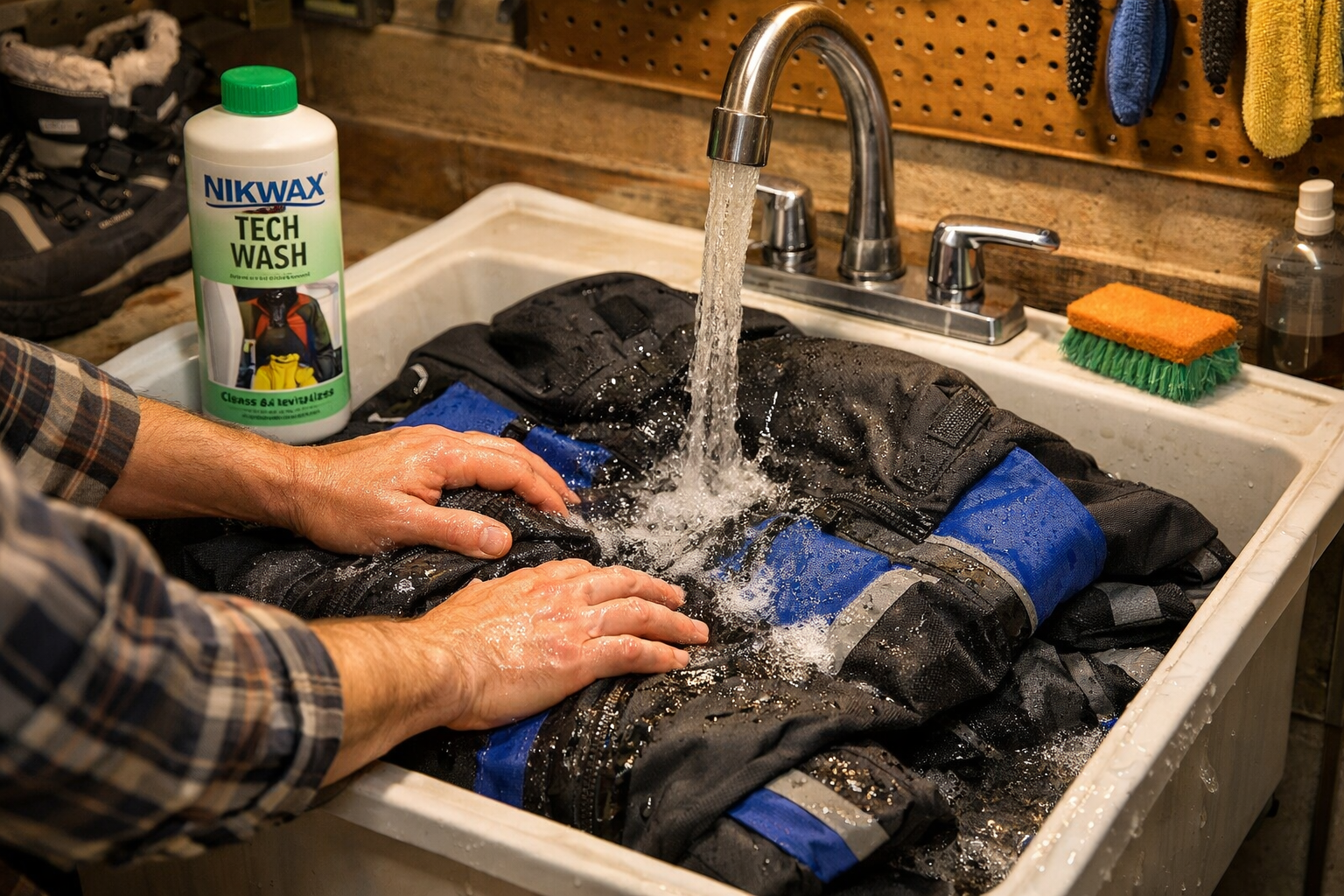
An off-season ice fishing suit storage checklist covers five phases: cleaning, drying, inspecting and repairing, storing in a breathable environment, and conducting a pre-season check before your next trip. Each phase prevents a specific type of damage. Cleaning removes salt and grime that eat through fabric. Drying prevents mold. Inspection catches small tears before they become big problems. Proper storage preserves waterproof coatings, insulation loft, and zipper function. The whole process takes about two hours of active work spread over two days.
Why Does Your Ice Fishing Suit Need a Storage Checklist?
A quality ice fishing suit with 600D fabric and closed-cell foam insulation costs between $300 and $800. That suit serves double duty as cold-weather protection and flotation device. Improper storage degrades both functions.
Here's what goes wrong without a plan:
- Mildew and odor. Moisture trapped in fabric or insulation creates mold colonies within weeks. Once mildew sets into closed-cell foam, removing the smell becomes nearly impossible.
- Waterproof coating failure. Regular detergent residue and prolonged UV exposure strip DWR (durable water repellent) coatings. Your suit absorbs water instead of shedding it.
- Zipper corrosion. Salt residue and moisture cause metal zipper teeth to seize. YKK zippers hold up better than generic hardware, but they still need maintenance.
- Insulation compression. Stuffing a suit into a tight bag crushes insulation loft. Compressed foam loses thermal efficiency over time.
Boreas introduced a lifetime warranty program in September 2025 for their ice fishing suits, but even that warranty requires proof of proper care. Windrider published research in November 2025 showing that ice fishing bibs with proper daily post-use cleaning (about 10 minutes per session) prevented 90% of premature wear and extended garment life beyond 10 years. Your off-season routine matters.
How Do You Clean an Ice Fishing Suit Before Off-Season Storage?
Clean your suit within 48 hours of your last outing. Dried salt, fish oils, and body oils bond to fabric fibers and become harder to remove with each passing day.
Step-by-Step Cleaning Process
Remove all accessories. Take out removable liners, detach any flotation panels that unclip, and empty every pocket. Check for forgotten lures, hand warmers, and bait.
Shake out debris. Turn the suit inside out and shake loose any sand, ice crystals, or dried bait.
Spot-treat stains. Apply a small amount of technical fabric cleaner directly to fish blood, oil stains, or ground-in dirt. Let the cleaner sit for 10 minutes.
Wash with Nikwax Tech Wash or a similar technical cleaner. Standard laundry detergent strips waterproof coatings and reduces breathability. Tech Wash cleans without damaging DWR treatments. Follow the product's dosage instructions.
Wash removable liners separately. If your suit has a removable liner system, machine wash the liner on a gentle cycle with Tech Wash. This allows thorough cleaning without submerging the waterproof outer shell.
Rinse thoroughly. Any soap residue left in the fabric attracts dirt and degrades waterproofing. Rinse until the water runs clear.
Clean boots and accessories. John Kushniroff, a storage facility manager, recommends cleaning all boots, gloves, and gutting equipment before storage to prevent odor retention and rust on metal components.
Common Mistakes During Cleaning
- Using bleach or fabric softener. Both destroy waterproof membranes.
- Machine washing the outer shell on a regular cycle. The agitation damages seam tape and waterproof coatings. Hand wash or use a front-loading machine on gentle.
- Skipping the rinse. Detergent residue (even from technical wash) left in fabric attracts moisture during storage.
For tips on thorough cleaning techniques that apply to gear and fabric care, check out this guide to cleaning like a pro.
How Long Should You Dry Your Ice Fishing Suit Before Storage?
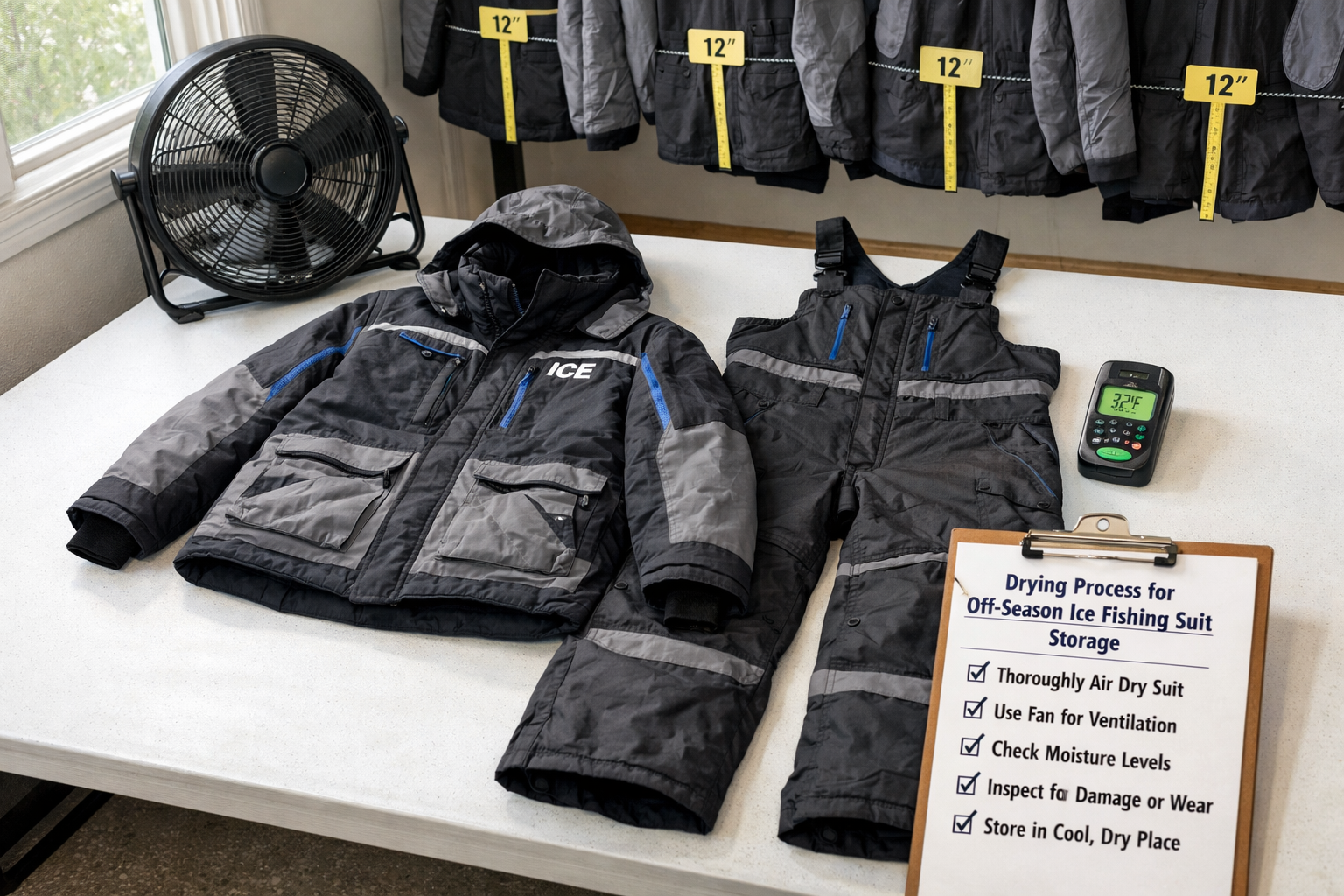
Dry your suit for a minimum of 24 to 48 hours before storing. Windrider's February 2026 drying guide specifies this timeline and recommends maintaining 12 inches of spacing between hanging suits and 6 inches of clearance from walls to allow full air circulation.
Drying Protocol
Hang the suit on a wide, padded hanger. Wire hangers create pressure points that distort shoulder seams. Use a hanger at least 2 inches wide.
Choose a well-ventilated room. A garage with a fan works. A bathroom with the exhaust fan running works. Avoid direct sunlight, which degrades waterproof coatings and fades fabric.
Unzip all zippers and open all flaps. Pockets, storm flaps, and ventilation panels should all be open to allow airflow into every compartment.
Hang liners separately. If you washed a removable liner, hang the liner on a different hanger at least 12 inches from the outer shell.
Check for dryness before proceeding. Press a dry paper towel against the inner fabric. If any moisture transfers, give the suit more time. Pay close attention to seams, cuffs, and the crotch area of bibs, where moisture hides.
What Happens If You Store a Damp Suit?
Mildew growth begins within 48 to 72 hours in a sealed or low-airflow environment. The closed-cell foam insulation in suits like Boreas models provides buoyancy and warmth, but foam also holds moisture longer than fabric. A suit that feels dry on the surface might still have damp insulation underneath.
Choose a drying location that stays between 60 and 75 degrees Fahrenheit. Too much heat damages adhesive seam tape. Too little airflow extends drying time beyond the safe window.
What Should You Inspect and Repair Before Storing Your Ice Fishing Suit?
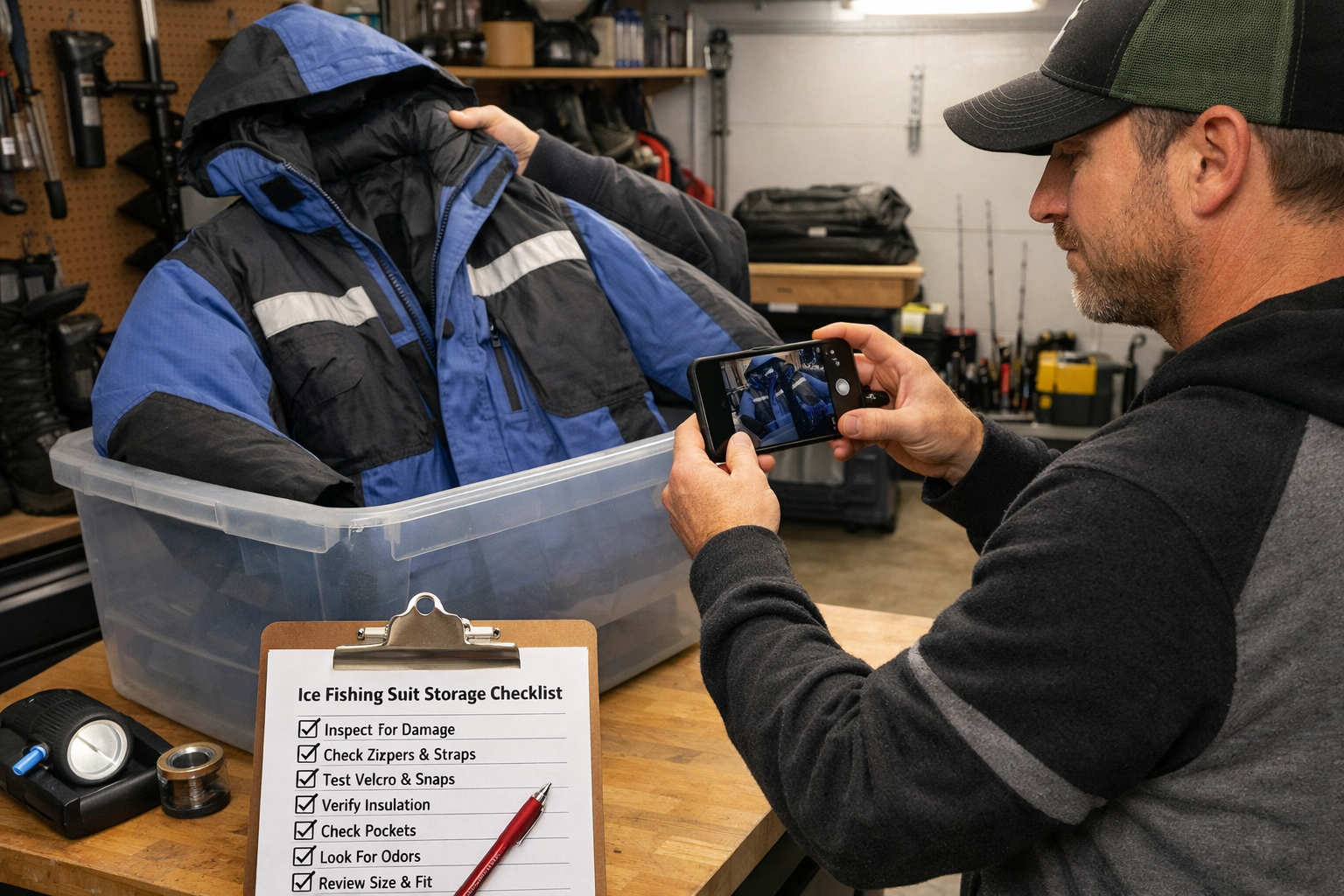
Inspect every seam, zipper, and panel before your suit goes into storage. Small damage found now costs a few dollars to fix. The same damage found next season, after months of mildew exposure, often means replacing the entire suit.
Inspection Checklist
| Area to Inspect | What to Look For | Action If Damaged |
|---|---|---|
| Seam tape | Peeling, bubbling, or lifting edges | Apply seam sealer (Gear Aid Seam Grip) |
| Zippers | Stiff teeth, corrosion, missing pulls | Clean, lubricate with zipper wax |
| Fabric panels | Tears, abrasion, thinning | Patch with Tenacious Tape or send for repair |
| Velcro closures | Lint buildup, weak grip | Clean with a stiff brush |
| Reflective strips | Peeling or cracking | Replace if compromised (safety feature) |
| Flotation foam | Compression, water saturation | Contact manufacturer for replacement panels |
| Cuffs and gaskets | Cracking, loss of elasticity | Apply 303 Protectant or replace gaskets |
Zipper Maintenance
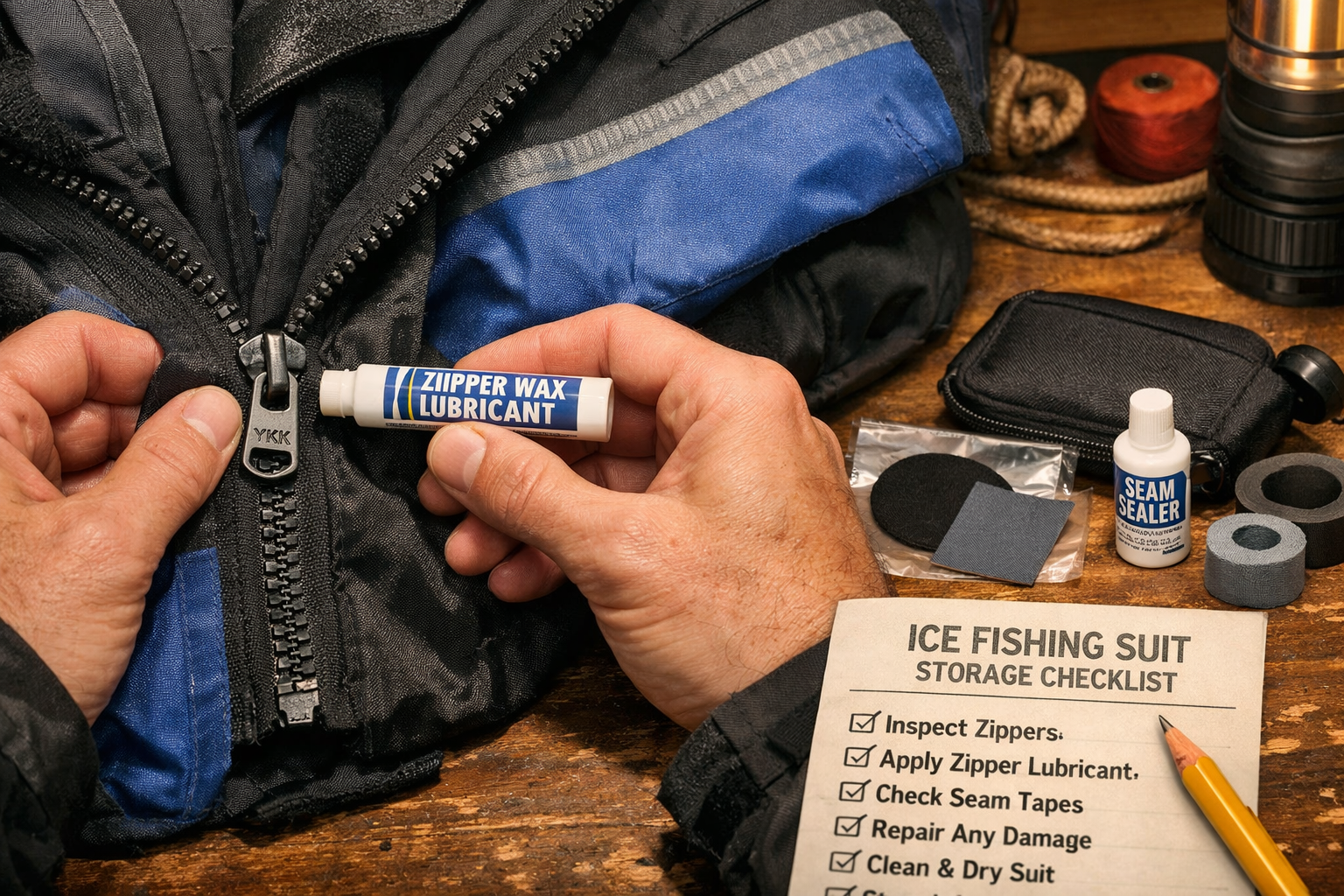
Apply zipper wax or a specialized zipper lubricant to every zipper on the suit. Run the zipper up and down several times to distribute the wax evenly. Avoid petroleum-based lubricants, which degrade rubber gaskets and nylon zipper tape. Monthly lubrication during the active ice season prevents freezing and extends hardware life. Before storage, one thorough application protects zippers for the entire off-season.
Document the Condition
Take photos of your suit from multiple angles before storing. Note any repairs you made and any areas to watch. This documentation serves two purposes: you'll have a baseline for your pre-season inspection, and you'll have evidence of proper care if you ever need to file a warranty claim.
For more on maintaining gear and tackling stains and grime, see this resource on cleaning solutions.
Off-Season Ice Fishing Suit Storage Checklist: Where and How to Store Your Suit
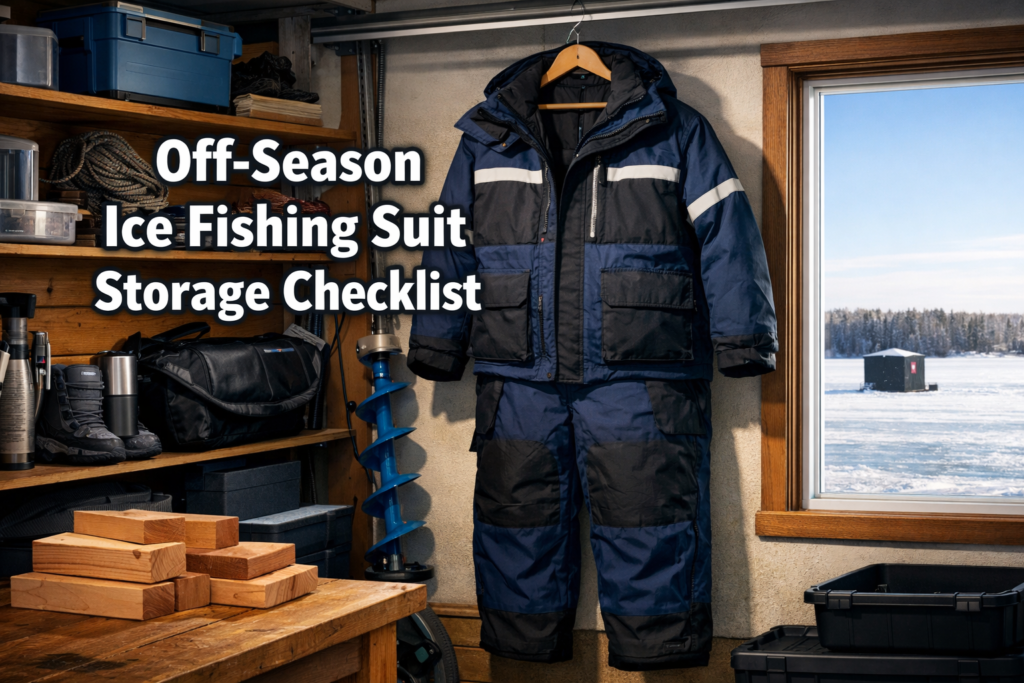
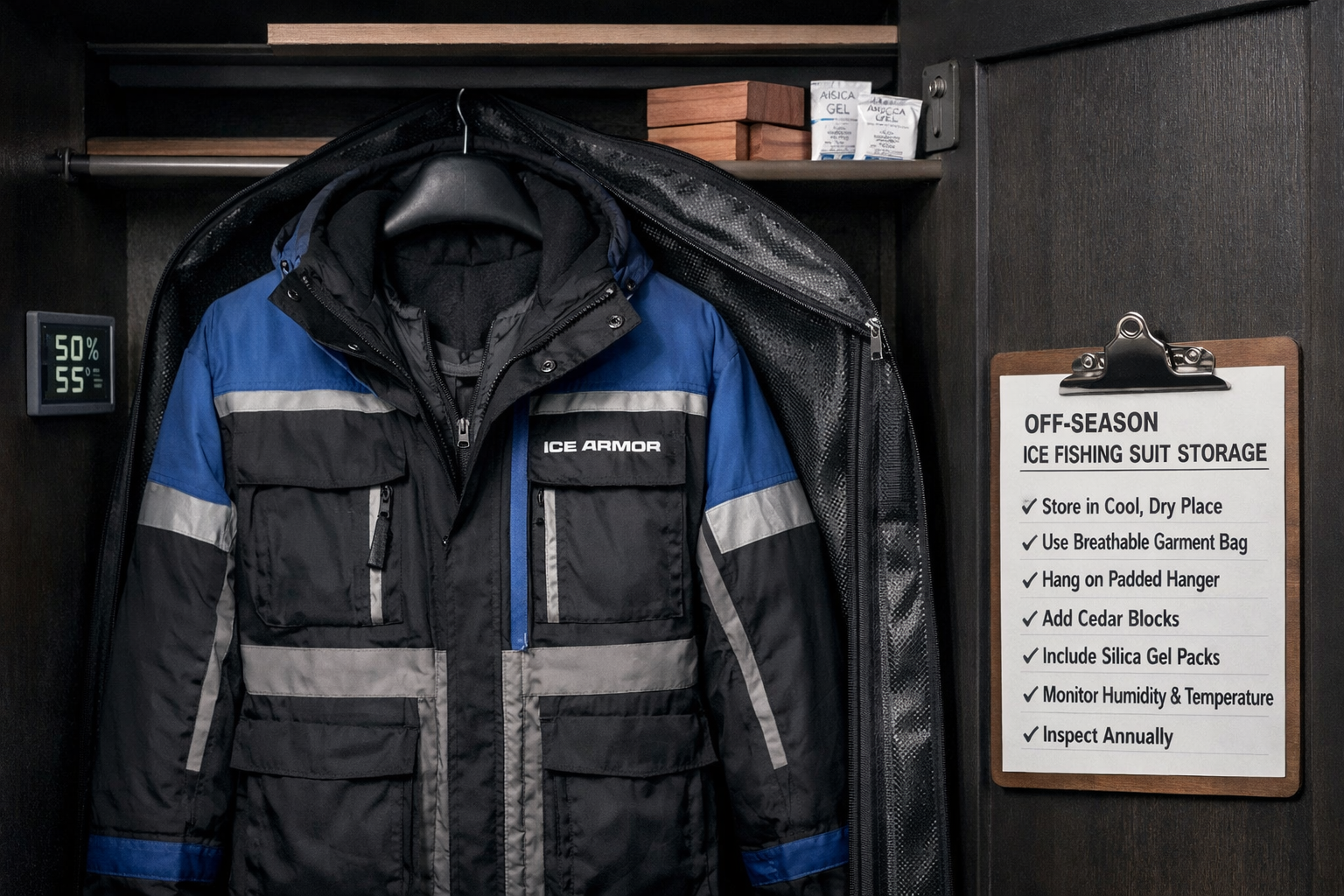
Store your suit in a cool, dry, dark location with consistent temperature and good airflow. A climate-controlled closet, a dry basement, or an interior storage room all work. Avoid attics (too hot in summer), unheated garages (temperature swings cause condensation), and outdoor sheds.
Storage Method: Step by Step
Hang, do not fold. Folding compresses insulation and creates permanent crease lines in waterproof coatings. Always hang your suit on a wide hanger.
Use a breathable garment bag. A cotton or non-woven polypropylene garment bag keeps dust off while allowing air circulation. Never use a sealed plastic bag. Sealed plastic traps moisture, promotes mildew growth, and causes material degradation. This is one of the most common storage mistakes anglers make.
Add moisture absorbers. Place silica gel packets or a small container of DampRid near (not touching) the suit. Replace these every 60 to 90 days if your storage area has any humidity concerns.
Use cedar blocks for odor prevention. Cedar naturally repels insects and absorbs odors. Place blocks on the shelf near your suit, not directly on the fabric.
Maintain clearance. Keep at least 12 inches between your suit and any other hanging garments. Keep at least 6 inches between the suit and walls. This spacing allows air to circulate and prevents moisture pockets.
Keep the area dark. UV light, even from fluorescent bulbs, degrades DWR coatings and fades fabric over time. If your storage area has windows, cover the garment bag or close blinds.
Storage Conditions Quick Reference
| Factor | Ideal Range | Why |
|---|---|---|
| Temperature | 50 to 70°F (10 to 21°C) | Prevents condensation and adhesive breakdown |
| Humidity | 30% to 50% relative humidity | Below 30% dries out gaskets. Above 50% promotes mold. |
| Light exposure | Minimal to none | UV degrades waterproof coatings |
| Airflow | Moderate, consistent | Prevents moisture buildup |
What About Storing Other Ice Fishing Gear?
Your suit shares storage space with rods, augers, and electronics. Alex Timm, an ice fishing content creator, recommends storing rods in hard-sided containers and disconnecting fish finder batteries before the off-season. Charge auger batteries to about 50% capacity for long-term storage. Keeping all your gear clean and dry in the same environment simplifies your pre-season prep.
Visit the FishOnYak blog for more gear maintenance guides and tactical angling content.
How Do You Prepare Your Stored Suit for the Next Ice Season?
Pull your suit out of storage at least two weeks before your first trip. A pre-season inspection gives you time to address problems before you're standing on the ice.
Pre-Season Retrieval Checklist
Remove the suit from the garment bag. Hang the suit in a well-lit area and let the fabric breathe for a few hours.
Photograph the suit. Compare the current condition to the photos you took before storage. Look for discoloration, new stains (possible mildew), or any visible wear.
Check all zippers. Open and close every zipper. They should move smoothly. If any zipper sticks, apply fresh zipper wax.
Inspect seam tape. Run your fingers along every sealed seam. Peeling tape needs resealing before the suit gets wet.
Test flotation. If your suit doubles as a float suit, check the foam panels for compression or water damage. Squeeze the foam. The material should spring back immediately.
Reapply DWR treatment if needed. Sprinkle a few drops of water on the outer fabric. If water beads up and rolls off, the DWR coating is still active. If water soaks into the fabric, apply a DWR spray like Nikwax TX.Direct.
Wash the suit lightly. A quick rinse removes any dust or storage odors. Hang dry for 24 hours before wearing.
Check fit. Try the suit on with your base layers. Body changes over the off-season affect fit, and a suit that restricts movement on the ice is a safety hazard.
This retrieval process aligns with February 2026 guidance recommending photo documentation and thorough condition assessment before the ice fishing season begins.
For a deeper look at maintaining long-lasting gear performance, explore tips for keeping things in top condition.
Complete Off-Season Ice Fishing Suit Storage Checklist (Printable Summary)
Use this consolidated checklist to walk through every step. Check off each task as you complete the process.
Phase 1: Cleaning (Day 1)
- Remove all accessories, liners, and pocket contents
- Shake out debris and turn suit inside out
- Spot-treat stains with technical fabric cleaner
- Wash with Nikwax Tech Wash (no regular detergent)
- Machine wash removable liners on gentle cycle
- Rinse thoroughly until water runs clear
- Clean boots, gloves, and accessories separately
Phase 2: Drying (Days 1 to 3)
- Hang on wide padded hanger
- Open all zippers, pockets, and flaps
- Maintain 12 inches between suits, 6 inches from walls
- Dry for 24 to 48 hours minimum
- Confirm dryness with paper towel test
Phase 3: Inspection and Repair (Day 3)
- Inspect all seam tape for peeling or bubbling
- Test every zipper for smooth operation
- Check fabric for tears, abrasion, or thinning
- Clean Velcro closures with stiff brush
- Verify reflective strips are intact
- Squeeze flotation foam to check for compression
- Inspect cuffs and gaskets for cracking
- Apply zipper wax to all zippers
- Repair any damage found
- Photograph suit from multiple angles
Phase 4: Storage
- Hang suit on wide hanger (never fold)
- Place in breathable garment bag (never sealed plastic)
- Add silica gel packets or DampRid nearby
- Place cedar blocks on shelf near suit
- Store in cool, dry, dark location (50 to 70°F)
- Maintain 30% to 50% relative humidity
- Ensure 12 inches of clearance on all sides
Phase 5: Pre-Season Retrieval
- Remove suit two weeks before first trip
- Photograph and compare to pre-storage photos
- Test all zippers and reapply wax if needed
- Inspect seam tape and reseal if necessary
- Test DWR coating with water droplet test
- Reapply DWR spray if water absorbs into fabric
- Rinse suit lightly and hang dry for 24 hours
- Try on suit with base layers to confirm fit
What Are Common Mistakes When Storing Ice Fishing Suits?
Knowing what to avoid saves you from expensive replacements.
Storing in sealed plastic bags. This is the most frequent mistake. Sealed plastic traps any residual moisture and creates a mildew incubator. Always use breathable covers.
Using regular laundry detergent. Standard detergent leaves residue that strips waterproof coatings. Your suit will absorb water instead of repelling the next time you wear the suit on the ice.
Folding instead of hanging. Folding creates permanent creases in waterproof membranes and compresses insulation. Even if space is tight, hang the suit.
Storing in a hot attic or unheated space. Temperature extremes break down adhesive seam tape and cause condensation cycles that promote mold.
Skipping zipper maintenance. A seized zipper on the ice is more than an inconvenience. If you rely on your suit for flotation in an emergency, a stuck zipper becomes a safety issue.
Forgetting to check flotation foam. Closed-cell foam in float suits like Boreas models provides buoyancy that replaces a separate flotation device. If that foam degrades during storage, you lose a critical safety feature without knowing the suit failed.
For more on maintaining the longevity of your gear through proper care routines, see essential care tips.
FAQ
How long does an ice fishing suit last with proper storage? With consistent cleaning and correct off-season storage, a quality ice fishing suit with 600D fabric lasts five to ten years. Windrider's November 2025 research showed bibs exceeding 10 years with proper care routines.
What detergent should you use to clean an ice fishing suit? Use Nikwax Tech Wash or a similar technical fabric cleaner. Regular detergents strip DWR waterproof coatings and reduce breathability. Never use bleach or fabric softener.
Is a sealed plastic bag okay for storing an ice fishing suit? No. Sealed plastic bags trap moisture and promote mildew growth. Use a breathable cotton or non-woven polypropylene garment bag instead.
How do you prevent mildew on a stored ice fishing suit? Dry the suit for 24 to 48 hours before storing. Use silica gel packets or DampRid near the suit. Store in a space with 30% to 50% relative humidity and good airflow.
Should you fold or hang an ice fishing suit for storage? Always hang. Folding compresses insulation and creates permanent creases in waterproof coatings. Use a wide padded hanger at least 2 inches across.
How do you maintain zippers on an ice fishing suit? Apply zipper wax or a non-petroleum zipper lubricant before storage. Run each zipper up and down several times to distribute the wax. Avoid petroleum-based products that degrade rubber gaskets.
What temperature is best for storing an ice fishing suit? Store between 50 and 70 degrees Fahrenheit. Avoid attics (too hot) and unheated garages (temperature swings cause condensation).
How do you test if your suit's waterproof coating still works? Sprinkle water droplets on the outer fabric. If water beads up and rolls off, the DWR coating is active. If water soaks in, reapply a DWR spray like Nikwax TX.Direct.
When should you pull your suit out of storage before ice season? At least two weeks before your first trip. This gives you time to inspect, test, and repair any issues.
Do you need to reapply waterproofing every year? Not always. Test the DWR coating during your pre-season check. If water still beads on the surface, the coating is fine. If water absorbs, reapply.
How much space do you need around a stored ice fishing suit? Maintain at least 12 inches between suits and 6 inches from walls. This spacing allows air circulation and prevents moisture pockets.
What's the best way to store other ice fishing gear alongside your suit? Store rods in hard-sided containers. Disconnect fish finder batteries. Charge auger batteries to 50% capacity. Clean all boots and accessories before storage to prevent odor and corrosion.
Key Takeaways
- Clean your suit with technical fabric wash within 48 hours of your last trip.
- Dry for 24 to 48 hours with full airflow before storing.
- Inspect every seam, zipper, and foam panel. Repair damage immediately.
- Lubricate all zippers with non-petroleum wax.
- Hang on a wide hanger inside a breathable garment bag.
- Store in a cool (50 to 70°F), dry (30 to 50% humidity), dark location.
- Never use sealed plastic bags, regular detergent, or hot storage spaces.
- Photograph your suit before and after storage for condition tracking.
- Pull your suit out two weeks before the season and run a full pre-season check.
- Proper storage extends suit life to five years or longer, protecting your investment and your safety on the ice.
Your ice fishing suit is safety equipment, not a jacket. Treat the storage process with the same discipline you bring to rigging your kayak or prepping for a tournament. Kayak. Drill. Catch. Repeat.
For more tactical angling content, coaching resources, and rigging mastery guides, visit FishOnYak.com and explore the practice resources available to multi-season adventurers.
See you on the water.