Last updated: March 7, 2026
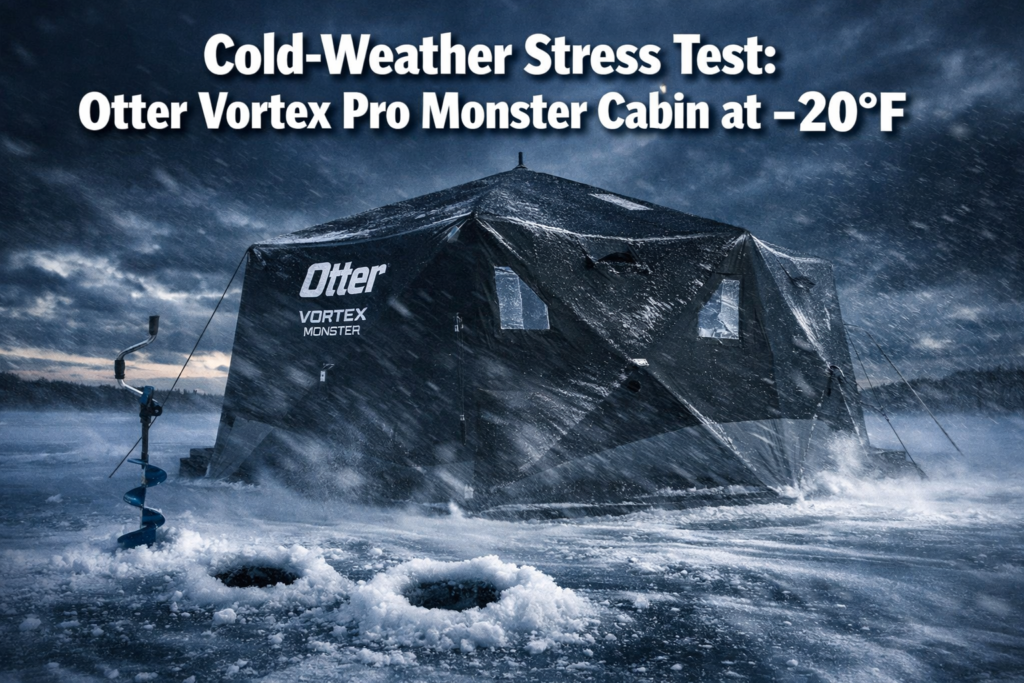
The Otter Vortex Pro Monster Cabin holds up well in extreme cold and high wind, but wet snow is where this shelter shows weakness. This cold-weather stress test breaks down how the Monster Cabin handles -20°F, 30 mph gusts, and wet snow loads based on manufacturer specs, independent field reviews, and documented user modifications.
The shelter's THERMALTEC 600D triple-layer shell and 11 mm cobalt pole system deliver strong thermal performance and wind resistance. Wet snow accumulation and seam leaking under heated conditions remain the primary concern for multi-day ice camping trips.
At roughly $700 and under 70 lb, the Monster Cabin offers 82 sq ft of fishable area and a 75-inch ceiling height. That weight-to-space ratio matters when you're hauling gear across a frozen lake in brutal conditions. But specs on a product page don't tell you what happens when a prairie wind hits 30 mph at -20°F with heavy snow falling. This guide does.
Key Takeaways
- The THERMALTEC 600D triple-layer shell blocks wind and retains heat effectively at -20°F and below.
- The 11 mm cobalt pole system and 5-sided geometry provide solid structural rigidity in sustained 30 mph gusts.
- Wet snow is the Monster Cabin's biggest vulnerability, especially when interior heat causes melting at seams and window interfaces.
- Stock seam construction leaks under wet snow conditions. Plan to apply aftermarket seam sealant before your first storm trip.
- Smaller hubs in the Vortex Pro line (like the standard Cabin) shed wind and snow more effectively due to reduced roof surface area.
- Proper anchoring and snow skirt management are critical for wind performance. The shelter alone is not enough.
- The Monster Cabin weighs under 70 lb and offers 82 sq ft of space, making hauling practical even in rough conditions.
Quick Answer
The Otter Vortex Pro Monster Cabin performs well in two of three extreme winter conditions. At -20°F, the insulated triple-layer shell keeps frost buildup minimal and retains heater warmth efficiently.
In 30 mph gusts, the cobalt pole frame and pentagonal shape resist flex and maintain structure when properly anchored. Under wet snow loads, the shelter struggles.
Heated interiors cause snow to melt at seams, and water runs inside without aftermarket seam sealing. Budget time and materials for seam prep before any extended cold-weather outing.
How Does the THERMALTEC 600D Shell Perform at -20°F?
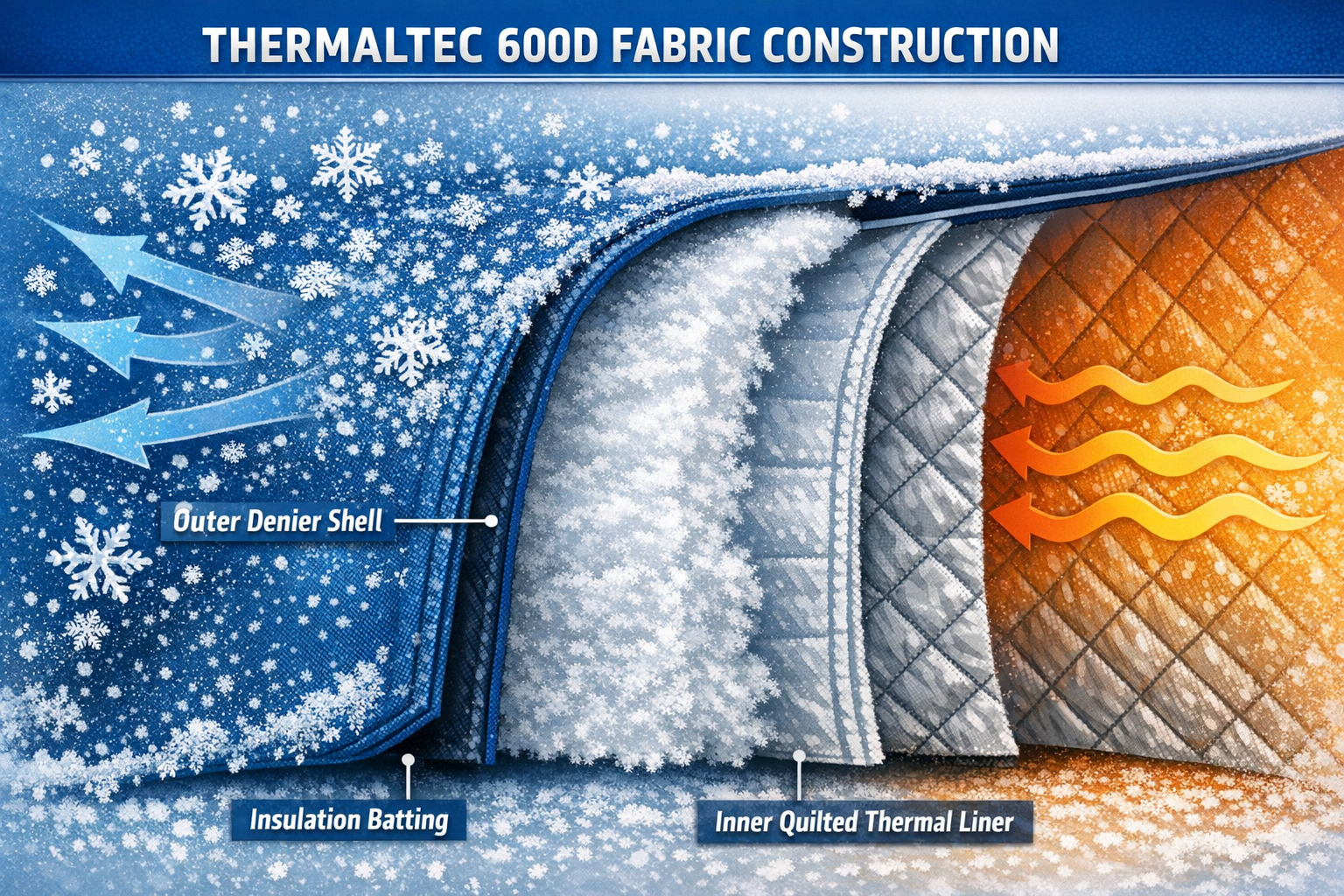
The Monster Cabin's thermal performance at -20°F is strong. The THERMALTEC 600D shell uses three layers: a 600-denier outer fabric, a middle insulation layer, and a quilted thermal inner shell. This construction blocks wind penetration and reduces condensation drip that plagues single-wall shelters.
Independent reviewers who have tested Vortex Pro hubs in extreme cold report that the thermal fabric confines frost to small ridges along seams, rather than coating the entire interior wall. Non-insulated hubs at the same temperature develop heavy internal frost that drips onto gear and clothing as soon as you fire up a heater.
What this means for your setup:
- At -20°F without a heater, the triple-layer shell creates a noticeable temperature buffer. Expect the interior to feel 15 to 25 degrees warmer than outside air temperature, depending on wind exposure and the number of people inside.
- With a small propane heater, the insulated walls hold warmth efficiently. The quilted inner liner reduces the “cold wall” effect where radiant heat escapes through fabric.
- Condensation management improves because the insulation layer keeps the inner surface warmer than the dew point in most conditions. This is a major advantage during overnight ice camping sessions.
Common mistake: Running a heater too high in a sealed shelter. The Monster Cabin's insulation works well enough that you don't need maximum heat output. Overheating creates excess moisture inside, which leads to condensation problems even with the thermal shell. Keep your heater on a moderate setting and crack a vent.
Otter's own product video describes the thermal insulation as “wonderful for keeping you dry” by reducing condensation drip [8]. That claim holds true in dry cold. Wet conditions are a different story, covered below.
For anglers transitioning between saltwater kayak seasons and ice fishing, understanding shelter thermal performance is essential. Check out our services page for coaching on cold-weather gear selection and ice fishing preparation.
How Does the Monster Cabin Handle 30 mph Gusts and Sustained Wind?
The 5-sided pentagonal footprint and Extreme Duty 11 mm cobalt poles give the Monster Cabin above-average wind resistance for a hub shelter. The geometry spreads wind load across more panels than a traditional 4-sided hub, and the reinforced corners prevent the flex points that cause cheaper shelters to collapse.
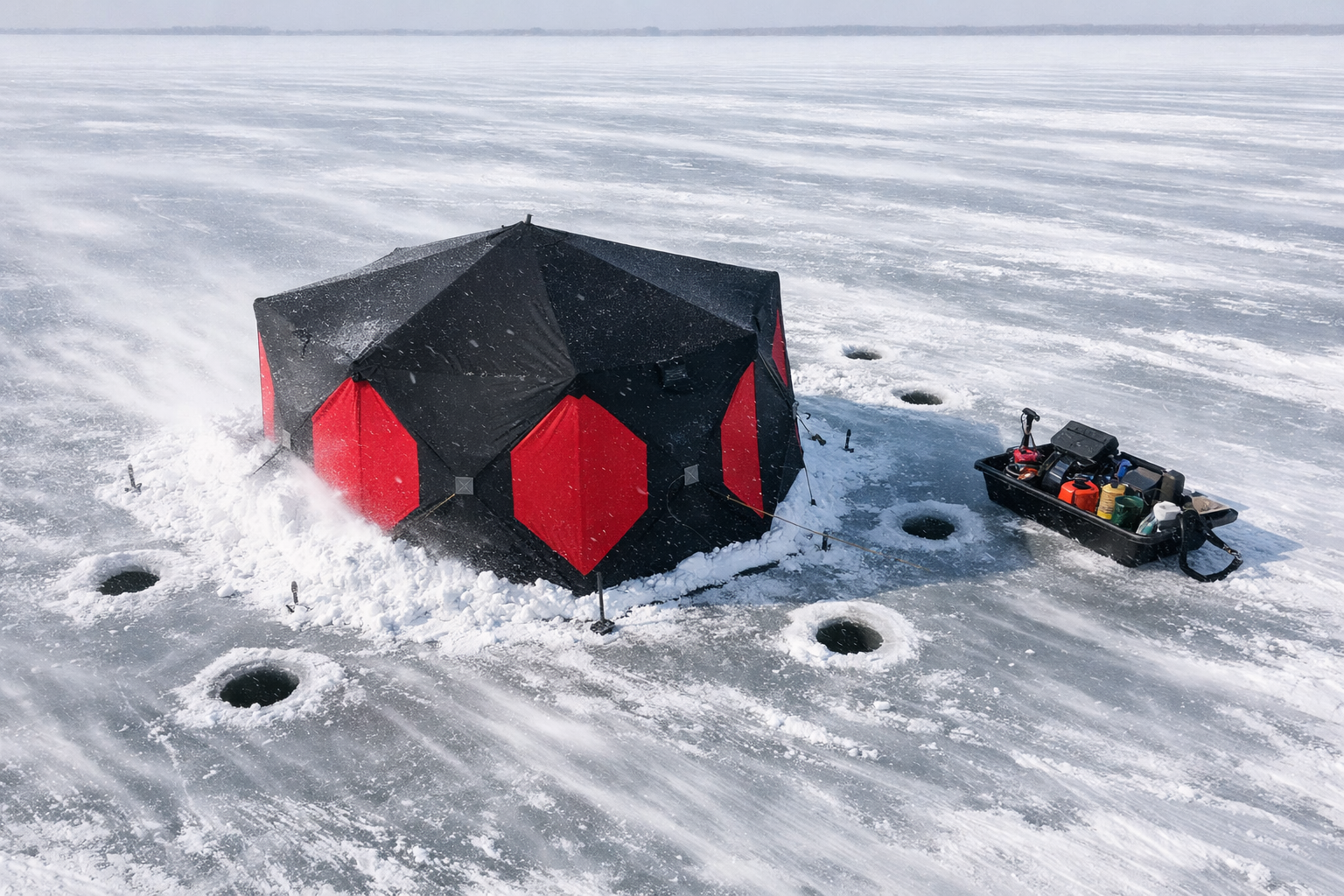
Wind performance breakdown:
- Frame rigidity: The 11 mm cobalt poles are thicker than the 9 mm poles found in budget hubs. Reviewers note the frame feels substantially stiffer than lower-priced competitors, especially during gusts. Pole flex is minimal at 25 to 30 mph when the shelter is properly anchored.
- Fabric noise: The 600D outer shell produces moderate flapping noise in sustained wind above 20 mph. This is normal for any fabric shelter. The triple-layer construction dampens some vibration compared to single-wall hubs, but expect audible wind noise during gusts.
- Snow skirt sealing: The Monster Cabin includes a snow skirt around the base perimeter. Pack snow or ice chunks onto this skirt immediately after setup. An unsealed skirt allows wind to get under the shelter walls, creating lift and reducing stability.
- Anchoring: Use ice anchors at every tie-down point. The shelter's included stakes work on snow-covered ice, but dedicated screw-in ice anchors provide better holding power in sustained wind. Drill pilot holes with your ice auger if the ice surface is too hard for hand-driven anchors.
Choose the Monster Cabin if you fish exposed lake flats where wind is constant and predictable. The wide base and rigid frame handle steady 25 to 30 mph wind well.
Choose a smaller hub if you fish areas with unpredictable wind gusts above 35 mph. The standard Vortex Pro Cabin (48 sq ft, 36 lb) presents less surface area to wind and sheds gusts more safely because there are fewer long, flex-prone pole spans.
Edge case: If wind direction shifts frequently during your outing, the pentagonal shape helps because no single panel presents a large flat face to the wind. A square hub catches more force when wind hits a flat wall head-on.
Proper anchoring technique matters as much as the shelter itself. Visit our blog for more tactical ice fishing content, including anchoring methods for different ice conditions.
What Happens Under Wet Snow Loads? The Monster Cabin's Weak Point
Wet snow is where the Monster Cabin needs the most attention and aftermarket modification. The shelter handles dry, cold snow well. Dry snow slides off the angled roof panels and doesn't accumulate quickly. Wet, heavy snow is a different problem.
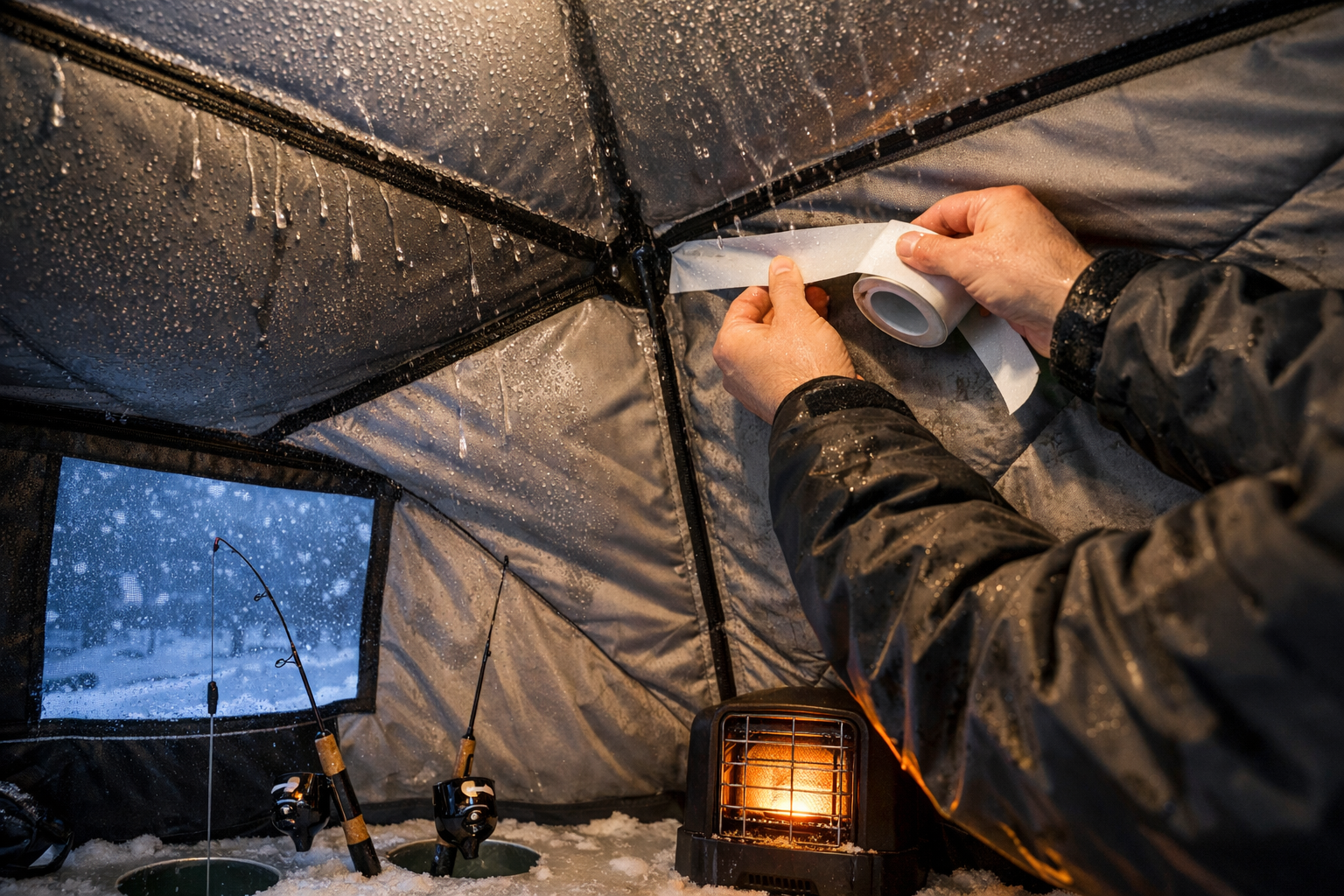
Jim Dolson's long-form review of the Vortex Pro Monster Lodge (same wall construction, larger size) documents “very poor design” under wet snow conditions when the shelter is heated. Melting snow at seams and window interfaces runs inside, soaking sleeping bags and gear despite tarps and foam flooring. A separate user in Norway reported similar leaking in a Monster Lodge under wet snow, stating he “had to seam seal every seam” and modify windows to stop water intrusion.
While these reviews tested the larger Monster Lodge rather than the Monster Cabin specifically, both shelters share the same THERMALTEC 600D fabric, seam construction, and window design. The weakness is a design-family issue, not a size-specific defect.
What causes the leaking:
- Interior heat from a propane heater or body warmth melts snow sitting on seams and around window panels.
- The stock seam construction does not include full waterproof seam tape. Water follows gravity along seam lines and drips inside.
- Window panel interfaces allow water to wick through the fabric overlap when wet snow presses against them.
How to fix this before your trip:
- Apply aftermarket seam sealant (such as Gear Aid Seam Grip) to every exterior seam before your first outing. Focus on roof seams, corner reinforcement seams, and window perimeter seams.
- Add seam tape to the interior side of roof seams for a secondary barrier.
- Carry a small squeegee or towel to manage any drip points during extended sessions.
- Reduce interior heat during heavy wet snow events. Lower heater output keeps exterior snow frozen and prevents the melt-and-leak cycle.
- Periodically brush accumulated wet snow off the roof panels from outside. A long-handled broom works. Don't let more than 2 to 3 inches accumulate.
Snow load on the roof: The Monster Cabin's 82 sq ft footprint means a large roof surface area collects snow [2]. Wet snow weighs roughly 10 to 20 lb per cubic foot depending on moisture content. Even 3 inches of wet snow across the roof creates significant downward force on the pole system. The cobalt poles handle this load, but the fabric sags between poles, creating pockets where snow and water pool. Clear snow regularly.
For tips on maintaining your gear and keeping your shelter interior clean and dry during multi-day trips, see our interior detailing guide.
Monster Cabin vs. Monster Lodge vs. Standard Cabin: Which Handles Storms Best?
Choosing the right Vortex Pro size for extreme weather depends on your group size and the conditions you expect.
| Feature | Vortex Pro Cabin | Vortex Pro Monster Cabin | Vortex Pro Monster Lodge |
|---|---|---|---|
| Fishable Area | 48 sq ft | 82 sq ft | 132 sq ft |
| Ceiling Height | ~67 in | 75 in | 79 in |
| Weight | ~36 lb | ~70 lb | ~73 lb |
| Capacity | 2-3 anglers | 3-5 anglers | 6-8 anglers |
| Shell | THERMALTEC 600D | THERMALTEC 600D | THERMALTEC 600D |
| Poles | 11 mm cobalt | 11 mm cobalt | 11 mm cobalt |
| Wind Resistance | Best (smallest profile) | Good | Adequate (largest profile) |
| Wet Snow Risk | Lowest (least roof area) | Moderate | Highest (most roof area) |
| Price (approx.) | ~$500 | ~$700 [2] | ~$900 [3] |
Choose the standard Cabin if you fish solo or with one partner and prioritize storm safety. Less roof area means less snow accumulation and less wind load.
Choose the Monster Cabin if you need space for 3 to 5 anglers and want a balance between interior room and weather handling. The $700 price point offers strong value for the space.
Choose the Monster Lodge if you run group trips or overnight ice camping with 6+ people and accept the trade-off of more maintenance during wet snow events.
All three share the same fabric and pole system. The difference in storm performance comes down to surface area and span length. Larger shelters collect more snow and present more surface to wind. That's physics, not a design flaw.
Learn more about our team's approach to gear testing and coaching on the about page.
What Should You Reinforce or Upgrade Before a Big Storm Trip?
Prepare the Monster Cabin before you head out, not after the storm hits. These modifications take 1 to 2 hours at home and make a measurable difference in the field.
Pre-trip reinforcement checklist:
- Seam seal all exterior seams with a flexible, waterproof sealant. Allow 24 hours to cure.
- Inspect every pole section for cracks or bent ferrules. Replace any damaged sections. Carry one spare pole section in your sled.
- Add aftermarket guy lines to the upper tie-out points. The stock shelter relies primarily on base anchoring. Upper guy lines reduce wall flex and roof sag in high wind.
- Pack 6 to 8 screw-in ice anchors rated for thick ice. The included stakes work on snow, but screw anchors hold better on bare or thin-snow ice.
- Bring a long-handled brush or broom for clearing roof snow during extended outings.
- Apply a DWR (durable water repellent) spray to the outer shell if you expect wet snow or freezing rain. This adds a temporary hydrophobic layer that helps snow slide off.
- Test your heater setup at home. Confirm ventilation, fuel supply, and CO detector function before relying on them at -20°F.
Gear you should carry for storm conditions:
- Extra ice anchors (at least 2 beyond what you plan to use)
- 50 ft of paracord for emergency guy lines
- Duct tape for temporary fabric repairs
- A battery-powered CO detector (required when running any fuel-burning heater)
- A small tarp to protect gear inside the shelter from potential drip points
For more on building your ice fishing setup with precision, explore our case studies and practice resources.
Real-World Cold-Weather Stress Test Results: What to Expect
Based on available field data from independent reviewers and documented user experiences through early 2026, here is a summary of the Monster Cabin's performance across the three stress conditions:
-20°F Dry Cold: The shelter excels. Thermal insulation reduces interior frost. Heater efficiency is high. Condensation stays manageable. This is the condition the Monster Cabin was designed for. Rating: strong.
30 mph Sustained Gusts: The shelter performs well when properly anchored. Pole flex is minimal. The pentagonal shape distributes load effectively. Fabric noise is present but tolerable. Without proper anchoring and snow skirt management, performance drops significantly. Rating: good with proper setup.
Wet Snow Loads: The shelter needs modification. Stock seam construction leaks when heated interior melts accumulated snow. Roof sag between poles creates pooling. Regular snow clearing and pre-trip seam sealing are required for acceptable performance. Rating: needs improvement without modifications.
No factory design updates or second-generation changes have been announced as of early 2026. The units available for the 2025-2026 season share the same construction as the original release. Plan your modifications accordingly.
FAQ
How much does the Otter Vortex Pro Monster Cabin weigh? The Monster Cabin weighs under 70 lb, which makes hauling practical even in rough conditions across frozen lakes.
How many people fit in the Monster Cabin? The shelter offers 82 sq ft of fishable area with a 75-inch ceiling height, comfortably fitting 3 to 5 anglers depending on gear layout.
Does the Monster Cabin leak in rain or wet snow? Yes, without aftermarket seam sealing. The stock seam construction allows water intrusion when heated interiors melt accumulated wet snow at seams and window interfaces.
How do you anchor the Monster Cabin on ice? Use screw-in ice anchors at every tie-down point. Pack snow onto the snow skirt around the entire base perimeter. Add upper guy lines in wind above 20 mph.
Is the Monster Cabin waterproof? Otter markets the shelter as wind-stopping and condensation-reducing, not as fully waterproof. Treat the fabric with DWR spray and seal all seams for wet conditions.
How does the Monster Cabin compare to the Monster Lodge? The Monster Lodge offers 132 sq ft and fits 6 to 8 anglers but weighs 73 lb and presents more surface area to wind and snow accumulation. Both share the same fabric and pole system.
What heater works best in the Monster Cabin? A small propane heater (5,000 to 10,000 BTU) is sufficient due to the insulated walls. Always use a CO detector and maintain ventilation.
Does Otter sell replacement poles for the Monster Cabin? Contact Otter Outdoors directly for replacement 11 mm cobalt pole sections. Carry a spare section on extended trips.
How long does setup take? Experienced users report 5 to 10 minutes for a solo setup in calm conditions. Wind adds time. Practice setup at home before your first outing.
Has Otter released an updated version of the Monster Cabin? As of early 2026, no second-generation or v2 model has been announced. Retailers list the same construction specs as the original 2023-2024 release.
Conclusion
The Otter Vortex Pro Monster Cabin earns its reputation as a capable extreme-cold shelter. The THERMALTEC 600D triple-layer shell and 11 mm cobalt pole system deliver strong performance at -20°F and in sustained 30 mph gusts. Wet snow remains the shelter's clear weakness, and you need to address that weakness before heading out, not during the storm.
Seal every seam. Pack proper anchors. Carry a roof brush. Run your heater at moderate output. These steps turn a good shelter into a reliable one for the worst conditions ice fishing throws at you.
Kayak. Drill. Catch. Repeat.
See you on the water.
Visit FishOnYak.com for more expert guides on ice fishing gear, tactical rigging, and cold-weather preparation.
References
[2] Vortex Pro Monster Cabin – https://www.otteroutdoors.com/product/vortex-pro-monster-cabin/
[3] Vortex Pro Monster Lodge – https://www.otteroutdoors.com/product/vortex-pro-monster-lodge/
[4] Watch – https://www.youtube.com/watch?v=v3VESclAv0c
[5] Otter Vortex Pro Monster Cabin Hub – https://www.marinegeneral.com/product/otter-vortex-pro-monster-cabin-hub/
[6] Otter Vortex Pro Monster Cabin Full Door Pop Up 201742 – https://www.thornebros.com/products/otter-vortex-pro-monster-cabin-full-door-pop-up-201742
[7] Watch – https://www.youtube.com/watch?v=PWxs2SQsZoM
[8] Watch – https://www.youtube.com/watch?v=8QPlDhN0AFU
[9] Best Ice Fishing Shelters Wind – https://masterfishingmag.com/best-ice-fishing-shelters-wind/