Last updated: March 7, 2026
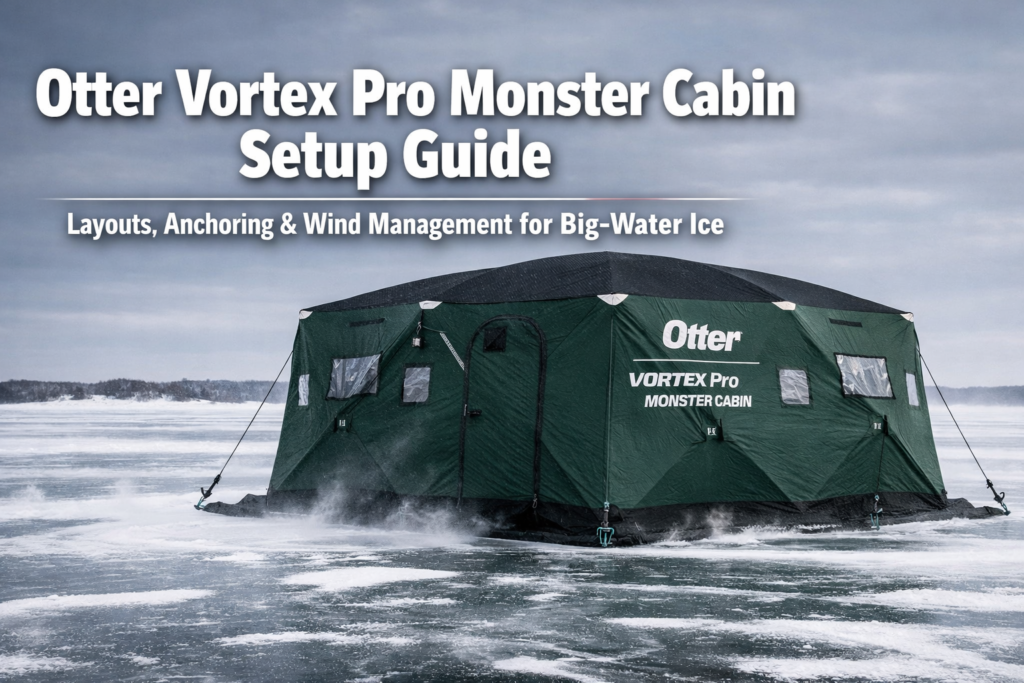
The Otter Vortex Pro Monster Cabin gives you 82 square feet of fishable space, a THERMALTEC 600D triple-layer shell, and a full-size door, all at roughly 59 pounds. This Otter Vortex Pro Monster Cabin setup guide covers layouts, anchoring, and wind management for big-water ice so you spend less time fighting your shelter and more time fishing. Whether you're running a two-person overnight on Lake of the Woods or hosting four anglers on a Mille Lacs day trip, the steps below will help you deploy fast, anchor hard, and stay warm when the wind picks up.
Key Takeaways
- Deploy the Monster Cabin in under five minutes using the wind-first method: back to the wind, stake the upwind wall first, then pop the hubs from inside.
- The shelter provides 82 sq ft of fishable area with extreme-duty 11 mm poles and a full-height door for loading gear, cots, and heaters.
- Otter's Ice-Lock anchoring system includes a tie-down for every wall (six total), giving you 360-degree hold in shifting winds.
- In sustained winds above 20 to 25 mph, add snow or slush banking on the skirt and use guy ropes from the roof hubs to supplemental ice anchors.
- Arrange fishing holes in an offset pattern to prevent anglers from tangling lines and to leave clear walkways for gear access.
- Avoid loading overhead cargo nets with heavy items. They sag, reduce headroom, and drip condensation onto bedding during overnights.
- For extreme wind forecasts (30+ mph sustained), consider whether a flip-over shelter or smaller hub with less sail area is the safer choice.
Quick Answer
Set up the Monster Cabin by facing away from the wind, anchoring the upwind wall with two Ice-Lock screws before popping the hubs, then circling the shelter to secure all six tie-down points. Arrange your holes in a staggered layout that keeps anglers facing each other with a clear center aisle. Bank the skirt with snow and add guy ropes in winds above 20 mph. This approach keeps the shelter locked to the ice on exposed basins where conditions change fast.
How Do You Set Up the Otter Vortex Pro Monster Cabin in Wind?
The fastest and safest method is the wind-first procedure demonstrated by Otter's pro staff. Stand with your back to the wind. Unfold the shelter so the upwind wall faces you. Anchor that wall to the ice with two Ice-Lock screws before you do anything else. Those two anchors prevent the shelter from catching wind and cartwheeling across the lake while you finish setup.
Step-by-step deployment:
- Position the folded shelter on the ice with the upwind side closest to you.
- Pull the upwind fabric panel taut and drive two Ice-Lock anchors through the skirt grommets into the ice.
- Crawl inside the partially open shelter.
- Push the hub poles up and out from the center until they lock into position.
- Exit and walk the perimeter, pulling each wall taut and anchoring the remaining four tie-down points.
- Open the full-height door last, on the downwind side when possible, to avoid a wind tunnel effect.
Common mistake: Trying to pop all hubs before anchoring anything. On a 20 mph day, 82 square feet of fabric acts as a sail. One gust will rip the shelter out of your hands and send gear scattering.
For more tactical approaches to rigging and setup in demanding conditions, check out the FishOnYak services page for coaching resources.
What Is the Best Hole Layout for 2 to 4 Anglers?
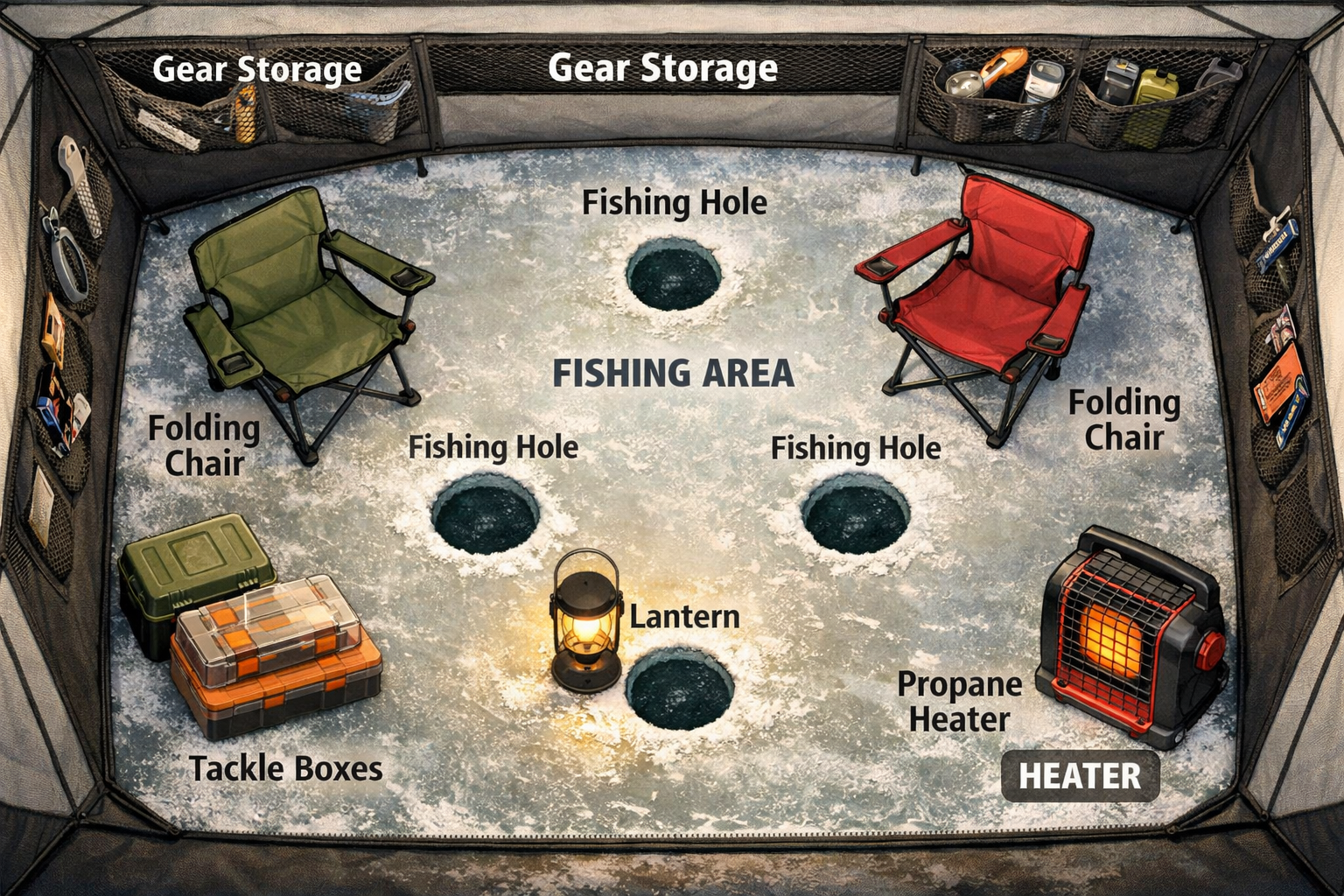
Hole placement determines whether four people fish comfortably or spend the day untangling jigs. The Monster Cabin's rectangular footprint (roughly 13.5 ft x 8 ft based on its 82 sq ft area) gives you room to work with.
Two-angler layout: Drill two holes on opposite sides of the shelter, offset toward the back wall. This leaves the front half open for gear, a heater, and the door. Each angler faces the other with full elbow room.
Three-angler layout: Place two holes along one long wall (spaced 4 feet apart) and one hole centered on the opposite wall. The single-hole side becomes the “command post” for the angler running electronics or managing tip-ups.
Four-angler layout (day trip): Use a diamond pattern. Place one hole 3 feet from each short wall along the centerline, and two holes along the long walls, offset so no two holes are directly across from each other. This stagger prevents crossed lines when fish run.
| Layout | Holes | Spacing | Best For |
|---|---|---|---|
| Two-angler | 2 | 6 ft apart, offset | Overnights with cots and gear |
| Three-angler | 3 | Triangle, 4-5 ft sides | Day trips with one electronics station |
| Four-angler | 4 | Diamond, 3-4 ft between | Full-capacity day sessions |
Edge case: If you plan to sleep in the shelter, limit holes to two and position them on one side. Place cots on the opposite side so nobody rolls into an open hole at 3 a.m.
Explore our blog for more tactical angling content that covers multi-season strategies.
How Does the Ice-Lock Anchoring System Work on the Monster Cabin?
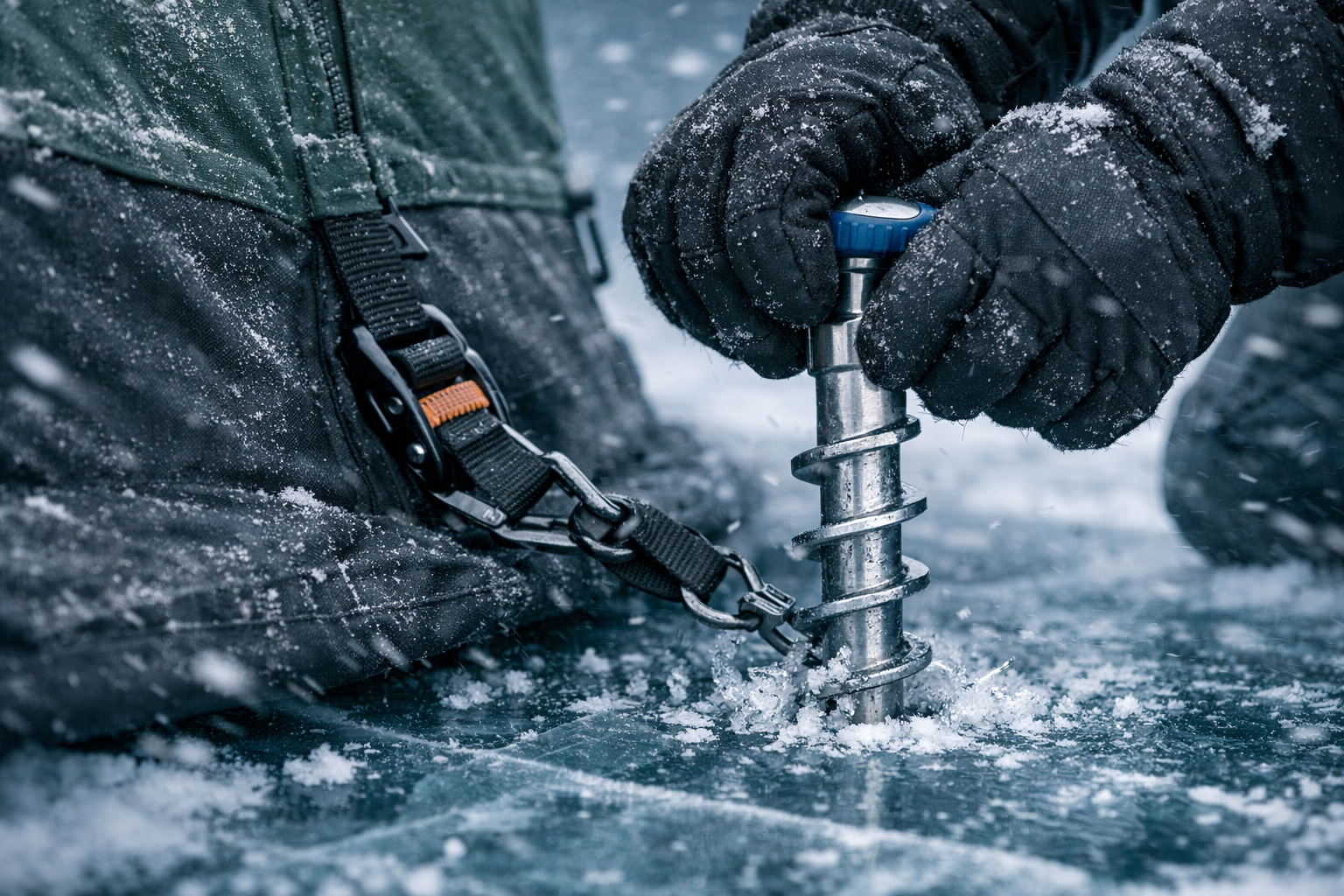
Otter ships the Monster Cabin with six Ice-Lock tie-downs, one for every wall panel [2]. Each tie-down connects the shelter frame to an ice anchor screw driven into the surface. This six-point system provides hold from every direction, which matters on big water where wind shifts 360 degrees or more during an overnight stay.
Anchoring procedure:
- Drive an ice screw at each of the six grommet locations around the shelter skirt.
- Clip the provided strap or bungee from the shelter frame to the screw.
- Tighten each strap until the fabric is taut against the ice with no slack.
- Walk the perimeter and confirm every connection is secure.
Competing shelters from Eskimo ship with three tie-downs, which works for day trips but leaves gaps when wind rotates overnight [3]. The Monster Cabin's six-point system eliminates that vulnerability.
Decision rule: If you fish exposed basins (Great Lakes bays, large prairie lakes, or big reservoirs), the six-anchor system is worth using every time, even on calm days. Conditions change. A forecast for 10 mph at dawn often becomes 25 mph by noon.
For a deeper look at how anchoring philosophy affects your setup, the FishOnYak case studies page covers real-world examples of rigging under pressure.
Otter Vortex Pro Monster Cabin Setup Guide: Anchoring Patterns for 20+ MPH Winds
The Ice-Lock system handles moderate wind on its own. When sustained winds push past 20 mph, you need supplemental anchoring to prevent wall suck-in, skirt lift, and frame stress.
Supplemental anchoring steps:
- Bank the skirt. Shovel snow or slush onto the fabric skirt all the way around the shelter. This adds weight at the base and seals drafts. On clear ice with no snow, use heavy gear bags or buckets of slush.
- Add guy ropes. Tie paracord or ratchet straps from the top hub junction points to ice anchors set 5 to 6 feet out from the shelter walls. Two guy ropes on the windward side and one on each lateral side create a stable triangle of tension.
- Double-anchor the windward wall. Drive a second ice screw 12 inches from each original anchor on the upwind side. Connect both screws to the same tie-down point with a Y-strap or loop of cord.
- Reduce interior pressure. Open a downwind window or vent slightly. This equalizes air pressure inside the shelter and reduces the ballooning effect that stresses poles and anchors.
Wall suck-in fix: When wind hits one side hard, the opposite wall pulls inward and reduces your interior space. Adding a guy rope from the leeward wall's hub to an external anchor 5 feet out counteracts this pull. You restore full floor space and reduce stress on the 11 mm poles.
No hub shelter is completely wind-proof in severe conditions. If the forecast calls for sustained winds above 30 mph with higher gusts, a flip-over shelter with a weighted sled base offers better raw wind resistance due to lower sail area [3]. Use the Monster Cabin for group outings in 15 to 25 mph conditions where you need the space and are prepared to anchor aggressively.
How Do You Manage Condensation and Airflow Inside the Monster Cabin?
The THERMALTEC 600D triple-layer shell reduces condensation compared to single-wall hubs because the insulation layer creates a thermal break between cold exterior air and warm interior air. Condensation still forms, especially during overnights when body heat and a propane heater raise humidity levels.
Condensation management tips:
- Crack a downwind window or mesh vent to allow moisture to escape. Even a 2-inch opening makes a measurable difference.
- Avoid hanging wet clothing on the overhead cargo nets. Water drips onto gear below and adds moisture to the air.
- Keep overhead cargo net loads light. Heavy loads cause the net to sag into the hub junction, reducing headroom and trapping warm, moist air against the ceiling where frost forms fastest.
- Run your heater on a lower setting rather than blasting high. A steady, moderate heat output creates less temperature differential between the shell layers.
Overnight edge case: If you sleep in the shelter, position your cot so your head is not directly under a hub junction. Frost accumulates at those high points and drips when the heater cycles on in the morning.
For tips on maintaining clean, organized interior spaces in tight quarters, see our guide on interior detailing essentials.
Otter Vortex Pro Monster Cabin Setup Guide: Wind Management Strategies for Big-Water Ice
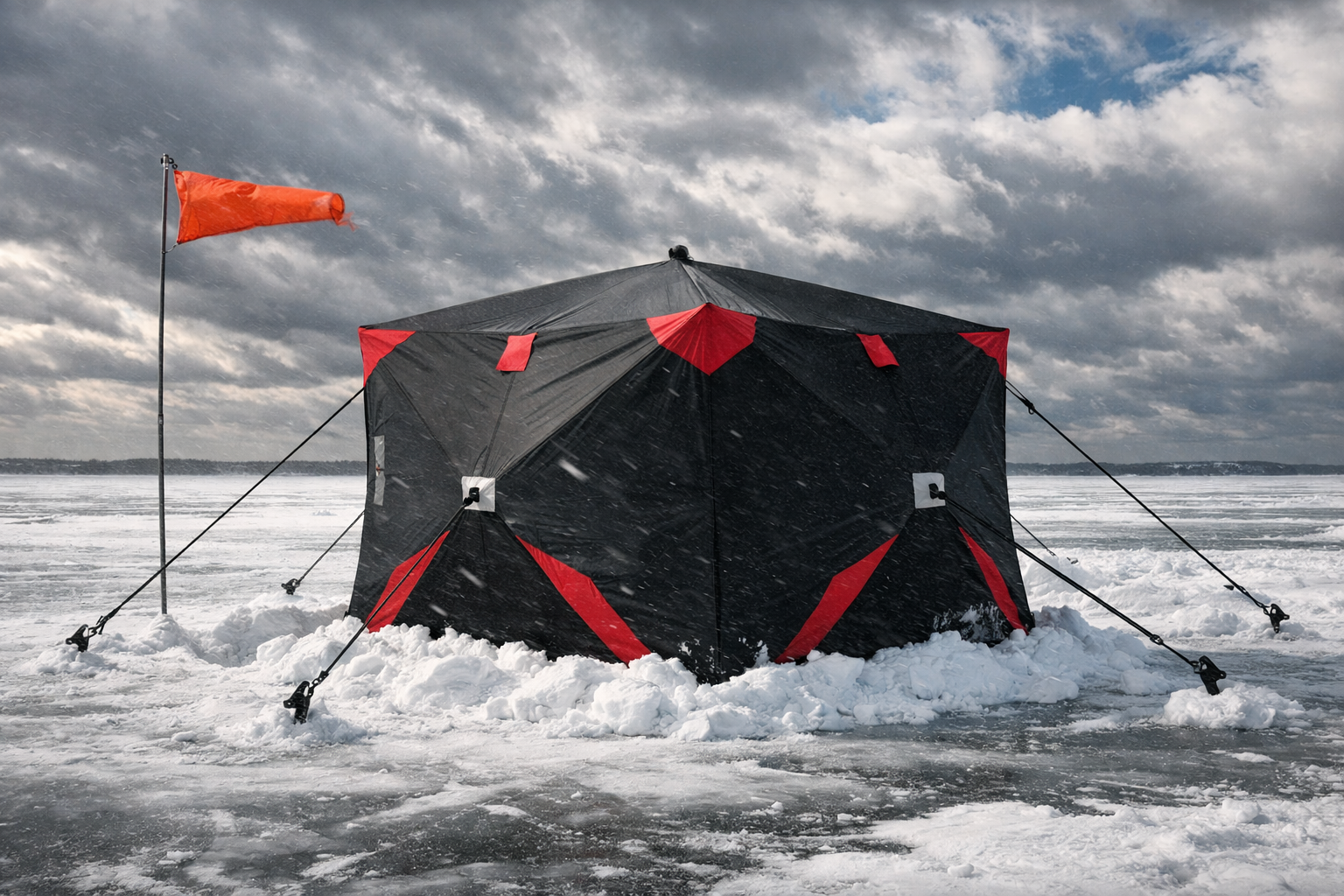
Big-water ice means long fetches where wind builds speed and force without obstruction. The Monster Cabin's 82 sq ft footprint catches more wind than a two-person hub. You need a plan before you leave the truck.
Pre-trip wind planning:
- Check hourly wind forecasts, not daily averages. A “15 mph day” with gusts to 35 mph is a different animal.
- Orient the shelter so the narrower end (short wall) faces the prevailing wind. This reduces the total surface area exposed to direct gusts.
- Choose a setup location near a pressure ridge, island, or shoreline feature that breaks wind when possible. Even a 3-foot pressure ridge reduces ground-level wind speed.
On-ice wind management:
- Tighten all six Ice-Lock straps until the fabric has zero slack. Loose fabric flaps in wind, creates noise, and fatigues the pole joints over time.
- If wind shifts during your session, re-anchor the new windward side with supplemental screws and guy ropes. Do not wait for the shelter to start moving.
- Keep the full-height door zipped and latched when not in use. The door is the largest opening and creates the most drag when open.
Tournament-ready tip: Competitive ice anglers on big water often pre-set four extra ice anchors in a wider perimeter before deploying the shelter. When wind picks up, they clip guy ropes to the pre-set anchors without drilling new holes in deteriorating conditions.
Learn more about building a tournament-ready approach to your fishing from the FishOnYak team.
How Does the Monster Cabin Compare to Other Large Hub Shelters?
The Monster Cabin competes directly with the Eskimo Outbreak 850XD and Eskimo FatFish 9416i. Here is how they stack up on the factors that matter for big-water use.
| Feature | Otter Monster Cabin | Eskimo Outbreak 850XD | Eskimo FatFish 9416i |
|---|---|---|---|
| Fishable Area | 82 sq ft | 85 sq ft | 94 sq ft |
| Weight | ~59 lbs | ~62 lbs | ~68 lbs |
| Shell | THERMALTEC 600D triple-layer | StormShield 300D insulated | IQ Insulated Quilted |
| Tie-downs Included | 6 (every wall) | 3 | 3 |
| Door | Full-height, full-width | Standard | Standard |
| Pole Diameter | 11 mm extreme-duty | 11 mm | 11 mm |
The Monster Cabin wins on anchor system completeness and door design. Six tie-downs out of the box means you do not need to buy extra hardware for overnight trips where wind rotates. The full-height door makes loading cots, heaters, and gear bins easier than ducking through a standard opening.
Eskimo shelters have a slight edge in seam stitching quality and window placement for seated visibility. If you primarily fish sitting down and want to watch tip-ups outside through the windows, Eskimo's layout works better for that specific use.
Choose the Monster Cabin if: You fish big water overnight, need six-point anchoring, and load heavy gear through the door regularly.
Choose an Eskimo if: You prioritize window visibility, fish day trips where three anchors suffice, and prefer quilted insulation feel.
Visit our practice resources for hands-on drills that translate across shelters and setups.
What Mistakes Should You Avoid During Monster Cabin Setup?
These are the errors that cost anglers time, gear, and sometimes their shelter on big-water ice.
- Skipping upwind anchors during setup. Two anchors on the windward wall before popping hubs is non-negotiable [4]. One gust without them and you're chasing your shelter across the lake.
- Overloading overhead cargo nets. Heavy tackle boxes and wet gear cause the nets to sag into the hub frame. This reduces headroom and, in extreme cases, collapses the roof hub junction.
- Ignoring the skirt. The fabric skirt around the base exists to be weighted down. Snow, slush, or gear bags on the skirt seal drafts and add critical ground-level anchoring.
- Setting up with the broad side to the wind. Orient the narrow end (short wall) into the wind to minimize sail area and reduce stress on poles and anchors.
- Leaving the door unzipped on the windward side. An open door on the wind side turns the shelter into a parachute. Always position the door downwind when possible.
- Using too few anchors for conditions. Six Ice-Lock points are the minimum. Add supplemental guy ropes and double-anchor the windward wall when winds exceed 20 mph.
Frequently Asked Questions
How long does the Otter Vortex Pro Monster Cabin take to set up? With practice, two people deploy and anchor the shelter in 4 to 6 minutes. Solo setup takes 7 to 10 minutes. The wind-first method [4] is the fastest approach because you secure the upwind wall immediately and work from a stable base.
How much does the Monster Cabin weigh? Approximately 59 pounds packed, which gives you one of the best size-to-weight ratios among large hub shelters at 82 sq ft of fishable area.
How many ice anchors come with the shelter? Otter includes six Ice-Lock tie-downs, one for each wall panel. For big-water use, bring four to six additional ice screws for supplemental guy ropes.
What wind speed is too much for the Monster Cabin? The shelter handles sustained winds of 20 to 25 mph well when fully anchored with all six tie-downs and skirt banking. Above 30 mph sustained, consider a smaller shelter or a flip-over with less sail area unless you add extensive guy ropes and supplemental anchors.
Does the THERMALTEC fabric stop condensation? The triple-layer shell reduces condensation compared to single-wall hubs because the insulation creates a thermal break. Condensation still forms in high-humidity conditions (heater running, multiple anglers, cooking). Crack a vent to manage moisture.
Where should you place a heater inside the Monster Cabin? Position the heater in a corner on the downwind side, away from the door. This keeps heat from escaping when you enter or exit and distributes warmth across the shelter. Maintain clearance from fabric walls per the heater manufacturer's specifications.
Is the Monster Cabin good for overnight trips? Yes. The 82 sq ft floor fits two cots, a heater, and two fishing holes comfortably. The six-point anchoring system handles overnight wind shifts that rotate direction, which is where three-anchor shelters fall short.
How do you prevent wall suck-in during high wind? Attach a guy rope from the leeward wall's hub junction to an ice anchor set 5 to 6 feet outside the shelter. This counteracts the vacuum effect and restores full interior space.
What size auger holes work best for the Monster Cabin floor? Standard 8-inch or 10-inch holes work for most species. Drill them at least 3 feet apart to maintain ice integrity between holes, especially on thinner early-season or late-season ice.
How do you pack up the Monster Cabin in wind? Reverse the setup process. Anchor the upwind wall last. Remove all other anchors first, collapse the hubs from inside, then release the final two upwind anchors while holding the folded shelter against your body. Stuff the shelter into the carry bag immediately.
Kayak. Drill. Catch. Repeat. See you on the water.
Check out the FishOnYak blog for more guides covering ice fishing, saltwater kayak tactics, and rigging mastery for every season.
References
[1] Watch – https://www.youtube.com/watch?v=xOK5NsgF6Jc
[2] 609142 201742 – https://www.scheels.com/p/otter-vortex-pro-monster-cabin-thermal-hub-ice-shelter/609142-201742/
[3] How Do The Ice Fishing Hubs Not Fly Away 3 – https://fishingandfish.com/how-do-the-ice-fishing-hubs-not-fly-away-3/
[4] Watch – https://www.youtube.com/watch?v=zfnQ3LqL6X0
[5] Otter Vortex Pro Monster Cabin Hub – https://www.marinegeneral.com/product/otter-vortex-pro-monster-cabin-hub/
[6] How To Anchor Your Ice Fishing Shelter Your One Stop Guide – https://www.fishingduo.com/how-to-anchor-your-ice-fishing-shelter-your-one-stop-guide/