Last updated: March 5, 2026
The best packable ice fishing jackets for backcountry access weigh between 5 and 16 ounces, compress into their own pockets, and provide enough insulation to keep you warm during stationary fishing after a long hike or snowmobile ride. For 2026, the sweet spot for ultralight options under 1lb sits at the intersection of high fill power down (850+) or premium synthetic insulation (PrimaLoft, FullRange) paired with ultralight ripstop shells under 15 denier.
If you trek across thin early ice, haul gear on a sled, or ride a snowmobile to remote spots, a heavy traditional ice fishing jacket works against you. Bulk restricts movement. Excess weight drains energy. Sweat from exertion soaks standard insulation and leaves you cold once you stop moving. Packable ice fishing jackets for backcountry access solve this problem by traveling small and deploying fast when you reach your spot.
This guide breaks down the best ultralight options under 1lb for 2026, explains the trade-offs between down and synthetic fills for ice conditions, and helps you choose the right jacket for your specific backcountry approach.
Key Takeaways
- Packable jackets under 1lb serve as insulation layers, not standalone outer shells. Pair them with a windproof/waterproof shell for full protection.
- Down jackets (850+ fill power) offer the best warmth-to-weight ratio but lose insulating ability when wet [7].
- Synthetic fills like PrimaLoft and FullRange retain warmth when damp, making them better for high-exertion approaches where sweat is a factor.
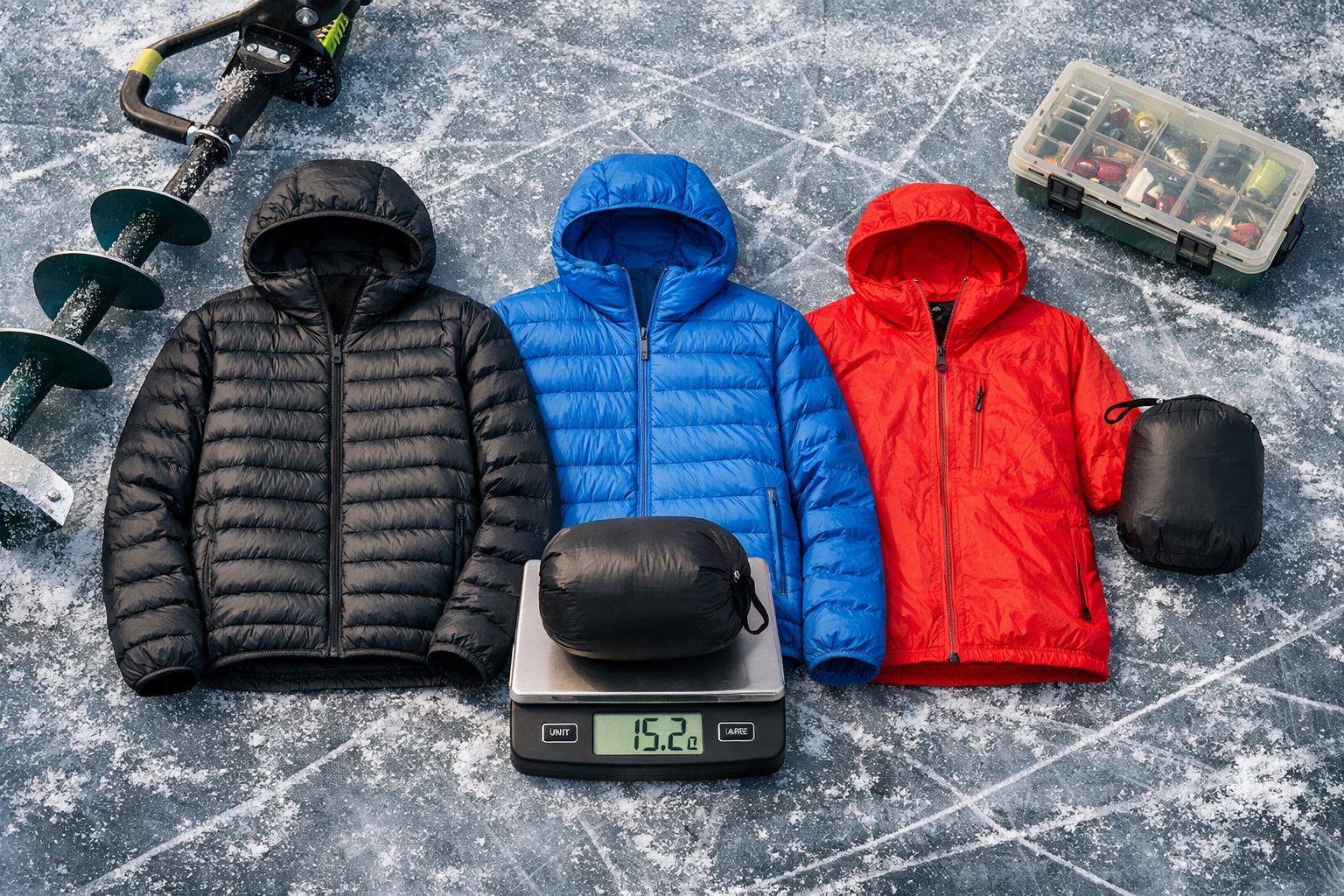
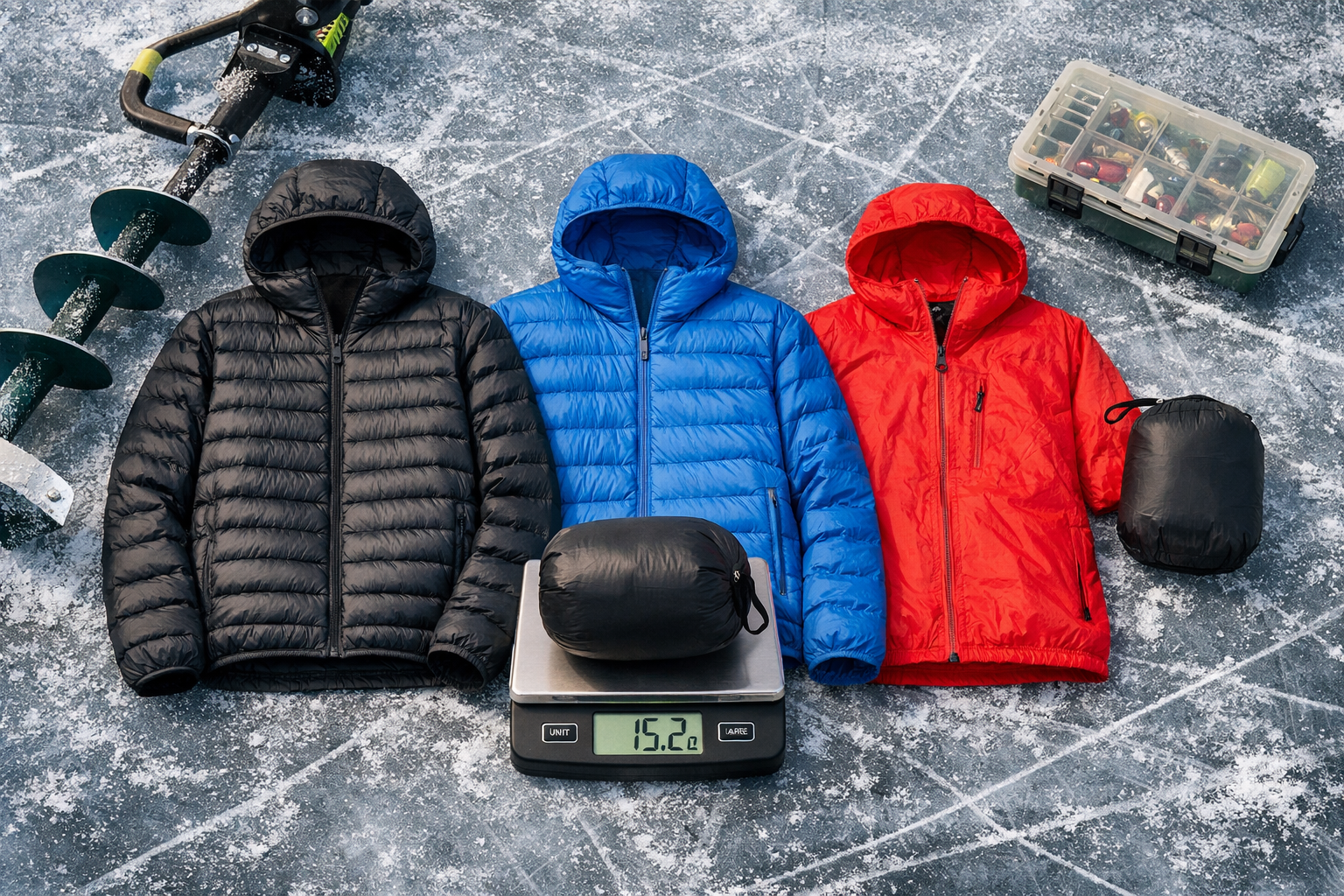
- The Outdoor Vitals Vantage Alpine Down Jacket at 15.2 oz with 850 fill ExpeDRY down represents the upper end of the sub-1lb category with treated down for moisture resistance.
- Ultralight options under 8 oz (like the Montbell Plasma 1000 at 4.9 oz) sacrifice hood coverage and insulation volume, limiting their use to mild conditions or as emergency backup layers.
- Flotation-capable jackets like the StrikeMaster Surface Jacket provide safety on thin ice but weigh well over 1lb [4].
- Choose your jacket based on your approach method: hiking requires maximum packability, snowmobile access allows slightly heavier options.
Quick Answer
For backcountry ice fishing in 2026, choose a sub-1lb packable jacket with 850+ fill power treated down if you fish in dry, cold conditions. Choose a synthetic fill jacket (PrimaLoft or equivalent) if you sweat heavily during the approach or fish in wet snow conditions. Budget $150 to $350 depending on fill quality and shell technology. Pack the jacket in your sled bag or strap it to your pack, then put it on when you stop moving and start fishing.
Why Do Backcountry Ice Anglers Need Packable Jackets Under 1lb?
Standard ice fishing jackets weigh 24 to 48 ounces and provide excellent warmth for truck-access fishing. They fail backcountry anglers who hike, ski, or snowmobile to remote spots. The problem is thermoregulation during transitions between high exertion (moving) and zero exertion (fishing).
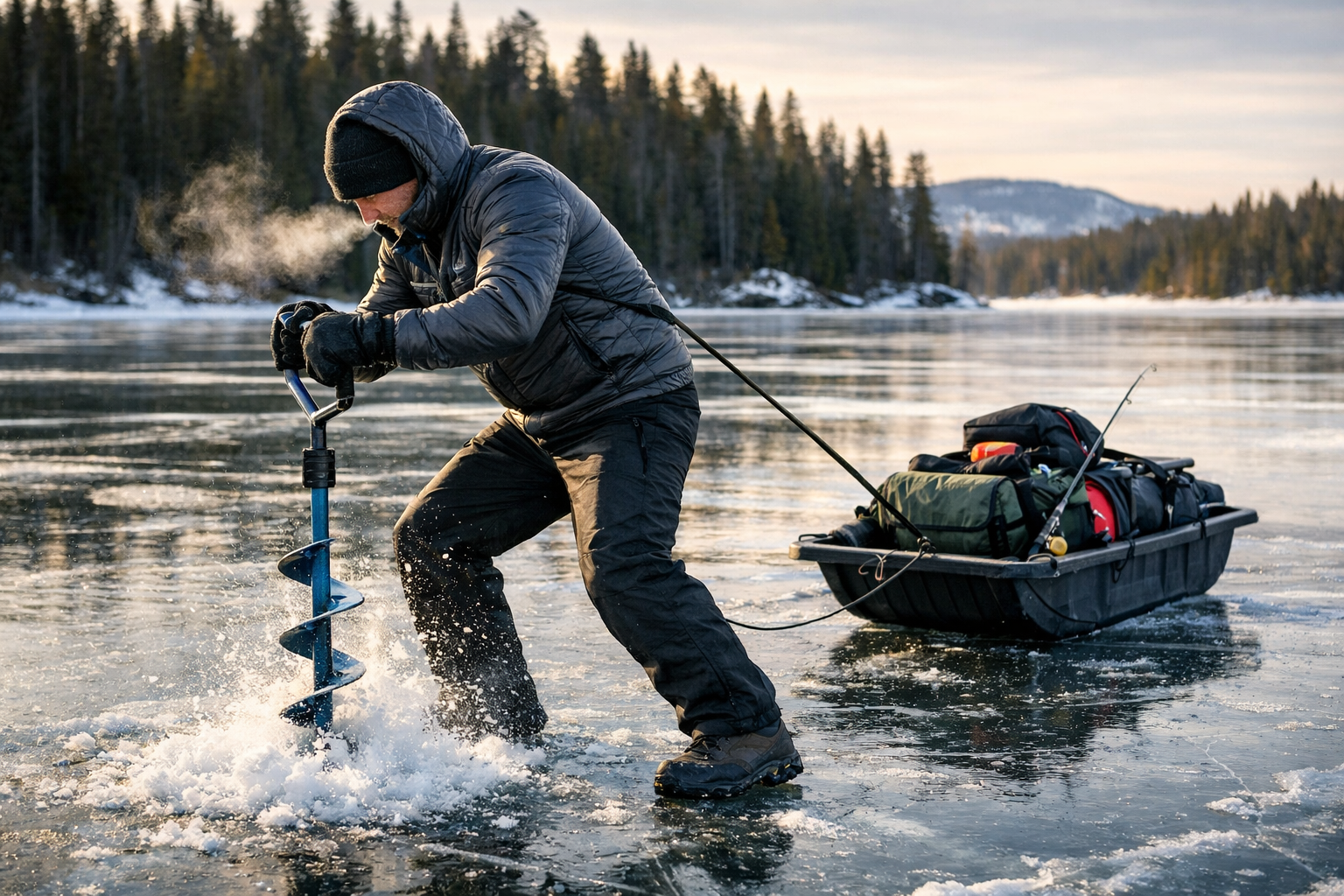
When you hike a mile across a frozen lake dragging a sled, your body generates significant heat. A heavy insulated jacket traps that heat, causes sweating, and saturates your base layers. Once you stop to drill holes and fish, that moisture pulls heat from your body fast.
A packable jacket under 1lb stays compressed in your pack during the approach. You pull it out, shake it to loft, and layer it over dry base layers when you reach your spot. This system keeps you dry during movement and warm during fishing.
Choose a packable jacket if you:
- Hike more than a quarter mile to your fishing spot
- Access ice by snowmobile and need gear that fits in limited storage
- Fish early ice where conditions change fast and you need adaptable layering
- Want a backup insulation layer inside a portable shelter
Stick with a traditional ice jacket if you:
- Drive your truck or ATV directly to your spot
- Fish from a permanent shanty
- Prioritize flotation capability for safety on questionable ice [4]
For more on building a complete gear strategy, check out the FishOnYak services page for coaching options.
What Insulation Types Work Best for Packable Ice Fishing Jackets in 2026?
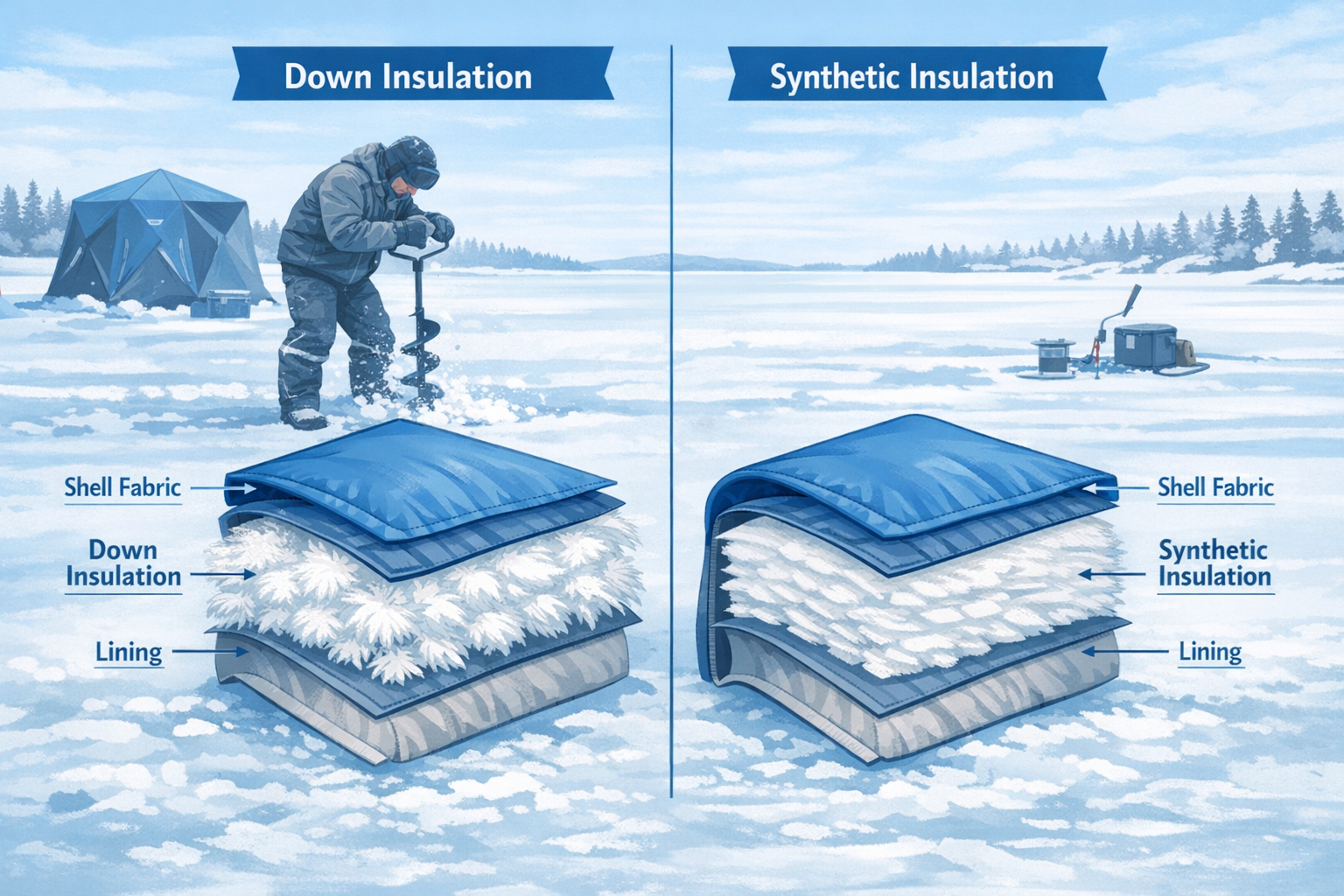
Down insulation provides the highest warmth-to-weight ratio available. Synthetic insulation performs better in wet conditions. Your choice depends on how you approach the ice and how much moisture you expect.
Down Fill (850+ Fill Power)
High fill power down compresses smaller and weighs less than any synthetic alternative. An 850 fill power down jacket packs to the size of a water bottle. The trade-off: standard down loses roughly 90% of its insulating ability when wet [7].
Treated down (like ExpeDRY or DriDown) adds a hydrophobic coating to individual down clusters. This treatment helps the down resist moisture longer, but it does not make down waterproof. Treated down buys you time in damp conditions. It does not eliminate the wet-down problem entirely.
The Outdoor Vitals Vantage Alpine Down Jacket uses 203 grams of 850 fill ExpeDRY down with Zero Stitch baffle construction. The stitchless baffles reduce cold spots and improve wind resistance by an estimated 40% compared to sewn-through construction.
Synthetic Fill (PrimaLoft, FullRange, Thermadex)
Synthetic insulation retains 80% or more of its warmth when wet. For anglers who sweat during the approach or fish in wet snow, synthetic fills provide more reliable performance.
The Patagonia Nano-Air Light Hybrid at 10.5 oz uses 40g FullRange insulation and represents one of the lightest synthetic options available. The Simms Challenger Insulated Jacket pairs 60g PrimaLoft Silver with a Gore-Tex shell but weighs 24 oz, putting it above the 1lb threshold [1].
Advanced insulation materials like PrimaLoft and Thermadex have become industry standards for ice fishing applications. The Striker Ice Climate Jacket uses 150g Thermadex insulation rated to negative 30 degrees Fahrenheit windchill [1], but its weight exceeds the ultralight category.
Down vs. Synthetic Comparison for Ice Fishing
| Feature | Down (850+ FP) | Synthetic (PrimaLoft/FullRange) |
|---|---|---|
| Weight for equal warmth | Lighter | Heavier |
| Packed size | Smaller | Larger |
| Wet performance | Poor (treated down: moderate) | Good |
| Dry time | Slow | Fast |
| Durability | Good with care | Excellent |
| Price range | $200 to $350 | $150 to $280 |
| Best for | Cold, dry conditions | Wet snow, high exertion |
Which Ultralight Jackets Under 1lb Perform Best for Ice Fishing in 2026?
The best performers balance insulation volume, shell durability, and packability. Here are the top categories based on weight class and intended use.
Under 8 oz: Emergency and Mild Conditions
The Montbell Plasma 1000 at 4.9 oz uses 1000 fill power down in an ultra-thin 7D shell. This jacket packs to the size of a soda can. The limitation: it lacks a hood, carries minimal fill, and provides inadequate warmth for static use below 40 degrees Fahrenheit [7]. Use jackets in this weight class as emergency backup layers or for mild late-season conditions.
Custom options from makers like GooseFeet Gear offer 9 oz pullovers with 5.5 oz of 950 fill power down. These sacrifice durability and weather resistance for extreme weight savings [7].
8 to 12 oz: The Sweet Spot
This weight range delivers the best balance for backcountry ice anglers. Jackets here carry enough insulation for static warmth in temperatures down to 20 degrees Fahrenheit (when layered properly) while still compressing into their own pockets.
The Patagonia Nano-Air Light Hybrid at 10.5 oz offers synthetic warmth with excellent breathability for active approaches. Look for jackets in this range with:
- Hooded designs (hoods add 1 to 2 oz but provide critical head warmth)
- Elastic or drawcord hems to seal against wind
- Chest pockets large enough to serve as stuff sacks
- DWR-treated shells for light snow resistance
12 to 16 oz: Maximum Warmth Under 1lb
The Outdoor Vitals Vantage Alpine at 15.2 oz pushes the upper boundary of the sub-1lb category. Jackets in this range carry enough insulation for extended stationary fishing in colder conditions. The extra ounces translate to more down fill, better baffle construction, and more durable shell fabrics (typically 15D to 20D ripstop).
For anglers who want to explore the full range of gear options and expert recommendations, this weight class offers the most versatile performance.
How Should You Layer a Packable Jacket for Backcountry Ice Fishing?
Start with a moisture-wicking base layer. Add the packable jacket as your insulation layer at the fishing spot. Top with a windproof, waterproof shell. This three-layer system gives you the most control over temperature regulation.
During the approach (hiking, snowmobiling):
- Wear base layer and shell only
- Keep the packable jacket compressed in your pack or sled
- Vent your shell to prevent sweat buildup
At the fishing spot:
- Remove your shell
- Pull on the packable jacket over dry base layers
- Replace the shell over the jacket
- Cinch the hood, hem, and cuffs to trap warm air
Common mistake: Wearing the packable jacket during the hike. This causes overheating, sweating, and wet insulation. The jacket works best when deployed fresh at the fishing spot over dry layers.
For a deeper look at building tactical systems for harsh conditions, visit the FishOnYak about page to learn how the team approaches multi-season gear strategy.
What Are the Trade-offs Between Packability and Safety Features?
Flotation-capable jackets save lives on thin ice. Packable ultralight jackets do not float. This is the most important trade-off to understand.
The StrikeMaster Surface Jacket offers lightweight flotation with 120g PrimaLoft Rise insulation at an affordable price [4]. But it weighs well over 1lb and does not compress into a pocket. The Blackfish StormSkin Gale Pullover takes the opposite approach: extremely lightweight, prevents overheating, but offers zero flotation [4].
Decision rule: If you fish early ice or any ice you are not 100% confident about, wear a flotation-capable jacket or suit regardless of weight. Packable sub-1lb jackets belong in your system when ice conditions are confirmed safe and you need mobility for the approach.
Consider carrying ice picks, a throw rope, and wearing a PFD under your shell as alternatives to a flotation jacket when using ultralight insulation layers. Fluid Safety means planning for the worst while optimizing for performance.
What Features Matter Most in Packable Ice Fishing Jackets for 2026?
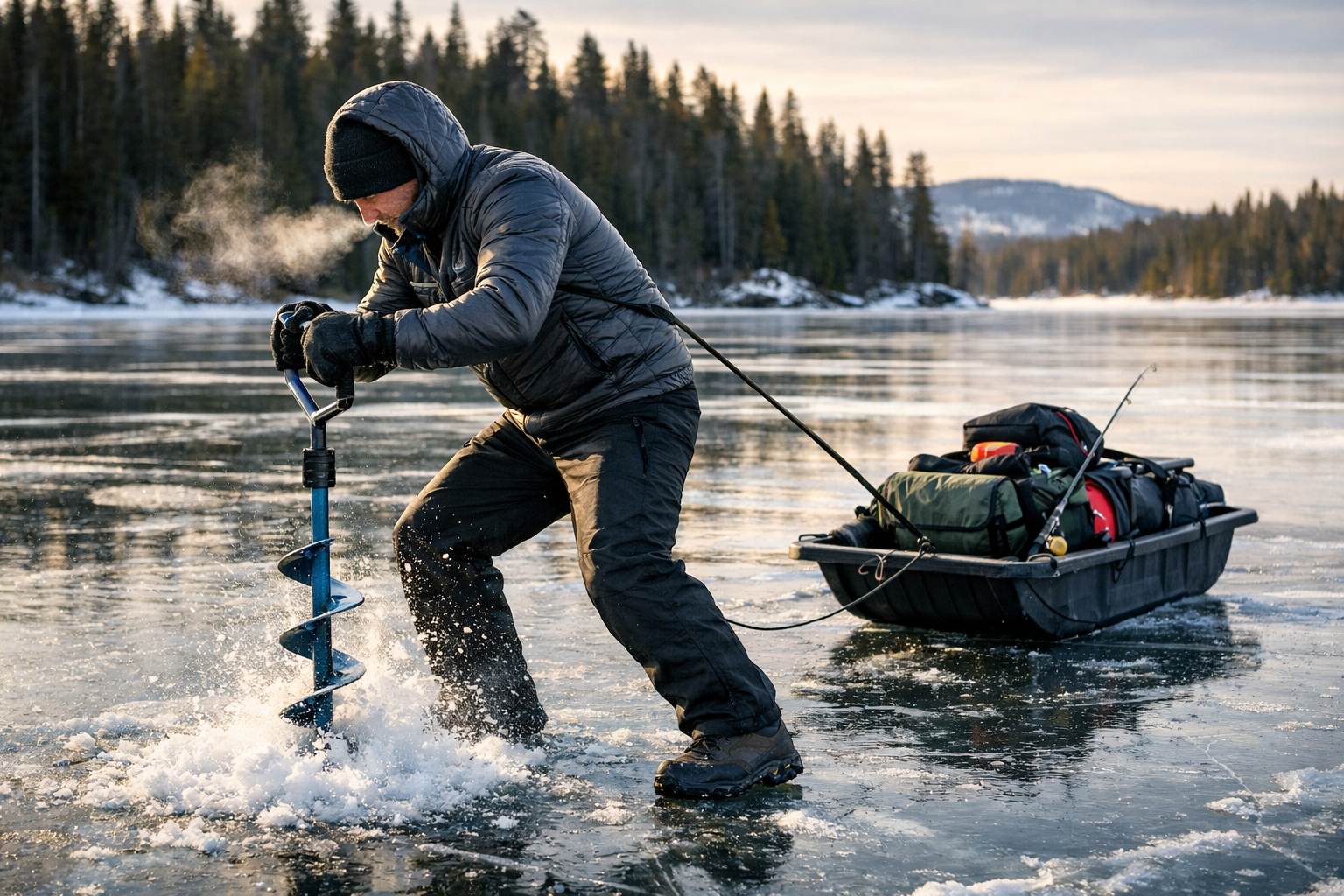
Prioritize these features when evaluating ultralight options under 1lb for 2026:
Shell fabric: Look for 10D to 20D ripstop nylon with a DWR (Durable Water Repellent) finish. Thinner shells pack smaller but snag on ice equipment. A 15D shell balances packability with durability for fishing use.
Baffle construction: Sewn-through baffles create cold spots at every stitch line. Welded or bonded baffles (like Zero Stitch construction) eliminate cold spots and improve wind resistance. This matters when you sit stationary on open ice.
Hood design: A well-fitting hood prevents 10% or more of body heat loss. Hoodless jackets save 1 to 2 oz but force you to carry a separate hat or balaclava. For ice fishing, choose the hooded version.
Stuff pocket: The jacket should compress into its own chest or hand pocket. This eliminates the need for a separate stuff sack and reduces the chance of losing the sack on the ice.
Hem and cuff adjustability: Elastic cuffs and a drawcord hem seal out wind. On open ice with sustained wind, these features make a measurable difference in warmth retention.
The FishOnYak blog covers additional gear selection strategies for multi-season anglers.
How Is the Ice Fishing Jacket Market Changing in 2026?
The global ice fishing clothing market is projected to grow from $500 million in 2025 to over $800 million by 2033, driven by advances in insulation and materials technology. Manufacturers are increasingly incorporating recycled materials and environmentally friendly production processes.
Emerging trends include smart textiles with temperature regulation capabilities and heated garment integration. Brands like Clam, Simms, and Striker continue to push innovation [1]. Clam's 2025/2026 lineup expanded their accessory ecosystem with extreme weather gloves and thermal hub shelters [9], while Jiffy introduced Base Camp insulated shelters [3].
For packable jackets specifically, the trend moves toward treated down that resists moisture, bonded baffle construction that eliminates cold spots, and recycled shell fabrics that reduce environmental impact without adding weight.
Check out FishOnYak's showroom for curated gear recommendations, and explore the testimonials page to see how other anglers build their systems.
Conclusion
Packable ice fishing jackets under 1lb fill a specific role in your backcountry system. They travel compressed during your approach and deploy as insulation layers when you stop to fish. Choose treated down for cold, dry conditions. Choose synthetic fills for wet approaches or high-exertion access. Layer the jacket over dry base layers and under a windproof shell for the best results.
Match your jacket to your access method and ice conditions. Prioritize flotation-capable gear on early or uncertain ice. Save the ultralight packable option for confirmed safe ice where mobility and weight savings matter most.
Build your system around the conditions you fish. Test your layering before heading to remote spots. And remember: Kayak. Drill. Catch. Repeat.
See you on the water.
FAQ
Q: Is a packable jacket warm enough as a standalone ice fishing jacket? A: No. Packable jackets under 1lb serve as insulation layers, not standalone outerwear. Pair them with a windproof, waterproof shell for full protection on the ice.
Q: Should I choose down or synthetic for ice fishing? A: Choose treated down (850+ fill power) for dry, cold conditions where you stay dry during your approach. Choose synthetic (PrimaLoft or FullRange) if you sweat heavily or fish in wet snow.
Q: How cold is too cold for a sub-1lb packable jacket? A: Most sub-1lb jackets provide adequate insulation down to about 20 degrees Fahrenheit when layered over a quality base layer and under a shell. Below that, you need heavier insulation or a heated garment.
Q: Do packable jackets provide flotation on thin ice? A: No. Ultralight packable jackets do not provide flotation. Wear a flotation-capable jacket or suit on early ice or any ice you are not confident about [4].
Q: How do I keep a down jacket dry while ice fishing? A: Wear a waterproof shell over the down jacket. Avoid wearing the jacket during high-exertion activities. Store it compressed in a dry bag inside your sled when not in use.
Q: What fill power should I look for in a packable down jacket for ice fishing? A: Look for 850 fill power or higher. Higher fill power means more warmth per ounce and better compressibility [7]. Treated down (ExpeDRY, DriDown) adds moisture resistance.
Q: How small do these jackets pack? A: Most sub-1lb packable jackets compress to the size of a 1-liter water bottle or smaller. Some ultralight options (under 8 oz) pack to the size of a soda can.
Q: Are recycled materials as warm as traditional materials? A: Yes. Recycled polyester shells and recycled down perform at the same level as virgin materials. The manufacturing process does not reduce insulating ability.
Q: How do I care for a packable down jacket used for ice fishing? A: Wash with a down-specific detergent. Tumble dry on low heat with clean tennis balls to restore loft. Store uncompressed in a breathable bag between seasons.
Q: What is the price range for quality packable ice fishing jackets under 1lb? A: Expect to pay $150 to $350 depending on fill quality, shell technology, and brand. Custom ultralight options from cottage manufacturers start around $200.
References
[1] The 10 Best Ice Fishing Jacket Reviewed – https://bowinsgarment.com/the-10-best-ice-fishing-jacket-reviewed/ [3] Watch – https://www.youtube.com/watch?v=w-vKPlYt84g [4] Best Ice Fishing Suits – https://www.outdoorlife.com/gear/best-ice-fishing-suits/ [7] Best Ultralight Puffy Jacket – https://www.adventurealan.com/best-ultralight-puffy-jacket/ [9] Watch – https://www.youtube.com/watch?v=3rqDaaFZDPU