Last updated: March 4, 2026
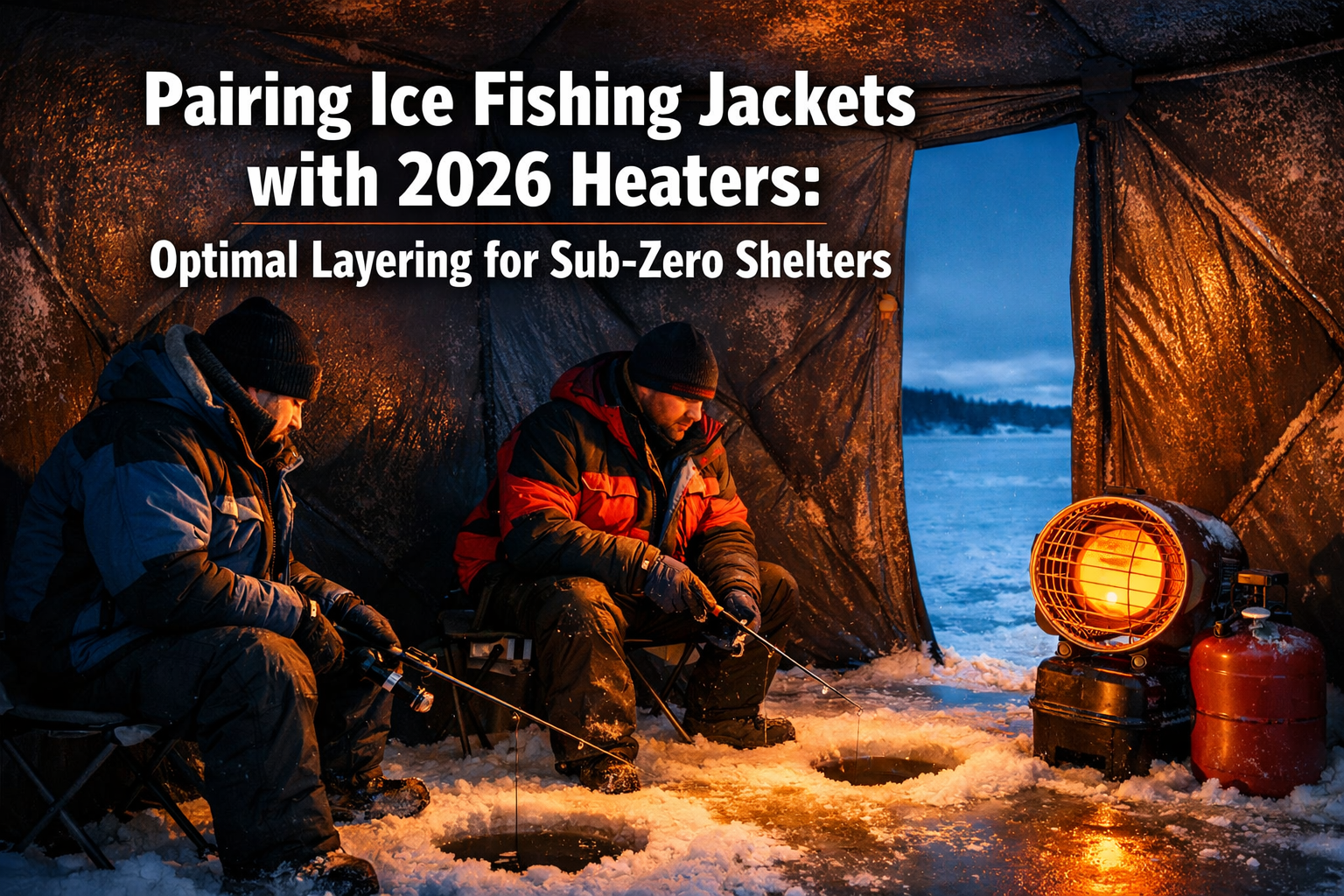
Your jacket and your heater need to work as a team. Pairing ice fishing jackets with 2026 heaters for optimal layering in sub-zero shelters means matching insulation weight to BTU output so you stay warm without overheating, sweating through your layers, or wasting propane. Get this balance wrong, and you end up damp, cold, and burning through fuel twice as fast.
This guide breaks down how to pair specific jacket insulation levels with heaters like the Clam CH-10000VH and Heat Hog series. You will learn setup strategies for multi-person hubs like the Clam X-1200, common mistakes that create cold spots, and a step-by-step layering system that keeps you fishing longer in the worst conditions.
Kayak. Drill. Catch. Repeat.
Key Takeaways
- Match jacket insulation weight (100g to 200g) to your heater's BTU output and shelter size to avoid overheating or under-heating.
- The Clam CH-10000VH produces up to 10,000 BTUs with tip-over safety, making it a strong choice for large hubs like the X-1200 [5].
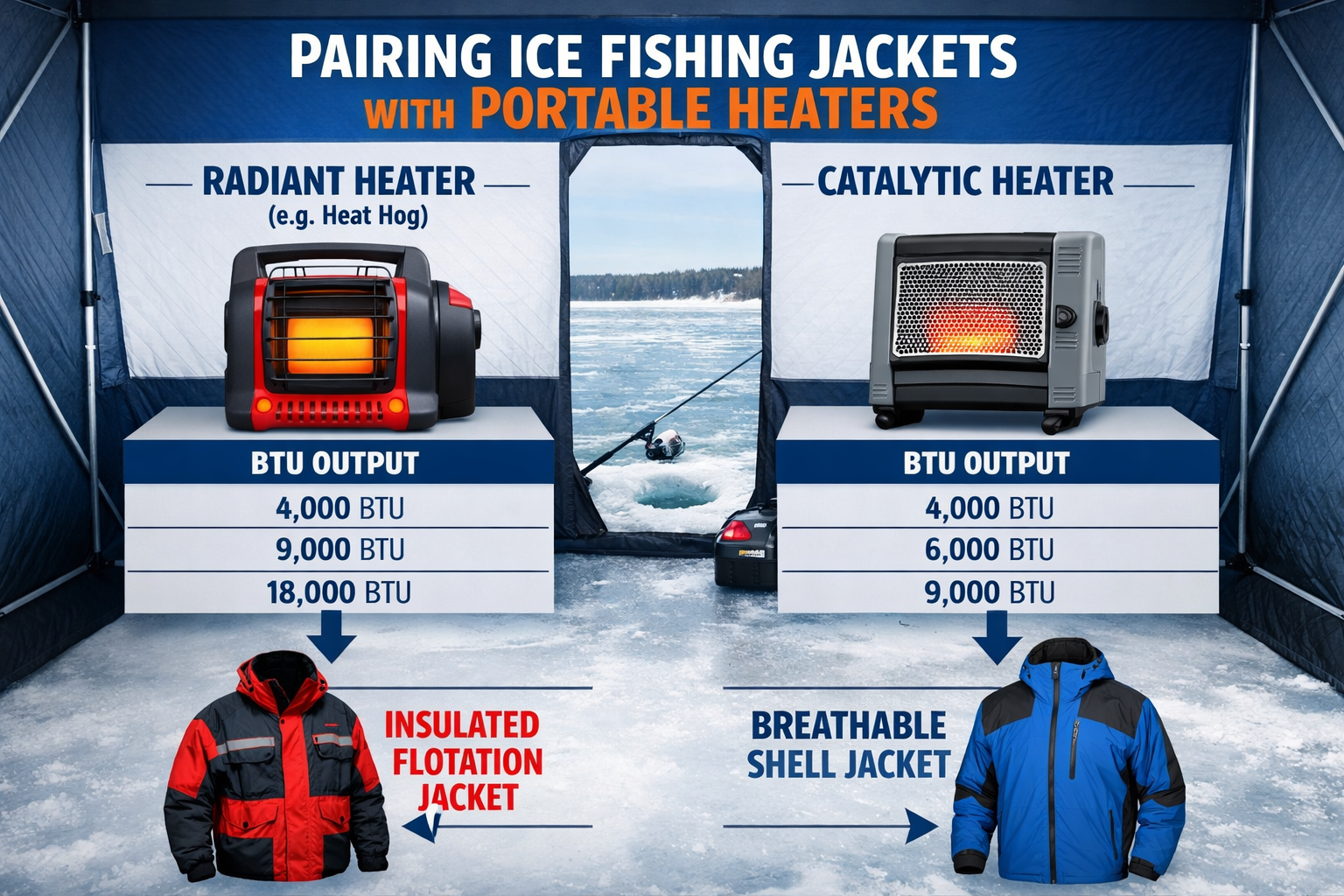
- Radiant heaters (Heat Hog, 4,000 to 18,000 BTUs) warm faster than catalytic models but demand more ventilation and breathable outerwear [2].
- Moisture-wicking base layers are more important than a heavy jacket when a heater raises shelter temps 40 to 50 degrees above ambient air [8].
- Thermal shelters with 90g insulation per square meter, banked with snow, reduce heater runtime by 20 to 30 percent [3][6].
- Insulated flotation jackets (Striker Climate, rated to -30 degrees F) double as safety gear for walk-on ice travel [10].
- Heated battery jackets (Norfin Element 2) work well for stationary shelter fishing but add bulk that limits mobility [10].
- Ventilation management prevents condensation from soaking your layers and killing insulation performance.
Quick Answer
Pair lightweight to mid-weight insulated jackets (100g to 150g) with high-output heaters like the Clam CH-10000VH in large shelters. Use heavier insulation (150g to 200g) with smaller heaters or no heater at all. The goal is to let the heater handle ambient warmth while your layers manage moisture and trap body heat during movement. Always include a moisture-wicking base layer, a breathable mid-layer, and a windproof outer shell.
Why Does Jacket Insulation Level Matter When You Run a Shelter Heater?
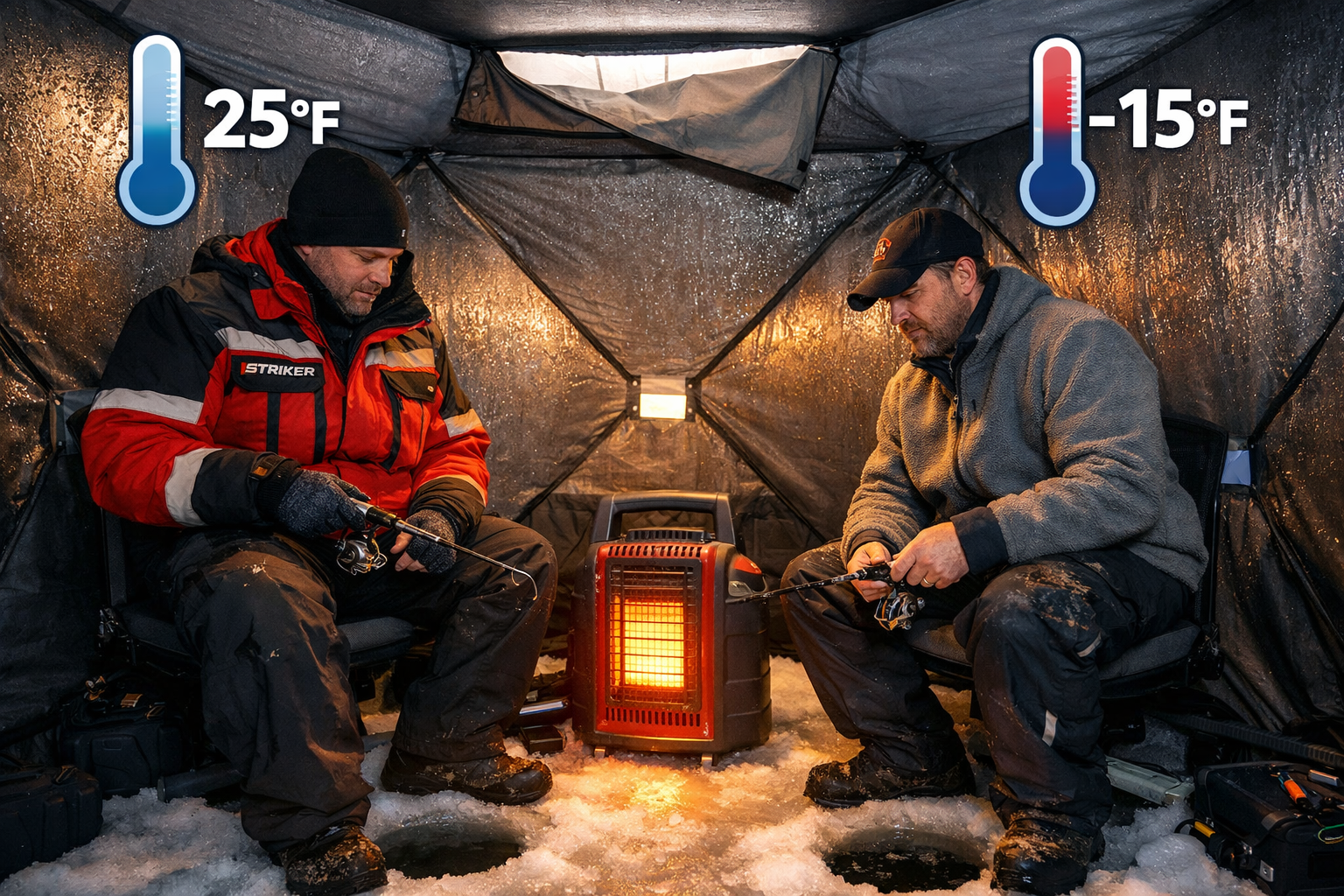
A heater changes the thermal equation inside your shelter. Without one, you need maximum insulation. With a 10,000 BTU heater running in a well-insulated hub, shelter temps rise 40 to 50 degrees above outside air [8]. That means a -15 degree F day becomes a 25 to 35 degree F shelter interior.
At those temperatures, a 200g insulated jacket causes you to sweat. Sweat soaks your mid-layer. Wet insulation loses up to 90 percent of thermal efficiency. You step outside to move between holes or check tip-ups, and that moisture freezes against your skin.
The rule is simple: the more BTUs your heater produces, the lighter your jacket insulation should be.
| Heater Output | Shelter Size | Recommended Jacket Insulation |
|---|---|---|
| No heater | Any | 200g (heavy insulated flotation) |
| 4,000 to 6,000 BTU | 2-person flip-over | 150g mid-weight |
| 8,000 to 10,000 BTU | 4 to 6 person hub | 100g to 150g breathable shell |
| 10,000+ BTU | Large hub (X-1200 class) | 100g shell, removable mid-layer |
This table assumes a thermal shelter with adequate insulation. A non-insulated shelter loses heat fast and shifts the balance toward heavier jackets [3].
How Do the Clam CH-10000VH and Heat Hog Compare for Shelter Heating?
The Clam CH-10000VH delivers up to 10,000 BTUs with a built-in tip-over safety shutoff, designed for the 2025-26 season [5]. The Heat Hog series offers a wider range (4,000 to 18,000 BTUs) with a tiltable head for directing radiant heat [2].
Clam CH-10000VH strengths:
- Consistent output for large hubs like the Clam X-1200 (188 square feet of floor space) [5]
- Tip-over safety is critical in multi-angler setups where gear and movement create trip hazards
- Pairs well with 100g to 150g jackets because the steady output keeps shelter temps stable
Heat Hog strengths:
- Tiltable radiant head lets you aim heat at your core or lower body
- 18,000 BTU max output handles extreme cold (-30 degrees F and below)
- Radiant heat warms objects and people directly, not just air
Common mistake: Running a Heat Hog at 18,000 BTUs in a small 2-person flip-over shelter. You overheat the space, sweat through your layers, and burn propane at three times the necessary rate. Size the heater to the shelter. A 4,000 to 6,000 BTU setting works for small shelters. Save the full output for large hubs or extreme conditions [2].
Radiant heaters require more ventilation than catalytic models. Pair them with breathable jacket shells (15,000g breathability rating or higher) to prevent moisture buildup inside your clothing [2]. Check out more practice-tested strategies for dialing in your gear.
What Is the Best Layering System for Pairing Ice Fishing Jackets with 2026 Heaters in Sub-Zero Shelters?
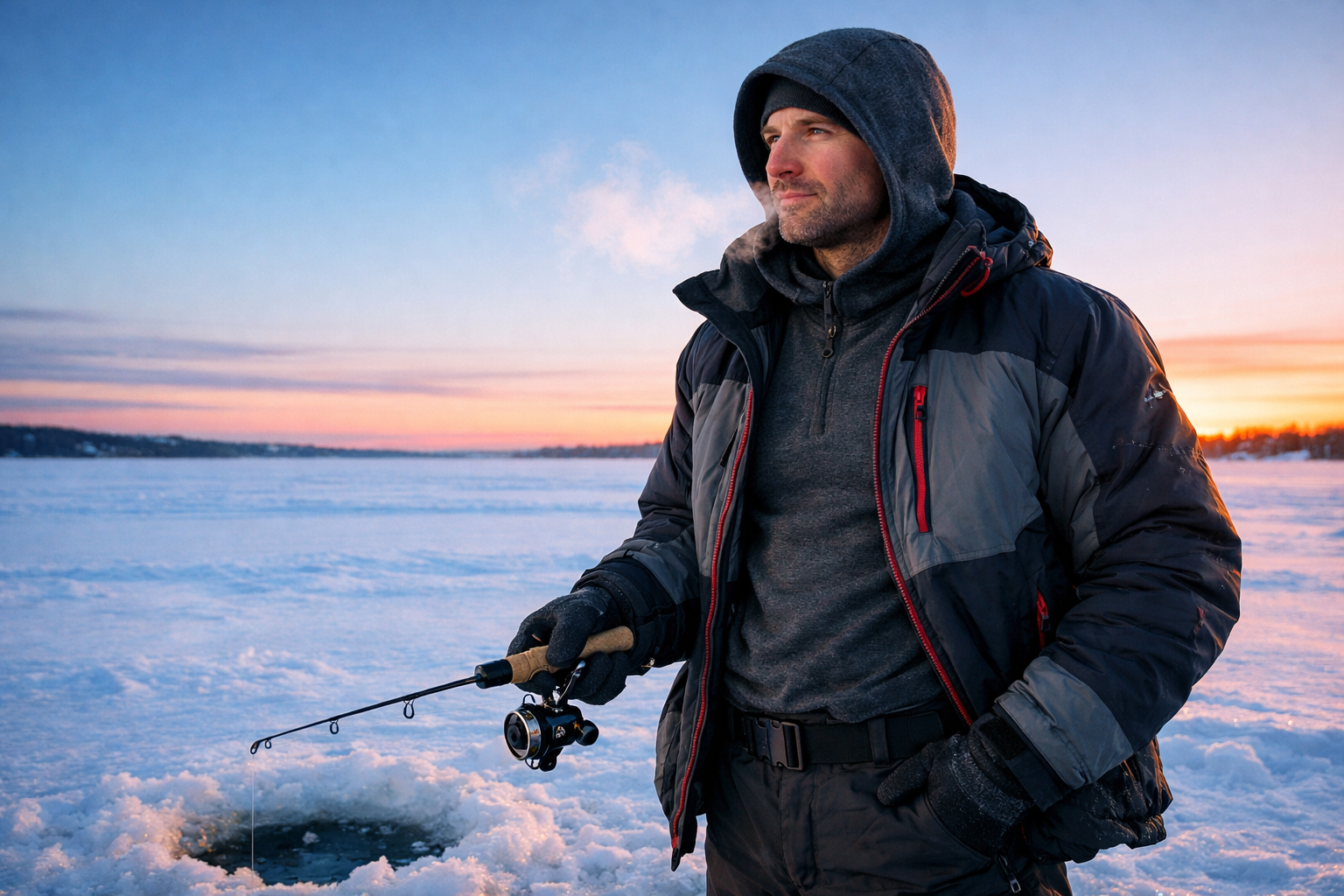
Start with three layers: base, mid, and outer shell. Each layer has a specific job.
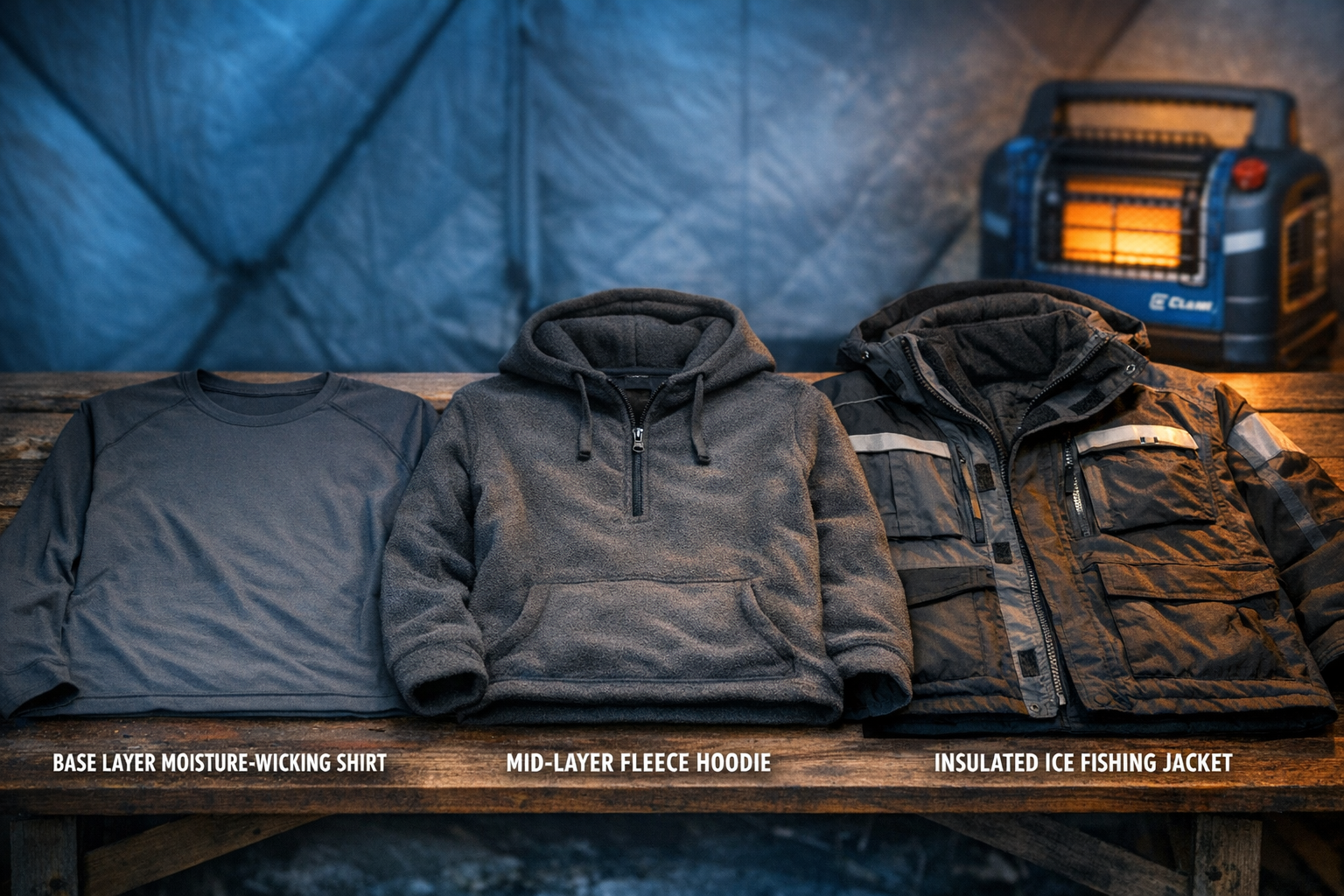
Base Layer: Moisture Management Choose a bi-component fabric with a brushed interior. Fish Lake Co recommends their Bi-Component Quarter Zip base layer, which wicks moisture away from skin while the brushed interior retains warmth [1]. This layer matters more than your jacket when a heater is running. A cotton base layer traps sweat and becomes a liability within 30 minutes of active jigging.
Mid-Layer: Adjustable Insulation A cotton-poly fleece hoodie or quarter-zip provides insulation you remove when the heater brings shelter temps up [1]. Fish Lake Co's USA Hoodie serves this role. The key feature: easy on, easy off. You will adjust this layer multiple times during a session as you move between the heated shelter and outside ice.
Outer Shell: Wind Protection and Breathability Your jacket serves as the windproof barrier for travel between shelter and open ice. Inside the shelter with a heater running, you often unzip or remove this layer entirely. Look for:
- Windproof outer fabric
- 15,000g or higher breathability rating
- 100g to 150g removable insulation
- Pit zips for rapid venting
Decision rule: Choose an insulated flotation jacket (Striker Climate, 150g, rated to -30 degrees F) if you walk long distances on open ice to reach your shelter [10]. Choose a lighter breathable shell (Simms Challenger class, 15,000g breathability) if you drive an ATV or snowmobile directly to a permanent or semi-permanent shelter setup [2].
For more gear and technique breakdowns, visit the FishOnYak blog.
How Do You Set Up a Multi-Person Hub Like the Clam X-1200 for Maximum Heat Efficiency?
The Clam X-1200 hub offers 188 square feet of floor space with 900-denier thermal fabric [5]. That is a large volume to heat. Placement of the heater and positioning of anglers determine whether everyone stays comfortable or someone sits in a cold spot.
Step-by-step setup:
Position the shelter to block prevailing wind. The door should face away from wind. Wind hitting the door side creates drafts every time someone enters or exits.
Bank snow around the shelter skirt. Pack snow 6 to 8 inches up the exterior walls. This seals drafts at ground level and adds insulation. Fleet Farm pros identify this as one of the most effective heat-retention steps for thermal shelters [3].
Place the heater in the center or slightly off-center. Avoid corners. Corner placement creates a hot zone near two anglers and leaves the opposite side cold. Center placement distributes heat more evenly.
Open one ventilation port at the top. Propane combustion produces carbon monoxide and moisture. A single top vent allows CO to escape (CO rises with warm air) while keeping most heat inside. Never seal a shelter completely with a propane heater running.
Seat anglers at equal distances from the heater. In a 6-person hub, arrange seating in a circle or arc around the heater rather than clustering on one side.
Adjust jacket layers by position. The angler closest to the door should wear a heavier mid-layer (150g). Anglers near the heater center should drop to a base layer and light fleece.
Edge case: If you run two heaters in a large hub (one Clam CH-10000VH and one smaller backup), place them on opposite ends. This eliminates the single-source heat gradient that creates cold spots near walls.
Explore FishOnYak services for coaching on shelter setups and tournament-ready ice fishing strategies.
Should You Choose an Insulated Flotation Jacket or a Battery-Heated Jacket?
This depends on whether you fish inside a heated shelter all day or move between spots on open ice.
Insulated flotation jackets (Striker Climate, 150g Thermadex insulation, rated to -30 degrees F) provide buoyancy if you break through thin ice [10]. They offer consistent passive insulation without batteries. The 150g insulation pairs well with heaters in the 6,000 to 10,000 BTU range because the jacket provides enough warmth during heater-off periods without causing overheating when the heater runs.
Battery-heated jackets (Norfin Element 2, 200g insulation plus battery heating elements) deliver targeted heat to your core [10]. They excel for stationary shelter fishing where you sit for hours. The downside: bulk. A heated jacket under a windproof shell creates a stiff, restrictive fit that limits your range of motion for jigging and drilling.
Choose a flotation jacket if:
- You walk on ice to reach your shelter
- You move between multiple holes or shelters during the day
- Safety on thin or variable ice is a concern
- You fish with a mid-range heater (6,000 to 10,000 BTU)
Choose a heated jacket if:
- You drive directly to a permanent shelter
- You sit stationary for 4 or more hours
- Your shelter has a low-output heater or no heater
- You prioritize core warmth over mobility
For anglers who transition between saltwater kayak seasons and ice fishing, the flotation jacket offers Fluid Safety across both environments. Learn more about our approach to multi-season angling.
How Does Shelter Insulation Affect Your Jacket and Heater Pairing?
A well-insulated shelter reduces the work your heater and jacket need to do. Thermal shelters rated at 90g insulation per square meter retain significantly more heat than non-insulated models [3]. Jack Ammerman of North American Outdoorsman notes that thermal upgrades in 2025-26 shelters cut heater runtime by 20 to 30 percent compared to previous generations [6].
Practical impact on your layering:
In a thermal shelter (Clam X-1200, Jiffy Basecamp class) with a 10,000 BTU heater, you often fish in your base layer and mid-layer only. The jacket stays unzipped or draped over your chair. You put it on when you step outside.
In a non-insulated shelter with the same heater, you keep your jacket zipped. The heater fights heat loss through thin fabric walls, and the temperature inside fluctuates with wind gusts. Your layering system needs to handle a wider temperature swing, from 0 degrees F during a wind gust to 30 degrees F when the heater catches up.
Condensation warning: When warm, moist air from your heater contacts cold shelter walls, condensation forms. That moisture drips onto gear and clothing. In a non-insulated shelter, this problem is worse because the walls are colder. Wear a jacket shell with a DWR (durable water repellent) finish to shed drips, and keep your mid-layer dry [3].
Browse additional resources for upcoming guides on shelter selection and thermal management.
What Are the Most Common Mistakes When Pairing Jackets with Shelter Heaters?
Mistake 1: Wearing too much insulation with a high-output heater. You sweat, your layers get wet, and you get cold the moment you step outside or the propane runs out. Match insulation to BTU output using the table above.
Mistake 2: Sealing the shelter completely. Propane heaters produce carbon monoxide. Always maintain at least one ventilation opening. A CO detector rated for enclosed spaces is required gear, not optional [3].
Mistake 3: Using cotton base layers. Cotton absorbs moisture and holds it against your skin. Synthetic or merino wool base layers wick moisture away. Fish Lake Co's bi-component fabric base layers address this directly [1].
Mistake 4: Ignoring the door-side cold zone. The angler nearest the shelter door gets hit with cold air every time someone enters. Rotate seating positions or give that angler a heavier mid-layer.
Mistake 5: Running the heater at full blast constantly. Cycle the heater. Run it at high output to warm the shelter, then reduce to a maintenance level. This saves propane and prevents the overheating cycle that leads to sweating.
Mistake 6: Forgetting head and extremity coverage. Your jacket handles your core. Add a quality winter hat (Fish Lake Co logo hats or similar) and insulated gloves rated for the conditions [1]. You lose significant heat through an uncovered head.
For more expert content and tips, visit the FishOnYak knowledge base.
Jacket and Heater Pairing Checklist for 2026
Use this checklist before your next ice fishing session:
- Confirm shelter insulation rating (thermal vs. non-insulated).
- Size heater BTU output to shelter square footage.
- Select jacket insulation weight based on heater output (see table above).
- Pack a moisture-wicking base layer (synthetic or merino, never cotton).
- Bring a removable mid-layer (fleece hoodie or quarter-zip).
- Verify jacket breathability rating (target 15,000g or higher for heated shelters).
- Install a battery-operated CO detector inside the shelter.
- Bank snow around the shelter skirt to seal ground-level drafts.
- Position the heater centrally for even heat distribution.
- Open at least one top ventilation port before lighting the heater.
FAQ
Q: How many BTUs do I need per person in an ice fishing shelter? A: Estimate 2,500 to 3,000 BTUs per person in a thermal shelter. A 4-person hub needs 10,000 to 12,000 BTUs in sub-zero conditions.
Q: Will a battery-heated jacket replace a shelter heater? A: No. Battery-heated jackets warm your core but do not heat the air around your hands, face, or lower body. They supplement a heater, not replace one.
Q: How often should I cycle my shelter heater? A: Run at high output for 15 to 20 minutes to warm the shelter, then reduce to low or medium. Cycle back to high if the temperature drops noticeably.
Q: What breathability rating should my ice fishing jacket have for heated shelter use? A: Target 15,000g or higher. Lower breathability traps moisture from both sweat and heater-generated humidity [2].
Q: Is the Clam CH-10000VH safe for overnight shelter use? A: The tip-over safety shutoff adds protection, but no propane heater should run unattended while you sleep. Always use a CO detector and maintain ventilation [5].
Q: Do I need a different jacket for walk-in versus drive-in ice fishing? A: Yes. Walk-in anglers should wear insulated flotation jackets for ice safety. Drive-in anglers benefit from lighter shells paired with removable mid-layers [10].
Q: How do I prevent condensation from ruining my jacket insulation inside a heated shelter? A: Use a jacket with a DWR-treated outer shell, maintain top ventilation in the shelter, and avoid sealing the shelter completely [3].
Q: What base layer fabric works best under an ice fishing jacket in a heated shelter? A: Bi-component synthetic fabrics with brushed interiors wick moisture while retaining warmth. Fish Lake Co recommends their Quarter Zip base layer for this purpose [1].
Q: Does shelter fabric weight affect how I layer? A: Yes. A 900-denier thermal fabric shelter (like the Clam X-1200) retains heat better, allowing lighter jacket insulation. A lighter-fabric shelter requires heavier layering [5].
Q: Where should I position myself relative to the heater? A: Sit 3 to 5 feet from the heater for comfort. Closer than 3 feet risks overheating synthetic jacket fabrics. Farther than 6 feet in a large hub creates cold spots.
Pairing ice fishing jackets with 2026 heaters for optimal layering in sub-zero shelters comes down to balance. Match your insulation to your heater output. Prioritize breathability and moisture management over maximum warmth. Set up your shelter to retain heat efficiently so your heater and your layers work together instead of against each other. The anglers who stay warm, dry, and comfortable are the ones who stay on the ice longer and catch more fish.
Dial in your system before the next cold snap. Test your layering at home with the heater running. Adjust before you are 30 minutes into a session and already damp.
See you on the water.
References
[1] Stay Warm Keep Fishing Ice Fishing Layering Tips From Fish Lake Co – https://fishlakeco.com/blog/stay-warm-keep-fishing-ice-fishing-layering-tips-from-fish-lake-co/ [2] Watch – https://www.youtube.com/watch?v=w-vKPlYt84g [3] Ice Fishing Shelters – https://everyday.fleetfarm.com/articles/ice-fishing-shelters [5] Top New Gear For Your 2025 26 Ice Angling Campaign – https://www.outdoornews.com/2025/11/01/top-new-gear-for-your-2025-26-ice-angling-campaign/ [6] Best Ice Fishing Shanties – https://northamerican-outdoorsman.com/best-ice-fishing-shanties/ [8] Watch – https://www.youtube.com/watch?v=aZHeiuF3Pjg [10] Best Ice Fishing Suits – https://www.outdoorlife.com/gear/best-ice-fishing-suits/
SEO Meta Title: Ice Fishing Jackets + 2026 Heaters: Sub-Zero Layering Guide
SEO Meta Description: Learn how to pair ice fishing jackets with 2026 heaters for optimal layering in sub-zero shelters. BTU matching, setup tips, and jacket comparisons included.