Last updated: March 12, 2026
Quick Answer: Choosing between Plug & Play vs Traditional Wired Underwater Cameras for Ice Fishing comes down to one question: Are you a “run-and-gun” hunter or a “stationary” scout?
Traditional Wired Systems: Best for maximum 4K clarity, deep-water stability, and multi-day battery life in sub-zero conditions.
Plug & Play Systems: Best for rapid hole-hopping and ultra-portable scouting.
Key Takeaways
- Plug and play cameras (FishPRO, Eyoyo) weigh under 2 lbs and set up in under 60 seconds. Wired systems (Marcum, Aqua-Vu) weigh 10+ lbs but provide 75 to 125 ft cable reach and heated displays.
- Field studies suggest underwater cameras boost catch rates by 40 to 60% when paired with proper hole spacing.
- FishPRO's 2026 redesign added 1080p resolution, manual focus (2 to 18 inches), and a magnetic spool for tangle-free deployment.
- Wired cameras from Marcum and Aqua-Vu perform better below 40 ft and in low-light conditions.
- Budget plug and play units (Eyoyo) work well for anglers under $100 but fall short of pro-grade clarity.
- Battery life matters more than resolution in sub-zero conditions. Lithium batteries outperform lead-acid below 10 degrees F.
- Fish show curiosity toward cameras rather than avoidance in clear water, according to on-ice observations with the Quest HD.
- Seavu's March 2026 GoPro/DJI streaming kits now bridge the gap between plug and play portability and wired-quality viewing on phones and tablets.
What Is the Difference Between Plug and Play and Traditional Wired Underwater Cameras for Ice Fishing?
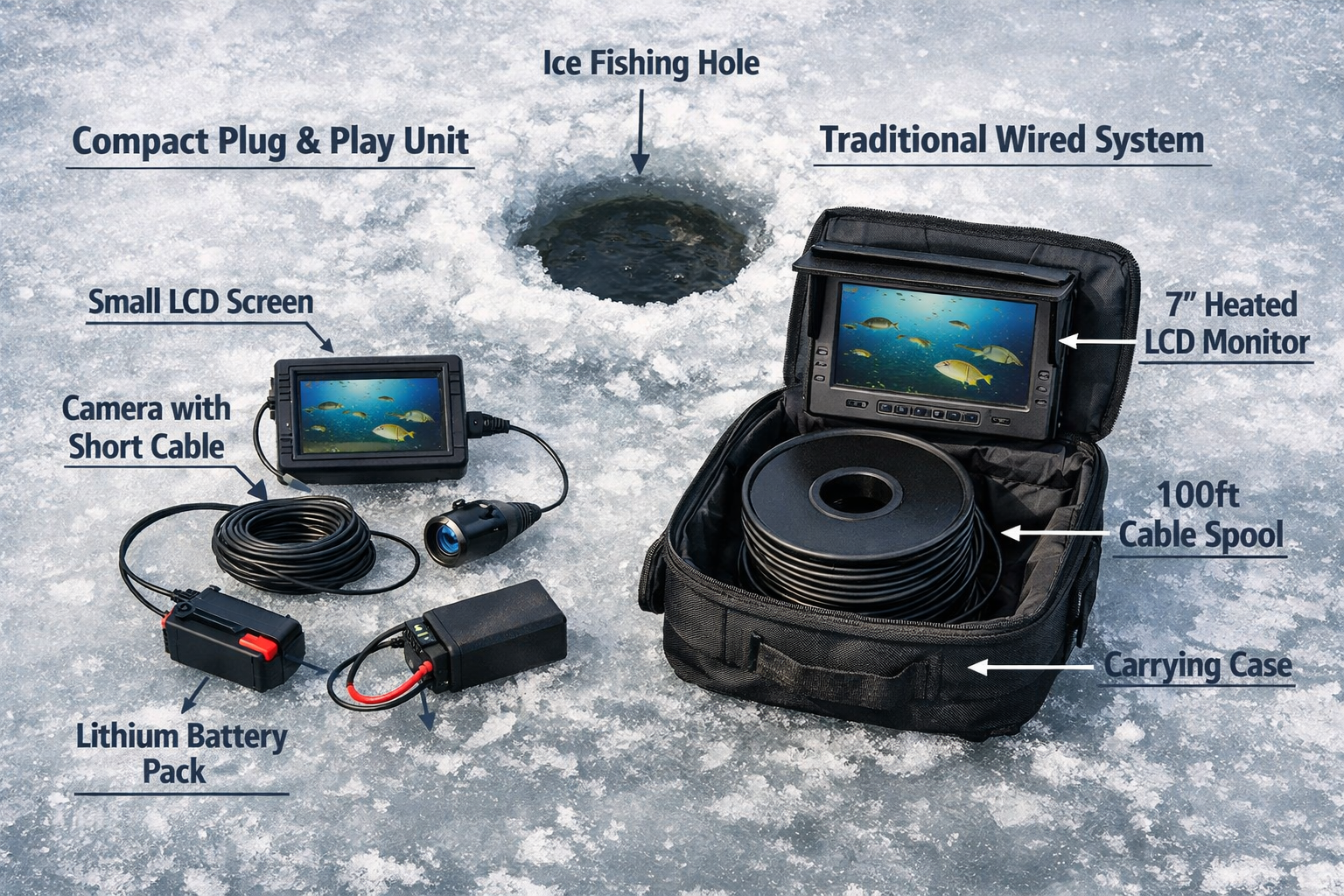
Plug and play cameras combine the screen, battery, and camera head into one compact unit with a short cable (typically 50 ft or less). You charge the battery, drop the camera, and start watching. Traditional wired systems use a separate monitor connected to a camera head by a long shielded cable (75 to 125 ft), often with an external battery or power supply.
Here is how the two categories compare on specs that matter on the ice:
| Feature | Plug and Play (FishPRO, Eyoyo) | Traditional Wired (Marcum, Aqua-Vu) |
|---|---|---|
| Weight | 1.5 to 3 lbs | 10 to 15 lbs |
| Cable Length | 30 to 50 ft | 75 to 125 ft |
| Screen Size | 4.3 to 7 inches | 7 to 9 inches |
| Resolution | 1000TVL to 1080p | 1080p (heated LCD) |
| Battery Type | 5000mAh lithium (USB-C) | 12V lithium or lead-acid |
| Runtime (sub-zero) | 5 to 9 hours | 9 to 11+ hours |
| DVR Recording | Select models | Common on mid-tier and up |
| Price Range | $50 to $200 | $300 to $800+ |
| Setup Time | Under 60 seconds | 3 to 5 minutes |
Choose plug and play if you fish shallow water (under 30 ft), move between holes often, or need a backup camera. Choose wired if you fish from a shelter, target deep structure, or need heated displays that stay readable at negative 20 degrees F.
For a deeper look at wireless options in this price range, check our guide to the best wireless underwater cameras under $300 for ice fishing.
How Do You Set Up a Plug and Play Underwater Camera on Ice in 2026?
Setup takes three steps and under one minute. That speed is the primary advantage for mobile anglers who drill and move.
Step-by-step plug and play setup:
- Charge the internal lithium battery fully before heading out. The FishPRO 2026 model uses USB-C and reaches full charge in about 3 hours.
- Power on the unit. The screen and camera activate together.
- Unspool cable to your target depth. The FishPRO's magnetic spool keeps cable organized and prevents tangles during deployment.
- Lower the camera head into the hole. Keep the camera 3 to 5 ft away from your jigging line so fish behavior stays natural.
- Adjust IR light intensity. The FishPRO offers three grades of infrared, which helps in stained water without spooking fish.
- Use manual focus (2 to 18 inches on the 2026 FishPRO) to sharpen the image at your target depth.
Common mistake: Dropping the camera directly down the same hole you're jigging. This creates line interference on screen and alters fish approach angles. Drill a dedicated camera hole 3 to 5 ft from your jigging hole for the best view.
The Eyoyo budget model follows a similar process but lacks manual focus and magnetic spool features. Shaun Ridder of Return2Wild rated the Eyoyo highly for the price but cautioned against expecting pro-level clarity.
If you run into WiFi or connectivity issues with wireless-enabled models, our wireless underwater camera setup and troubleshooting guide covers the fixes.
How Do You Set Up a Traditional Wired Camera System for Ice Fishing?
Wired systems need more steps, but the payoff is a stable, high-resolution feed that performs in deep water and extreme cold.
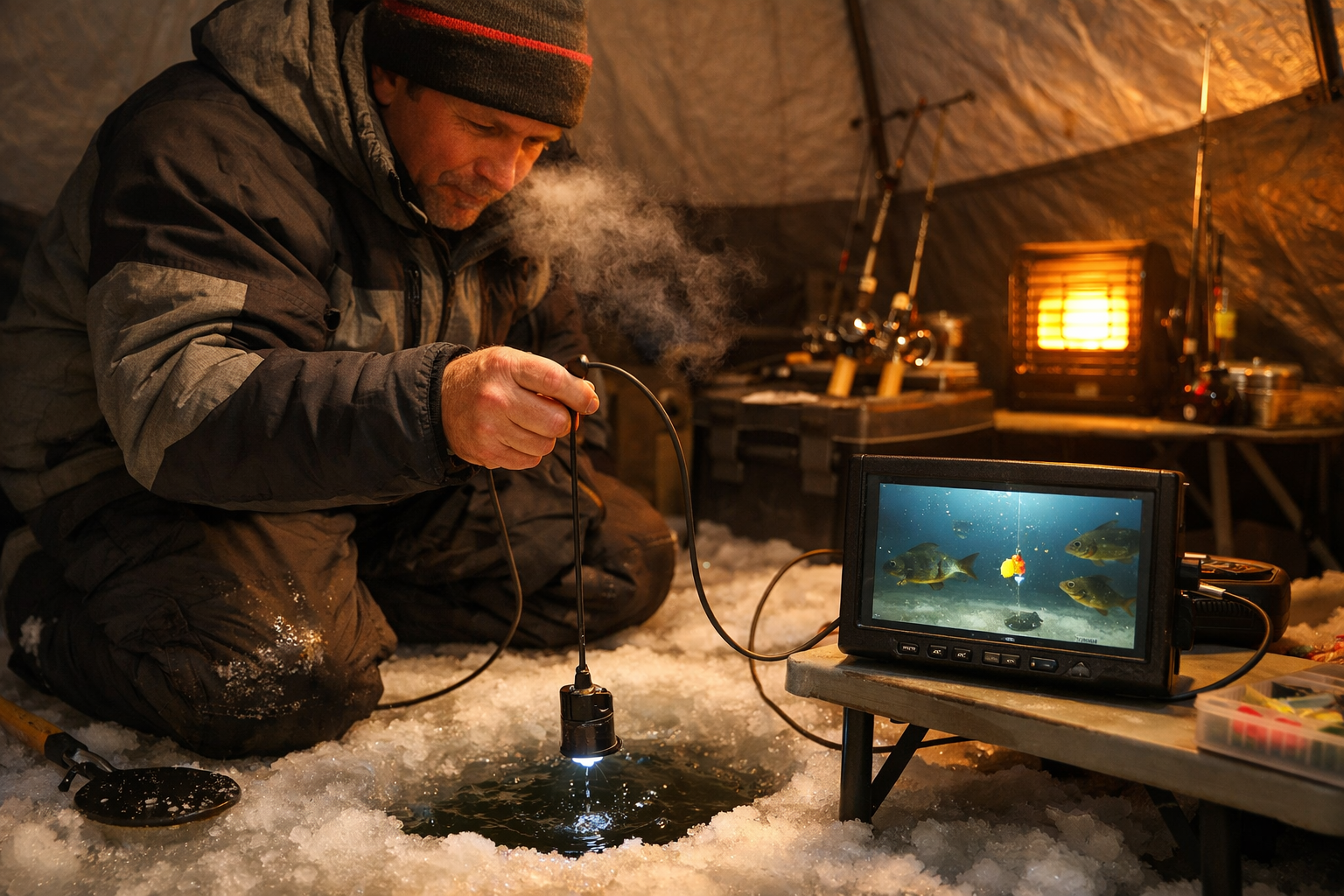
Step-by-step wired setup:
- Position your shelter and drill your holes. Plan one hole for the camera and one (or more) for jigging, spaced 3 to 5 ft apart.
- Set the monitor on a flat surface inside your shelter. Heated LCD screens (standard on Marcum and Aqua-Vu mid-tier models) need a few minutes to warm in extreme cold.
- Connect the camera head cable to the monitor input. Confirm the connection is secure before lowering.
- Attach the 12V battery. Lithium packs outperform lead-acid below 10 degrees F. The Marcum Quest HD runs approximately 11 hours on its lithium pack, per Field and Stream testing from 2024.
- Lower the camera head slowly, feeding cable without kinks. Avoid letting excess cable coil in the hole, which causes tangles when you retrieve.
- Adjust depth, camera angle, and lighting from the monitor controls.
- If your unit has DVR, start recording before you begin jigging. Reviewing footage later helps you identify fish species and refine presentations.
Common mistake: Running the cable across foot traffic areas inside the shelter. Secure cable along the shelter wall or floor edge to prevent tripping and accidental disconnection.
Windrider's 2026 field guide recommends Aqua-Vu for shallow to mid-depth clarity (5 to 40 ft) and Marcum for deep water and low-light conditions beyond 40 ft. For a detailed review of the Aqua-Vu flagship, read our Aqua-Vu HD71-125 Pro review.
Which Camera Type Performs Better in Real 2026 Field Tests?
Plug and play cameras now compete with entry-level wired systems in image quality, but wired still wins in depth, cold tolerance, and screen readability. Here is what field testers reported this season.
FishPRO 2026 (Plug and Play): Go Midwest Fishing's Randy tested the redesigned 7-inch 1080p model and noted better color vibrancy than previous generations. The IR filter delivered strong low-light performance, and the manual focus feature sharpened images at close range. Randy called the unit a strong value compared to Aqua-Vu and Marcum at a fraction of the price. The 50 ft cable limits depth, and colors wash out when viewing the screen in bright sunlight above the ice.
Eyoyo (Plug and Play, Budget): Shaun Ridder's January 2026 field test confirmed the Eyoyo works for ice and kayak use at its price point. Setup ease had some issues in real fishing conditions, and image quality falls short of units above $300
Marcum Quest HD (Wired): The 1920x1080p sensor and 11-hour lithium runtime make this a top performer for shelter-based anglers. CatchCover's January 2026 report confirmed clear imaging in Yetti wheelhouses, and fish showed curiosity toward the camera rather than avoidance in clear water. The main drawback is weight and the lack of built-in recording on the base model.
Vexilar Fish Scout (Wired): Outdoor Life's 2023 testing documented reliable performance down to negative 22 degrees F with a 9-hour runtime. The IR capability makes this a strong choice for murky water. Read our full breakdown in the Vexilar FS800IR Fish Scout review.
For a head-to-head comparison of IR-equipped cameras in murky conditions, see our Eyoyo vs FishPRO vs FourQ test.
Should You Choose Plug and Play or Wired Based on Your Fishing Style?
Match the camera to how you fish, not to the spec sheet alone.
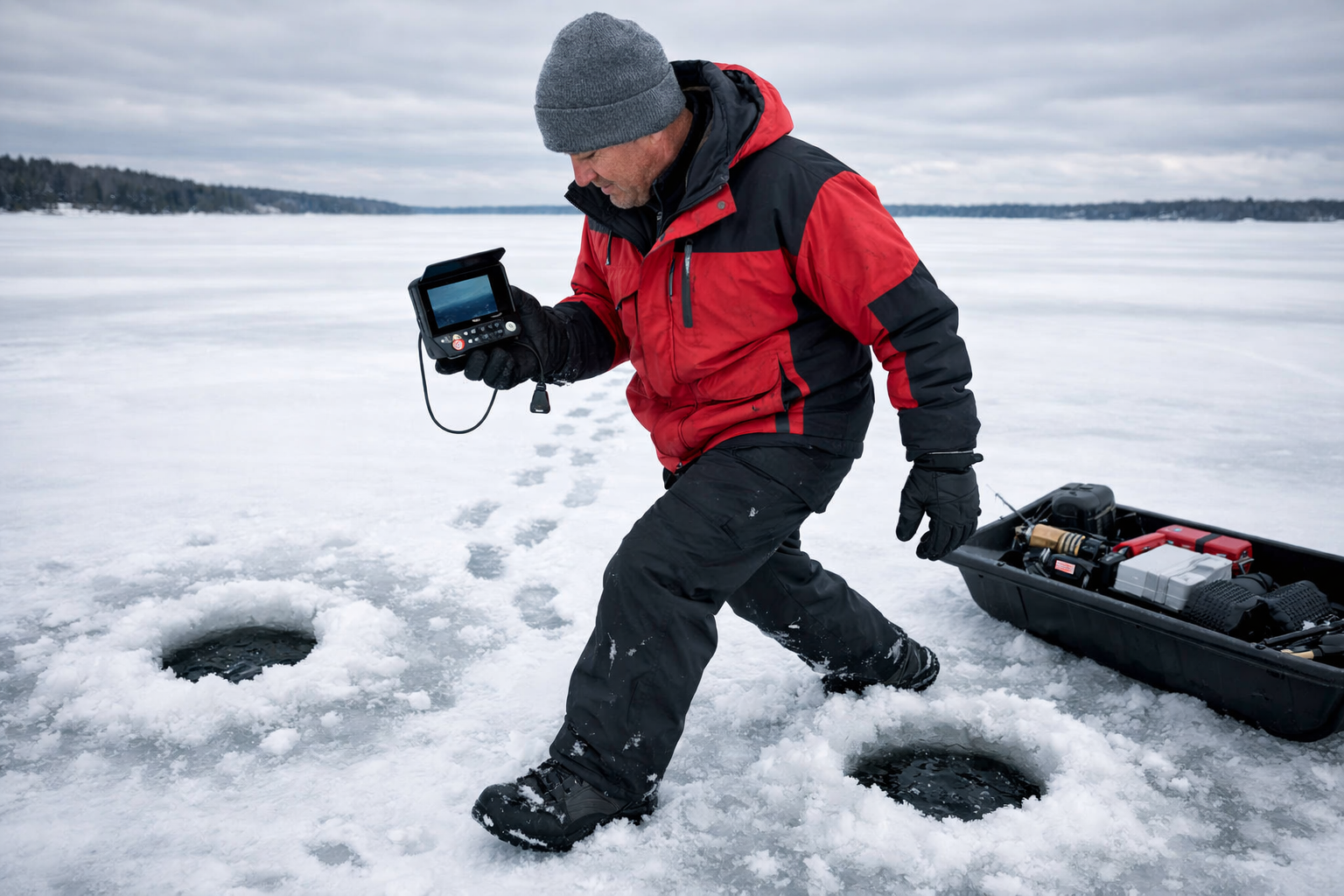
Choose plug and play if you:
- Hole-hop on open ice without a shelter
- Fish shallow panfish spots under 25 ft
- Want a backup camera alongside a flasher
- Need to keep sled weight under control
- Fish from a kayak in open water during other seasons
Choose wired if you:
- Fish from a permanent or portable shelter
- Target walleye, lake trout, or other species in 40+ ft of water
- Need a heated screen readable at negative 20 degrees F
- Want DVR recording for pattern analysis
- Fish multi-day trips where battery longevity matters
Edge case: If you fish both styles, consider pairing a budget plug and play (Eyoyo or FishPRO) for run-and-gun scouting with a wired system (Marcum or Aqua-Vu) in your shelter. The plug and play unit scouts structure and fish activity at new holes. Once you find the spot, set up the wired system for the session.
Seavu's March 2026 GoPro and DJI streaming kits add another option. These kits let you stream a GoPro or DJI camera feed to your phone or tablet, combining plug and play portability with better image quality. This approach works best for anglers who already own action cameras.
How Does Cold Weather Affect Camera Performance and Battery Life?
Cold is the biggest variable. Lithium batteries lose capacity as temperatures drop, and LCD screens slow their refresh rate.
Battery performance by temperature (estimated):
| Temperature | Lithium Runtime Loss | Lead-Acid Runtime Loss |
|---|---|---|
| 32 degrees F | 5 to 10% | 10 to 15% |
| 10 degrees F | 15 to 25% | 30 to 40% |
| Negative 10 degrees F | 25 to 35% | 50%+ |
| Negative 22 degrees F | 35 to 45% | Often fails |
The Vexilar Fish Scout's documented tolerance to negative 22 degrees F makes wired systems the safer bet for extreme conditions. Plug and play units with 5000mAh lithium packs (FishPRO, Eyoyo) perform well above 10 degrees F but lose significant runtime below that.
Practical tips for cold weather:
- Store batteries inside your jacket until you need them.
- Keep the monitor inside the shelter whenever possible.
- Carry a USB-C power bank as backup for plug and play units.
- Avoid repeatedly powering units on and off, which drains batteries faster than continuous use.
Our full guide on how wireless underwater cameras handle extreme ice fishing temperatures covers this topic in detail.
Do Underwater Cameras Scare Fish or Improve Catch Rates?
Underwater cameras improve catch rates when used correctly. Windrider's January 2026 report cites field studies showing a 40 to 60% increase in catch rates for anglers using through-ice cameras. CatchCover's on-ice observations with the Quest HD in clear water confirmed that fish approach cameras with curiosity rather than fear.
Best practices for camera placement:
- Position the camera 3 to 5 ft from your jigging hole.
- Point the camera toward your bait rather than away from the structure.
- Use IR lighting in clear water to avoid spooking fish with white light.
- Lower the camera slowly. Fast drops create turbulence that pushes fish away.
The camera becomes a tactical tool when you watch fish reactions to your jigging cadence. You see whether fish commit, follow, or turn away. That feedback loop lets you adjust presentation speed, bait color, and depth in real time.
What Are the Top Models to Consider in 2026?
Best Plug and Play: FishPRO 7-inch 1080p DVR Camera. The 2026 redesign added manual focus, magnetic spool, RF remote tripod, and improved low-light performance. Strong value for the price.
Best Budget Plug and Play: Eyoyo Underwater Camera. Affordable entry point for beginners and kayak anglers. Expect functional footage, not pro-grade clarity.
Best Wired for Deep Water: Marcum Quest HD. 1080p sensor, 11-hour lithium runtime, and strong low-light performance beyond 40 ft.
Best Wired for Murky Water: Vexilar FS800IR Fish Scout. IR capability and negative 22 degrees F cold tolerance make this a reliable pick for stained water and harsh conditions.
Best Wired for Shallow-Mid Depth: Aqua-Vu HD71-125 Pro. Clear imaging from 5 to 40 ft with a 125 ft cable for versatility.
Plug & Play vs Traditional Wired Underwater Cameras for Ice Fishing :Frequently Asked Questions
How long does a plug and play ice fishing camera battery last? Most plug and play units with 5000mAh lithium batteries run 5 to 9 hours above 10 degrees F. Expect 25 to 35% less runtime below that temperature.
Are wired underwater cameras worth the extra cost? Yes, if you fish from a shelter, target deep water, or fish in extreme cold. The heated screens, longer cables, and bigger batteries justify the price for serious anglers.
Do underwater cameras work in murky water? IR-equipped cameras (Vexilar Fish Scout, FishPRO with IR filter) perform well in stained water. White light cameras struggle with backscatter in murky conditions.
How far should the camera be from my jigging hole? Space the camera hole 3 to 5 ft from your jigging hole. This gives a clear side view of fish approaching your bait without line interference on screen.
Do fish avoid underwater cameras? No. On-ice observations show fish approach cameras with curiosity in clear water [6]. Avoid sudden movements and bright white light to keep fish comfortable.
What is the best underwater camera for ice fishing under $200? The FishPRO 2026 7-inch 1080p model offers the best combination of features and image quality in this range. The Eyoyo works as a budget alternative under $100.
Does the FishPRO 2026 record video? Yes. The redesigned 2026 model includes DVR recording capability [9].
How deep do plug and play cameras work? Most plug and play units include 30 to 50 ft of cable. They work best in shallow to mid-depth applications. For water deeper than 50 ft, choose a wired system with 75 to 125 ft of cable [1][3].
Are underwater cameras legal for ice fishing? Regulations vary by state and province. Check your local fishing regulations before using an underwater camera during the season. Most jurisdictions allow them for recreational use.
What screen size works best on the ice? A 7-inch screen provides a good balance of visibility and portability. Shelter anglers benefit from 9-inch heated screens on wired systems. Mobile anglers should stick with 4.3 to 7-inch plug and play screens to save weight.
Choosing the Right Camera for Your 2026 Ice Season
Your fishing style determines your camera. Mobile anglers who drill, scout, and move benefit from plug and play speed and low weight. Shelter anglers who sit on structure for hours need wired reliability, heated screens, and deep-water reach.
The 2026 plug and play models from FishPRO have closed the quality gap significantly, making them viable primary cameras for shallow water fishing [9]. Wired systems from Marcum and Aqua-Vu remain the standard for deep water, extreme cold, and tournament-level performance.
Start with one system that matches your primary fishing approach. Add the other style later as a complement. The combination of a plug and play scout camera and a wired shelter camera covers every scenario you will face on the hardwater.
Kayak. Drill. Catch. Repeat. See you on the water.
References
[1] Underwater Fishing Camera 4 3 Ice Fishing Camera 1000tvl No Need Learn Fish Finder Gift For Men 3 Grade Ir Usb C 5 000mah 50ft Cable Easy To Use For Any Age Ice Fish Camera – https://www.shopabunda.com/products/underwater-fishing-camera-4-3-ice-fishing-camera-1000tvl-no-need-learn-fish-finder-gift-for-men-3-grade-ir-usb-c-5-000mah-50ft-cable-easy-to-use-for-any-age-ice-fish-camera
[2] Return2Wild Eyoyo Underwater Camera Review (Jan 16, 2026) – https://www.youtube.com/watch?v=YUBv3jen5Tg
[3] Ice Fishing Through Ice Vision Underwater Cameras And Float Suit Mobility – https://windrider.com/blogs/tips-and-tricks/ice-fishing-through-ice-vision-underwater-cameras-and-float-suit-mobility
[4] Ice Fishing Walleyes With Underwater Cameras – https://catchcover.com/read-blog-articles/ice-fishing-walleyes-with-underwater-cameras/
[5] Go Midwest Fishing FishPRO 2026 Review (Feb 26, 2026) – https://www.youtube.com/watch?v=SnLfnJzKjQo
[6] Underwater Cameras – https://allaboutfishing.org/equipment-and-gear/ice-fishing-electronics/underwater-cameras