Last updated: February 21, 2026
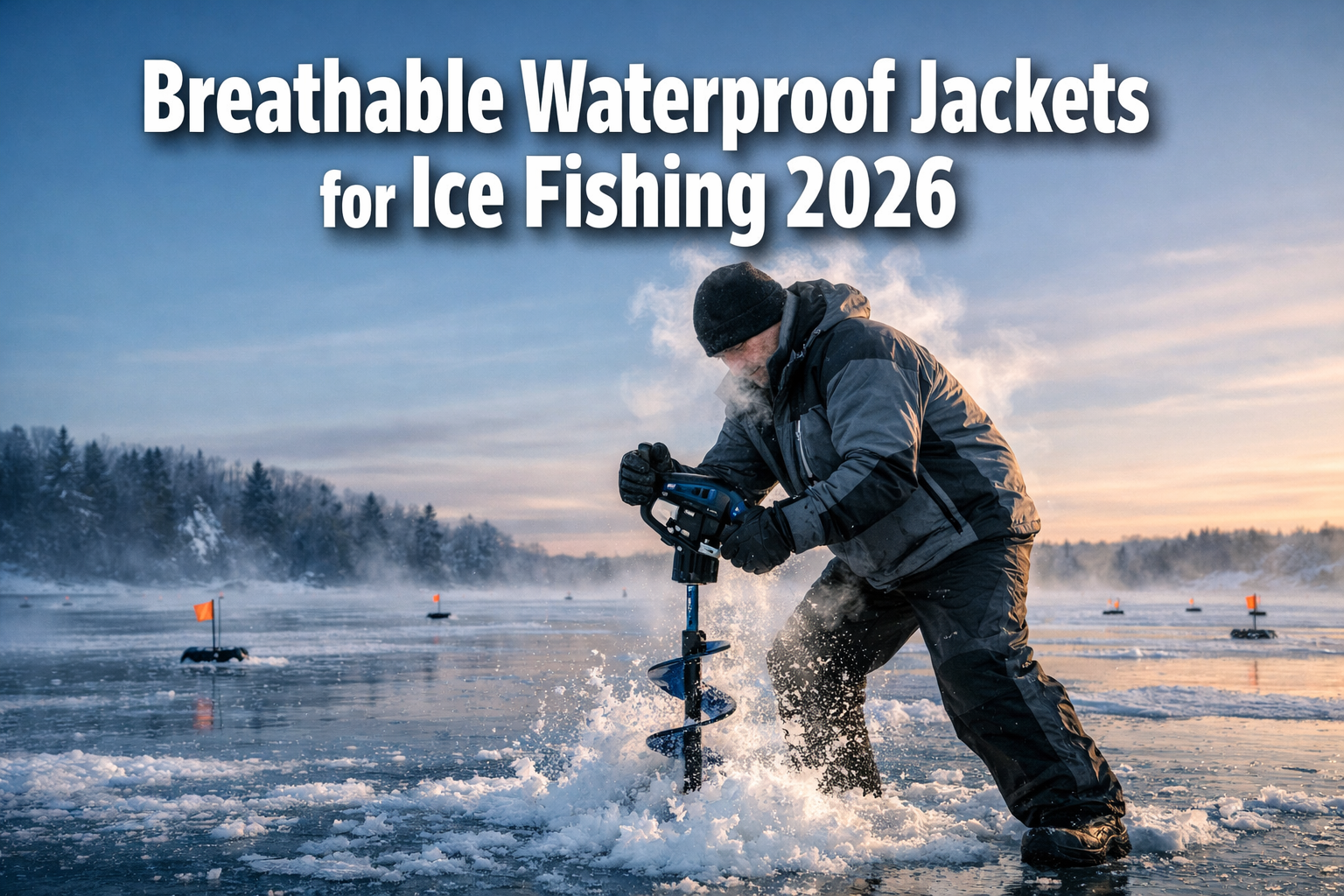
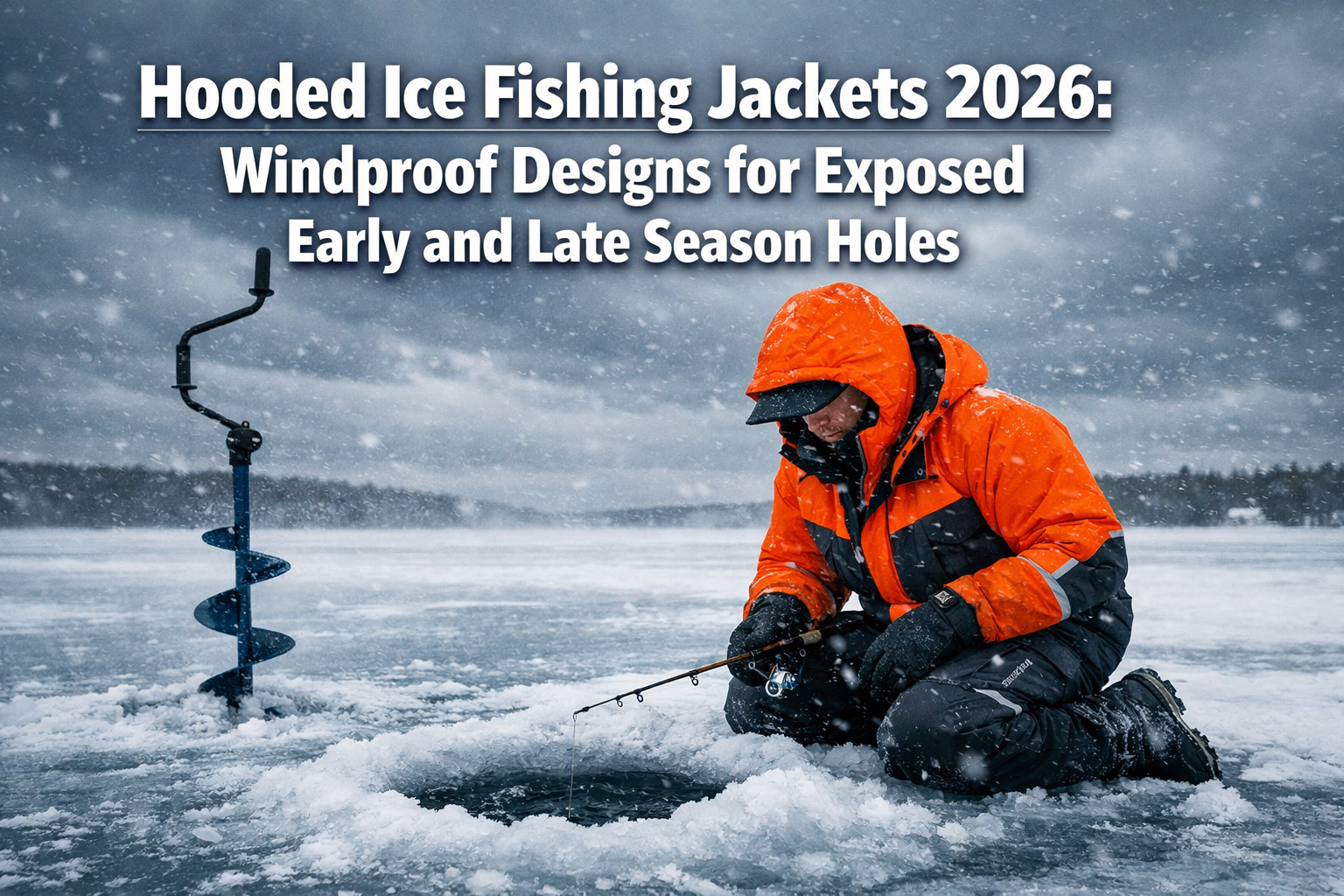
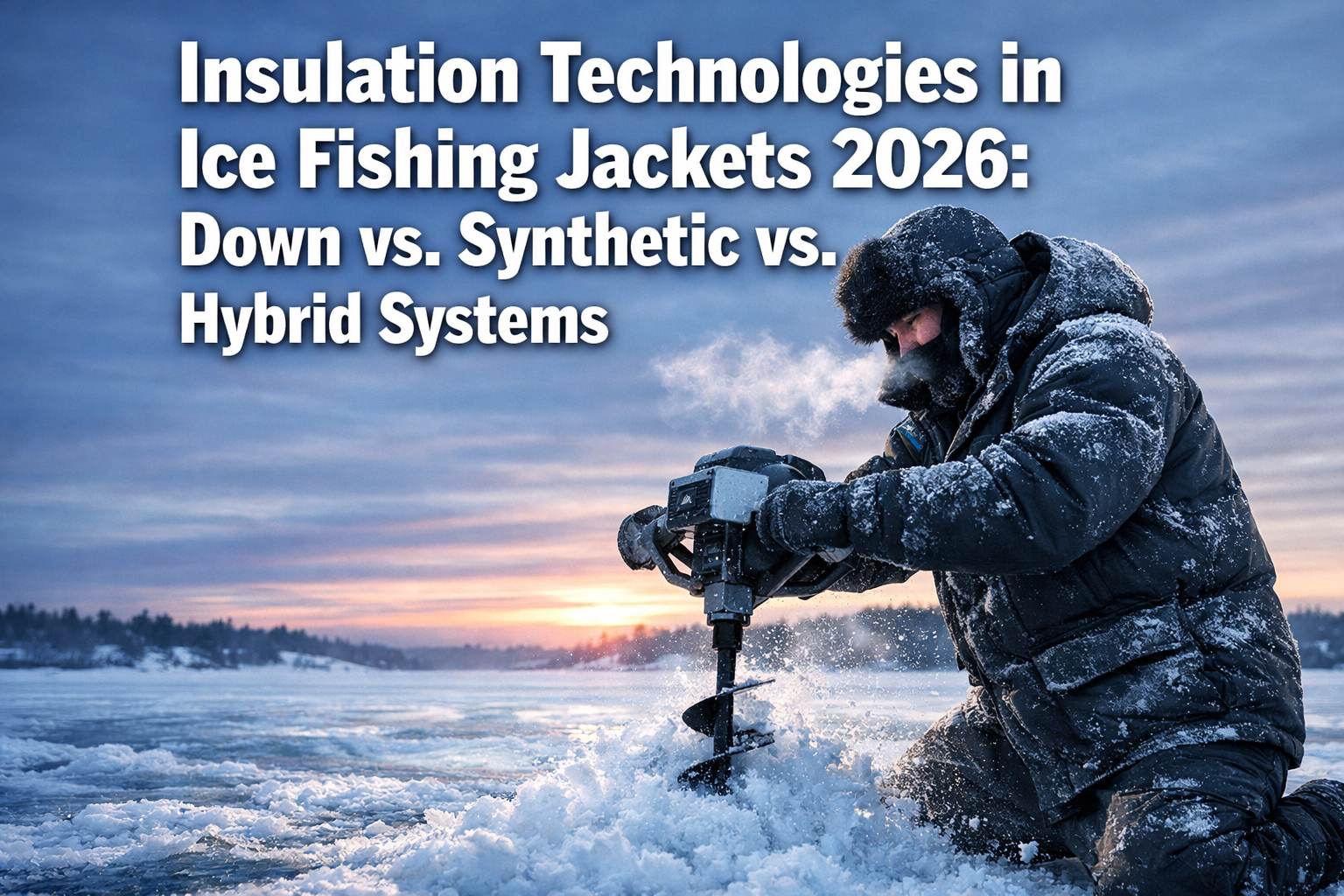
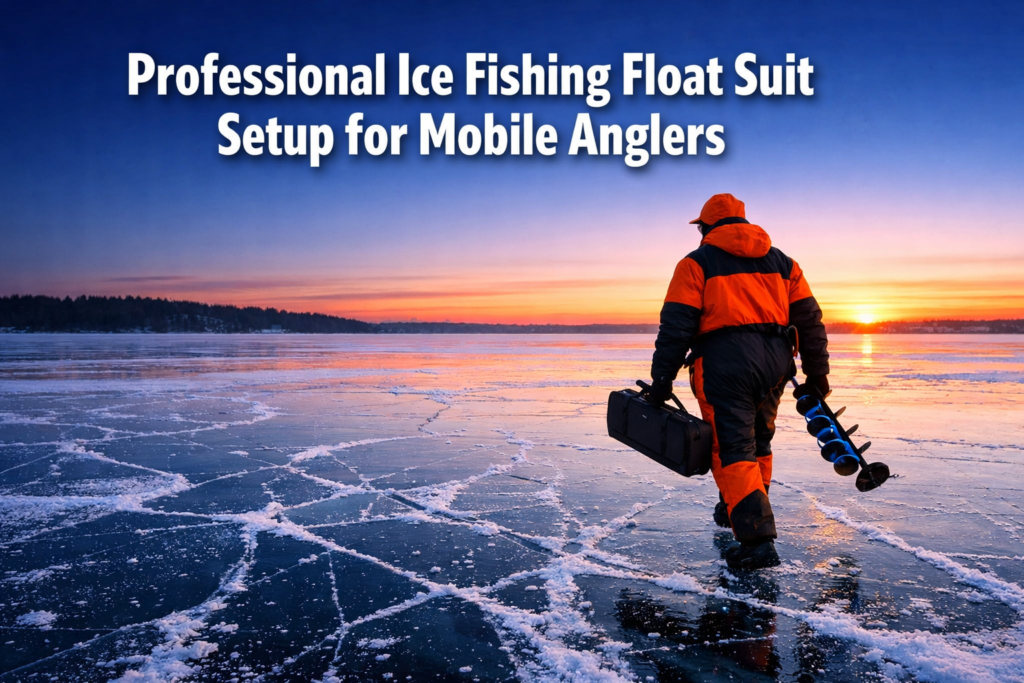
A professional ice fishing float suit setup for mobile anglers combines built-in flotation with thermal insulation in a single wearable system designed for anglers who move between holes across open ice. If you fish early ice, late ice, or big water where conditions shift fast, a float suit is your primary safety layer and your comfort system rolled into one. This guide breaks down how to choose, fit, layer, and maintain a float suit so you stay warm, mobile, and alive when the ice gives way.
Key Takeaways
- A float suit keeps your airways above water for 30 to 60 seconds after a breakthrough, giving you time to self-rescue.
- Mobile anglers need a two-piece bib-and-jacket configuration for freedom of movement between holes.
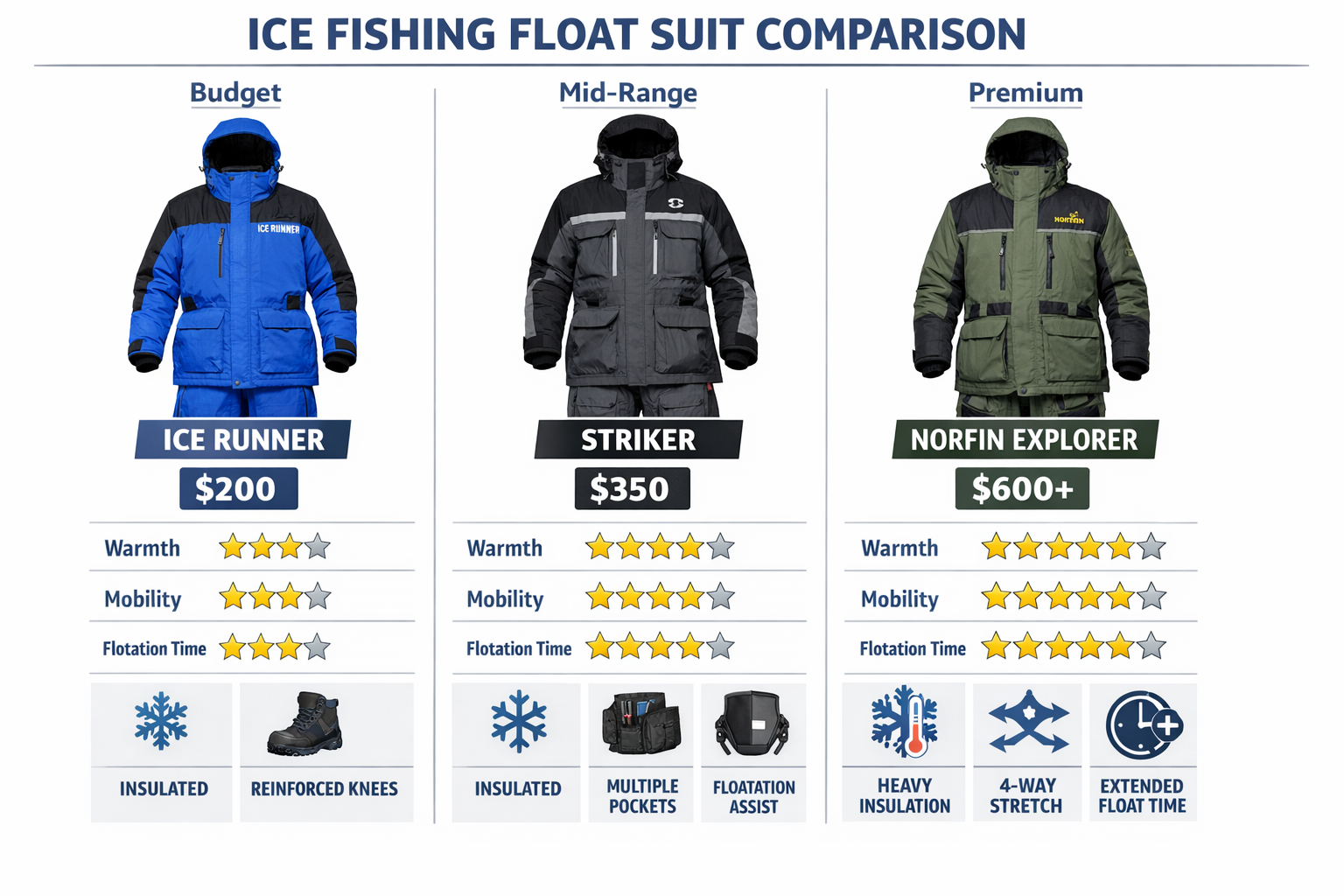
- Budget float suits (around $200) deliver roughly 90% of the performance of premium models ($450 to $600+) but sacrifice durability and heat retention.
- Proper layering underneath your float suit matters as much as the suit itself for warmth and moisture management.
- Float suits add the most value during early and late ice seasons and on large bodies of water like the Great Lakes, where ice thickness varies.
Quick Answer
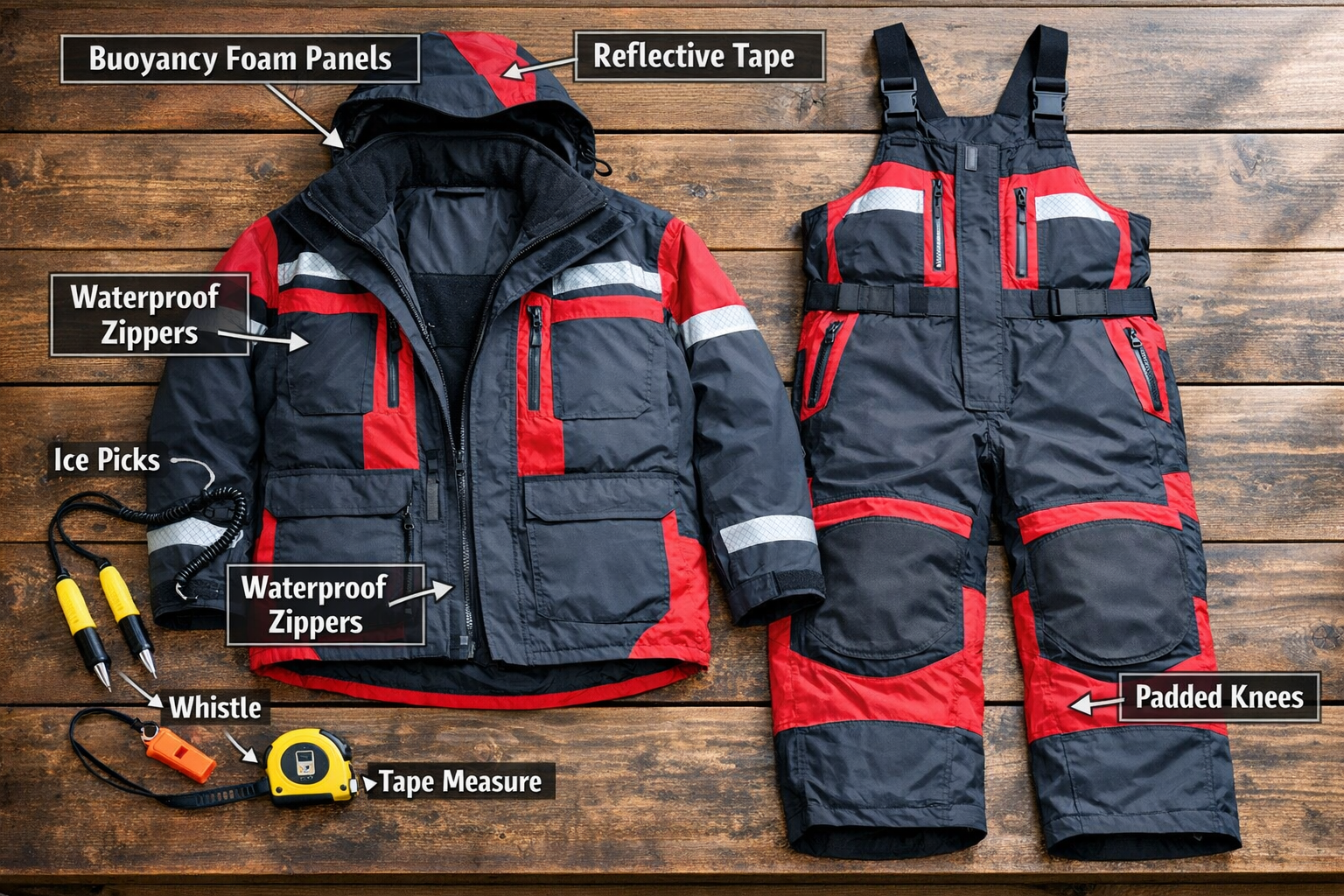
A professional ice fishing float suit setup for mobile anglers starts with a two-piece flotation suit rated for cold-water immersion, paired with moisture-wicking base layers and mid-layers that do not absorb water. Choose a suit with sealed seams, reinforced knees, and a chest strap that keeps the jacket locked to the bibs during a fall-through. Budget around $200 for entry-level protection or $450 and up for premium warmth and durability suited to full-season tournament use.
What Is a Float Suit and Why Do Mobile Ice Anglers Need One?
A float suit is a two-piece or one-piece garment with closed-cell foam sewn into panels throughout the jacket and bibs. That foam provides positive buoyancy if you fall through the ice. Unlike a standard life jacket worn over a coat, a float suit distributes flotation across your torso and legs, keeping you upright and your head above water without restricting arm movement.
Mobile anglers, the run-and-gun crowd who drill dozens of holes and move constantly, face more ice variability than anglers sitting in a permanent shanty. You cross pressure cracks, thin spots near current, and transitional ice near shore. A float suit addresses this risk directly.
Professional guide Mark Martin has noted in safety seminars that clients wearing float suits fish more comfortably, stay out longer, and catch more fish. The safety benefit is almost secondary to the confidence and warmth the suit provides.
Who benefits most from a float suit:
- Anglers fishing early ice (first few weeks after freeze-up) when thickness is inconsistent
- Late-ice anglers dealing with honeycombed, rotting ice in spring
- Tournament competitors who cover large areas of ice quickly
- Anyone fishing big lakes where wind, current, and pressure ridges create unpredictable conditions
Who does not need one:
- Anglers fishing exclusively from a permanent heated shelter on well-established mid-winter ice (12 inches or more of solid ice)
- Casual anglers on small, shallow ponds where water depth is under 3 feet
For more about the FishOnYak.com approach to safety-first angling across seasons, visit our About page.
How Do You Choose the Right Float Suit for a Professional Ice Fishing Setup?
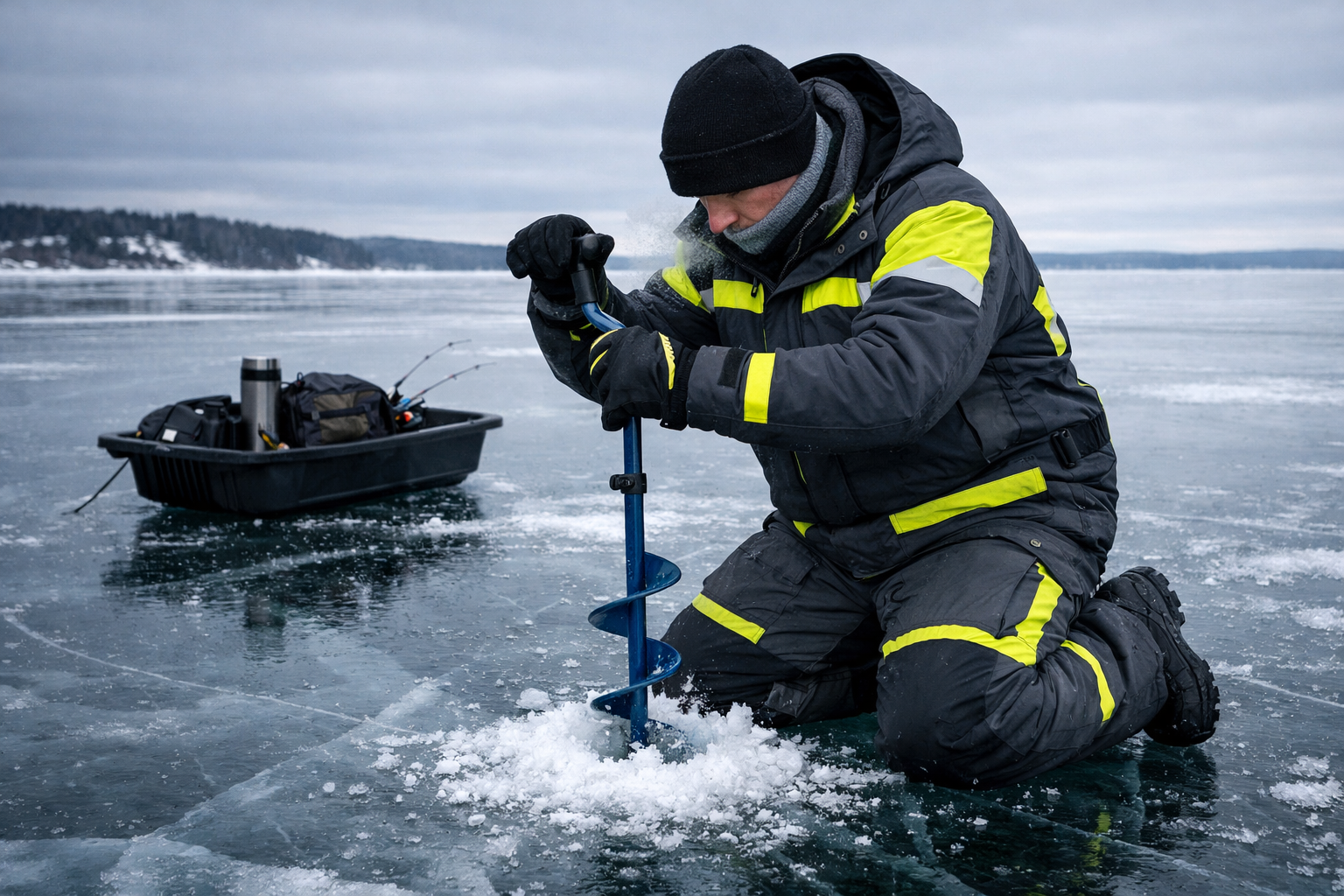
Start with the flotation rating and the temperature range. Every float suit worth buying will list its buoyancy in Newtons or pounds of flotation and its comfort temperature range. Aim for a suit that provides at least 50 Newtons of buoyancy (the EN 393 standard for buoyancy aids) and a comfort rating that matches your coldest fishing conditions.
Key Features to Evaluate
| Feature | What to Look For | Why It Matters for Mobile Anglers |
|---|---|---|
| Construction | Two-piece bib and jacket | Allows bathroom breaks and layering flexibility on the move |
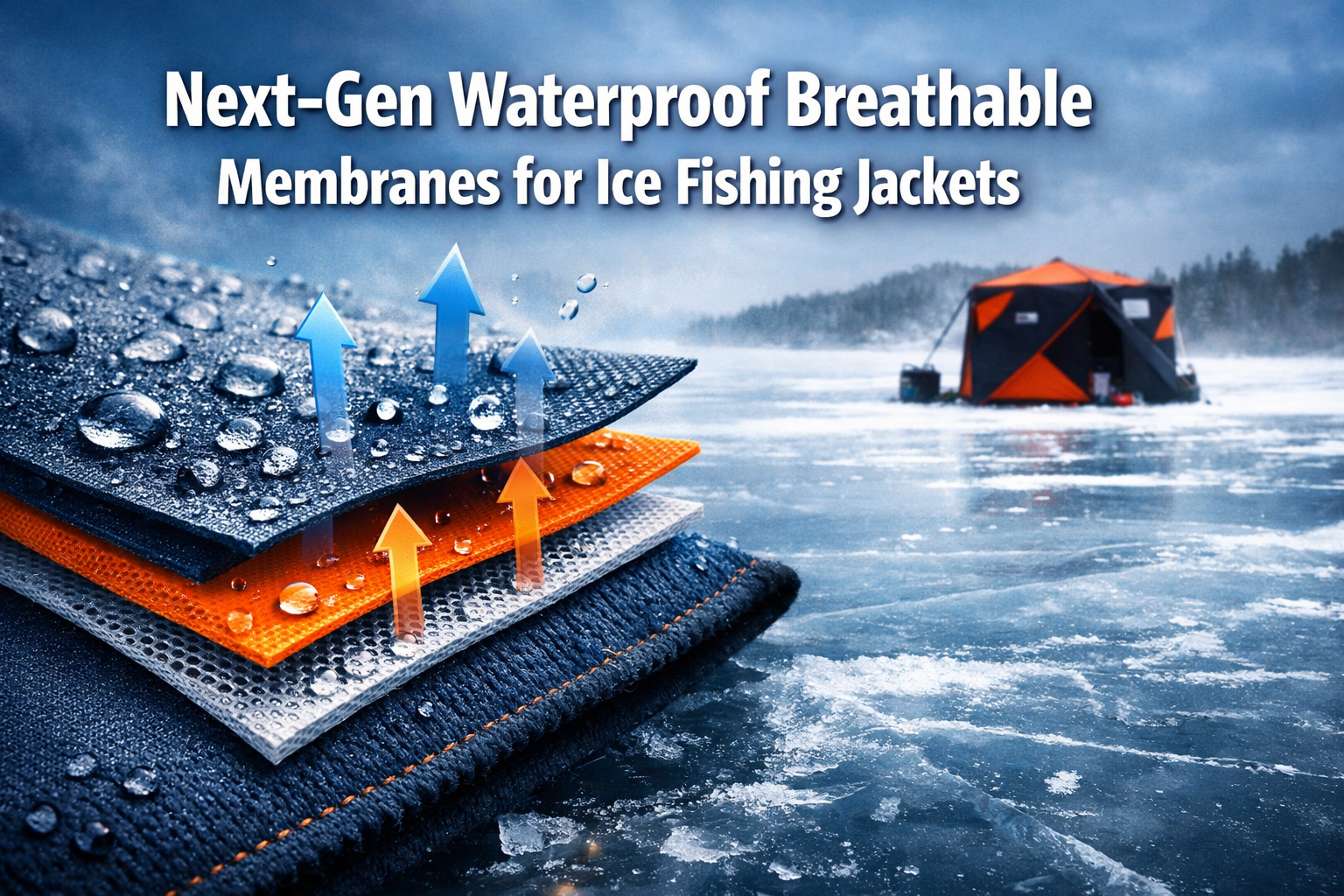
| Shell material | Waterproof nylon (228T Tussor or similar) with taped seams | Keeps wind and splash out during long walks across ice |
| Insulation | 100g to 200g polyester fill or phase-change materials | Warmth without bulk so you move freely between holes |
| Knees | Reinforced and padded | You kneel constantly when jigging and landing fish |
| Chest strap | Connects jacket to bibs | Prevents the jacket from riding up over your head in water |
| Pockets | Zippered, waterproof, accessible with gloves | Carry lures, phone, and ice picks without a tackle bag |
| Reflective tape | High-visibility strips on shoulders and back | Visibility in low light and for rescue crews |
Decision Rules
Choose a budget suit like the Ice Runner (around $200 for a full two-piece) if you fish fewer than 20 days per season and stick to moderate cold (15°F and above). Choose a mid-range suit like the Striker Climate ($350 range) if you want better pocket organization, lighter weight, and improved breathability for all-day mobility. Choose a premium suit like the Norfin Explorer 2 ($600+) if you fish sub-zero conditions regularly or compete in multi-day tournaments where comfort over 10+ hours matters.
Common mistake: Buying a suit one size too large “for layering room.” Float suits are designed with layering space built in. Oversized suits trap water pockets during immersion and reduce buoyancy efficiency. Follow the manufacturer's sizing chart based on your chest and inseam measurements, not your coat size.
How Should You Layer Under a Professional Ice Fishing Float Suit for Mobile Anglers?
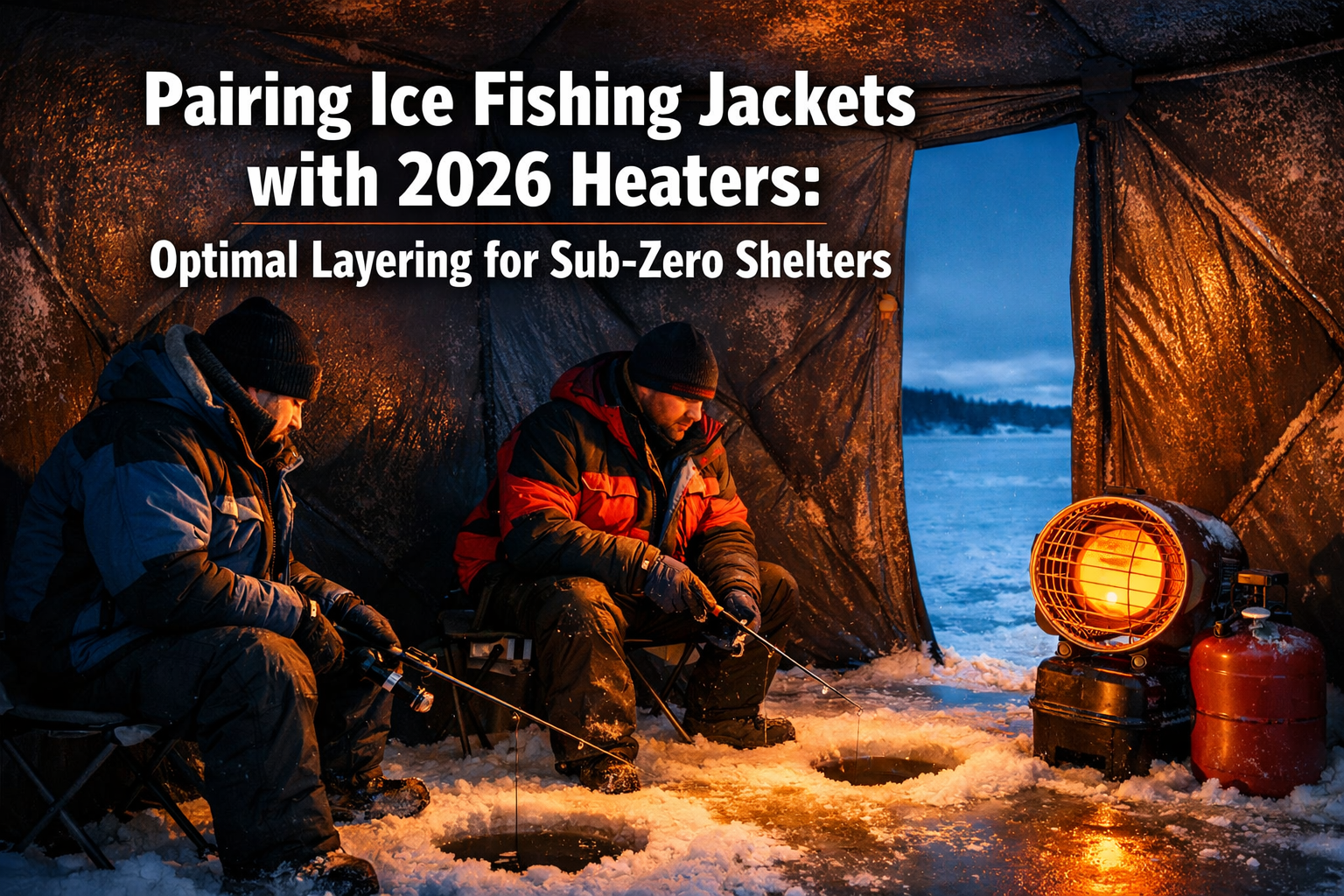
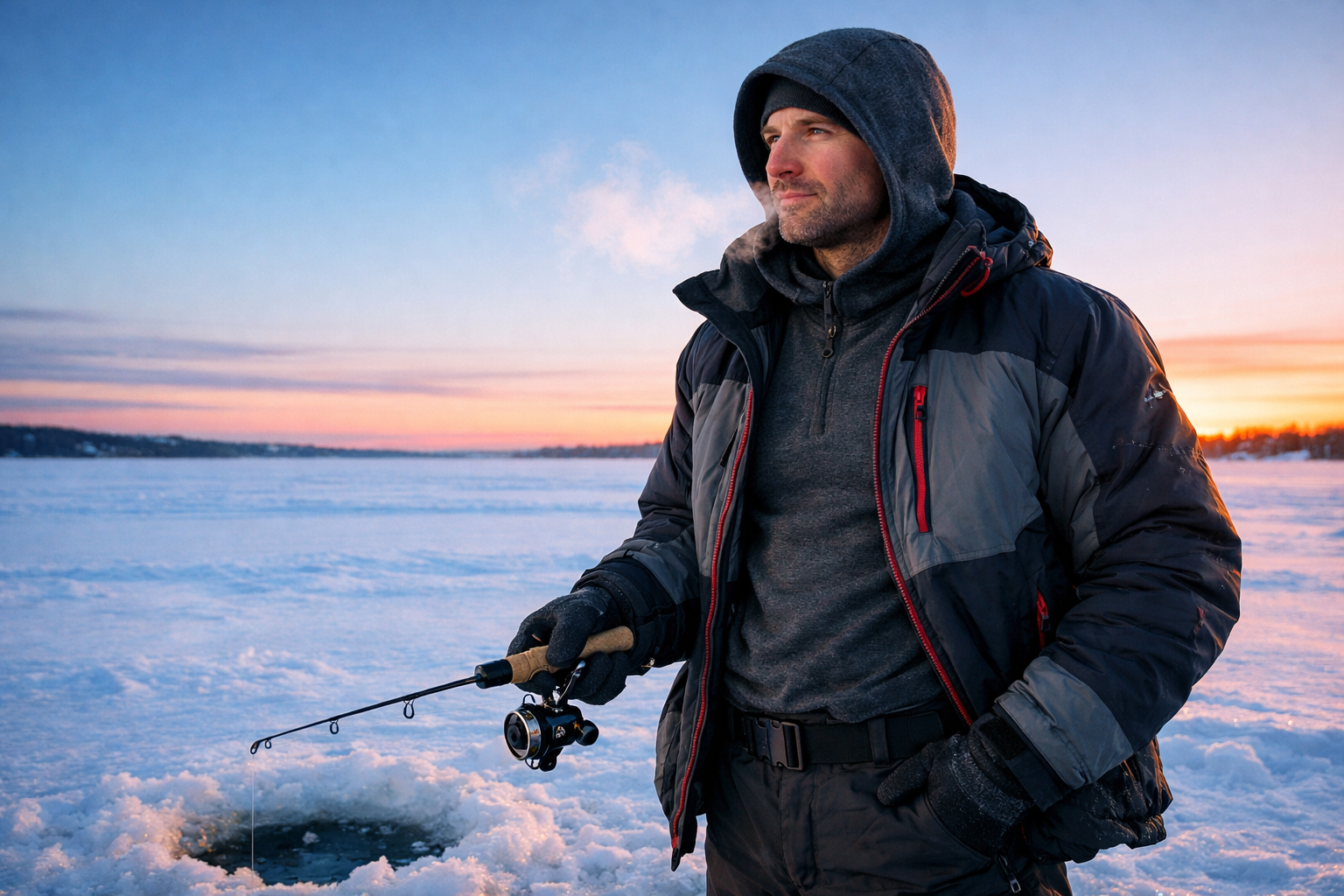
Your base and mid-layers determine whether you stay warm and dry or end up soaked in sweat after walking a mile across the ice. The float suit handles wind, water, and flotation. The layers underneath handle moisture management and trapped-air insulation.
The Three-Layer System
1. Base layer (next to skin) Wear a moisture-wicking synthetic or merino wool top and bottom. Avoid cotton completely. Cotton absorbs sweat, holds moisture against your skin, and accelerates heat loss. A 200-weight merino wool base layer works well for temperatures from 0°F to 25°F.
2. Mid-layer (insulation) Add a fleece or synthetic puffy jacket and pants. For mobile anglers who generate body heat while walking, a lighter mid-layer (100-weight fleece) prevents overheating. For stationary jigging periods, a heavier mid-layer (200-weight fleece or a thin synthetic puffy) traps more warmth.
3. Float suit (outer shell) The float suit acts as your wind layer, waterproof layer, and flotation device. Zip all vents closed when stationary. Open chest and pit vents when walking to dump excess heat.
Layering Tips for the Run-and-Gun Approach
- Pack a spare mid-layer in your sled. If you sweat through your fleece during a long walk, swap to a dry one before you sit down to jig.
- Tuck your base layer into your bib waistband. This prevents cold air from hitting bare skin when you bend over holes.
- Use the chest strap to secure the jacket to the bibs. This also seals the gap at your waist against wind.
Explore more tactical angling strategies and rigging mastery content on the FishOnYak.com blog.
What Gear Pairs Best with a Float Suit for Mobile Ice Fishing?
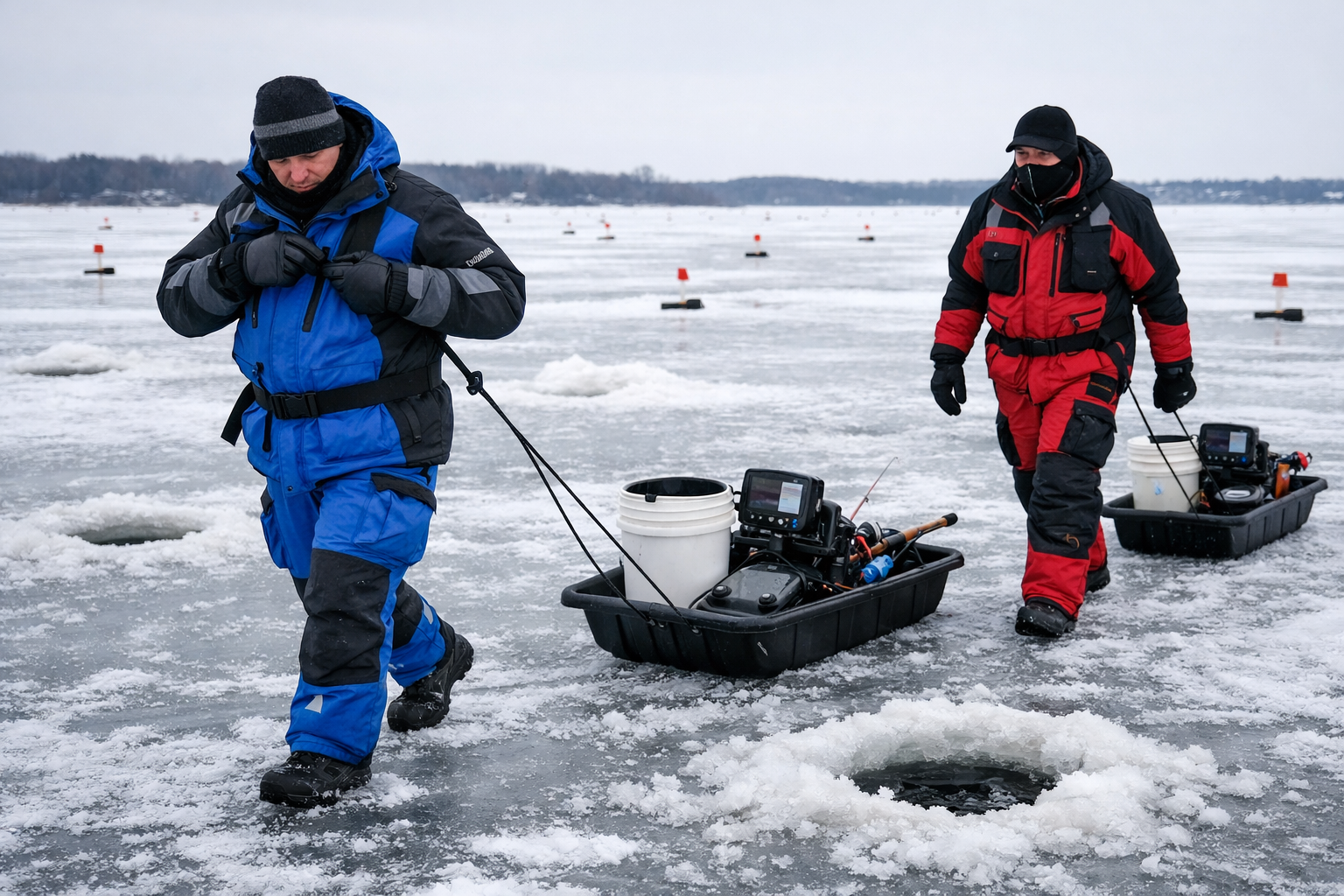
A float suit is one piece of a complete mobile ice fishing system. The suit keeps you safe and warm. The rest of your gear keeps you efficient and productive on the ice.
Essential Gear Checklist for Mobile Float Suit Anglers
- Ice picks on a neck lanyard. Wear these inside your jacket, accessible at the collar. If you go through, you grab them immediately to claw onto solid ice. No float suit replaces ice picks.
- Compact sled. A small jet sled (36 to 44 inches) holds your auger, bucket, rods, and electronics. Larger sleds slow you down.
- Hand or lightweight power auger. A 6-inch hand auger or a brushless electric auger (under 10 pounds) keeps your load light. You will drill 20 to 50 holes in a mobile session.
- Short, sensitive ice rods. Pack 2 to 4 rods rigged with different presentations. Store them in a rod sleeve strapped to your sled.
- Portable flasher or fish finder. A compact unit like a Vexilar or Garmin ice bundle fits in your bucket and reads bottom in seconds.
- Waterproof phone case. Your phone is your emergency communication device. Keep it dry and accessible in a chest pocket.
Float Suit Accessories That Add Value
| Accessory | Purpose |
|---|---|
| Knee pads (if not built in) | Protect knees during extended kneeling on hard ice |
| Gaiter or neck buff | Seal the gap between your jacket collar and hat |
| Boot-compatible bib cuffs | Prevent snow from entering boots when walking through drifts |
| Whistle on zipper pull | Signal for help if you go through and your hands are too cold to yell |
Edge case: If you fish from a kayak in open water during shoulder seasons and transition to ice, a float suit rated for both environments (like the Ice Runner Fall/Spring model with 228T Tussor nylon and 100g poly insulation) serves double duty. Eddie Stein, president of flyfishtraveler.com, reviewed the Ice Runner suits and praised their flexibility and lightweight feel for cold-rain boat use alongside ice fishing. This kind of crossover gear fits the multi-season adventurer perfectly.
Learn more about the FishOnYak.com team and our approach to multi-season angling on our services page.
How Does a Float Suit Compare to Other Cold-Weather Ice Fishing Options?
Float suits compete against non-float ice suits, snowmobile suits, and heavy workwear like Carhartt bibs. Each has a place, but the differences in a breakthrough scenario are severe.
Comparison: Float Suit vs. Alternatives
| Criteria | Float Suit | Non-Float Ice Suit | Snowmobile Suit / Workwear |
|---|---|---|---|
| Buoyancy | 1 to 3 hours of flotation | None. Absorbs water and pulls you down. | None. Heavy fabrics waterlog fast. |
| Warmth | Good to excellent (100g to 200g+ insulation) | Good to excellent | Excellent (heavy insulation) |
| Mobility | Good. Designed for movement. | Good to excellent. Often lighter. | Poor to fair. Bulky and stiff. |
| Weight | Moderate (foam panels add weight) | Light | Heavy |
| Cost | $200 to $600+ | $100 to $400 | $80 to $300 |
| Breakthrough survival | Airways stay above water 30 to 60 seconds automatically | Hypothermia risk in 15 to 30 minutes per U.S. Coast Guard data | Same as non-float. No buoyancy. |
The U.S. Coast Guard has documented that cold-water immersion without flotation leads to incapacitation in 15 to 30 minutes in water near 32°F. A float suit buys you time. Time to self-rescue. Time for a partner to reach you. Time to stay conscious.
Counterargument addressed: Some anglers argue float suits are too bulky for mid-season ice fishing when ice is thick and solid. That's a fair point. On 18 inches of clear ice in January, a non-float suit or even heavy workwear will keep you warm with less bulk. The float suit adds the most value during early ice, late ice, and on large, wind-swept lakes where conditions change fast. If you fish those conditions even a few times per season, the suit pays for itself the first time you step on ice you should not have trusted.
For a deeper look at how FishOnYak.com prepares anglers for demanding conditions, check out our case studies.
How Do You Maintain and Store a Float Suit to Maximize Its Lifespan?
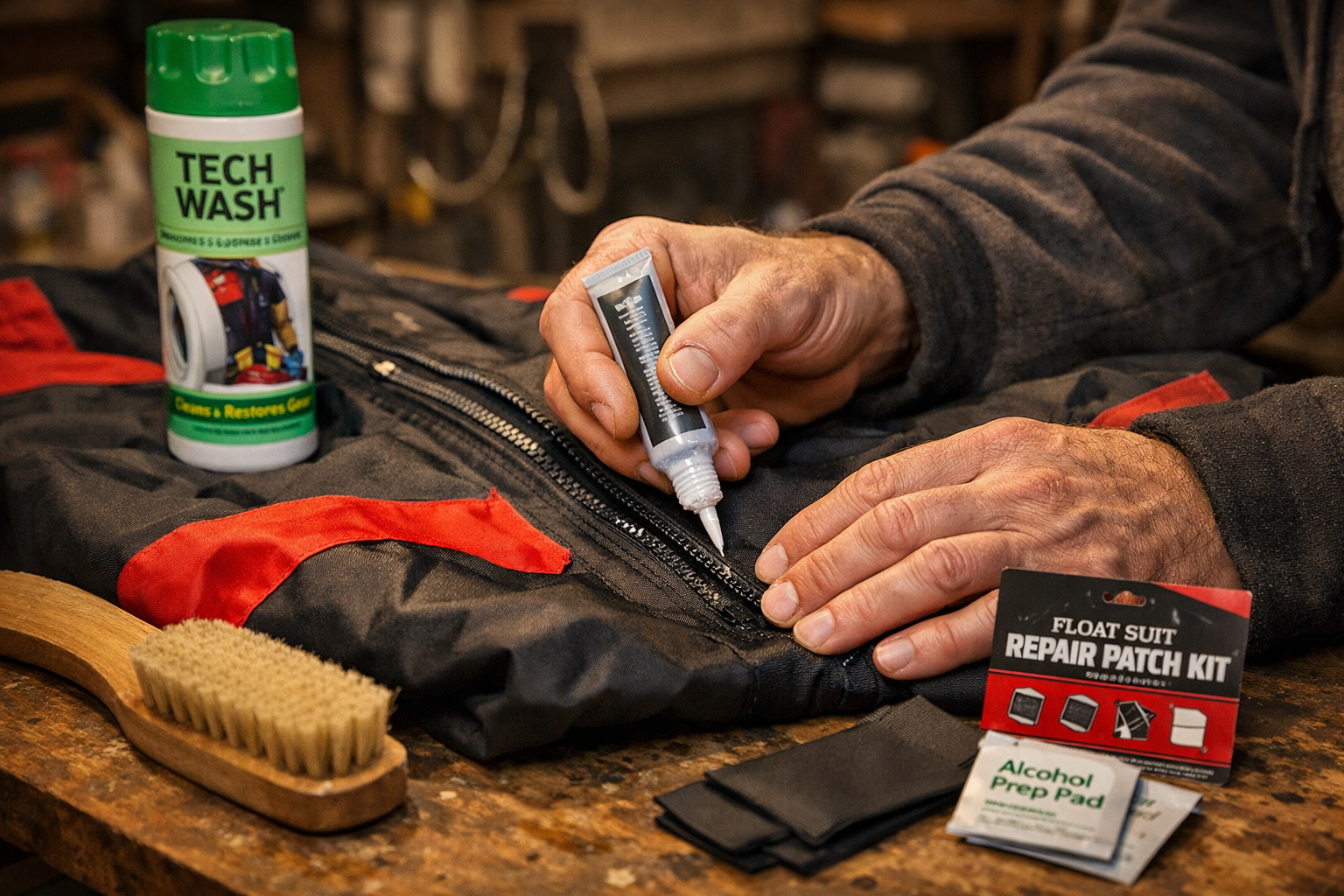
A float suit is an investment. Proper care keeps the waterproof coatings, sealed seams, and foam buoyancy panels performing for 5 to 10 seasons.
After Every Use
- Hang the suit open in a well-ventilated area. Do not ball it up in a gear bag while damp.
- Brush off any ice, salt, or fish slime with a soft brush.
- Unzip all pockets and vents to allow airflow.
Monthly During the Season
- Wipe down all zippers with a damp cloth and apply zipper lubricant (paraffin wax or a silicone-based product).
- Inspect seams for peeling tape or visible wear. Apply seam sealant to any compromised areas before the next outing.
- Check the chest strap buckle and bib suspender clips for corrosion or weakening.
End-of-Season Storage
- Wash the suit in a front-loading machine with a technical wash detergent (like Nikwax Tech Wash). Do not use regular laundry detergent. Standard detergent strips DWR (durable water repellent) coatings.
- Tumble dry on low heat for 20 minutes to reactivate the DWR coating. Or hang dry and apply a spray-on DWR treatment.
- Store the suit on a wide hanger in a cool, dry closet. Avoid compression storage, which crushes the closed-cell foam and reduces buoyancy over time.
Common mistake: Storing a float suit in a plastic tote in a hot garage over summer. Heat degrades waterproof membranes and foam. A climate-controlled space extends the suit's functional life by years.
Find more gear care and preparation tips on the FishOnYak.com blog.
What Are the Most Common Mistakes in a Professional Ice Fishing Float Suit Setup?
Even experienced anglers make errors that reduce the effectiveness of their float suit setup. Here are the ones that matter most.
1. Skipping the chest strap. The strap connecting your jacket to your bibs is not optional. Without it, the jacket rides up to your armpits or over your head during immersion. This defeats the purpose of the suit.
2. Wearing cotton underneath. Cotton kills warmth. One layer of cotton against your skin turns your float suit into a cold, clammy shell within 30 minutes of exertion.
3. Never testing the suit in water. Before your first ice trip, wear your float suit into a swimming pool or calm, shallow water. Experience how it floats you. Practice rolling onto your back. Practice kicking to the edge. This 10-minute drill builds the muscle memory you need in a real emergency.
4. Ignoring fit at the ankles and wrists. Loose cuffs let water rush in during immersion. Cinch ankle cuffs over your boots and wrist cuffs over your gloves. This creates a seal that slows water entry and extends your flotation time.
5. Overloading pockets. Float suits have generous pockets, but heavy items (pliers, lead jigs, spare batteries) shift your center of gravity in water. Keep heavy items in your sled, not on your body.
6. Assuming the suit replaces all safety gear. A float suit is one layer of protection. You still need ice picks, a throw rope, a whistle, and a charged phone. Carry all of these every time you step on ice.
For tournament-ready preparation and fluid safety protocols, visit our contact page to connect with the FishOnYak.com coaching team.
Step-by-Step: Setting Up Your Professional Ice Fishing Float Suit for a Mobile Session
Follow this sequence before every outing.
Step 1: Check the weather and ice report. Know the air temperature, wind speed, and recent ice thickness readings for your body of water. Adjust your layering based on conditions.
Step 2: Lay out your layers. Set your base layer, mid-layer, and float suit in order. Dress from the inside out.
Step 3: Put on the bibs first. Adjust the suspenders so the bib sits at your natural waist without sagging. Cinch the ankle cuffs over your boots.
Step 4: Put on the jacket. Zip fully. Attach the chest strap to the bibs. Adjust the wrist cuffs.
Step 5: Load your pockets. Phone in the upper chest pocket (waterproof case). Ice picks around your neck, tucked inside the jacket. Whistle on the outer zipper pull. A few small lure boxes in side pockets.
Step 6: Attach your sled. Use a tow rope with a quick-release buckle clipped to your bib suspender or belt loop. If you go through, you release the sled instantly so it does not drag you under.
Step 7: Test your range of motion. Swing your arms. Bend at the waist. Kneel. If anything binds or restricts, adjust the straps before you leave shore.
Step 8: Go fish. Kayak. Drill. Catch. Repeat.
FAQ: Professional Ice Fishing Float Suit Setup for Mobile Anglers
How long will a float suit keep you afloat if you fall through the ice? Most quality float suits provide 1 to 3 hours of buoyancy depending on the suit's foam density and your body weight. The WindRider Boreas suit, for example, keeps airways above water for 30 to 60 seconds automatically after a breakthrough, giving you time to orient yourself and begin self-rescue.
Are float suits too warm for active mobile fishing? They are warm, but modern float suits include ventilation zippers at the chest and underarms. Open these vents while walking and close them when stationary. Pair the suit with a lighter mid-layer to prevent overheating.
Do float suits work as life jackets? Float suits provide buoyancy but are classified as buoyancy aids, not life jackets, in most regulatory frameworks. They keep you afloat but do not guarantee a face-up position the way a Type I PFD does. The chest strap and foam distribution help, but they are not a substitute for a PFD on open water.
What is the best float suit for anglers on a tight budget? The Ice Runner full two-piece suit runs around $200 and offers waterproof 228T Tussor nylon with 100g poly insulation. You get roughly 90% of the performance of suits costing twice as much. The trade-off is less durability in the shell fabric and fewer pocket options.
Should you wear a float suit on mid-winter ice that is 12 inches thick? On solid mid-winter ice, the breakthrough risk is low, and a non-float ice suit gives you more mobility with less bulk. Reserve the float suit for early ice, late ice, and large lakes with variable conditions.
How do you clean a float suit without damaging the waterproofing? Use a front-loading washing machine with a technical wash detergent like Nikwax Tech Wash. Avoid regular detergent and fabric softener. Tumble dry on low heat for 20 minutes to reactivate the DWR coating.
What boots pair best with a float suit for mobile ice fishing? Insulated rubber boots with a felt or composite liner (rated to at least minus 40°F) work well. Make sure the bib ankle cuffs fit over the boot tops to create a water-resistant seal.
Do you need ice picks if you have a float suit? Yes. Always. A float suit keeps you afloat, but ice picks give you the grip to pull yourself out of the water and onto solid ice. Wear them on a neck lanyard inside your jacket at all times.
How tight should a float suit fit? Snug but not restrictive. You should be able to layer a base layer and a mid-layer fleece underneath without the suit feeling tight across the chest or limiting your arm swing. Follow the manufacturer's sizing chart.
Are one-piece float suits better than two-piece for mobile anglers? Two-piece suits (bib and jacket) are better for mobile anglers. They allow bathroom breaks without removing the entire suit, and you can remove the jacket during warm-up periods in a shelter without losing your bib insulation.
Key Takeaways
- A professional ice fishing float suit setup for mobile anglers combines flotation, insulation, and weather protection in a single system designed for anglers who move across open ice.
- Two-piece bib-and-jacket configurations offer the best balance of safety and convenience for run-and-gun fishing.
- Layer with synthetic or merino wool base layers and fleece mid-layers. Never wear cotton under a float suit.
- Budget suits around $200 (like the Ice Runner) deliver strong performance. Premium suits ($450 to $600+) add durability, warmth, and features for heavy-use anglers.
- The chest strap connecting jacket to bibs is a non-negotiable safety feature. Use it every time.
- Float suits add the most value during early ice, late ice, and on large, variable lakes.
- Maintain your suit with technical wash, zipper lubricant, and proper hanging storage to get 5 to 10 seasons of reliable use.
- A float suit does not replace ice picks, a throw rope, a whistle, or a charged phone. Carry all of them.
- Test your float suit in controlled water before your first ice trip. Ten minutes of practice builds the confidence and muscle memory you need in an emergency.
- Kayak. Drill. Catch. Repeat. And do it safely.
See you on the water.
SEO Meta Title: Professional Ice Fishing Float Suit Setup for Mobile Anglers
SEO Meta Description: Complete guide to professional ice fishing float suit setup for mobile anglers. Covers suit selection, layering, gear pairing, maintenance, and safety tips for 2026.