Last updated: March 23, 2026
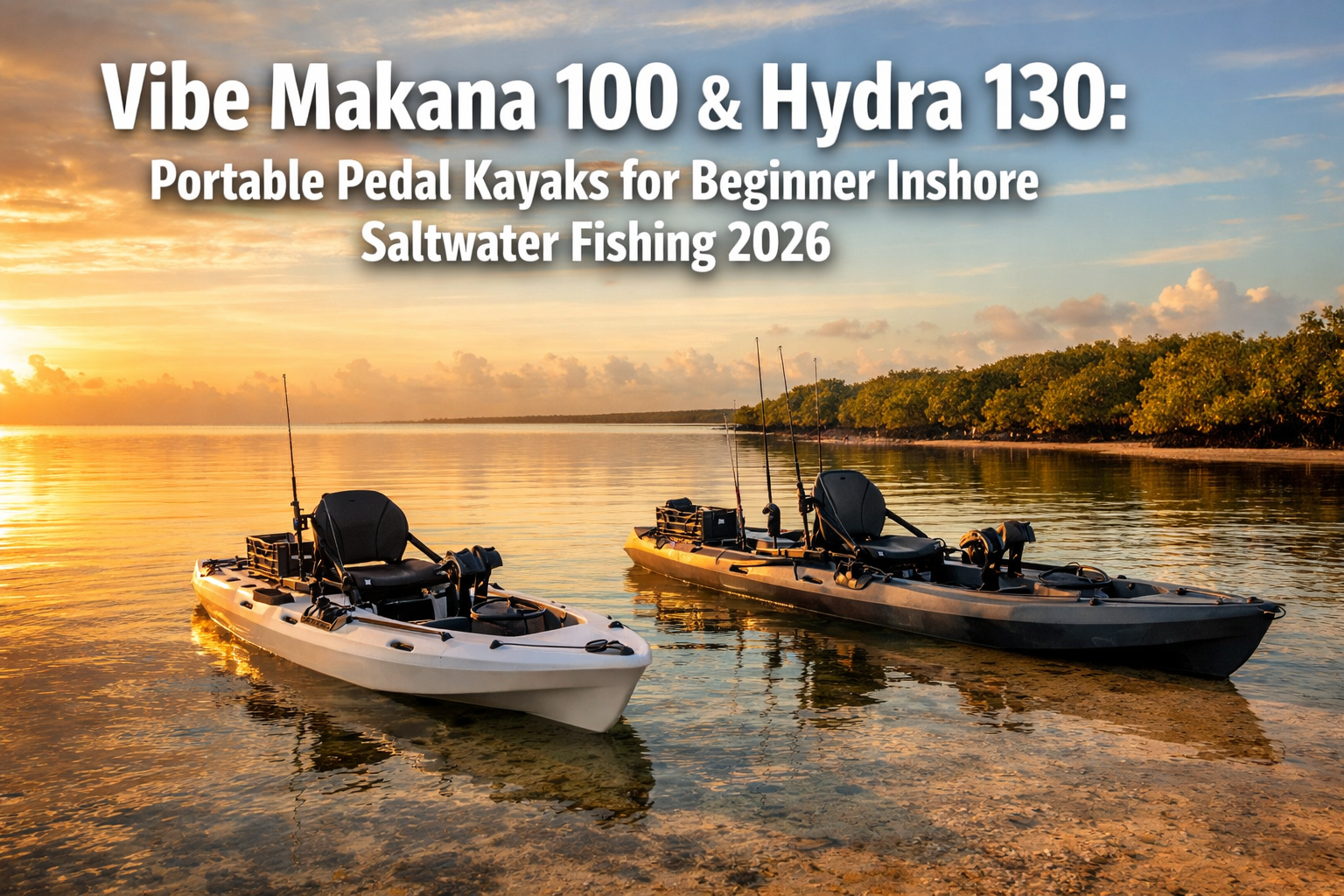
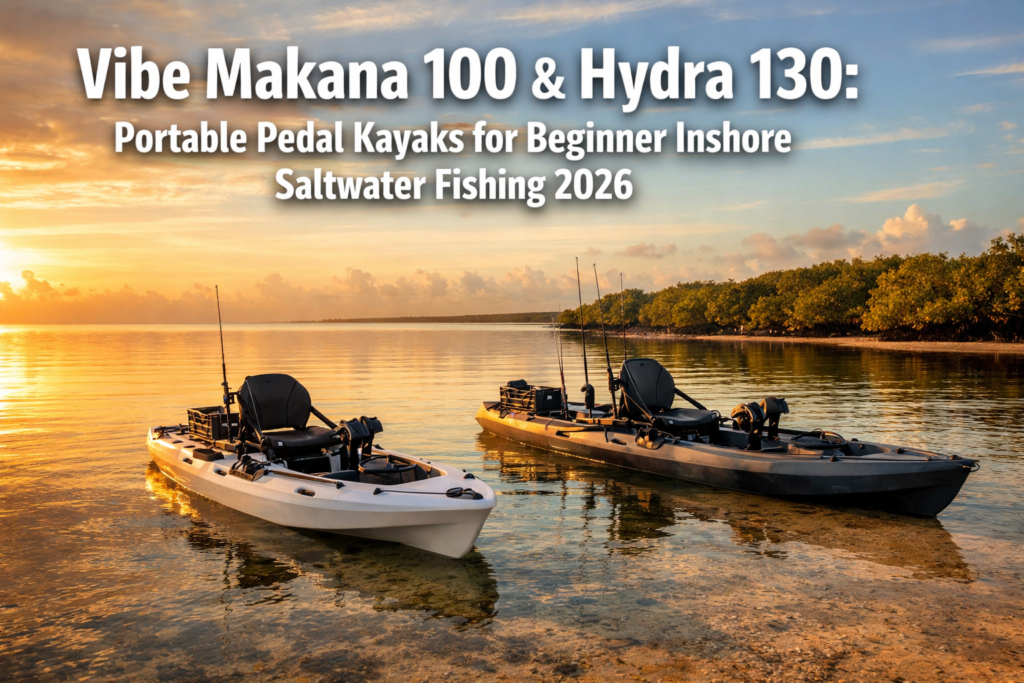
Quick Answer: The Vibe Makana 100 and Hydra 130 are two of the most accessible pedal and paddle kayaks for beginner inshore saltwater anglers in 2026. The Makana 100 weighs under 70 pounds, fits in a truck bed without a trailer, and delivers hands-free pedal fishing in shallow flats. The Hydra 130 trades pedal drive for a fast, tracking-optimized hull that handles tidal currents and coastal wind, earning the title of best overall ocean fishing kayak from Kayak Angler Magazine. Together, they cover the two most common beginner scenarios: shallow inshore flats fishing and open coastal water access.
Key Takeaways
- The Vibe Makana 100 is rated 90% for stability and 100% for maneuverability by Vibe Kayaks, making it a strong choice for beginners targeting shallow vegetation and inshore flats.
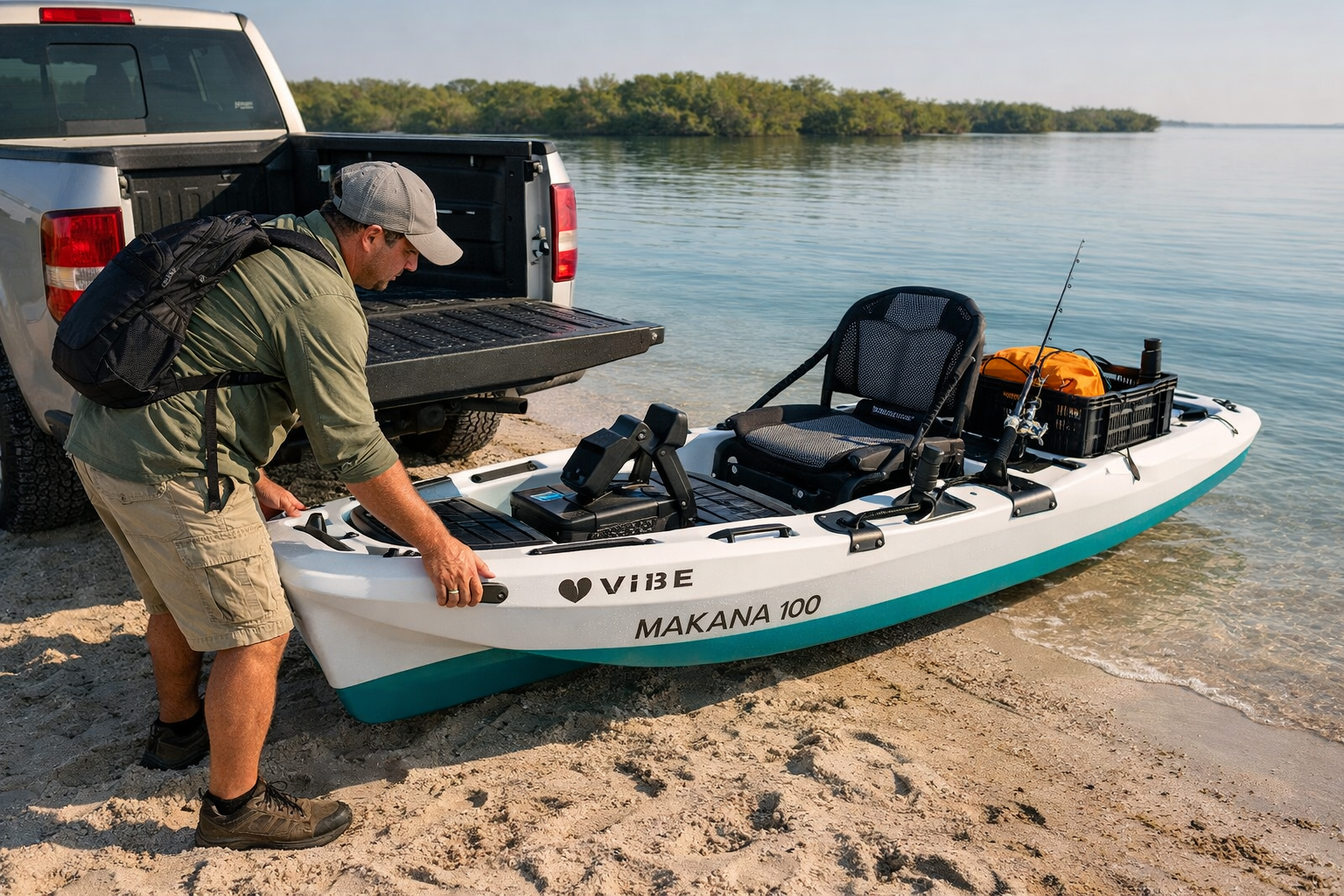
- The Makana 100 fits in a standard truck bed, eliminating the need for a trailer or roof rack, which solves a major access barrier for new anglers.
- The Hydra 130 is rated the best overall ocean fishing kayak for 2026 by Kayak Angler Magazine, with confirmed tracking performance in 15-knot winds and tidal currents.
- The Hydra 130 is currently out of stock on the Vibe Kayaks website, with restock targeted for April 16, 2026.
- The Makana 100 is priced at approximately $1,599 with the X Drive Impulse pedal drive, making it one of the most affordable pedal kayaks on the market.
- The Hydra 130 is priced at $1,199, undercutting most comparable ocean-ready kayaks while delivering competitive hull performance.
- Taller anglers or those who fish standing up should test the Makana 100 before buying, as independent testers rate its stability closer to 6.5 out of 10 in open water conditions.
- Both kayaks are built for saltwater exposure, but rinsing with fresh water after every session extends the life of pedal components and hardware significantly.
Why These Two Kayaks Make Sense for Beginners in 2026
The Vibe Makana 100 and Hydra 130 represent two different approaches to beginner inshore saltwater fishing, and both solve real problems that new anglers face. Most beginners do not own a trailer. Many do not have roof racks. The Makana 100 addresses this directly: it fits in a standard truck bed and weighs under 70 pounds, so one person handles transport and launch without help.
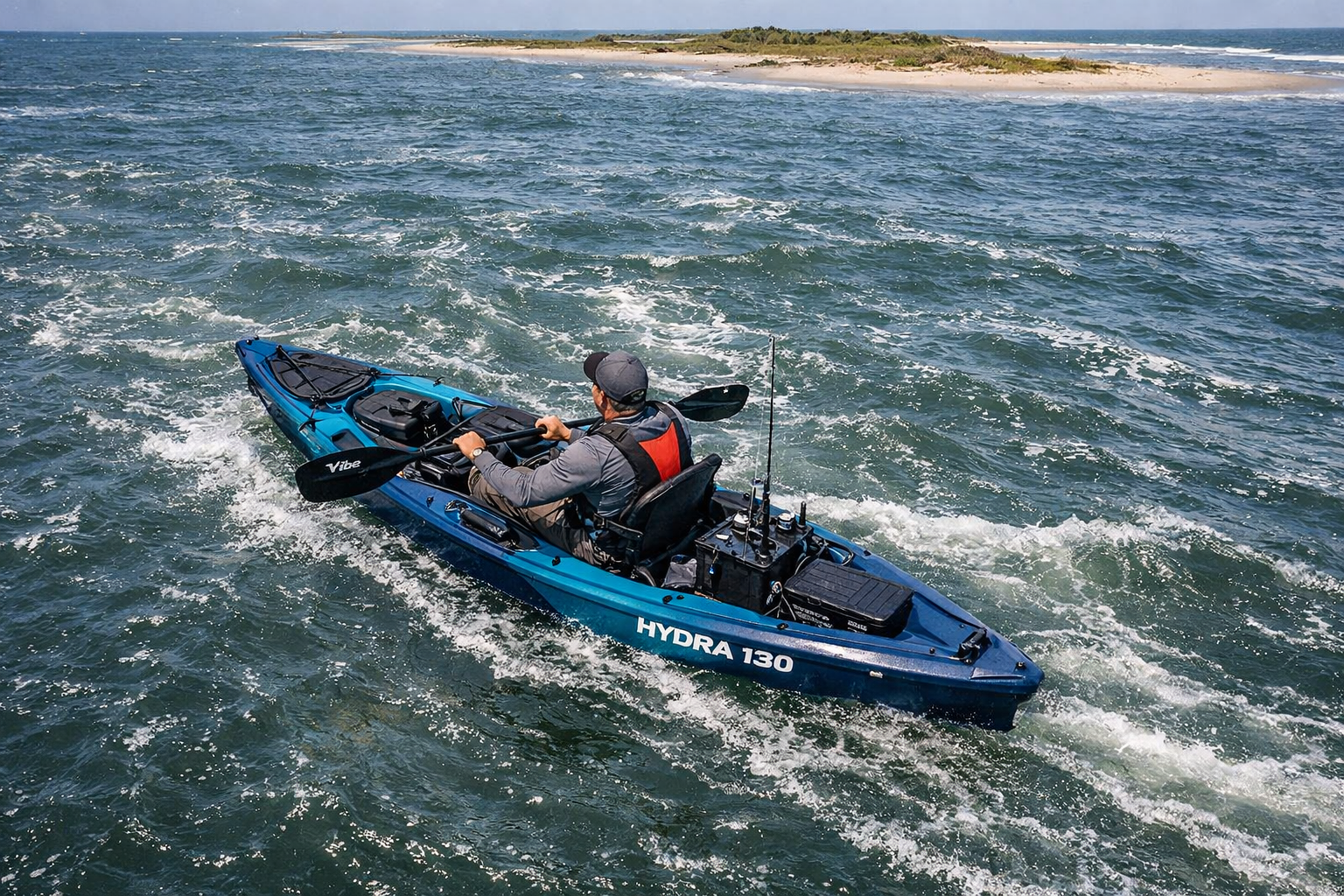
The Hydra 130 takes a different path. It prioritizes hull speed and tracking over pedal drive, giving beginners a stable, fast platform for open coastal water where wind and current are constant factors. Kayak Angler Magazine named it the best overall ocean fishing kayak for 2026 after testing its performance in 15-knot winds and tidal current conditions.
Choose the Makana 100 if your primary water is shallow inshore flats, backwater creeks, or grass beds where hands-free pedaling gives you a tactical edge. Choose the Hydra 130 if you plan to fish open bays, tidal channels, or coastal water where paddling efficiency and speed matter more than a pedal drive.
What Makes the Vibe Makana 100 Stand Out for Shallow Inshore Fishing
The Makana 100 is purpose-built for inshore fishing in tight, shallow spaces. It earns its reputation through three specific design choices that matter to beginners.
Portability without compromise. At under 70 pounds, the Makana 100 loads into a standard truck bed without a trailer. You drive to the ramp, lift it out, and launch. No registration hassle for a trailer. No backing a trailer into a crowded ramp. For anglers fishing solo, this is a significant practical advantage.
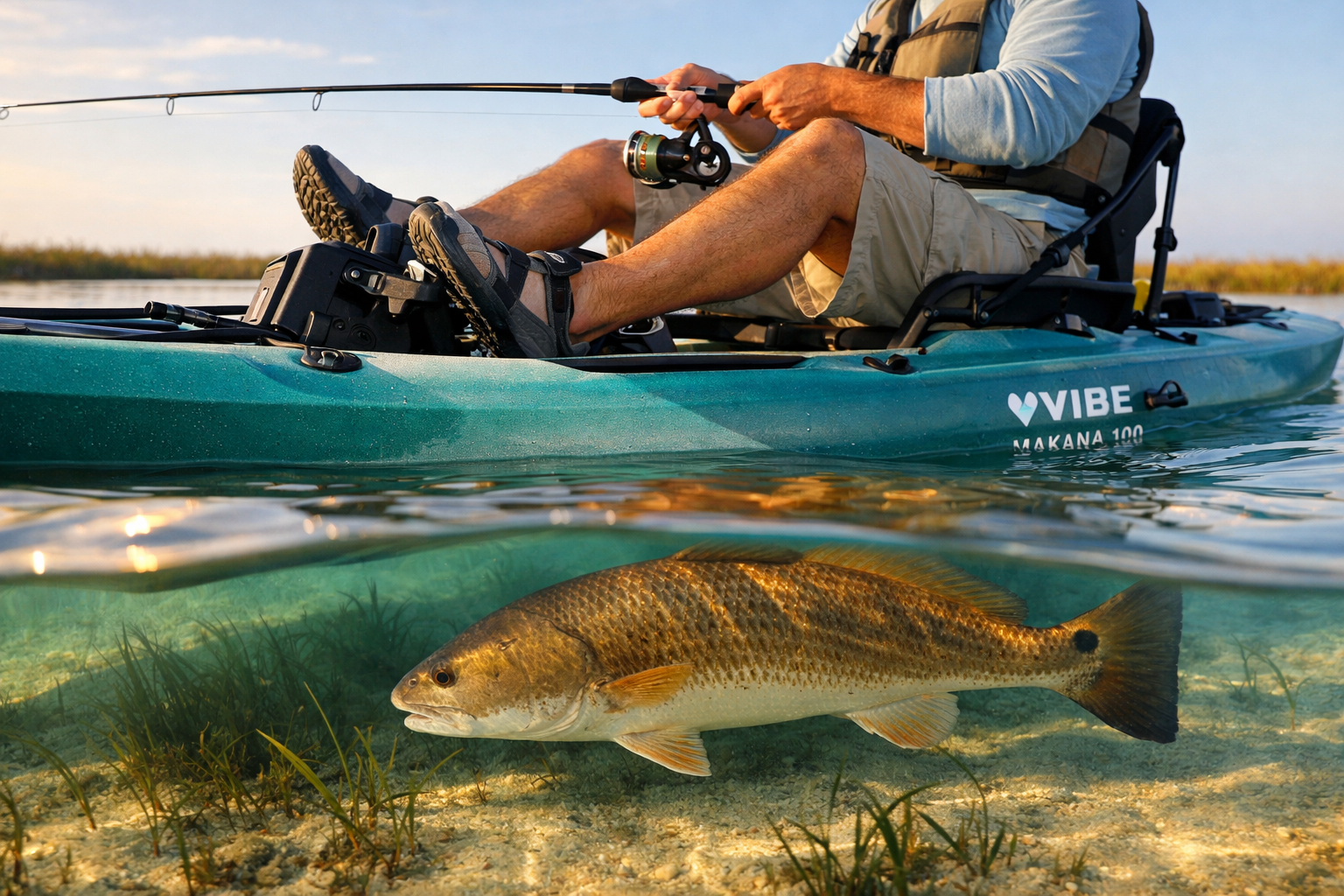
Pedal drive in a compact hull. The Makana 100 pairs with Vibe's X Drive Impulse pedal system, giving you hands-free propulsion in a 10-foot hull. That combination is rare. Most pedal kayaks run 12 to 14 feet. The shorter hull means you maneuver in vegetation, around dock pilings, and through shallow cuts that longer boats cannot access.
Beginner-appropriate stability. Vibe rates the Makana 100 at 90% stability, which reflects its wide, flat-bottomed hull design. Independent testers on YouTube rate it closer to 6.5 out of 10 in open water, which is an honest caveat. The Makana 100 performs best in calm, protected water. If you plan to fish exposed bays or stand up frequently, test it first.
Makana 100 Key Specs at a Glance:
| Spec | Detail |
|---|---|
| Length | 10 feet |
| Weight | Under 70 lbs |
| Weight Capacity | 375 lbs |
| Pedal Drive | X Drive Impulse (optional) |
| Price (with pedal) | ~$1,599 |
| Best For | Shallow flats, backwater, inshore |
[1][4][9]
How the Vibe Hydra 130 Performs in Coastal Saltwater Conditions
The Hydra 130 is the open-water counterpart to the Makana 100. Where the Makana prioritizes pedal efficiency in tight spaces, the Hydra prioritizes hull speed, tracking, and wind resistance in coastal environments.
Kayak Angler's Ric Burnley tested the Hydra 130 and noted that it bucks the current trend of high-seat, wide-hull stability platforms. Instead, the Hydra runs a low-profile seat and a sleek hull that rewards paddling efficiency. In 15-knot winds and tidal current, it tracked straight and maintained speed where wider hulls lose ground. [6]
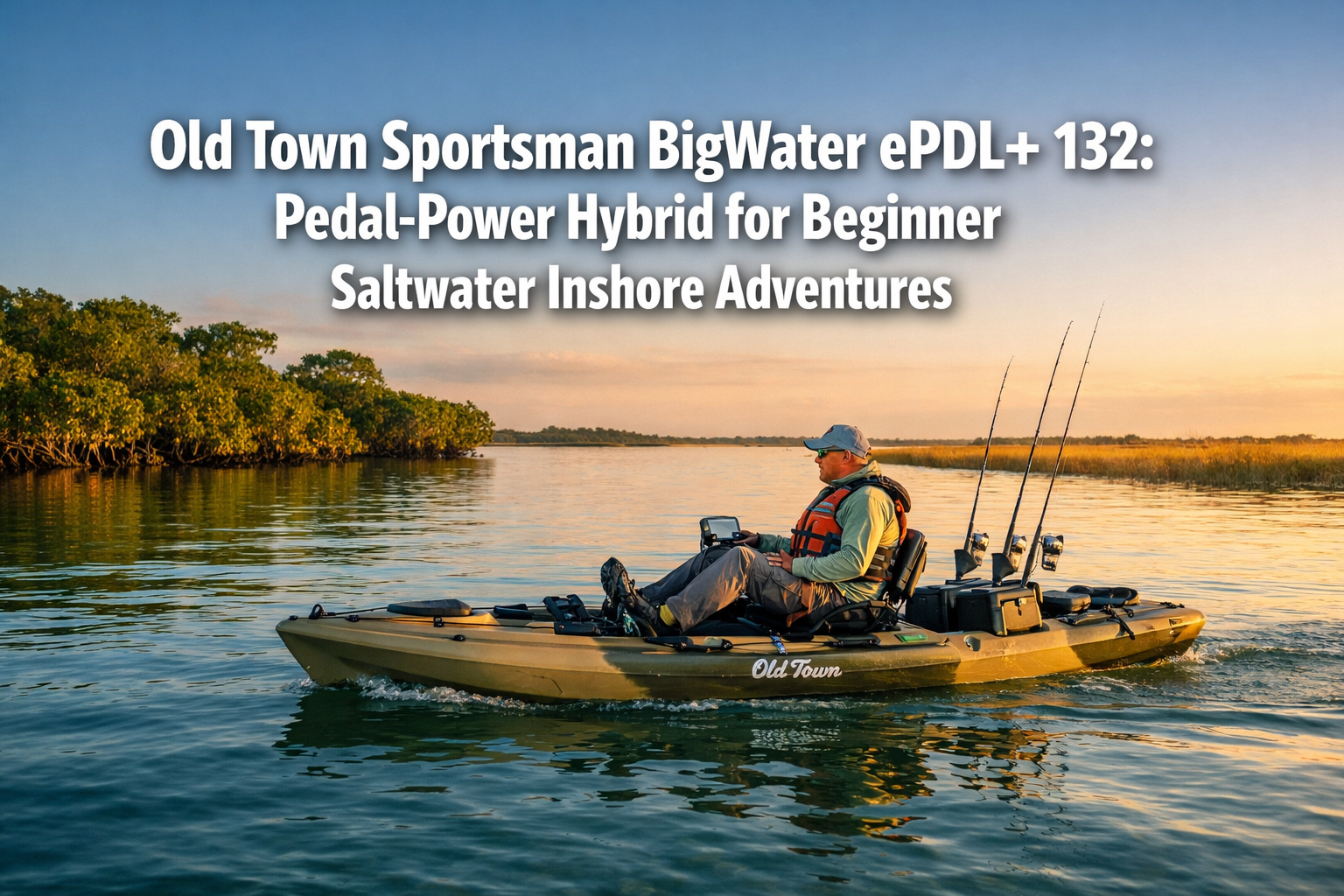
At $1,199, the Hydra 130 undercuts competitors like the Viking Profish Reload and the Old Town Sportsman BigWater ePDL+, both of which carry significantly higher price tags. The Hydra does not include a native pedal drive, which is the primary trade-off. For beginners who are comfortable paddling and want a fast, capable coastal platform, the value case is strong.
Hydra 130 Key Specs at a Glance:
| Spec | Detail |
|---|---|
| Length | 13 feet |
| Drive System | Paddle (no native pedal drive) |
| Price | $1,199 |
| Best For | Open bays, tidal channels, coastal water |
| Availability | Restock targeted April 16, 2026 |
| Kayak Angler Rating | Best Overall Ocean Fishing Kayak 2026 |
[6][10]
Vibe Makana 100 vs. Hydra 130: Which One Should You Buy?
The Vibe Makana 100 and Hydra 130 serve different anglers, and picking the wrong one creates frustration fast. Here is a direct decision framework.
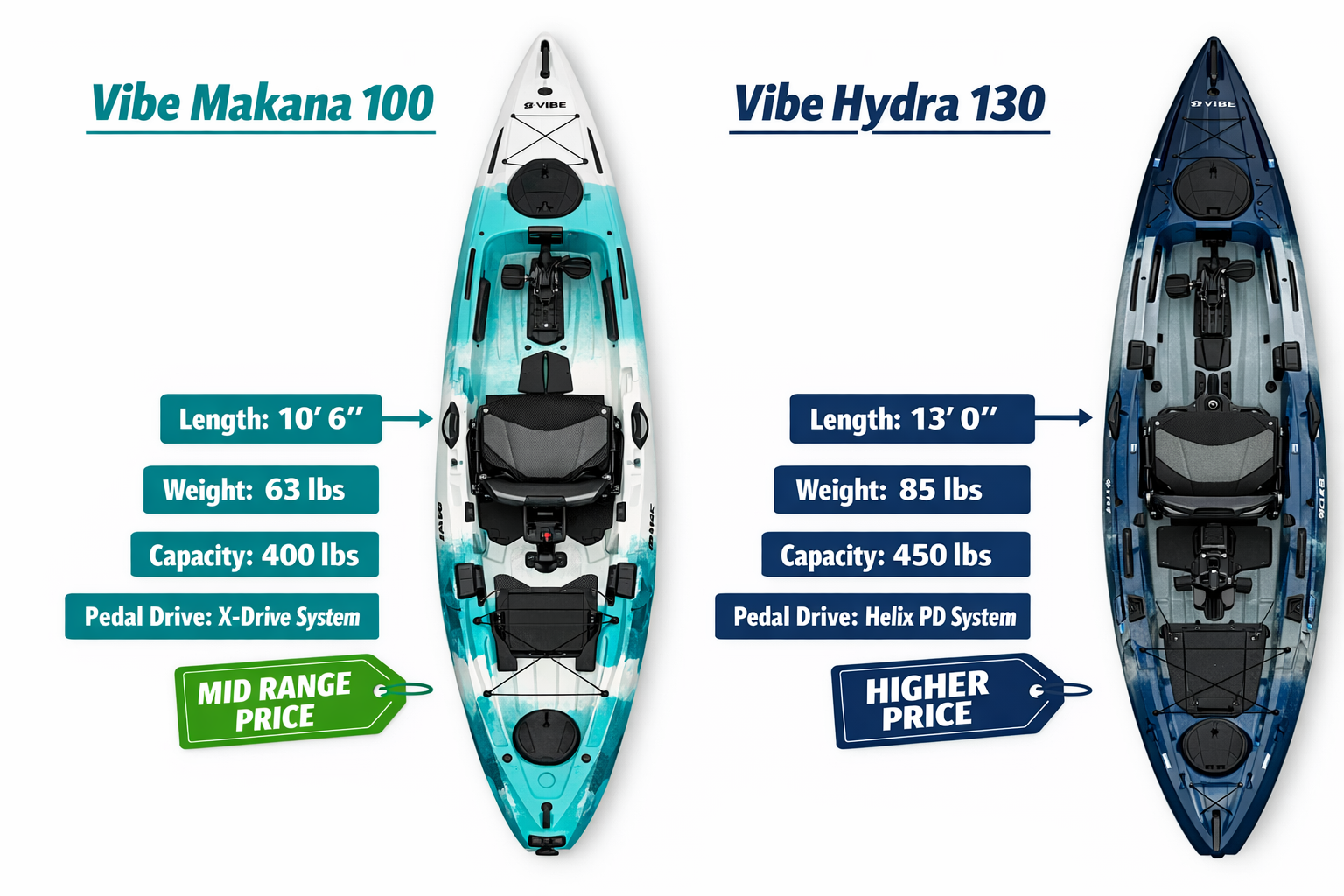
Choose the Makana 100 if:
- You fish shallow grass flats, mangrove edges, or backwater creeks
- You want hands-free pedal fishing to work lures without stopping
- You transport solo without a trailer or roof rack
- Your budget is around $1,599 and portability is the top priority
Choose the Hydra 130 if:
- You fish open bays, tidal channels, or barrier island coasts
- You prioritize speed and tracking over pedal drive
- You are comfortable paddling and want a fast, efficient hull
- Your budget is $1,199 and you accept the current out-of-stock wait until April 2026
The primary alternative to the Makana 100 is the Hobie Mirage Outback. The Hobie delivers a superior pedal system and more storage, but it costs over $3,000 and weighs significantly more, eliminating the truck-bed portability advantage that makes the Makana 100 practical for beginners without trailers.
Before you launch either kayak, get your rigging sorted. Read the complete guide to rigging a kayak for saltwater fishing to set up rod holders, anchor trolleys, and electronics mounts correctly from the start.
How to Set Up Either Kayak for Beginner Inshore Saltwater Fishing
Getting on the water is step one. Getting on the water with the right setup is what puts fish in the boat. Both the Makana 100 and Hydra 130 arrive with basic outfitting, but beginner inshore saltwater fishing demands a few additions.
Priority rigging steps for either kayak:
- Install a rod holder. Flush-mount or track-mount holders keep rods secure during transit and free your hands when pedaling or paddling.
- Add an anchor trolley. Tidal current moves fast in inshore environments. An anchor trolley lets you hold position without fighting the boat.
- Mount a fish finder. Even a basic unit reading depth and bottom composition changes your ability to locate fish. Position the transducer on the hull before your first trip.
- Attach a paddle leash. In wind or current, a dropped paddle becomes a problem fast. Leash it.
- Secure a VHF radio. Inshore saltwater fishing puts you in coastal water where weather changes quickly. A handheld VHF radio is non-negotiable safety gear.
- Add a crate or tank well storage. Both kayaks have rear tank wells. A milk crate or dedicated kayak crate organizes tackle and keeps gear accessible.
For location-specific planning, check out the best saltwater kayak fishing spots around Carolina Beach to identify inshore flats, creek mouths, and tidal channels that suit both kayak types.
After every saltwater session, rinse the entire kayak with fresh water. Pay specific attention to the pedal drive mechanism on the Makana 100. Salt buildup in the drive system causes corrosion and shortens component life. [9]
What Beginners Get Wrong About Pedal Kayak Fishing in Saltwater
Most beginner mistakes with pedal kayaks in saltwater come down to three areas: water selection, gear prep, and tidal awareness.
Water selection. The Makana 100 is a shallow-water pedal kayak. Taking it into open, exposed bays in wind above 10 knots pushes the hull beyond its comfort zone. Stick to protected flats, creek systems, and backwater until you build confidence and read the boat's limits.
Gear prep. Saltwater is corrosive. Every metal component on a pedal kayak, including drive pins, screws, and rod holder hardware, needs regular rinsing and occasional lubrication. Skipping this step after a few trips accelerates wear on a $1,599 investment.
Tidal awareness. Inshore saltwater fishing is tidal fishing. Launch on the wrong tide and you spend the session fighting current or stranded on a flat that drained while you were fishing. Check tide charts before every trip and plan your launch and return around tidal movement.
One practical tip on fish preservation: if you fish without a cooler, learn how to keep fish fresh after catching without ice to protect your catch on warm saltwater days.
The Market Context: Why Portable Pedal Kayaks Are Growing in 2026
The pedal kayak market was valued at $77.1 million in 2023 and is projected to reach $111.66 million by 2032, growing at a 4.2% compound annual growth rate driven by recreational fishing demand. That growth reflects a real shift in how anglers approach inshore fishing. Pedal drive systems free your hands for casting, fighting fish, and working lures, which translates directly to more productive time on the water.
Vibe Kayaks positions itself well within this market. The brand offers nine fishing kayaks with pedal options, giving anglers a range of hull sizes and price points. The Makana 100 sits at the compact, affordable end of the pedal spectrum. The Hydra 130 addresses the open-water segment without a pedal drive but at a price that removes the financial barrier for beginners.
For anglers comparing brands, Vibe's main competitor in the compact fishing kayak space is Crescent Kayaks. Crescent focuses on lighter, sheltered-water designs without open-water performers comparable to the Hydra 130. If open coastal water is your target, Vibe's lineup is the stronger choice at this price range.
Essential Safety Checklist Before Your First Inshore Saltwater Trip
Safety is the foundation of every successful trip. Both the Makana 100 and Hydra 130 are stable platforms, but saltwater environments add variables that beginners must prepare for before launching.
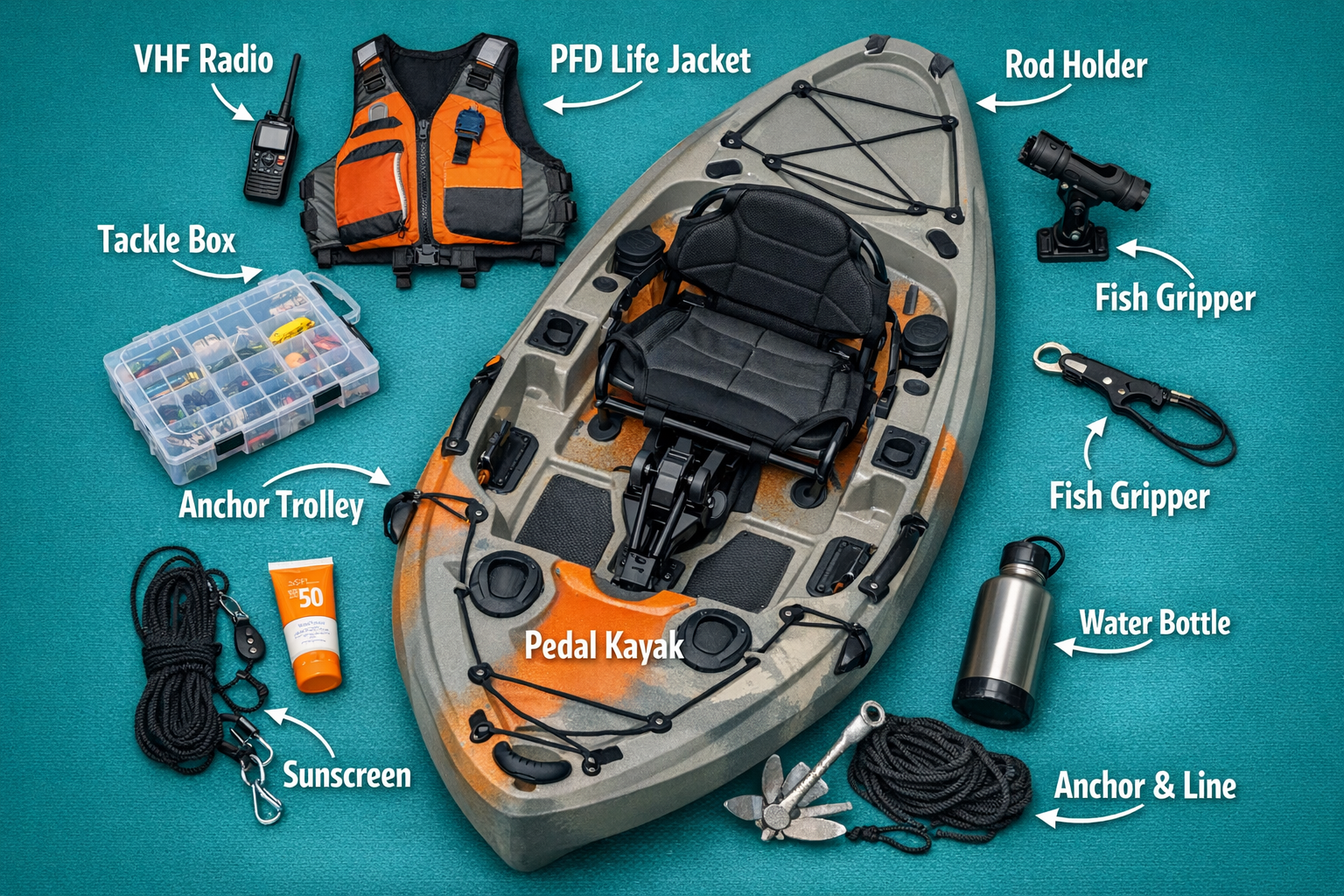
Pre-launch safety checklist:
- Wear your PFD at all times. Inshore saltwater water temperatures and tidal current make self-rescue difficult without a life jacket.
- File a float plan. Tell someone where you are launching, where you are fishing, and when you plan to return.
- Check the marine weather forecast. Wind speed and direction change conditions on inshore flats faster than most beginners expect.
- Carry a VHF radio or a charged phone in a waterproof case.
- Know the tidal window for your launch site. Confirm you have enough water depth for your pedal drive on the Makana 100 throughout your planned route.
- Bring sun protection. Saltwater flats reflect UV radiation intensely. Sunscreen, a buff, and polarized sunglasses are functional gear, not optional accessories.
- Carry drinking water. Dehydration on open water in warm conditions affects judgment and physical performance.
For more on water safety protocols, visit the survival and safety resources at FishOnYak.com.
Frequently Asked Questions
Is the Vibe Makana 100 good for beginners? Yes. Vibe rates it 90% for stability and 100% for maneuverability, and its compact size makes it easy to transport and launch without a trailer. It is best suited for calm, shallow inshore water rather than open, exposed bays.
Does the Makana 100 come with a pedal drive? The Makana 100 is available with the X Drive Impulse pedal drive. The pedal drive version is priced at approximately $1,599. Confirm current configurations directly with Vibe Kayaks or an authorized dealer.
Can the Makana 100 fit in a truck bed? Yes. The Makana 100 is 10 feet long and weighs under 70 pounds, which allows it to fit in a standard truck bed without a trailer or roof rack. This is one of its primary advantages for anglers without towing capability.
Is the Vibe Hydra 130 available to buy right now? As of March 2026, the Hydra 130 is listed as out of stock on the Vibe Kayaks website. Restock is targeted for April 16, 2026.
How does the Hydra 130 perform in wind? Kayak Angler Magazine tested the Hydra 130 in 15-knot winds and tidal current and confirmed strong tracking performance. Its low-profile seat and sleek hull design contribute to wind resistance compared to higher-seated, wider-hull competitors.
What is the weight capacity of the Makana 100? The Makana 100 has a weight capacity of 375 pounds, which accommodates most anglers with gear.
How does the Makana 100 compare to the Hobie Mirage Outback? The Hobie Mirage Outback delivers a superior pedal system and more storage, but it costs over $3,000 and is significantly heavier, eliminating the truck-bed portability that makes the Makana 100 practical for beginners without trailers.
Is the Hydra 130 a pedal kayak? No. The Hydra 130 is a paddle kayak. It does not include a native pedal drive system. Its advantage is hull speed, tracking, and value at $1,199 for coastal and open-water inshore fishing.
What saltwater species can beginners target from these kayaks? Both kayaks are well-suited for common inshore saltwater targets including redfish, speckled trout, flounder, and snook, depending on your region. The Makana 100 excels in shallow grass flats and backwater. The Hydra 130 handles open bays and tidal channels where larger species roam.
Do I need to rinse these kayaks after saltwater use? Yes. Rinse both kayaks with fresh water after every saltwater session. For the Makana 100, pay specific attention to the pedal drive mechanism. Salt corrosion on drive components is the most common cause of premature wear on pedal kayaks.
What is the price difference between the two kayaks? The Makana 100 with pedal drive is approximately $1,599. The Hydra 130 is $1,199. The Hydra 130 is the lower-cost option but does not include pedal drive capability.
Which kayak is better for fishing without a truck? The Makana 100 is specifically designed for truck-bed transport, but its 70-pound weight makes it manageable for two people with a car-top carrier as well. The Hydra 130 at 13 feet is harder to transport without a truck or trailer.
Conclusion
The Vibe Makana 100 and Hydra 130 are practical, well-priced entry points for beginners who want to fish inshore saltwater from a kayak in 2026. The Makana 100 solves the portability problem with a compact, pedal-ready hull that fits in a truck bed and performs well in shallow flats. The Hydra 130 delivers coastal performance and wind-tracking capability at a price that removes the financial barrier most beginners face.
Pick the Makana 100 if you fish shallow, protected water and want hands-free pedaling from day one. Pick the Hydra 130 if you target open bays and tidal channels and prioritize hull speed over a pedal drive. If you are waiting on the Hydra 130, use that time to get your rigging dialed in with the complete kayak saltwater rigging guide and scout your local inshore fishing spots before your first launch.
Get the gear right. Learn the tides. Respect the water.
Kayak. Drill. Catch. Repeat.
See you on the water.
References
[1] Vibe Makana 100 – https://kayakanglermag.com/boats/kayaks/vibe-makana-100/
[2] Vibe Kayaks – https://kayakanglermag.com/boats/kayaks/vibe-kayaks/
[3] 59 16 Vibe Makana 100 – https://buyersguide.paddlingmag.com/brand/vibe-kayaks/product/59-16-vibe-makana-100
[4] Vibe Hydra 130 – https://kayakanglermag.com/boats/kayaks/vibe-hydra-130/
[5] Makana 100 X Drive Impulse Drive – https://vibekayaks.com/products/makana-100-x-drive-impulse-drive
[6] Vibe Hydra 130 – https://vibekayaks.com/products/vibe-hydra-130