Last updated: March 3, 2026
Key Takeaways
- Gore-Tex completed its transition to PFAS-free ePE (expanded polyethylene) membranes by end of 2025, setting a new baseline for the industry.
- Hydrophilic PU membranes resist fish oils and salt better than pore-based options, making them a strong choice for anglers who handle bait and tackle constantly.
- eVent membranes use direct venting to move moisture faster than hydrophilic systems, which matters during high-exertion activities like drilling holes and hauling gear.
- Pertex Shield delivers Gore-Tex-level breathability at lighter weights, though with reduced abrasion resistance.
- Proprietary brand membranes from companies like Grundens and WindRider match 15,000+ MVTR breathability at $100 to $200 less than Gore-Tex equivalents.
- Condensation inside your jacket remains the biggest comfort problem on the ice, and membrane choice directly affects how much moisture builds up during static fishing periods.
- PFAS-free construction is now standard across premium membranes in 2026, removing environmental concerns that plagued older ePTFE fabrics.
Quick Answer
Waterproof breathable membranes in ice fishing jackets have moved well beyond Gore-Tex in 2026. Several alternatives, including eVent, hydrophilic PU laminates, Pertex Shield, and brand-specific proprietary membranes, now offer comparable or better performance for ice anglers at lower price points. The right membrane for you depends on whether you spend more time actively drilling and moving or sitting still over a hole, because breathability demands change with your activity level.
Why Are Anglers Looking Beyond Gore-Tex for Ice Fishing Jackets?
Gore-Tex dominated waterproof breathable outerwear for decades. The brand became shorthand for “waterproof jacket.” But the ice fishing environment creates specific challenges that Gore-Tex was never originally designed to solve.
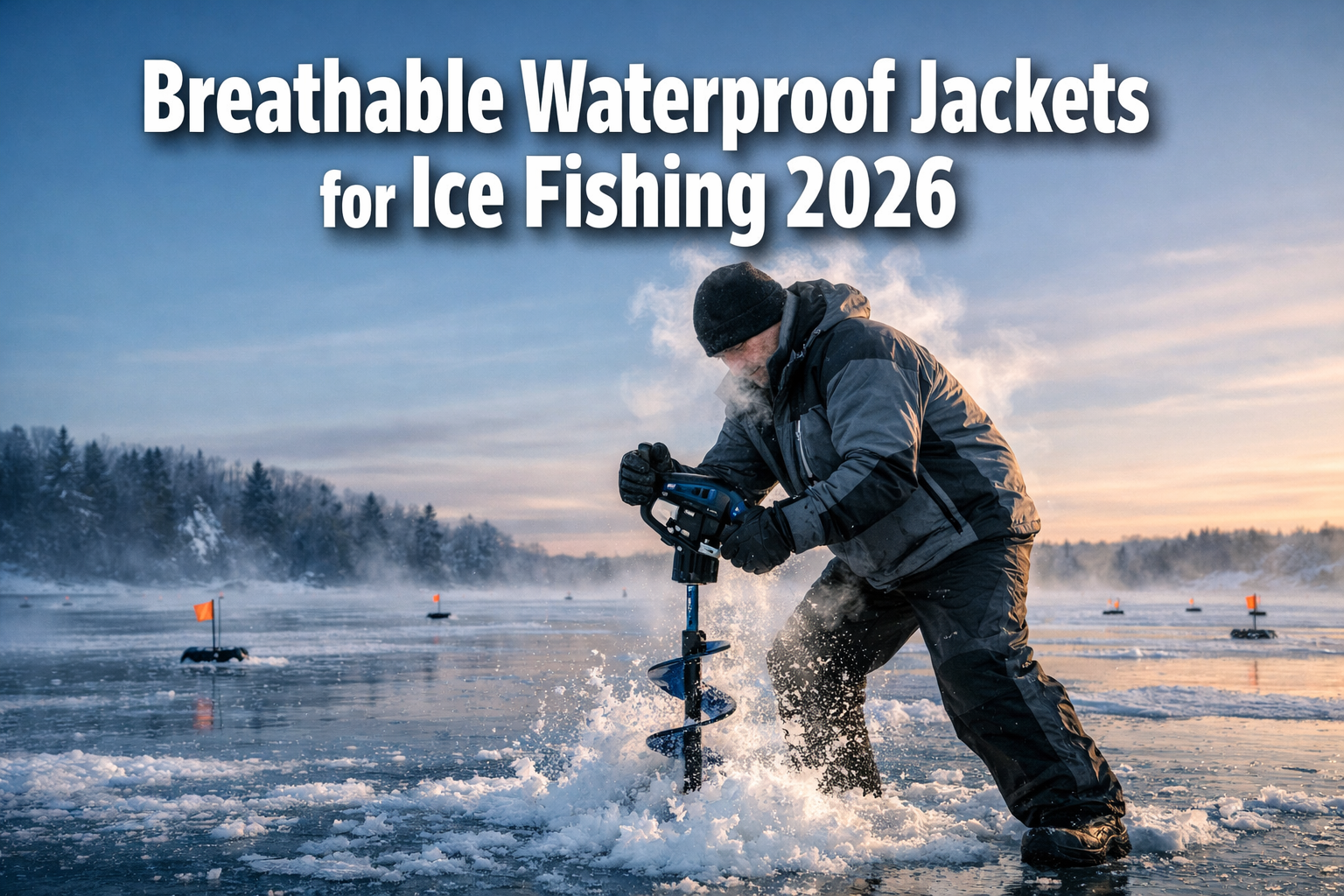
Ice fishing demands a different balance. You alternate between bursts of heavy exertion (augering holes, hauling sleds, setting up shelters) and long periods of sitting still in sub-zero temperatures. This cycle creates a condensation problem. During exertion, your body produces moisture. During rest, that moisture cools and condenses inside your jacket. A membrane that handles one phase well often struggles with the other.
Gore-Tex's 2025 transition to ePE membranes improved weight and reduced crinkle noise, and field tests confirm equivalent waterproofing and breathability to the prior ePTFE versions [8]. But the premium price tag, often $100 to $200 more than alternatives, pushes many anglers to explore other options that perform equally well in fishing-specific conditions.
Three factors drive the shift away from Gore-Tex exclusivity:
- Cost. Proprietary membranes deliver 15,000+ MVTR (moisture vapor transmission rate) at significantly lower retail prices.
- Fish oil and salt resistance. Hydrophilic PU membranes handle contamination from bait, blood, and salt without pore clogging.
- Specialized ice fishing design. Brands like Ice Runner build float suits with breathable laminates engineered for the specific demands of hardwater fishing.
For the multi-season adventurer transitioning from saltwater kayak fishing to ice, understanding these membrane differences helps you pick gear that performs across both environments. Check out the FishOnYak blog for more on bridging the gap between these disciplines.
How Do Waterproof Breathable Membranes in Ice Fishing Jackets Work?
Every waterproof breathable membrane does the same basic job: block liquid water from entering while allowing water vapor (sweat) to escape. The differences come down to how each membrane accomplishes this task.
Two main approaches exist:
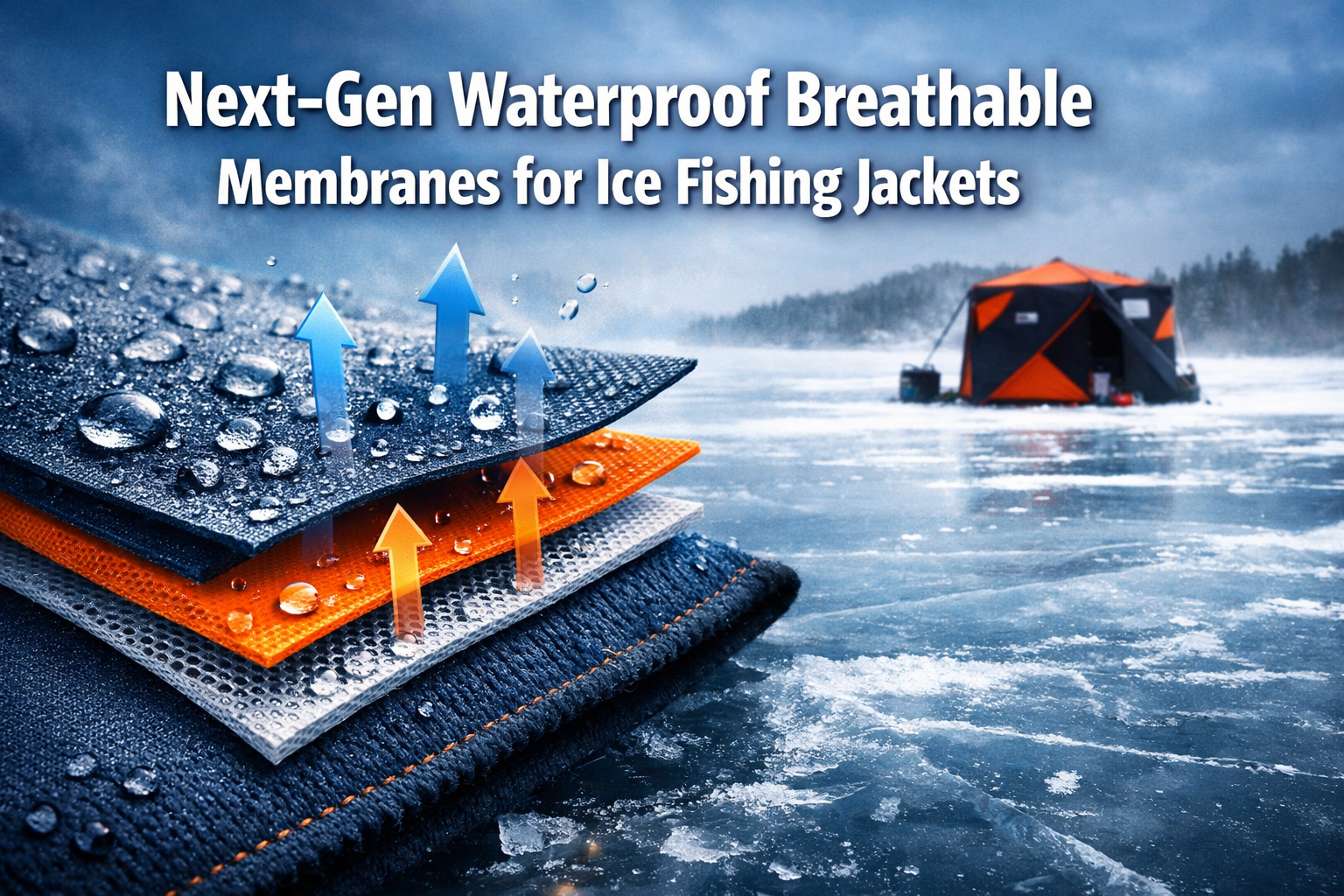
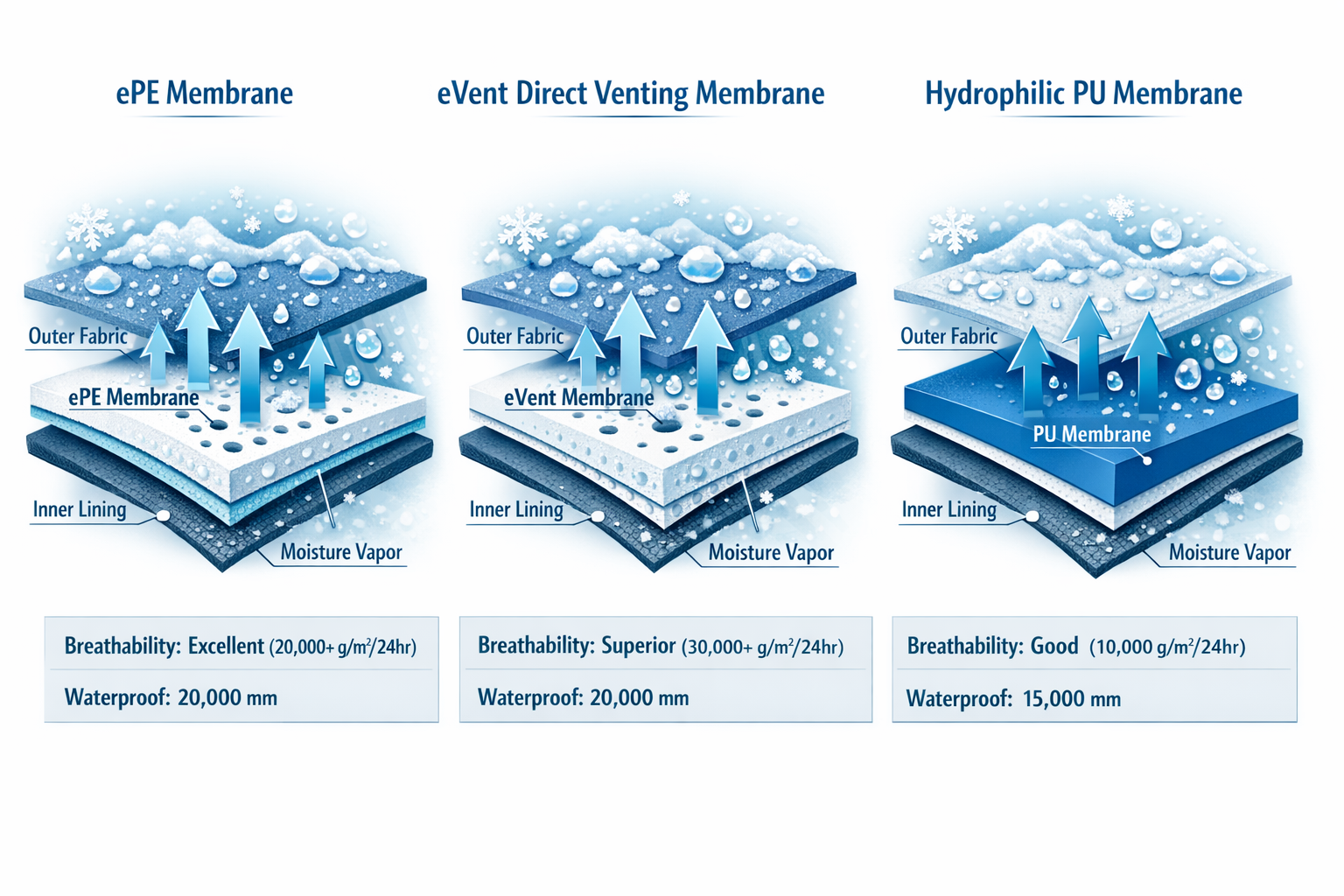
1. Microporous membranes contain billions of tiny pores. Each pore is too small for a water droplet to pass through but large enough for a water vapor molecule to escape. Gore-Tex ePE and eVent both use this approach.
2. Hydrophilic (solid film) membranes have no pores at all. They move moisture through a chemical process. The membrane absorbs water vapor on the warm inside surface, transports the molecules through the solid film, and releases them on the cooler outside. Many proprietary fishing membranes use this method.
| Feature | Microporous (ePE, eVent) | Hydrophilic (PU Film) |
|---|---|---|
| How moisture moves | Through physical pores | Through chemical absorption |
| Speed of moisture transfer | Fast (especially eVent) | Moderate, depends on temperature gradient |
| Contamination resistance | Pores can clog with oils/dirt | No pores to clog |
| Cold weather performance | Pores can frost over in extreme cold | Slows down when temp gradient is small |
| Durability | High (ePE, Gore-Tex Pro) | Varies by manufacturer |
| Typical MVTR | 15,000 to 28,000+ g/m2/24h | 10,000 to 20,000 g/m2/24h |
The key insight for ice anglers: No membrane fully prevents condensation during static fishing in extreme cold. Andrew Skurka and other outdoor gear analysts have noted that even premium shells produce some internal moisture when you're stationary. Choose your membrane based on how you fish, not on marketing claims alone.
What Are the Best Alternatives to Gore-Tex for Ice Fishing in 2026?
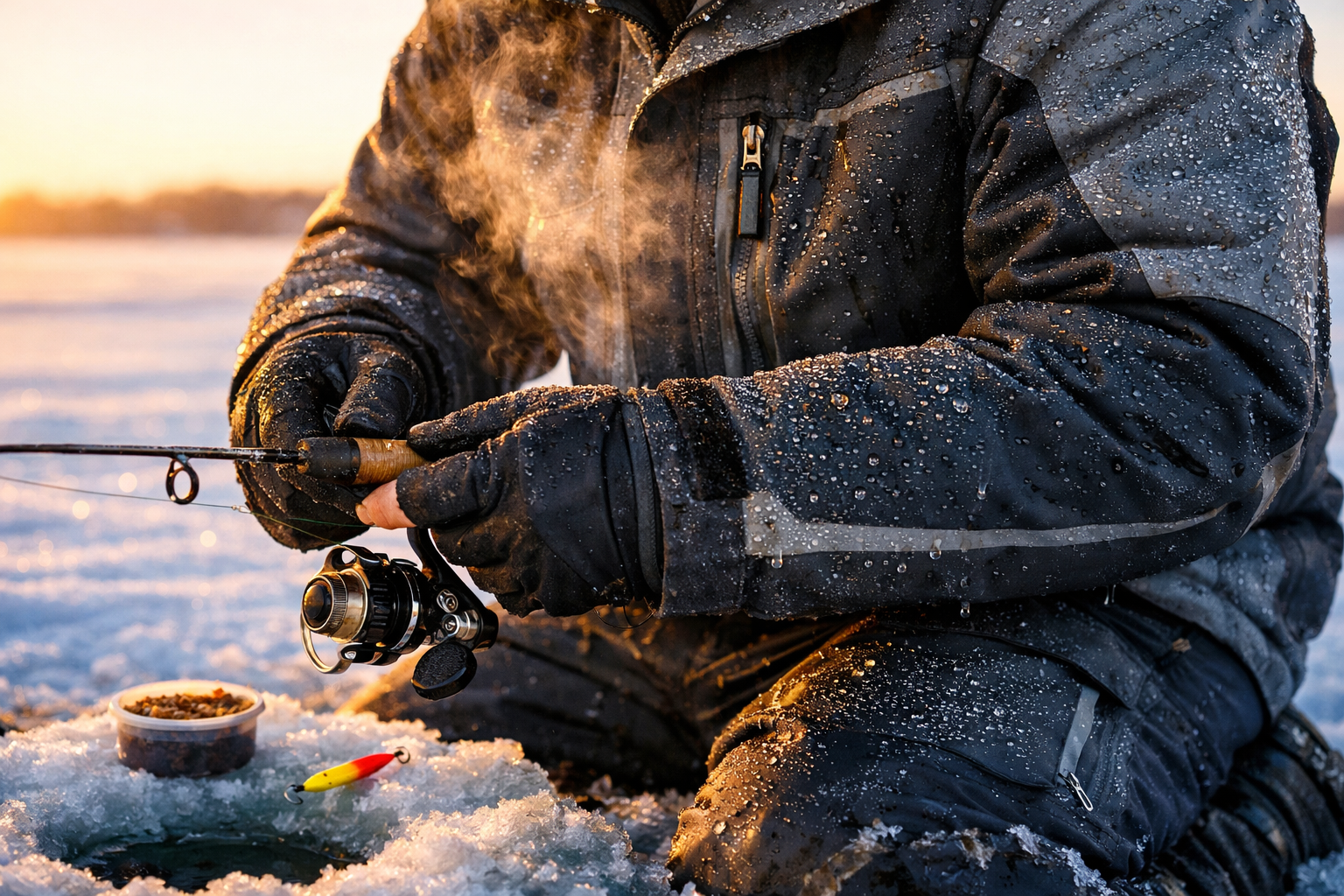
Several membrane technologies now compete directly with Gore-Tex for ice fishing applications. Each has specific strengths that suit different fishing styles.
eVent (Direct Venting Technology)
eVent uses a microporous structure similar to Gore-Tex but skips the hydrophilic PU layer that Gore-Tex places over its pores. The result: moisture vapor passes directly through the membrane without the delay caused by absorption and release. Reviewers have praised eVent for faster moisture escape during high-exertion activities, making the fabric well suited for anglers who drill multiple holes and move frequently across the ice.
Choose eVent if: You fish actively, move between spots often, and prioritize immediate breathability over long-term durability.
Common mistake: eVent's direct venting design means the membrane's DWR (durable water repellent) finish on the face fabric matters more. When the DWR wears off, the face fabric wets out and blocks the pores. Reapply DWR treatment every season.
Hydrophilic PU Laminates (Proprietary Brand Membranes)
WindRider and other fishing-specific brands use hydrophilic polyurethane membranes that resist contamination from fish oils, blood, and saltwater. Because these membranes have no pores, they don't clog the way microporous options do. For anglers who handle bait constantly, this is a significant advantage.
Grundens builds fishing jackets with proprietary waterproof breathable laminates designed for marine environments. These same properties translate well to ice fishing, where you encounter moisture from snow, slush, and the hole itself.
Choose hydrophilic PU if: You handle bait and fish frequently, fish in wet/slushy conditions, or want lower maintenance gear.
Pertex Shield
Pertex Shield offers breathability comparable to Gore-Tex at lighter weights. The membrane is thinner and more packable, which appeals to anglers who hike to remote ice fishing spots or need to layer efficiently. The tradeoff is reduced abrasion resistance. Pertex Shield works best when your jacket won't contact rough surfaces like ice auger handles or sled edges repeatedly.
Choose Pertex Shield if: You prioritize light weight and packability, fish in moderate cold rather than extreme conditions, and treat your gear carefully.
Gore-Tex ePE (The New Standard)
Gore-Tex itself has changed. The full transition to PFAS-free ePE membranes completed by end of 2025 [8]. The new material is lighter, less crinkly, and environmentally cleaner than the old ePTFE version. Field tests in ski applications confirm equivalent waterproofing and breathability, with the Pro line reaching 28,000+ g/m2/24h MVTR [8]. Patagonia's 2026 SnowDrifter jacket uses 100% recycled, PFAS-free Gore-Tex ePE, signaling crossover potential for ice fishing outerwear.
Choose Gore-Tex ePE if: You want the proven brand name, plan to use the jacket across multiple sports and seasons, and don't mind paying the premium.
How Do Waterproof Breathable Membranes in Ice Fishing Jackets Handle Condensation?
Condensation is the number one comfort complaint among ice anglers. Understanding why helps you manage the problem regardless of which membrane you choose.
Why condensation happens on the ice: When you sit still over a hole, your body temperature drops. The temperature difference between the inside and outside of your jacket shrinks. Every membrane, whether microporous or hydrophilic, relies on this temperature gradient to drive moisture outward. When the gradient flattens, moisture transfer slows. Sweat accumulates on the inside of your jacket.
Practical steps to reduce condensation:
- Vent your jacket during active phases (drilling, walking, setting up). Open pit zips, chest vents, or the main zipper to dump excess heat and moisture before you sit down.
- Layer with moisture-wicking base layers that pull sweat away from your skin. The membrane handles vapor, but liquid sweat pooling against your skin creates cold spots.
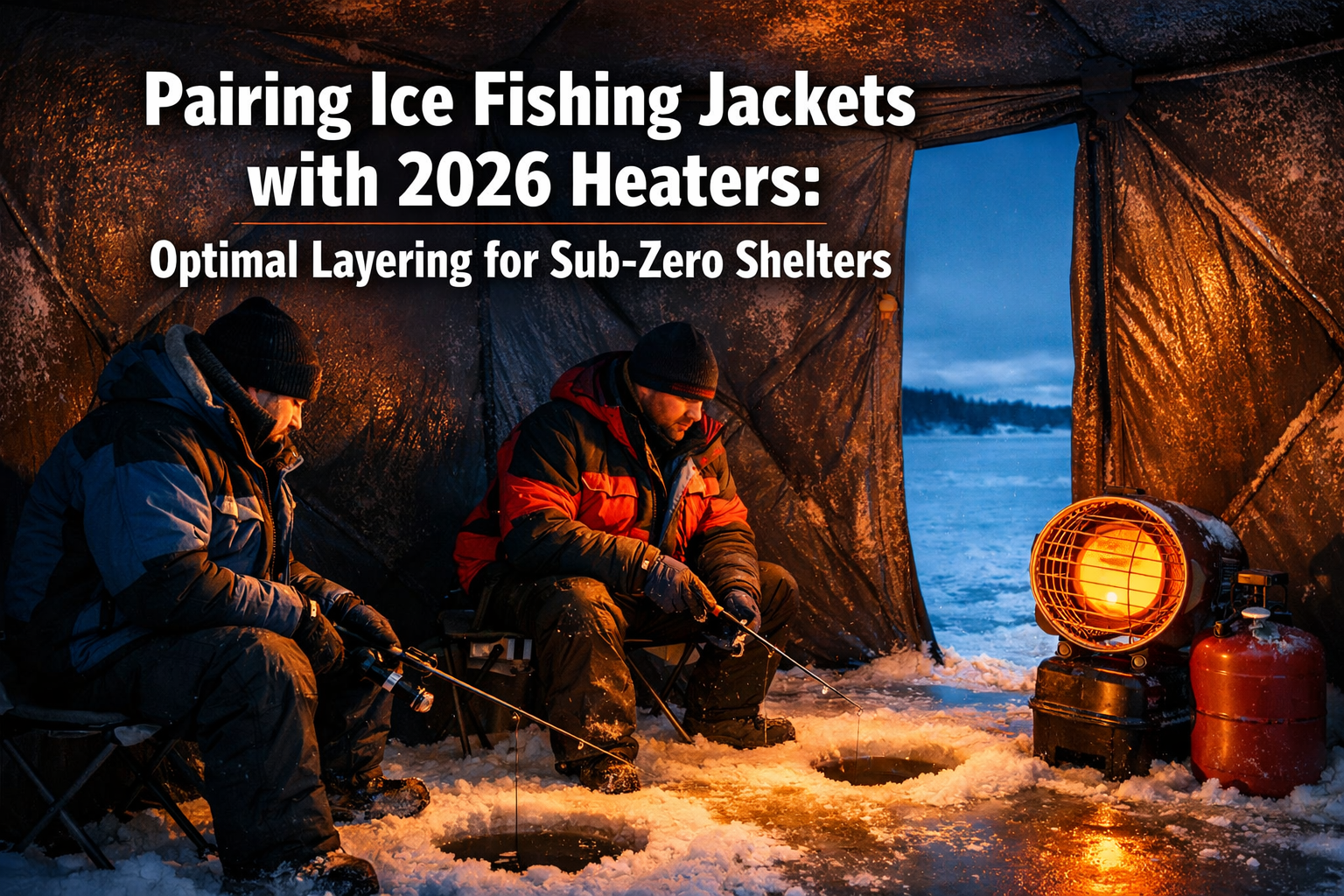
- Remove your jacket briefly when entering a heated shelter. The rapid temperature change causes a burst of condensation inside the jacket. Let the moisture escape before putting the jacket back on.
- Choose a membrane with higher MVTR ratings if you run hot. Anything above 15,000 g/m2/24h provides adequate breathability for most ice fishing scenarios.
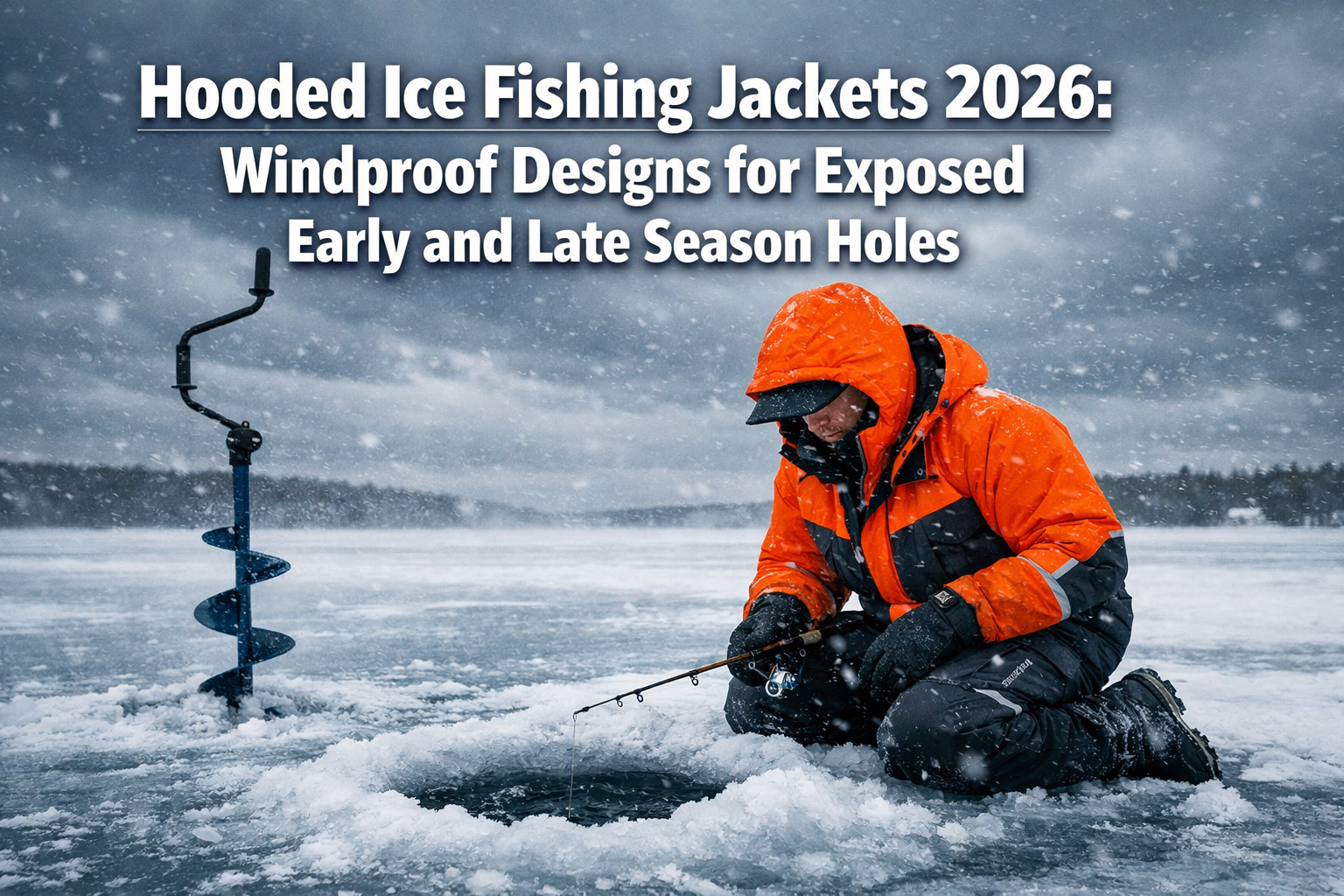
Edge case: In extreme cold below minus 20 degrees Fahrenheit, microporous membranes face frost buildup inside the pores. Hydrophilic membranes slow down because the chemical transfer process depends on warmth. Neither system works perfectly at these temperatures. Add a vapor barrier liner closest to your skin to trap moisture before reaching the membrane. This approach sounds counterintuitive, but keeps your insulation dry.
For those of you who also fish from kayaks in cold weather, these same layering principles apply. Visit the FishOnYak homepage for resources on cold-weather kayak fishing preparation.
What Should You Look for When Buying an Ice Fishing Jacket in 2026?
Focus on five measurable specs when comparing waterproof breathable membranes in ice fishing jackets. Marketing language varies between brands, but these numbers tell the real story.
1. Waterproof Rating (mm) Minimum 10,000mm for ice fishing. You encounter snow, slush, and spray from drilling. A 20,000mm rating provides extra margin for kneeling on wet ice or falling.
2. MVTR / Breathability (g/m2/24h) Look for 15,000+ g/m2/24h as a baseline. Higher numbers (20,000+) matter if you fish actively. Static anglers who sit in shelters benefit less from extreme breathability ratings.
3. Seam Construction Fully taped seams are non-negotiable. Welded seams outperform glued seams for longevity. Check the seam tape at zippers, shoulder joints, and hood attachment points, as these are the first failure points.
4. DWR Treatment PFAS-free DWR coatings are now standard across premium brands. These treatments cause water to bead and roll off the face fabric. Without functioning DWR, even the best membrane underperforms because a wet face fabric blocks vapor transfer.
5. Float Capability Ice fishing float suits integrate buoyancy into the jacket and bibs. Ice Runner's float suits use breathable laminates that maintain comfort while providing life-saving flotation if you break through. This feature adds cost but addresses the most serious risk on the ice. The FishOnYak team emphasizes Fluid Safety as a core principle, and float capability is the most direct application of that concept.
| Spec | Budget Jacket | Mid-Range Jacket | Premium Jacket |
|---|---|---|---|
| Waterproof Rating | 5,000-10,000mm | 10,000-20,000mm | 20,000mm+ |
| Breathability (MVTR) | 5,000-10,000 | 10,000-20,000 | 20,000-28,000+ |
| Membrane Type | Basic PU coating | Proprietary PU laminate | Gore-Tex ePE or eVent |
| Seam Construction | Critically taped | Fully taped | Welded + taped |
| Typical Price | $75-$150 | $150-$350 | $350-$600+ |
| Float Capability | No | Some models | Select models |
Are PFAS-Free Membranes as Good as the Old Versions?
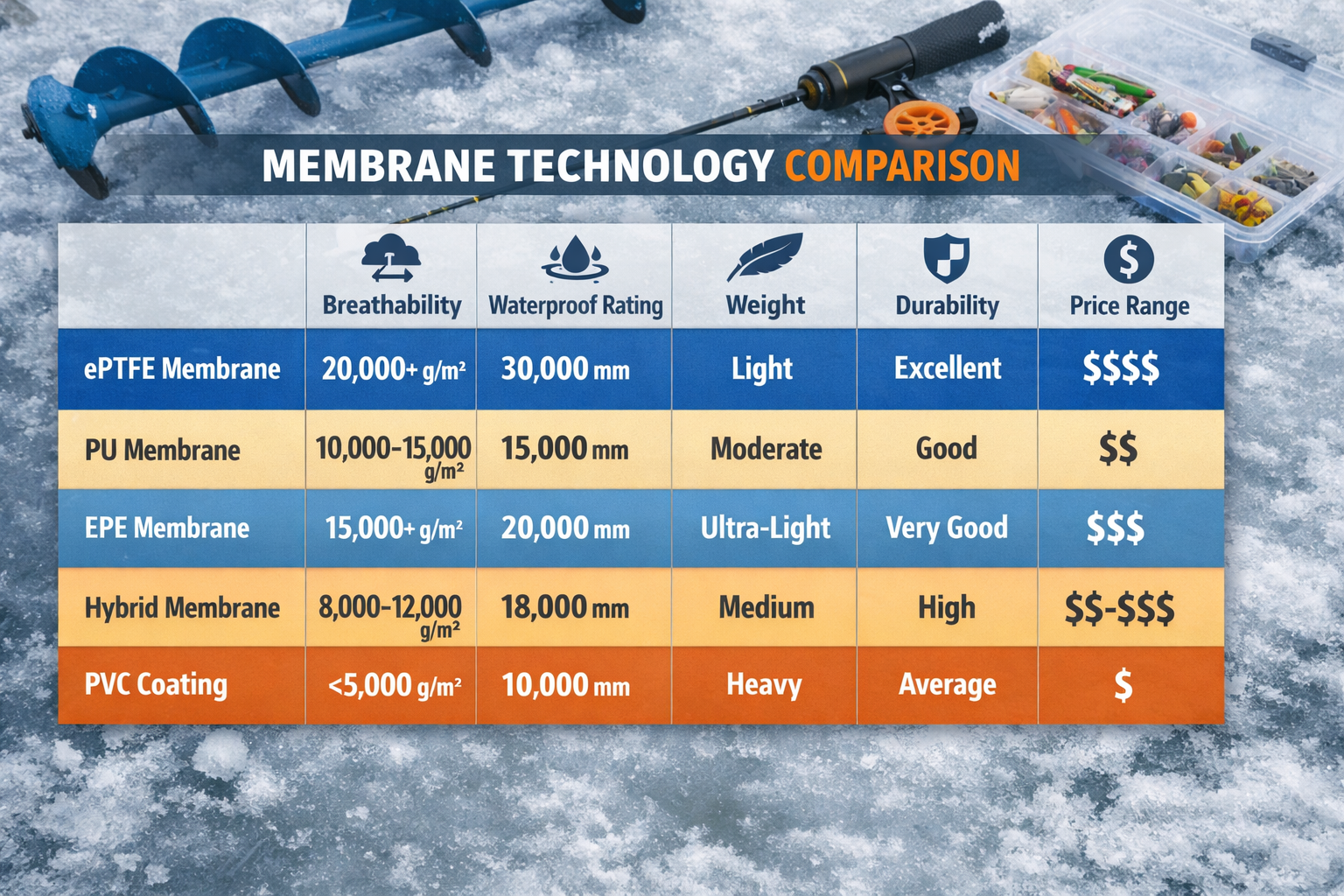
Yes. Field testing of Gore-Tex's new ePE membrane confirms equivalent waterproofing and breathability compared to the prior ePTFE versions. The transition away from PFAS (per- and polyfluoroalkyl substances, often called “forever chemicals”) does not require a performance sacrifice in 2026.
What changed: PFAS chemicals made older membranes and DWR treatments highly effective at repelling water and oil. But these chemicals persist in the environment indefinitely and accumulate in water systems. Regulatory pressure and consumer demand pushed manufacturers to find alternatives.
What stayed the same: Waterproof ratings, breathability numbers, and durability in the new PFAS-free membranes match or exceed previous generations. Gore-Tex's ePE membrane is lighter and produces less noise than the old ePTFE version [8]. Patagonia's adoption of 100% recycled, PFAS-free Gore-Tex in their 2026 ski line demonstrates that sustainability and performance now coexist.
What to watch for: Budget jackets sometimes use older PFAS-based DWR treatments on the face fabric even when the membrane itself is PFAS-free. Check the full product spec sheet, not the headline claim. Look for “PFAS-free DWR” specifically.
For anglers who care about the waters they fish, PFAS-free gear is a practical step toward protecting the lakes and rivers you depend on. Kayak. Drill. Catch. Repeat, but leave the water cleaner than you found it.
How Do Ice Fishing Membrane Needs Differ from Other Outdoor Sports?
Ice fishing creates a unique combination of demands that separates membrane requirements from skiing, hiking, or general outdoor use.
Static vs. dynamic activity. Skiers and hikers maintain consistent exertion levels. Ice anglers alternate between high output and near-zero movement. This stop-start pattern stresses any membrane's ability to manage moisture.
Contamination exposure. Fish blood, bait oils, and saltwater (on coastal ice) contaminate jacket surfaces. Microporous membranes lose breathability when oils clog the pores. Hydrophilic PU membranes handle this contamination better because they have no pores to block.
Abrasion patterns. Ice anglers kneel on rough ice, lean against sled rails, and handle sharp equipment. Sleeve cuffs, forearms, and knees take heavy wear. A lighter membrane like Pertex Shield wears through faster in these areas than a Gore-Tex Pro laminate.
Temperature extremes. Ice fishing routinely happens at temperatures where skiing would be cancelled. Membrane performance drops in extreme cold regardless of technology. The temperature gradient that drives moisture transfer shrinks as ambient temperatures fall further below your body temperature plateau.
Decision rule: If you fish from a heated shelter and step outside primarily to check lines, a mid-range hydrophilic PU jacket provides adequate protection at a reasonable price [4]. If you run-and-gun across open ice, drilling new holes every 30 minutes, invest in a high-MVTR microporous membrane like eVent or Gore-Tex ePE Performance.
Browse the FishOnYak blog for more tactical gear breakdowns that help you match equipment to your specific fishing style.
Conclusion
Waterproof breathable membranes in ice fishing jackets have progressed significantly beyond Gore-Tex as the only viable option. In 2026, eVent, hydrophilic PU laminates, Pertex Shield, and Gore-Tex's own reformulated ePE membrane all deliver legitimate performance for hardwater anglers. Your choice depends on how you fish: active anglers benefit from high-MVTR microporous membranes, while bait-handling anglers who sit for long stretches do better with contamination-resistant hydrophilic PU options.
Your next steps:
- Identify your fishing style (active/mobile vs. static/shelter-based).
- Set a budget and compare membranes within that range using the spec table above.
- Prioritize float capability if you fish early or late ice when conditions are uncertain.
- Reapply DWR treatment before each season to maintain face fabric performance.
- Layer properly underneath, because no membrane compensates for a poor base layer.
Match your membrane to your conditions, and you'll stay dry, warm, and focused on the bite. Contact the FishOnYak team with questions about cold-weather fishing gear.
See you on the water.
FAQ
What does MVTR mean on an ice fishing jacket? MVTR stands for Moisture Vapor Transmission Rate. The number measures how many grams of water vapor pass through one square meter of fabric in 24 hours. Higher numbers mean better breathability. Look for 15,000 g/m2/24h or above for ice fishing.
Is Gore-Tex still the best waterproof membrane for ice fishing? Gore-Tex remains a strong option, especially the new ePE Pro line with 28,000+ g/m2/24h breathability [8]. But alternatives like eVent and proprietary PU laminates match or exceed Gore-Tex performance for fishing-specific conditions at lower prices.
Why does my waterproof jacket still get wet inside during ice fishing? Condensation, not leaking, causes most internal wetness. When you stop moving, the temperature gradient across the membrane shrinks and moisture transfer slows. Venting during active phases and proper base layers reduce this problem.
Do fish oils damage waterproof membranes? Fish oils clog the pores in microporous membranes like Gore-Tex and eVent, reducing breathability over time. Hydrophilic PU membranes have no pores and resist oil contamination better.
What is the difference between ePTFE and ePE in Gore-Tex? ePTFE (expanded polytetrafluoroethylene) was Gore-Tex's original membrane material containing PFAS chemicals. ePE (expanded polyethylene) is the PFAS-free replacement that Gore-Tex fully adopted by end of 2025. Performance is equivalent, but ePE is lighter and more environmentally responsible.
Are ice fishing float suits breathable? Yes. Modern float suits from brands like Ice Runner use breathable laminates that provide both flotation safety and moisture management. They cost more than standard jackets but address the most serious ice fishing hazard.
How often should I reapply DWR to my ice fishing jacket? Reapply DWR treatment at the start of each ice season. If water stops beading on the face fabric mid-season, wash the jacket according to manufacturer instructions and reapply. Functioning DWR is essential for membrane breathability.
What waterproof rating do I need for ice fishing? A minimum of 10,000mm handles typical ice fishing conditions. Choose 20,000mm or higher if you frequently kneel on wet ice, fish in freezing rain, or encounter heavy slush.
Is eVent better than Gore-Tex for ice fishing? eVent offers faster initial moisture transfer because of its direct venting design (no hydrophilic delay). Gore-Tex Pro offers better long-term durability. Choose eVent for active fishing styles and Gore-Tex Pro for gear longevity.
Do I need a waterproof breathable jacket if I fish inside a shelter? Yes. You still encounter moisture when entering and exiting the shelter, drilling holes, and handling wet gear. A breathable jacket also prevents sweat buildup during setup and teardown. A mid-range option with 10,000+ MVTR works well for primarily shelter-based fishing.
References
[1] Ice Fishing Float Suit Comparison – https://windrider.com/blogs/tips-and-tricks/ice-fishing-float-suit-comparison [3] Winter Float Suit New For 2025 – https://icerunnerhouses.com/winter-float-suit-new-for-2025/ [4] The 10 Best Ice Fishing Jacket Reviewed – https://bowinsgarment.com/the-10-best-ice-fishing-jacket-reviewed/ [7] Best Ice Fishing Suits – https://www.outdoorlife.com/gear/best-ice-fishing-suits/ [8] Here's What You Need to Know About Next Year's Gore-Tex Products – https://www.yardbarker.com/skiing/articles/heres_what_you_need_to_know_about_next_years_gore_tex_products/s1_17376_41793695 [9] Fishing Jackets – https://grundens.com/collections/fishing-jackets