
Last updated: February 24, 2026
Lake of the Woods is fishing as well as any late-season window in recent memory. With 30 to 36 inches of ice reported across most areas as of mid-February 2026, the season is set to run deep into spring. Fish houses stay on the ice through March 31. Walleye and sauger harvest extends through April 14.
If you want to put fish on the ice during this Lake of the Woods extended ice season 2026, walleye jigging and deadsticking tactics through March are your most reliable approach.
The combination of a Dirty Bomb spoon on one rod and a moon jig tipped with a minnow on a deadstick gives you both the calling power and the finesse trigger that late-season walleyes demand in 28 to 32 feet of water.
This guide breaks down the specific presentations, gear, depth zones, regulations, and timing strategies you need to fish this extended window with confidence. Whether you are a multi-season adventurer looking to push your skills from open water to hard water, or a first-timer drawn by the reports, every tactic here comes from the 2026 resort consensus and professional instruction.
Key Takeaways
- Ice thickness on Lake of the Woods measured 30 to 36 inches in mid-February 2026, supporting safe travel and extended operations through March 31 for fish houses.
- Walleye and sauger season remains open through April 14, 2026. Pike season stays open year-round.
- The “one-two punch” of an active jigging rod paired with a deadstick rod is the consensus top tactic among leading resorts and guides.
- Dirty Bomb rattling spoons in gold or orange call fish in from distance. Moon jigs tipped with minnow heads or live shiners close the deal on the deadstick.
- Target 24 to 32 feet of water on the South Shore and Northwest Angle for the most consistent mid-winter and late-season walleye action.
- Gold is the top all-around jig color. Glow red, glow pink, and orange perform well in Lake of the Woods’ stained water.
- The first two hours after daylight and the last two hours before dark produce the most aggressive feeding windows, especially on the Rainy River.
- Deadsticking with a flexible-tip rod detects subtle bites that a bobber setup often misses.
- Catch-and-release practices become increasingly important as the season extends into April.
Quick Answer
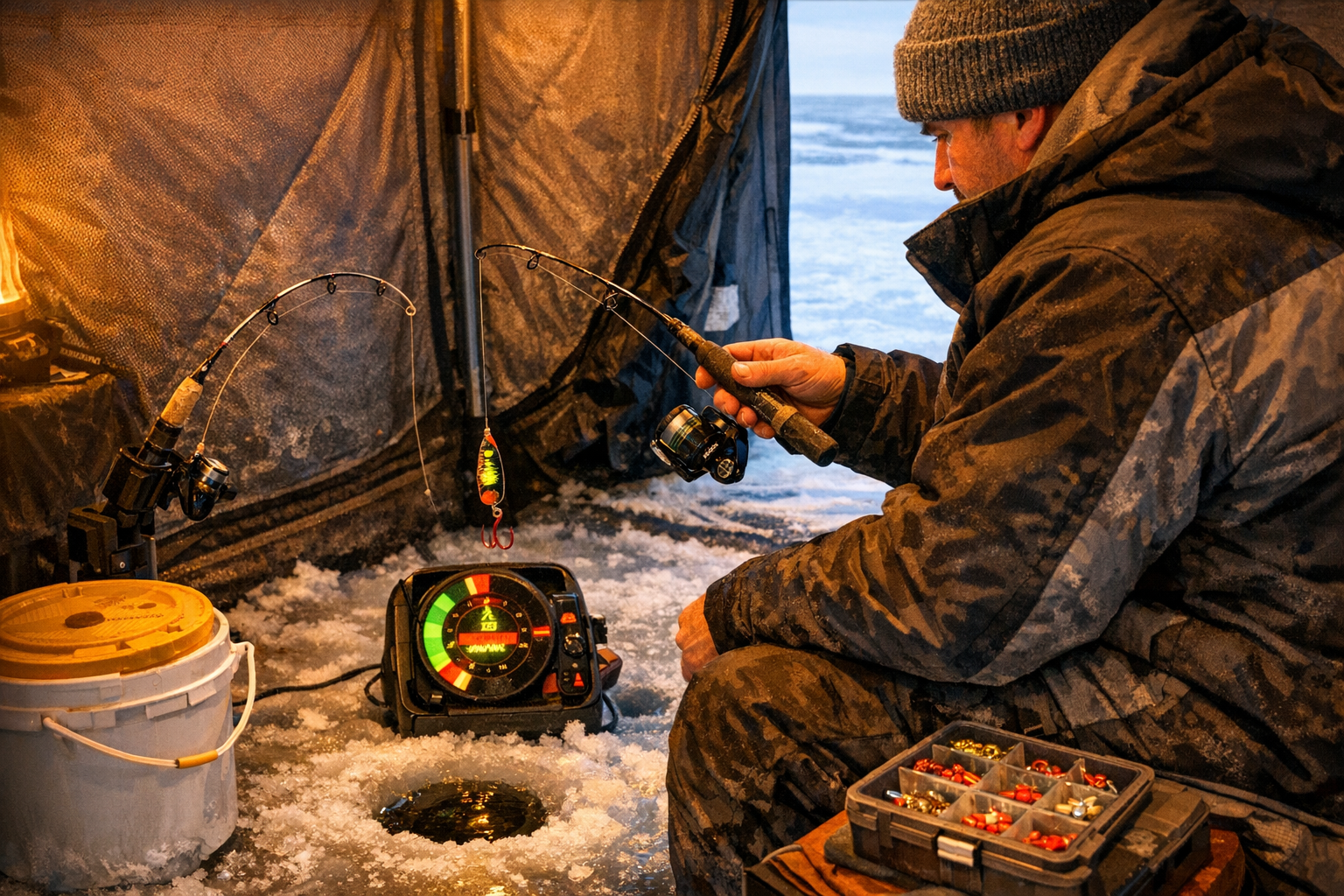
The 2026 Lake of the Woods ice season offers one of the longest fishing windows in the Midwest, with safe ice and open walleye season running well past the March fish house deadline. Drop a Dirty Bomb spoon or rattling glide bait on your active rod to attract walleyes in 28 to 32 feet, then let a moon jig with a minnow sit on your deadstick to convert followers into hookups. Gold and glow colors dominate in the stained water.
Fish the dawn and dusk windows hard, and plan your trips around the resort ice road updates that come daily on social media.
Why Is the Lake of the Woods Extended Ice Season 2026 So Significant for Walleye Anglers?
The 2026 ice season stands out because of the sheer volume of safe, fishable ice. Reports from mid-February show 30 to 36 inches across most zones, with some lake-side readings hitting 36 inches. That is well above the 12-inch minimum for truck travel and gives anglers a stable platform that holds through warming March temperatures.
Multiple resorts have pushed plowed ice roads more than 20 miles onto the lake. These roads connect anglers to productive structure that would otherwise require snowmobile access or long walks. Daily monitoring by resort staff keeps weight limits and road conditions current.
What the extended timeline means for you:
- Fish houses stay on the ice through March 31, 2026.
- Walleye and sauger harvest season runs through April 14, 2026.
- Pike season has no close date and remains open year-round.
- After March 31, you fish with portable shelters or in the open. No permanent houses.
This creates a two-phase late season. Phase one (through March 31) lets you fish from a heated house with all your gear. Phase two (April 1 through 14) shifts to portable flip-overs and catch-and-release tactics as conditions soften. Plan your trips accordingly.
For anglers who fish saltwater kayak seasons and transition to ice when temperatures drop, this extended window is a prime opportunity to build hard-water skills. The same tactical angling mindset that drives success on the coast applies here. Read the conditions. Adjust your presentation. Stay disciplined. For more on building a multi-season approach, check out the FishOnYak blog for resources that bridge both worlds.
What Are the Best Walleye Jigging Tactics for Lake of the Woods Through March?
Active jigging is the search-and-attract half of the one-two punch. Your jigging rod calls walleyes in from 20, 30, even 50 feet away. The key is matching your lure’s noise and flash to the conditions.
Dirty Bomb Spoons: The Calling Card
Dirty Bomb spoons have become a go-to for Lake of the Woods regulars because they combine rattle, flash, and a wide flutter on the drop. Work them in 28 to 32 feet with an aggressive cadence during prime feeding windows.
How to work a Dirty Bomb spoon in deep water:
- Drop the spoon to within 6 inches of bottom. Confirm depth on your flasher.
- Rip the rod tip up 12 to 18 inches with a sharp snap.
- Let the spoon flutter back down on a controlled slack line. Watch your flasher for marks rising toward the lure.
- Pause for 3 to 5 seconds at the bottom. Repeat.
- When you see a fish on the flasher approaching but not committing, shorten your rips to 4 to 6 inches and slow the cadence.
- If the fish still won’t commit, stop jigging entirely and let the deadstick do the work.
Choose gold or orange Dirty Bombs for Lake of the Woods. The stained water in most areas reduces visibility, and gold reflects the most light in low-clarity conditions. This matches the consensus from both resort guides and the Fish House Nation Podcast, which named gold the top all-around ice fishing color.
Moon Jigs for Finesse Jigging
When walleyes are tight to bottom and ignoring aggressive spoon work, switch your jigging rod to a moon jig tipped with a minnow head. The smaller profile and subtle action trigger fish that have already been pressured by other anglers.
Tip the moon jig with a fresh minnow head. The scent trail and slow descent of a head-tipped jig holds a walleye’s attention longer than a whole minnow, which tends to spin and look unnatural on a jig.
Color priority for moon jigs:
| Condition | First Choice | Second Choice |
|---|---|---|
| Stained water, low light | Gold | Glow red |
| Stained water, bright day | Orange | Glow pink |
| Clear water pockets | White | Black |
| Post-cold front, negative fish | Glow red | Glow pink |
Glow colors need to be charged with a camera flash or UV light every 10 to 15 minutes to maintain their effectiveness. Keep a small flashlight in your shelter for this purpose.
How Does Deadsticking Work for Lake of the Woods Walleye Through March?
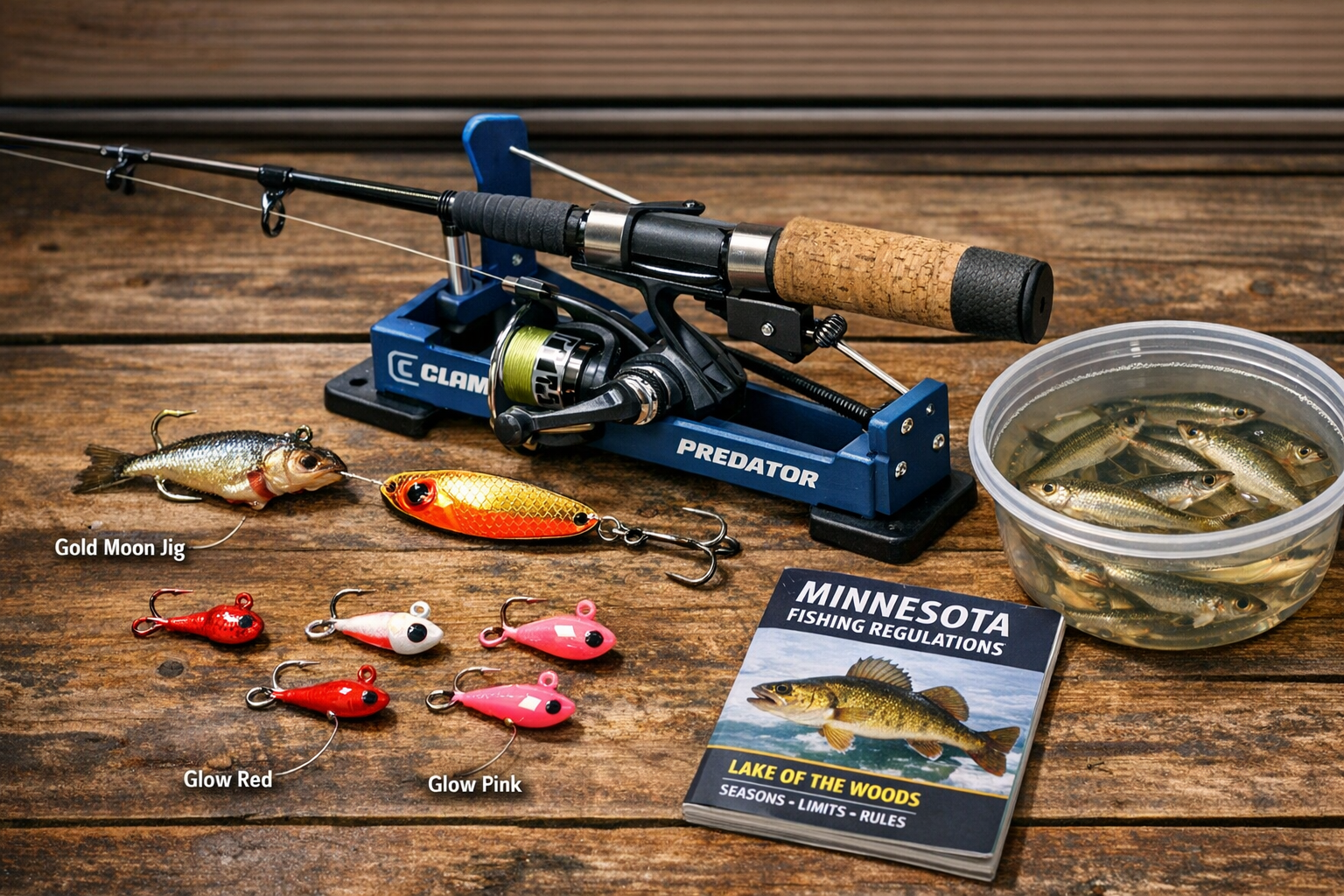
Deadsticking is the conversion tool. Your jigging rod brings fish close. Your deadstick closes the deal. The concept is simple: set a rod with a live or dead minnow on a light jig, position the bait 6 to 12 inches off bottom, and leave the rod alone.
Why deadsticking works on neutral and negative walleyes: During cold fronts and high-pressure days, walleyes often approach a jigging presentation but refuse to bite. They track the flash and vibration but won’t commit to something moving aggressively. A stationary minnow on a nearby line gives them an easy meal that requires no effort to chase.
Professional ice fishing educator Jason Mitchell released detailed instruction in January 2026 on deadsticking walleyes using the Clam Predator automatic hook-set device. The Predator holds the rod in a spring-loaded cradle. When a fish pulls the line, the device sets the hook automatically. This matters because walleye bites on a deadstick are often so subtle that you miss them if you are focused on your jigging rod.
Flexible-Tip Rod vs. Bobber for Bite Detection
Expert angler Joe Henry advocates using a flexible-tip rod instead of a bobber for deadstick bite detection. Here is why: some walleyes produce bites so light that a bobber barely moves. A sensitive rod tip, by contrast, loads and bends visibly even on the slightest take.
Set up your deadstick rod this way:
- Use a 28 to 36 inch medium-light rod with a fast, flexible tip.
- Spool with 6-pound fluorocarbon or 8-pound braid with a fluorocarbon leader.
- Tie on a small (1/8 oz) jig in gold or glow red.
- Hook a live shiner or fathead minnow through the back, just behind the dorsal fin.
- Lower the bait to 6 to 12 inches off bottom.
- Set the rod in a holder or Clam Predator device. Position the rod so you see the tip from your jigging seat.
- Watch for the tip to load, bounce, or pull down. Set the hook with a firm upward sweep.
Live Minnow vs. Dead Minnow on the Deadstick
Resort professionals on Lake of the Woods note that walleyes sometimes prefer dead minnows over live ones. This varies by the day and even by the hour. Do not assume live bait is always better. Carry both and test.
A dead minnow on a deadstick sits motionless and emits scent without any erratic movement. On days when fish are extremely negative, that stillness triggers bites that a swimming live minnow does not. Start with a live minnow. If you get lookers on the flasher that refuse to eat, swap to a dead one and give the hole 15 minutes.
What Depth Zones Produce the Best Walleye Action During the Extended Season?
Fish 24 to 32 feet of water. That is the productive range confirmed by multiple guide services and resort reports for mid-winter and late-season walleye on Lake of the Woods.
South Shore: The South Shore offers consistent structure in the 24 to 30 foot range with mud flats, rock transitions, and scattered gravel. This is the most accessible area for anglers launching from Minnesota-side resorts. Ice roads from resorts like Sportsman’s Lodge and Bayview Lodge reach these zones.
Northwest Angle: The Angle produces walleyes in slightly deeper water, often 28 to 32 feet. The structure here includes more defined reefs and drop-offs. Access requires either a longer drive to Angle-area resorts or extended ice road travel.
Rainy River: The Rainy River fishery differs from the main lake. Depths are shallower (8 to 18 feet in most spots), and the bite is concentrated in the first two hours after daylight and the last two hours before dark. If you plan to fish the river, commit to those windows and do not waste prime time setting up.
Common mistake: Drilling holes too shallow. Anglers new to Lake of the Woods often set up in 18 to 22 feet because the structure looks good on a map. In February and March, the most active walleyes on the main lake are deeper. Start at 26 feet and work out to 32 before moving shallower.
How Should You Approach Lake of the Woods Extended Ice Season 2026 Walleye Jigging and Deadsticking Tactics Through March Timing?
Fish the edges of the day. The golden hours pattern holds through the entire extended season. The first two hours after sunrise and the last two hours before sunset produce the most aggressive walleye feeding.
Daily schedule for maximum efficiency:
| Time Block | Activity |
|---|---|
| Pre-dawn (5:30 AM) | Set up shelter, drill holes, get electronics running |
| First light to 2 hours after sunrise | Active jigging with Dirty Bomb spoons, deadstick set |
| Mid-morning to mid-afternoon | Slow bite. Switch to finesse moon jigs. Rely on deadstick |
| 2 hours before sunset to dark | Resume aggressive jigging. Peak feeding window |
| After dark | Pack up or switch to after-dark tactics if regulations allow |
During the midday lull, your deadstick does most of the work. Keep your jigging cadence slow and subtle. Pound-and-pause with a moon jig rather than ripping a spoon. Fish that are holding tight to bottom in 30 feet during bright midday conditions will not chase an aggressive presentation.
As March progresses and daylight hours increase, the afternoon bite window tends to expand. By late March, some anglers report consistent action from 3 PM through sunset rather than only the final two hours. Adjust your schedule as the season evolves.
What Regulations Apply to the Lake of the Woods Extended Season Through April 2026?
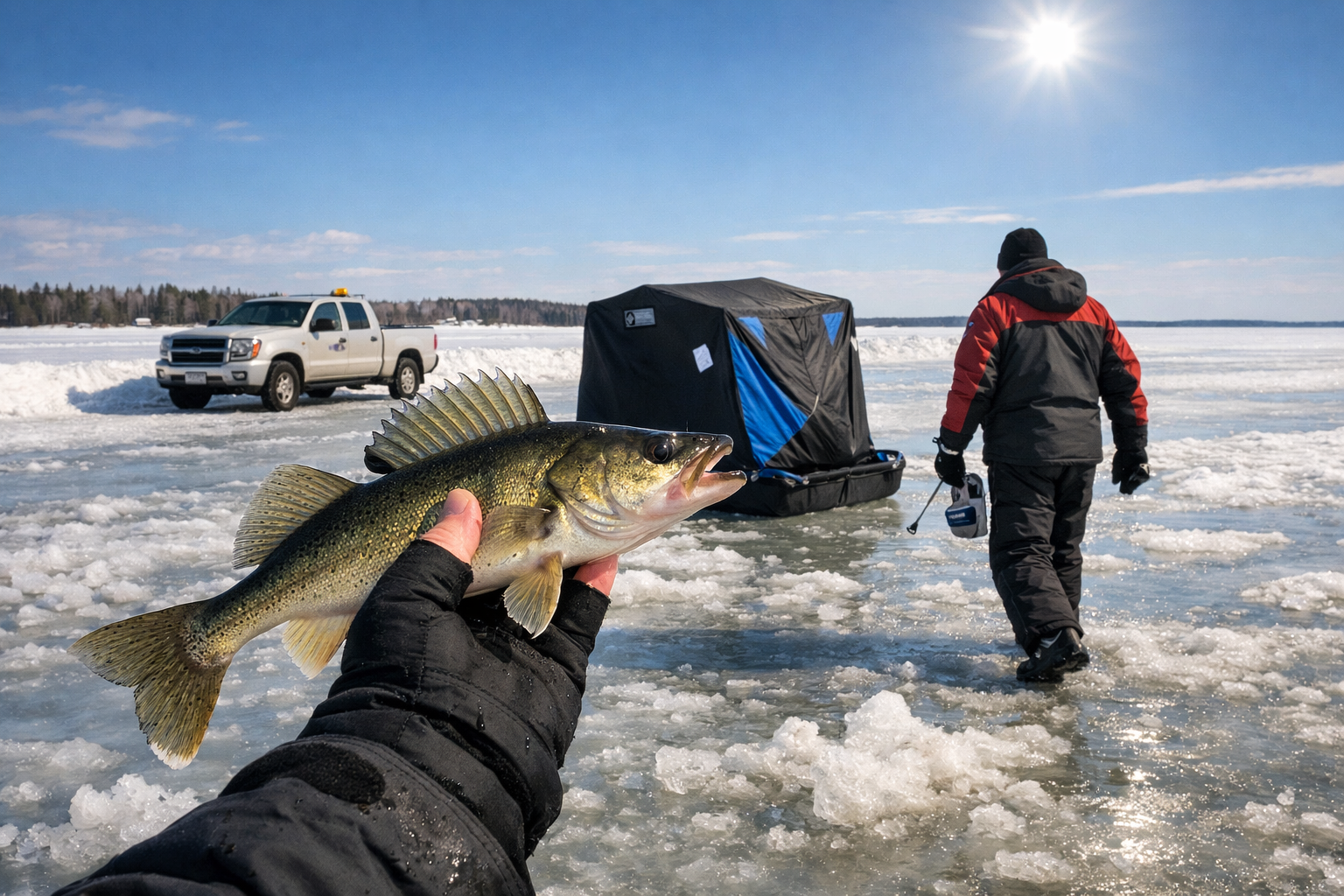
Know the rules before you drill your first hole. The regulations create a clear framework for the extended season.
Key dates for 2026:
- March 31: Last day for fish houses on the ice. Remove all permanent and portable shelters by this date.
- April 14: Walleye and sauger season closes. After this date, no walleye harvest or targeting.
- Pike: Open year-round. No close date.
After March 31 and before April 14: You fish without a shelter or with a portable flip-over that you remove each day. Catch-and-release becomes the practical approach for many anglers during this window, as conditions soften and ice quality changes daily.
Catch-and-release best practices for late-season walleye:
- Use single hooks or pinch barbs to reduce handling time.
- Keep the fish in the water or on wet ice. Do not place fish on dry surfaces.
- Remove the hook with pliers quickly. If the fish is hooked deep, cut the line rather than digging.
- Return the fish headfirst into the hole. Hold the fish upright in the water until the tail kicks and the fish swims down on its own.
Ice safety after March 15: Even with 30-plus inches measured in February, March sun and warm days degrade ice quality. White or honeycomb ice loses strength faster than clear blue ice. Check thickness daily. Stay on maintained roads as long as they remain open. When roads close, travel on foot or by snowmobile with extreme caution.
For anglers who prioritize fluid safety in every fishing environment, this transition period demands the same vigilance you bring to reading tides and weather on coastal kayak trips. Conditions change fast. Respect the ice. For more on building a safety-first approach to fishing, visit the FishOnYak services page for coaching resources.
What Gear Do You Need for the One-Two Punch Setup?
A proper two-rod setup for Lake of the Woods walleye does not require a massive investment, but the right pieces matter.
Jigging Rod Setup:
- Rod: 28 to 36 inch medium or medium-heavy action with a fast tip
- Reel: Small spinning reel spooled with 8-pound braid
- Leader: 24 inches of 8-pound fluorocarbon
- Lure: Dirty Bomb spoon (1/4 oz to 3/8 oz) in gold or orange, or a 1/4 oz moon jig in gold or glow red
- Tip: Fresh minnow head on the moon jig. Treble hook on the spoon gets a minnow head or tail.
Deadstick Rod Setup:
- Rod: 28 to 36 inch medium-light with a fast, flexible tip
- Reel: Small spinning reel with smooth drag, spooled with 6-pound fluorocarbon
- Hook/Jig: 1/8 oz jig in gold or glow pink, or a plain hook with a small split shot
- Bait: Live shiner or fathead minnow hooked through the back
- Holder: Clam Predator automatic hook-set device or a simple rod holder
Electronics:
- Flasher (Vexilar, Marcum, or Humminbird ICE series) is essential for reading fish behavior in 28 to 32 feet. Without a flasher, you are guessing.
- Watch for fish marks rising from bottom toward your lure. This tells you when to slow down, speed up, or switch to the deadstick.
Shelter:
- Heated fish house (rented from resort) through March 31
- Portable flip-over shelter for April fishing
- Carry ice picks, a spud bar, and a throw rope for safety during late-season travel
If you are building out your gear for multi-season fishing, the same rigging mastery principles apply whether you are outfitting a kayak or an ice shelter. Think about efficiency, access to your tackle, and keeping your workspace organized. Check out the FishOnYak showroom for ideas on how organized rigging translates across fishing disciplines.
Common Mistakes Anglers Make During the Extended Ice Season
Setting up too shallow. The 28 to 32 foot zone produces the most consistent action. Resist the urge to fish 18 to 22 feet unless you have specific intel from a resort or guide.
Ignoring the deadstick. Some anglers treat the deadstick as an afterthought. On many days, the deadstick outproduces the jigging rod 3 to 1. Set the deadstick with care. Check the bait every 20 minutes. Replace dead or sluggish minnows.
Fishing the same color all day. Start with gold. If the bite slows, rotate to glow red or glow pink. Color changes trigger fish that have been staring at the same presentation for hours.
Staying too long in one spot. If you have not marked fish on your flasher in 30 minutes, move. Drill new holes 50 to 100 feet away. The advantage of the extended season is time. Use that time to cover water, not to sit over dead holes.
Neglecting ice safety in March. The ice was 36 inches in February. By late March, sun exposure and warm nights degrade the top layers. Measure ice thickness at every new spot. Do not assume February numbers hold through March.
For those who want to build a tournament-ready approach to ice fishing, avoiding these mistakes separates productive anglers from those who go home empty. The same discipline applies in competitive kayak fishing circuits. Visit the FishOnYak about page to learn more about building that competitive edge.
How Do Weather Patterns Affect the Late-Season Bite?
Late February 2026 brought light snow and drifting conditions to the Kenora and Lake of the Woods region, with icy highway travel but stable lake ice. Weather patterns in March drive the daily bite quality.
Cold fronts: Walleyes go negative. Slow your jigging cadence. Rely on the deadstick. Use glow colors. Fish the golden hours and accept that midday will be slow.
Stable high pressure (2 or more days): Fish spread out and feed in shorter, more predictable windows. Stick to dawn and dusk. Cover more water during the day.
Warming trends: As March temperatures climb above freezing during the day, ice conditions change but the bite often improves. Warming water under the ice triggers increased walleye activity, especially in the last two hours of daylight.
Snow events: Fresh snow on the ice reduces light penetration. This pushes walleyes into a more aggressive feeding mode during daylight hours because the low-light conditions mimic dawn and dusk. Fish harder during and immediately after snowfall.
Monitor resort social media pages daily for ice road conditions and fishing reports. River Bend Resort, Bayview Lodge, and Sportsman’s Lodge all post regular updates that include road status, weight limits, and current catch data.
FAQ
How thick is the ice on Lake of the Woods in 2026? Mid-February 2026 reports show 30 to 36 inches across most areas, with some lake-side locations measuring 36 inches. This is well above minimum safe levels for vehicle travel.
When do fish houses need to be off Lake of the Woods in 2026? March 31, 2026 is the deadline for all fish house removal.
When does walleye season close on Lake of the Woods in 2026? Walleye and sauger season closes April 14, 2026. After March 31, you fish without permanent shelters.
What depth should you fish for walleye on Lake of the Woods in late winter? Target 24 to 32 feet. The most consistent reports come from the 28 to 32 foot range on the South Shore and Northwest Angle.
What is the best jig color for Lake of the Woods walleye? Gold is the top all-around choice. Glow red, glow pink, and orange are strong secondary options in the lake’s stained water.
What is a Dirty Bomb spoon? A rattling spoon designed to call walleyes in from distance with vibration and flash. Work the spoon with sharp rips and controlled drops in 28 to 32 feet.
Should you use live or dead minnows on a deadstick? Test both. Live minnows work most days, but dead minnows sometimes outperform on cold-front days when fish want a motionless, scent-driven presentation.
What is the Clam Predator? An automatic hook-set device that holds your deadstick rod in a spring-loaded cradle. When a fish pulls the line, the device sets the hook. Professional educator Jason Mitchell endorsed this tool for deadsticking walleyes in January 2026.
Is pike season open on Lake of the Woods in March? Yes. Pike season is open year-round on Lake of the Woods.
What are the best times to fish walleye on Lake of the Woods? The first two hours after sunrise and the last two hours before sunset produce the most aggressive feeding. This pattern holds through the entire extended season.
Do you need a boat to fish Lake of the Woods in winter? No. You fish from the ice using a fish house, portable shelter, or in the open. Resort ice roads provide vehicle access to fishing areas up to 20 miles from shore.
How do you stay safe on Lake of the Woods ice in March? Check ice thickness daily. Stay on maintained resort roads when available. Carry ice picks, a spud bar, and a throw rope. Watch for white or honeycomb ice, which loses strength faster than clear ice.
Kayak. Drill. Catch. Repeat. Whether you are on salt or ice, the approach stays the same: prepare your gear, read the conditions, and commit to the tactics that produce. For more fishing content and coaching resources, visit FishOnYak.com and explore the blog for guides across every season.
See you on the water.