Last updated: April 13, 2026
Quick Answer: What rod and reel combos are recommended for inshore saltwater kayak fishing in 2026? The top rod and reel combos are the PENN Battle IV spinning combo, the Temple Fork Outfitters Intracoastal rod paired with a Shimano Nasci 2500HG, and the KastKing ReKon SW. Choose a 7-foot medium or medium-heavy fast-action spinning rod paired with a 2500 to 4000 size sealed spinning reel. Match it with 10-20 lb braided line and a fluorocarbon leader for redfish, trout, flounder, and drum.
Key Takeaways
- Target a 7-foot medium or medium-heavy fast-action spinning rod for most inshore kayak situations.
- Use a 2500 to 4000 size spinning reel with a sealed or IPX-rated body to resist saltwater corrosion.
- The PENN Battle IV is the top all-around saltwater kayak combo for 2026, praised for its sealed body and HT-100 carbon drag system.
- Captain Harvey Wall recommends the TFO Intracoastal Rod paired with the Shimano Nasci 2500HG for redfish, trout, flounder, and drum from a kayak.
- Budget anglers get strong value from the PENN Battle IV 2500 combo in the $100-$150 range.
- The KastKing ReKon SW (starting at $154.99) prioritizes weight savings with carbon components, which matters for all-day kayak paddling.
- Shorter rods (5’11” to 6’6″) work better for sheepshead, flounder, and tight-quarters casting from a seated kayak position.
- Spool your inshore kayak combo with 10-20 lb braid and a 12-20 lb fluorocarbon leader for most inshore species.
- Corrosion resistance is non-negotiable. Rinse every combo with fresh water after every saltwater session.
- Spinning combos dominate inshore kayak fishing. Conventional setups suit trolling for larger drum but sacrifice casting versatility.
What Rod and Reel Combos Are Recommended for Inshore Saltwater Kayak Fishing in 2026?
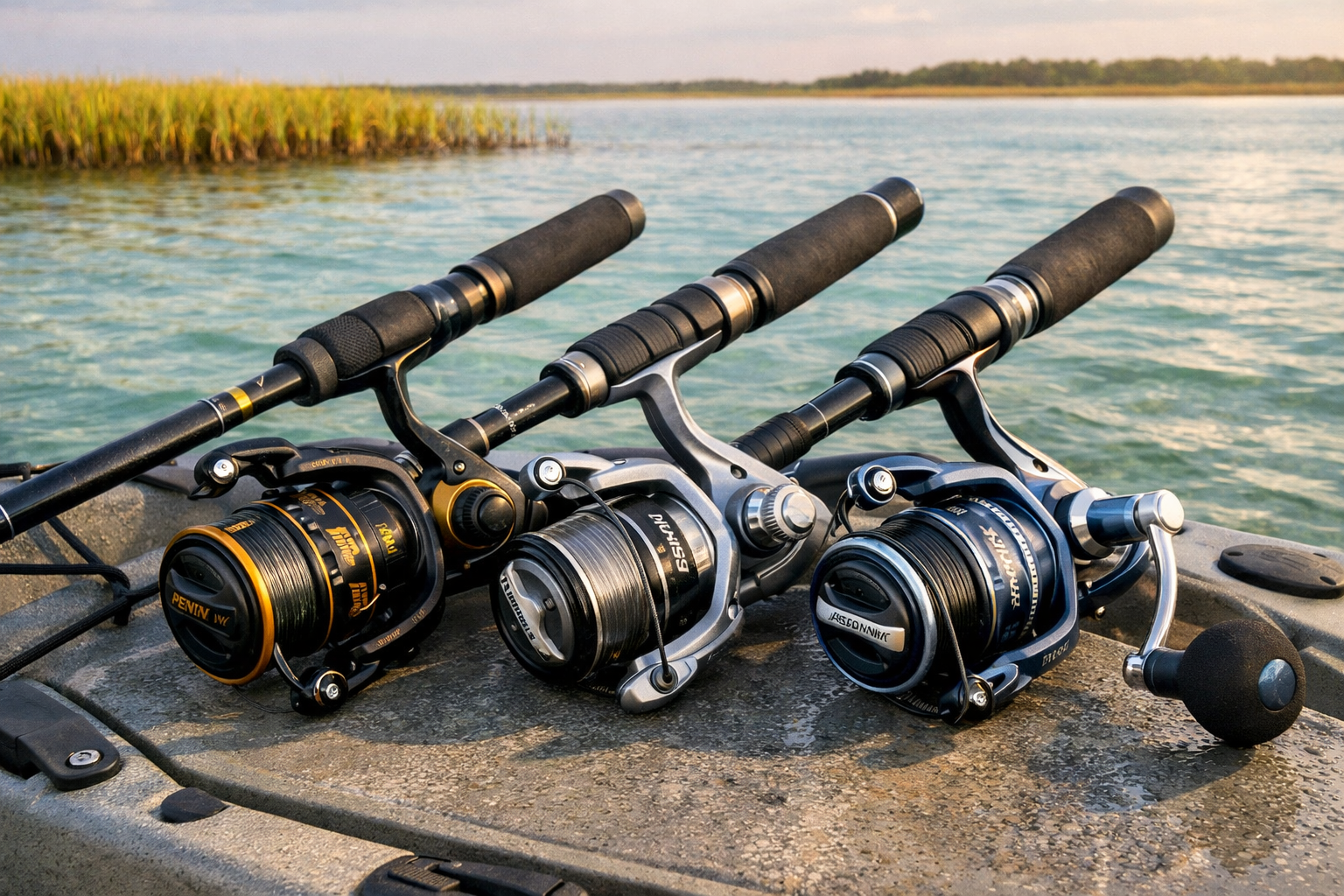
The best inshore saltwater kayak fishing combos in 2026 balance three things: corrosion resistance, manageable weight, and enough power to handle redfish, speckled trout, flounder, and drum from a seated position. Spinning combos in the 2500 to 4000 size range dominate this category.
Here are the top-recommended combos for 2026:
Top Picks at a Glance
| Combo | Rod Length | Reel Size | Best For | Price Range |
|---|---|---|---|---|
| PENN Battle IV Spinning Combo | 6’6″ to 7′ | 2500-4000 | All-around inshore | $179.99+ |
| TFO Intracoastal + Shimano Nasci 2500HG | 7′ | 2500 | Redfish, trout, flounder | $200-$280 |
| KastKing ReKon SW | 7′ | 3000-6000 | Lightweight kayak use | $154.99+ |
| Quantum Merit Saltwater Combo | 7′ | 2500-4000 | Corrosion-resistant budget | $120-$160 |
| Toadfish Elite Carbon 3000-4000 Combo | 7′ | 3000-4000 | Redfish, trout | $180-$240 |
Choose the PENN Battle IV if you want one combo that handles everything from oyster bed redfish to open-water trout. Choose the TFO Intracoastal setup if you want a guide-tested, finesse-forward option for mixed inshore species.
Why Does Your Kayak Setup Change What Combo You Need?
Fishing from a kayak changes your gear requirements in ways that bank fishing or boat fishing do not. The seated position lowers your casting angle. Paddle storage limits rod length. Weight affects how the kayak tracks and how tired your arms get after six hours on the water.
Key kayak-specific factors to consider:
- Rod length: 7 feet is the standard for inshore kayak fishing. Longer rods (7’6″ and above) create clearance problems when casting from a seated position. Shorter rods (5’11” to 6’6″) work for tight-quarters targeting of sheepshead and flounder.
- Reel weight: Lighter reels reduce arm fatigue over long sessions. Carbon drag systems and carbon frames (like those on the KastKing ReKon SW) shave meaningful weight.
- Corrosion resistance: Saltwater exposure is constant on a kayak. Spray hits the reel directly. Choose combos with sealed bodies, IPX-rated protection, or stainless components.
- Rod holders: Most sit-on-top kayaks hold rods vertically. A 7-foot rod fits most standard flush-mount holders without issue.
For a full breakdown of how to set up your kayak for inshore saltwater use, read the complete kayak rigging guide for saltwater fishing.
What Rod Specs Work Best for Inshore Kayak Fishing?
A 7-foot medium or medium-heavy fast-action spinning rod covers 80% of inshore kayak fishing situations. Fast action means the rod tip bends quickly and recovers fast, which improves hook sets on redfish and trout.
Rod spec breakdown by target species:
- Redfish and drum: 7-foot medium-heavy, fast action. Handles 15-30 lb braid with a 20 lb fluorocarbon leader. Enough backbone to pull fish away from oyster beds.
- Speckled trout: 7-foot medium, fast action. Lighter tip loads lures better for soft plastic presentations. Pairs with 10-15 lb braid.
- Flounder and sheepshead: 5’11” to 6’6″ medium, extra-fast action. The shorter length gives more sensitivity for bottom-contact bites.
- General inshore (mixed bag): 7-foot medium, fast action. The TFO Intracoastal rod in this spec is Captain Harvey Wall’s go-to recommendation for kayak anglers targeting redfish, trout, flounder, and drum.
Look for graphite or carbon composite blanks. They keep weight down and transmit strikes clearly. Stainless steel or titanium guides resist corrosion better than chrome-plated alternatives.
What Reel Specs Matter Most for Inshore Saltwater Kayak Fishing?
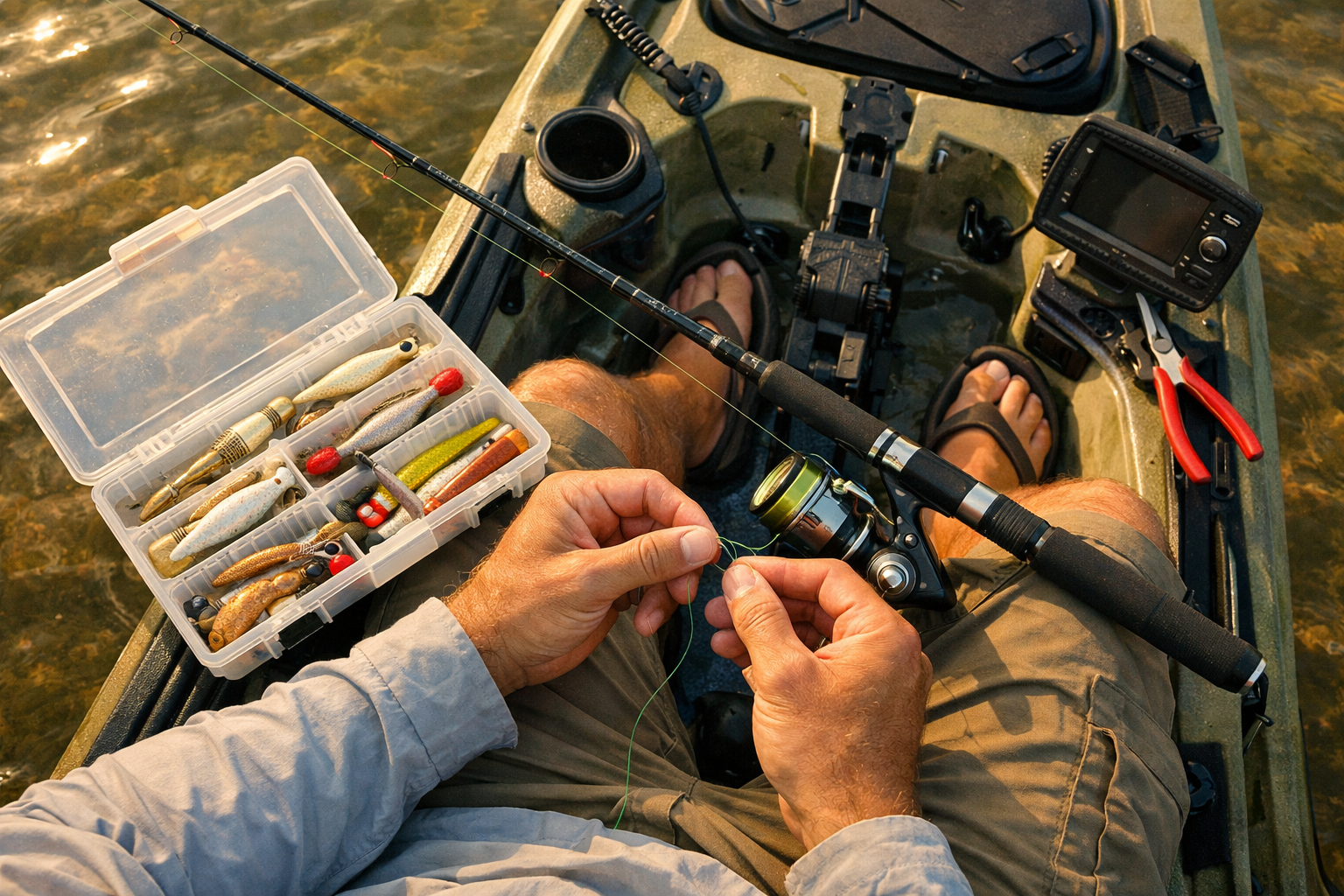
Use a 2500 to 4000 size spinning reel with a sealed or IPX-rated body. Drag strength of 10-20 pounds handles most inshore species. Prioritize corrosion resistance above all other features.
Reel spec checklist:
- Size: 2500 for trout and finesse work. 3000 to 4000 for redfish, drum, and heavier presentations.
- Drag: 10 lb minimum for inshore use. The PENN Battle IV offers 10-40 lbs of max drag across its size range. The Toadfish Elite Carbon 3000-4000 delivers 16 lbs of drag.
- Sealed body: Saltwater gets into unsealed reels fast. Look for IPX5 or IPX6 ratings, or a fully sealed body like the PENN Battle IV.
- Bearing count: 5+1 bearings is the minimum for smooth retrieves. More bearings improve smoothness but add cost.
- Gear ratio: 6.0:1 to 6.2:1 is the standard for inshore spinning. Higher ratios (7.0:1+) help with fast lure retrieves for trout.
The Shimano Nasci 2500HG pairs well with the TFO Intracoastal rod because its high-gear ratio (6.0:1) and smooth drag handle both slow-rolled soft plastics and fast-moving topwater lures.
“Buy once and go fish.” That is how Captain Harvey Wall describes the PENN Battle IV for beginner kayak anglers. It handles the abuse of inshore saltwater without requiring constant maintenance.
How Do Budget and Premium Combos Compare for Kayak Anglers?
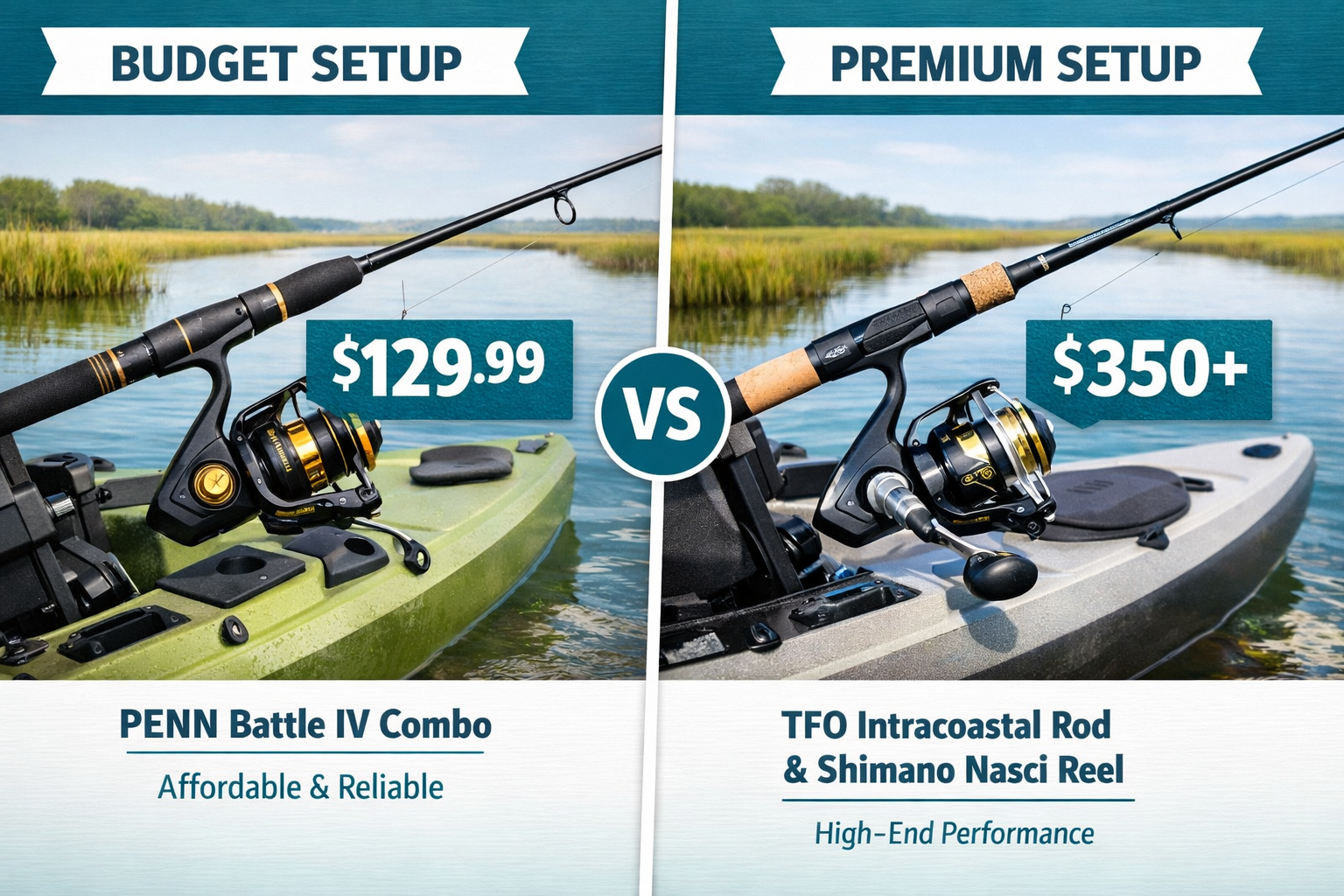
Budget combos work. Premium combos last longer and perform better in demanding conditions. The decision depends on how often you fish and what species you target.
Budget vs. Premium Comparison:
| Factor | Budget (Under $160) | Premium ($180+) |
|---|---|---|
| Corrosion resistance | Adequate for occasional use | Sealed, long-term protection |
| Weight | Heavier frames | Carbon components, lighter |
| Drag smoothness | Functional | Consistent under pressure |
| Best example | Quantum Merit Saltwater, Okuma Veros ($104.99) | PENN Battle IV, TFO + Shimano Nasci |
| Who it suits | Beginners, occasional anglers | Frequent anglers, tournament prep |
The Shimano Nexave ($79.99+) offers Propulsion Line Management for longer casts from a kayak but lacks the sealed body of the PENN Battle IV ($179.99+). For anglers fishing saltwater weekly, the Battle IV’s corrosion resistance justifies the price difference.
The KastKing ReKon SW (starting at $154.99) sits between budget and premium. Its carbon frame and drag system reduce weight significantly, which matters when you paddle all day. Compare it to the Okuma Veros ($104.99), which has cork grips and sealed bearings but feels heavier for extended kayak sessions.
Choose budget if you fish fewer than 20 days per year in saltwater. Choose premium if you fish more than that, or if you target larger redfish and drum near structure.
For anglers fishing the Carolina coast, check out the best saltwater kayak fishing spots around Carolina Beach to understand what conditions your gear needs to handle.
What Rod and Reel Combos Are Recommended for Specific Inshore Species?
Match your combo to the species you target most. A single 7-foot medium-fast spinning setup handles mixed-bag inshore fishing. Species-specific setups improve your hookup rate and presentation.
Species-specific combo recommendations:
Redfish and Bull Drum
- Rod: 7-foot medium-heavy, fast action
- Reel: 3000 to 4000 size, sealed, 15+ lb drag
- Line: 20 lb braid, 20-30 lb fluorocarbon leader
- Recommended: PENN Battle IV 3000 or Toadfish Elite Carbon 3000-4000
Speckled Trout
- Rod: 7-foot medium, fast action
- Reel: 2500 size, high gear ratio (6.2:1+)
- Line: 10-15 lb braid, 12-15 lb fluorocarbon leader
- Recommended: TFO Intracoastal + Shimano Nasci 2500HG
Flounder and Sheepshead
- Rod: 5’11” medium, extra-fast action (the Toadfish “Convict Rod” spec works here)
- Reel: 2500 size
- Line: 15 lb braid, 15-20 lb fluorocarbon leader
- Recommended: Toadfish 2500 combo
Larger Drum (Trolling)
- Conventional combos like the PENN Pursuit V LE ($134.99+) add line capacity for trolling larger baits. They sacrifice casting versatility but handle bigger fish from a kayak.
If you fish the Vibe Makana 100 or Hydra 130, read about why these kayaks are built for inshore performance in 2026 to understand how your platform affects your rod and reel choices.
What Line and Leader Setup Completes an Inshore Kayak Combo?
The rod and reel are only part of the system. Line selection and leader setup determine whether you land fish or lose them.
Standard inshore kayak line setup:
- Main line: 10-20 lb braided line. Braid has zero stretch, which improves sensitivity and hook sets from a seated kayak position. It also casts farther on a spinning reel.
- Leader: 12-20 lb fluorocarbon. Fluorocarbon is nearly invisible in water and abrasion-resistant around oyster beds and dock pilings.
- Connection: Use a double uni knot or an FG knot to connect braid to fluorocarbon. The FG knot is stronger and passes through guides smoothly.
- Leader length: 18 to 36 inches for most inshore situations. Extend to 4-6 feet in clear, shallow water where fish are line-shy.
Spool your reel with 150-200 yards of braid. Most inshore kayak fights do not exceed 100 yards of run, but redfish near structure test your drag and line capacity.
What Mistakes Do Kayak Anglers Make When Choosing Inshore Combos?
Avoid these common errors when selecting your inshore kayak rod and reel combo.
Top mistakes and how to fix them:
Choosing a rod that is too long. Rods over 7’6″ create casting problems from a seated kayak position. Stick to 7 feet for most situations.
Skipping corrosion protection. An unsealed reel corrodes fast in saltwater spray. Rinse every combo with fresh water after every session. Choose IPX-rated or sealed reels for longer service life.
Using too light a drag for redfish. Redfish near oyster beds need firm drag pressure to stop their runs. A 2500 reel with 8 lb max drag is not enough. Use a 3000 to 4000 size with 15+ lb drag for reds.
Ignoring rod weight. A heavy rod fatigues your arm over a six-hour kayak session. Carbon and graphite blanks reduce fatigue without sacrificing strength.
Buying a freshwater combo and hoping for the best. Freshwater reels corrode in saltwater within a season. Buy combos rated for saltwater use from the start.
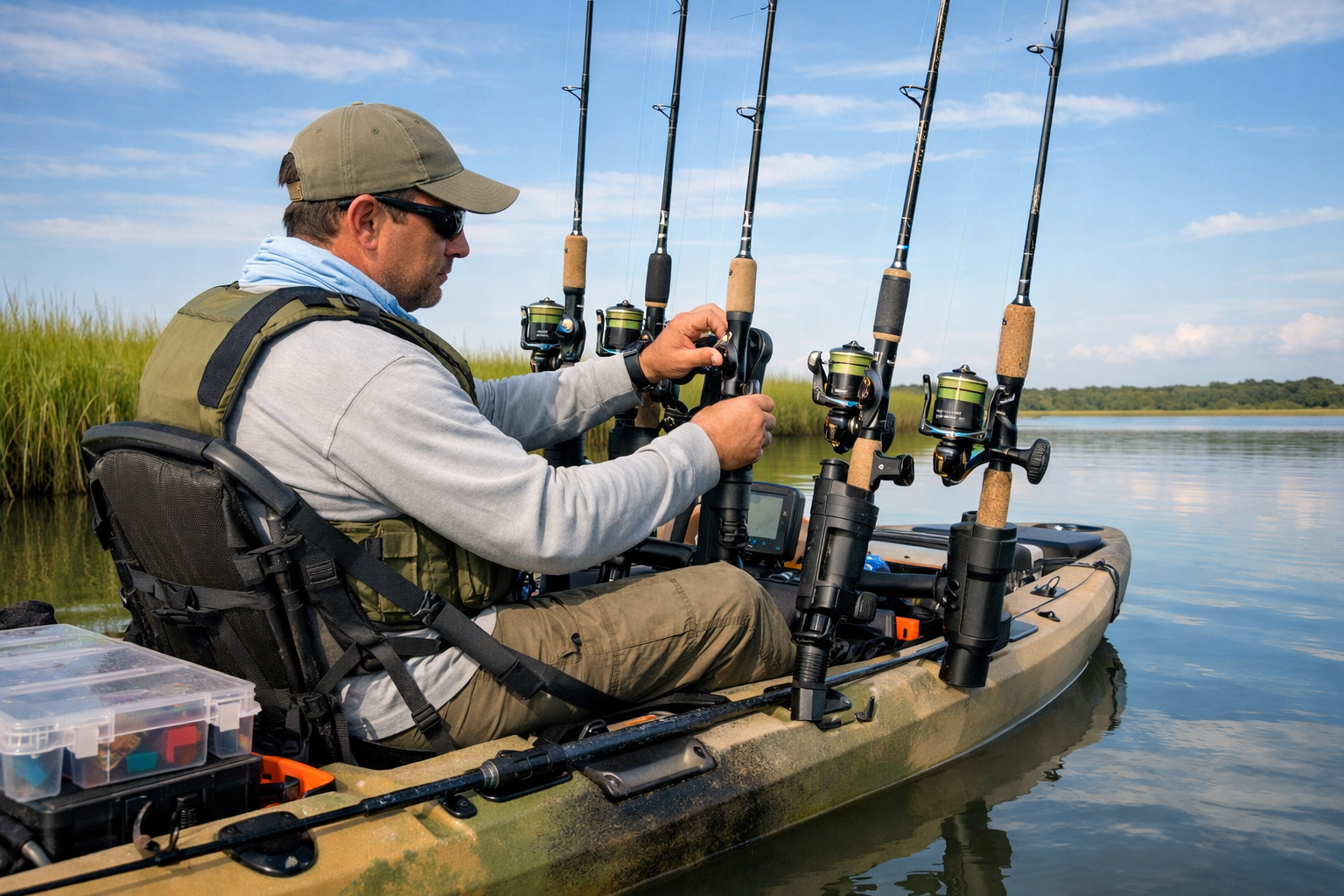
Overloading the kayak with too many rods. Two to three combos cover all inshore situations from a kayak. Rig one for finesse (trout), one for power (redfish), and one for bottom fishing (flounder/sheepshead).
For anglers building out a complete kayak setup, the complete kayak rigging guide for saltwater fishing covers rod holders, tackle storage, and gear organization.
How Should You Maintain Your Inshore Kayak Combo?
Proper maintenance extends the life of any inshore combo. Saltwater is aggressive. Neglect it and your gear fails within a season.
Post-session maintenance routine:
- Rinse the rod and reel with fresh water immediately after every saltwater session. Focus on the reel body, bail arm, and line roller.
- Open the bail and rinse under the spool.
- Dry the reel with a clean cloth before storage.
- Apply a light coat of reel oil to the line roller and bail arm pivot points every 10-15 sessions.
- Inspect guides for cracks or corrosion. A damaged guide cuts braid and causes break-offs at the worst time.
- Store rods horizontally or in a vertical rod rack away from direct sunlight.
A well-maintained PENN Battle IV or KastKing ReKon SW lasts five or more years of regular inshore saltwater use. A neglected combo corrodes in one season.
FAQ: What Rod and Reel Combos are Recommended for Inshore Saltwater Kayak Rod and Reel Combos
What size spinning reel works best for inshore kayak fishing? A 2500 size handles trout and finesse work. A 3000 to 4000 size handles redfish, drum, and heavier presentations. Most kayak anglers carry one of each.
What is the best all-around inshore kayak combo for 2026? The PENN Battle IV spinning combo. Its sealed body, HT-100 carbon drag, and graphite rod with stainless guides handle all major inshore species.
What rod length works best from a kayak? Seven feet is the standard. It clears the kayak deck during casts and fits most flush-mount rod holders. Go shorter (5’11” to 6’6″) for sheepshead and flounder.
Is braid or monofilament better for inshore kayak fishing? Braid is better. It has zero stretch, casts farther, and gives you direct feel of bottom structure and bites. Pair it with a fluorocarbon leader.
What is the best budget inshore kayak combo? The PENN Battle IV 2500 in the $100-$150 range gives beginners a durable, corrosion-resistant starting point. The Quantum Merit Saltwater Combo is another strong option with IPX6 sealing.
Do I need a different combo for redfish versus trout? Technically one 7-foot medium-fast combo handles both. A medium-heavy setup with a 3000-4000 reel gives you more control over redfish near structure. A medium setup with a 2500 reel loads trout lures more naturally.
Can I use a conventional reel for inshore kayak fishing? Spinning reels dominate inshore kayak fishing for their casting versatility. Conventional setups like the PENN Pursuit V LE work for trolling larger drum but are less versatile for lure casting.
How often should I replace the line on my inshore combo? Replace braid every 1-2 seasons depending on use. Inspect for fraying or color fading. Replace fluorocarbon leaders every 2-3 sessions or after fighting fish near structure.
What drag setting should I use for redfish? Set drag to roughly 25-30% of your line’s breaking strength. For 20 lb braid, set drag at 5-6 lbs. Tighten slightly when fishing near oyster beds or structure.
Is the KastKing ReKon SW worth the price for kayak anglers? For anglers who paddle long distances, yes. Its carbon components reduce weight meaningfully compared to heavier budget combos. Starting at $154.99, it sits between budget and premium.
What rod action works best for soft plastic lures on inshore flats? Fast action. The tip loads quickly on the cast and recovers fast on the hook set. Extra-fast action works for bottom-contact presentations targeting flounder and sheepshead.
How many rods should I bring on a kayak inshore trip? Two to three. One finesse setup for trout, one power setup for redfish, and one bottom rod for flounder or sheepshead. More than three creates clutter and tangles on a kayak deck.
Conclusion
Inshore saltwater kayak fishing demands gear that handles saltwater abuse, fits a seated casting position, and gives you enough power to stop fish near structure. The PENN Battle IV remains the top all-around pick for 2026. The TFO Intracoastal paired with the Shimano Nasci 2500HG is the guide-tested choice for mixed inshore species. The KastKing ReKon SW earns its place for anglers who prioritize weight savings on long paddle sessions.
Start with a 7-foot medium or medium-heavy fast-action spinning rod. Pair it with a sealed 2500 to 4000 size reel. Spool with 10-20 lb braid and a fluorocarbon leader. Rinse everything after every session.
Build your setup around the species you target most, then add a second combo for specialty situations. Two well-matched combos outperform five mediocre ones every time.
Kayak. Drill. Catch. Repeat.
See you on the water.
References
[1] Best Inshore Rod And Reel Combos – https://fishoceanisle.com/best-inshore-rod-and-reel-combos.html
[2] The Best Rod And Reel Combos For Inshore Fishing – https://toadfish.com/blogs/put-em-back-post/the-best-rod-and-reel-combos-for-inshore-fishing
[3] March New Arrivals Upcoming Rods Reels – https://jdmtackleheaven.com/blogs/jdm-ths-blog/march-new-arrivals-upcoming-rods-reels
[4] Rod And Reel Combos – https://kayakanglermag.com/gear/fishing-gear-accessories/rod-and-reel-combos/
[5] Spinning Rod And Reel Combos – https://kayakanglermag.com/gear/fishing-gear-accessories/spinning-rod-and-reel-combos/
[6] Kayak Fishing What Rods And Reels To Use – http://www.texaskayakfisher.com/blog-1/2021/9/24/kayak-fishing-what-rods-and-reels-to-use