Last updated: February 26, 2026
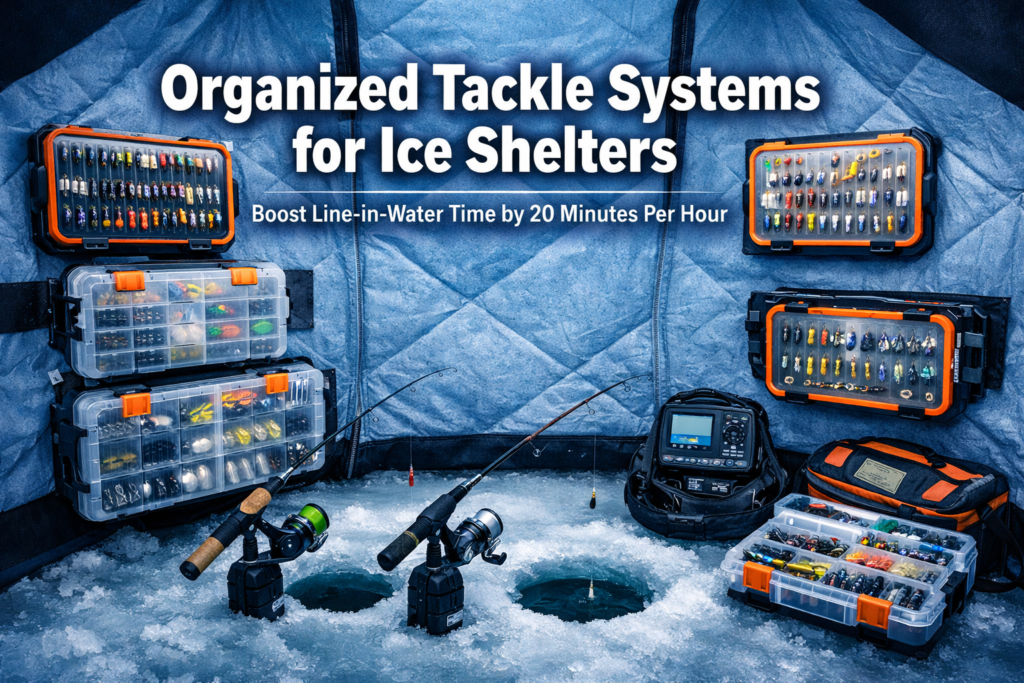
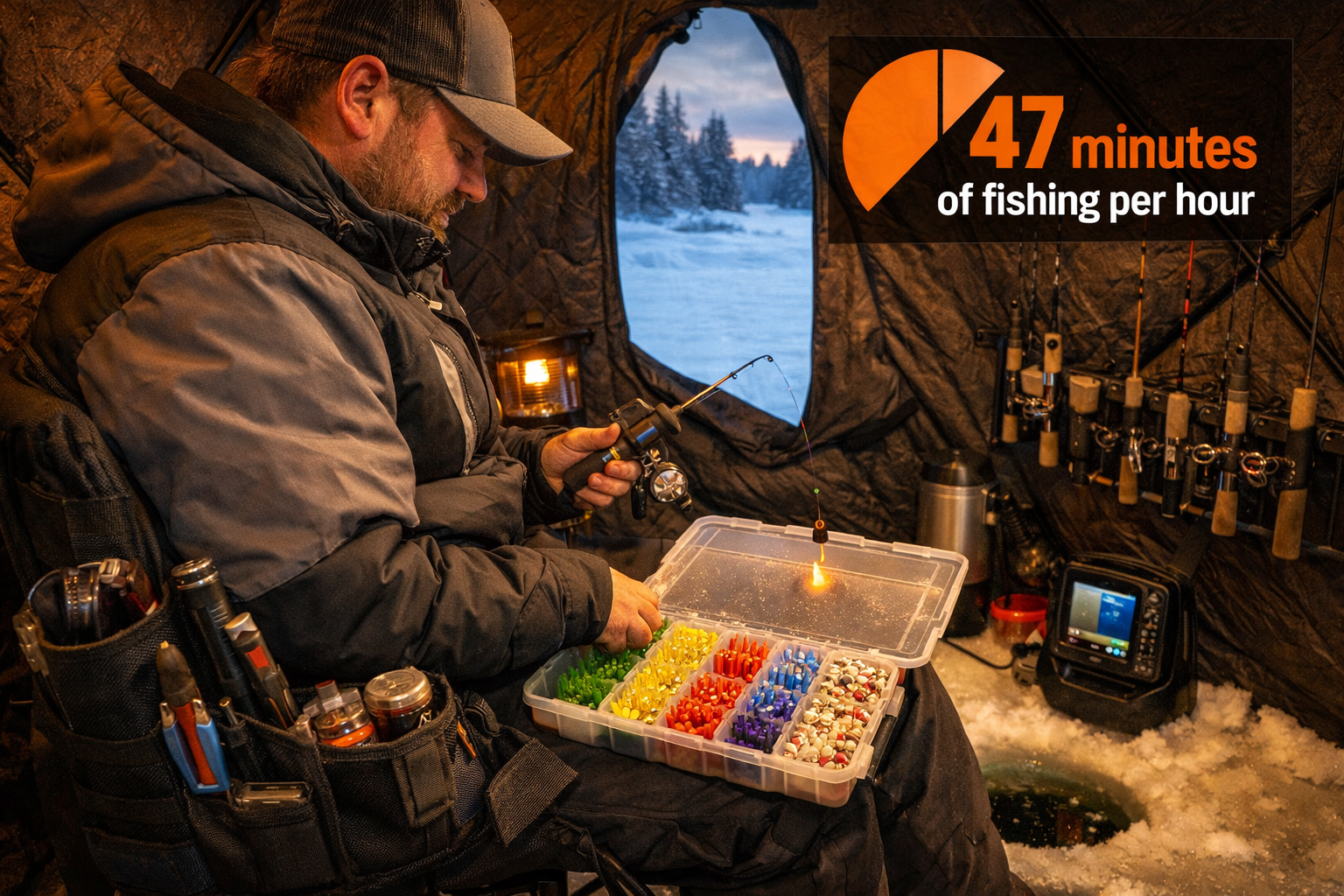
Organized tackle systems for ice shelters increase your line-in-water time by 20 minutes per hour. That is the difference between 40 minutes of fishing and a full 60. Inside a cramped flip-over or hub shelter, scattered gear forces you to dig through bags, untangle leaders, and fumble for the right jig. A purpose-built organization system removes those delays and puts your focus where it belongs: on the fish below.
This guide reviews the compact organizers, nested storage methods, and seat-mounted solutions that eliminate gear scatter in tight ice shelters. Every recommendation comes from field-tested approaches used by professional ice anglers in the 2025/2026 season.
Key Takeaways
- Disorganized tackle in ice shelters wastes an estimated 15 to 25 minutes per hour on searching, sorting, and re-rigging.
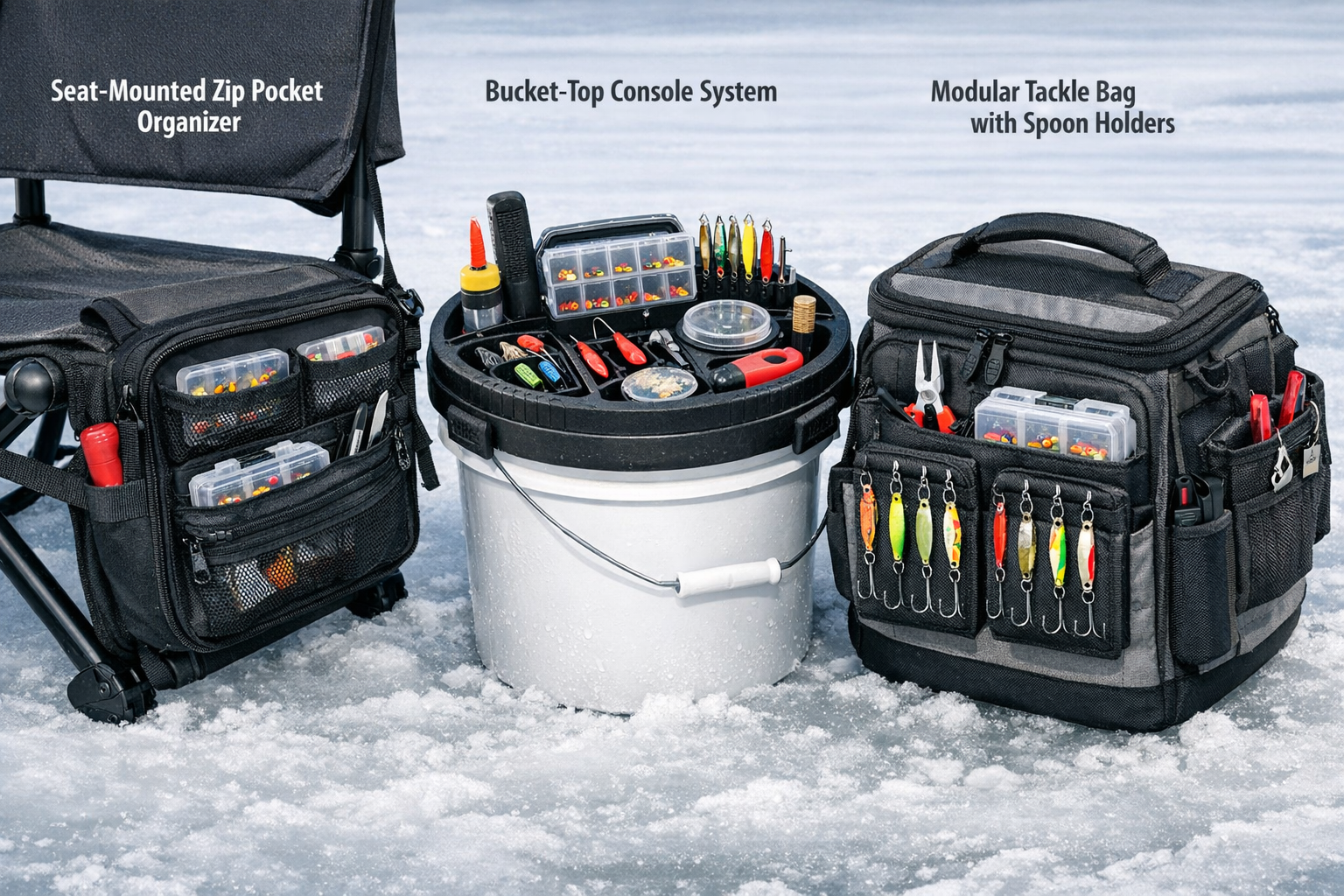
- Seat-mounted organizers like the Eskimo SeatStash keep small tools and jigs within arm’s reach without taking up floor space.
- Nested storage (totes inside bags inside labeled pouches) gives you high variety in low volume.
- Bucket consoles such as the Otter Sidekick turn a standard 5-gallon pail into a full tackle station.
- Clam HD Tackle Boxes (2025/2026 season) integrate directly with shelter sled systems for grab-and-go setup.
- Poor line storage causes coiling and memory issues that reduce presentation quality and cost you fish.
- Color-sorting jigs and spoons by type cuts swap time from 30+ seconds to under 10 seconds per change.
- The best system for you depends on shelter type, species targets, and how often you move between holes.
Quick Answer
Organized tackle systems for ice shelters increase productive fishing time by reducing the minutes you spend searching for gear, re-rigging, and managing tangled line. The most effective setups combine a seat-mounted organizer for frequently used items, a nested bag system for backup tackle, and dedicated spoon or jig trays sorted by color and size. Anglers who adopt these systems report spending closer to 50 minutes per hour with line in the water, compared to roughly 30 to 35 minutes for those fishing out of a loose duffel bag.
Why Does Tackle Organization Matter Inside an Ice Shelter?
An ice shelter gives you protection from wind and cold, but the interior space is small. Most hub shelters offer 30 to 60 square feet of floor space. Flip-over shelters give you even less. Every item on the floor competes with your fishing holes, your heater, and your movement.
When tackle sits in a single bag on the floor, you spend time on three tasks that produce zero fish:
- Searching for the right jig or spoon color
- Untangling leaders and pre-tied rigs stored loosely
- Swapping between presentations when the bite changes
Ice Team Pro Craig Oyler from Clam recommends dedicated spoon boxes and jig trays inside shelters for visibility and protection. His reasoning is direct: you reduce fumble time during active fishing. When panfish shift from a gold tungsten jig to a glow pattern at sunset, you need that swap to happen in seconds.
A common mistake is bringing your entire home tackle collection onto the ice. Bring what you need for the target species and conditions. Leave the rest in your vehicle.
What Are the Best Compact Organizers for Ice Shelters in 2026?
Three categories of compact organizers dominate the ice shelter market in 2026. Each fits a different shelter style and fishing approach.
Seat-Mounted Organizers
The Eskimo SeatStash Bucket Lid organizer (introduced for the 2025/2026 season) straps directly to Versa shelter seats. Zip pockets hold jigs, split shot, line spools, and small tools. The advantage: your gear stays mounted to your seat and travels with you. The limitation: these hold small items only. Full-size tackle trays do not fit.
Price range: approximately $40.
Choose a seat organizer if you fish a flip-over shelter and want hands-free access without bending down.
Bucket Consoles
The Otter Sidekick mounts on any standard 5-gallon bucket. This turns a bucket you already carry into a tackle station with multiple compartments. The universal fit works in any shelter type.
Price range: approximately $50.
Choose a bucket console if you already haul a 5-gallon bucket for your catch and want to consolidate gear.
Integrated Sled Tackle Boxes
Clam HD Tackle Boxes (launched August 2025) feature durable compartments for jigs and spoons that fit into Clam shelter sled systems. These boxes ride in the sled during transport and slide out for use inside the shelter.
Choose integrated sled boxes if you run a Clam shelter system and want zero loose items during transport.
| Organizer Type | Best For | Price Range | Pros | Cons |
|---|---|---|---|---|
| Seat-mounted (Eskimo SeatStash) | Flip-over shelters | ~$40 | Always accessible, no floor space used | Limited to small items |
| Bucket console (Otter Sidekick) | Any shelter with a bucket | ~$50 | Universal fit, large capacity | Bulkier, less modular |
| Sled-integrated (Clam HD Boxes) | Clam sled systems | ~$30-60 | Grab-and-go, durable | Brand-specific fit |
For more fishing insights and expert guidance, check out the FishOnYak blog for updated content throughout the 2026 season.
How Does Nested Storage Work for Ice Fishing Tackle?
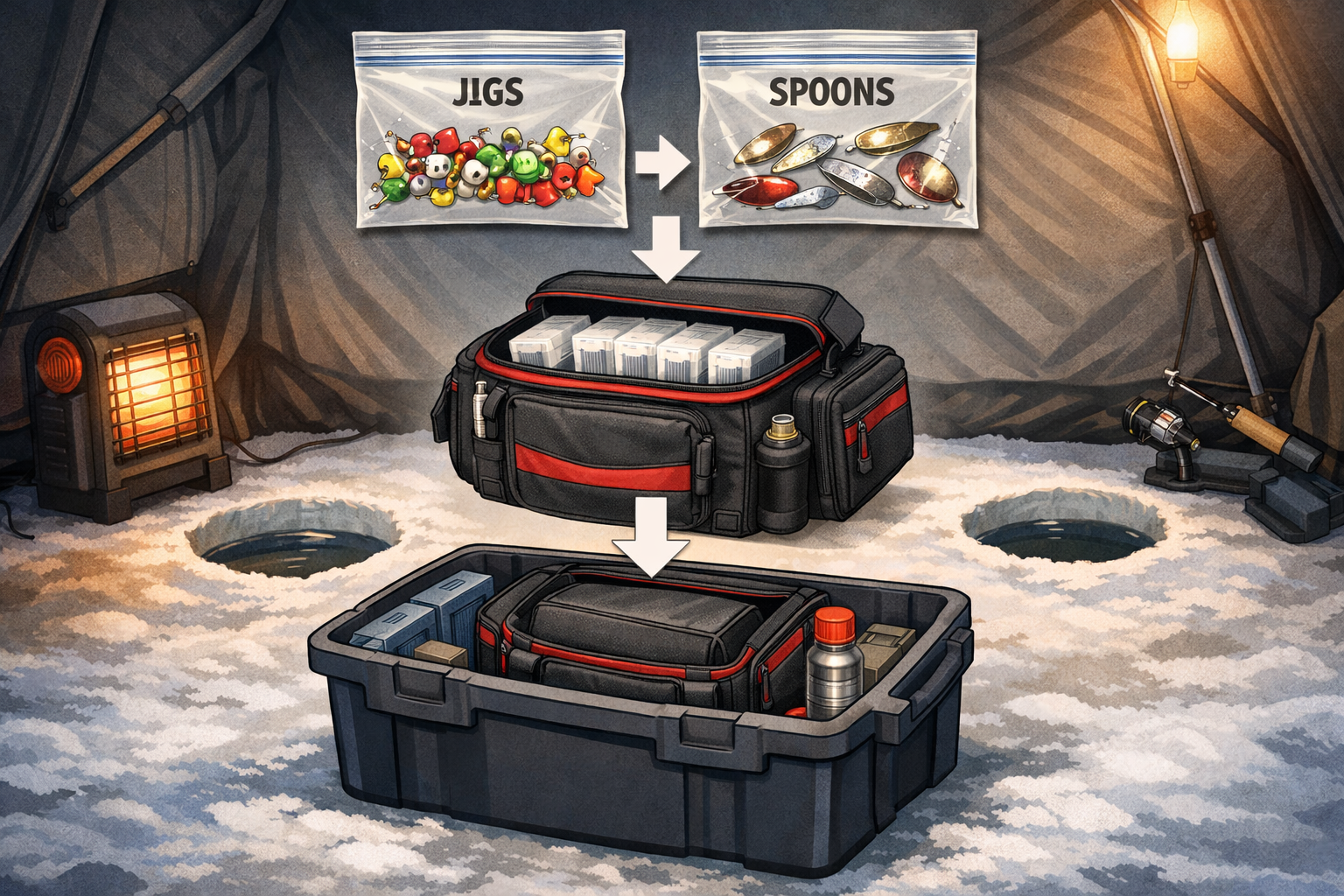
Nested storage is the most efficient way to carry high variety in low volume. Joel Nelson, a Northland Tackle pro, has advocated this system since 2018, and ice anglers still reference his approach in 2026.
The concept is simple. Start with a large container and nest smaller containers inside it, each sorted by category.
Step-by-Step Nested Storage Setup
- Start with one medium hard-sided tote (12 to 16 quart). This is your master container that rides in the sled.
- Place two to three soft-sided bags inside the tote. Sort by species or technique (for example: one bag for walleye jigging, one for panfish).
- Inside each soft bag, use labeled Ziploc bags or small utility boxes. Sort by color, size, or presentation type.
- Keep your most-used presentations in the outermost, most accessible bag. Bury backup tackle deeper.
This system works because you grab one bag for your current target species and leave the tote in the sled. Inside the shelter, you handle one small bag instead of a full tackle box.
A common mistake with nested storage: skipping the labels. When your fingers are cold and you are wearing gloves, you need to identify the right Ziploc by sight. Use a permanent marker and write the contents on each bag.
The FishOnYak practice resources offer additional drills and preparation strategies that apply to pre-season tackle sorting.
How Do Organized Tackle Systems for Ice Shelters Increase Line-in-Water Time by 20 Minutes Per Hour?
The 20-minute gain comes from eliminating four specific time drains. Here is where those minutes go when your tackle is disorganized:
Searching for tackle: 5 to 8 minutes per hour. Digging through a single bag for the right jig color or hook size.
Re-rigging after tangles: 4 to 6 minutes per hour. Leaders stored loosely develop memory coils and tangles. Tony Roach, a professional guide, ties tackle organization directly to line management. Poor storage causes fluorocarbon and monofilament to coil, which ruins your presentation and forces re-ties.
Swapping presentations: 3 to 5 minutes per hour. When fish are active and you need to match a changing bite, slow swaps cost you the window.
Setup and teardown inside the shelter: 3 to 5 minutes per hour. Spreading gear across the shelter floor at arrival and packing it back up when you move holes.
An organized system addresses each drain:
- Sorted jig trays cut search time to under 10 seconds per swap.
- Pre-spooled rods stored in rod holders eliminate re-rigging.
- Seat-mounted organizers keep active tackle at hand level.
- Sled-integrated boxes reduce setup to pulling one tray from the sled.
The result is a shift from roughly 30 to 35 productive minutes per hour to 50 or more. Over a six-hour ice session, that adds up to two extra hours of line-in-water time.
Alex Timm, a fishing content creator, documented this effect in February 2026 when reviewing EGO Kryptek bags with clip systems for Rippin Raps. His clip system allowed lure swaps in under five seconds, keeping his line in the strike zone during a hot walleye bite.
What Is the Best Tackle Layout for Different Ice Shelter Types?
Your shelter type determines your layout. A flip-over shelter has different space constraints than a hub shelter.
Flip-Over Shelters
Floor space is minimal. Your seat is your primary storage platform.
- Mount a seat organizer (SeatStash or similar) to your chair.
- Use the sled base for a single nested tote.
- Keep one rod in hand, one in a rod holder, and store backups in the sled.
- Jason Revermann of JR Pro Team uses the Otter Sportsman’s Caddy in flip-over shelters. This all-in-one caddy holds tackle, tools, and accessories in a single unit that fits the sled footprint.
Hub Shelters
Hub shelters offer more floor space and wall structure.
- Mount rod holders to the shelter frame or use freestanding holders.
- Place your bucket console near your primary fishing hole.
- Use the extra space for a second tote with backup tackle sorted by species.
- Hang a small tool organizer (pliers, hook removers, line cutters) from the shelter frame using carabiner clips.
Choose your layout based on how often you move. If you run-and-gun between holes, keep your system light and sled-integrated. If you sit on structure for hours, spread out and use the full shelter space.
For a deeper look at how the FishOnYak team approaches gear preparation, visit the about page for background on rigging philosophy and coaching methods.
How Should You Store Line and Leaders to Protect Presentation Quality?
Line management is the most overlooked part of ice shelter organization. Tony Roach emphasizes that poor line storage creates coiling and memory problems in monofilament and fluorocarbon. These issues reduce your jig’s action and cost you bites.
Follow these storage rules:
- Store pre-tied leaders in leader wallets or straight in labeled Ziploc bags. Do not wrap leaders around foam spools smaller than 3 inches in diameter, as this creates permanent coils.
- Keep braided main line on the reel. Braid has minimal memory and does not need special storage.
- Carry at least two spare spools of fluorocarbon leader material (2-pound and 4-pound for panfish, 6-pound and 8-pound for walleye).
- Store line spools in a zip pocket on your seat organizer where body heat keeps the material slightly above freezing temperature.
A common edge case: fishing in shelters without heaters. In unheated shelters, monofilament becomes stiff below 20 degrees Fahrenheit. Switch to fluorocarbon leaders in these conditions, as fluorocarbon retains flexibility at lower temperatures.
What Mistakes Do Anglers Make with Ice Shelter Tackle Organization?
Five mistakes account for most of the wasted time inside ice shelters.
Bringing too much tackle. Carry what matches your target species and the current conditions. Three to four jig colors and two to three spoon sizes cover most panfish and walleye situations.
Using a single large bag. One big bag means everything mixes together. Split your tackle into categories using the nested system described above.
Ignoring vertical storage. Shelter walls and seat backs offer mounting points. Use them for tools, line cutters, and small accessory pouches.
Forgetting to re-sort after each trip. Tackle drifts out of order during a fishing session. Spend five minutes at home re-sorting your trays before the next outing. The FishOnYak services page outlines coaching options that include pre-trip preparation checklists.
Storing wet tackle in closed containers. Jigs and spoons rust when stored wet. Dry your tackle before sealing containers, or leave lids cracked during transport home.
Pre-Season Tackle Organization Checklist for 2026
Use this checklist before your first ice trip of the season. A FishUSA pre-season guide from January 2026 stressed that tackle organization before late ice melt maximizes your remaining fishing days.
- Inspect all jigs and spoons for rust, dull hooks, and damaged paint. Replace or sharpen as needed.
- Sort tackle by species: panfish in one tray, walleye in another, pike or trout in a third.
- Within each species tray, sort by color from light to dark, left to right.
- Pre-tie six to ten leaders in your most-used lengths and pound tests. Store flat in a leader wallet.
- Load your seat organizer with the items you reach for most: pliers, line cutter, hook remover, split shot, and two to three jig colors.
- Test all zippers and closures on soft bags. Replace any bag with a failing zipper before it dumps your tackle on the ice.
- Confirm your nested tote fits in your sled with room for your auger, heater, and electronics.
For tournament-level preparation strategies, review the FishOnYak testimonials from anglers who have refined their systems through coaching.
FAQ
How much does a complete ice shelter tackle organization system cost? A basic setup using a seat organizer ($40), a bucket console ($50), and a set of utility boxes ($15 to $25) runs between $105 and $115. You do not need all three. Pick the one or two that match your shelter type.
Do organized tackle systems work in run-and-gun ice fishing? Yes. Sled-integrated boxes and nested tote systems are designed for mobility. Keep your active tackle in a single grab-and-go bag and leave backup gear in the sled.
What is the best way to organize jigs by color? Sort from light to dark, left to right, within a single tray. Group natural colors (silver, gold, copper) together and glow colors together. This lets you find the right color by position without reading labels.
Should I use hard cases or soft bags inside my ice shelter? Use hard cases for jigs and spoons to prevent hook damage and tangling. Use soft bags as the outer carrier for easy stacking and compression in the sled.
How often should I reorganize my ice fishing tackle? Re-sort after every trip. Spend five minutes at home returning jigs to their correct slots and replacing any tackle you used up.
Does tackle organization affect catch rates? Yes. More line-in-water time means more opportunities to detect and react to bites. Anglers who fish 50 minutes per hour instead of 35 minutes per hour increase their window for catching fish by over 40 percent.
What size tote works best for nested ice fishing storage? A 12 to 16 quart hard-sided tote fits most flip-over and hub shelter sleds while holding two to three soft bags inside.
Are brand-specific organizers worth the extra cost over generic options? Brand-specific organizers like Clam HD Boxes fit their sled systems precisely, which saves setup time. If you run a matching shelter system, the fit justifies the cost. Generic options work fine for anglers using mixed gear.
How do I prevent jigs from rusting in storage? Dry all tackle before closing containers. Add a small silica gel packet to each tackle tray. Store trays in a cool, dry location between trips.
What is the single most impactful organization upgrade for ice anglers? A seat-mounted organizer. It puts your most-used items at arm’s reach and eliminates bending down to search through floor-level bags. This one change saves the most time per hour.
Kayak. Drill. Catch. Repeat. The same discipline that makes a tournament-ready kayak angler applies on the ice. Organize your shelter tackle with intention, and you will fish more minutes every hour you spend out there.
See you on the water.