Last updated: March 5, 2026
The hood on your ice fishing jacket is the difference between a productive day on hard water and a miserable retreat to the truck. Hood design innovations for ice fishing jackets covering visibility, fit, and wind resistance in 2026 models have shifted toward adjustable, articulated structures with embedded wire brims, fur ruffs, and reflective elements that stay locked in place during casting and wind gusts. This guide breaks down what has changed, what works, and how to pick the right hood for your conditions.
Key Takeaways
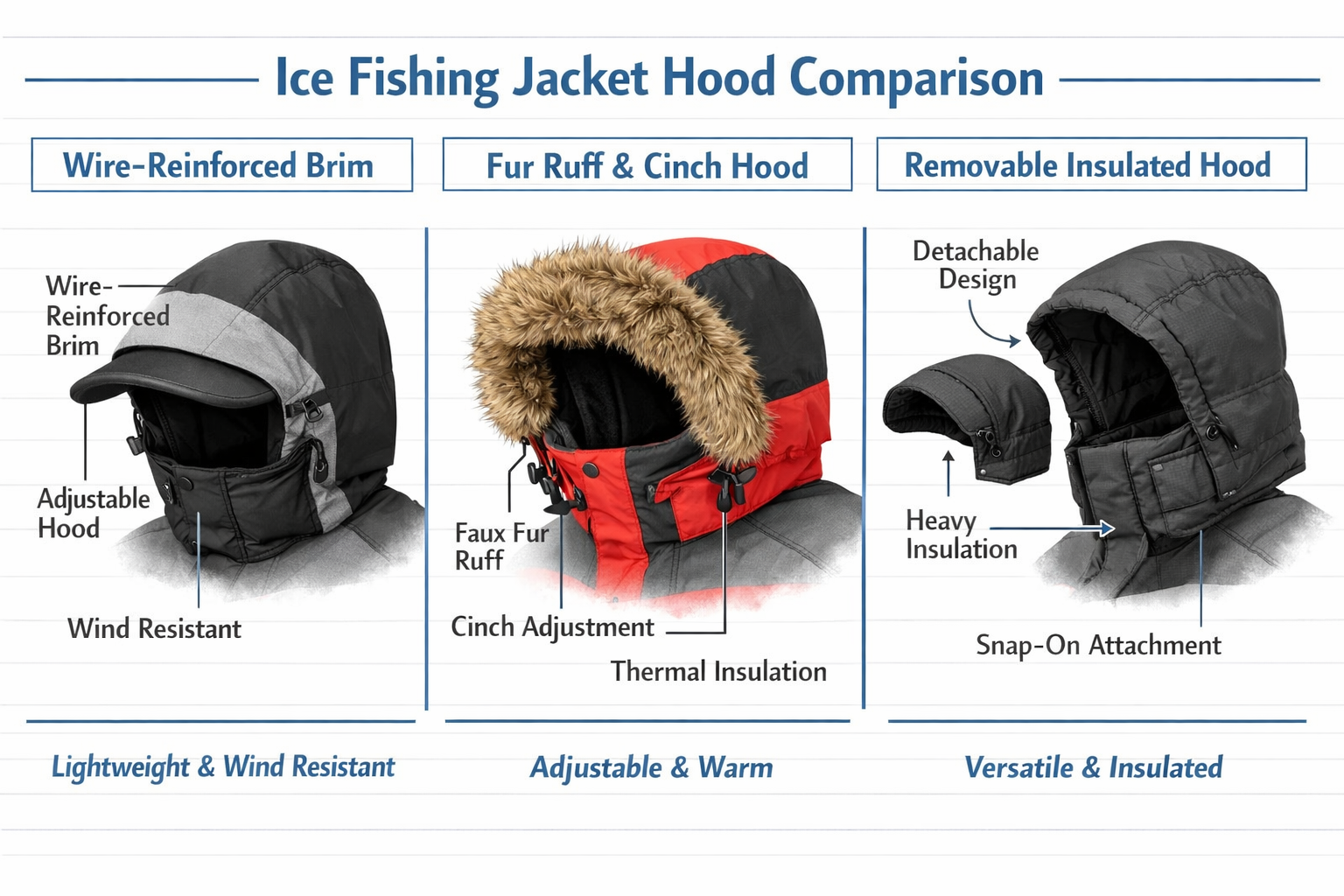
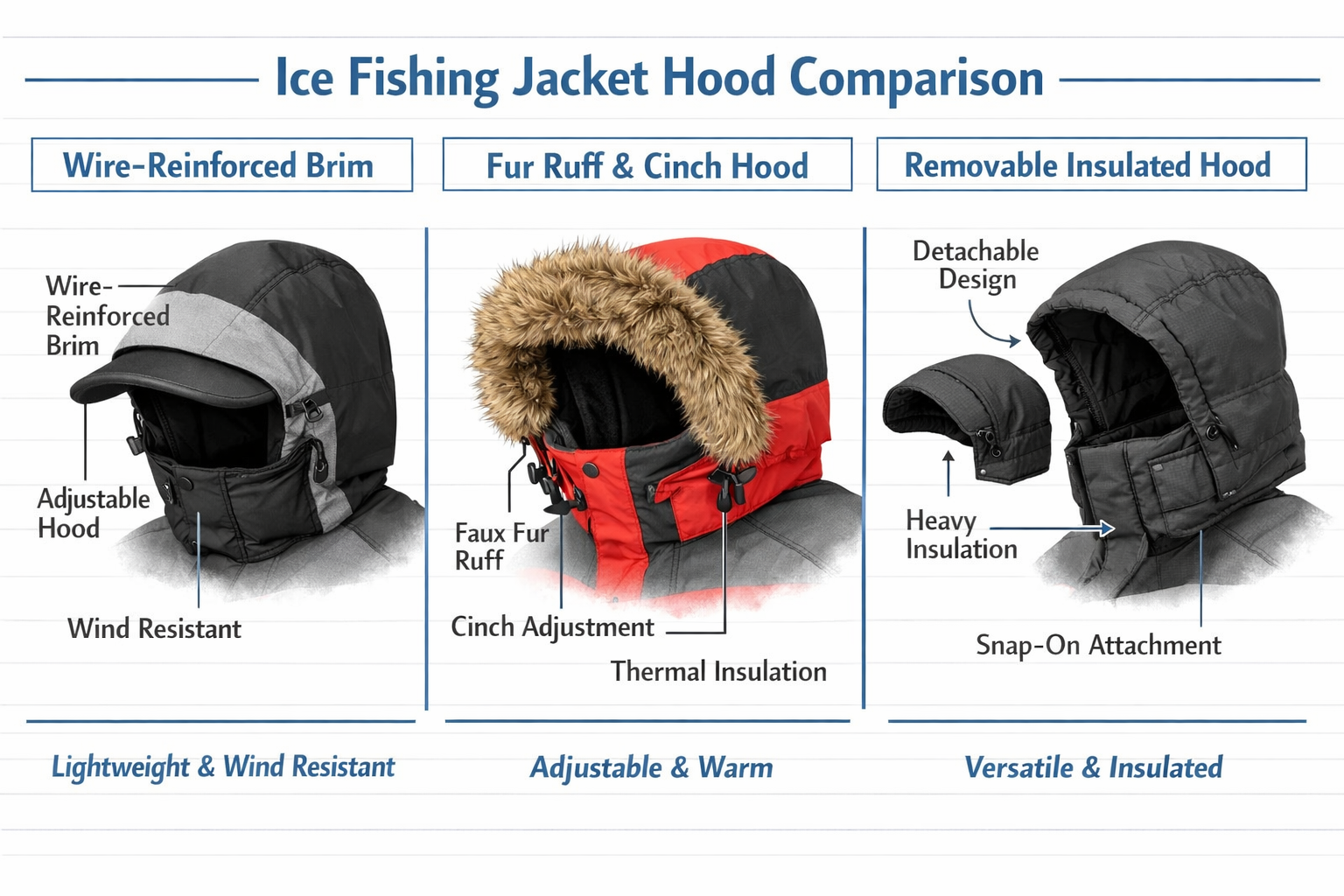
- Wire-reinforced hood brims prevent the hood from collapsing over your eyes in heavy wind, a feature tested and praised in field reviews of the Striker Climate series .
- Adjustable drawcord systems at the face opening and rear of the hood let you dial in peripheral vision without sacrificing wind protection.
- Insulated hoods with 100g Thinsulate (like those on Eskimo Legend and Expedition jackets) prioritize warmth for static fishing over mobility.
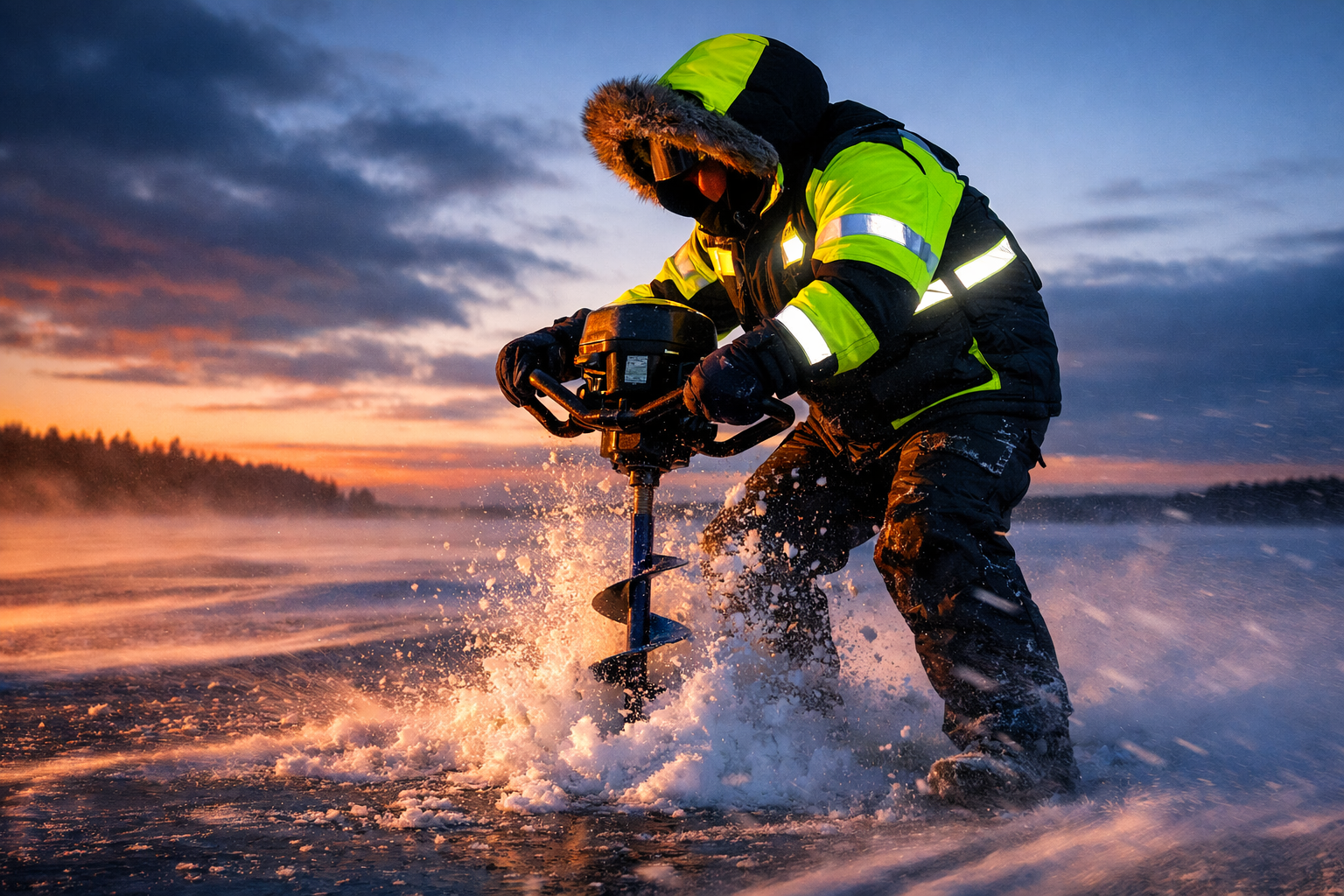
- Reflective strips on hood edges boost low-light visibility, a safety factor when you’re on the ice before dawn or after sunset.
- Removable hood designs offer versatility for multi-season anglers but sacrifice the sealed wind resistance of fixed, articulated hoods.
- Fur ruffs along the face opening break wind turbulence and reduce heat loss from the face and neck area.
- 3-in-1 modular jacket systems pair well with adjustable hoods for anglers who fish both open water and ice.
Quick Answer
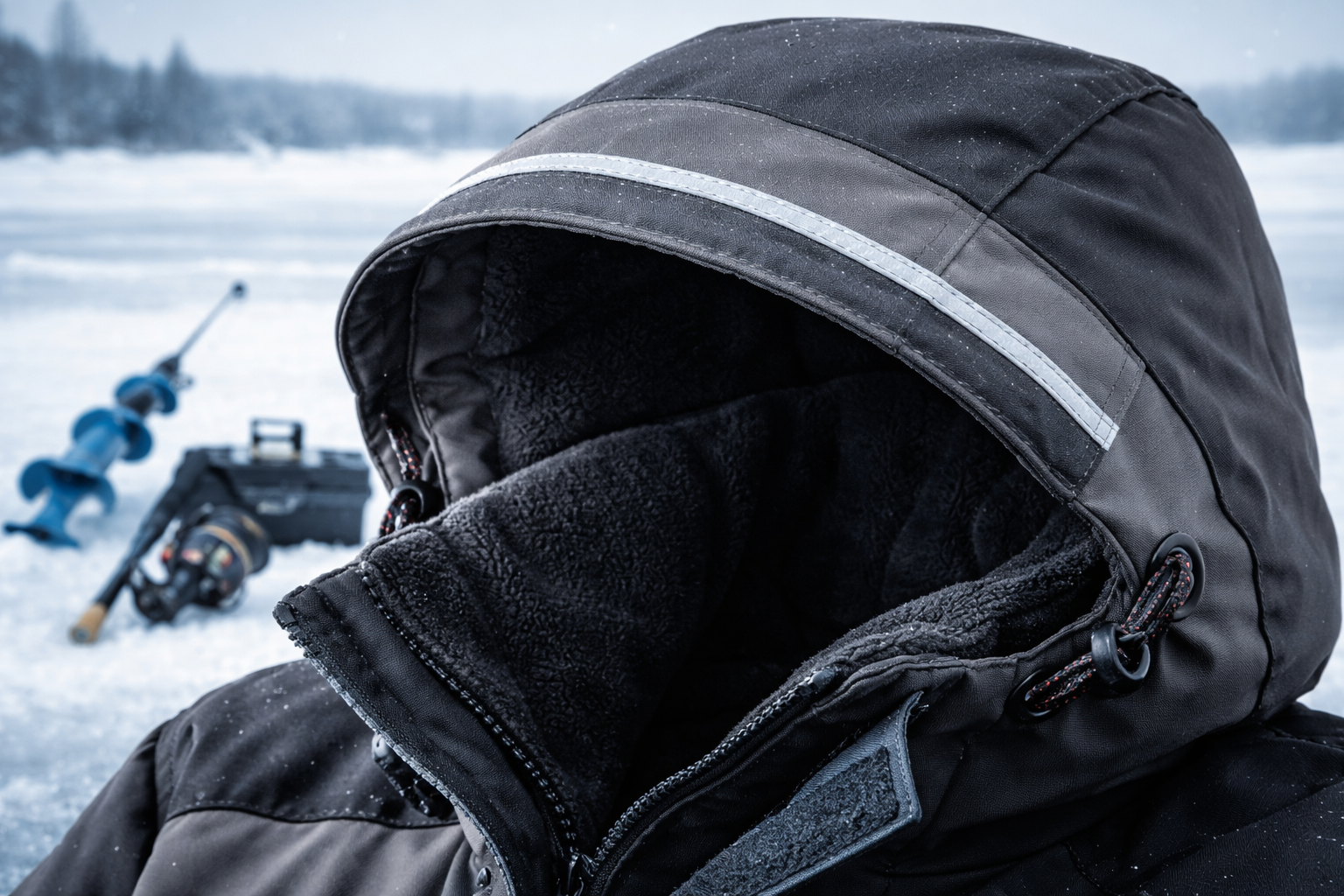
The best 2026 ice fishing jacket hoods combine a wire-reinforced brim for shape retention, fleece lining for comfort against skin, and a multi-point cinch system that locks the hood in place during wind gusts without blocking your view of electronics or tip-ups. Striker’s Climate series leads in this category with embedded wire and reflective elements, while Eskimo’s Legend line prioritizes insulation weight for extreme cold. Choose based on whether you move between holes frequently (prioritize fit and visibility) or sit in one spot for hours (prioritize insulation).
Why Hood Design Matters More Than You Think on the Ice
A poorly designed hood creates blind spots. You miss flag pops on your tip-ups. You lose awareness of changing ice conditions. And in wind, a floppy hood becomes a constant distraction that pulls your focus from fishing.
Ice fishing demands a hood that does three things at once: blocks wind from reaching your face and neck, maintains your peripheral vision for safety and situational awareness, and stays put when you bend over a hole or whip a rod on a hookset. The 2026 models from major brands address all three, but they do so with different engineering approaches.
For the multi-season adventurer who transitions between saltwater kayak fishing and ice, understanding hood construction helps you evaluate whether a jacket serves double duty or belongs strictly on hard water.
How Do Wire-Reinforced Brims Improve Visibility in 2026 Hood Designs?
Wire-reinforced brims are the single biggest improvement in ice fishing hood design over the past two years. A thin, flexible wire sewn into the brim of the hood lets you shape the opening around your face and hold that shape against wind.
Reviewer Joe Shead tested the Striker Climate hood during windy hole-hopping sessions and called the wire brim a “definite plus” over competitors where hoods slipped down and blocked the view of electronics. The wire keeps the hood opening positioned above your eyeline, so you maintain full forward and downward vision to read your flasher or sonar.
What to look for in a wire brim:
- The wire should run along the full front edge of the hood, not just the top
- Bend the brim before buying to confirm the wire holds its shape after repeated adjustments
- Check that the wire does not create pressure points against your forehead when cinched tight
Common mistake: Anglers who wear baseball caps under their hoods often push the wire brim forward, creating a gap at the temples where wind enters. If you wear a cap, choose a hood with a deeper face opening that accommodates the bill.
What Makes a Hood Stay Secure During Casting and Wind Gusts?
The answer is a multi-point adjustment system. A single rear drawcord is not enough. The best 2026 hoods use two or three adjustment points: one at the face opening, one at the back of the head, and sometimes a chin strap or magnetic closure.
The Striker Climate series uses an adjustable fleece-lined hood with drawcords that let you cinch the face opening tight while keeping the back of the hood snug against your head. This two-point system prevents the hood from rotating when you turn your head to check a tip-up or look over your shoulder.
Fur ruffs along the face opening serve a dual purpose. They break incoming wind before the air reaches your skin, and they create a soft seal around your face that reduces heat loss. Synthetic fur ruffs perform better than natural fur in wet conditions because they dry faster and resist clumping.
Decision rule: Choose a fixed, articulated hood if you fish exposed lakes with sustained winds above 15 mph. Choose a removable hood if you split time between sheltered bays and open ice, or if you fish from a portable shanty where a hood gets in the way.
For anglers who build and customize their own gear setups, understanding these adjustment mechanisms helps you evaluate whether aftermarket modifications are worth the effort.
How Do 2026 Models Address Wind Resistance in Hood Construction?
Wind resistance in a hood comes down to three factors: shell material, seam sealing, and the hood’s ability to maintain its shape under pressure.
The Striker Climate series uses a Hydrapore membrane rated at 5k/5k (waterproofing/breathability), which blocks wind while allowing moisture vapor to escape. Eskimo’s Legend and Expedition jackets step up to a 10k/10k rating with fully taped seams, creating a tighter wind barrier at the cost of slightly less breathability.
Hood wind resistance comparison for 2026 models:
| Feature | Striker Climate | Eskimo Legend | Norfin Element 2 |
|---|---|---|---|
| Wire-reinforced brim | Yes | No | No |
| Insulation (hood) | Fleece lining | 100g Thinsulate | Heavy fleece |
| Waterproof rating | 5k mm | 10k mm | Not rated |
| Removable | No (fixed) | Yes | No (fixed) |
| Reflective elements | Yes | Limited | No |
| Fur ruff | No | No | No |
| Temperature rating | Moderate cold | Extreme cold | Rated to -45F |
The Norfin Element 2 earns praise for extreme cold protection (rated to -45F) but lacks the wire brim and reflective elements found on the Striker [1]. If you fish in brutal temperatures but moderate wind, the Norfin hood works. For windy conditions with moderate cold, the Striker hood performs better.
Edge case: Anglers who fish during early ice or late ice, when temperatures fluctuate and rain or sleet is possible, benefit from the higher waterproof ratings of the Eskimo line. A hood that soaks through in freezing rain becomes a liability fast.
How Does Hood Insulation Affect Fit and Comfort?
Thicker insulation in the hood creates a tighter fit around the head, which reduces peripheral vision unless the hood is cut larger to compensate. This is the core tradeoff between warmth and visibility.
Eskimo’s approach uses 100g Thinsulate in the body and hood area, with 60g in the sleeves to maintain arm mobility [4]. The heavier insulation in the hood keeps your head warm during long sits but adds bulk that narrows your field of view.
Striker takes a different approach with fleece lining instead of synthetic insulation in the hood. Fleece compresses less than Thinsulate, so the hood maintains a more consistent shape. The tradeoff is less warmth in extreme cold.
Choose insulated hoods (100g Thinsulate) if:
- You fish from a stationary position for 4+ hours
- Temperatures drop below -10F regularly
- You use a portable shelter that blocks wind but not cold
Choose fleece-lined hoods if:
- You move between holes frequently
- You need full peripheral vision to monitor multiple tip-ups
- Temperatures stay between 0F and 25F
For more guidance on choosing gear that matches your fishing style, check out the FishOnYak resource hub.
What Role Do Reflective Elements Play in Hood Safety?
Reflective strips on ice fishing hoods serve a specific safety function: they make you visible to snowmobiles, ATVs, and other anglers during low-light conditions. Early morning and late afternoon on the ice put you at risk if other users of the frozen lake cannot see you.
The Striker Climate hood includes reflective elements along the hood edges that activate under direct light [2]. Field data from the 2025/2026 season suggests these reflective strips improve angler visibility by a meaningful margin in dawn and dusk conditions.
Practical tip: If your hood lacks reflective elements, add reflective tape to the back and sides of the hood yourself. 3M Scotchlite tape adheres well to most shell fabrics and costs under $10.
How Do 3-in-1 Modular Systems Change Hood Performance?
The trend toward 3-in-1 modular jacket systems affects hood design because the hood must work with multiple layering configurations. Industry reviewers note the shift toward versatile systems like Striker’s, where the hood adjustability supports multi-season use.
A modular system pairs an outer shell with a removable insulating liner. The hood attaches to the outer shell and must fit properly whether the liner is installed or removed. This means the hood needs extra volume to accommodate the liner’s bulk around the collar and neck.
The tradeoff: Modular hoods fit looser when the liner is removed, which reduces wind resistance. Some anglers solve this by cinching the drawcords tighter, but this narrows the face opening and cuts peripheral vision.
If you’re a multi-season angler who fishes both open water and ice, a modular system makes financial sense. But if you fish ice exclusively, a dedicated ice jacket with a fixed, articulated hood will outperform a modular hood in wind and cold. Learn more about transitioning between fishing seasons on the FishOnYak blog.
What About Float Suit Hoods and Safety on the Ice?
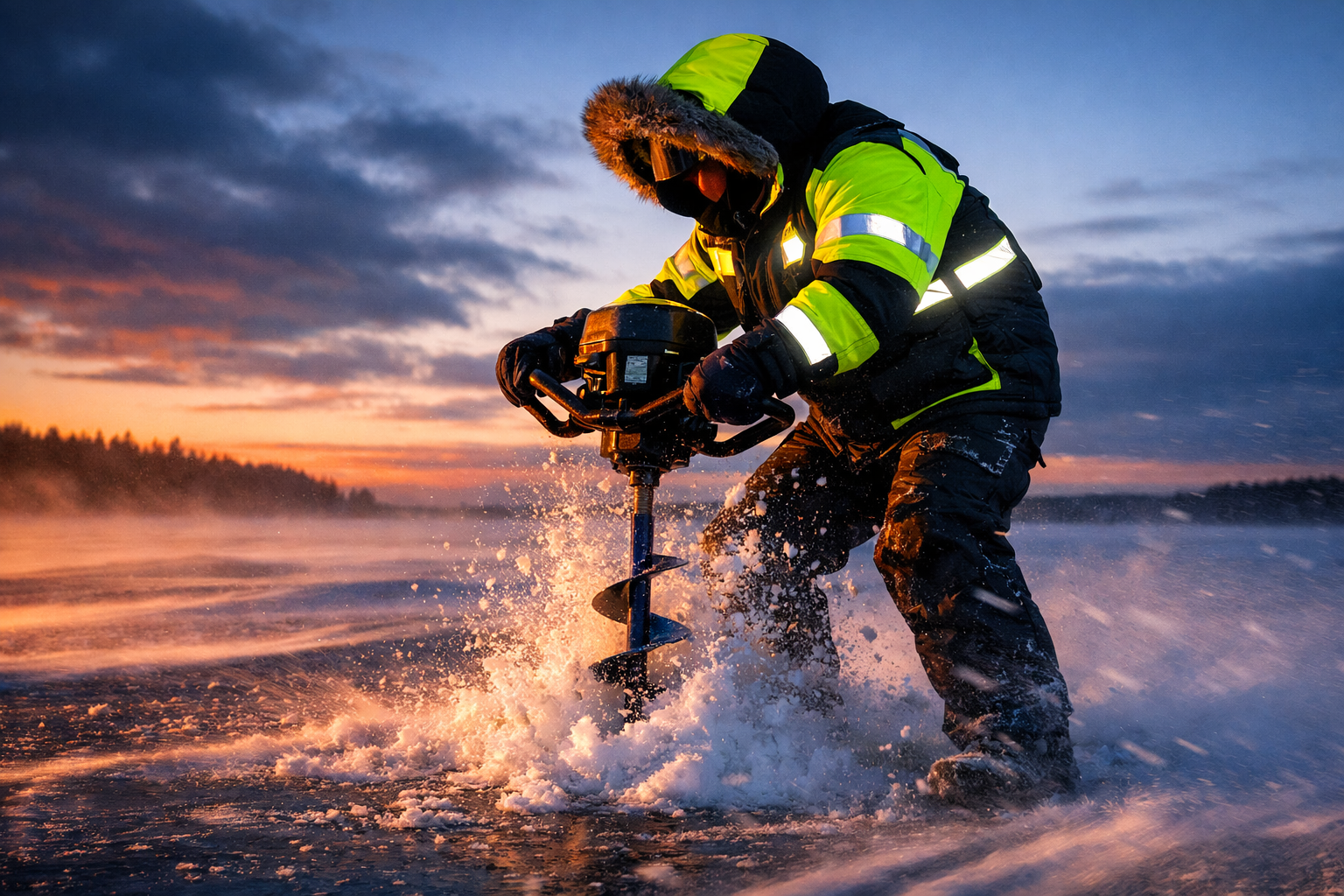
Float suits like the Frabill I-Float and Striker Sureflote incorporate buoyant foam into the hood and collar area. This foam provides flotation if you break through the ice, but adds stiffness that limits hood adjustability.
The Frabill I-Float offers 35+ pounds of buoyancy with flexible foam distributed through the jacket, including the hood and collar zones [5]. The Striker Sureflote uses a perforated foam design that balances flotation (rated for 2-hour float time) with breathability.
Decision rule: If you fish early ice (first 3 weeks after freeze-up) or late ice (last 2 weeks before breakup), a float suit hood is worth the reduced adjustability. During mid-season on thick, stable ice, a standard insulated hood gives you better fit and visibility.
For anglers focused on fluid safety, understanding when to prioritize flotation over comfort is part of the tactical angling mindset. Visit FishOnYak’s practice resources for more on safety-first approaches.
Hood Design Innovations for Ice Fishing Jackets: Visibility, Fit, and Wind Resistance in 2026 Models, a Step-by-Step Buying Checklist
Use this checklist when evaluating hoods on your next ice fishing jacket purchase:
- Test the brim. Press the front edge of the hood. Does the wire (if present) hold its shape? Does the brim stay above your eyeline?
- Check adjustment points. Count the drawcords and closures. Two or more adjustment points beat a single rear drawcord.
- Assess peripheral vision. Put the hood on and cinch the adjustments. Turn your head 90 degrees left and right. Your vision should remain unobstructed.
- Evaluate insulation type. Fleece for mobility. Thinsulate for stationary warmth.
- Inspect seam sealing. Run your finger along the interior seams of the hood. Taped seams block wind and water. Untaped seams leak.
- Look for reflective elements. Check the back and sides of the hood for reflective strips or logos.
- Test with your headwear. Wear whatever hat or balaclava you normally use under the hood. Confirm the fit still works.
- Check helmet compatibility. If you ride a snowmobile or ATV to your spot, verify the hood fits comfortably under or over your helmet.
FAQ
Q: Do wire-reinforced hood brims break over time? A: The wire bends repeatedly without breaking in most models. Striker’s embedded wire design has held up through full-season testing without reported failures [2]. Avoid storing the jacket with the hood crushed flat for extended periods.
Q: Should I choose a removable or fixed hood for ice fishing? A: Fixed hoods seal better against wind and cold. Removable hoods offer versatility if you fish from shelters where a hood gets in the way. For open-ice fishing in wind, fixed hoods perform better.
Q: How do I prevent my hood from fogging up my glasses? A: Choose a hood with a face opening large enough to allow airflow across your lenses. A wire brim helps because you position the hood higher on your forehead, directing your breath downward instead of up into your glasses.
Q: Are fur ruff hoods worth the extra cost? A: Fur ruffs break wind turbulence at the face opening and reduce heat loss. Synthetic fur ruffs outperform natural fur in wet conditions. They add $20 to $40 to jacket cost and provide a noticeable comfort improvement in sustained winds.
Q: What waterproof rating do I need for an ice fishing hood? A: A 5k mm rating handles light snow and wind-driven moisture. A 10k mm rating protects against freezing rain and heavy wet snow. For most ice fishing conditions, 5k mm is sufficient.
Q: Do 2026 ice fishing hoods work with electronic hearing protection or earbuds? A: Most 2026 hoods accommodate low-profile earbuds. Over-ear hearing protection requires a hood with a larger volume. Test fit before buying.
Q: How much does hood design affect overall jacket price? A: Hoods with wire brims, reflective elements, and multi-point adjustment systems add an estimated $30 to $60 to jacket cost compared to basic pullover hoods.
Q: Is a balaclava a good substitute for a well-designed hood? A: A balaclava handles warmth but provides zero wind resistance structure. Pair a balaclava with a good hood for the best results. One does not replace the other.
Conclusion
Hood design on ice fishing jackets in 2026 comes down to three priorities: keeping wind out, keeping vision clear, and keeping the hood locked in place during active fishing. Wire-reinforced brims, multi-point cinch systems, and strategic insulation placement separate the best hoods from the rest. Match your hood choice to how you fish. Move between holes often, and you need visibility and fit. Sit in one spot for hours, and you need insulation. Fish early or late ice, and you need flotation. Test every hood with your normal headwear before buying, and check for reflective elements if you fish low-light hours. Kayak. Drill. Catch. Repeat.
See you on the water.
References
[1] Best Ice Fishing Suits – https://www.outdoorlife.com/gear/best-ice-fishing-suits/ [2] Striker Climate Ice Fishing Suit Review – https://www.si.com/onsi/fishing/freshwater/striker-climate-ice-fishing-suit-review [3] Watch – https://www.youtube.com/watch?v=3rqDaaFZDPU [4] The 10 Best Ice Fishing Jacket Reviewed – https://bowinsgarment.com/the-10-best-ice-fishing-jacket-reviewed/ [5] Best Fishing Rain Gear 2026 – https://windrider.com/blogs/tips-and-tricks/best-fishing-rain-gear-2026 [7] Climate Series 25 – https://www.strikerbrands.com/collections/climate-series-25 [10] The 7 Best Ice Fishing Coats Review – https://www.bwfishingclothing.com/the-7-best-ice-fishing-coats-review/