Last updated: March 5, 2026
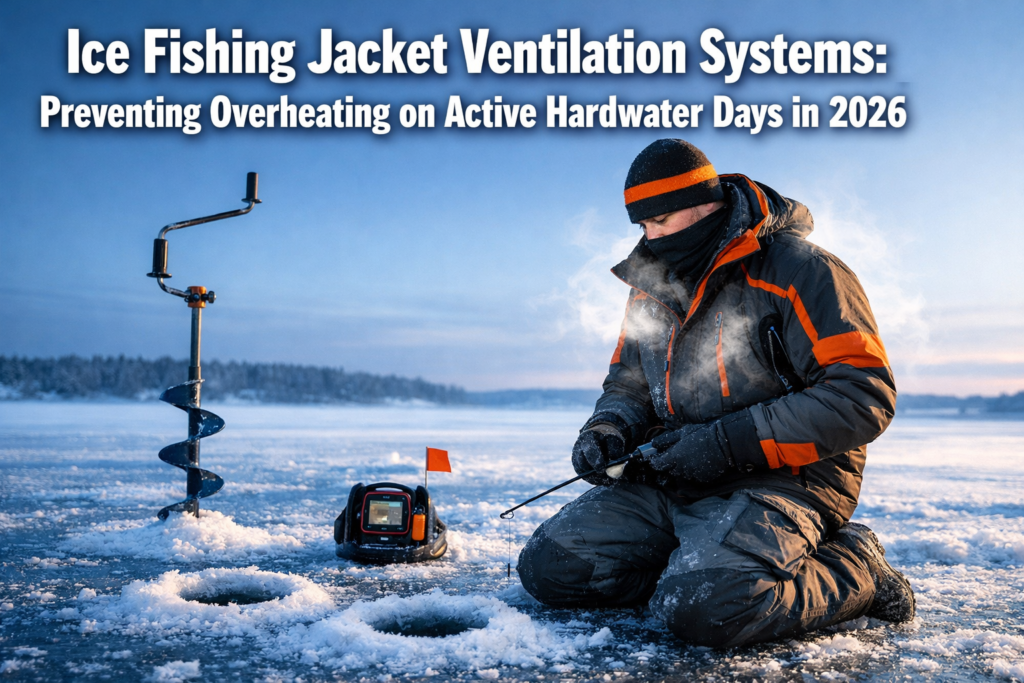
Drilling holes, hauling sleds, and hole-hopping across a frozen lake will make you sweat. That sweat, trapped inside the wrong jacket, turns into a serious comfort and safety problem. Ice fishing jacket ventilation systems prevent overheating on active hardwater days in 2026 by combining mechanical venting features (pit zips, back vents, adjustable cuffs) with breathable membrane fabrics that move moisture vapor away from your body. This guide breaks down how these systems work, which features matter most, and how to choose the right setup for your style of fishing.
Key Takeaways
- Pit zips are the single most effective ventilation feature for ice anglers. They create a convection “chimney effect” that dumps heat fast during high-exertion tasks [9].
- Breathable membranes alone are too slow for active anglers. You need mechanical venting (pit zips, back vents) combined with breathable fabric for full moisture control.
- Sweat-soaked clothing pulls heat from your body and creates a hypothermia risk. Proper ventilation is a safety issue, not a comfort preference [2].
- Graphene-infused textiles are showing up in 2026 ice fishing apparel, offering better thermal conductivity and breathability in a lighter package [3][6].
- Heated jackets with USB-powered elements offer temperature control but add cost ($200 to $250 more) and require battery management [10].
- Flotation-focused jackets sacrifice breathability for safety. Know the tradeoff before you buy [10].
- Layering with removable components gives you the most flexibility for variable temps throughout the day [2].
Quick Answer
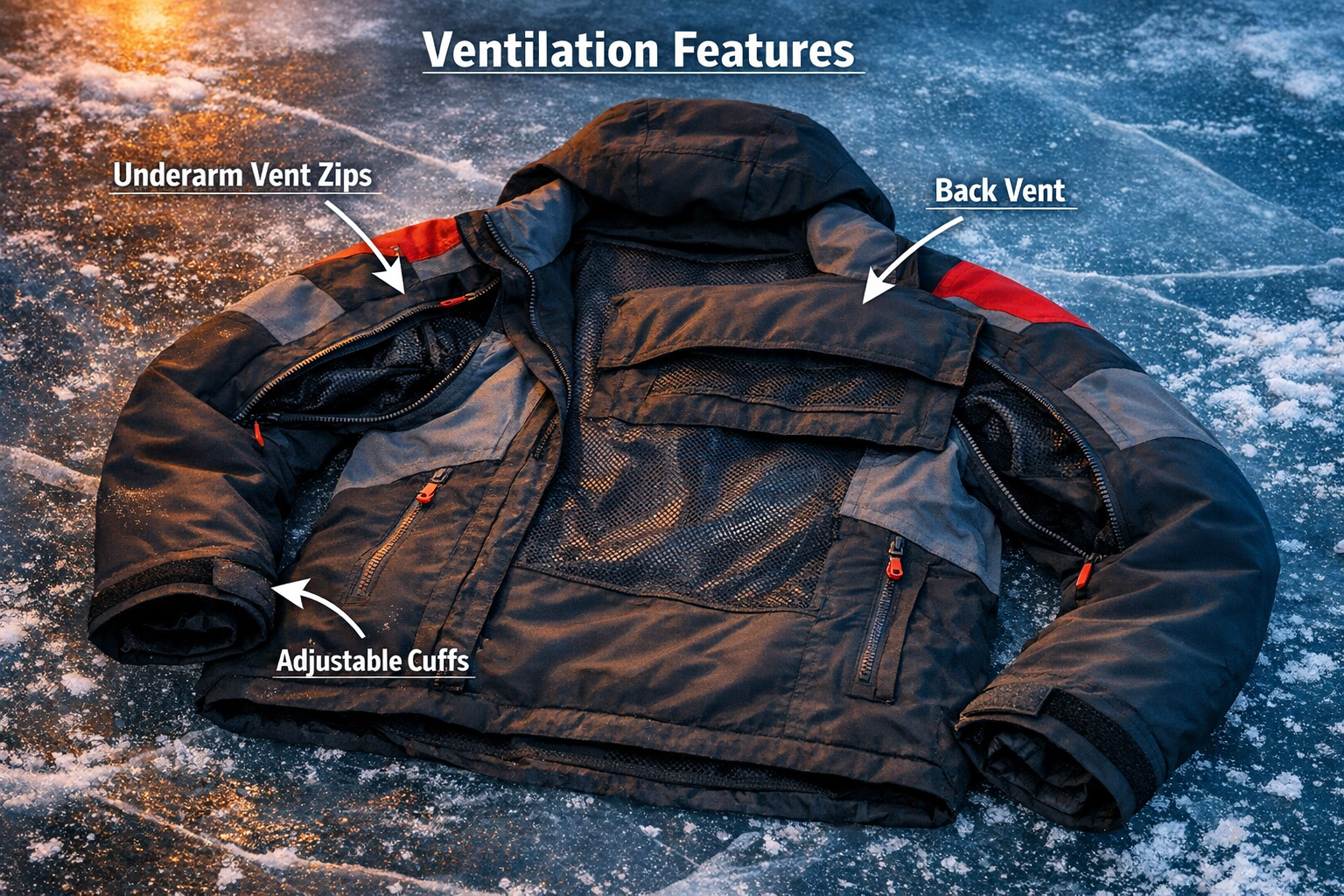
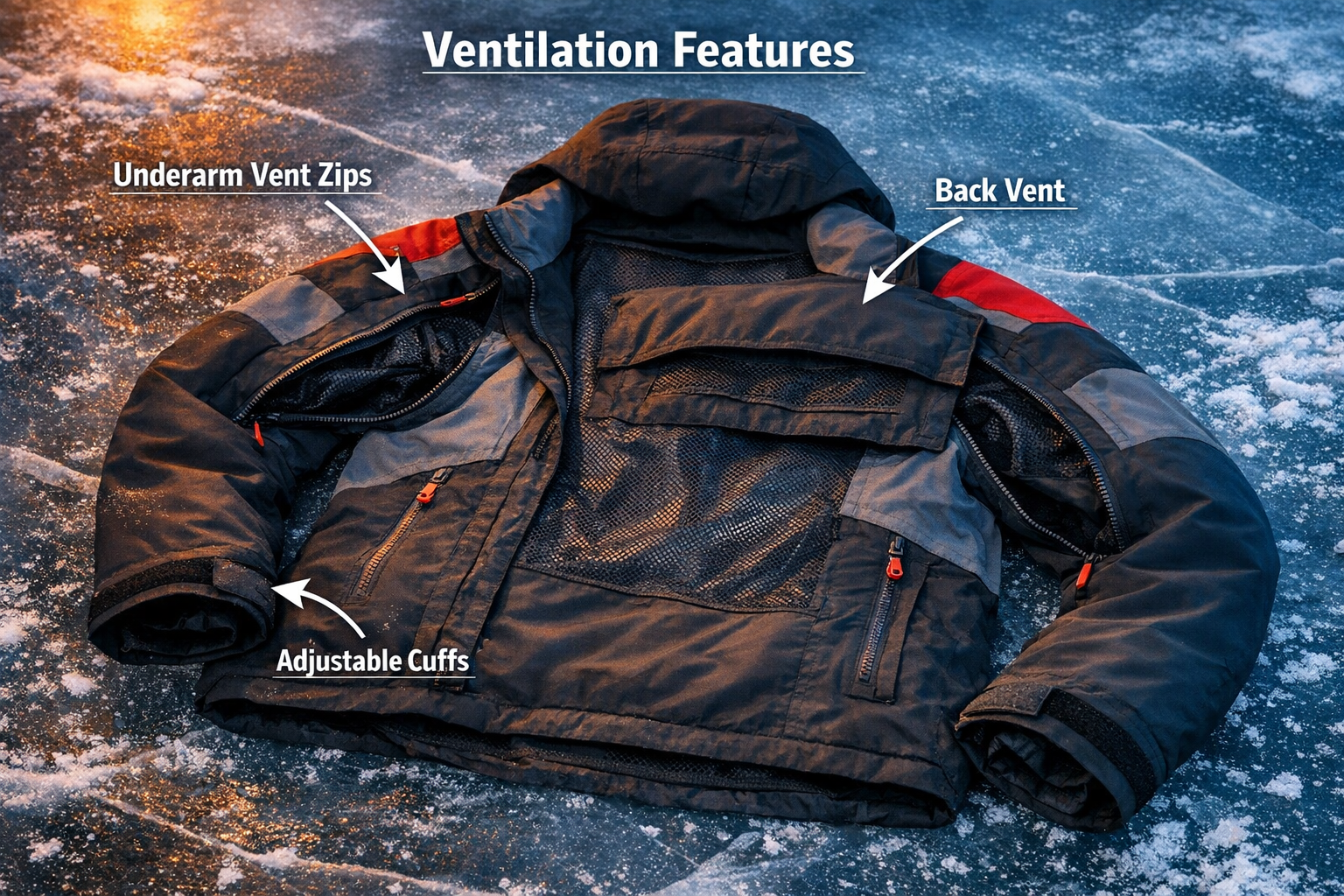
The best ice fishing jackets in 2026 pair breathable waterproof membranes (15,000+ g/m2/24hr MVTR) with mechanical ventilation features like 8 to 12 inch pit zips, mesh-backed back vents, and adjustable cuffs. This combination lets you dump excess heat during high-output activities (drilling, pulling sleds) and seal up when you’re sitting still over a hole. Choose a jacket with pit zips as your minimum requirement. Add back vents and adjustable hoods if you hole-hop frequently.
Why Do Ice Anglers Overheat in the First Place?
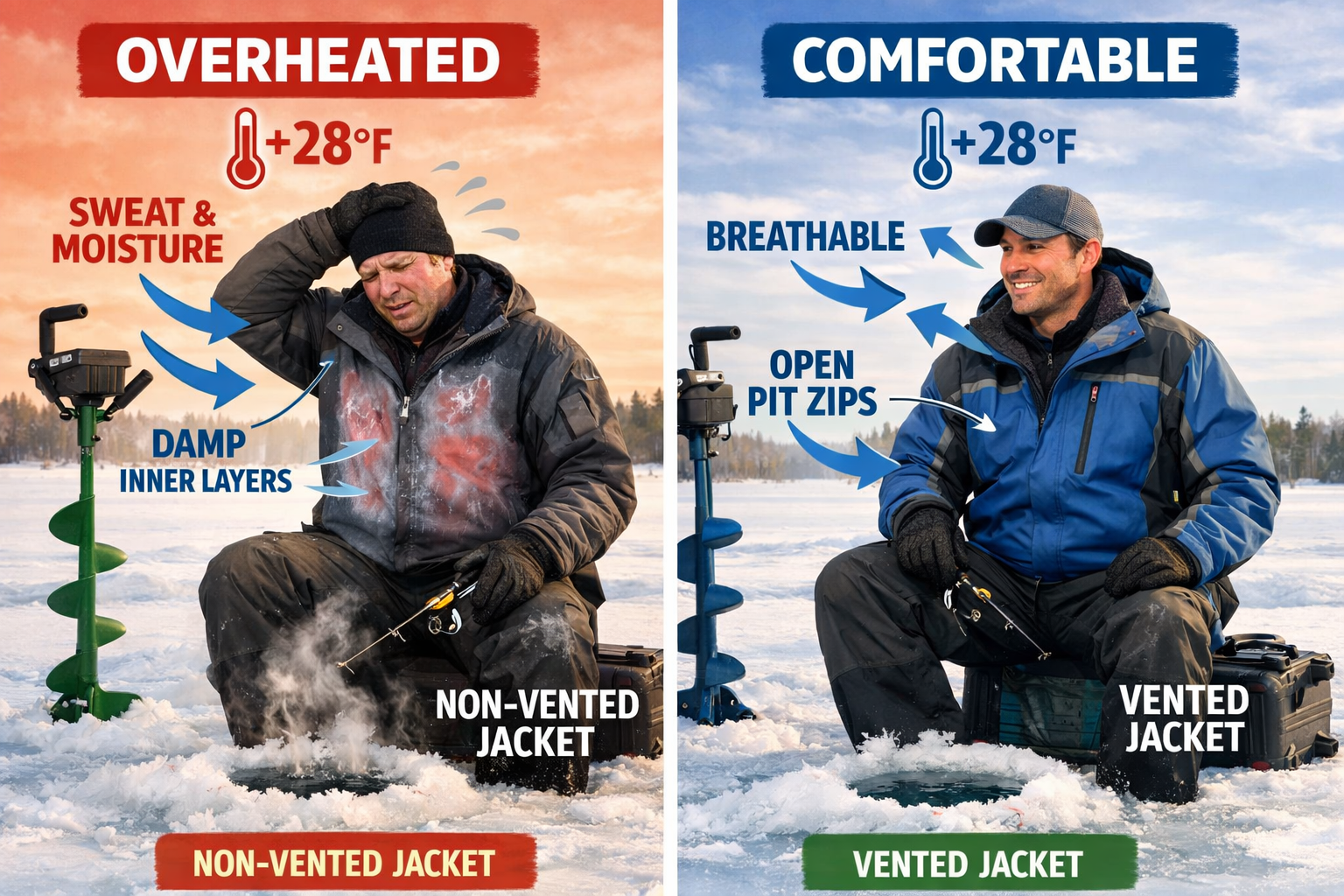
Most anglers dress for the coldest moment of the day, which is usually the walk from the truck to the first hole. But the hardest physical work happens in the first 30 to 60 minutes: hauling gear, drilling holes, setting up. Your body generates significant heat during these tasks.
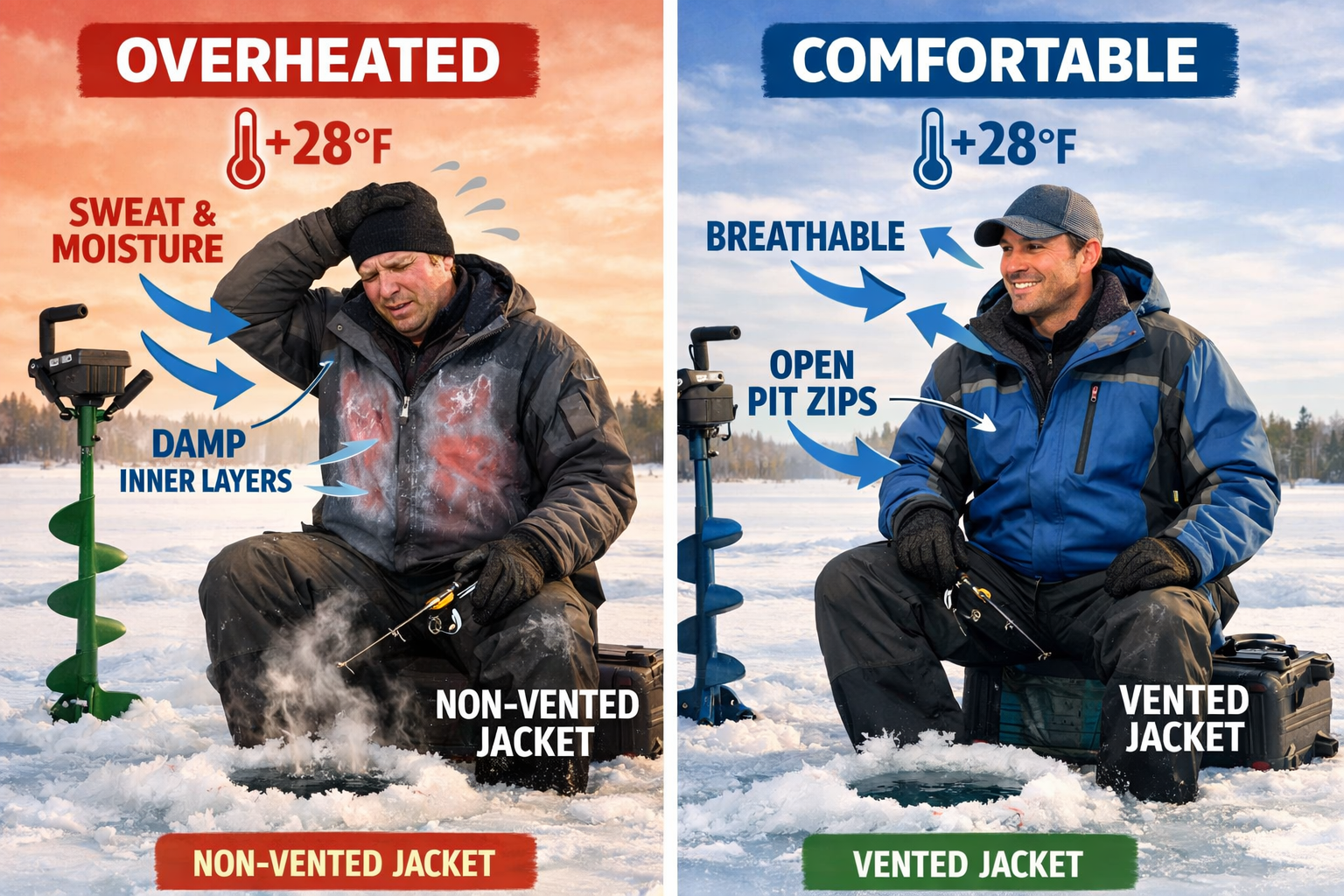
A jacket without ventilation traps that heat and moisture inside. Breathable membranes work through passive vapor diffusion, which is a slow process. When your exertion level spikes, passive diffusion alone cannot keep up. The result is condensation building inside your jacket, soaking your mid-layers.
According to Sail.ca’s ice fishing guide, wearing wet, sweat-soaked clothing pulls heat from the body rapidly [2]. Once you stop moving and sit over a hole, that moisture becomes a direct path to hypothermia. This is why ice fishing jacket ventilation systems for preventing overheating on active hardwater days in 2026 are a safety feature, not a luxury.
Common overheating triggers on the ice:
- Drilling multiple holes with a heavy auger
- Pulling a loaded gear sled across uneven ice
- Hole-hopping between spots throughout the day
- Fighting fish in heavy outerwear
- Walking long distances from parking to fishing spots
What Ventilation Features Should You Look For in 2026?
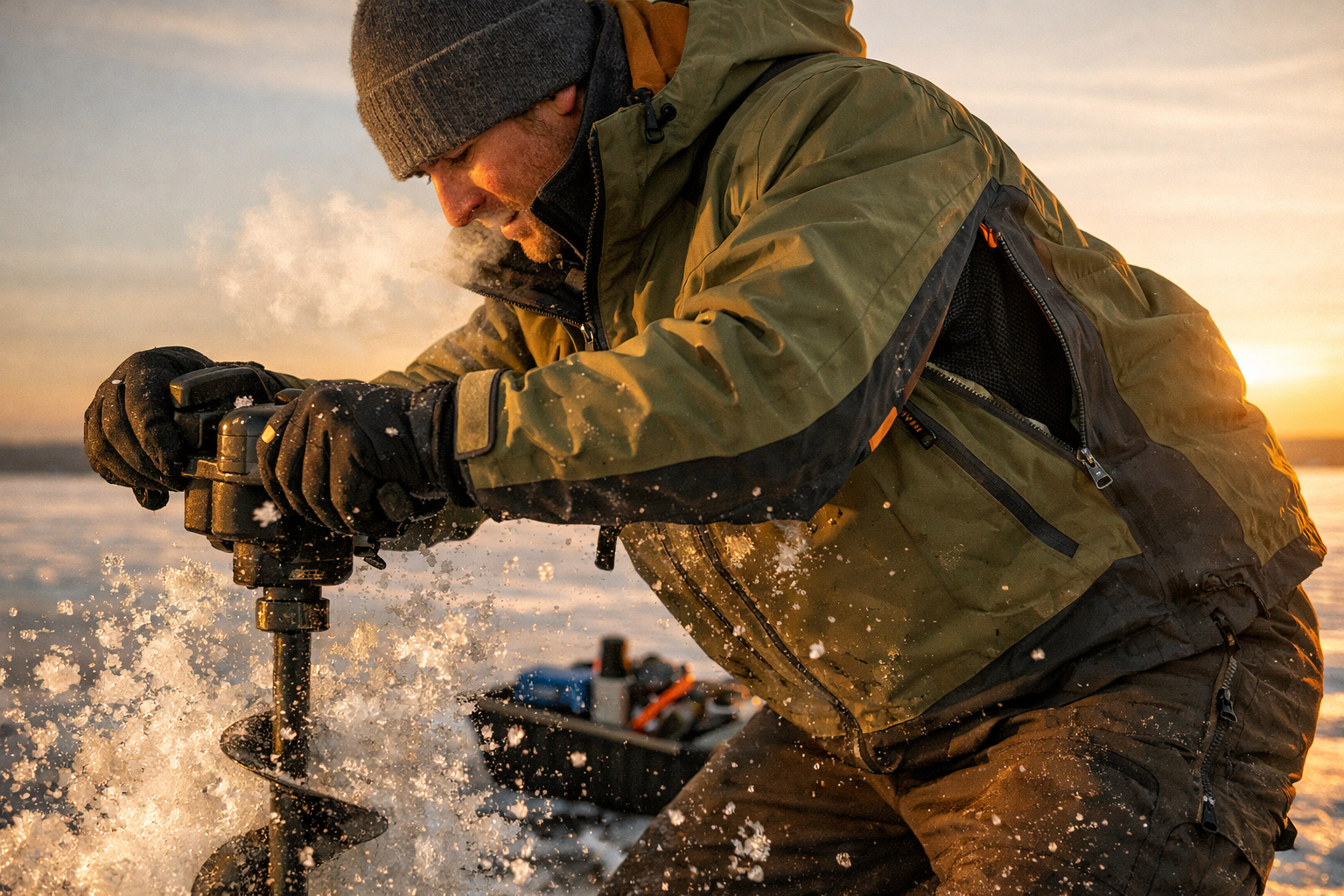
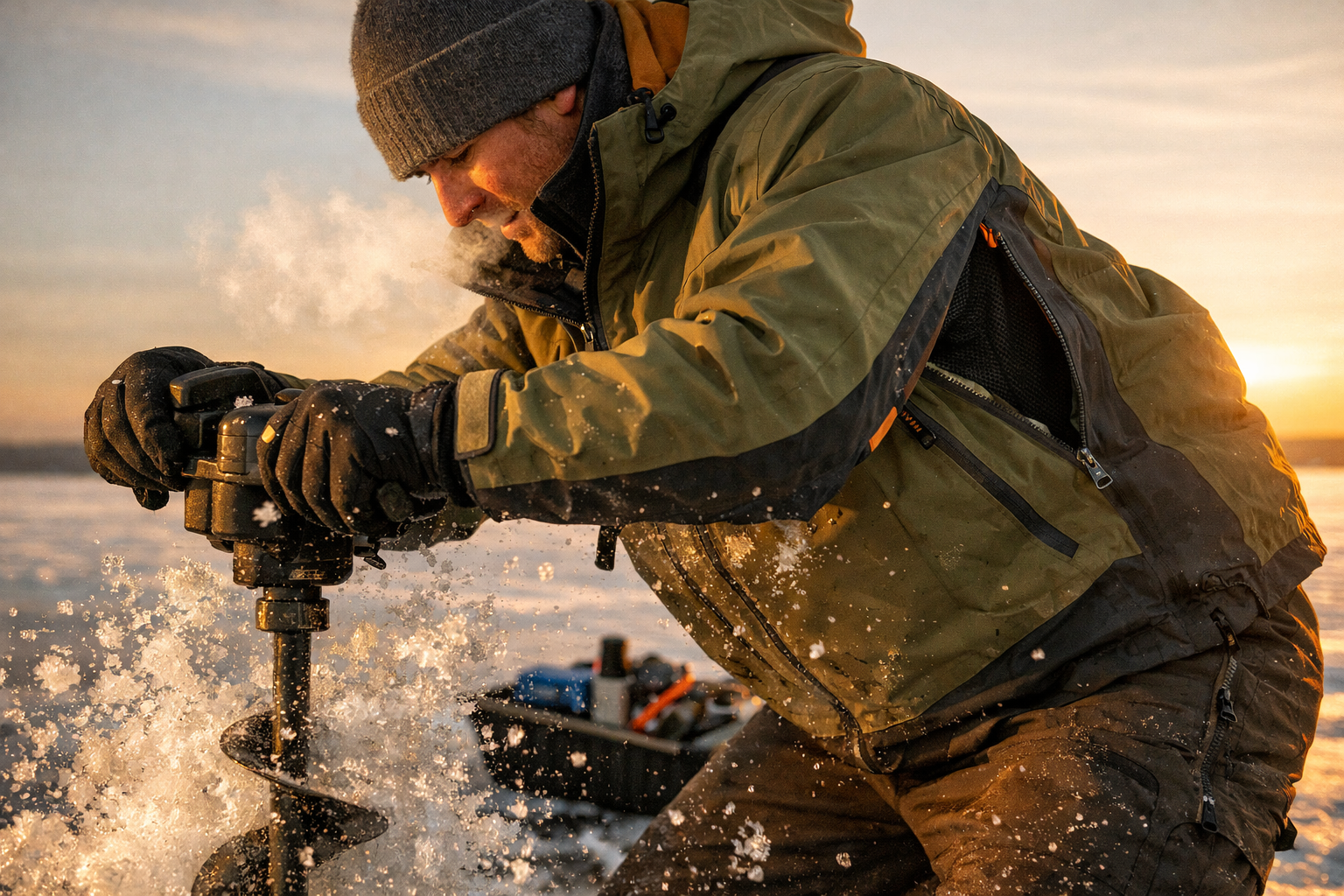
Start with pit zips. They are the most important single ventilation feature on any ice fishing jacket. According to WindRider’s analysis, pit zips extending 8 to 12 inches from mid-chest to mid-torso create a chimney effect that rapidly evacuates built-up heat and humidity [9]. Quality jackets with pit zips reduce internal moisture by 70 to 80 percent compared to jackets without ventilation features.
Beyond pit zips, look for these features:
Back vents: Mesh-backed openings along the upper back or yoke area. These work with pit zips to create cross-flow airflow. The Striker Apex Series uses a “Cross Flow Venting System” with adjustable hem and sleeve cuff controls for this purpose [7].
Adjustable cuffs and hems: Velcro or drawcord closures at the wrists and waist let you open up airflow from below. Loose cuffs allow cool air to enter while warm air exits through upper vents.
Adjustable hoods: A hood you can open, tighten, or remove entirely gives you a major heat-release valve at the top of your body. Your head and neck release a large percentage of body heat.
Mesh liners: Interior mesh panels create a small air gap between your body and the jacket shell. This gap improves air circulation and speeds moisture transport.
Two-way front zippers: Unzipping from the bottom lets you vent your core without fully opening the jacket to wind.
| Feature | Heat Dump Speed | Wind Protection When Closed | Complexity |
|---|---|---|---|
| Pit zips (8-12 inch) | Fast | High | Low |
| Back vents | Moderate | Moderate | Low |
| Adjustable cuffs | Moderate | High | Low |
| Two-way front zip | Fast | Moderate | Low |
| Mesh liner | Slow (passive) | High | None |
| Removable hood | Fast (head heat) | Variable | Low |
Choose pit zips plus back vents if you hole-hop frequently and alternate between high exertion and sitting still. Choose pit zips plus adjustable cuffs if you fish from a shelter and need quick adjustments without standing up.
How Do Breathable Membranes and Mechanical Venting Work Together?
Breathable waterproof membranes and mechanical vents handle two different speeds of moisture removal. You need both for active ice fishing.
Breathable membranes (like Gore-Tex or polyurethane coatings) allow water vapor to pass through the fabric from inside to outside. The Simms Challenger Insulated Jacket achieves a 15,000 g/m2/24hr breathability rating with a 2-layer Gore-Tex shell and 20,000 mm waterproof rating [10]. That breathability number represents the maximum amount of moisture vapor the fabric transfers in 24 hours under lab conditions.
The problem: during a burst of drilling or sled-hauling, your body produces moisture faster than any membrane transfers. That is where mechanical venting takes over. Opening pit zips creates active convection. Cool outside air enters, warm moist air exits. The exchange happens in seconds, not hours.
The practical rule: Use your breathable membrane as your baseline moisture management. Use your pit zips and vents for burst heat dumps during high-exertion moments. Close everything back up when you sit down to fish. This approach keeps you dry and warm across the full range of activity levels on a hardwater day.
For more fishing-specific gear guidance and expert coaching, check out the services offered at FishOnYak.
Ice Fishing Jacket Ventilation Systems: Preventing Overheating on Active Hardwater Days in 2026 with New Fabric Technology
Graphene-infused textiles represent the biggest material development in ice fishing apparel for 2026. Manufacturers are incorporating graphene into insulation layers and shell fabrics [3][6]. Graphene conducts heat efficiently, which means the material distributes warmth evenly across the jacket rather than creating hot spots. When you open a vent, the heat redistributes and exits more efficiently.
The Graphene-X AeroGraph Puffer Jacket (ISPO Award winner, 2025) features Weather Adaptive Insulation with aerogel tubes that inflate or deflate based on temperature. This allows continuous thermal adjustment without manual intervention. While this specific jacket targets general outdoor use, the technology is filtering into ice fishing specific designs in 2026.
What graphene means for you as an ice angler:
- Lighter jacket weight at the same warmth level
- Faster heat distribution when vents are opened
- Better moisture management through the insulation layer
- Reduced bulk, which improves mobility for drilling and jigging
Heated jacket systems offer another approach. The BOWINS 2 in 1 Winter Ice Fishing Jacket uses USB-powered carbon fiber heating elements with three settings: 45 degrees C (low), 50 degrees C (medium), and 55 degrees C (high). A 10,000 mAh power bank runs the system for 6 to 8 hours [10]. The advantage is precise temperature control. The downside is battery dependency, added weight, and $200 to $250 in extra cost compared to traditional vented jackets.
Choose graphene-infused passive systems if you want lightweight, low-maintenance temperature regulation. Choose heated systems if you sit in one spot for long periods and want precise warmth control without layering adjustments.
How Should You Layer Under a Vented Ice Fishing Jacket?
Your ventilation system only works if your layering supports it. A cotton base layer under the best-vented jacket will still leave you wet and cold.
Step 1: Base layer. Wear a moisture-wicking synthetic or merino wool base layer against your skin. This pulls sweat away from your body and into the next layer.
Step 2: Mid layer. Use a fleece or synthetic insulation mid-layer that continues moving moisture outward. Avoid down insulation for active ice fishing because down loses its insulating properties when wet.
Step 3: Shell (your vented jacket). The outer layer blocks wind and precipitation while providing mechanical ventilation for heat dumps.
Sail.ca’s ice fishing guide emphasizes that layering with removable components allows anglers to prevent overheating during high-exertion tasks [2]. Carry your mid-layer in your sled if the day warms up. Strip down to your base layer and shell during drilling sessions. Add the mid-layer back when you sit down to fish.
Common mistake: Wearing too many layers “just in case.” Overdressing with a vented jacket defeats the purpose. Start lighter than you think you need. Your ventilation system handles the rest.
For more tips on preparing your gear before the season starts, visit the FishOnYak blog for regular updates.
What Are the Tradeoffs Between Flotation Jackets and Breathable Vented Jackets?
Safety-focused flotation jackets like the Frabill I-Float (Coast Guard PFD certified) prioritize buoyancy, built-in ice picks, and drainage mesh [10]. These features save lives if you break through the ice. But they come at a breathability cost.
The Frabill I-Float uses heavier 300-denier nylon construction and weighs 36 ounces total. Compare that to the Clam Edge at 24 ounces [10]. The heavier construction and flotation foam reduce airflow and limit ventilation options.
Decision framework:
- Fish alone or on early/late ice: Prioritize flotation. Accept reduced breathability and compensate with lighter base layers.
- Fish with partners on thick, mid-season ice: Prioritize ventilation and breathability. Carry a separate PFD or float-assist device.
- Hole-hop aggressively all day: Breathability matters more. A soaked angler in a flotation jacket still faces hypothermia risk from moisture buildup.
No single jacket does everything perfectly. Understand what you are trading away with each choice. The FishOnYak team emphasizes that Fluid Safety means matching your gear to your specific conditions, not buying one jacket for every scenario.
How Do You Maintain Your Jacket’s Ventilation Performance Over Time?
Ventilation systems lose effectiveness when zippers clog, DWR coatings wear off, or mesh panels get compressed by improper storage.
Maintenance checklist:
- Clean pit zip and vent zippers with a soft brush after each trip. Ice, salt, and debris jam zipper teeth over time.
- Apply zipper lubricant (paraffin wax or silicone-based) every 5 to 10 uses.
- Reapply DWR (durable water repellent) spray to the shell fabric at the start of each season. A failed DWR coating causes the outer fabric to “wet out,” which blocks moisture vapor transmission through the membrane.
- Hang your jacket on a wide hanger in a dry space. Stuffing a vented jacket into a compression sack crushes mesh panels and deforms vent openings.
- Wash according to manufacturer instructions. Most technical shells need a gentle cycle with tech wash (no regular detergent) and a low-heat tumble dry to reactivate DWR.
Edge case: If your pit zips start leaking water during wet snow or sleet, the zipper tape’s waterproof coating has worn through. Replace the zippers through the manufacturer’s repair program or a local gear repair shop. A leaking pit zip is worse than no pit zip because the water soaks directly into your insulation layer.
Check the FishOnYak resource hub for more gear maintenance guides tailored to multi-season anglers.
Top Ice Fishing Jackets with Ventilation Systems for 2026
Here is a comparison of jackets that prioritize ventilation for active anglers:
| Jacket | Breathability (g/m2/24hr) | Pit Zips | Back Vents | Weight | Price Range |
|---|---|---|---|---|---|
| Simms Challenger Insulated | 15,000 | Yes | No | ~32 oz | $300 to $400 |
| Striker Apex Series | High (rated) | Yes | Cross Flow System | ~30 oz | $250 to $350 |
| Clam Edge | Moderate | Yes | Yes | ~24 oz | $150 to $250 |
| Grundens Dark and Stormy | 15,000 mm WP | Limited | No | ~28 oz | $200 to $300 |
| BOWINS 2 in 1 Heated | Moderate | No | No | ~38 oz (with battery) | $350 to $500 |
The Striker Apex Series stands out for active anglers because of the Cross Flow Venting System with adjustable hem and sleeve cuff controls [7]. The Simms Challenger leads on raw breathability numbers [10]. The Clam Edge offers the best weight-to-ventilation ratio for hole-hoppers [10].
Choose the Striker Apex if you need maximum airflow control across variable activity levels. Choose the Simms Challenger if you want the highest passive breathability for all-day comfort. Choose the Clam Edge if weight and mobility are your top priorities.
For a deeper look at how to prepare your full ice fishing setup, explore the practice resources at FishOnYak.
Frequently Asked Questions
Do pit zips let cold air in when you are sitting still? Yes, if you leave them open. Close your pit zips when you stop moving. The zipper closure seals the opening and restores full wind protection. Treat pit zips as active controls, not set-and-forget features.
Are heated jackets better than vented jackets for ice fishing? They solve different problems. Heated jackets add warmth on demand but do not remove moisture. Vented jackets remove excess heat and moisture but cannot add warmth. For active anglers who hole-hop, ventilation matters more than heating [10].
What breathability rating should an ice fishing jacket have? Target 15,000 g/m2/24hr or higher for active ice fishing. Lower ratings (5,000 to 10,000) work for sitting in a shelter but will leave you damp during drilling and hauling [10].
How long should pit zips be? Look for 8 to 12 inches. Shorter zips do not create enough airflow. Longer zips (over 12 inches) are rare and unnecessary for most anglers [9].
Does graphene insulation help with ventilation? Graphene distributes heat more evenly, which means hot spots dissipate faster when you open vents. The insulation itself does not vent, but the heat distribution improves the effectiveness of mechanical venting features [3][6].
Should you buy a flotation jacket or a vented jacket? Match your jacket to your conditions. Flotation jackets save lives on thin or uncertain ice. Vented jackets keep you dry and comfortable during active fishing on solid ice. Some anglers carry both and switch based on conditions [10].
How often should you reapply DWR coating? Once per season for regular use. If you notice water no longer beading on the outer fabric, reapply immediately. A saturated outer fabric blocks breathability even if the membrane underneath is intact.
Do back vents work as well as pit zips? Back vents provide moderate airflow and work best in combination with pit zips. Alone, they do not create enough convection to handle high-exertion heat buildup [9].
Wrapping Up Your Ventilation Strategy
Ice fishing jacket ventilation systems prevent overheating on active hardwater days in 2026 by giving you manual control over your body temperature. Pit zips are your primary tool. Back vents, adjustable cuffs, and breathable membranes support them. Layer smart underneath, maintain your gear between seasons, and match your jacket choice to how you fish.
The best ventilation system is the one you use. Open those pit zips when you start drilling. Close them when you sit down. Adjust throughout the day as your activity level changes. Your body stays dry, your core stays warm, and you fish longer with more focus.
Kayak. Drill. Catch. Repeat.
For personalized gear recommendations and expert coaching, reach out through the FishOnYak contact page.
See you on the water.
References
[1] Striker Climate Ice Fishing Suit Review – https://www.si.com/onsi/fishing/freshwater/striker-climate-ice-fishing-suit-review [2] How To Stay Warm Ice Fishing – https://www.sail.ca/blog/how-to-stay-warm-ice-fishing/ [3] New Ice Fishing Gear 2025 – https://carmi.illinois.gov/new-ice-fishing-gear-2025/ [6] New Ice Fishing Gear 2025 – https://forrestertei.cloudblue.com/new-ice-fishing-gear-2025/ [7] Climate Series 25 – https://www.strikerbrands.com/collections/climate-series-25 [9] Best Ice Fishing Suits 2026 Float Warmth Value Compared November 2026 Edition – https://windrider.com/blogs/tips-and-tricks/best-ice-fishing-suits-2026-float-warmth-value-compared-november-2026-edition [10] The 10 Best Ice Fishing Jacket Reviewed – https://bowinsgarment.com/the-10-best-ice-fishing-jacket-reviewed/