Last updated: March 7, 2026
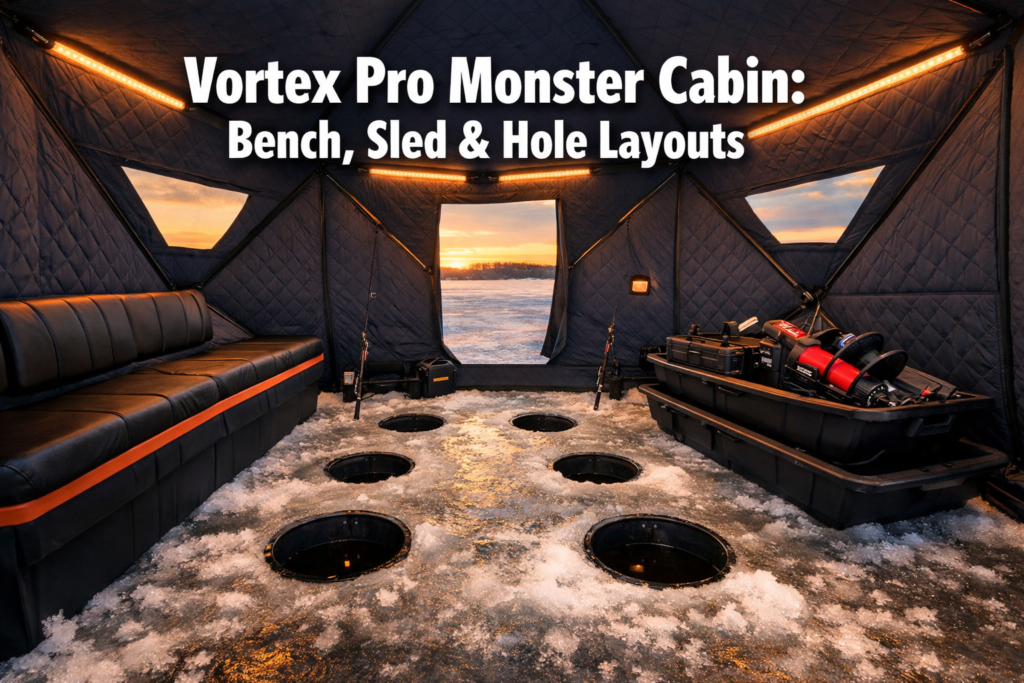
The Vortex Pro Monster Cabin gives you 82 square feet of fishable floor space, a 75-inch ceiling, and a 5-sided hub frame that weighs roughly 59 to 65 pounds. That is a lot of room for a portable shelter. But 82 square feet fills up fast when you add benches, sleds, heaters, electronics, and five to seven anglers. Space optimization inside the Vortex Pro Monster Cabin, covering bench, sled, and hole layouts for families vs. hardcore crews, determines whether your shelter feels like a command center or a cluttered closet. This guide walks through specific interior configurations for three use cases: family weekends, overnight walleye missions, and run-and-gun basecamps.
Key Takeaways
- The Monster Cabin’s 82 sq ft and 5-sided shape support three distinct layout zones: seating, fishing, and gear/cooking.
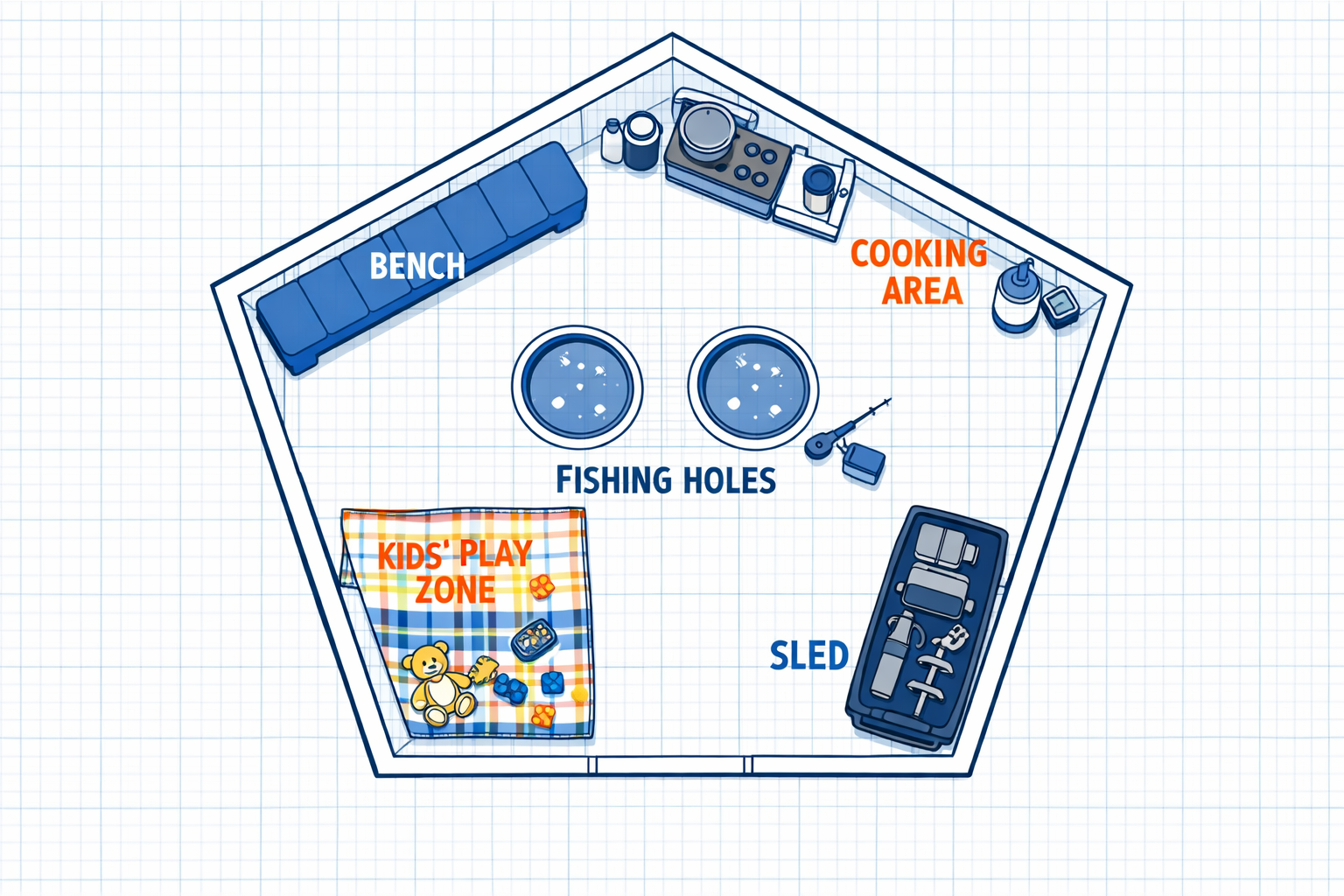
- Families benefit from a continuous bench along one wall, centralized holes, and a dedicated kids’ zone opposite the heater.
- Hardcore crews should skip the bench entirely and use individual swivel seats positioned around staggered holes for maximum coverage.
- Sled placement against the entry wall keeps traffic lanes clear for both groups.
- Overnight layouts require sacrificing one or two fishing holes to fit a cot or sleeping pad along the longest wall panel.
- The overhead cargo net system adds vertical storage that frees up floor space for any configuration.
- Modular, movable seating outperforms fixed benches when you need to change layouts between trips.
Quick Answer
Place your longest bench or cot against one of the two rear wall panels (the widest sections of the pentagon). Drill your primary fishing holes along the center strip of the floor, offset toward the bench side so seated anglers reach them without standing. Stack sleds vertically against the entry wall, and keep your heater in the corner opposite the door. This base framework adapts to families, hardcore crews, and overnight stays by swapping seating type and hole count.
Why Does the 5-Sided Shape Change Your Layout Strategy?
The Monster Cabin’s pentagonal footprint creates unequal wall lengths. Two rear panels are the widest, the two side panels are shorter, and the front panel holds the full-height door. This geometry means you have two natural “long walls” for benches or cots, two shorter walls for gear staging, and a front wall you need to keep clear for entry and exit.
Round hub shelters waste corner space. Rectangular shelters give you predictable parallel walls. The Monster Cabin sits between those two extremes. Plan your layout by treating the two rear panels as your primary living walls and the center floor as your fishing alley.
Common mistake: Placing a bench across the front door panel. This blocks your exit, creates a tripping hazard over sled runners, and forces everyone to climb over seating to leave the shelter.
Space Optimization Inside the Vortex Pro Monster Cabin: Bench, Sled, and Hole Layouts for Families on Weekend Trips
Families with kids need comfort, safety zones, and fewer holes. Here is a tested layout for three to four people, including one or two children.
Bench placement: Run a continuous bench (6 to 7 feet long) along the widest rear wall panel. This seats two adults and one child comfortably. A continuous bench provides storage underneath for tackle boxes, snack coolers, and extra layers. Forum users consistently report that benches offer better weight distribution and more continuous storage than individual seats [source: ice fishing community discussions].
Hole layout: Drill two holes in the center floor strip, spaced about 30 inches apart, directly in front of the bench. This lets seated adults fish without standing. Drill one additional hole on the opposite side of the shelter for a child supervised by the second adult. Three holes total. Fewer holes mean less cold air rising from below, which keeps the cabin warmer for kids.
Kids’ zone: Designate the floor area along the second rear wall panel (opposite the bench) as the kids’ zone. Lay down a foam pad or insulated blanket. Keep this zone away from the heater corner.
Sled placement: Stand your sled vertically against the entry wall, runner-side against the fabric. This keeps the sled out of the walking path and uses the least valuable floor space.
Heater placement: Position your heater in the corner where a short side panel meets a rear panel, away from the kids’ zone and the door. Keep a 24-inch clearance radius around the heater.
| Zone | Location | Purpose |
|---|---|---|
| Bench | Widest rear panel | Adult seating, under-bench storage |
| Kids’ zone | Second rear panel | Play area, nap spot |
| Fishing holes (3) | Center floor strip | Two near bench, one near kids’ zone |
| Sled | Entry wall | Vertical storage, gear access |
| Heater | Rear corner (away from kids) | Warmth |
| Overhead net | Center ceiling | Gloves, snacks, small gear |
For tips on keeping your shelter interior organized between trips, check out our guide on essential tips for a clean cabin interior.
Space Optimization Inside the Vortex Pro Monster Cabin: Bench, Sled, and Hole Layouts for Hardcore Crews Running Five to Seven Anglers
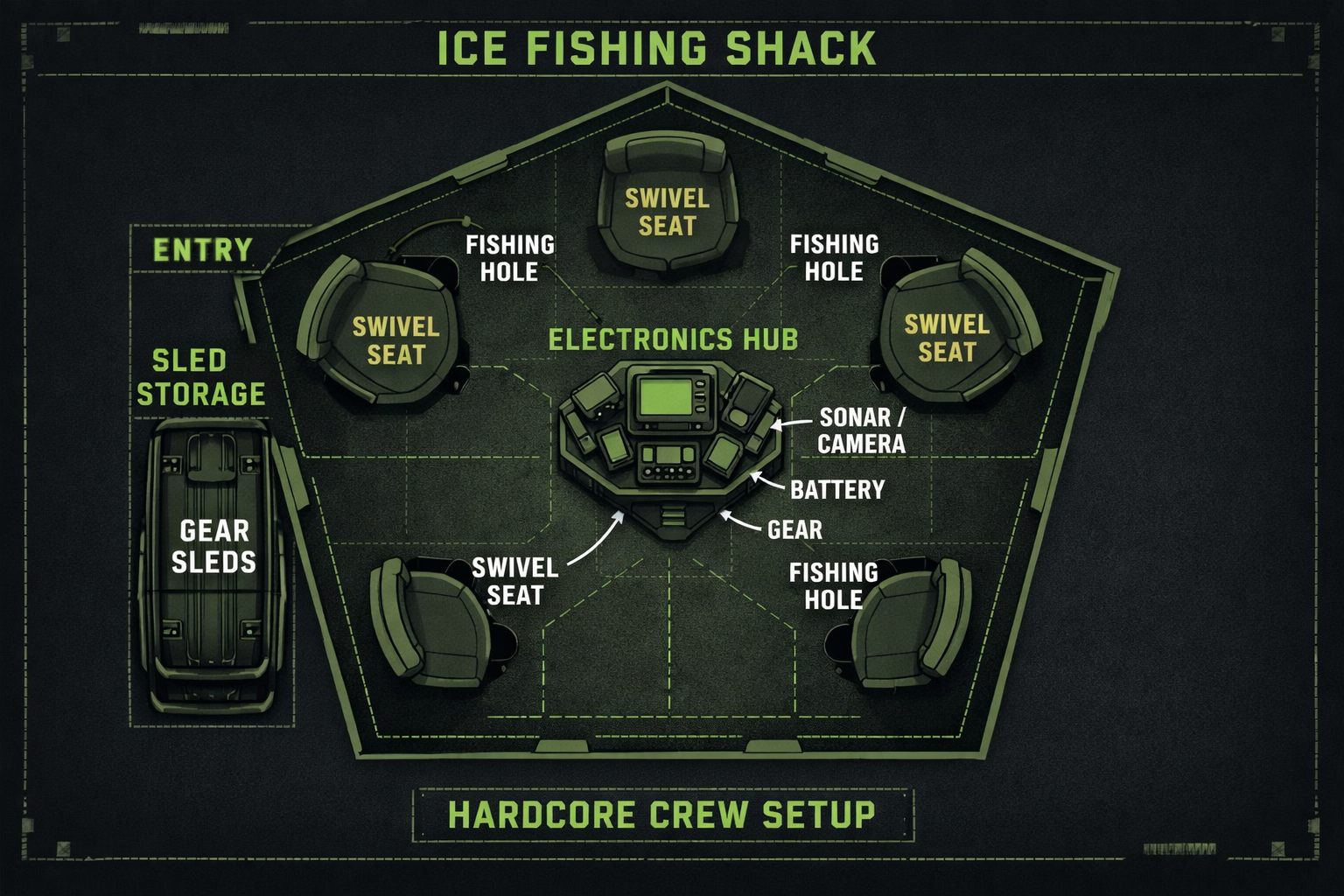
Hardcore crews want maximum hole count, individual mobility, and fast access to electronics. Drop the bench. Switch to individual swivel seats or lightweight camp chairs.
Seating: Position four to five individual swivel seats, each one placed directly behind a drilled hole. Swivel seats let each angler pivot between their hole, their tackle, and shared electronics without standing. This approach improves access to gear in the sled and makes it easier to work multiple holes compared to a fixed bench setup.
Hole layout: Drill five holes in a staggered pattern. Place two holes along the left side of the center strip, two along the right side, and one near the rear center. Stagger them so no two anglers sit directly across from each other. This prevents tangled lines and gives everyone elbow room.
Sled placement: Stack two sleds vertically against the entry wall, one behind the other. If you run three sleds, place the third flat on the floor against a short side panel and use it as a gear shelf.
Electronics: Mount your primary flasher or sonar unit on a portable tripod in the center of the shelter, visible from at least three seats. Run secondary units on individual seat-mounted arms.
Heater: Same corner placement as the family layout. With more bodies generating heat, you need less BTU output but more ventilation. Crack the door zipper two inches at the bottom.
Choose this layout if: Your crew fishes aggressively, runs multiple rods per person, and values individual hole access over shared seating comfort.
Choose the family layout if: You have children, want a warmer shelter with fewer holes, and prefer communal seating.
How Do You Set Up an Overnight Walleye Mission Layout?
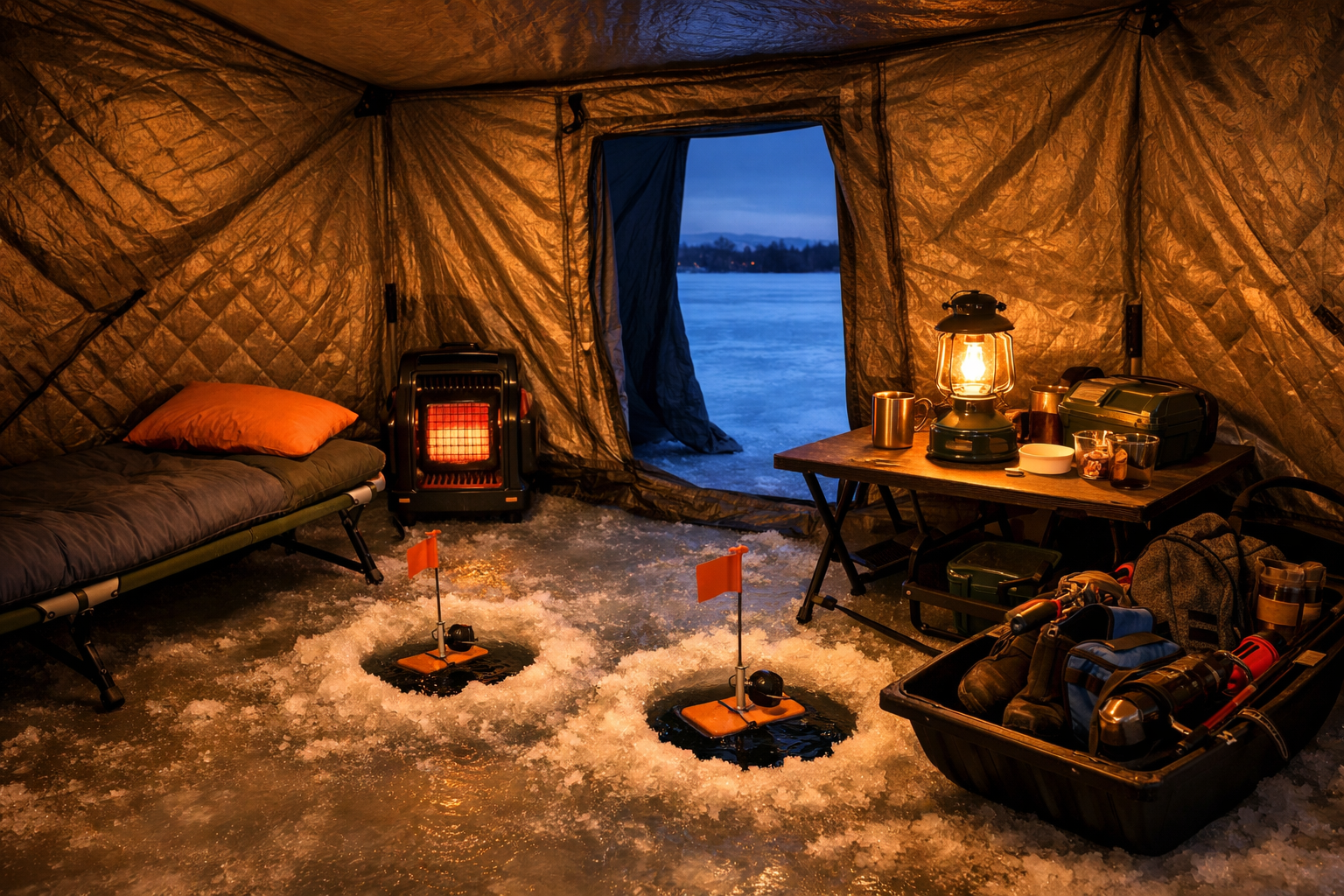
Overnight stays force a tradeoff: sleeping space versus fishing holes. In 82 square feet, you fit either a full cot or two sleeping pads, but you lose one to two fishing holes.
Cot placement: Run a standard 75-inch cot along the widest rear panel. The Monster Cabin’s 75-inch ceiling height means you stand comfortably next to the cot without hunching.
Hole layout: Drill two holes in the center strip, offset toward the opposite wall from the cot. This keeps water splashes and fish slime away from your sleeping gear. Set tip-ups on both holes for passive fishing while you rest.
Cooking and heating zone: Place a small portable stove or heater on a heat-resistant pad in the corner nearest the door. This keeps cooking fumes close to the ventilation point (the door zipper). Keep fuel canisters in the sled, not loose on the floor.
Gear table: Set a small folding table (18 by 24 inches) next to the cooking zone for a lantern, tackle, and food prep. The overhead cargo net handles gloves, headlamps, and phone chargers, freeing the table surface.
Sled as shelf: Lay one sled flat against the short side panel opposite the cooking zone. Use the sled’s interior compartments as organized storage bins for bait, tools, and spare line.
This layout supports two anglers comfortably. A third person fits if you replace the cot with two narrow sleeping pads placed side by side and shift the fishing holes closer to the door wall.
For more on organizing gear in tight spaces, see our practice setups and rigging guides.
What Are the Biggest Mistakes When Laying Out a Monster Cabin Interior?
Blocking the door. Every piece of gear between you and the exit is a safety hazard. Keep a 30-inch-wide clear path from the door to the center of the shelter at all times.
Drilling holes too close to wall panels. Holes drilled within 12 inches of a wall panel risk catching the shelter fabric when you pull fish. Center your holes at least 18 inches from any wall.
Ignoring vertical storage. The Monster Cabin’s 75-inch ceiling supports overhead cargo nets and hanging organizers. Every item you move off the floor opens space for seating or another hole.
Using oversized furniture. A full recliner or wide padded bench eats 30% of your floor space. Stick with compact, foldable seating that you remove or reposition between sessions.
Forgetting traffic flow. Anglers need to move between the door, their seat, and the bait station without stepping over holes or tripping on sled runners. Map your traffic lanes before you drill.
How Does the Monster Cabin Compare to the Monster Lodge for Space Planning?
The Monster Lodge offers 132 square feet, a 79-inch ceiling, and capacity for six to eight anglers. That extra 50 square feet lets you run a full cot, a cooking corner, and a clear central fishing alley without sacrificing hole count.
| Feature | Monster Cabin | Monster Lodge |
|---|---|---|
| Floor area | 82 sq ft [1] | 132 sq ft [10] |
| Ceiling height | 75 in [1] | 79 in [10] |
| Capacity | 5 to 7 anglers [1] | 6 to 8 anglers [10] |
| Weight (approx.) | 59 to 65 lb | Heavier (check current specs) |
| Best for | Day trips, small overnights | Multi-day, large group camps |
Choose the Cabin if: You hand-pull your shelter onto remote lakes and need the best space-to-weight ratio. The Cabin’s lighter weight makes solo transport realistic.
Choose the Lodge if: You tow gear by ATV or snowmobile and want dedicated sleeping, cooking, and fishing zones without compromise.
For anglers weighing other shelter options, our services page covers coaching on gear selection for ice and saltwater seasons.
Run-and-Gun Basecamp: A Minimal Layout for Mobile Crews
Some crews set the Monster Cabin as a warm basecamp and fish satellite holes outside. This layout minimizes interior furniture and maximizes staging space.
Seating: Two lightweight camp chairs near the heater. No bench.
Holes: One hole inside for jigging or monitoring sonar. Drill the rest outside.
Sled placement: Sleds stay outside, loaded and ready to relocate. Only bring personal gear bags inside.
Interior focus: Heater, one sonar unit, a small table for bait prep, and the overhead net for layers and snacks. The shelter becomes a warming station and command post rather than a primary fishing spot.
This approach works for tournament-ready crews covering multiple spots on a large lake. You spend 20 minutes warming up, checking electronics, and re-rigging, then head back out. The Monster Cabin’s quick setup and teardown time supports this mobile strategy.
Learn more about tactical approaches to competitive fishing on our blog.
Bench vs. Swivel Seats: Which Should You Buy for the Monster Cabin?
Benches work best for families and overnight stays. They provide continuous seating, under-seat storage, and double as sleeping platforms in a pinch. A 6-foot bench along the rear wall seats three and stores two tackle bags underneath.
Swivel seats work best for hardcore crews fishing four or more holes. Each angler gets independent rotation, better posture for jigging, and quick access to personal gear. Otter’s industry trend toward modular, rail-mounted individual seats reflects this shift away from fixed benches in base packages.
Decision rule:
- Pick a bench if your group includes non-anglers (kids, partners) who need a comfortable place to sit or lie down.
- Pick swivel seats if every person in the shelter plans to actively fish their own hole.
- Pick camp chairs if you run the shelter as a basecamp and need furniture you fold flat for transport.
You also want to consider how your seating choice affects your overall setup. Our content on optimization strategies covers related planning principles.
Frequently Asked Questions
How many fishing holes fit inside the Vortex Pro Monster Cabin? Five holes fit comfortably with staggered spacing. You drill up to seven if you skip benches and use minimal seating, but line tangles increase above five.
What is the floor area of the Monster Cabin? 82 square feet with a 5-sided hub design and a 75-inch ceiling.
Do I need a special bench for the Monster Cabin? No. Any portable bench or camp-style bench that measures 6 to 7 feet long fits along the widest rear wall panel. Otter sells compatible benches, but aftermarket options work too.
Where should I place my heater inside the Monster Cabin? Place the heater in a rear corner where a short side panel meets a long rear panel. Keep 24 inches of clearance around the unit. Position it away from children, sleeping areas, and the door.
Is the Monster Cabin big enough for overnight stays? Yes, for one to two people. A standard 75-inch cot fits along the rear wall. You sacrifice one or two fishing holes to make room for sleeping gear.
How heavy is the Monster Cabin? Approximately 59 to 65 pounds, making it one of the lighter shelters in its size class [1]. Hand-pulling onto remote lakes is realistic for one person.
Should families consider the Monster Lodge instead? The Lodge’s 132 square feet removes the tradeoff between sleeping space and hole count. If you tow by vehicle and fish with four or more family members, the Lodge gives you dedicated zones for everything.
How do I keep the interior organized during a long session? Use the overhead cargo net for small items, store tackle in the sled or under the bench, and keep a clear 30-inch path to the door at all times.
What is the best hole spacing inside the shelter? Space holes 28 to 32 inches apart, center to center. Stagger them so adjacent anglers face slightly different directions to avoid tangled lines.
Do swivel seats work on ice without a mounting platform? Most portable swivel seats have a flat base designed for ice or hard floors. You do not need a mounting rail inside a hub shelter. Place the seat directly on the ice behind your hole.
For more guidance on rigging and gear decisions, visit our about page to learn how FishOnYak.com supports multi-season anglers.
Conclusion
The Vortex Pro Monster Cabin’s 82 square feet reward careful planning. Families should anchor their layout with a continuous bench, three centered holes, and a kids’ zone opposite the heater. Hardcore crews should ditch the bench for individual swivel seats around five staggered holes. Overnight anglers trade one or two holes for a cot along the rear wall. Every layout starts with the same foundation: sleds against the entry wall, heater in a rear corner, and a clear path to the door.
Map your layout at home before you hit the ice. Measure your bench, mark your hole positions with tape on a garage floor, and walk the traffic lanes. Ten minutes of planning saves an hour of frustration on the lake.
Kayak. Drill. Catch. Repeat.
See you on the water.
References
[1] Vortex Pro Monster Cabin – https://www.otteroutdoors.com/product/vortex-pro-monster-cabin/
[2] Otter Outdoors Vortex Pro Monster Lodge Hub Ice Fishing Shelter – https://www.sportsmans.com/fishing-gear-supplies/ice-fishing-shelters-accessories/otter-outdoors-vortex-pro-monster-lodge-hub-ice-fishing-shelter/p/1740205
[3] Otter Vortex Pro Monster Cabin Thermal Hub Ice Shelter – https://www.scheels.com/p/otter-vortex-pro-monster-cabin-thermal-hub-ice-shelter/609142-201742/
[4] Otter Vortex Pro Monster Cabin Thermal Hub Ice House – https://www.glensoutdoors.com/otter-vortex-pro-monster-cabin-thermal-hub-ice-house.html
[5] Vortex Pro Monster Lodge – https://www.otteroutdoors.com/product/vortex-pro-monster-lodge/