Last updated: March 14, 2026
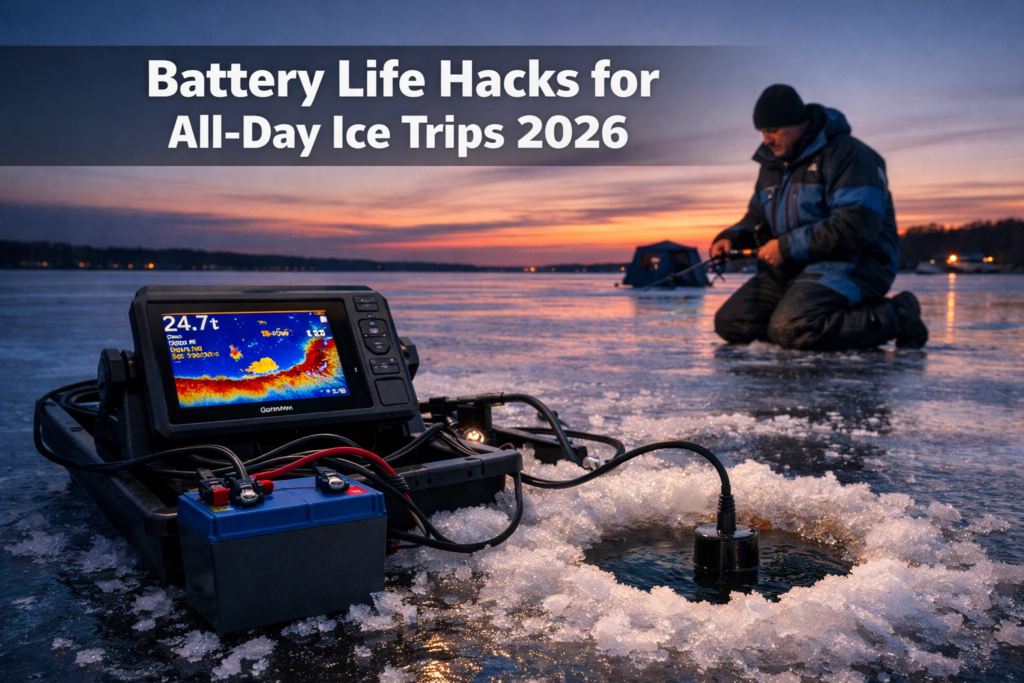
Quick Answer: The Garmin ECHOMAP 73cv Panoptix bundle draws approximately 1.2 to 1.5 amps at full load. A 12Ah LiFePO4 lithium battery gives you 8 to 10 hours of runtime in cold conditions. For full 10 to 12 hour ice days, step up to a 20Ah LiFePO4 pack and add a quick-swap SAE connector harness so you never lose sonar time between batteries.
When considering Portable Power Solutions for Garmin ECHOMAP 73cv Panoptix Bundle setups, don’t overlook screen brightness; dimming your display to 70% or 80% can shave off a significant amount of current draw, effectively extending your “hole-hopping” sessions by another hour or two without sacrificing the clarity of your LiveScope returns
Key Takeaways
- The ECHOMAP 73cv with Panoptix PS22-IF draws roughly 1.2 to 1.5A at full operation, including CHIRP sonar, GPS, and backlight
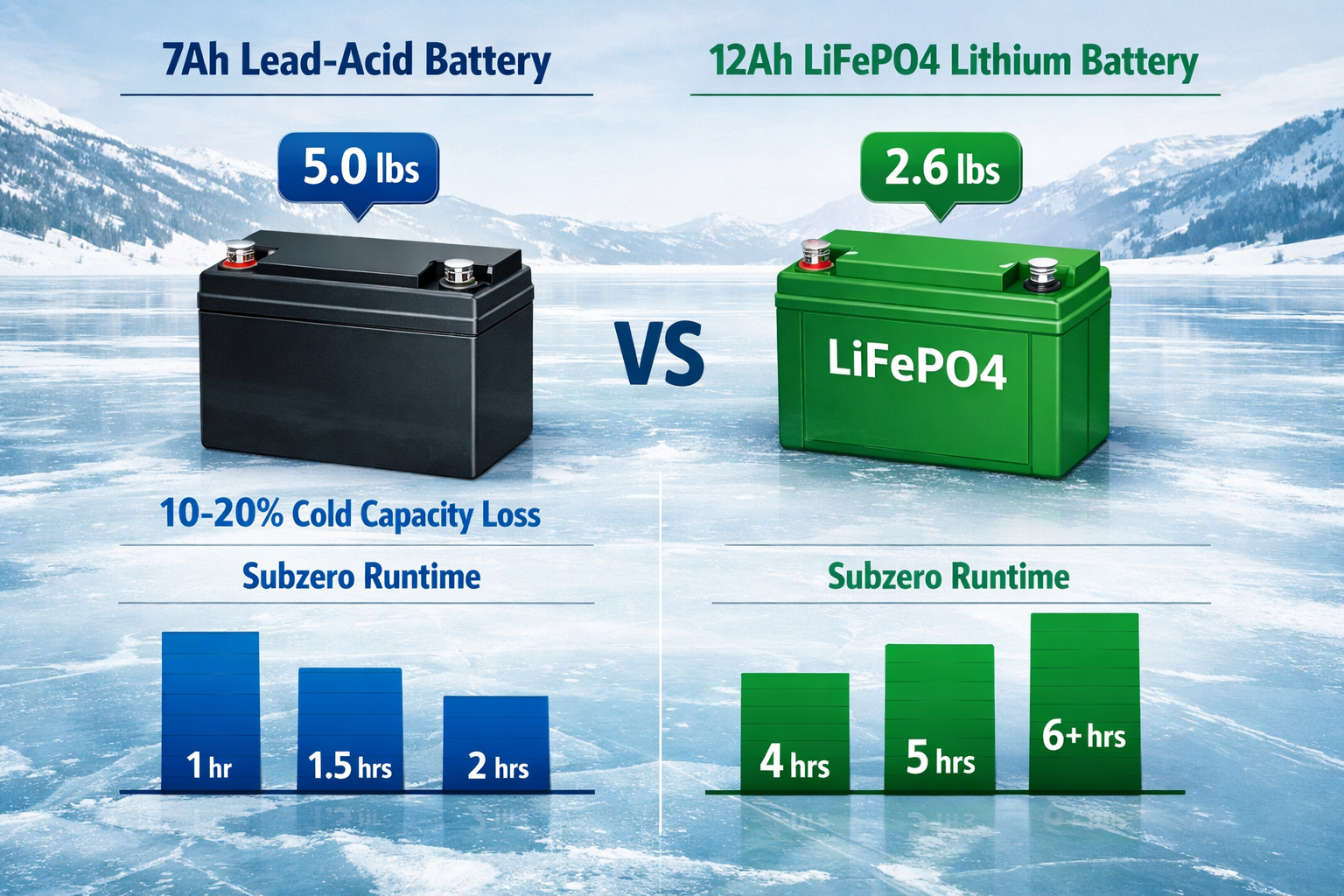
- Stock 7Ah lead-acid batteries lose 10 to 20 percent capacity in cold weather, cutting your day short
- A 12Ah LiFePO4 battery delivers 8 to 10 hours of runtime and weighs 50 to 70 percent less than lead-acid equivalents
- LiFePO4 chemistry handles temperatures down to -20°F without significant capacity loss, making it the top choice for ice fishing
- Quick-swap SAE connectors let you hot-swap batteries in under 60 seconds without powering down your unit
- Carry one primary 12Ah pack and one 7Ah backup for a full 12-plus hour session
- Store batteries in an insulated pouch or shelter bag to maintain operating temperature
- Amped Outdoors 6Ah LiFePO4 runs 5 to 6 hours on ECHOMAP setups; upgrade to 12Ah for all-day coverage
- Avoid USB power banks for primary power; they deliver inconsistent voltage that disrupts sonar returns
- Check voltage before every trip. A fully charged 12V LiFePO4 reads 13.6V at rest
What Does the Garmin ECHOMAP 73cv Panoptix Bundle Actually Draw?
The ECHOMAP 73cv Panoptix bundle pulls between 1.2 and 1.5 amps at 12V during normal operation. That number climbs slightly when the GPS is acquiring satellites and the backlight runs at 100 percent.
Breaking down the load:
- ECHOMAP 73cv display and CHIRP sonar: approximately 0.7 to 0.9A
- Panoptix PS22-IF transducer: approximately 0.4 to 0.6A additional draw
- GPS waypoint logging: minimal additional load, under 0.1A
At 1.25A average draw, a 12Ah battery gives you roughly 9.6 usable hours before voltage drops below safe operating range. A 7Ah lead-acid stock battery gives you 5 to 6 hours at best, and less when temperatures drop below 20°F.
For comparison, Garmin’s ECHOMAP UHD 93sv Panoptix bundle with a 16.5Ah Li-ion battery achieves 11.4 hours at 0°C with 100 percent backlight. The 73cv setup performs similarly at that draw rate.
Decision rule: Choose a 12Ah LiFePO4 for 8 to 10 hour days. Choose a 20Ah LiFePO4 for 10 to 12 hour marathon sessions or when you run backlight at full brightness all day.
Why Lead-Acid Batteries Fail Ice Anglers
Lead-acid batteries lose 10 to 20 percent of their rated capacity when temperatures drop below freezing. On a 10°F day, your 7Ah stock battery effectively becomes a 5.6 to 6.3Ah battery. That translates to 4 to 5 hours of runtime instead of the rated 6 to 7 hours.
Additional problems with lead-acid on ice:
- Weight: a 7Ah sealed lead-acid battery weighs 5 to 7 pounds, adding sled load
- Charge cycles: lead-acid typically delivers 300 to 500 cycles before significant capacity loss
- Voltage sag: lead-acid voltage drops noticeably under load, which causes sonar display flickering
- Recharge time: 6 to 8 hours to full charge between trips
LiFePO4 lithium batteries solve all four problems. Amped Outdoors LiFePO4 packs run 2,000-plus charge cycles and operate reliably from -20°F to 140°F. They weigh 50 to 70 percent less than equivalent lead-acid packs and hold voltage flat across most of their discharge curve.
Common mistake: Anglers assume a new lead-acid battery will last all day because it reads full voltage at home. Cold temperatures change that math fast.
Best Portable Power Solutions for Garmin ECHOMAP 73cv Panoptix Bundle: Battery Life Hacks for All-Day Ice Trips 2026
The best portable power solutions for the Garmin ECHOMAP 73cv Panoptix bundle fall into three categories: compact LiFePO4 packs for mobile anglers, higher-capacity packs for stationary setups, and USB power banks as a last-resort backup.
LiFePO4 Battery Options by Session Length
| Battery | Capacity | Est. Runtime (1.25A draw) | Weight | Best For |
|---|---|---|---|---|
| Amped Outdoors 6Ah LiFePO4 | 6Ah | 4.8 hours | ~1.5 lbs | Half-day mobile trips |
| Amped Outdoors 12Ah LiFePO4 | 12Ah | 9.6 hours | ~2.5 lbs | Full-day sessions |
| Redodo 12V 20Ah LiFePO4 | 20Ah | 16 hours | 4.92 lbs | Marathon or multi-unit setups |
| Redodo 16V 30Ah LiFePO4 | 30Ah | 24 hours | 7.63 lbs | Base camp, shelter power |
Alex Timm’s 2024 field tests, still referenced in 2026 discussions, confirmed that the Amped Outdoors 6Ah LiFePO4 delivers 5 to 6 hours on ECHOMAP UHD 73sv setups with a Panoptix transducer. Upgrading to a 12Ah pack extends that to 10 or more hours.
USB Power Banks: Use With Caution
USB power banks like the Charmast 26800mAh (approximately 12 oz, around $35) are ultralight and convenient. They work for charging phones and small accessories on the ice. However, they deliver 5V USB output, not stable 12V DC. Running your ECHOMAP 73cv directly off a USB bank requires a DC-DC boost converter, which adds complexity and introduces voltage instability that affects sonar accuracy.
The Nitecore NB 10000 Gen 3 performs well in cold conditions with minimal capacity loss, making it a solid choice for phone charging and GPS device backup. Keep it in your inner jacket pocket to maintain temperature.
Decision rule: Use dedicated 12V LiFePO4 for the ECHOMAP 73cv. Use USB power banks for phones, headlamps, and heated gloves.
For a related look at how power pairing works with other ice setups, see this guide on the Otter Vortex Pro Monster Cabin with StrikeMaster 40V Maven power pairing.
How to Wire a Quick-Swap Battery System for the Ice
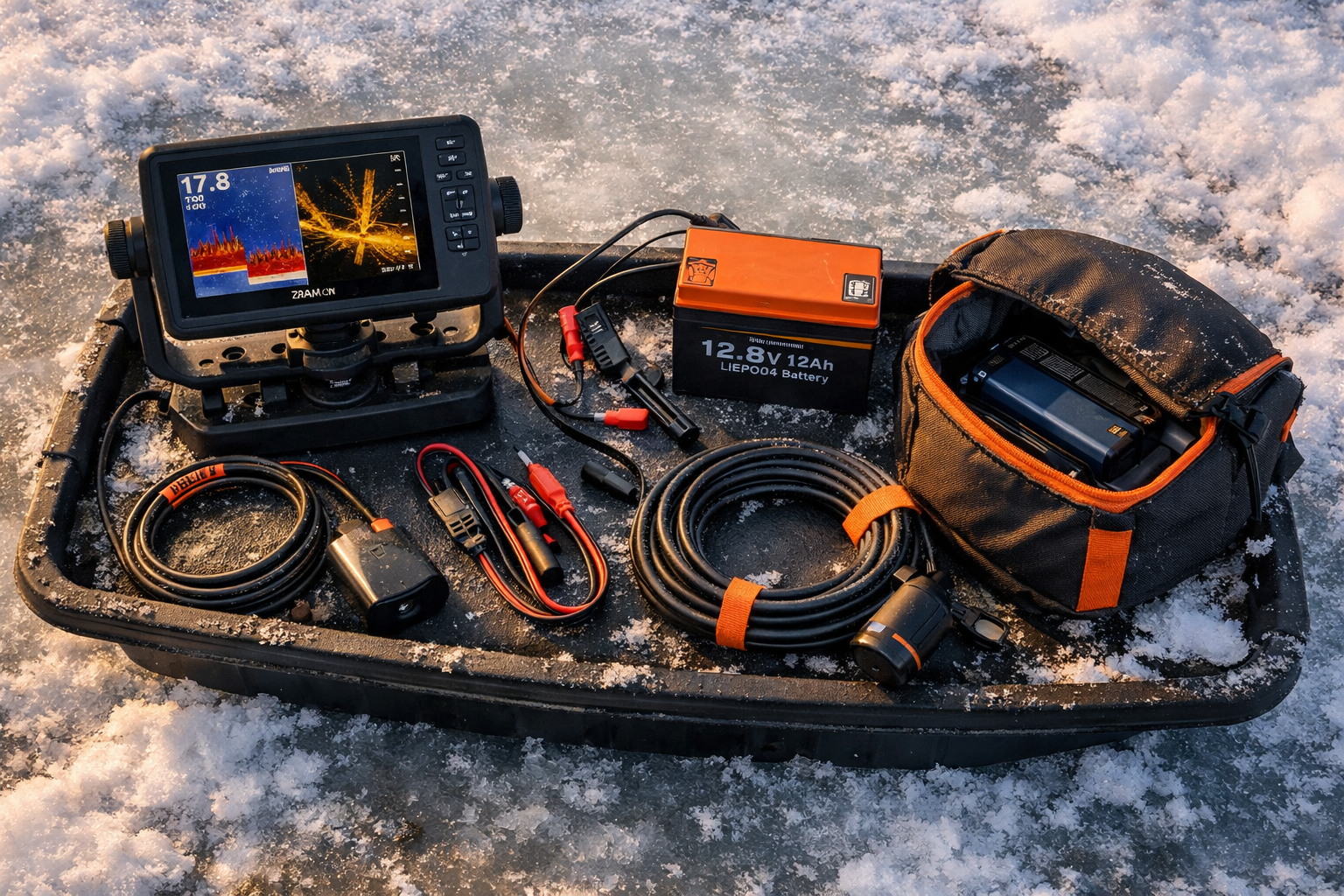
A quick-swap harness lets you replace a depleted battery in under 60 seconds without touching the ECHOMAP 73cv power settings. This is the single most effective battery life hack for all-day ice trips.
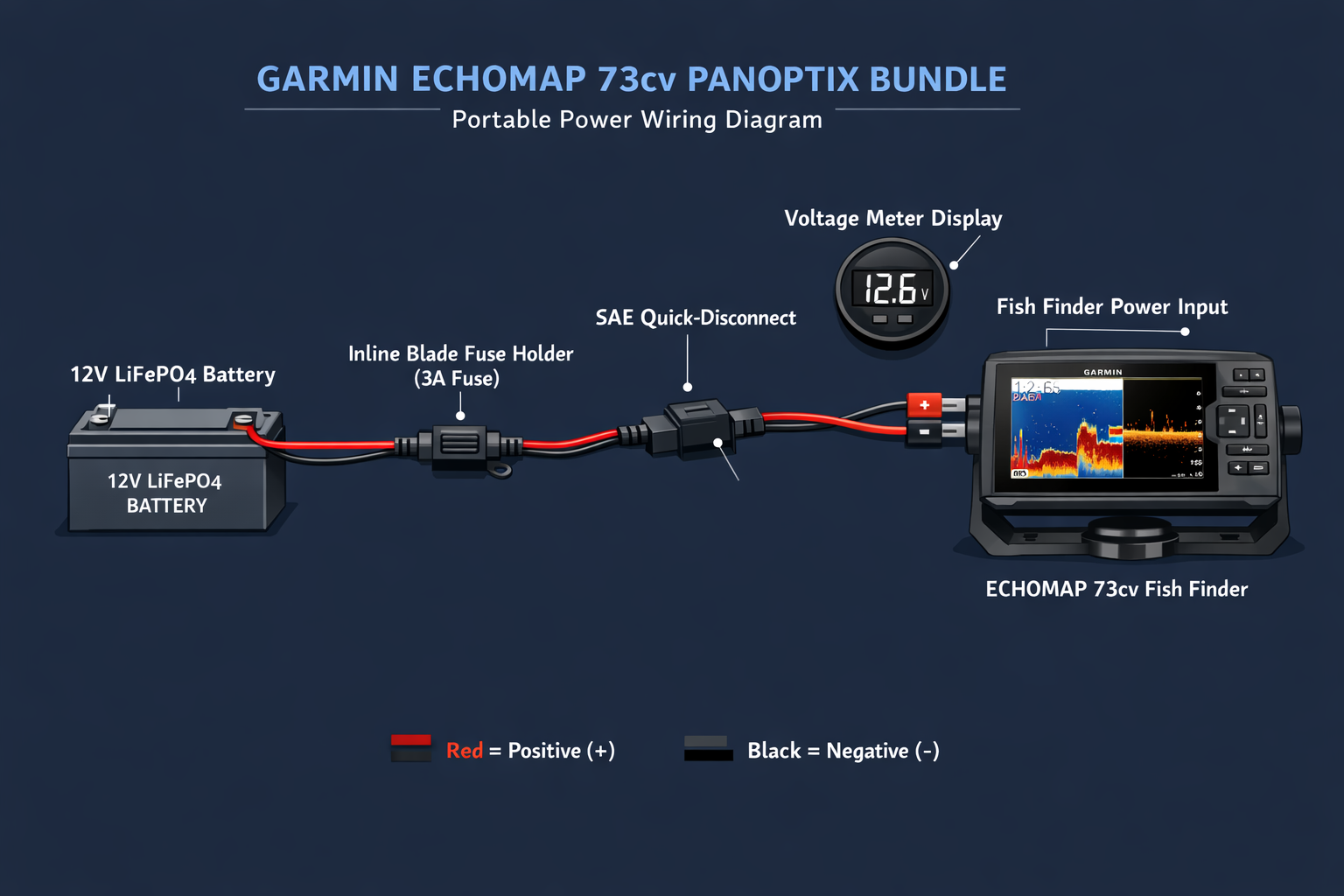
Step-by-step wiring setup:
- Purchase two SAE quick-disconnect pigtail connectors (male and female, 18-gauge minimum)
- Wire the female SAE connector to your ECHOMAP 73cv power cable using the red positive and black negative leads
- Wire the male SAE connector to each battery’s terminals with an inline 3-amp blade fuse on the positive lead
- Plug battery into the female connector on the fish finder cable
- When battery one depletes, unplug the male connector and plug in battery two. The ECHOMAP 73cv stays powered if you complete the swap in under 2 seconds, or simply power it back on after the swap
Materials needed:
- SAE quick-disconnect pigtail set (2 pairs)
- 3A inline blade fuse holders (one per battery)
- 18-gauge marine-grade wire (red and black, 12 inches per connection)
- Heat shrink tubing
- Wire crimping tool
Total cost for the harness: approximately $15 to $25 in parts. Total build time: 30 to 45 minutes.
Edge case: In temperatures below -10°F, SAE connectors become stiff. Apply a small amount of dielectric grease to the connector pins before each trip to keep them pliable.
Portable Power Solutions for Garmin ECHOMAP 73cv Panoptix Bundle: Cold-Weather Battery Hacks That Actually Work
The most effective cold-weather battery hacks for the Garmin ECHOMAP 73cv Panoptix bundle focus on temperature management, not just capacity. A 12Ah LiFePO4 battery stored in a cold sled all day performs worse than the same battery kept warm.
Battery life hacks for sub-zero conditions:
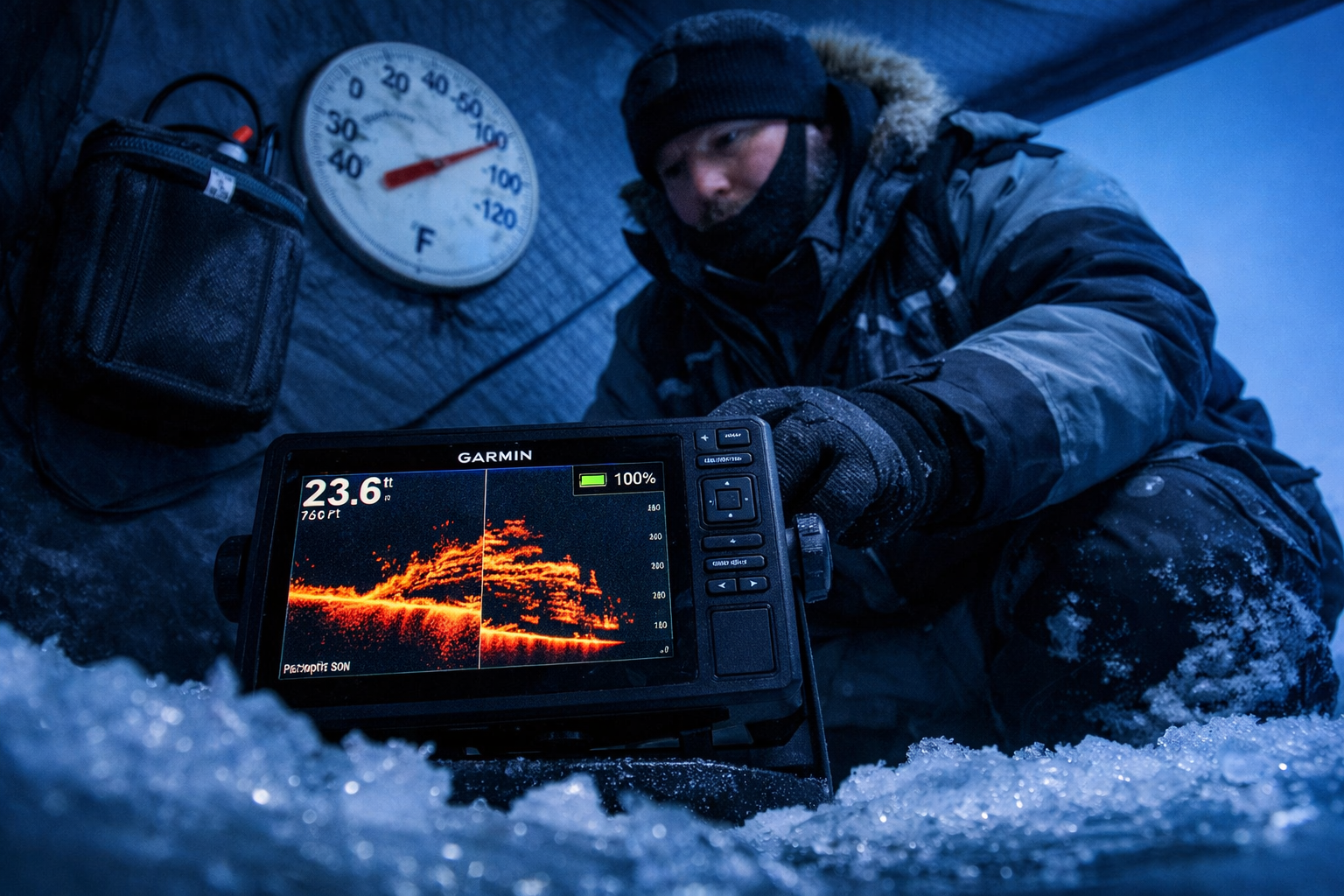
- Store your battery in an insulated neoprene or fleece pouch inside your shelter bag or between your legs while traveling to the hole
- Pre-warm batteries indoors overnight before the trip. LiFePO4 cells perform at their rated capacity when starting above 32°F
- Lower ECHOMAP 73cv backlight to 60 to 70 percent. Full backlight is visible in most shelter conditions and reduces draw by an estimated 0.1 to 0.2A
- Disable sonar history scrollback when not needed. It reduces processing load
- Use GPS track logging only when moving between holes, then pause it at the fishing location
- Keep a digital voltmeter in your kit. Check battery voltage every 3 to 4 hours. A reading below 11.8V under load means the battery is approaching depletion
For more on managing electronics in cold shelter conditions, read about Clam X-1200 hub shelter setups for group ice fishing trips where power management across multiple devices becomes critical.
LiFePO4 vs. NMC Lithium: Which Chemistry Wins on Ice?
LiFePO4 wins for ice fishing applications. NMC (nickel manganese cobalt) lithium offers higher energy density, meaning more capacity per pound, but it requires a specific 16.8V charger and has a narrower safe temperature range.
| Feature | LiFePO4 | NMC Lithium |
|---|---|---|
| Temperature range | -20°F to 140°F | 14°F to 140°F |
| Charge cycles | 2,000 plus | 800 to 1,000 |
| Voltage output | Stable 12.8V | Stable but needs matched charger |
| Safety | High (no thermal runaway risk) | Moderate |
| Cost per Ah | Moderate | Lower |
Amped Outdoors offers both chemistries. Their 52Ah NMC pack delivers high capacity but requires a specific 16.8V charger and performs less reliably below 14°F. Their LiFePO4 line handles -20°F without low-temperature protection circuits cutting off the discharge.
For ice fishing in the upper Midwest and Canada where temperatures regularly drop below 0°F, LiFePO4 is the correct choice. NMC makes sense for late-season ice or early ice when temperatures stay above 20°F.
Common mistake: Anglers buy NMC packs for the higher capacity rating without checking the low-temperature cutoff. The battery management system (BMS) shuts off discharge below 14°F to protect the cells, leaving you without power at the worst moment.
For more on comparing Garmin ice bundles and their power requirements, see the Panoptix PS22-IF vs ECHOMAP 73cv bundle comparison.
How to Maximize ECHOMAP 73cv Runtime Through Settings
The Garmin ECHOMAP 73cv offers several settings that directly affect power draw. Adjusting these settings before you drill your first hole adds 1 to 2 hours to your battery life without changing hardware.
Settings to adjust on the ECHOMAP 73cv:
- Backlight: Set to 60 to 70 percent. Full brightness is unnecessary inside a shelter and adds measurable draw
- Sonar frequency: Run CHIRP standard frequency (77/200kHz) rather than high-wide CHIRP unless you need the wider cone angle. High-wide CHIRP increases transducer power demand
- Screen timeout: Enable auto-dim after 5 minutes of inactivity if you step away from the hole
- GPS update rate: Set to 1-second updates only when actively moving. Drop to 5-second updates while stationary
- Panoptix LiveVu mode: Use Forward mode only when scanning new water. Switch to Down mode when positioned over a productive hole. Forward mode draws more power due to wider beam processing
Garmin’s support documentation confirms that display brightness is the largest single variable in fish finder power consumption.
For deeper technique work with the Panoptix system, read about mastering LiveVu Forward on Garmin Panoptix for spotting fish migrations.
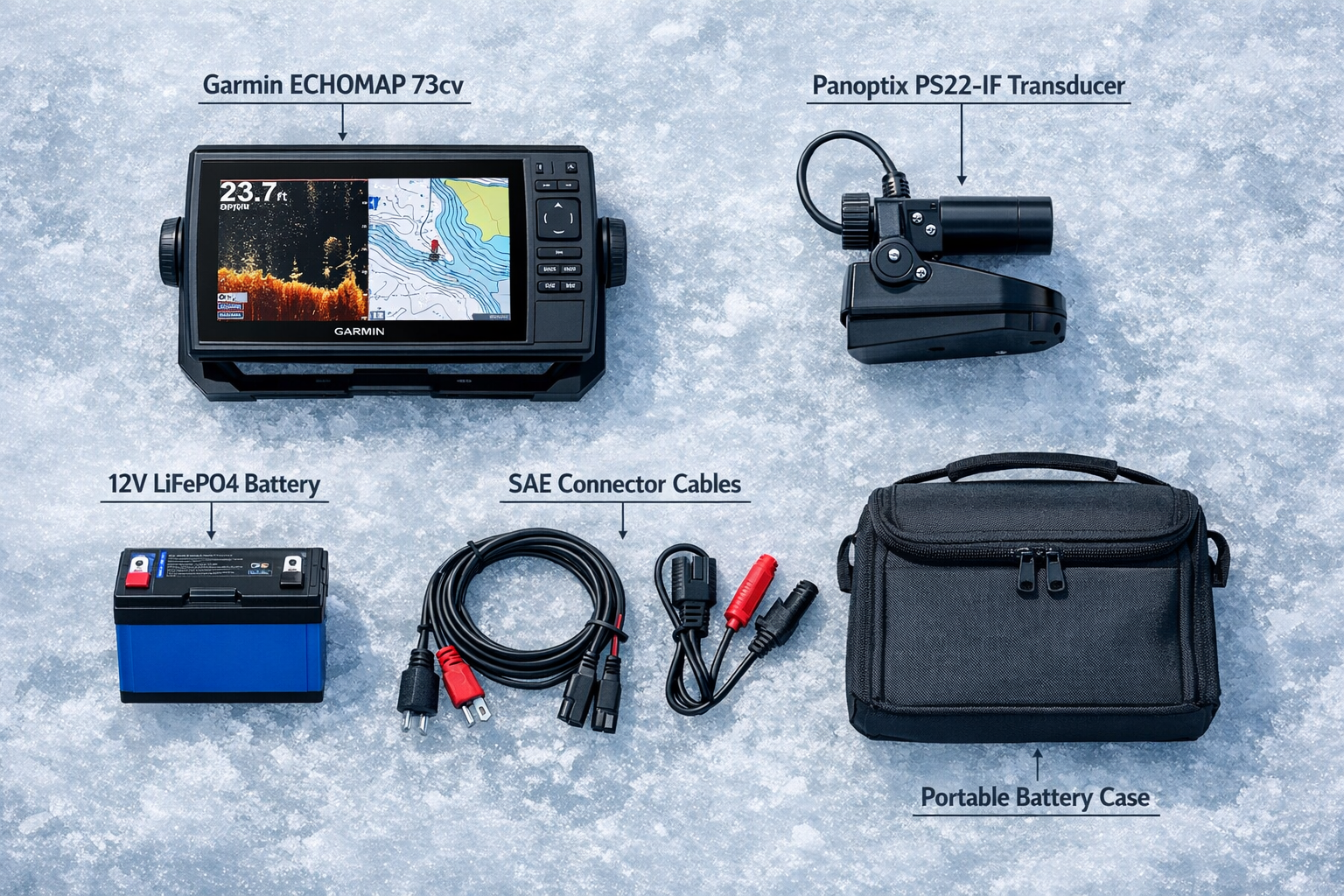
What to Carry for a 10 to 12 Hour Ice Day: Power Kit Checklist
A complete portable power kit for a full ice day with the ECHOMAP 73cv Panoptix bundle weighs under 8 pounds and fits in a medium tackle bag.
Power kit for 10 to 12 hour sessions:
- Primary battery: 12Ah LiFePO4 (approximately 2.5 lbs)
- Backup battery: 7Ah LiFePO4 (approximately 1.5 lbs)
- Quick-swap SAE harness (pre-wired, both batteries)
- Digital voltmeter (pocket-sized, under 2 oz)
- Insulated battery pouch (neoprene or fleece-lined)
- Spare inline 3A fuse (2 units)
- Small roll of electrical tape
Total estimated weight: 6 to 7 pounds including batteries and accessories.
This setup gives you 9.6 hours on the primary 12Ah pack and an additional 5.6 hours on the 7Ah backup, totaling over 15 hours of available runtime. For most 10 to 12 hour ice days, you will not deplete both batteries.
For anglers running additional electronics like an underwater camera alongside the ECHOMAP 73cv, budget an extra 0.3 to 0.5A of draw. Check out the best wireless underwater cameras under $300 for ice fishing to see which models draw the least power.
Kayak. Drill. Catch. Repeat.
Frequently Asked Questions
Q: What is the minimum battery size for the Garmin ECHOMAP 73cv Panoptix bundle? A 6Ah LiFePO4 battery runs the ECHOMAP 73cv with Panoptix PS22-IF for approximately 4.8 to 5 hours in cold conditions. Use this size only for half-day trips. For full-day sessions, use 12Ah or larger.
Q: Will a 12V car jump starter work as a fish finder battery? Most portable jump starters deliver 12V but are not designed for sustained low-amp discharge. They work in an emergency but voltage regulation is inconsistent. Use a dedicated LiFePO4 battery for reliable sonar performance.
Q: How do I know when my battery is getting low on the ice? Check voltage with a digital voltmeter. A reading below 12.0V at rest or below 11.8V under load means you are in the bottom 20 percent of capacity. Swap to your backup battery at this point.
Q: Can I charge a LiFePO4 battery in my truck between spots? Yes. A 12V LiFePO4 battery charges from a vehicle’s 12V outlet using a compatible LiFePO4 charger. Do not use a standard lead-acid charger. Charging time from 50 percent to full is approximately 1.5 to 2 hours at 5A charge rate.
Q: Does the Panoptix PS22-IF transducer draw power separately from the ECHOMAP 73cv? The PS22-IF draws power through the ECHOMAP 73cv’s transducer port. You power the entire system from one battery connection to the fish finder’s power cable.
Q: What happens if my battery dies mid-session on the ECHOMAP 73cv? The unit powers off cleanly. Waypoints, tracks, and settings save to internal memory. Power back on with your backup battery and the unit restores your last settings automatically.
Q: Is it safe to leave a LiFePO4 battery in a cold vehicle overnight? LiFePO4 batteries store safely at temperatures down to -20°F. Cold storage does not damage the cells. However, a battery stored at -20°F will deliver reduced capacity until it warms above 32°F. Bring it inside the night before a trip.
Q: How long does a 12Ah LiFePO4 battery last in a shelter vs. open ice? In a shelter, the battery stays warmer and performs closer to its rated capacity, giving you the full 9 to 10 hours. On open ice in wind and extreme cold, expect 8 to 8.5 hours. Use an insulated pouch on open ice to close that gap.
Q: What fuse size should I use on my ECHOMAP 73cv power cable? Garmin recommends a 3-amp inline fuse on the power cable for the ECHOMAP 73cv. Use a blade-type automotive fuse in an inline fuse holder on the positive lead.
Q: Do I need a battery management system (BMS) in my LiFePO4 pack? Quality LiFePO4 batteries from Amped Outdoors and Redodo include a built-in BMS. The BMS handles overcharge protection, over-discharge cutoff, and low-temperature protection. Do not buy a LiFePO4 pack without a built-in BMS for ice fishing use.
Conclusion
Running the Garmin ECHOMAP 73cv Panoptix bundle through a full 10 to 12 hour ice day comes down to three decisions: choosing LiFePO4 chemistry over lead-acid, sizing your battery to at least 12Ah for primary power, and adding a quick-swap SAE harness so dead batteries cost you zero fishing time.
Start with a 12Ah LiFePO4 primary pack and a 7Ah backup. Wire both with SAE connectors before your first trip. Store batteries in an insulated pouch and lower your backlight to 60 percent. Check voltage every 3 to 4 hours with a pocket voltmeter.
These steps cover the portable power solutions for Garmin ECHOMAP 73cv Panoptix bundle that most ice anglers overlook until they lose sonar at hour seven on a productive lake.
Take the time to build your power kit right before the season. Your electronics will run all day. Your focus stays on the fish.
See you on the water.
References
[1] Watch – https://www.youtube.com/watch?v=_ShldCn3Rc4
[2] Garmin 010 01893 15 Echomap Plus 73cv Ice Fishing Bundle – https://www.tackledirect.com/garmin-010-01893-15-echomap-plus-73cv-ice-fishing-bundle.html
[3] Best Power Banks – https://www.cleverhiker.com/backpacking/best-power-banks/
[4] Garmin Echomap Uhd 93sv Panoptix Livescope Ice Bundle Us Lakevu G3 Li Ion Battery – https://boatgearusa.com/products/garmin-echomap-uhd-93sv-panoptix-livescope-ice-bundle-us-lakevu-g3-li-ion-battery
[5] En Us – https://support.garmin.com/en-US/?faq=clpEAO0FSs3j2rLo3aX078