Last updated: March 19, 2026
Quick Answer
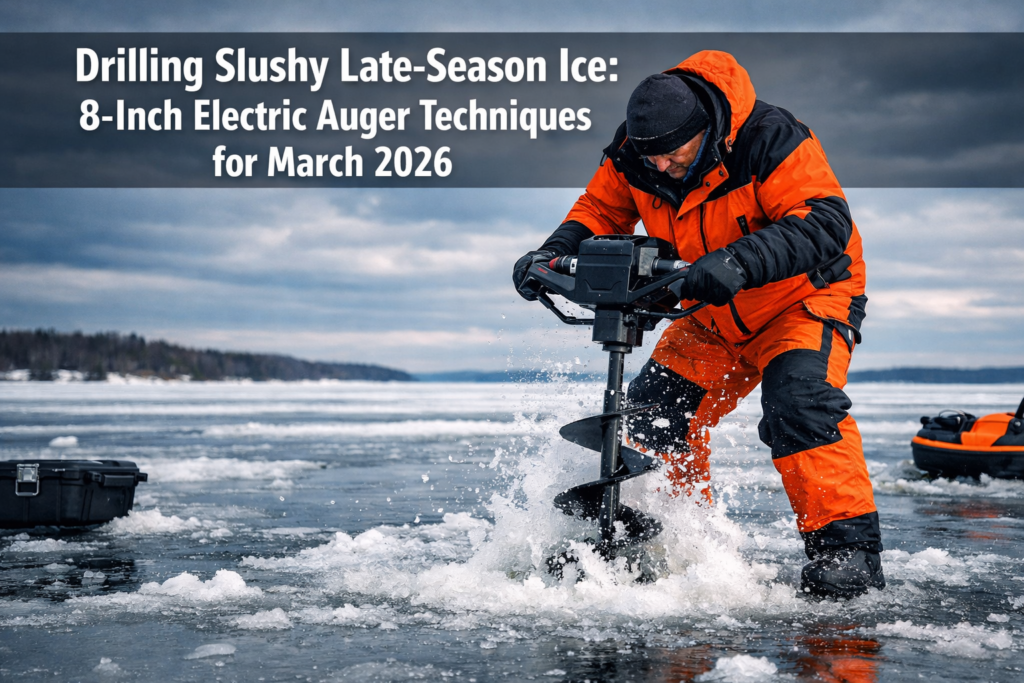
Mastering 8-inch electric ice augers in slushy late-season ice requires slowing your RPMs and reducing vertical pressure to prevent binding in honeycombed March layers. Periodically toggle your auger’s reverse function mid-hole to flush heavy slush before it refreezes and traps the flighting. To maintain peak torque in these wet 2026 conditions, keep your lithium batteries warm in an insulated jacket to ensure consistent power delivery. These essential drilling techniques and gear hacks transform frustrating spring slush into a high-efficiency, productive ice fishing session
Key Takeaways
- Use variable-speed trigger control to enter slush layers slowly, then accelerate through hard ice below
- Always run the reverse function immediately after drilling to flush slush and avoid refreeze in the hole
- Store your battery in an insulated neoprene pouch between holes to prevent cold-related torque loss
- The ION Alpha Plus 8-inch delivers 15-20% more torque than the Eskimo E40, making it better suited for thick, wet late-season ice
- The Eskimo E40’s variable-speed trigger gives you precise control inside shelters where slush management matters most
- An 8-inch blade is the right call for late-season mobility: smaller diameter means less slush displacement and less fatigue when moving holes frequently
- Budget options like the VEVOR 40V work for occasional use but show durability questions in repeated slushy conditions
- Drill bit augers paired with an 18V+ hammer drill cut 12 inches of ice in about 6 seconds and weigh around 5 lbs, ideal for anglers covering ground fast
- Warm your auger blade with a hand warmer sleeve before the first hole of the day to prevent slush from bonding to cold steel
- Check ice thickness every 50 yards when traveling on March ice; late-season slush hides weak spots that mid-winter ice does not
Why Does Slushy Late-Season Ice Make Drilling Harder?
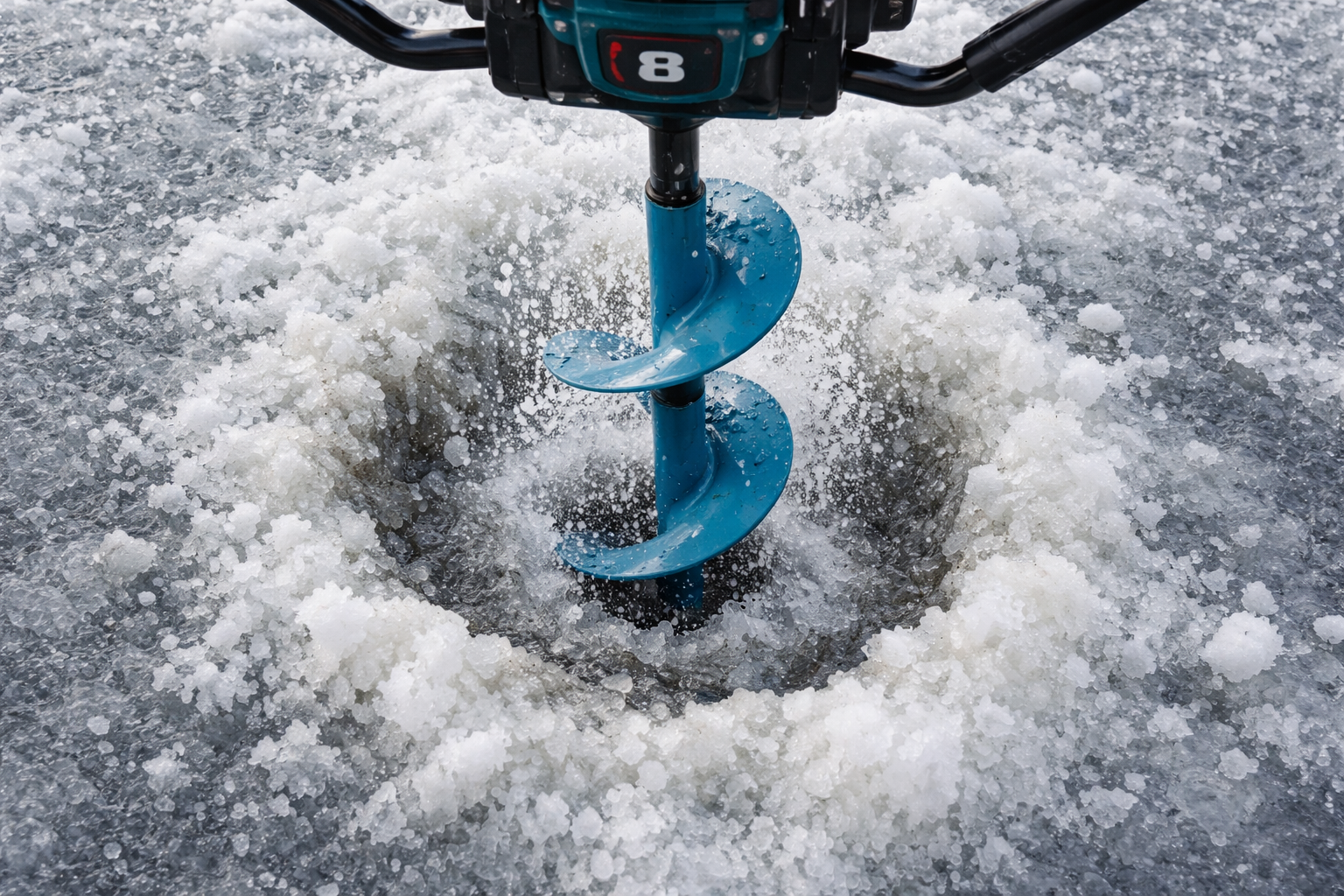
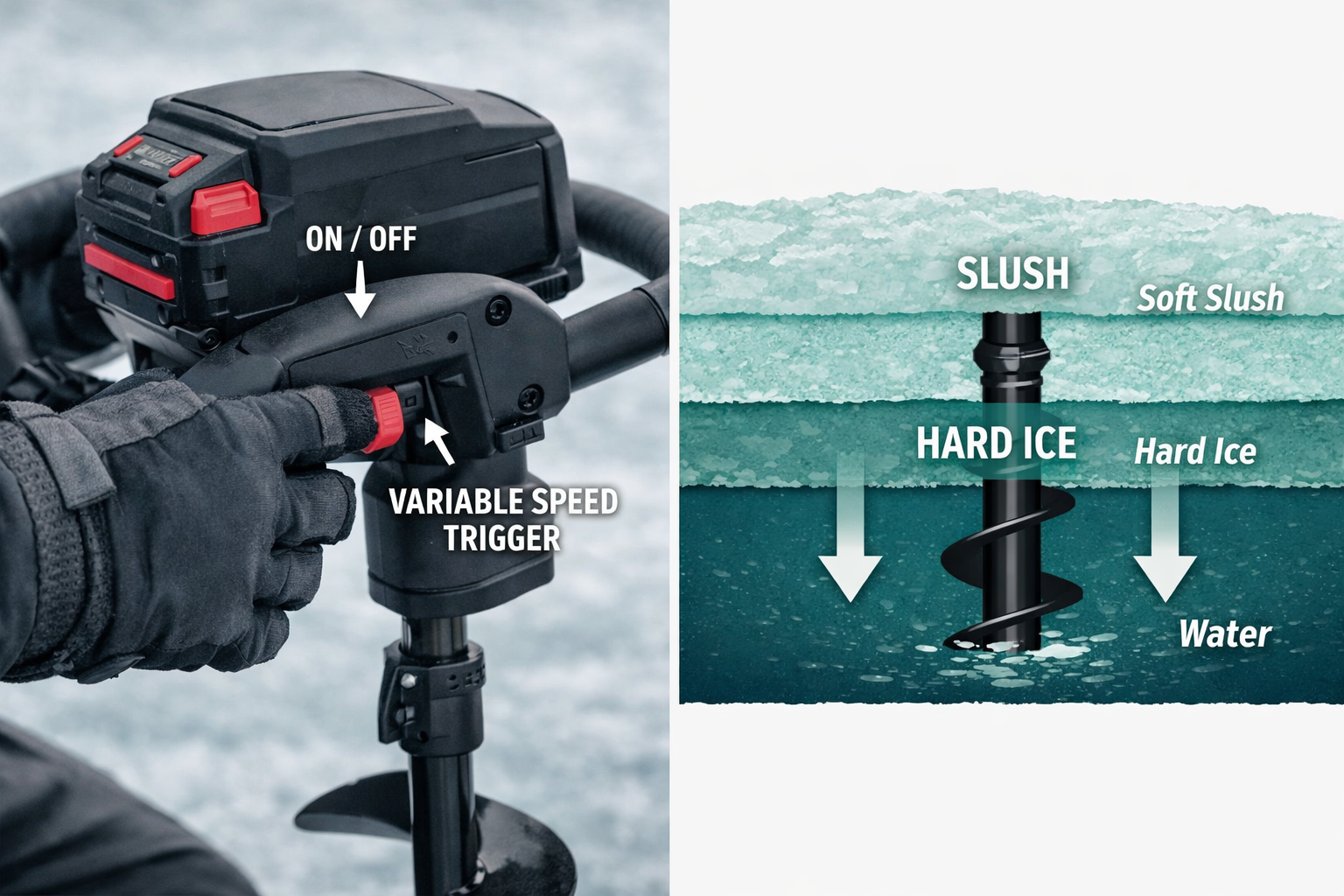
Slushy late-season ice creates two problems for electric augers: it clogs the flighting and it refreezes fast once you stop drilling. March ice typically has a soft, wet top layer of 2-6 inches, a harder ice column below, and standing water on the surface. That combination fights your auger in ways mid-winter ice does not.
When your blade enters the slush layer, the wet material packs into the flighting grooves instead of clearing cleanly. This increases drag on the motor and burns battery capacity faster. Once you pull the auger out, that packed slush can refreeze around the hole edge within minutes on a cold, windy day, narrowing your opening before you get your line down.
The fix starts with understanding the ice structure beneath your feet. Late-season ice is not uniform. You will find:
- Soft, granular slush on top (often 2-6 inches deep)
- A hard, clear or white ice column in the middle (your main drilling zone)
- A wet, honeycomb layer near the bottom where ice meets water
Knowing this structure lets you adjust drill speed and pressure at each layer, which is the foundation of every technique covered in this guide.
For a broader look at how March ice conditions affect travel and safety decisions, read this guide on safe ice travel in variable conditions.
Which 8-Inch Electric Auger Handles Slush Best in March 2026?
The ION Alpha Plus and the Eskimo E40 are the two top performers for slushy late-season conditions based on 2026 field testing. Your choice between them depends on whether you prioritize raw torque or precise speed control.
ION Alpha Plus 8-inch
- Weight: 15.9 lbs (roughly 40% lighter than many competitors)
- Speed: 3.4 inches per second through hard ice
- Torque advantage: 15-20% more than the Eskimo E40 in January 2026 testing
- Reverse function: Yes, with strong slush-flushing capability
- LED lights: Bright, useful for low-light late-season sessions
- Best for: Anglers drilling through 20+ inches of late-season ice who need maximum torque
Eskimo E40 8-inch
- Weight: 17.5 lbs
- Variable-speed trigger: Yes, praised specifically for controlled drilling in shelters
- Reverse function: Yes, with reliable slush-flushing reverse
- Best for: Anglers who move holes frequently inside a shelter and need precise speed management
VEVOR 40V 8-inch
- Budget entry point for 8-inch drilling
- Durability questions noted in repeated slushy conditions as of early 2026
- Best for: Occasional late-season anglers who drill fewer than 20 holes per session
For a direct head-to-head comparison of the StrikeMaster 40V Maven against the ION Alpha, see the Strikemaster 40V Maven vs ION Alpha review.
| Auger | Weight | Torque | Reverse/Slush Flush | Best March Use |
|---|---|---|---|---|
| ION Alpha Plus 8″ | 15.9 lbs | Highest | Yes | Thick ice, high hole count |
| Eskimo E40 8″ | 17.5 lbs | High | Yes | Shelter drilling, speed control |
| StrikeMaster 40V Maven | ~18 lbs | High | Yes | All-around late season |
| VEVOR 40V 8″ | ~16 lbs | Moderate | Limited | Budget, low hole count |
| Drill bit auger (5 lbs) | ~5 lbs | Drill-dependent | No | Fast moves, ice under 20″ |
Drilling Techniques for 8-Inch Electric Ice Augers in Slushy Late-Season Ice
The right drilling sequence for slushy late-season ice has four steps. Follow them in order on every hole.
Step 1: Pre-drill surface prep
Clear standing water from the surface before you start. Use a skimmer or boot to push water away from your drill point. This keeps slush from immediately flooding back into the hole as you drill.
Step 2: Enter the slush layer slow
Set your variable-speed trigger to about 30-40% power for the first 3-4 inches. This prevents the blade from throwing wet slush sideways and packing it into the flighting. Let the blade work at its own pace through the soft material.
Step 3: Accelerate through hard ice
Once you feel the blade hit the harder ice column below the slush, increase to full power. Hard ice cuts cleanly at full speed. Forcing slow speed through hard ice wastes battery and time.
Step 4: Run reverse immediately after breakthrough
The moment you break through to water, run the reverse function for 3-5 seconds before pulling the auger out. This spins slush and ice chips up and out of the hole. Industry testers confirm that electric augers with strong reverse functions eliminate the need for a skimmer in most late-season conditions [6]. Pull the auger straight up without tilting to keep the hole round and clear.
Common mistake: Pulling the auger out at full forward speed. This drags slush back down into the hole and packs it around the edge.
Edge case: In temperatures below 10°F with wind, slush refreezes in under two minutes. In those conditions, drop your line immediately after drilling and keep a hand warmer near the hole edge between checks.
Gear Hacks That Solve the Biggest 8-Inch Electric Auger Problems in March
These modifications and habits address the three main failure points for electric augers in late-season slushy ice: battery drain, blade clogging, and slush refreeze.
Battery management hacks
Cold temperatures reduce lithium battery output significantly. Keep your battery in an insulated neoprene sleeve or a small soft cooler with a hand warmer pack between holes. This maintains battery temperature and preserves torque output across a full day of drilling.
Electric augers like the ION R1 deliver 1,600+ inches of drilling per charge under ideal conditions. In late-season cold, expect 20-30% reduction from that figure if you leave the battery exposed to air between holes.
Blade prep before the first hole
Attach a chemical hand warmer to the blade assembly with a rubber band for 10 minutes before your first drill. Cold steel bonds with wet slush faster than warm steel. A slightly warmed blade sheds slush more cleanly and reduces the chance of the flighting packing up on the first hole of the day.
Slush collar hack
Cut a 6-inch section of foam pipe insulation and split it lengthwise. Clip it around the auger shaft just above the blade. This acts as a slush collar, deflecting wet material away from the motor housing as you drill. It weighs almost nothing and costs under $2 at any hardware store.
Neoprene gloves over waterproof shells
Your hands contact the auger handle and the wet ice surface constantly in March. Thin neoprene gloves under a waterproof outer shell keep dexterity high while blocking the cold water that soaks standard insulated gloves within the first hour. For more on layering for active ice fishing days, see this breakdown of breathable waterproof jackets for ice fishing in 2026.
Drill bit auger as a backup
Carry a nylon 8-inch drill bit auger (roughly 5 lbs) paired with an 18V+ hammer drill as a secondary tool. If your primary electric auger battery dies or the motor overheats from repeated slush contact, the drill bit auger cuts through 12 inches of ice in about 6 seconds and weighs almost nothing in your pack. It struggles above 20 inches of total ice thickness, so it works best as a backup rather than a primary tool in late March.
For a full breakdown of electric versus gas options, including weight and runtime comparisons, check out electric vs gas ice auger pros and cons for beginners.
How Do You Prevent Slush Refreeze After Drilling?
Prevent slush refreeze by combining three tactics: reverse-flush immediately after drilling, keep a small skimmer clipped to your jacket, and use a foam hole cover between checks.
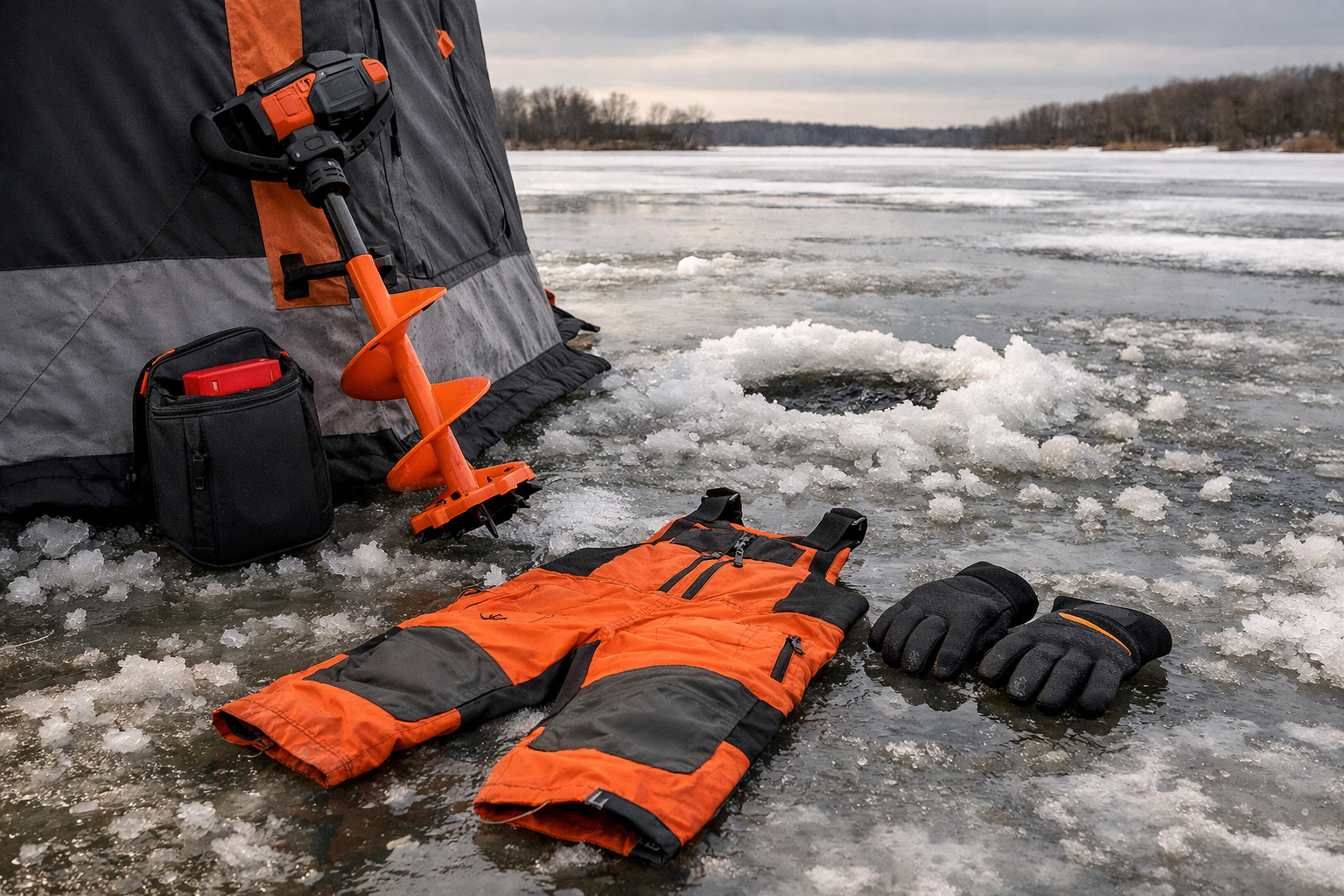
After running the reverse flush, skim any remaining slush chips from the hole surface. Then place a foam disc or a folded cloth over the hole opening between checks. This blocks wind from accelerating refreeze and keeps the hole open longer in sub-freezing temperatures.
In temperatures above 28°F, refreeze is slow enough that you have 10-15 minutes between checks without needing a cover. Below 20°F with wind, refreeze starts in under 2 minutes. Adjust your hole management based on actual air temperature, not assumptions.
Quick refreeze prevention checklist:
- Run reverse for 3-5 seconds before pulling the auger out
- Skim loose slush chips immediately
- Cover the hole with a foam disc or cloth between checks
- Keep a hand warmer near the hole edge in temperatures below 20°F
- Check and clear holes every 5-8 minutes in windy conditions
When Should You Choose a Gas Auger Over Electric for Late-Season Slush?
Choose a gas auger when temperatures drop below 0°F or when you plan to drill more than 40 holes in a single session without access to a warm vehicle for battery recovery.
Gas augers like the Eskimo Quantum (28-34 lbs, 33cc engine) deliver unlimited runtime regardless of temperature [1][6]. Below 0°F, lithium battery performance drops enough that a gas auger becomes the more reliable tool. The tradeoffs are weight (nearly double most electrics), fuel mixing, and exhaust fumes inside a shelter.
For the majority of March 2026 late-season conditions, where temperatures typically range from 10°F to 35°F, an 8-inch electric auger with proper battery management outperforms gas in convenience, noise level, and portability.
Choose electric if:
- Temperature stays above 0°F
- You drill 40 or fewer holes per session
- You fish inside a shelter where exhaust is a concern
- Weight and portability matter for your setup
Choose gas if:
- Temperature drops below 0°F consistently
- You drill 50+ holes per session
- You have a sled to carry the extra weight
- Battery charging access is not available
For anglers running a full late-season walleye setup, the tactics in this Lake of the Woods extended ice season walleye guide pair well with the drilling efficiency covered here.
Safety Protocols for Drilling on March Ice
March ice demands more caution than any other month. The same warming trend that creates slushy surface conditions also weakens the ice column from below.

Before you drill:
- Check ice thickness at the shore and every 50 yards as you move out
- Minimum safe thickness for a single angler on foot: 4 inches of clear, solid ice
- Late-season ice with significant slush layers requires 6+ inches of solid ice below the slush
- Carry ice picks on a cord around your neck at all times
- Wear a float suit or ice fishing bibs with flotation rated for cold water immersion
While drilling:
- Never drill near pressure cracks or dark ice patches
- Listen for hollow sounds underfoot, which signal air pockets or thin spots
- Keep your auger bag and gear on a sled, not on your back, so you shed weight fast if ice fails
- Drill test holes as you travel to verify thickness before committing your full weight
After drilling:
- Note the water level in the hole relative to the ice surface. If water floods up immediately and aggressively, the ice is under stress. Move back toward shore.
- Mark weak spots with a flag so other anglers avoid them
The Fluid Safety principle at FishOnYak.com applies here directly: read your environment before you commit your gear and your body to it.
Frequently Asked Questions: 8-inch electric ice augers in slushy late-season ice
Q: Can an 8-inch electric auger handle 24 inches of late-season ice? A: Yes. The ION Alpha Plus and Eskimo E40 both handle 24-inch ice in late-season conditions. Use full power through the hard ice column and run reverse immediately after breakthrough to clear slush.
Q: How many holes does an 8-inch electric auger drill per charge in March? A: Under ideal conditions, models like the ION R1 drill 1,600+ inches per charge. In cold late-season conditions with slush, expect 20-30% less. A full charge on most 40V augers covers 25-40 holes through 20-inch ice.
Q: Why choose 8-inch over 10-inch for late-season drilling? A: An 8-inch blade displaces less slush per hole, reduces motor strain, and causes less fatigue when moving holes frequently. Reviewer Scottie Brewer specifically recommends 8-inch over 10-inch for late-season deep ice for these reasons.
Q: Does cold weather kill electric auger batteries fast? A: Yes. Lithium batteries lose output in cold temperatures. Keep your battery in an insulated sleeve with a hand warmer between holes to maintain performance throughout the day.
Q: What is the reverse function actually doing in slushy ice? A: Reverse spins the blade backward, which pushes slush and ice chips upward and out of the hole instead of packing them down. This eliminates the need for a skimmer in most conditions.
Q: Is a drill bit auger a real alternative to a dedicated electric auger? A: For ice under 20 inches and anglers covering a lot of ground, yes. An 8-inch nylon drill bit auger weighs about 5 lbs and cuts 12-inch ice in roughly 6 seconds [1]. Above 20 inches of ice, a dedicated electric auger is the better primary tool.
Q: How do you stop slush from packing into the auger flighting? A: Enter the slush layer at 30-40% trigger speed. This prevents the blade from throwing wet material into the flighting grooves. Warming the blade with a hand warmer before the first hole also helps slush shed more cleanly.
Q: What is the lightest 8-inch electric auger for late-season mobility? A: The ION Alpha Plus at 15.9 lbs is among the lightest dedicated 8-inch electric augers available for the 2025-26 season. Drill bit auger setups weigh around 5 lbs total but require a separate hammer drill.
Q: Should you use a gas auger in a shelter during late season? A: No. Gas auger exhaust in an enclosed shelter is a carbon monoxide hazard. Use electric inside any enclosed or semi-enclosed shelter. If you need gas for extreme cold, keep the shelter door open and the auger outside.
Q: How do you know if March ice is safe to drill on? A: Check thickness every 50 yards with a spud bar or test drill. You need a minimum of 4 inches of solid clear ice for a single angler, and 6+ inches when significant slush layers are present. Dark ice, pressure cracks, and water flooding aggressively up through a fresh hole are all signals to move toward shore.
Conclusion
Drilling through slushy late-season ice with an 8-inch electric auger comes down to three things: the right auger, the right technique, and the right gear modifications.
Start with a variable-speed trigger to control your entry through the soft slush layer. Use the reverse function on every single hole. Keep your battery warm between holes. Add a foam slush collar and pre-warm your blade before the first hole of the day. Carry a lightweight drill bit auger as a backup.
The ION Alpha Plus and Eskimo E40 are the two augers that handle March 2026 slushy conditions best, each for different reasons. Know which one fits your fishing style and commit to the battery management habits that keep it performing all day.
Above all, check your ice before you drill it. March ice hides weak spots under slush that mid-winter ice does not. Fluid Safety means reading those conditions before your gear touches the surface.
Kayak. Drill. Catch. Repeat.
See you on the water.
References
[1] Watch – https://www.youtube.com/watch?v=YG25lrMog-8
[2] Top New Gear For Your 2025-26 Ice Angling Campaign – https://www.outdoornews.com/2025/11/01/top-new-gear-for-your-2025-26-ice-angling-campaign/
[3] Best Ice Augers – https://northamerican-outdoorsman.com/best-ice-augers/
[4] Watch – https://www.youtube.com/watch?v=Asmluw0r8vg