Last updated: March 21, 2026
Quick Answer
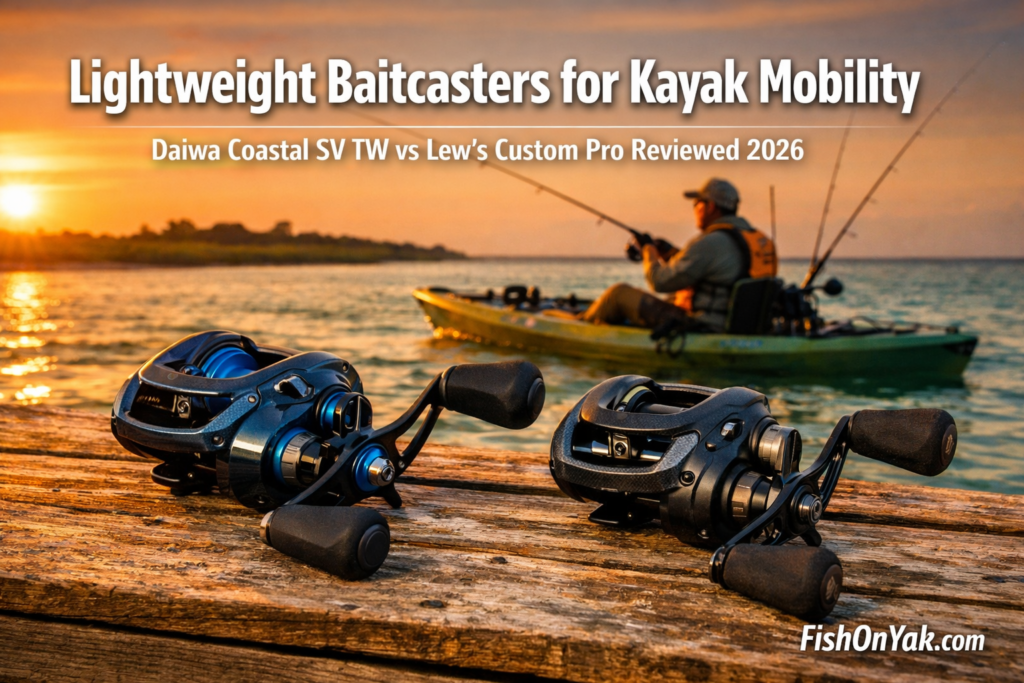
When you’re managing a paddle, a fish finder, and a tight casting deck, every ounce counts. Finding the right Lightweight Baitcasters for Kayak Mobility isn’t just about shaving weight—it’s about balancing corrosion resistance with the finesse required for inshore precision.
In 2026, the market has narrowed down to two titans of the “light-but-tough” category: the Daiwa Coastal SV TW 150 and the Lew’s Custom Pro Gen3.
Key Takeaways
- The Daiwa Coastal SV TW 150 uses a 100-size body with a 150-size spool, making it compact enough to palm all day from a kayak without fatigue
- Lew’s Custom Pro Gen3 weighs 5.6 oz with an aluminum frame and ParaMag ITB magnetic braking, reducing backlashes on quick kayak casts
- Daiwa’s SV spool handles lures from 1/4 oz to 1 oz without re-tuning, covering trout jigs to redfish plugs in one setup
- Lew’s Custom Pro earned “most versatile” recognition from Kayak Angler Magazine for 2026, covering light jigs to heavy plugs from a mobile platform
- Both reels sit near the $200 price point, competing directly with the Shimano Curado 150M
- Corrosion-resistant ball bearings (CRBB) in the Coastal SV TW give it a durability edge in saltwater environments
- Neither reel suits heavy big-game kayak work like cobia or large red drum; the PENN Fathom LP handles that role better
- Palmability and one-handed operation matter more on a kayak than on a boat, and both reels pass that test
- For a complete inshore setup, pair either reel with a 7-foot medium rod and 20 lb braid
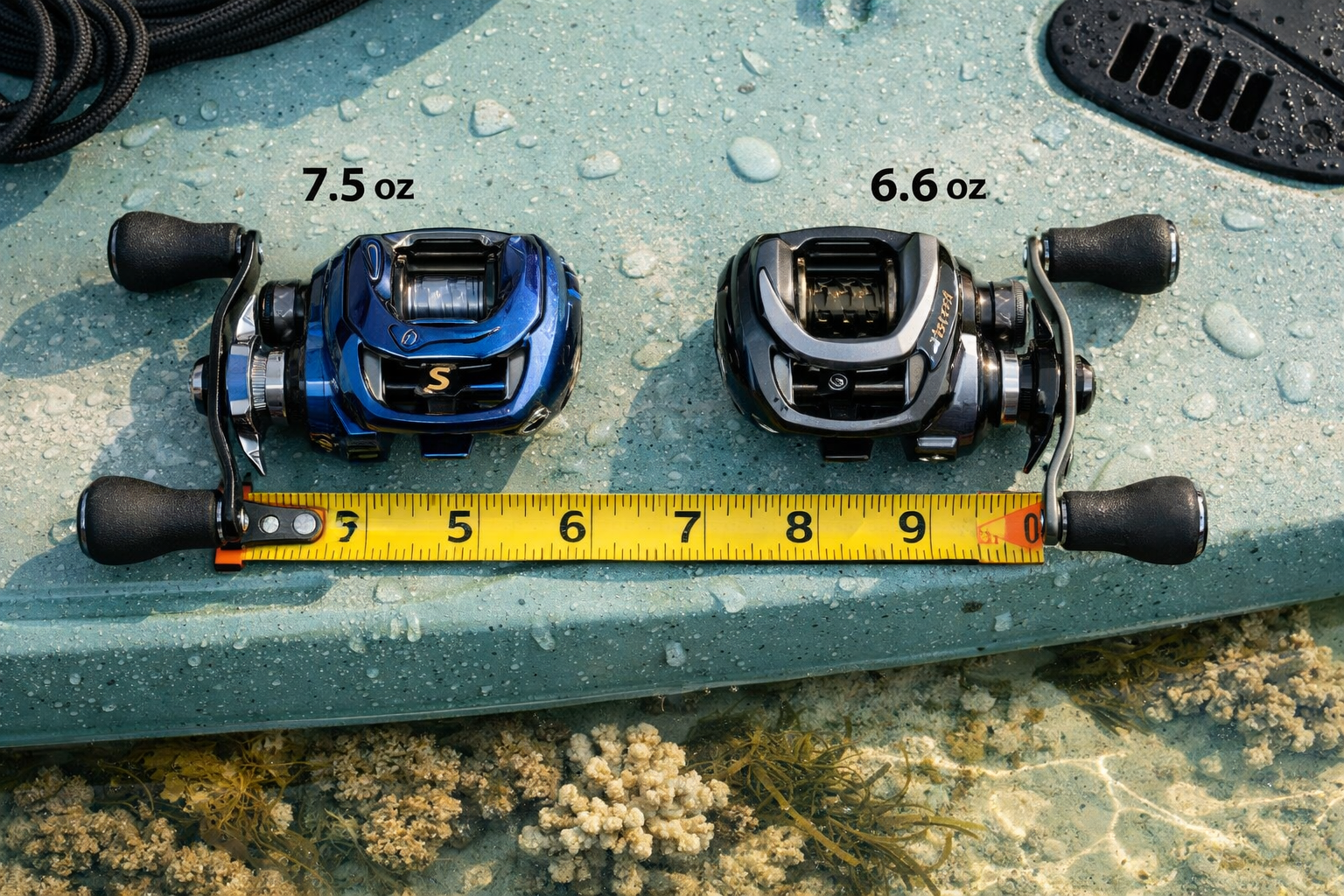
Why Reel Weight Matters More on a Kayak Than on a Boat
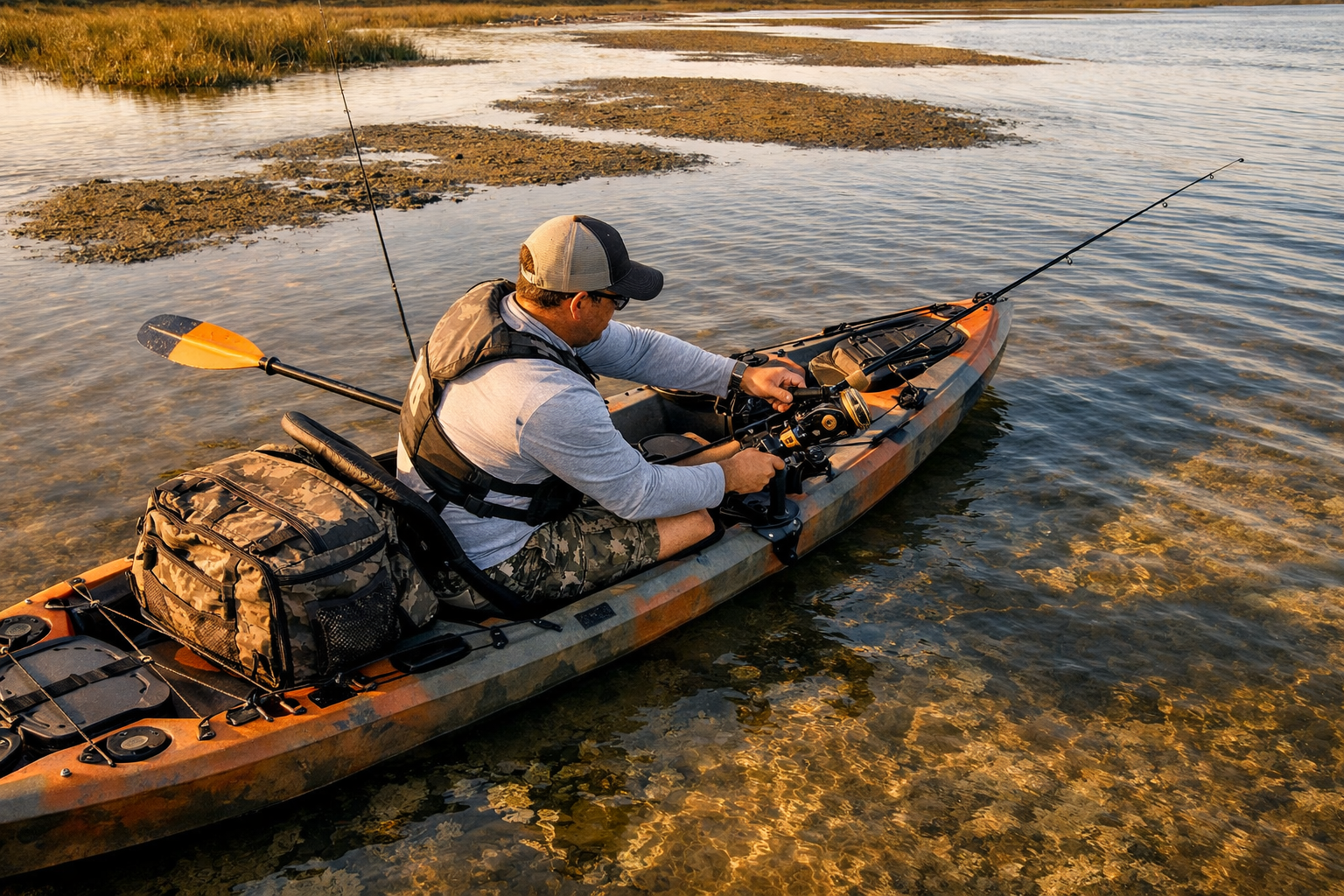
On a kayak, every ounce counts. You paddle, balance, and cast from the same seat for hours. A heavier reel shifts your rod’s balance point, accelerates arm fatigue, and slows your reaction time when a redfish charges a flat.
Kayak anglers who target trout and reds in shallow flats make dozens of short, precise casts per hour. A reel that weighs 7+ ounces on a 7-foot rod creates a front-heavy setup that tires your wrist faster than a balanced 5.6 to 6.0 oz reel. That weight difference also affects one-handed operation, which matters when your other hand holds a paddle or grips the gunwale for stability.
Both the Daiwa Coastal SV TW and the Lew’s Custom Pro address this directly. They represent the current standard for lightweight baitcasters for kayak mobility, and this review tests them against the specific demands of all-day paddling on saltwater flats.
For a broader look at building a functional inshore setup, check out the Inshore Saltwater Fishing Kayak Setup Guide 2026 at FishOnYak.com.
Daiwa Coastal SV TW 150: Built for Saltwater Kayak Abuse
The Daiwa Coastal SV TW 150 targets inshore kayak anglers who need a compact, corrosion-resistant reel that handles both finesse and moderate power presentations.
Key specs at a glance:
- Body size: 100 (compact, palmable)
- Spool size: 150 (deeper capacity for braid)
- Weight: approximately 6.0 oz
- Bearings: 7 CRBB + 1 roller bearing (corrosion-resistant)
- Max drag: 13.2 lbs
- Gear ratios: available in 6.3:1 and 8.1:1
- SV spool design for wide lure weight range
The 100-size body fits naturally in your palm. Outdoor Life testers noted this palmable design suits kayak mobility better than bulkier saltwater reels. When you’re braced in a sit-on-top kayak with your knees up and your casting arc shortened by the low seat position, a compact body lets you generate clean, controlled casts without over-rotating your wrist.
The SV spool advantage: Daiwa’s SV (Stress-Free Versatile) spool uses a narrower, shallower design that reduces inertia at the start of a cast. This means lighter lures, like a 1/4 oz trout jig, launch cleanly without a thumb-heavy brake setting. Salt Strong analysts confirmed the SV spool outperforms the Tatula in saltwater kayak scenarios for light lure presentations.
The T-Wing System: The T-shaped levelwind guide reduces line friction during the cast. On a kayak where your casting distance is already limited by your seated position and the need to keep the rod tip low over the hull, every extra foot of distance matters. The T-Wing delivers that.
Corrosion resistance: The CRBB bearings resist salt intrusion better than standard stainless bearings. For anglers who fish coastal flats regularly, this extends the reel’s service life without constant maintenance. Daiwa presented the updated Coastal series at the Saltwater Fishing Expo in Edison, New Jersey, on March 13-15, 2026, emphasizing lightweight inshore performance for kayak use.
Where it falls short: The 13.2 lb drag ceiling limits its use on larger red drum or cobia. For those targets, a PENN Fathom LP with its full-metal body and higher drag is the better tool. The Coastal SV TW is a finesse-to-moderate-power reel, not a big-game reel.
Lew’s Custom Pro Gen3: The Lightweight Baitcaster Kayak Anglers Keep Reaching For
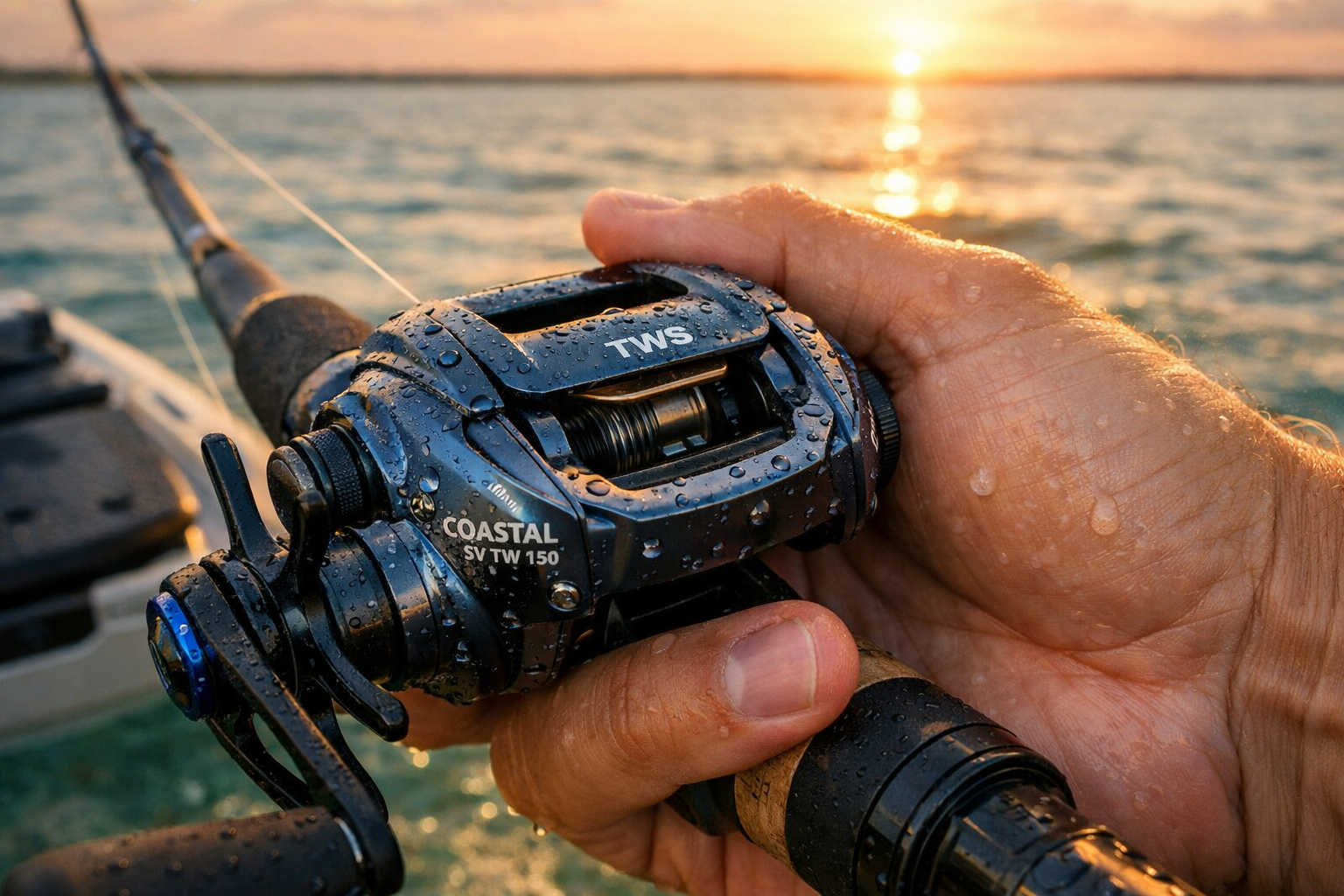
The Lew’s Custom Pro Gen3 weighs 5.6 oz and uses an aluminum frame with the ParaMag ITB (Independent Tension Brake) magnetic braking system. Field & Stream testers called it a “modern marvel” for its smooth braking and low weight, making it a natural fit for kayak anglers who need quick casts without thumb fatigue.
Key specs at a glance:
- Weight: 5.6 oz
- Frame: aluminum
- Bearings: 10 + 1 roller bearing
- Max drag: 20 lbs
- Braking: ParaMag ITB magnetic system
- Gear ratios: available in 6.8:1 and 8.3:1
ParaMag ITB braking: The magnetic brake system on the Custom Pro operates independently from the centrifugal system, giving you a cleaner adjustment range. On a kayak, where your casting angle changes constantly based on wind, current, and the direction you’re drifting, a brake system you can dial in fast without opening the side plate saves time. Kayak Angler Magazine named the Custom Pro the most versatile baitcaster for 2026 for exactly this reason, citing its ability to cast light jigs to heavy plugs without re-tuning.
20 lb drag: This is the Custom Pro’s biggest advantage over the Coastal SV TW. Twenty pounds of drag gives you room to fight larger inshore fish, including slot-size red drum, without worrying about the reel giving out. Tackle Warehouse reviewers noted the solid feel on finesse rigs without backlashes, and the drag holds up on heavier presentations as well.
Weight at 5.6 oz: This is the lightest of the two reels reviewed here. Paired with a 7-foot medium rod, the balance point sits closer to your hand, reducing the lever effect that causes wrist fatigue over a long paddle day.
Where it falls short: The Custom Pro’s lighter spool handles wind less predictably than heavier alternatives like the Abu Garcia Revo SX. In open-water kayak situations with consistent crosswind, you need a slightly heavier brake setting to stay backlash-free. The Revo SX handles wind better but sacrifices palmability. For most inshore flats fishing, the Custom Pro’s braking range is sufficient.
Lew’s featured the Custom Pro prominently in its 2026 new products lineup, highlighting the ParaMag upgrades for compact, lightweight casting in mobile setups.
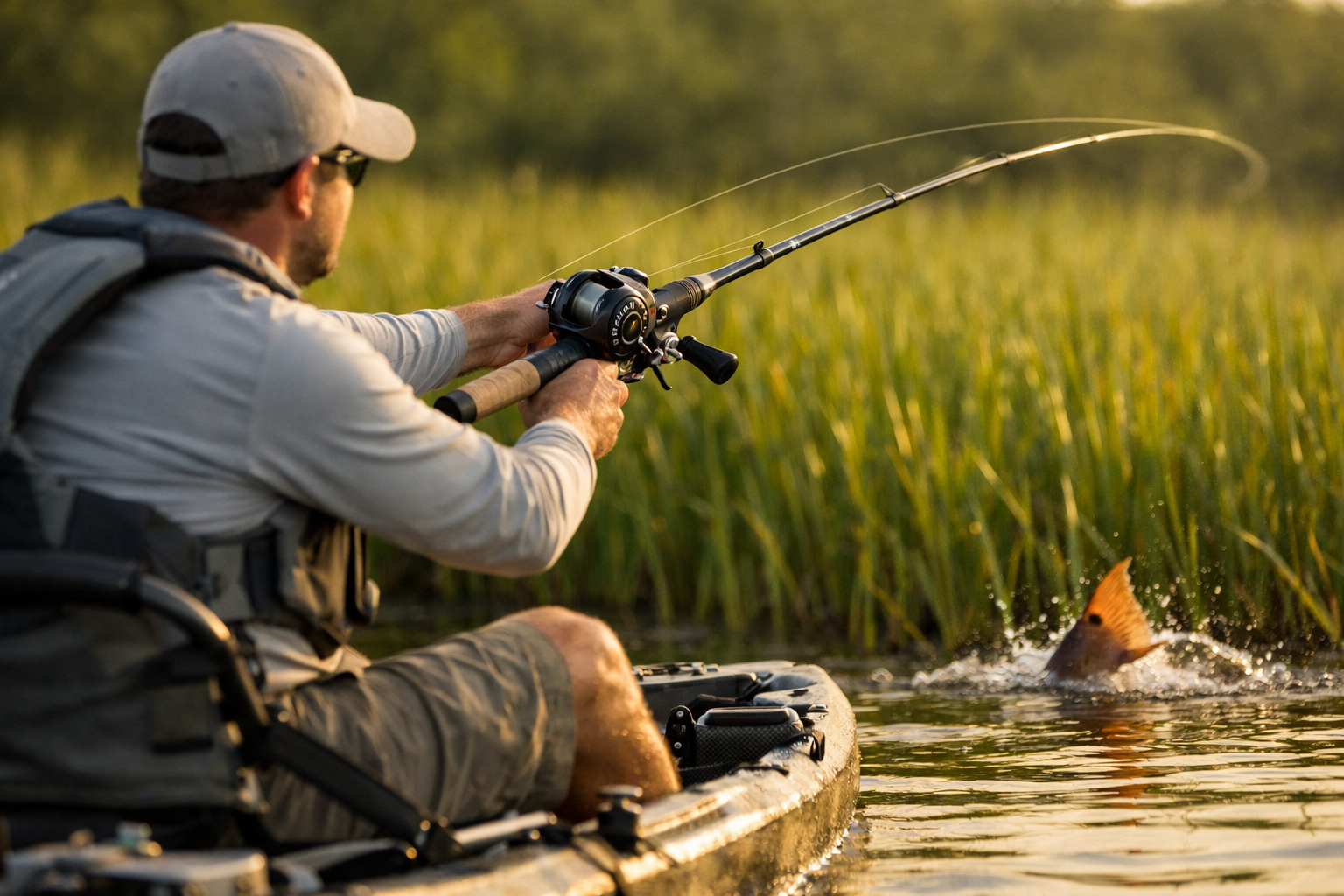
Head-to-Head: Daiwa Coastal SV TW vs. Lew’s Custom Pro for Kayak Fishing
Here is a direct comparison of both reels across the criteria that matter most for kayak mobility and inshore fishing performance.
| Feature | Daiwa Coastal SV TW 150 | Lew’s Custom Pro Gen3 |
|---|---|---|
| Weight | ~6.0 oz | 5.6 oz |
| Frame material | Aluminum/Zaion | Aluminum |
| Max drag | 13.2 lbs | 20 lbs |
| Bearings | 7 CRBB + 1 | 10 + 1 |
| Braking system | SVS Infinity + SV spool | ParaMag ITB |
| Corrosion resistance | High (CRBB) | Moderate |
| Light lure performance | Excellent (SV spool) | Good |
| Palmability | Excellent (100 body) | Excellent |
| Price range | ~$200 | ~$180-$200 |
| Best for | Dedicated saltwater flats | Mixed inshore/freshwater |
Choose the Daiwa Coastal SV TW if: you fish saltwater exclusively, target trout and reds with lures under 3/4 oz, and want the best corrosion protection in a compact body.
Choose the Lew’s Custom Pro if: you rotate between inshore and freshwater, need higher drag for larger fish, or want the lightest possible reel for all-day paddle sessions.
For help building the rest of your kayak around these reels, the complete guide to rigging a kayak for saltwater fishing covers rod holders, storage, and anchor systems in detail.
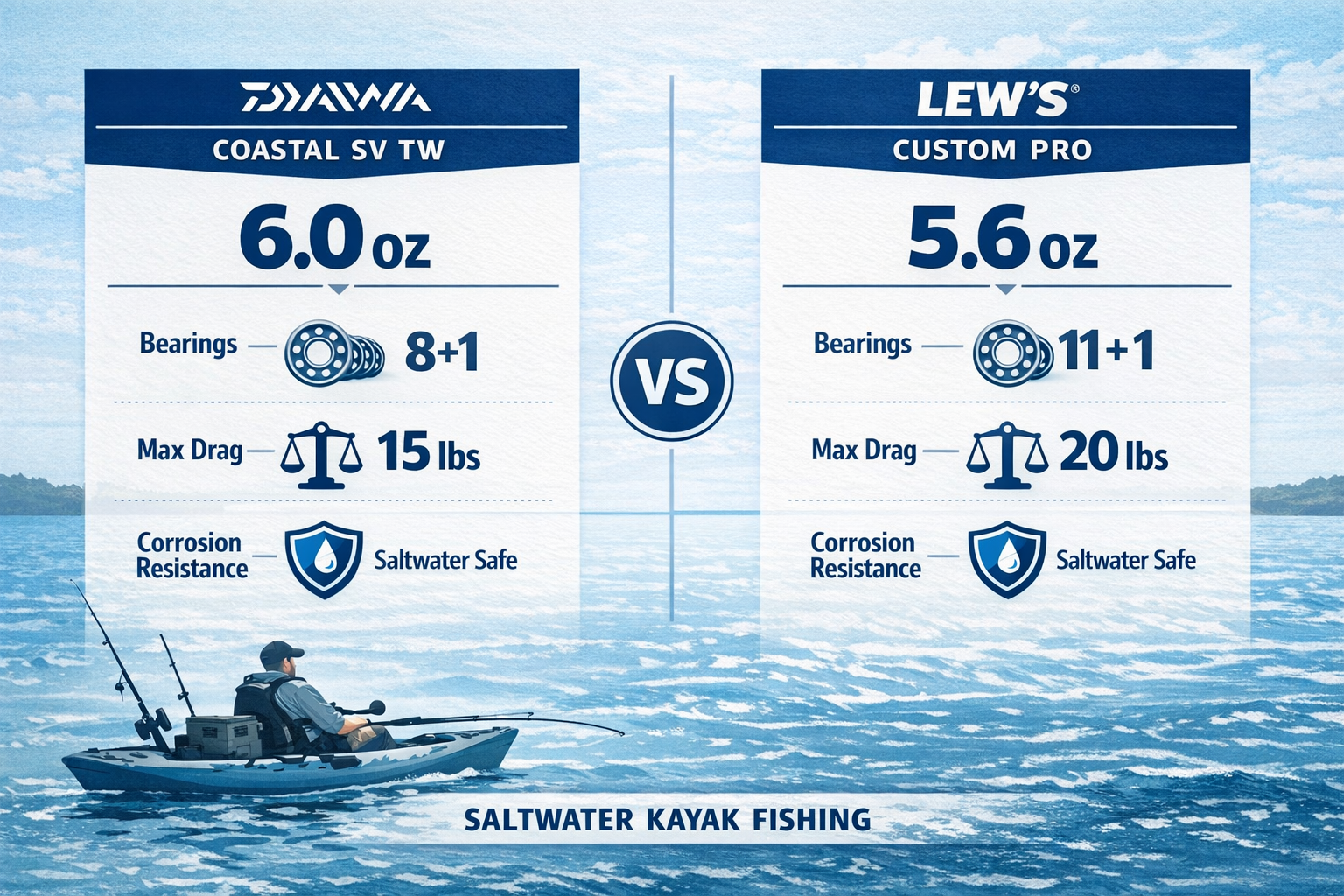
How to Set Up Either Reel for Shallow Flats Fishing
Getting the most from a lightweight baitcaster on a kayak requires more than buying the right reel. Setup and tuning determine whether you spend your time casting or picking out backlashes.
Step 1: Spool with 20 lb braid. Both reels perform best with a quality 20 lb braided line. Braid’s thin diameter fills the spool efficiently and reduces wind resistance during the cast. Leave 1/8 inch of space at the spool rim.
Step 2: Set the spool tension knob first. Hold the rod at 10 o’clock and release the thumb bar. The lure should fall slowly with minimal spool overrun. This is your baseline.
Step 3: Dial in the magnetic brake. Start at 50% brake setting. Make a short test cast. Reduce the brake in 10% increments until you find the minimum setting that keeps the spool controlled at the end of the cast.
Step 4: Add a fluorocarbon leader. Tie a 15 to 20 lb fluorocarbon leader of 12 to 18 inches for trout and reds. Fluorocarbon handles abrasion from oyster bars and grass better than braid alone.
Step 5: Check rod balance. Mount the reel on your rod and hold the setup at the grip. The rod tip should not drop dramatically. If it does, the rod is too heavy for the reel weight, and you need a lighter blank.
For a full breakdown of how rigging decisions affect your catch rate on the water, the saltwater kayak fishing resource hub at FishOnYak.com covers species-specific tactics and gear selection.
Alternatives Worth Considering
The Daiwa Coastal SV TW and Lew’s Custom Pro are strong choices, but they are not the only options for lightweight baitcasters for kayak mobility.
Shimano Curado 150M: Kayak Angler’s top overall pick for 2026 kayak fishing. HAGANE body construction adds durability for heavy abuse, and the braking system handles varied lure weights well. Priced similarly to both reels reviewed here. The Curado is the safer choice if you prioritize long-term durability over minimum weight.
Daiwa Tatula SV TW103: A direct freshwater rival to the Coastal SV TW. It uses the same SV spool technology but lacks the CRBB corrosion-resistant bearings. Forum users note it works for light inshore fishing without the Coastal’s spool depth, but it will degrade faster in saltwater environments.
Abu Garcia Revo SX: A workhorse alternative with better heavy-lure control than the Custom Pro’s lighter spool. Less ideal for kayak palmability, but it handles crosswind casting better. Choose this reel if you fish open-water kayak situations with consistent wind more than sheltered flats.
PENN Fathom LP: The right tool for kayak big-game fishing. Full-metal body, high drag ratings, and 9.2:1 gear ratio options counter the Coastal SV TW’s finesse focus. If your target species runs larger than slot-size red drum, the Fathom LP is the appropriate step up.
If you’re new to inshore kayak fishing and want to build your skills before committing to tournament-level gear, the 21 essential saltwater kayak fishing tips for beginners gives you a solid foundation.
Frequently Asked Questions
Q: Is the Daiwa Coastal SV TW worth the price over a standard Tatula? A: Yes, for saltwater use. The CRBB bearings resist corrosion significantly better than standard bearings, and the 150-size spool holds more braid for inshore applications. The Tatula is fine for freshwater but degrades faster in salt.
Q: Can the Lew’s Custom Pro handle redfish? A: Yes. The 20 lb drag rating is sufficient for slot-size red drum. For fish over 30 inches, consider a reel with a higher drag ceiling like the PENN Fathom LP.
Q: What gear ratio should I choose for flats fishing? A: A 6.3:1 to 6.8:1 ratio works best for most inshore presentations. It gives you enough speed for topwater retrieves and enough torque for slow-rolling swimbaits. The 8.1:1 options suit specific fast-retrieve techniques but are less versatile.
Q: Do I need corrosion-resistant bearings if I rinse my reel after every trip? A: Rinsing helps, but salt intrusion still occurs over time. CRBB bearings in the Coastal SV TW provide a meaningful durability advantage for anglers who fish saltwater more than twice per week.
Q: Which reel is better for beginners on a kayak? A: The Lew’s Custom Pro Gen3. The ParaMag ITB braking system is easier to adjust and more forgiving of casting errors than many comparable reels. Beginners produce fewer backlashes with magnetic braking systems.
Q: How do I store a baitcaster after a saltwater kayak trip? A: Rinse with fresh water, dry with a cloth, and back off the drag to release tension on the drag washers. Store in a reel case or bag away from direct sunlight.
Q: Is 13.2 lbs of drag enough for inshore kayak fishing? A: For most trout and slot-size red drum, yes. For larger red drum, black drum, or cobia from a kayak, upgrade to a reel with 20+ lbs of drag.
Q: What line capacity does the Coastal SV TW 150 hold? A: The 150-size spool holds approximately 100 yards of 20 lb braid, which is sufficient for most inshore kayak presentations.
Q: Can I use these reels for freshwater bass fishing? A: Both reels work for bass fishing. The Lew’s Custom Pro is particularly well-suited given its origins as a bass reel. The Coastal SV TW is overbuilt for freshwater but performs well.
Q: What rod pairs best with these reels for kayak trout and reds? A: A 7-foot medium or medium-heavy rod with a fast action tip. This length gives you enough casting arc from a seated kayak position without becoming unmanageable in tight quarters.
Conclusion
Lightweight baitcasters for kayak mobility come down to one question: what are you fishing for and where? The Daiwa Coastal SV TW 150 is the right reel for dedicated saltwater flats anglers who need corrosion resistance, a compact body, and a spool that handles light lures without fuss. The Lew’s Custom Pro Gen3 is the right reel for anglers who want the lightest possible setup, higher drag, and a braking system that adapts fast to changing conditions.
Both reels pass the all-day kayak test. Both sit at a price point that reflects their quality. Neither is the wrong choice for trout and reds in shallow water.
Pick the one that matches your primary target species and water type. Rig it properly, set your brakes before you launch, and focus on reading the flat. Kayak. Drill. Catch. Repeat.
See you on the water.
References
[1] 24 Coastal Sv Tw 150 Icast Release – https://daiwa.us/products/24-coastal-sv-tw-150-icast-release
[2] New Products – https://www.lews.com/en/shop/new-products
[3] Best Baitcasting Reels – https://www.outdoorlife.com/gear/best-baitcasting-reels/
[4] Why This New Baitcaster Might Be Your Next Favorite Reel – https://www.saltstrong.com/articles/why-this-new-baitcaster-might-be-your-next-favorite-reel/
[5] Coastal Sv Tw Casting Reels – https://thehookuptackle.com/products/coastal-sv-tw-casting-reels
[6] Lews Custom Pro Gen3 Baitcasting Reel 2024 Models – https://discounttackle.com/products/lews-custom-pro-gen3-baitcasting-reel-2024-models