Last updated: February 21, 2026
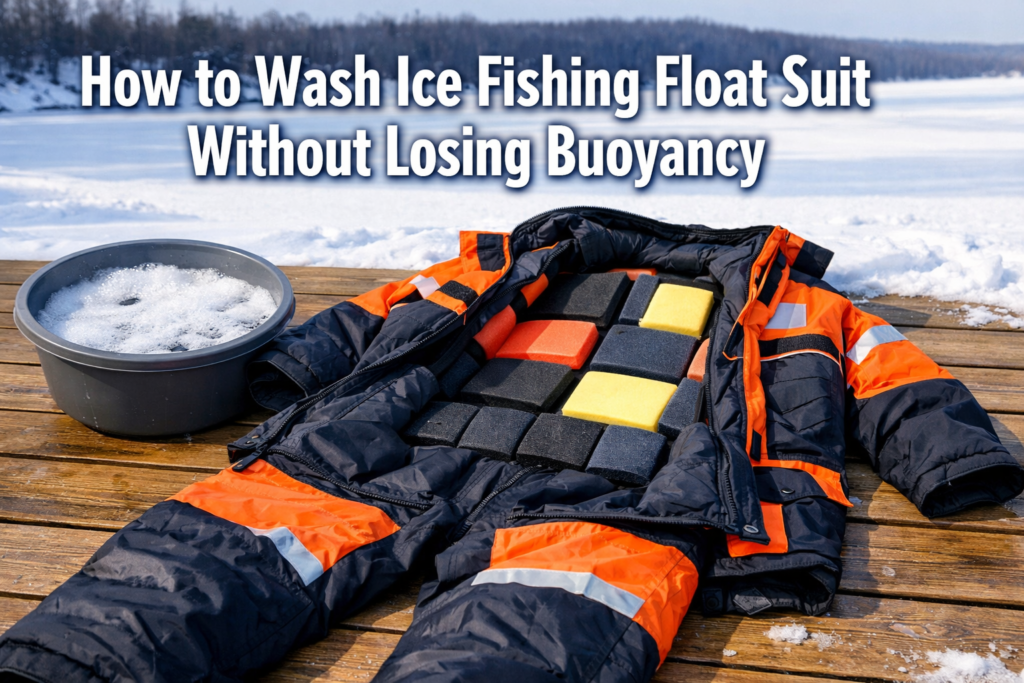
Your ice fishing float suit keeps you alive if you break through the ice. Washing it wrong destroys the closed-cell foam and DWR coating that make flotation possible. Learning how to wash ice fishing float suit without losing buoyancy comes down to three things: use the right detergent, wash gently by hand, and dry flat or hanging with zero heat. Get those three steps right, and your suit holds its rated buoyancy for years.
Key Takeaways
- Hand wash your float suit in lukewarm water (below 100°F) with a technical gear detergent like Nikwax Tech Wash or Granger’s Performance Wash.
- Standard laundry detergents, bleach, and fabric softeners break down DWR coatings and degrade closed-cell foam over time.
- Never machine wash, machine dry, or wring out a float suit. Compression and heat damage flotation foam permanently.
- Air dry the suit on a wide hanger in a ventilated space away from direct sunlight and heat sources.
- Reapply DWR treatment after every third wash or whenever water stops beading on the outer fabric.
Quick Answer
Wash your ice fishing float suit by hand in a bathtub with cool or lukewarm water and a PFAS-free technical wash. Gently agitate the suit for 10 to 15 minutes, rinse thoroughly, and hang dry on a padded hanger. This process removes salt, fish slime, sweat, and grime without compressing or chemically degrading the closed-cell foam that provides buoyancy.
Why Does Washing Method Affect Float Suit Buoyancy?
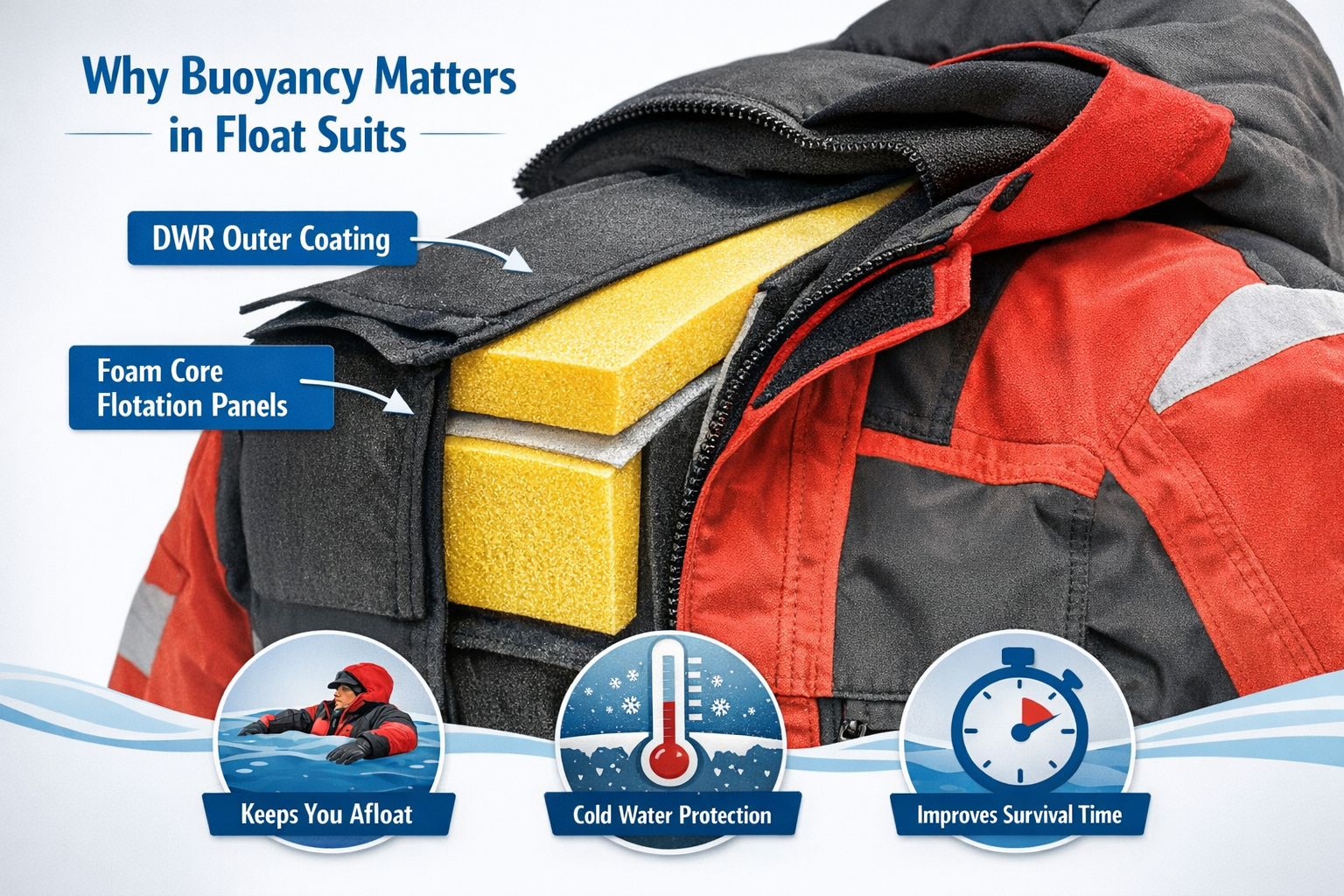
Float suit buoyancy comes from closed-cell foam panels distributed throughout the jacket and bibs. Modern suits like the Boreas line use strategically placed foam providing around 35 pounds of buoyancy. The Eskimo Expedition Suit uses Uplyft Breathable Flotation with perforated foam designed for both buoyancy and airflow. These foam panels trap air in sealed cells. That trapped air is what keeps you floating.
Three things destroy that buoyancy:
- Heat. Temperatures above 120°F cause closed-cell foam to soften, warp, and lose its rigid cell structure. Once the cells collapse, they no longer trap air.
- Mechanical compression. Washing machine agitators and dryer tumbling crush foam cells. A spin cycle applies enough force to permanently compress thin flotation panels.
- Chemical degradation. Standard detergents contain surfactants, optical brighteners, and sometimes bleach compounds that break down both the foam material and the DWR (Durable Water Repellent) coating on the outer fabric.
The DWR coating matters because it prevents the outer shell from absorbing water. A waterlogged outer layer adds weight and reduces the suit’s ability to keep you on the surface. When you wash a float suit with regular Tide or Gain, you strip that coating. The suit still looks fine. But the next time you fall through the ice, the fabric soaks up water instead of repelling it, and you sit lower in the water than the suit’s rating suggests.
Common mistake: Assuming a float suit is “tough enough” for a washing machine because the outer fabric is 600-denier or heavier. The fabric might survive. The foam inside won’t.
How to Wash Ice Fishing Float Suit Without Losing Buoyancy: Step-by-Step
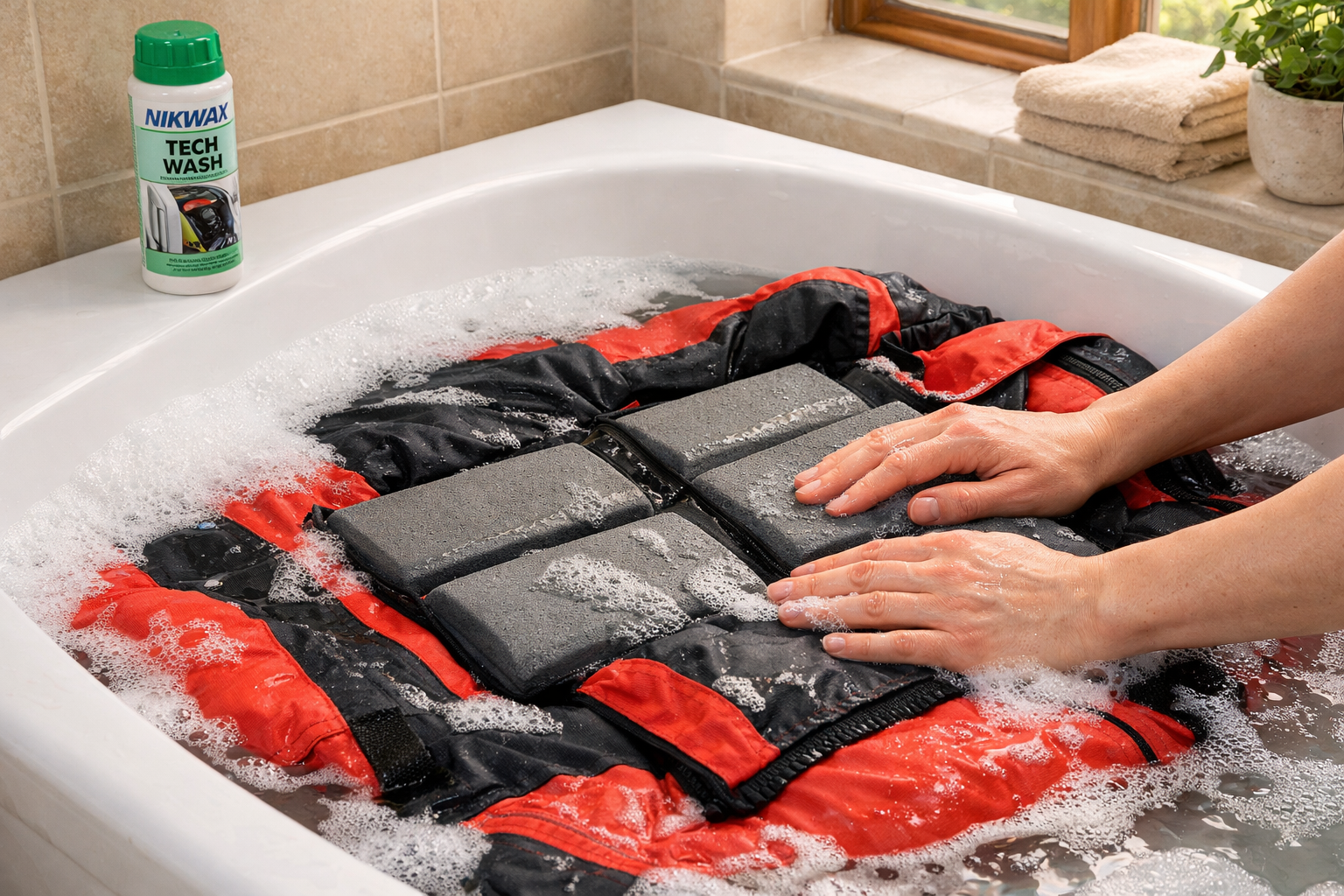
Follow these steps every time your suit needs cleaning. Most anglers wash their float suit two to three times per season, depending on use.
Step 1: Read the manufacturer’s care label. Every float suit brand (Striker, StrikeMaster, Eskimo, Norfin, Boreas) includes specific washing instructions. Some brands void the warranty if you machine wash. Start there.
Step 2: Fill a bathtub or large basin with lukewarm water. Keep the temperature below 100°F. Water that feels slightly warm to your wrist is about right. Hot water damages foam and DWR coatings.
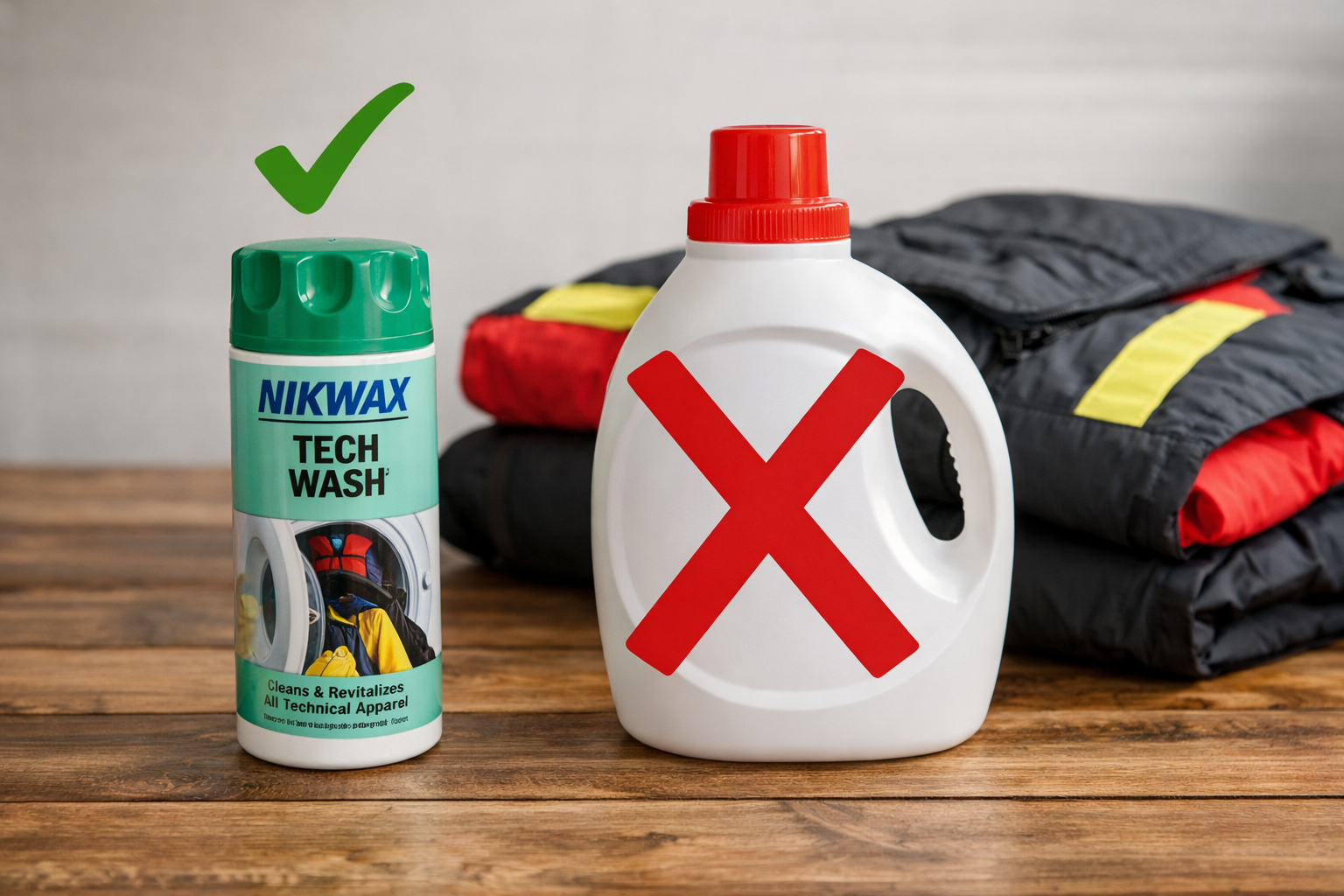
Step 3: Add technical gear detergent. Use one capful (or the amount specified on the bottle) of Nikwax Tech Wash, Granger’s Performance Wash, or a similar product designed for technical outerwear. These detergents clean without leaving residue that clogs fabric pores or degrades foam.
Step 4: Submerge the suit. Unzip all zippers. Open all pockets and flaps. Lay the suit flat in the water. Press it down gently to release trapped air so the suit fully submerges.
Step 5: Agitate gently by hand. Use your hands to work soapy water through the fabric for 10 to 15 minutes. Focus on high-soil areas: the collar, cuffs, seat of the bibs, and anywhere fish slime or bait has dried. Do not scrub aggressively over foam panel areas. Use a soft cloth or sponge for stubborn spots.
Step 6: Drain and rinse. Drain the tub. Refill with clean, cool water. Press the suit gently to flush out detergent. Repeat the rinse until the water runs clear with no suds. Residual detergent left in the fabric degrades DWR performance.
Step 7: Remove excess water without wringing. Lay the suit flat on a clean towel. Roll the towel and suit together, pressing gently to absorb water. Never twist or wring the suit. Wringing compresses foam panels unevenly and causes permanent damage.
Step 8: Hang dry on a wide, padded hanger. Hang the suit in a well-ventilated area out of direct sunlight. Open all zippers and flaps. Allow 24 to 48 hours for full drying. Do not use a clothes dryer, space heater, or heat gun.
For more guidance on maintaining gear through proper cleaning techniques, check out our detailed approach to cleaning like a pro.
Which Detergents Preserve Buoyancy and Which Ones Destroy It?
Use a technical gear wash. Avoid everything else. Here is a comparison of common options:
| Detergent Type | Safe for Float Suits? | Effect on DWR | Effect on Foam |
|---|---|---|---|
| Nikwax Tech Wash | Yes | Preserves and revives DWR | No degradation |
| Granger’s Performance Wash | Yes | Preserves DWR | No degradation |
| Standard liquid detergent (Tide, Gain) | No | Strips DWR coating | Residue buildup on foam |
| Powdered detergent | No | Strips DWR coating | Particles lodge in foam cells |
| Bleach | No | Destroys DWR entirely | Degrades foam structure |
| Fabric softener | No | Coats and blocks DWR | Coats foam, reduces air trapping |
| Dish soap (Dawn) | Use with caution | Strips DWR | Minimal foam damage, but DWR loss is the bigger problem |
| Baking soda soak | Limited use for odor | Neutral on DWR | Neutral on foam |
Decision rule: If the product label does not say “safe for technical outerwear” or “safe for Gore-Tex/DWR fabrics,” do not use it on your float suit.
Nikwax Tech Wash has been PFAS-free since 1977 and uses water-based, biodegradable formulas. WindRider’s 2026 detergent guide specifically recommends Nikwax and Granger’s for preserving flotation foam and DWR coatings on float suits and other technical fishing gear.
Edge case: If you’re on the ice and need to spot-clean blood or fish slime immediately, use plain water and a soft cloth. A quick wipe in the field prevents stains from setting without risking chemical damage.
How to Dry Your Float Suit Without Damaging Flotation Foam
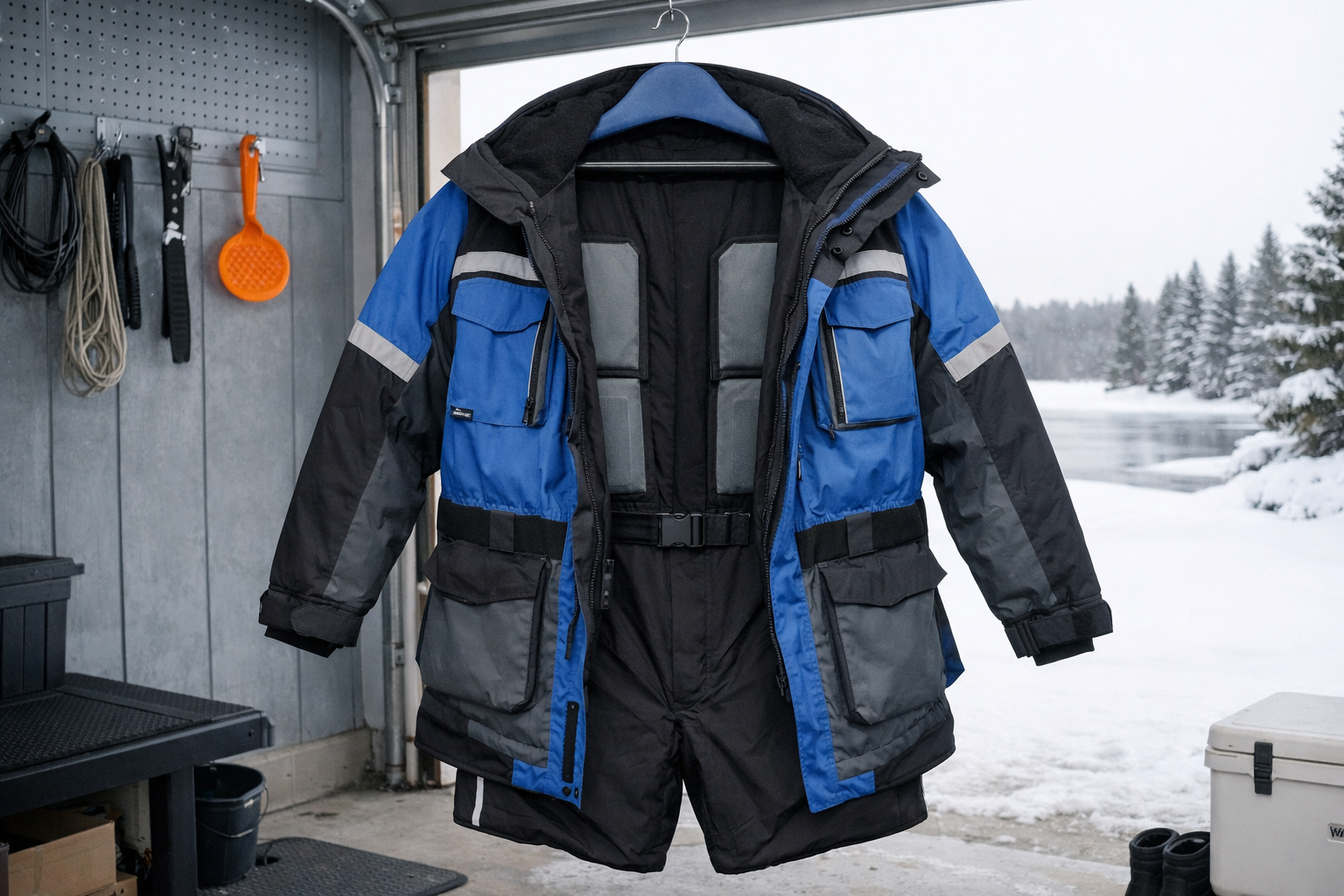
Air drying is the only safe method. The foam inside your float suit loses buoyancy when exposed to sustained heat above 120°F. A standard household dryer reaches 125°F to 135°F on low heat and 135°F to 150°F on medium. Both exceed the safe threshold.
Proper drying method:
- Hang the suit on a wide, padded hanger. Wire hangers create pressure points that compress foam in the shoulder area.
- Open all zippers, pockets, and Velcro closures.
- Choose a ventilated indoor space. A garage, covered porch, or laundry room with airflow works well.
- Avoid direct sunlight. UV exposure degrades both the DWR coating and the outer fabric dye over time.
- Allow 24 to 48 hours for complete drying. Thicker suits with more foam (like the Boreas with its 600-denier fabric) take longer.
- Flip the suit inside out after 12 hours to ensure the inner lining and foam backing dry evenly.
Do not:
- Lay the suit flat on a surface for extended periods. This traps moisture underneath and promotes mildew growth between foam layers.
- Drape the suit over a radiator, wood stove, or heating vent.
- Use a hair dryer or heat gun on any section of the suit.
Norfin float suits with quick-drain technology on parka hems and bib cuffs shed water faster than suits without drain features. If your suit has drain ports, position the suit so those ports face downward during drying.
For tips on maintaining the exterior finish of your gear over the long term, see our guide on achieving a long-lasting finish on your equipment.
How Often Should You Wash an Ice Fishing Float Suit?
Wash your float suit only when it needs cleaning. Over-washing accelerates DWR degradation even with the right detergent. For most anglers, that means two to three full washes per season.
Wash after these situations:
- Extended exposure to saltwater spray (saltwater crystals degrade fabric and zippers if left to dry repeatedly)
- Heavy contact with fish slime, bait, or blood
- Visible dirt or mud buildup
- Noticeable odor that spot cleaning does not resolve
- End of season before storage
Between washes, do this instead:
- Wipe down the exterior with a damp cloth after each outing.
- Hang the suit to air out in a ventilated space after every use.
- Spot clean stains with plain water and a soft brush.
- Inspect YKK zippers and lubricate them with zipper wax or silicone spray to prevent freezing and corrosion.
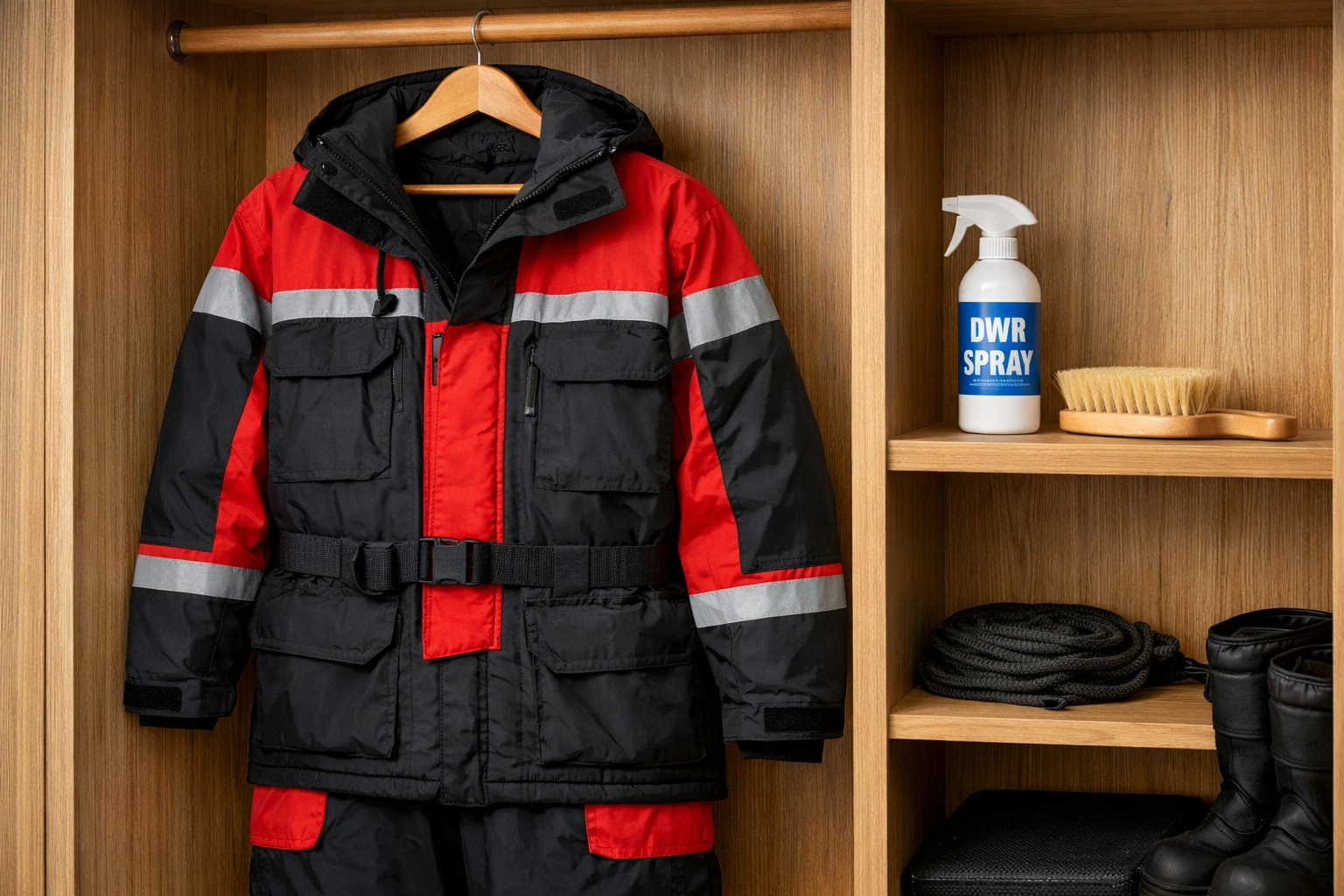
Reapply DWR treatment after every third wash or whenever you notice water no longer beading on the outer fabric. Nikwax TX.Direct or Granger’s Performance Repel are spray-on options that restore water repellency without affecting foam. Apply the DWR spray to a clean, damp suit for best absorption, then hang dry.
Industry data from September 2025 shows that spring ice conditions account for the destruction of 84% of ice suits through warranty-voiding improper maintenance. Most of that damage comes from storing a dirty, damp suit at the end of the season. A proper end-of-season wash and full dry before storage prevents this.
Check out our services page for more on how FishOnYak.com supports multi-season anglers with gear care and coaching.
How to Store Your Float Suit to Maintain Buoyancy Long-Term
Storage matters as much as washing. A clean suit stored improperly loses buoyancy over a single off-season.
Storage checklist:
- Wash and fully dry the suit before storing (follow the steps above).
- Hang the suit on a wide, padded hanger. Never fold a float suit for storage. Folding compresses foam panels for months, and compressed foam loses cell structure over time.
- Store in a cool, dry, dark location. A closet or gear room works. Avoid attics (too hot in summer), basements (too humid), and garages (temperature swings).
- Leave all zippers partially open to prevent zipper teeth from bonding or corroding during storage.
- Do not store the suit in a sealed plastic bag or compression sack. The suit needs airflow to prevent mildew and off-gassing from foam materials.
- Place a cedar block or moisture-absorbing packet nearby (not touching the suit) to control humidity and odor.
Cost perspective: A Boreas float suit at $400 lasts six years with proper care, costing about $67 per year. A cheaper $250 suit replaced every two years due to poor maintenance costs $125 per year. Proper washing and storage save money over time.
For anglers who take pride in maintaining their gear at the highest level, visit our blog for more tactical gear care content.
What Happens If You Wash a Float Suit Wrong?
Understanding the consequences reinforces why the right process matters.
Machine washing: The agitator or tumbling action compresses foam panels. Even a gentle cycle applies enough force to deform thin flotation inserts. After one machine wash, you might lose 10% to 20% of the suit’s buoyancy rating (this is an estimate based on foam compression behavior, not a lab-tested figure). After several machine washes, the suit becomes unreliable as a flotation device.
Hot water or dryer use: Heat above 120°F causes closed-cell foam to soften. The foam cells partially collapse and do not re-expand when cooled. The suit feels thinner in affected areas. Buoyancy drops.
Standard detergent use: DWR coating washes away over two to three cycles with regular detergent. The outer fabric starts absorbing water instead of repelling it. The suit becomes heavier when wet, and you sit lower in the water during an emergency. The suit also takes longer to dry between uses, promoting mildew growth inside foam layers.
Wringing or twisting: Creates uneven compression zones in the foam. Some areas retain full buoyancy while others lose it. This creates an imbalanced flotation profile, which makes it harder to stay face-up in the water after a fall through the ice.
Mark Martin, an ice fishing safety seminar instructor with over 10,000 guided trips, has noted that anglers wearing properly maintained float suits fish more comfortably, stay out longer, and catch more fish. Safety is the primary benefit, but comfort and confidence follow from knowing your gear works as designed.
Minnesota DNR research indicates that ice fishing fatalities often involve experienced anglers who knowingly ventured onto questionable ice. A float suit in good condition provides both physical protection and the psychological confidence to make better decisions on the ice.
Learn more about the team behind FishOnYak.com and our approach to safety-first angling on our About page.
Float Suit Washing Quick-Reference Checklist
Print this and tape it to your gear closet.
- Read the manufacturer’s care label
- Fill tub with lukewarm water (below 100°F)
- Add one capful of Nikwax Tech Wash or Granger’s Performance Wash
- Unzip all zippers, open all pockets
- Submerge suit and gently agitate for 10 to 15 minutes
- Drain tub, rinse with clean cool water until no suds remain
- Roll suit in a towel to absorb water (no wringing)
- Hang on a wide padded hanger in a ventilated area
- Open all closures for airflow
- Allow 24 to 48 hours to dry completely
- Reapply DWR spray if water no longer beads on fabric
- Store hanging in a cool, dry, dark space
Frequently Asked Questions
Can you machine wash an ice fishing float suit? No. Machine washing compresses closed-cell foam and strips DWR coatings. Hand wash only in lukewarm water with a technical gear detergent.
What soap do you use to wash a float suit? Use Nikwax Tech Wash or Granger’s Performance Wash. Both are designed for technical outerwear and preserve DWR coatings and foam integrity.
Will regular laundry detergent ruin a float suit? Yes, over time. Standard detergents strip the DWR coating and leave residue that clogs fabric pores. After two to three washes with regular detergent, water repellency drops significantly.
How do you know if your float suit has lost buoyancy? Inspect the foam panels by pressing them with your fingers. Healthy closed-cell foam springs back immediately and feels firm. Degraded foam stays compressed, feels soft, or has visible creases. If you suspect buoyancy loss, test the suit in a controlled shallow water environment before relying on it on the ice.
How often should you wash an ice fishing float suit? Two to three times per season for most anglers. Wash after heavy soiling, saltwater exposure, or at the end of the season before storage. Spot clean between washes.
Can you put a float suit in the dryer? No. Household dryers reach temperatures that damage closed-cell foam. Air dry only, away from direct heat and sunlight.
Does DWR coating wear off even with proper washing? Yes. DWR degrades gradually with use, abrasion, and washing. Reapply a DWR spray like Nikwax TX.Direct after every third wash or when water stops beading on the fabric.
Can you dry clean a float suit? No. Dry cleaning solvents are harsh chemicals that degrade both foam and DWR coatings. Hand washing is the only safe method.
What temperature water should you use to wash a float suit? Keep water below 100°F. Lukewarm water cleans effectively without risking heat damage to foam or coatings.
How do you remove fish smell from a float suit without washing? Hang the suit outdoors in shade for 24 hours. For persistent odor, sprinkle baking soda on the interior lining, let it sit for a few hours, then brush it off. This neutralizes odor without affecting foam or DWR.
Is it safe to use a pressure washer on a float suit? No. High-pressure water forces its way past seams and into foam layers, potentially delaminating the suit’s construction. Use gentle hand washing only.
Do all float suits have the same foam type? No. Striker uses strategically distributed foam in jackets and bibs. StrikeMaster’s SOS technology focuses on extended flotation time up to two hours. Eskimo’s Uplyft system uses perforated foam for breathability. Norfin uses lightweight flotation assist with quick-drain ports. Each design has the same basic care requirements, but check your specific brand’s instructions.
Key Takeaways
- Hand wash your float suit in lukewarm water below 100°F with Nikwax Tech Wash or Granger’s Performance Wash.
- Never machine wash, machine dry, wring, or twist a float suit.
- Standard detergents, bleach, and fabric softeners destroy DWR coatings and degrade flotation foam.
- Rinse thoroughly until all detergent is removed. Residue blocks DWR performance.
- Roll the suit in a towel to remove excess water. Hang dry on a wide padded hanger for 24 to 48 hours.
- Reapply DWR spray after every third wash or when water stops beading.
- Store the suit hanging in a cool, dry, dark space. Never fold or compress for storage.
- Inspect foam panels regularly. Firm, springy foam means full buoyancy. Soft, flat foam means replacement time.
- Proper care extends suit life to six or more years, saving money and keeping you safe.
- A well-maintained float suit is the single most important piece of safety gear for ice fishing.
Your float suit is your lifeline on the ice. Treat it with the same care you give your rods, reels, and rigging. Wash it right, dry it right, store it right, and it will perform when you need it most.
Kayak. Drill. Catch. Repeat.
See you on the water.