Last updated: February 22, 2026
Key Takeaways
- Electric augers weigh 30-50% less than gas models, start instantly, and require almost zero maintenance, making them the top pick for most beginners in 2026.
- Gas augers deliver more raw drilling power for thick ice (20+ inches) and run all day without recharging, but they demand fuel mixing, pull-starting, and regular upkeep.
- Modern 40V and 60V electric augers now match 80-85% of gas auger performance through ice up to 30 inches, according to 2025-26 season testing.
- Budget alternatives like hand augers (under $100) and drill-powered bits ($150-$300) work for casual anglers who drill fewer than 10 holes per trip.
- Noise levels differ significantly: electrics run at 70-75 dB while gas models hit 95-100 dB, which matters for fish behavior and shared ice courtesy.
Quick Answer
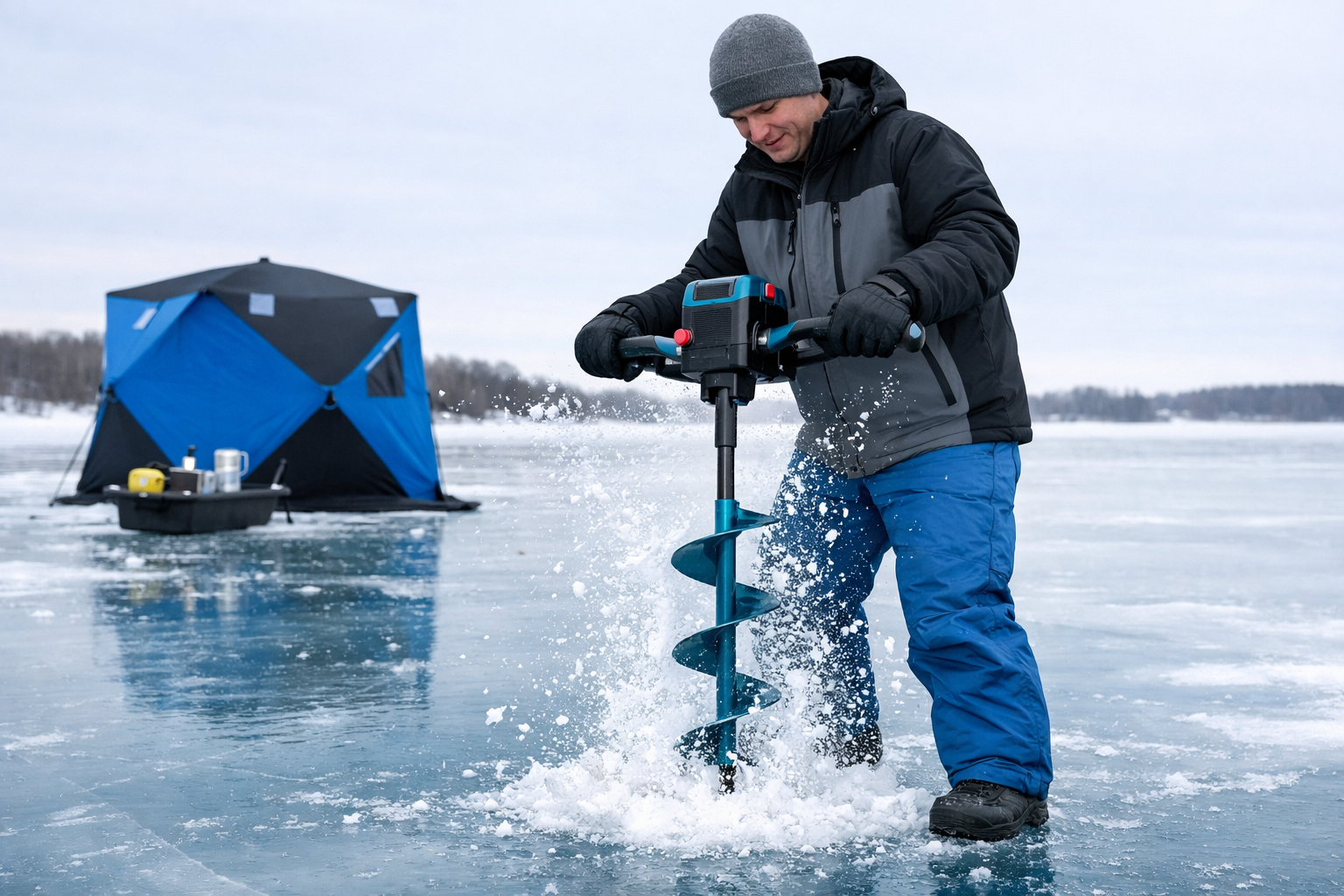
For most beginners heading onto the ice in 2026, an electric auger is the better starting choice. Electric models weigh less, start with a trigger pull, produce minimal noise, and need no fuel mixing or engine maintenance. Gas augers still hold an edge in sustained drilling power for thick ice and all-day marathon sessions. Your decision comes down to how thick your local ice gets, how many holes you drill per outing, and your budget. This guide on electric vs gas ice auger pros and cons for beginners breaks down every factor so you pick the right tool for your first season.
Why Does Your Auger Choice Matter as a Beginner?
Your auger is the single most important piece of ice fishing equipment you own. Without a reliable way to punch through the ice, nothing else in your setup matters. Choosing the wrong auger leads to frustration, wasted money, and shorter days on the ice.
Beginners face a specific set of challenges that experienced anglers have already solved:
- Unfamiliarity with small engine maintenance. Gas augers require fuel-oil mixing at precise ratios, carburetor priming, and pull-start technique. A flooded engine at 10 degrees below zero tests anyone’s patience.
- Physical demands. Hauling gear across ice is tiring. Every pound counts when you’re also carrying a shelter, rods, tackle, and a sled.
- Budget constraints. First-season anglers often need to spread their dollars across an entire setup, not sink everything into one tool.
- Confidence on the ice. A tool that works every time builds confidence. A tool that fights you erodes the experience.
Understanding electric vs gas ice auger pros and cons for beginners helps you avoid the most common first-season mistake: buying a tool that doesn’t match your fishing style. For more guidance on building your knowledge base, check out the FishOnYak blog for seasonal fishing content.
What Are the Pros and Cons of Electric Ice Augers for Beginners?
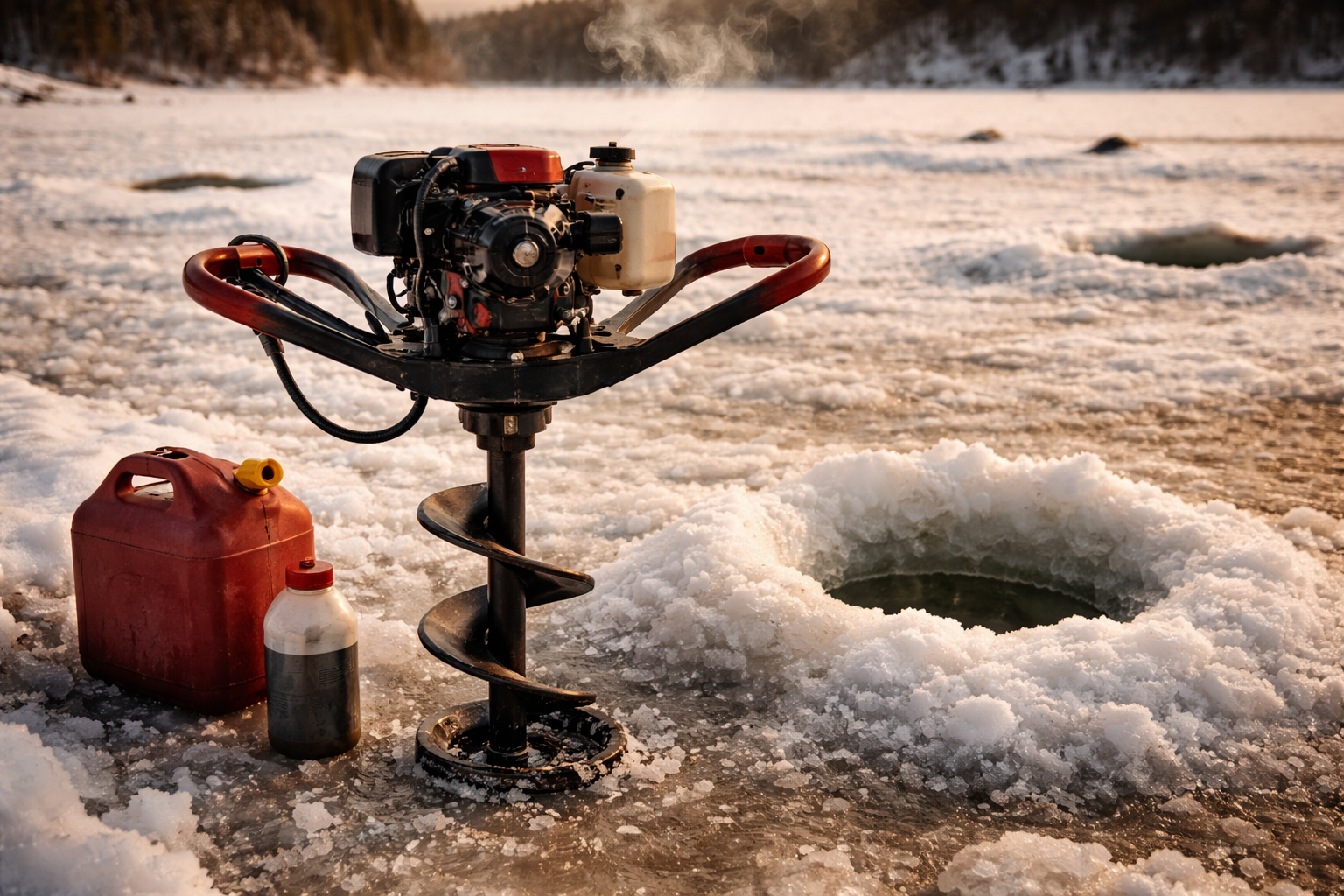
Electric augers have become the default recommendation for new ice anglers in 2026. Here’s why, along with the honest drawbacks.
Pros of Electric Augers
Instant, effortless starting. Pull the trigger and the auger spins. No choke, no priming, no yanking a pull cord with frozen fingers. This alone saves beginners significant frustration.
Lighter weight. The Eskimo E40 weighs 13 lbs 8 oz. The ION Alpha Plus comes in around 17.5 lbs. Compare that to gas models that often exceed 30 lbs. When you’re hauling gear on foot or pulling a sled, that weight difference adds up fast.
Quiet operation. Electric augers produce roughly 70-75 dB of noise. That’s about as loud as a normal conversation. Quiet drilling means less disturbance to fish below the ice and better relations with nearby anglers.
Zero emissions and no fuel mixing. No exhaust fumes, no carrying gas cans, no measuring two-stroke oil ratios. You charge a battery at home and go.
Minimal maintenance. Keep the blades sharp and the battery charged. That’s the maintenance list. No spark plugs, no carburetors, no fuel line issues.
Variable speed control. Many electric models (like the Eskimo E40) offer variable speed triggers, letting you control drilling pace. This helps beginners manage torque and avoid the auger grabbing and spinning.
Cons of Electric Augers
Battery life limits your holes. A single 4Ah battery on a 40V system drills roughly 40-60 holes through 12 inches of ice in moderate conditions. In extreme cold (below minus 10F), that number drops. Carry a spare battery or plan your day around this limit.
Cold weather battery degradation. Lithium-ion batteries lose capacity in sub-zero temperatures. Keep your spare battery inside your jacket or in an insulated bag to maintain charge.
Higher upfront cost for premium models. Top-tier 40V and 60V electric augers with batteries run $400-$700. Budget gas augers start around $250-$350.
Less raw power than gas in thick ice. Modern electrics handle 16-20 inches of ice with ease. Beyond 24-30 inches, gas augers still drill faster and more consistently. If you fish lakes with 30+ inch ice regularly, factor this in.
What Are the Pros and Cons of Gas Ice Augers for Beginners?
Gas augers have been the standard for decades. They remain a strong choice in specific situations.
Pros of Gas Augers
Unlimited run time. Bring an extra quart of mixed fuel and you drill all day. No batteries to deplete, no charging concerns. For anglers who drill 100+ holes in a tournament-style outing, gas still wins on endurance.
Superior power in thick ice. Gas engines, typically 40-50cc two-stroke motors, deliver consistent torque through 24-36 inches of ice without slowing down. If your home lake freezes thick, gas handles the job.
Lower entry price for basic models. A reliable entry-level gas auger (like a Jiffy or Eskimo two-stroke) costs $250-$400. You get proven drilling performance without the battery system investment.
No cold-weather power loss. Gas engines don’t care about the temperature once they’re running. At minus 20F, a gas auger delivers the same power as at 20F above zero.
Cons of Gas Augers
Pull-start frustration. Cold engines resist starting. Beginners who haven’t mastered choke settings, priming, and pull technique will spend valuable fishing time fighting the starter cord.
Heavy. Most gas augers weigh 28-35 lbs. Carrying that weight across a frozen lake, especially without a sled, wears you out before you start fishing.
Loud. Gas augers produce 95-100 dB of noise. That’s equivalent to a lawn mower. The sound carries across ice and spooks fish in shallow water.
Ongoing maintenance. Gas engines need fresh fuel (don’t leave old mix in the tank), spark plug replacement, carburetor cleaning, and occasional fuel line service. Skip maintenance and the auger won’t start when you need it most.
Fumes and fuel handling. Mixing two-stroke fuel, carrying gas on the ice, and breathing exhaust at the hole are real downsides. Some anglers in enclosed shelters find the fumes unpleasant and potentially harmful.
Vibration. Two-stroke engines vibrate more than electric motors. Extended drilling sessions cause hand and arm fatigue.
Electric vs Gas Ice Auger: Side-by-Side Comparison for Beginners
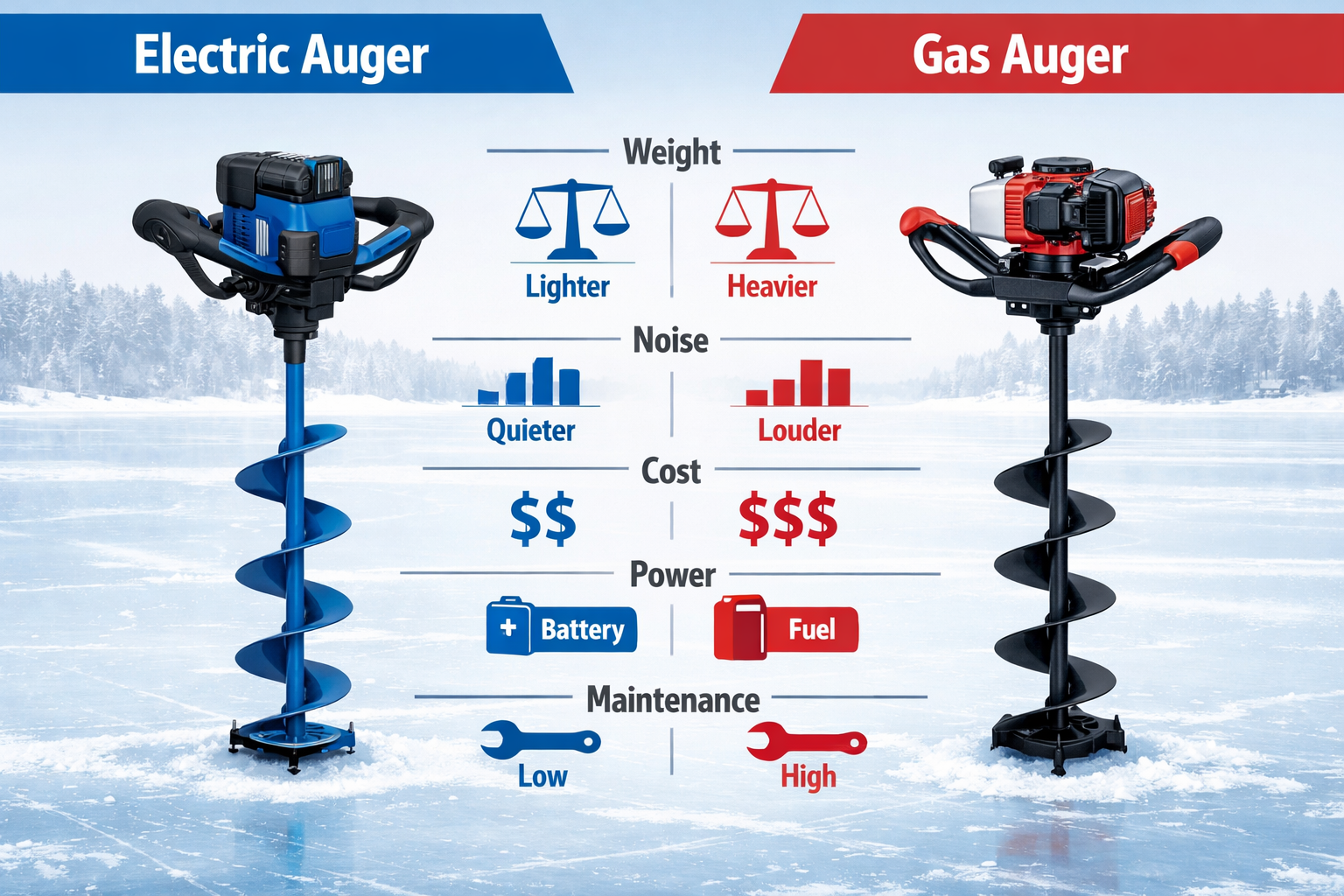
This table compares the two auger types across the factors that matter most to first-time ice anglers.
| Factor | Electric Auger | Gas Auger |
|---|---|---|
| Weight | 13-22 lbs | 28-35 lbs |
| Noise Level | 70-75 dB | 95-100 dB |
| Starting Method | Trigger (instant) | Pull-start (technique required) |
| Drilling Speed (12″ ice) | ~60 seconds | ~45 seconds |
| Max Ice Thickness | 20-30 inches (model dependent) | 30-40+ inches |
| Maintenance | Blade sharpening, battery care | Engine service, fuel system, blades |
| Upfront Cost | $350-$700 (with battery) | $250-$500 |
| Operating Cost | Electricity (pennies per charge) | Mixed fuel ($5-$10/quart) |
| Emissions | Zero | Two-stroke exhaust |
| Cold Performance | Battery capacity drops below 0F | Consistent once running |
| Holes Per Session | 40-80 (battery dependent) | Unlimited (fuel dependent) |
Choose electric if: You fish ice under 20 inches, drill fewer than 50 holes per trip, value quiet operation, and want minimal hassle.
Choose gas if: You fish thick ice (24+ inches) regularly, drill 80+ holes per outing, need all-day endurance, and don’t mind engine upkeep.
Which Electric Augers Stand Out for Beginners in 2026?
Based on the 2025-26 season testing by angler Alex Timm (January 2026 YouTube review), four electric models lead the pack. Each serves a different beginner profile.
Eskimo E40 (40V, 4Ah)
- Weight: 13 lbs 8 oz (lightest tested)
- Best for: Hole-hoppers who move frequently and value carry balance
- Features: Variable speed trigger, LED work light
- Drawback: Smaller battery means fewer holes per charge
ION Alpha Plus (40V)
- Weight: ~18 lbs
- Best for: All-around performance with smooth, quiet cuts
- Features: Refined mid-tone operation, consistent torque
- Drawback: Slightly heavier than the E40
StrikeMaster Maven 40V
- Weight: ~19 lbs
- Best for: Anglers who want high torque and bundled battery options (4Ah + 5Ah included)
- Features: Aluminum shaft, twin serrated stainless blades
- Drawback: Small trigger noted as ergonomic concern
Jiffy 60V
- Weight: 19 lbs 8 oz
- Best for: Fastest drilling speed (lowest total time for 11 holes in Timm’s test)
- Features: Wide handles reduce torque feel, smooth breakthrough
- Drawback: Heaviest of the four, higher price point
For beginners who prioritize weight and simplicity, the Eskimo E40 is the strongest starting point. For those who want maximum speed and plan to drill aggressively, the Jiffy 60V earns the edge. Learn more about gear selection and tactical approaches on the FishOnYak services page.
What About Budget Alternatives to Electric and Gas Augers?
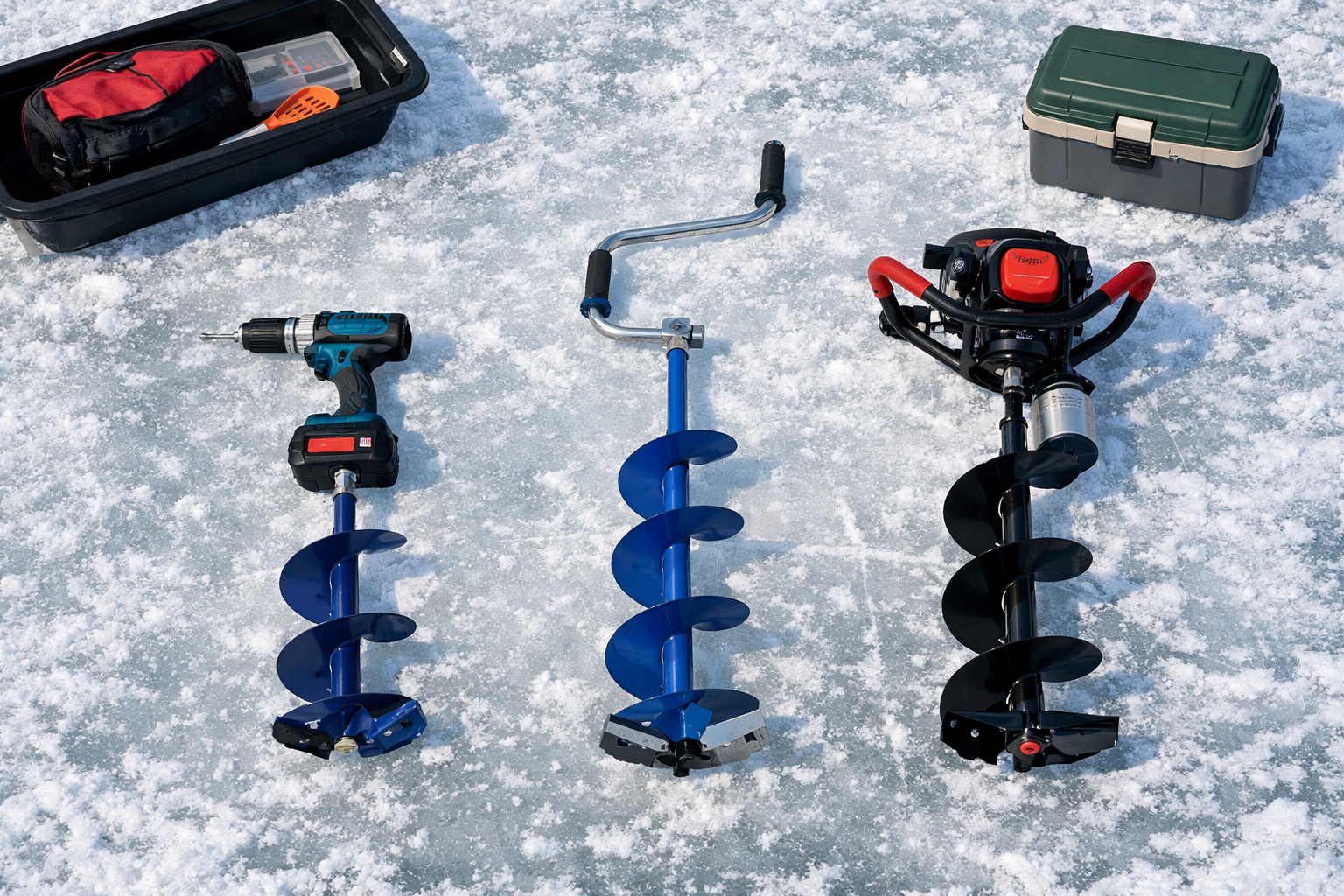
Not every beginner needs a $500 power auger. Three alternatives deserve consideration, especially for anglers testing the ice fishing waters before committing to a full setup.
Hand Augers ($50-$100)
Hand augers like the StrikeMaster Mora cost under $100 and weigh almost nothing. They work well for re-opening old holes or drilling through ice under 12 inches. The tradeoff: drilling a single hole through 12 inches of ice takes 2-5 minutes of physical effort. Drill five holes and your arms will remind you why power augers exist.
Choose a hand auger if: You fish thin ice, drill fewer than five holes per trip, or want an emergency backup tool.
Drill-Powered Auger Bits ($150-$300)
Brands like Iceberg and Nisus sell auger bits that attach to a standard cordless drill. If you already own a quality 18V or 20V drill, this option keeps your total investment low. The system works well through ice up to 12 inches. Beyond that, most consumer drills lack the torque to cut efficiently.
Choose a drill-powered bit if: You own a strong cordless drill, fish moderate ice thickness, and want the lightest possible setup.
Propane Augers ($350-$500)
Propane augers (like the Eskimo propane series) burn clean household propane tanks. They deliver gas-like power without the hassle of mixing two-stroke fuel. They’re louder than electrics but simpler than gas engines. Propane models sit between electric and gas in weight and complexity.
Choose propane if: You want gas-level power with simpler fueling, and noise doesn’t concern you.
For a broader look at how to approach gear decisions with confidence, visit the FishOnYak about page to understand the team’s approach to tactical angling education.
How Do You Maintain Each Auger Type Through the Season?
Maintenance determines whether your auger starts on the coldest morning of the year. Here’s what each type demands.
Electric Auger Maintenance Checklist
- Charge batteries fully after each trip. Store batteries at room temperature, not in a cold garage.
- Dry the auger after use. Wipe down the shaft and blades to prevent rust.
- Sharpen or replace blades once per season (or sooner if you hit sand or rocks at the bottom of a hole).
- Inspect the battery contacts for corrosion before each outing.
- Store the auger indoors during the off-season with the battery removed.
Total annual maintenance cost: $15-$30 (blade sharpening or replacement).
Gas Auger Maintenance Checklist
- Use fresh fuel mix every trip. Old fuel gums up carburetors. Mix only what you need.
- Run the engine dry at the end of the season or add fuel stabilizer.
- Replace the spark plug annually.
- Clean or replace the air filter mid-season.
- Inspect the fuel lines for cracks before each season.
- Sharpen or replace blades on the same schedule as electric.
- Grease the gearbox per manufacturer instructions.
Total annual maintenance cost: $30-$75 (spark plug, fuel, filters, blades).
The maintenance gap between electric and gas is significant for beginners. Electric augers reward you for doing almost nothing. Gas augers punish you for neglecting any step on the list. This is one of the strongest arguments in the electric vs gas ice auger pros and cons for beginners discussion.
What Common Mistakes Do Beginners Make When Choosing an Auger?
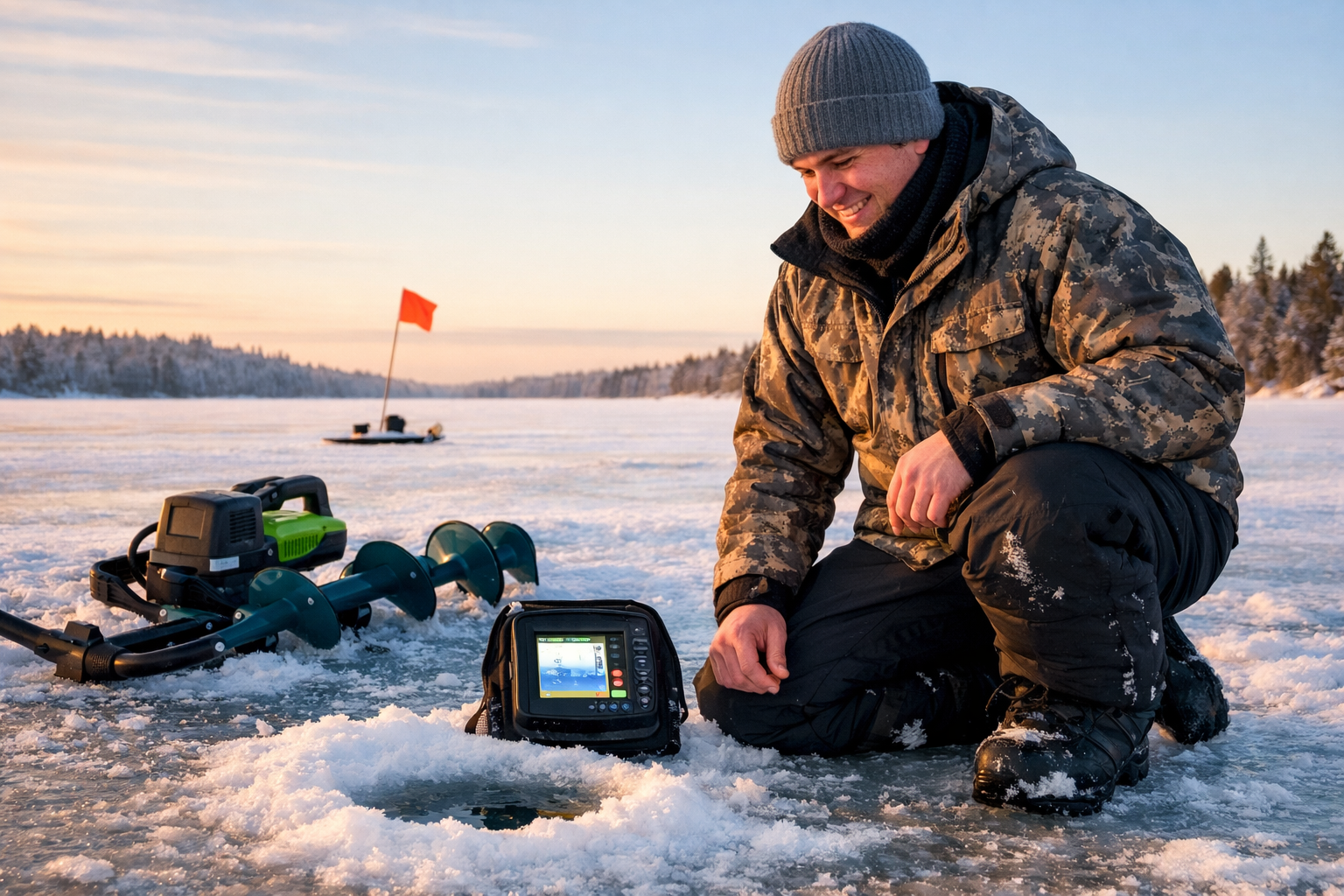
Avoid these errors that first-time ice anglers repeat every season.
Buying too much auger. A 10-inch diameter auger drills bigger holes but burns through battery life and fuel faster. For panfish and walleye, an 8-inch hole handles the job. Save the 10-inch for pike and lake trout.
Ignoring blade diameter compatibility. Some auger brands lock you into proprietary blade systems. Check blade replacement cost and availability before buying.
Forgetting the spare battery. If you choose electric, budget for a second battery from day one. A dead battery at hole 30 ends your day early.
Skipping the blade guard. Auger blades are razor sharp. Always use the blade guard during transport. A cut hand on the ice, far from your vehicle, is a serious safety concern.
Leaving gas mix in the tank. Storing a gas auger with old fuel in the tank over the summer creates carburetor problems by fall. Drain the fuel or add stabilizer.
Not testing before the first trip. Run your auger at home before heading to the lake. Confirm the battery charges, the engine starts, and the blades spin freely. Discovering a problem on the ice wastes a trip.
For more on building a disciplined, step-by-step approach to your fishing preparation, explore the FishOnYak blog archives.
How Does Noise Affect Your Ice Fishing Success?
Noise is an underrated factor in the electric vs gas ice auger pros and cons for beginners conversation.
Gas augers at 95-100 dB produce sound levels comparable to a lawn mower. On a quiet frozen lake, that noise carries hundreds of yards. Fish in shallow water (under 15 feet) respond to overhead noise by moving away from the disturbance.
Electric augers at 70-75 dB are roughly 75% quieter in perceived loudness (decibels measure on a logarithmic scale, so a 20-25 dB difference represents a significant reduction in perceived volume).
Pro guide Tony Roach, who switched fully to StrikeMaster electrics, has cited quieter operation as a factor in reduced fish-spooking during his guided trips. For anglers targeting pressured fish on popular lakes, this matters.
Practical takeaway: If you fish shallow, clear-water lakes with spooky panfish or walleye, electric augers give you a tactical advantage. On large, deep lakes where fish sit 30+ feet down, noise matters less.
This kind of tactical detail separates casual anglers from those building tournament-ready skills. Visit the FishOnYak case studies for examples of how small tactical edges compound into results.
Should Beginners Consider Propane or Hybrid Setups?
Propane augers occupy a middle ground that some beginners overlook. They burn clean, require no fuel mixing, and use standard 1-pound propane cylinders available at any hardware store. Brands like Eskimo offer propane models in the $350-$500 range.
The downsides: propane augers are still loud (closer to gas noise levels), heavier than electrics, and less common, which means fewer online reviews and community support for troubleshooting.
Hybrid approach: Some experienced anglers carry an electric auger as their primary tool and a hand auger as backup. This covers the battery-death scenario without adding significant weight. A StrikeMaster Mora hand auger weighs under 5 lbs and fits alongside your primary auger on a sled.
Choose propane if: You want power similar to gas, prefer simple fueling (no mixing), and fish in areas where cold-weather battery performance concerns you.
Frequently Asked Questions
How many holes does an electric auger drill on one battery charge? Most 40V electric augers with a 4Ah battery drill 40-60 holes through 12 inches of ice in moderate temperatures. Extreme cold (below minus 10F) reduces this number by 20-30%. Carry a spare battery to extend your session.
Are electric augers strong enough for thick ice? Modern 40V and 60V electric augers handle ice up to 20-30 inches effectively. The Jiffy 60V, tested in January 2026, cut through 16 inches of ice with smooth, consistent performance. For ice beyond 30 inches, gas augers still hold an advantage.
How much does a good beginner ice auger cost? Budget $350-$500 for a quality electric auger with battery and charger. Gas augers start around $250-$400. Hand augers cost under $100. Drill-powered bits run $150-$300 (drill not included).
Do electric augers work in extreme cold? Yes, but battery capacity drops in sub-zero conditions. Keep spare batteries warm inside your jacket or in an insulated container. The auger motor itself performs fine in any temperature.
Is a gas auger harder to maintain than an electric? Significantly. Gas augers need fresh fuel mixing, spark plug replacement, air filter service, carburetor cleaning, and fuel line inspection. Electric augers need blade sharpening and battery charging. For beginners, this maintenance gap is a major decision factor.
What auger blade diameter should a beginner choose? Start with 8 inches. An 8-inch hole handles walleye, perch, crappie, and most panfish. Move to 10 inches if you target pike, lake trout, or other large species. Larger blades drain batteries and fuel faster.
Do gas auger fumes bother fish? The fumes themselves don’t enter the water in meaningful amounts. The noise and vibration from gas engines are the bigger concern for fish disturbance. Fumes are primarily a comfort and health issue for the angler, especially inside a shelter.
How long do electric auger batteries last over multiple seasons? Quality lithium-ion batteries maintain 80% or more of their original capacity for 3-5 years with proper care. Store them at room temperature during the off-season and avoid fully depleting the charge.
Are there any safety differences between electric and gas augers? Electric augers weigh less (reducing fall risk on slippery ice), produce no exhaust (safer in enclosed shelters), and have no hot engine parts. Gas augers require careful fuel handling and produce carbon monoxide. For safety-conscious beginners, electric models reduce several risk factors. Fluid safety on the ice starts with choosing gear that minimizes hazards.
What’s the best electric auger for a beginner in 2026? The Eskimo E40 stands out for beginners due to its 13 lb 8 oz weight, variable speed trigger, LED light, and straightforward operation. The ION Alpha Plus is a strong second choice for those who want smoother cuts and don’t mind a few extra pounds.
Final Takeaways
- Electric augers suit most beginners in 2026 because of lighter weight, instant starting, quiet operation, and near-zero maintenance.
- Gas augers remain the better tool for thick ice (24+ inches) and all-day drilling sessions where battery limits become a problem.
- Budget-conscious beginners should consider hand augers or drill-powered bits as entry points before investing in a full power auger system.
- Buy a spare battery if you go electric. This single purchase eliminates the biggest weakness of battery-powered augers.
- Start with an 8-inch blade diameter. Upgrade to 10 inches only when your target species demands bigger holes.
- Test your auger at home before your first trip. Confirm everything works in the warmth of your garage, not on the ice.
- Keep gas auger fuel fresh and drain the tank for off-season storage. Stale fuel causes more gas auger failures than any other factor.
- Noise matters for fishing success. Electric augers give you a real edge on pressured, shallow-water fisheries.
- Maintenance habits separate anglers who fish all season from those who quit in frustration. Choose the auger type that matches the maintenance effort you’re willing to invest.
Your first season on the ice should be about learning to read the water, find fish, and build confidence. Pick the auger that removes obstacles from that process. For most beginners, that’s an electric model. For those fishing extreme conditions, gas still earns its place.
Kayak. Drill. Catch. Repeat.
See you on the water.
For more expert guidance on gear, rigging, and seasonal fishing transitions, visit FishOnYak.com or reach out through the contact page.
.