Last updated: February 23, 2026
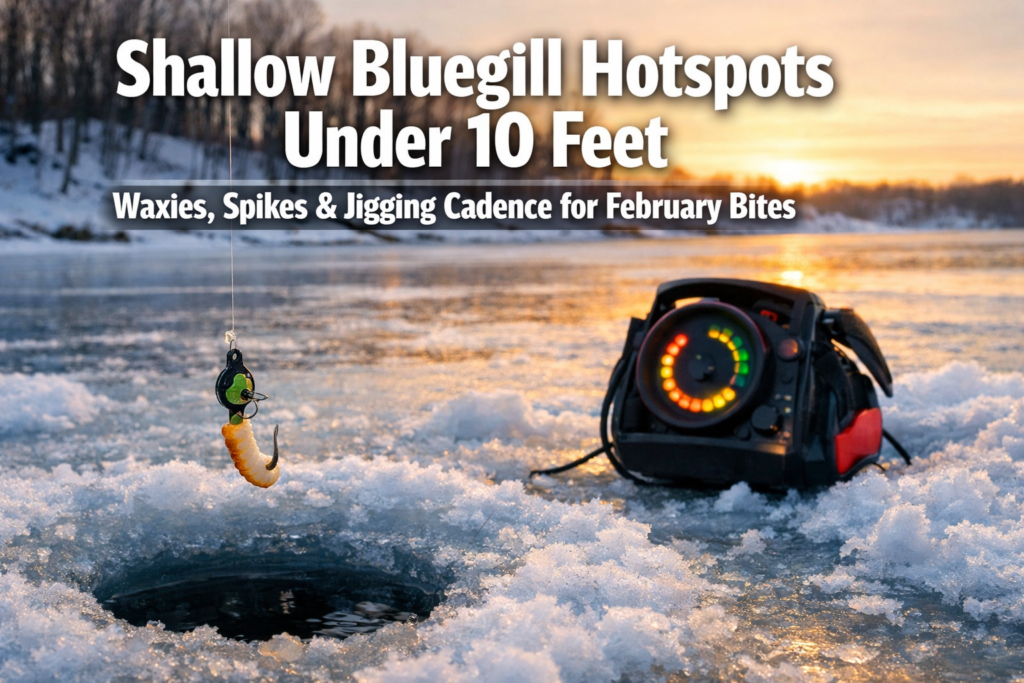
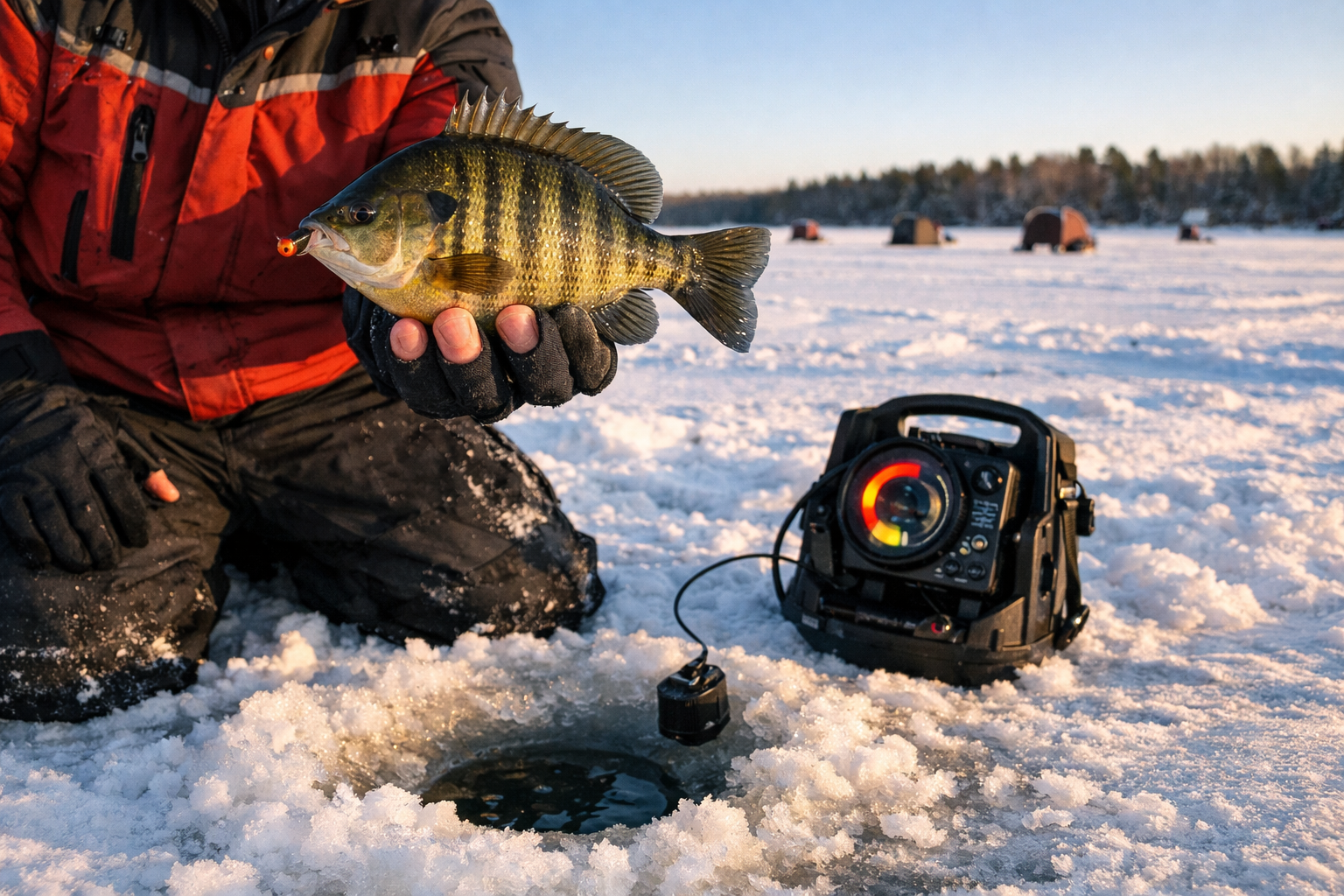
February bluegill fishing through the ice demands a focused approach. The biggest fish often hold in water shallower than you’d expect, and the difference between a slow day and a bucket-filling session comes down to three things: location, bait choice, and how you move your jig. This guide breaks down shallow bluegill hotspots under 10 feet: waxies, spikes, and jigging cadence for February bites, giving you a tactical framework to put more slab bluegills on the ice during the toughest month of the hardwater season.
Across the Midwest and northern states, February ice conditions bring slush, heavy snow cover, and reduced light penetration. These factors push bluegill behavior in specific directions. Fish that scattered into deeper basins during mid-January often begin staging shallower again by late February as photoperiod increases. Knowing where to drill, what to thread on your hook, and how fast to work your presentation separates consistent anglers from those staring at a blank flasher screen.
Key Takeaways
- February bluegills frequently hold in 4 to 10 feet of water near remaining green weed growth, especially on north-facing shorelines.
- Tungsten jigs in 1/64-oz and 1/80-oz sizes outperform lead in shallow water because they drop faster and transmit subtle bites.
- Waxworms produce the most consistent results for larger bluegills. Spikes work better when fish want a smaller profile.
- Jigging cadence matters more than jig color. A slow shake followed by a 3 to 5 second pause triggers the most strikes.
- Hole-hopping is essential. Drill 10 to 15 holes across a weed flat before wetting a line.
- Snow and slush on the ice reduce light below, concentrating bluegills near the brightest available areas.
- A flasher or portable sonar unit lets you watch fish reactions in real time and adjust your cadence on the spot.
- 2-lb fluorocarbon line paired with a spring bobber rod gives you the sensitivity to detect light February bites.
Quick Answer
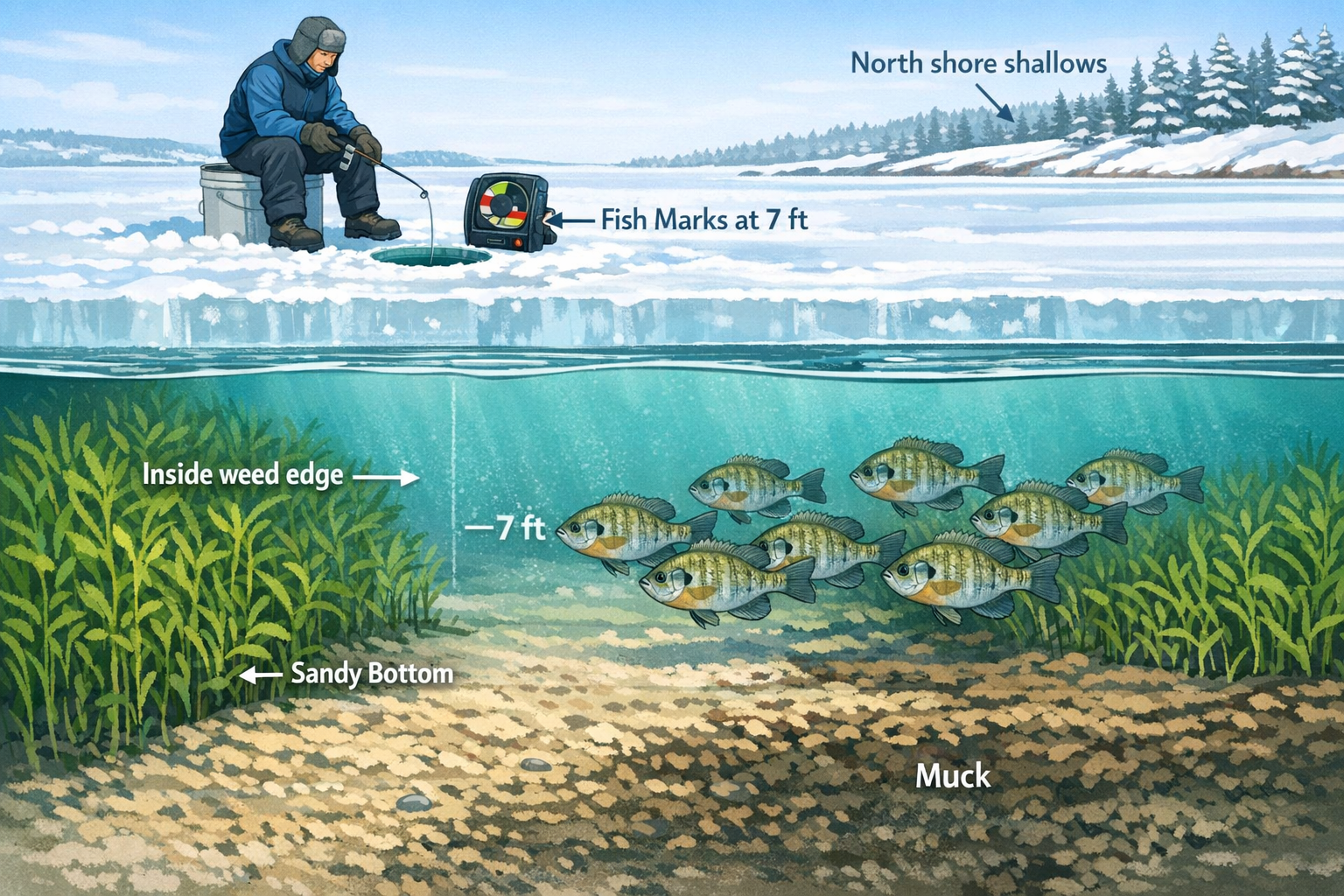
Target shallow weed edges and inside turns in 4 to 10 feet of water during February. Tip a 1/64-oz tungsten jig with a single waxworm or two spikes. Use a slow, subtle jigging cadence with pauses of 3 to 5 seconds between movements. Drill plenty of holes and move until you find active fish. The bite window peaks between 10 a.m. and 2 p.m. on most February days, with a secondary window near last light.
Why Do Bluegills Hold in Shallow Water Under 10 Feet During February?
Bluegills move shallow in February because food sources concentrate near remaining weed growth, and increasing daylight hours trigger pre-spawn staging behavior. Green weeds in 4 to 10 feet of water produce oxygen and harbor aquatic insects, bloodworms, and zooplankton. Bluegills follow this food.
Several factors drive this pattern:
- Surviving weed beds in shallow zones still photosynthesize under the ice, creating localized oxygen-rich pockets. Cabbage, coontail, and milfoil that stays green through winter are the primary targets.
- North-facing shorelines receive less direct sunlight, which slows ice deterioration and often maintains better weed health beneath the surface. Reports from lakes across the upper Midwest confirm that north shore shallows hold fish more consistently during February.
- Snow cover plays a major role. Heavy snow blocks light and kills weeds in some areas while leaving others intact. Scout for areas where wind has blown snow thinner, allowing more light penetration to the weeds below.
- Insect hatches occur even under the ice. Chironomid larvae (bloodworms) live in soft-bottom areas adjacent to weed growth. Bluegills cruise these zones feeding on larvae throughout the day.
A common mistake is assuming all shallow water holds fish. Focus on structure. Inside weed edges, small points, and transitions from sand to muck in 6 to 9 feet produce the most reliable action. Flat, featureless shallows with dead weeds are a waste of time.
For more on how FishOnYak.com approaches seasonal transitions and tactical angling, check out our blog for the latest guides and reports.
What Are the Best Baits for February Bluegill: Waxies, Spikes, or Soft Plastics?
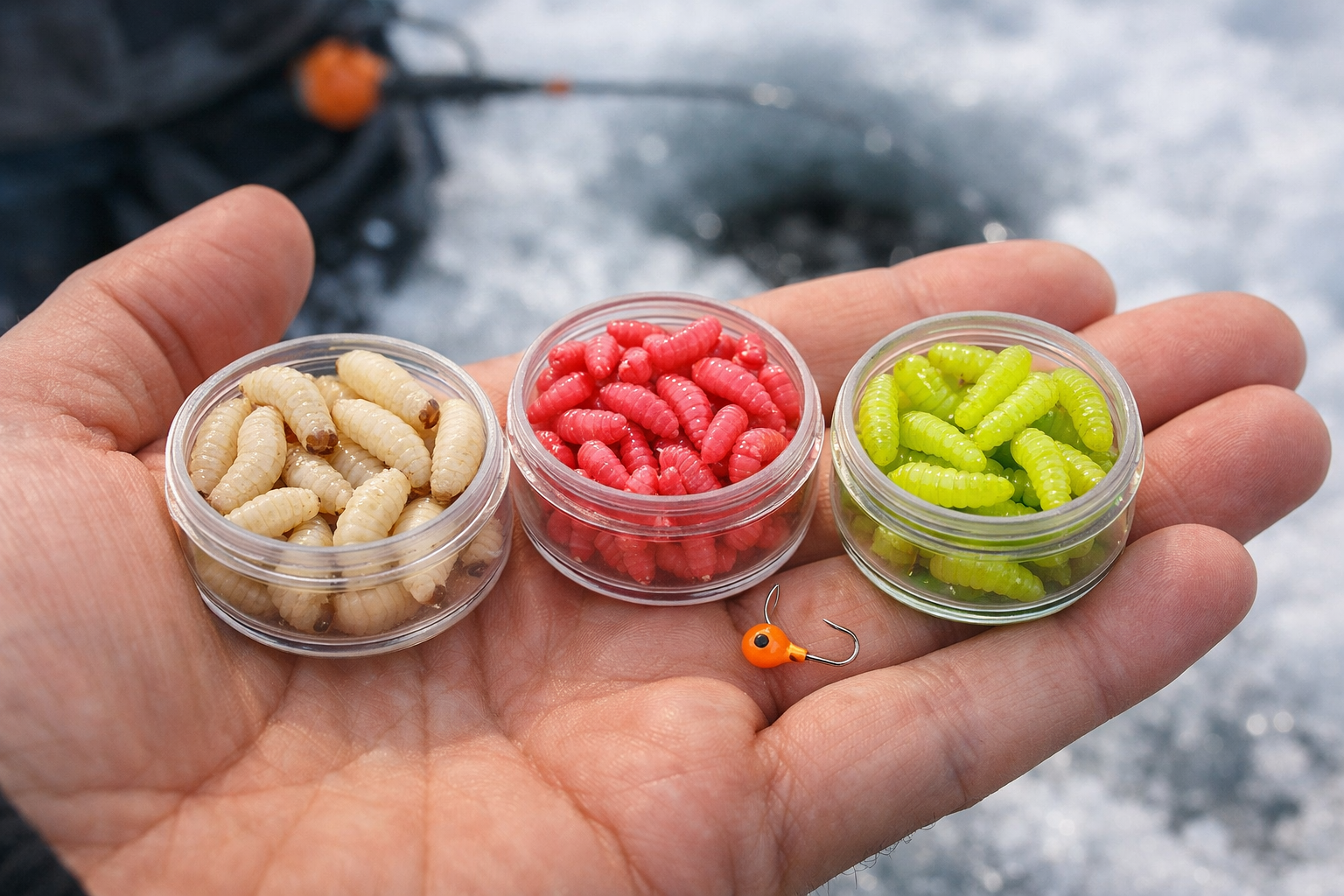
Waxworms (waxies) are the top live bait for February bluegills in shallow water. They produce a strong scent trail, have a soft body that bluegills hold onto longer, and their size matches the profile of a substantial meal. Spikes (eurolarva) work best when fish are finicky and want a smaller offering.
Here is a direct comparison:
| Bait Type | Best Use Case | Hook Size | Pros | Cons |
|---|---|---|---|---|
| Waxworms | Targeting larger bluegills, slower bites | #12 to #14 | Strong scent, soft texture, fish hold on longer | Fragile, need frequent replacement |
| Spikes | Finicky fish, high-pressure lakes | #14 to #16 | Durable, small profile triggers wary fish | Smaller profile attracts smaller fish |
| Soft Plastics | Covering water fast, no rebaiting | #12 to #14 | No rebaiting needed, consistent action | Lack scent, less effective on tough days |
Decision rule: Start with a waxworm on your primary rod. If bluegills approach on your flasher but refuse the bait, downsize to two spikes on a smaller jig. If you’re hole-hopping aggressively and don’t want to rebait constantly, thread on a small soft plastic tail (Clam Dropper or similar) and tip the hook point with a single spike for scent.
Phil Piscitello, a well-known Midwest ice guide, has noted that soft plastics outperform live bait on some days, particularly when bluegills are aggressive and you want to avoid the time spent rebaiting after each catch. The key is reading fish behavior on your electronics and adjusting.
Bait rigging tip: Thread a waxworm onto the hook so the point barely exits the body. A fully exposed hook point causes bluegills to spit the bait faster. With spikes, hook one through the thick end and let the second dangle freely for movement.
How Should You Adjust Jigging Cadence for February Bluegill Bites?
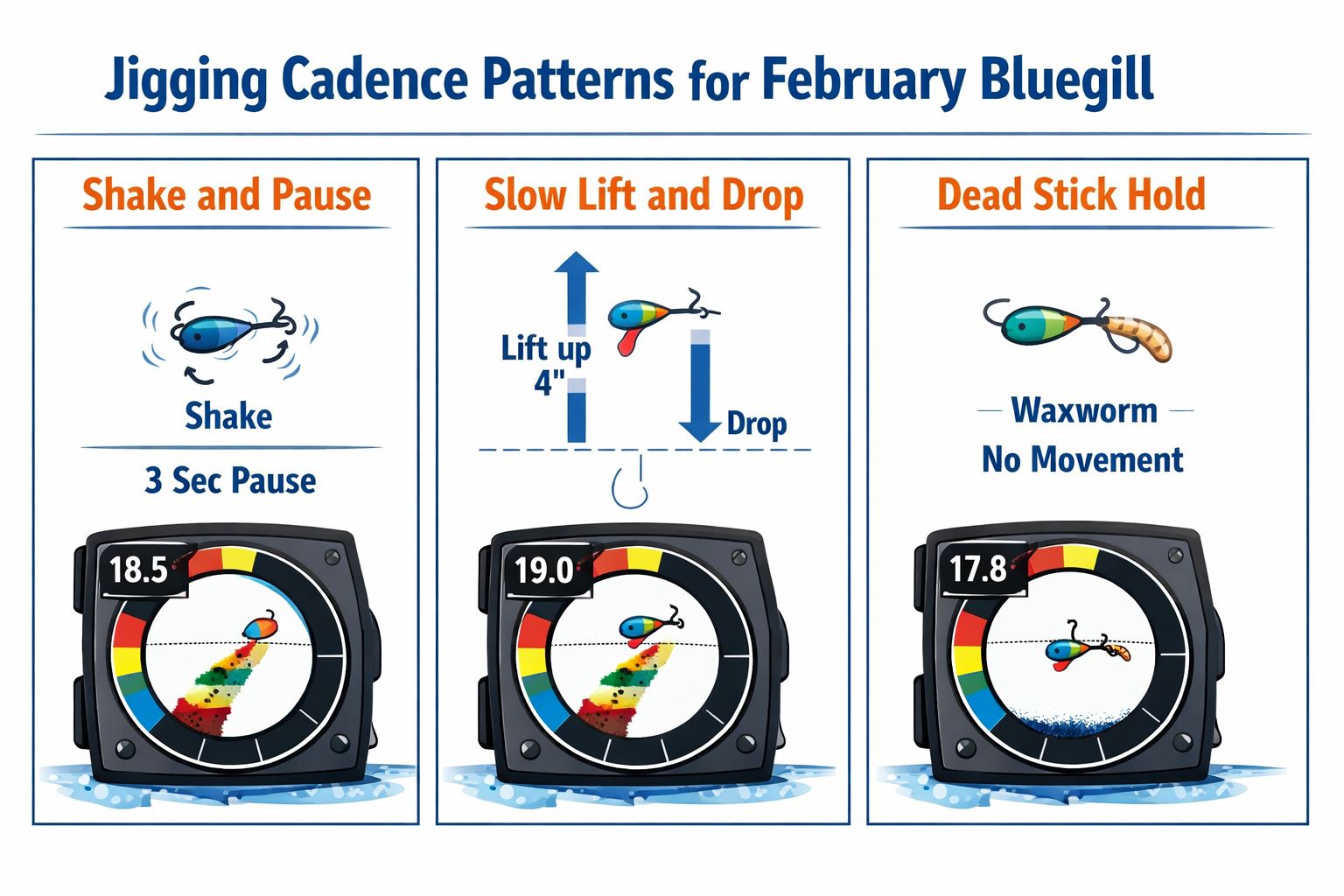
Slow your cadence down. February bluegills respond to subtle, controlled movements far more than aggressive jigging. The most productive cadence involves small shakes of 1 to 2 inches followed by a dead pause of 3 to 5 seconds.
Here are three cadence patterns ranked by effectiveness for February conditions:
1. Shake and Pause (Most Consistent) Hold your jig at the fish’s depth. Give three to four tiny shakes, barely moving the rod tip. Then stop completely for 3 to 5 seconds. Most strikes happen during the pause or within the first second after you resume shaking. Watch your spring bobber or flasher closely during the dead time.
2. Slow Lift and Drop Raise your jig 4 to 6 inches over 2 seconds, then let your jig fall back on a controlled drop. The falling motion triggers a reaction bite from fish that followed the jig up. This works well when bluegills are suspended 2 to 3 feet off the bottom.
3. Dead Stick Hold Set your rod in a holder with the jig at the target depth. Do nothing. Let the waxworm do the work. This is your backup plan when fish are visible on sonar but refuse every active presentation. A second rod (where legal) rigged as a dead stick while you actively jig on another hole covers both approaches.
Common mistake: Jigging too aggressively. Dave Genz, a pioneer of modern ice fishing, has long emphasized that bluegills will charge a jig from several feet away, then refuse at the last second if the movement is too erratic. When you see a mark rising on your flasher, reduce your movement to almost nothing. Let the fish close the distance on its own terms.
Jason Mitchell, another respected ice fishing educator, recommends using the lightest line possible (2-lb fluorocarbon) so your jig moves naturally in the water column. Heavier line dampens the subtle action that triggers bites from pressured February bluegills.
Learn more about the services and coaching available at FishOnYak.com to sharpen your tactical angling skills across seasons.
What Gear Do You Need for Shallow Bluegill Hotspots Under 10 Feet?
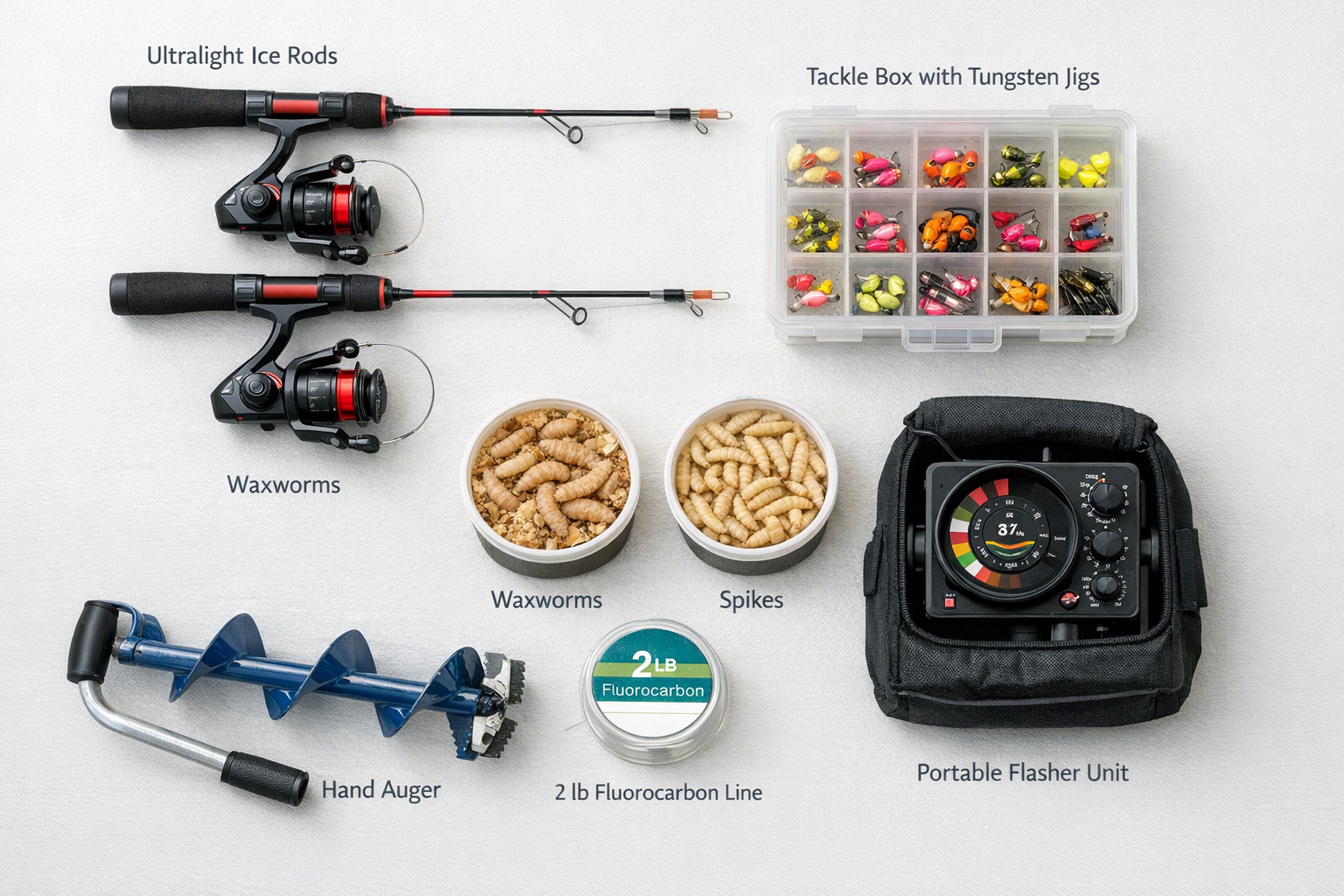
A purpose-built ultralight ice setup makes a measurable difference when targeting bluegills in shallow water. Here is the gear list that performs in February conditions:
Rods: Choose a 24 to 28 inch ultralight ice rod with a spring bobber or noodle tip. The soft tip registers bites that you would never feel on a stiffer rod. Brands like St. Croix, 13 Fishing, and Fenwick all make dedicated panfish models.
Reels: A small inline reel eliminates line twist, which matters when you’re using 1 to 2 lb test. Line twist causes your jig to spin unnaturally and reduces bite detection.
Line: 2-lb fluorocarbon is the standard. Fluorocarbon sinks faster than monofilament, has less stretch for better sensitivity, and is less visible underwater. In stained water, you can get away with 3-lb test.
Jigs: Tungsten jigs in 1/64-oz and 1/80-oz sizes are the foundation. Tungsten is denser than lead, so a smaller jig reaches depth faster and gives you better feel. Stock these colors: glow white, glow pink, chartreuse, and black. Glow colors perform well in the low-light conditions under February ice with snow cover.
Electronics: A portable flasher (Vexilar, MarCum, or Humminbird) is not optional for this style of fishing. You need to see fish reactions to your presentation in real time. When a mark rises toward your jig and then stops, that tells you to pause. When a mark charges up fast, hold still and wait for the bite.
Auger: A hand auger or battery-powered drill auger lets you punch holes quickly for a mobile approach. Drill 10 to 15 holes in a grid pattern across a weed flat before you start fishing.
Slush management: February brings slush. Carry a quality skimmer and keep your holes clean. Slush blocks light and makes bite detection harder. A dark bucket or shelter over the hole helps you see down into the water on sunny days.
For a deeper look at how FishOnYak.com approaches gear breakdowns and rigging mastery, visit our about page to understand the team behind the content.
When Is the Best Bite Window for February Bluegills in Shallow Water?
The primary bite window runs from 10 a.m. to 2 p.m. on most February days. A secondary window opens during the last 45 minutes of daylight.
February’s shorter days and lower sun angle mean bluegills feed in compressed windows. Here is how to plan your day:
- Early morning (sunrise to 9 a.m.): Use this time to drill holes and scout. Fish are often inactive and holding tight to cover. Set up your grid of holes across the weed flat.
- Mid-morning to early afternoon (10 a.m. to 2 p.m.): This is prime time. The sun warms the ice surface slightly, light penetrates to the weeds below, and bluegills begin actively feeding. Work your holes systematically. Spend no more than 5 to 7 minutes on a hole without a mark on your flasher before moving.
- Late afternoon (3 p.m. to sunset): Activity often slows, then picks up again in the final 30 to 45 minutes before dark. Bluegills that fed midday rest, then make a short feeding push before nightfall.
Weather factor: Overcast days with stable barometric pressure often produce longer bite windows. Bright, high-pressure bluebird days compress the bite into a shorter midday period. Falling pressure ahead of a front triggers aggressive feeding, sometimes starting earlier in the morning.
Edge case: On lakes with heavy snow cover that blocks most light, the bite window shifts. Bluegills in these conditions feed more sporadically throughout the day because there is no strong light cycle driving their behavior. Drill holes near areas where snow has been cleared or blown thin by wind.
How Do You Find Shallow Bluegill Hotspots Under 10 Feet in February?
Start with a lake map. Identify bays, channels, and flats with depths of 4 to 10 feet that show weed symbols or are known to hold green vegetation. Then drill a systematic grid of holes to confirm fish presence with your electronics.
Step-by-step approach:
- Study a lake contour map before you leave home. Look for gradual depth transitions (not steep drop-offs) in 4 to 10 feet. Bays on the north side of a lake are a strong starting point.
- Arrive at the lake and walk to your target area. Look for visual clues on the ice surface. Dark patches under clear ice often indicate weed growth below. Areas where snow is thinner allow more light to reach weeds.
- Drill 10 to 15 holes in a grid pattern, spacing them 15 to 20 feet apart. Cover the inside weed edge, the top of the weed flat, and the transition zone where weeds thin out.
- Drop your transducer into each hole and scan for weeds and fish marks. Mark productive holes with a small flag or piece of colored tape.
- Fish the holes that showed marks first. If a hole produces two or three fish, stay. If nothing shows within 5 minutes, move to the next marked hole.
- Pay attention to depth patterns. If your first three fish come from 7 feet over a sand-to-muck transition, focus on similar spots across the flat.
Specific lake types that produce in February:
- Shallow natural lakes (max depth under 30 feet) with abundant weed growth. These lakes maintain better oxygen levels in the shallows through February.
- River backwaters and channels. Reports from Fox Chain O’ Lakes in Illinois confirm that shallow channels hold bluegills throughout winter, with larger fish often following smaller scouts into an area.
- Farm ponds and small impoundments. These often get overlooked, but a 5-acre pond with good weed growth produces quality bluegills in February without the competition of larger public lakes.
Mistake to avoid: Drilling all your holes in one tight cluster. Spread out. Bluegills roam in loose schools across a flat, and a grid pattern intercepts more fish than a single cluster of holes.
Explore additional FishOnYak.com resources to build your knowledge base for both open water and hardwater seasons.
How Do Snow and Slush Affect Shallow Bluegill Hotspots Under 10 Feet?
Heavy snow cover reduces light penetration, kills weeds, and shifts bluegill location within a lake. Slush on the ice surface makes mobility harder and affects your ability to detect bites visually.
Snow’s impact on fish location:
Snow acts as a light filter. When 6 or more inches of snow sit on the ice, very little sunlight reaches the weeds below. Weeds die, oxygen drops, and bluegills vacate those areas. The fish concentrate near spots where snow is thinner, where wind has scoured the surface, or where pressure cracks allow light through.
Scout for these light windows on the ice. Walk the lake and look for areas where the snow depth changes. Drill your first holes where snow cover is lightest over known weed flats.
Slush management on the ice:
February often brings a cycle of snow, warm days, and refreezing that creates slush layers between the ice and snow. This makes walking difficult and floods your drilled holes with gray slush.
- Carry a heavy-duty skimmer with a long handle. Clean each hole thoroughly before dropping your transducer or jig.
- Wear waterproof boots rated for ice conditions. Wet feet end your day early.
- A portable sled hauls your gear over slush more effectively than carrying everything by hand.
- If slush is severe, consider fishing from a portable shelter. The shelter keeps your holes cleaner and blocks wind, which improves bite detection.
Practical tip: When slush floods a hole, wait 10 minutes for the water level to stabilize before fishing. A freshly flooded hole creates current that spooks shallow bluegills.
For more tactical content and seasonal guides, browse the FishOnYak.com blog for updated reports and techniques.
Checklist: February Shallow Bluegill Ice Fishing Setup
Use this checklist before heading out:
- Lake map reviewed for 4 to 10 foot weed flats and north-facing bays
- Auger charged or sharpened (plan for 10 to 15 holes minimum)
- Ultralight ice rod with spring bobber, spooled with 2-lb fluorocarbon
- Tungsten jigs: 1/64-oz and 1/80-oz in glow, pink, chartreuse, black
- Live bait: container of waxworms and container of spikes, kept warm
- Soft plastic backups (small tails in matching colors)
- Portable flasher unit with charged battery
- Heavy-duty skimmer
- Waterproof boots and layered clothing
- Sled for gear transport over slush
- Portable shelter (optional but recommended for slush days)
- Needle-nose pliers and small towel
FAQ
Q: What depth should you target for February bluegills? A: Focus on 4 to 10 feet of water over green weed growth. The sweet spot on most lakes falls between 6 and 8 feet during February.
Q: Are waxworms or spikes better for big bluegills? A: Waxworms produce larger fish more consistently. Their bigger profile and stronger scent attract slab bluegills. Use spikes when fish are refusing waxworms.
Q: What size jig works best for February bluegills? A: A 1/64-oz tungsten jig is the standard. Drop to 1/80-oz when fish are extremely finicky. Avoid anything heavier than 1/32-oz in water under 10 feet.
Q: How long should you fish one hole before moving? A: Give each hole 5 to 7 minutes. If your flasher shows no marks in that time, move. If fish appear but won’t bite, try changing your cadence or bait before leaving.
Q: Does jig color matter for February bluegills? A: Cadence matters more than color. That said, glow colors (white, pink, chartreuse) perform well under snow-covered ice where light is limited. Charge glow jigs with a camera flash or UV light every 15 minutes.
Q: What line weight should you use? A: 2-lb fluorocarbon is the standard for shallow bluegill fishing. Drop to 1.5-lb on heavily pressured lakes. Avoid monofilament because of its higher visibility and stretch.
Q: When do bluegills move from shallow to deep water in winter? A: Bluegills often shift to deeper basins (15 to 25 feet) during mid-January when shallow weed oxygen drops. They begin returning to shallower water in late February as daylight increases and weeds start producing oxygen again.
Q: How do you detect a bluegill bite on light tackle? A: Watch your spring bobber. A bluegill bite often shows as a slight lift or subtle dip of the spring. On a flasher, you’ll see your jig signal merge with a rising fish mark. Set the hook with a gentle wrist snap, not a full arm sweep.
Q: Should you use a shelter for shallow bluegill fishing? A: A shelter helps on windy or slushy days by keeping your holes clean and blocking wind that vibrates your rod tip. On calm days, fishing in the open lets you move between holes faster.
Q: How many holes should you drill for a February bluegill session? A: Drill 10 to 15 holes in a grid across your target weed flat. Spacing of 15 to 20 feet covers enough water to intercept roaming schools.
Q: Do bluegills bite at night through the ice in February? A: Bluegill activity drops significantly after dark in February. Focus your efforts on the 10 a.m. to 2 p.m. window and the last 45 minutes before sunset for the best results.
Q: What is the advantage of tungsten jigs over lead? A: Tungsten is about 1.7 times denser than lead. A tungsten jig in the same weight as lead is physically smaller, which gives you a more compact profile that finicky bluegills prefer. Tungsten also transmits vibration better, improving your feel for subtle bites.
Kayak. Drill. Catch. Repeat.
See you on the water.
Visit FishOnYak.com for more guides, coaching, and tournament-ready content across all seasons.