Last updated: February 23, 2026
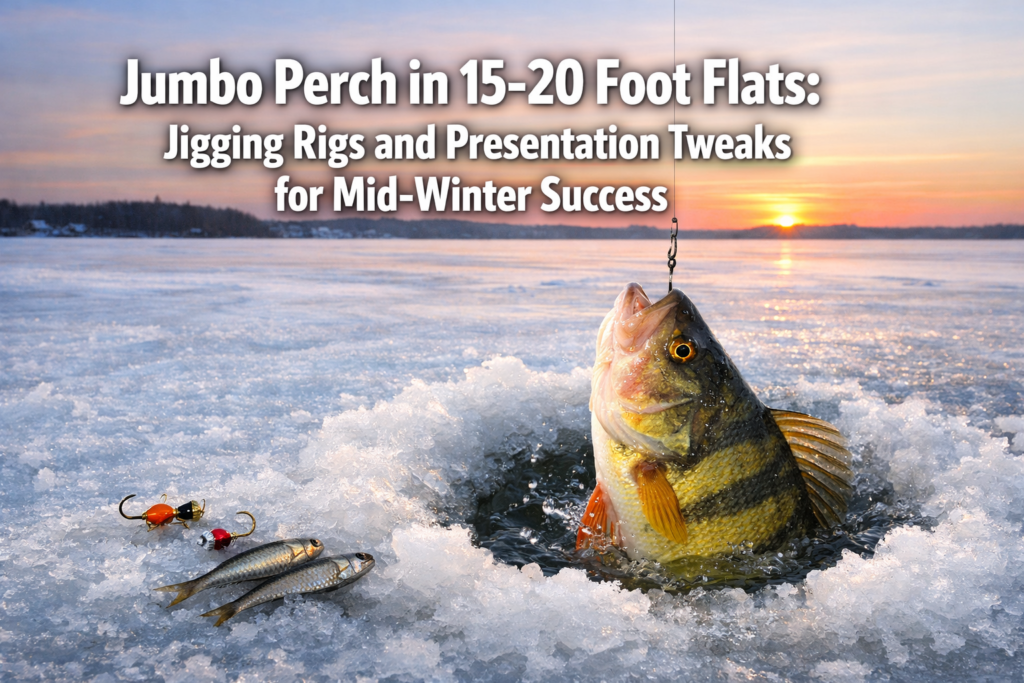
Mid-winter pushes jumbo perch onto expansive flats between 15 and 20 feet. These fish roam in loose schools across mud and sand bottoms, feeding in short windows that demand the right rig and the right touch. This guide breaks down jumbo perch in 15-20 foot flats: jigging rigs and presentation tweaks for mid-winter success, giving you a complete system for locating, triggering, and catching trophy-class perch during the toughest weeks of the ice season.
Reports from January 2026 confirm that mid-winter perch patterns on deep mud flats remain consistent across the Upper Midwest. Schools push off shallow structure and spread across basin flats, making scouting and rig selection the two biggest factors in your catch rate. Whether you fish Northern Wisconsin, the Great Lakes region, or inland reservoirs, the approach stays the same: drill wide, start aggressive, then downsize.
Key Takeaways
- Jumbo perch hold on 15-20 foot flats with mud or sand-mud transition bottoms during mid-winter.
- Start with a 1/8 oz jigging spoon to call fish from a distance, then switch to a tungsten finesse jig to close the deal.
- Drill at least 10-15 holes in a grid pattern before you sit down. Mobility wins.
- Deadsticking with a JawJacker beside your active rod outperforms single-line approaches on tough days.
- Line diameter matters more than brand. Stay at 2-3 lb fluorocarbon for the finesse rod.
- Fathead minnow heads on spoons and live larvae on tungsten jigs cover both ends of the aggression spectrum.
- Northern Wisconsin lakes like the Chippewa Flowage and Lake Winnebago systems produce consistent jumbo perch on mid-winter flats in 2026.
- Presentation speed should slow down as the day progresses. Morning bites tolerate more action. Afternoon bites require near-stillness.
Quick Answer
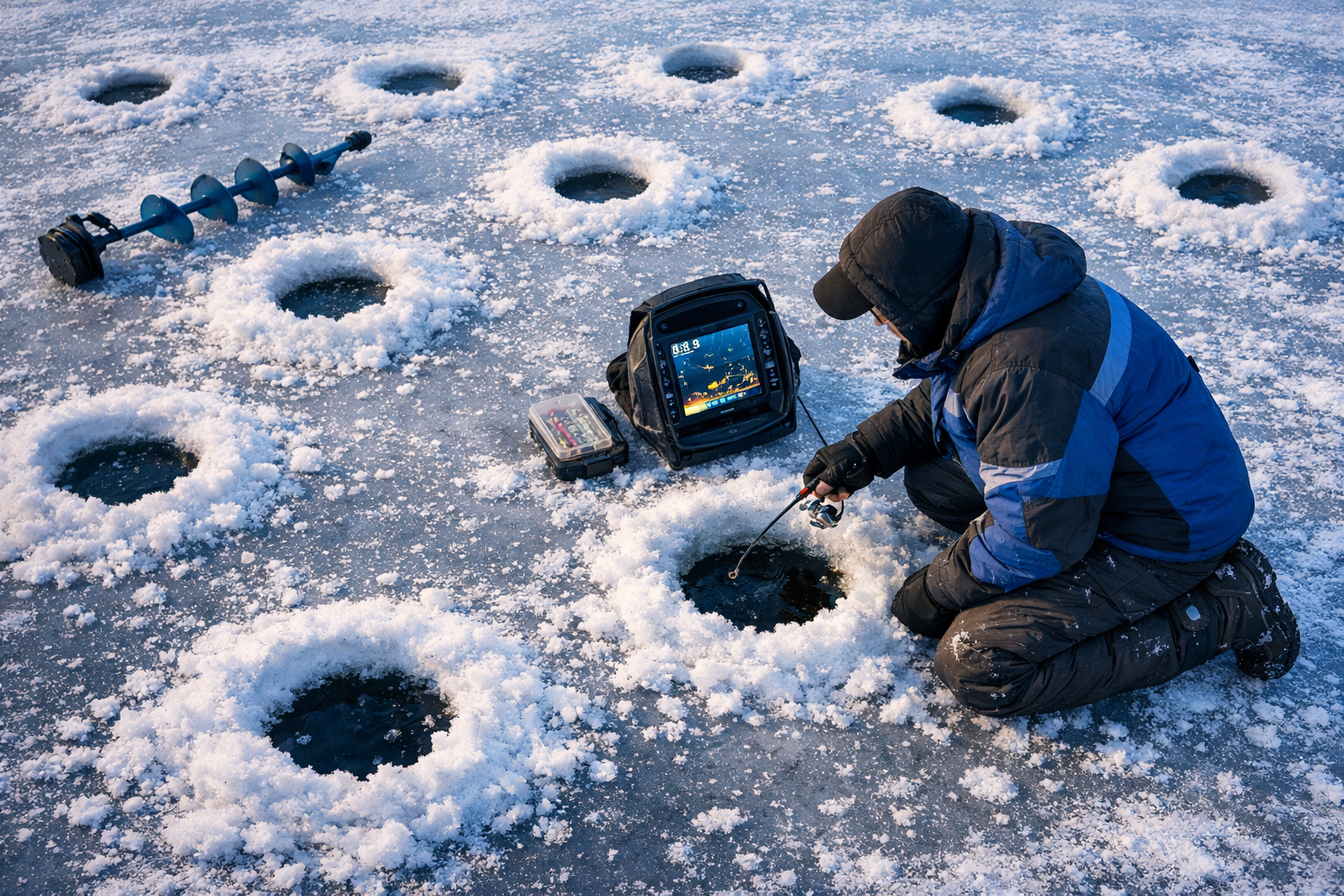
Target 15-20 foot mud or sand-mud flats with a two-rod system: one aggressive jigging spoon (1/8 to 1/4 oz) to attract roaming schools and one finesse tungsten jig (3-5mm) tipped with larvae or a minnow head to convert followers into bites. Drill a grid of holes, use your electronics to mark fish, and move to them rather than waiting. Deadsticking a second line in a JawJacker produces the largest perch on days when active jigging draws short strikes.
Why Do Jumbo Perch Move to 15-20 Foot Flats in Mid-Winter?
Jumbo perch shift to 15-20 foot flats because forage concentrates there during mid-winter. Bloodworms, insect larvae, and small invertebrates burrow into soft mud bottoms at these depths. Oxygen levels remain stable in the 15-20 foot zone on most lakes, while shallower areas lose dissolved oxygen under thick ice and snow cover.
The transition from early ice to mid-winter changes perch behavior in three ways:
- Schools spread out. Early ice perch stack tight on structure. Mid-winter perch scatter across open flats in groups of 5-20 fish.
- Feeding windows shrink. You get two to three productive windows per day, often lasting 20-45 minutes each.
- Fish become bottom-oriented. Perch in 15-20 feet hug the bottom, feeding within 12 inches of the substrate.
Choose flats that border deeper water. A 15-foot flat that drops to 25 feet within a quarter mile holds more fish than an isolated 15-foot shelf. Perch use that deeper water as a highway and slide up onto the flat to feed.
For more tactical angling content and fishing resources, visit the FishOnYak blog for updated guides.
How to Scout and Drill for Jumbo Perch in 15-20 Foot Flats
Scouting beats sitting. Guide Tony Roach recommends drilling multiple holes across a flat before you drop a line. This approach works because mid-winter perch roam. The school that was under your hole 30 minutes ago has moved 100 yards.
Step-by-step scouting process:
- Study your lake map before you leave the truck. Identify flats between 15 and 20 feet with mud or sand-mud bottoms.
- Walk to the flat and drill 10-15 holes in a grid pattern, spacing them 30-50 yards apart.
- Drop your transducer in each hole for 2-3 minutes. Mark any holes where you see fish or baitfish activity.
- Start fishing the most active hole. Keep your auger accessible.
- If a hole goes dead for 15 minutes, move. Check your next pre-drilled hole.
Common mistake: Setting up a shelter on the first hole and staying all day. Mid-winter perch reward mobility. Fish move to you for brief windows, then leave. You need to follow them.
On Northern Wisconsin lakes like the Chippewa Flowage, productive flats often sit on the north side of mid-lake humps where mud accumulates. Lake Winnebago anglers find jumbos on the vast western flats between 16 and 19 feet, especially near old weed edges that still hold some green vegetation.
What Are the Best Jigging Rigs for Jumbo Perch on Mid-Winter Flats?
The best approach uses two distinct rigs: one to attract fish and one to catch them. This two-rig system accounts for the split personality of mid-winter perch. They respond to flash and vibration from a distance but often refuse to commit unless the final presentation is subtle.
The Attractor Rig: Jigging Spoons
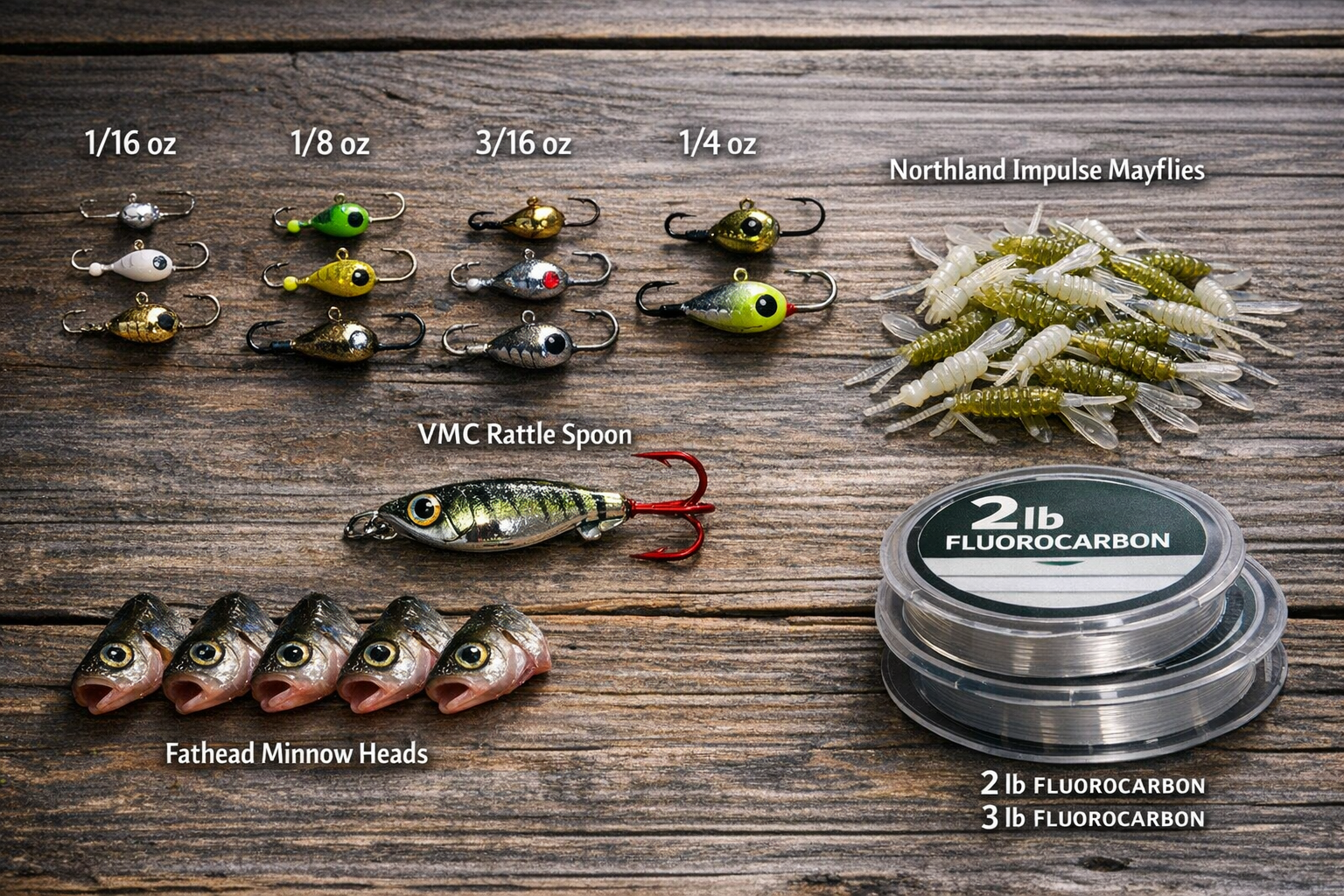
Use a 1/8 oz jigging spoon as your search bait. The VMC Rattle Spoon and Northland Buck-Shot Rattle Spoon both work well at 15-20 feet. Tip the treble hook with a fathead minnow head. The minnow head adds scent and a visual target without killing the spoon’s action.
Attractor rig specs:
| Component | Specification |
|---|---|
| Rod | 28-30 inch medium-light, fast tip |
| Reel | Inline or small spinning, smooth drag |
| Line | 4 lb fluorocarbon or 6 lb braid with 4 lb fluoro leader |
| Lure | 1/8 oz rattling jigging spoon |
| Tipping | Fathead minnow head on treble hook |
The spoon’s job is to pull perch toward your hole from 20-30 feet away. Pound the bottom with the spoon to stir up mud. This mimics feeding activity and triggers the curiosity response in roaming schools.
The Closing Rig: Tungsten Finesse Jigs
Once your electronics show fish below you, switch to a tungsten jig in the 3-5mm range. Tungsten sinks faster than lead at the same size, getting your bait back to the strike zone quickly. Tip with a waxworm, euro larvae, or a small plastic like the Northland Impulse Mayfly.
Finesse rig specs:
| Component | Specification |
|---|---|
| Rod | 24-28 inch ultra-light, spring bobber tip |
| Reel | Inline reel with no line twist |
| Line | 2-3 lb fluorocarbon, no leader |
| Lure | 3-5mm tungsten jig (gold, chartreuse, or glow) |
| Tipping | Waxworm, euro larvae, or Impulse Mayfly plastic |
Brian Brosdahl, one of the most respected ice anglers in the Midwest, advocates this finesse tungsten approach on 1-3 lb line for late-season jumbos. The principle applies equally to mid-winter fish on flats. Downsize after the spoon draws them in.
Check out the FishOnYak services page for coaching options that cover rigging mastery across fishing disciplines.
Presentation Tweaks for Mid-Winter Success on 15-20 Foot Flats
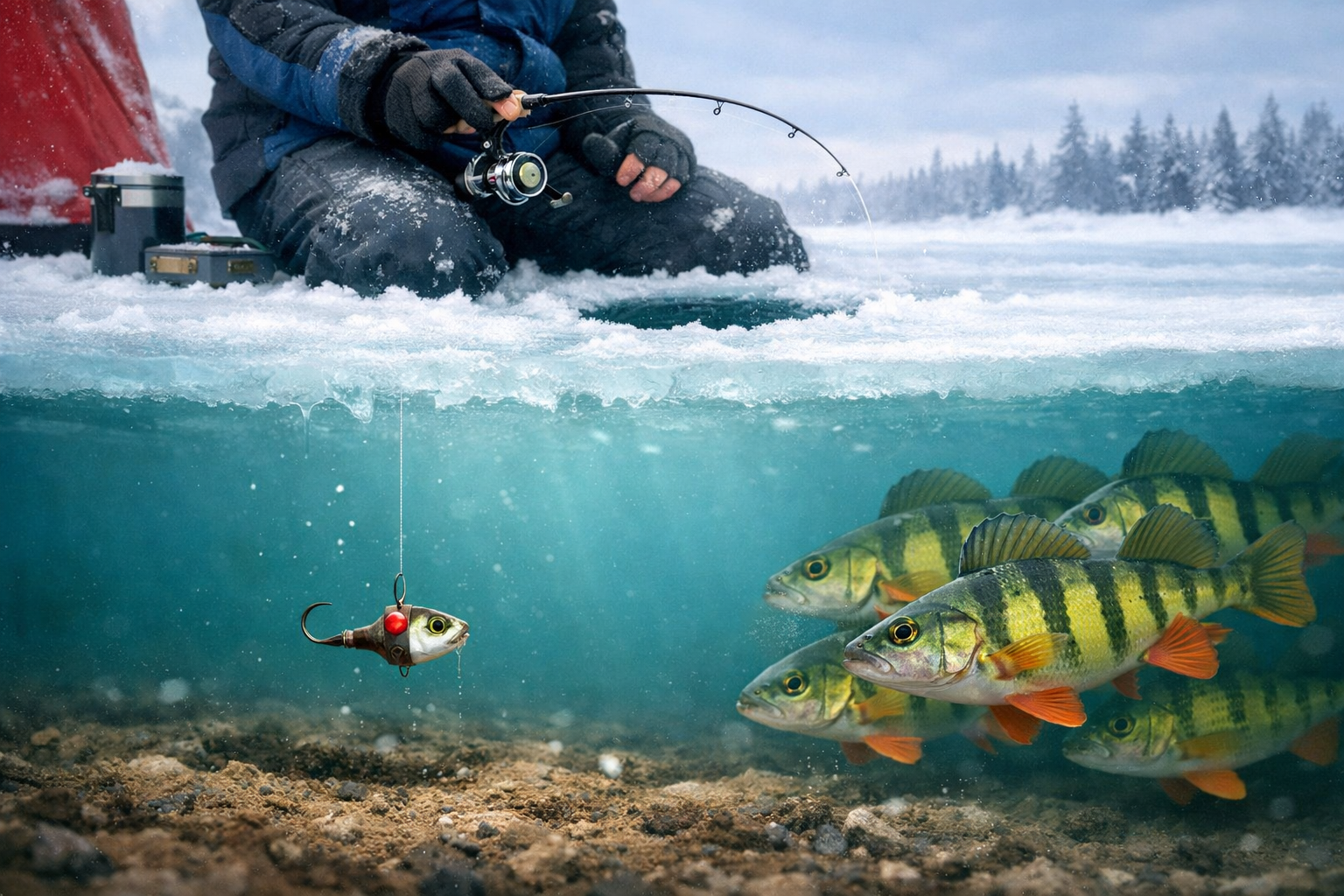
Presentation separates a 5-fish day from a 25-fish day. The same jig fished two different ways produces completely different results during mid-winter. Here are the specific tweaks that matter.
Cadence Changes Through the Day
Morning bites (sunrise to 10 AM) tolerate a faster cadence. Lift your tungsten jig 6-8 inches off bottom, let it fall, pause 2 seconds, repeat. Perch feeding in the morning window are more aggressive and will chase a moving bait.
Afternoon bites (1 PM to 3 PM) demand a slower approach. Lift the jig 2-3 inches, hold, quiver in place for 5-10 seconds, then drop 1 inch. The bite often comes on the hold or the micro-drop. Watch your spring bobber or line for any weight change.
The Mud Puff Technique
Lower your jig to the bottom and tap it twice. This creates a small cloud of silt that mimics natural feeding activity. Raise the jig 4-6 inches above the cloud and hold still. Perch investigate the disturbance and find your bait waiting above the mess. This technique works best on soft mud bottoms and produces bites from fish that ignored standard jigging cadences.
Deadsticking as a Presentation Tweak
Deadsticking is not a passive backup plan. On tough mid-winter days, a stationary bait outperforms an actively jigged bait for the largest perch in the school. Set a JawJacker or rod holder with a 5-7mm tungsten jig tipped with a small shrimp or minnow head. Position the bait 4-6 inches off bottom and leave it alone.
Run your deadstick line 3-5 feet from your active jigging hole. The active rod draws fish into the area. The deadstick converts the cautious jumbos that refuse the moving bait. Multiple reports from the 2025-2026 ice season confirm that deadstick setups with tungsten jigs outperform active jigging for the biggest perch in a school, while smaller perch chase the spoons.
Decision rule: If you mark fish on your electronics but get no bites after 3 minutes of finesse jigging, set that rod as a deadstick and switch to your attractor spoon in an adjacent hole. Often, the deadstick rod loads up within minutes.
How Does a Dual-Line Setup Maximize Jumbo Perch Catches?
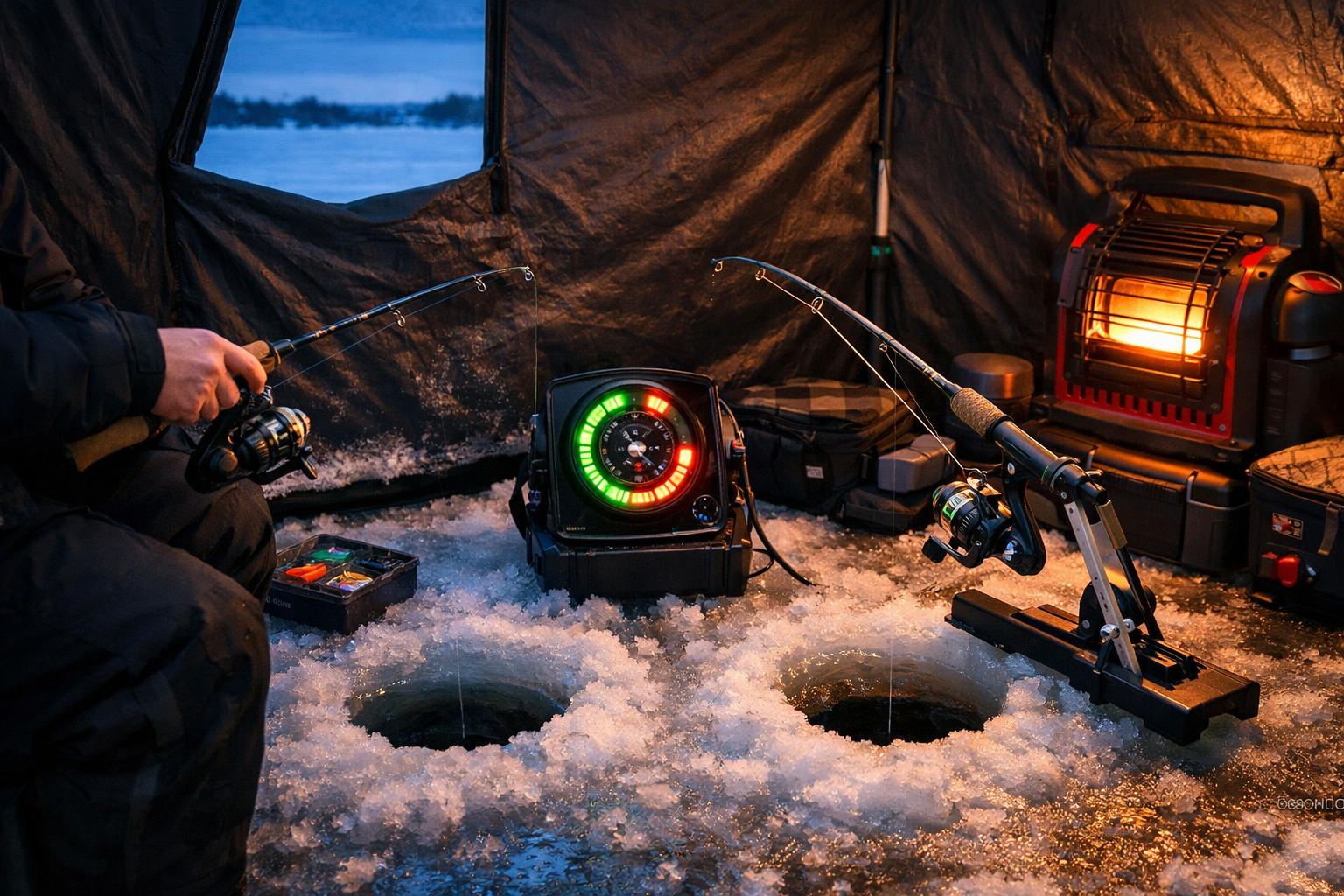
A dual-line setup covers both aggressive and neutral fish at the same time. In states that allow two lines through the ice (check your local regulations), running one active rod and one deadstick dramatically increases your catch rate.
Dual-line setup breakdown:
- Hole 1 (Active): 1/8 oz jigging spoon on medium-light rod. Pound bottom, rip and flutter, call fish in.
- Hole 2 (Deadstick): 5mm tungsten jig on ultra-light rod in a JawJacker. Set 4-6 inches off bottom. Do not touch.
- Spacing: Drill holes 3-5 feet apart. Close enough that fish attracted to Hole 1 see the bait in Hole 2.
- Electronics: Position your flasher or Panoptix on the active hole. You need to see when fish arrive so you know to watch the deadstick.
This system works because jumbo perch in a school behave differently based on their feeding state. Active feeders hit the spoon. Neutral fish drift past the spoon and find the stationary tungsten jig. You catch both types instead of only one.
For anglers looking to build tournament-ready setups across multiple fishing disciplines, the FishOnYak about page covers the team’s approach to rigging mastery and tactical preparation.
What Line and Terminal Tackle Choices Matter Most?
Line choice at 15-20 feet separates consistent hookups from missed fish. Fluorocarbon in 2-3 lb test gives you the best combination of low visibility, sensitivity, and sink rate for finesse presentations. Braid works on the attractor rod because sensitivity matters more than stealth when you’re pounding a spoon.
Line recommendations by rod:
| Rod Purpose | Line Type | Test Weight | Why |
|---|---|---|---|
| Attractor spoon | Braid with fluoro leader | 6 lb braid, 4 lb leader | Sensitivity for detecting subtle takes on the spoon |
| Finesse jig | Straight fluorocarbon | 2-3 lb | Low visibility, natural sink, direct contact with jig |
| Deadstick | Straight fluorocarbon | 3 lb | Invisible to cautious jumbos, enough strength for the JawJacker spring |
Hook sharpness matters. Tungsten jigs often come with hooks that are adequate but not sharp. Run a hook file across the point before you fish. A sticky-sharp hook converts those light “tick” bites that mid-winter perch give. You lose fewer fish at the hole, and you detect bites earlier.
Common mistake: Using line that is too heavy on the finesse rod. Jumping from 3 lb to 6 lb fluorocarbon changes how your 3mm tungsten jig falls. The heavier line slows the fall rate and reduces the jig’s natural action. Stay light. You are fishing for perch, not pike. If a pike bites you off, that is the cost of catching more perch.
Regional Hotspots for Jumbo Perch on Mid-Winter Flats in 2026
Northern Wisconsin continues to produce consistent jumbo perch fishing on mid-winter flats. Here are specific areas worth targeting in 2026:
Chippewa Flowage: Look for 16-18 foot mud flats on the main basin. Schools roam between the deeper holes and the flat feeding shelves. Morning bites have been strongest near submerged timber edges.
Lake Winnebago system: The western shoreline flats between 15 and 19 feet hold schools of jumbos feeding on bloodworms. Drill wide grids and stay mobile. The Winnebago system rewards anglers who cover water.
Green Bay (west shore): Sand-mud transition flats in 17-20 feet produce quality perch through February. Target areas where sand meets softer substrate. Perch concentrate along that transition line.
Devils Lake, North Dakota: A consistent producer of jumbo perch on mid-lake flats. The 15-20 foot zone on the main basin holds roaming schools from January through March.
These locations share common traits: large expanses of flat bottom in the 15-20 foot range, soft substrate, and proximity to deeper water. Apply the same scouting and rigging approach regardless of the specific lake.
Explore more fishing content and guides on the FishOnYak blog for seasonal updates.
Mistakes That Cost You Jumbo Perch on Mid-Winter Flats
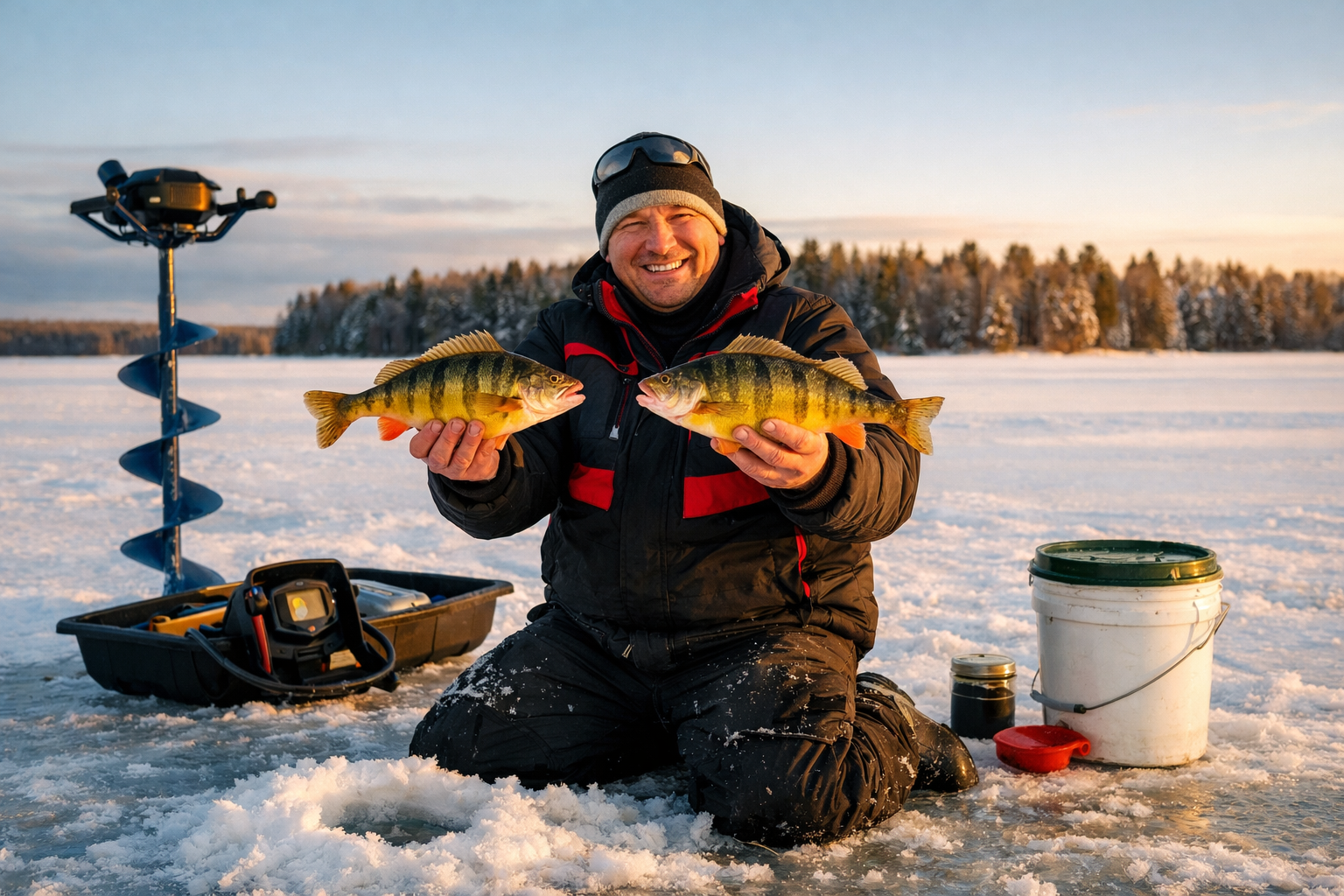
Knowing what to avoid saves you time on the ice. These are the most frequent errors anglers make when targeting jumbo perch in 15-20 foot flats during mid-winter.
Staying too long on dead holes. If your electronics show no marks for 10-15 minutes, move. The school has passed. Waiting another hour will not bring them back.
Jigging too aggressively all day. Morning fish tolerate action. Afternoon fish want subtlety. Adjust your cadence as the day progresses or you will watch marks come and go without converting bites.
Using jigs that are too large. A 1/4 oz spoon works for calling fish, but switching to a 1/4 oz jig for the finesse presentation is too heavy. Drop to 3-5mm tungsten. The size difference between your attractor and your finesse bait should be significant.
Ignoring the bottom composition. Perch on hard sand bottoms behave differently than perch on soft mud. The mud puff technique works on mud. On sand, focus on lift-and-flutter presentations that keep the jig above the bottom rather than stirring substrate.
Fishing without electronics. A flasher or forward-facing sonar tells you when fish arrive, how they react to your presentation, and when they leave. Fishing blind on a 15-20 foot flat is guessing. Electronics turn guessing into a system.
For step-by-step guidance on building your skills across fishing environments, visit the FishOnYak practice page.
Gear Checklist for Mid-Winter Jumbo Perch on Flats
Pack this gear before you head to the ice:
- 28-30 inch medium-light rod with fast tip (attractor rod)
- 24-28 inch ultra-light rod with spring bobber (finesse rod)
- Inline reels (2) spooled with appropriate line
- 6 lb braid and 4 lb fluorocarbon leader material
- 2-3 lb fluorocarbon (finesse spool)
- 1/8 oz jigging spoons (gold, silver, glow) with rattles
- 3-5mm tungsten jigs (gold, chartreuse, pink, glow)
- Fathead minnows (alive and heads separated)
- Waxworms and euro larvae
- Northland Impulse Mayfly or Reins Rockvibe Shaker plastics
- JawJacker or rod holder for deadsticking
- Flasher unit (Vexilar, Humminbird, or MarCum)
- Power auger with sharp blades
- Hook file
- 5-gallon bucket with lid
This list covers the complete two-rod system described above. Carry extras of your tungsten jigs. Losing one to a snag or a pike bite-off should not end your day.
Learn more about the FishOnYak team and their approach to fishing preparation on the about page.
FAQ
What depth do jumbo perch prefer in mid-winter? Jumbo perch hold on flats between 15 and 20 feet during mid-winter on most Midwest lakes. They feed near bottom on mud or sand-mud substrates and roam in loose schools across these flats.
What size jig works best for jumbo perch through the ice? A 3-5mm tungsten jig produces the most consistent bites for finesse presentations. Use a 1/8 oz jigging spoon as an attractor to call fish in before switching to the smaller jig.
Should you tip tungsten jigs with live bait or plastics? Both work. Live waxworms and euro larvae produce the most bites on tough days. Plastics like the Northland Impulse Mayfly work well during active feeding windows and save time re-baiting.
How far apart should you drill holes when scouting? Space holes 30-50 yards apart in a grid pattern. Drill 10-15 holes before you start fishing. This gives you options when fish move.
What line weight works best for perch at 15-20 feet? Use 2-3 lb fluorocarbon on your finesse rod. Heavier line reduces jig action and increases visibility in clear mid-winter water.
Does deadsticking work for jumbo perch? Yes. Deadsticking with a tungsten jig in a JawJacker often catches the largest perch in a school. Set the bait 4-6 inches off bottom and leave it stationary while you actively jig a nearby hole.
What time of day is best for mid-winter perch? The strongest bites happen from sunrise to 10 AM and again from 1 PM to 3 PM. Feeding windows are short, often lasting 20-45 minutes.
How do you tell jumbo perch from small perch on electronics? Jumbo perch show as thicker marks on a flasher and hold tighter to the bottom. Small perch often appear as scattered marks higher in the water column and move more erratically.
What bottom type holds the most jumbo perch? Soft mud and sand-mud transitions hold the most forage (bloodworms, larvae) and attract the largest concentrations of jumbo perch on mid-winter flats.
Are tandem rigs effective for jumbo perch? Tandem rigs like the Lindy Old Guide’s Secret with dual minnows produce double hookups in thick schools. They tangle more than single jigs and work best during aggressive feeding windows rather than subtle bite periods.
Kayak. Drill. Catch. Repeat.
See you on the water.