Carolina Beach sits at the southern tip of a barrier island in New Hanover County, NC. The water around it holds redfish, flounder, speckled trout, bluefish, and more. If you know where to launch and when to paddle, you will find some of the best saltwater kayak fishing spots around Carolina Beach that North Carolina’s coast has to offer. This guide breaks down the top locations, the species that hold there, the tides that control access, and the tactical decisions that separate a full cooler from an empty one.
Key Takeaways
- Carolina Beach is home to a dense network of inshore creeks, tidal flats, and inlet systems that kayak anglers access with a serious tactical advantage over larger boats.
- Fort Fisher consistently ranks as one of the top inshore fishing destinations in NC, with shallow water averaging 5 to 6 feet that puts kayakers right on the fish.
- Tides control everything. Analyze the tide before you load the yak. A grounded kayak in a falling tide means a long wait.
- Targeting redfish and speckled trout requires reading structure: oyster beds, dock pilings, creek mouths, and marsh edges are your primary focus.
- The Got-Em-On Classic King Mackerel Tournament and the Post Carolina Beach Inshore Challenge draw serious competitors to these waters, which tells you everything about the quality of fishing here.
Why Carolina Beach Delivers Elite Kayak Fishing in North Carolina
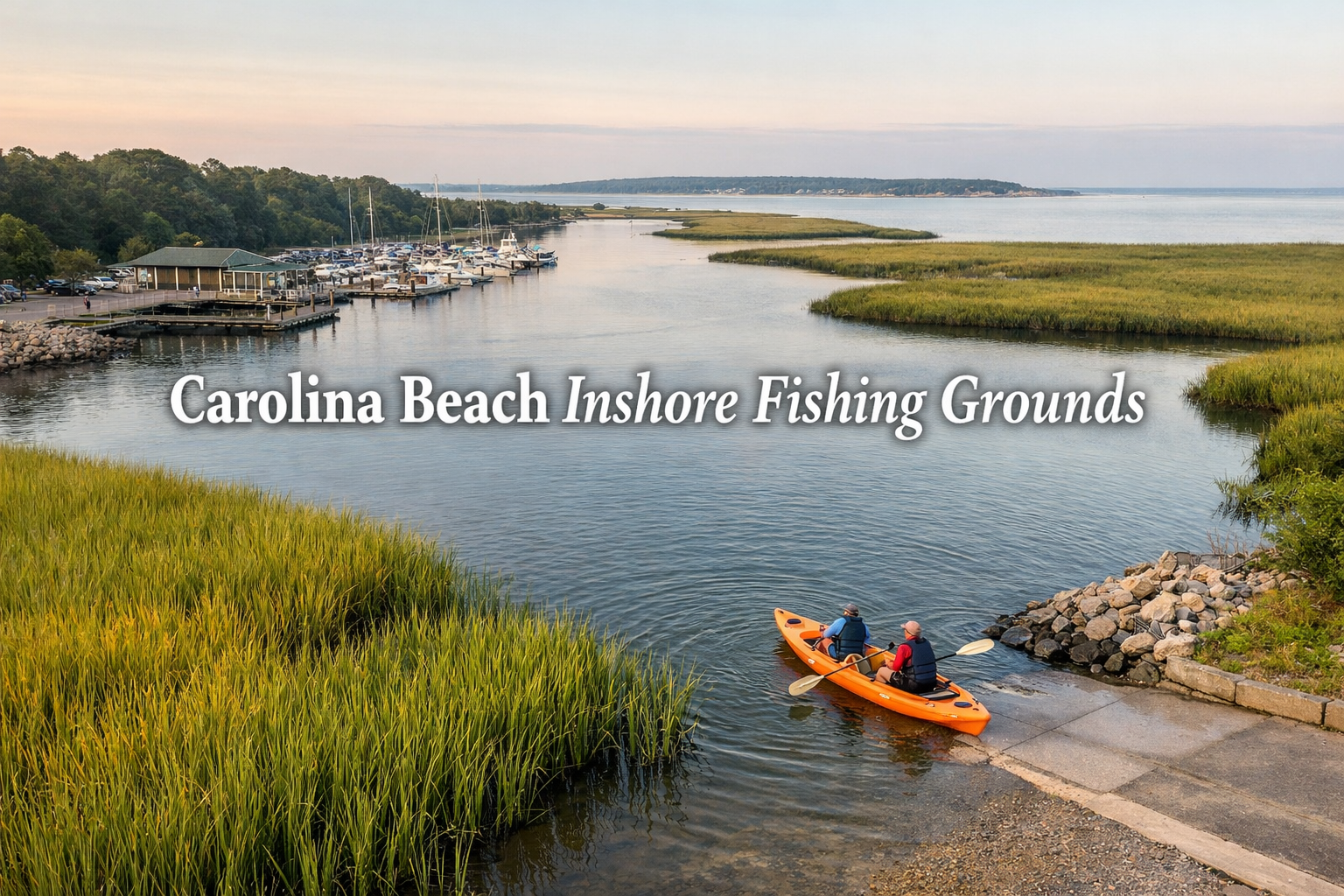
Carolina Beach is not just a beach town with a pier and a parking lot. It sits between the Cape Fear River to the west and the Atlantic Ocean to the east, with the Intracoastal Waterway running directly through it. That geography creates a layered system of inshore fishing grounds that rewards anglers who study the water.
The barrier islands around Carolina Beach concentrate fish in predictable ways. Tidal movement pushes bait through narrow cuts and creek systems. Predators stack up at those choke points. A kayak angler who reads that pattern and positions correctly will out-fish a center console every time in these conditions.
Carolina Beach is home to a variety of fish species that change with the season. Summer months bring Spanish mackerel, cobia, and bluefish into range. Fall transitions push flounder toward the inlets. Winter and early spring keep red drum active in the creeks and tidal flats. There is no dead season here if you know where to look.
For anglers looking to sharpen their approach before hitting the water, the FishOnYak.com home page offers resources on rigging, tactics, and tournament preparation built for serious kayak anglers.
The Best Saltwater Kayak Fishing Spots Around Carolina Beach: Location Breakdown
Fort Fisher: The Premier Inshore Destination
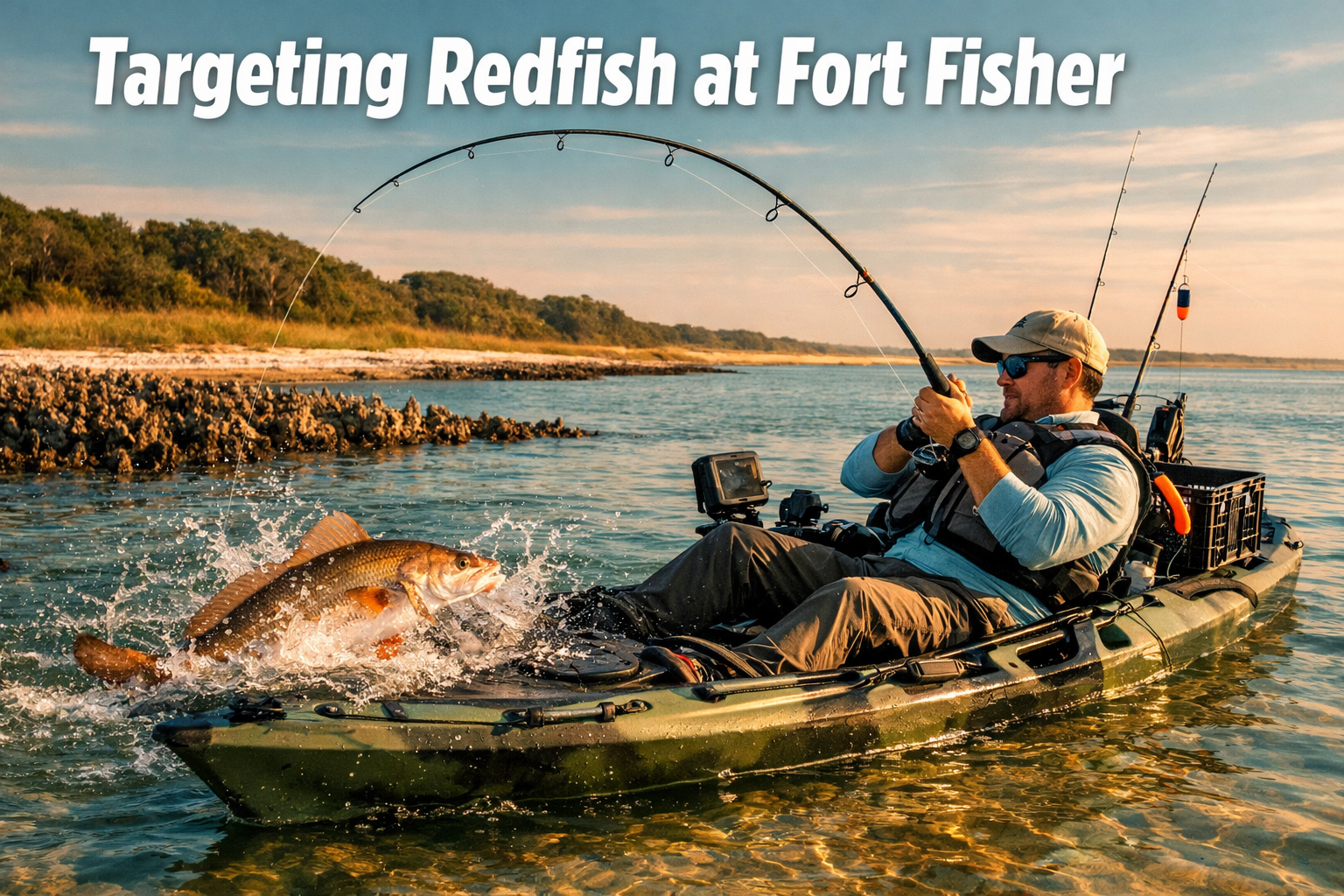
Fort Fisher is the anchor of any serious kayak fishing trip in this region. Multiple fishing publications and coastal guides identify it as one of the best spots for saltwater fishing anywhere on the NC coast [2]. The Fort Fisher State Recreation Area gives you access to both the ocean side and the basin side, which means you have options depending on wind and tide.
The water here averages 5 to 6 feet in depth depending on tidal conditions [2]. That shallow profile is exactly what a fishing kayak needs. You get into areas that skiffs and larger boats cannot reach without risk of grounding. That access advantage translates directly into less-pressured fish.
Guides working these waters have documented slot-sized redfish and oversized specimens regularly. One guide recorded a personal best red drum just over 30 inches at Fort Fisher [2]. Flounder and trout round out the primary target species in the shallows here.
Analyze the tide before you launch at Fort Fisher. The shallow flats drain fast on an outgoing tide. Anglers who misjudge the window end up waiting on a sandbar for the water to return [2]. Set your launch time around two hours before high tide to maximize your access window.
Fort Fisher Tactical Breakdown:
- Target species: Redfish, flounder, speckled trout
- Optimal tide: Incoming to high
- Depth: 5 to 6 feet average
- Launch: Fort Fisher State Recreation Area ramp
- Structure to work: Oyster beds, tidal flats, creek mouths
Carolina Beach State Park: Protected Water and Consistent Bait
Carolina Beach State Park sits on the western edge of the island along the Cape Fear River. The marina here is a key access point. Paddle NC operates kayak rentals from the Carolina Beach State Park Marina, which makes this location accessible even if you are traveling without your own yak [4].
The park’s position along the Cape Fear River puts you in range of dock structure, creek mouths, and the Intracoastal Waterway. Work the dock pilings on an incoming tide with live bait or a paddle tail soft plastic. Flounder stack under structure here during the warmer months. Redfish cruise the marsh edges at first light.
The park also serves as a staging area for anglers targeting the Cape Fear River channel. Bluefish and Spanish mackerel push through the river mouth during summer months. Position your kayak on the edge of the channel and work a fast-retrieved lure through the bait schools.
Weekend crowds at the park ramp fill up early on summer mornings. Arrive before sunrise or plan a weekday trip to avoid the pressure.
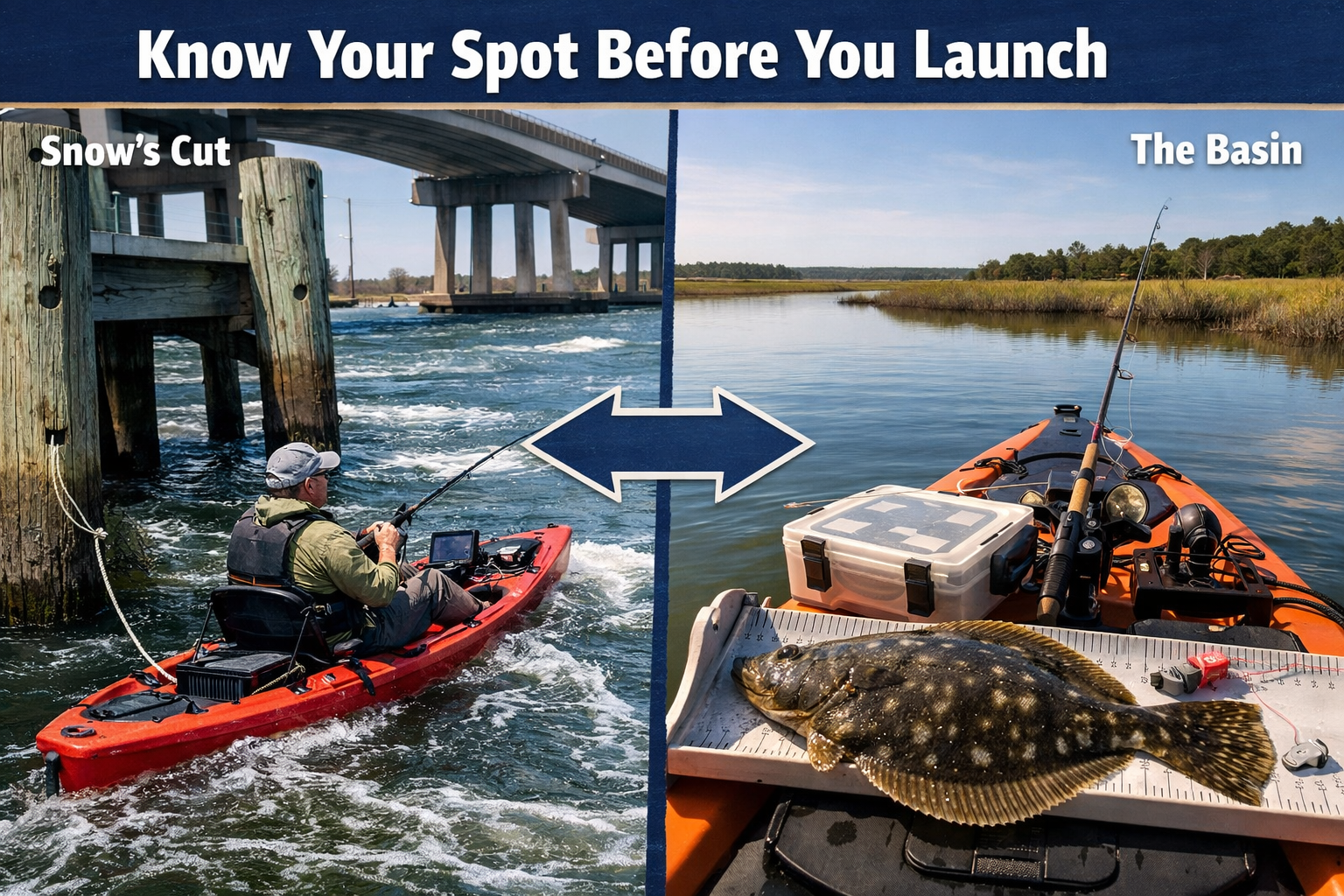
Snow’s Cut: Tidal Current and Structure
Snow’s Cut connects the Cape Fear River to the Intracoastal Waterway. It is a man-made channel, and it moves water fast. That current concentrates bait and the predators that follow it.
Work the edges of Snow’s Cut rather than the center. The current in the middle runs hard enough to push a kayak off position. Set up near the dock pilings and structure along the banks. Flounder hold tight to the bottom here, especially on the downstream side of any obstruction. Use a heavier jig head to get your bait down through the current.
Red drum patrol the shallower sections near the cut’s ends where the current slows and bait collects. Target these transition zones on the last two hours of an outgoing tide.
The Basin at Carolina Beach: Calm Water and Flounder Staging
The Carolina Beach Yacht Basin is a protected body of water on the northern end of the island. The calm conditions here make it a reliable option when wind makes the ocean or the open waterway rough. Dock structure throughout the basin holds flounder during summer and fall.
Work each piling systematically. Drop a bucktail jig or a live mud minnow tight to the structure and let it fall. Flounder fishing in this area rewards patience and precision. The fish sit motionless and ambush. Your presentation needs to land within inches of the structure to trigger a strike.
The basin also holds sheepshead around the dock pilings. Target them with fiddler crabs on a light jig head.
Kure Beach and the Kure Beach Fishing Pier Zone
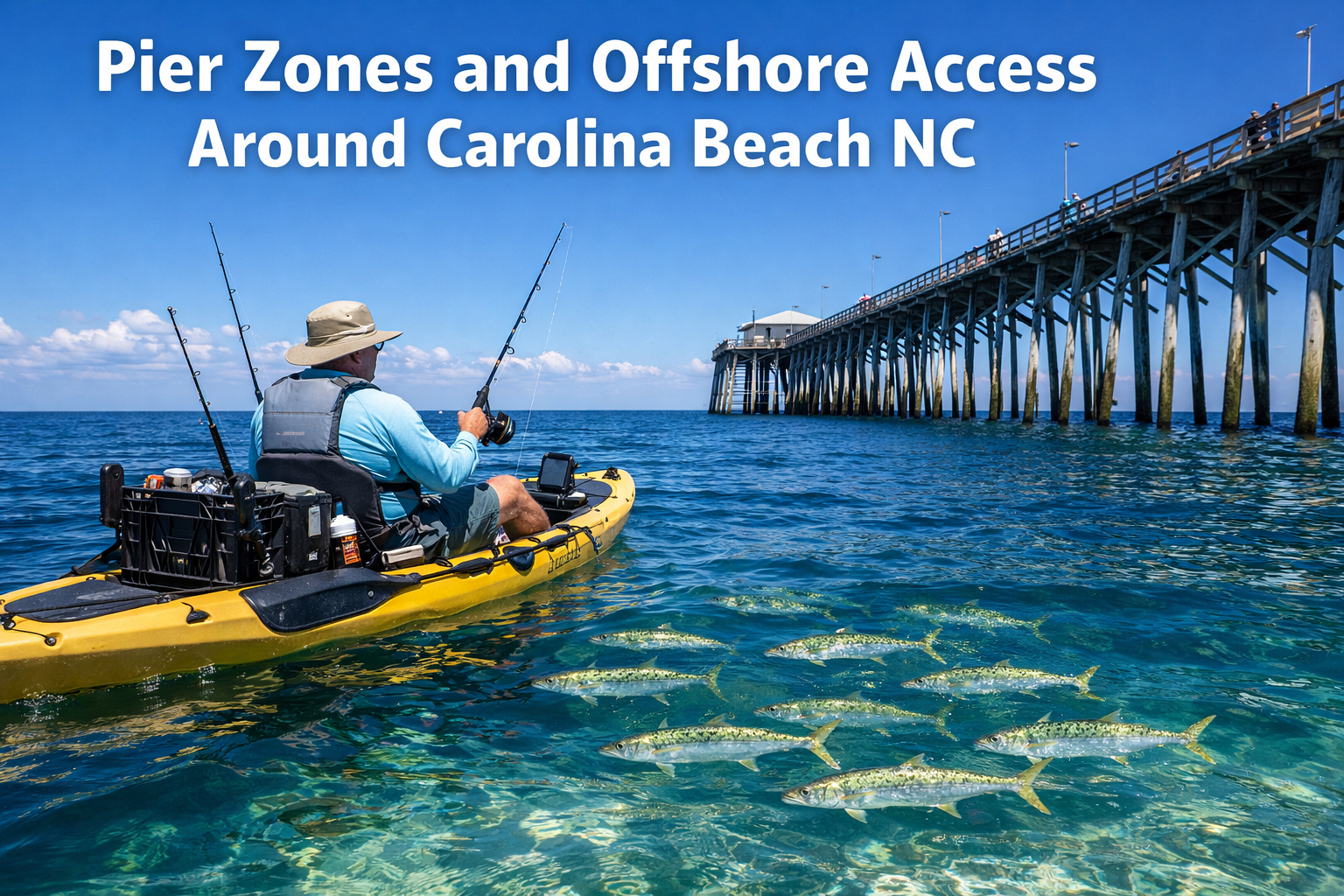
Kure Beach sits just south of Carolina Beach. The Kure Beach fishing pier extends into the Atlantic and creates an artificial reef effect. Kayak anglers who launch from the beach and position near the pier structure access Spanish mackerel, bluefish, and king mackerel during summer months.
Pier fishing from a kayak requires awareness of boat traffic and the pier itself. Stay clear of the pier structure and work the edges where baitfish concentrate. A cast net to load up on live bait before positioning near the pier will increase your hookup rate significantly.
The surf zone around Kure Beach also holds pompano and red drum during certain tidal windows. Work the troughs parallel to the beach on an incoming tide with a Carolina rig and fresh shrimp.
Fort Fisher Basin and Zeke’s Island: Wind Protection and Remote Access
The basin between Fort Fisher and Zeke’s Island sits on the southern end of the island chain. This area offers significant wind protection when north winds push through. The shallow flats and oyster beds here hold redfish through the winter pattern and into April [2].
Zeke’s Island is part of a reserve estuarine research area. The water is clear and the fish are less pressured than spots closer to the Carolina Beach boat ramps. Paddle out from the Fort Fisher basin launch and work the oyster beds on either side of the main channel.
Winter redfish in this area feed aggressively on an incoming tide. Use a weedless gold spoon or a soft plastic crab imitation worked slowly across the bottom near oyster structure.
Remote Creeks Near Bald Head Island: Low Pressure, High Reward
Bald Head Island sits across the Cape Fear River from Fort Fisher. The creek systems around Bald Head Island see far less skiff traffic than the Carolina Beach inshore spots [2]. That reduced pressure means fish that have not been educated by constant angling.
Accessing these creeks requires a longer paddle across the Cape Fear River mouth. Plan this trip for calm wind days only. The river mouth sees significant boat traffic and the chop builds fast when wind opposes current. Fluid safety is not optional here. Wear your PFD, file a float plan, and carry a VHF radio.
The reward for that paddle is redfish and trout in creek systems that rarely see a kayak. Work the creek mouths on an incoming tide and push into the marsh grass edges as the water rises.
Best Saltwater Kayak Fishing Spots Around Carolina Beach: Species-Specific Tactics
Targeting Redfish Around Carolina Beach
Targeting redfish in this area requires understanding their seasonal patterns. Red drum activity peaks during the winter pattern and holds strong through early spring [2]. During this window, fish concentrate in the warmer, shallower water of the tidal flats and creek systems.
In summer, redfish push into the marsh grass and feed on crabs and shrimp. Approach these areas quietly. Redfish in skinny water spook easily. Cut your paddle strokes short and use a push pole or anchor to hold position once you spot fish.
Redfish and speckled trout often share the same water. When you find one, look for the other. Speckled trout prefer slightly deeper water near structure, while redfish work the shallower edges.
Redfish Rig Setup:
- Rod and reel: Medium-heavy spinning, 3000 series reel, 20 lb braid with 25 lb fluorocarbon leader
- Lure: Gold spoon, soft plastic paddle tail on 1/4 oz jig head, or weedless rigged crab imitation
- Live bait: Mud minnow, finger mullet, or shrimp under a popping cork
- Tide: Incoming to high for marsh access, outgoing for creek mouth concentration
Flounder Fishing: Structure and Patience
Flounder hold on the bottom near structure. Every dock, piling, oyster bed, and channel edge is a potential ambush point. Flounder fishing rewards anglers who slow down and work each piece of structure thoroughly.
Use a jig head heavy enough to maintain bottom contact in the current. A 3/8 oz to 1/2 oz head with a Gulp shrimp or a live mud minnow produces consistent results. Drag the bait slowly across the bottom and pause near any structure. Flounder strike on the pause.
Speckled Trout: Grass Edges and Drop-Offs
Speckled trout in the waters around Carolina Beach hold along grass edges, channel drop-offs, and near structure in the Intracoastal Waterway. Work a suspending twitch bait or a soft plastic on a light jig head through these areas.
Early morning topwater action on speckled trout is one of the most rewarding experiences in inshore fishing. Walk a topwater plug along a grass edge at first light and hold on.
Offshore Access: Tuna, Mahi, Wahoo, and Sailfish
The Gulf Stream runs approximately 40 to 50 miles offshore from Carolina Beach. Kayak anglers do not access the Gulf Stream directly, but the nearshore wrecks and ledges within safe kayak range hold mahi, tuna, wahoo, and occasional sailfish during summer months.
These offshore trips require serious preparation. Check weather forecasts from multiple sources, carry safety equipment, and fish with a buddy. The crystal coast and the waters south toward the Cape Fear River mouth offer nearshore structure within a reasonable paddle or tow range.
Fishing charters operating out of Carolina Beach run offshore trips to these grounds regularly. If you want to learn the offshore fishing grounds before committing to a solo kayak trip, booking a trip with a local fishing guide is a smart investment.
Tide, Wind, and Access: What Controls Your Success
Read the Tide Before You Launch
Tide controls access to the best inshore spots around Carolina Beach. A falling tide drains the shallow flats and leaves kayaks stranded. An incoming tide floods the marsh grass and pushes bait into the shallows where predators follow.
Check the NOAA tide chart for Wilmington or Carolina Beach before every trip. Build your launch time around the tidal window. Two hours before high tide gives you the best access to shallow water spots and the most active feeding period.
Wind Direction and Spot Selection
Wind direction determines which spots fish well on any given day. A north wind makes the open water rough but protects the creek systems and the basin areas. A south wind builds chop on the Intracoastal Waterway but leaves the ocean-side launch points calm.
Match your spot selection to the wind forecast. Zeke’s Island and the Fort Fisher basin offer protection from north winds. The Carolina Beach State Park marina area shields you from south winds. Snow’s Cut runs east to west and stays fishable in most wind conditions.
Bait and Tackle Considerations
Stock your bait and tackle before you launch. Carolina Beach has several bait shops that carry live bait, fresh cut bait, and terminal tackle. Mud minnows, shrimp, and finger mullet are the primary live bait options for inshore species.
Carry a variety of lure weights and styles. Conditions change throughout a tide cycle. A 1/4 oz jig head that works perfectly on a high tide flat becomes useless in a fast-moving cut where you need 1/2 oz or more to reach the bottom.
Kayak Fishing Logistics Around Carolina Beach
Launch Points and Access
| Location | Launch Type | Parking | Tide Sensitivity | Weekend Crowds |
|---|---|---|---|---|
| Carolina Beach State Park | Concrete ramp | Paid lot | Low | High |
| Fort Fisher Basin | Sandy beach | Free roadside | High | Moderate |
| Snow’s Cut Park | Concrete ramp | Free lot | Moderate | Moderate |
| Kure Beach Access | Beach launch | Street parking | Low | High |
| Carolina Beach Yacht Basin | Floating dock | Limited | Low | Low |
Fishing License Requirements
You need a valid North Carolina saltwater fishing license before you wet a line. North Carolina anglers fishing in coastal waters require a Coastal Recreational Fishing License. Purchase your fishing license through the NC Wildlife Resources Commission website or at a local bait and tackle shop before your trip.
Fishing Charters and Guided Options
If you want to learn the water before committing to solo kayak fishing trips, local fishing charters provide access to experienced fishing guides who know the seasonal patterns, the best spots, and the right presentations for each location. A single guided trip teaches you more than a dozen solo trips spent figuring it out from scratch.
The Post Carolina Beach Inshore Challenge draws competitive anglers to these waters each year and is a strong indicator of the quality of inshore fishing available here. The Got-Em-On Classic King Mackerel Tournament brings offshore competitors to the area and highlights the range of fishing options available from this stretch of coast.
Best Saltwater Kayak Fishing Spots Around Carolina Beach: Seasonal Guide
Spring (March to May)
Red drum remain active through April following the winter pattern [2]. Flounder begin staging near inlets and cuts as water temperatures rise. Spanish mackerel arrive in late April and early May. Target the Intracoastal Waterway and inlet areas with live bait or fast-retrieved lures.
Summer (June to August)
Summer months bring the widest variety of fish species to the area. Spanish mackerel, bluefish, cobia, and king mackerel work the nearshore waters. Inshore, flounder fishing peaks around dock structure and creek mouths. Redfish push into the marsh grass. Early morning and late evening are the most productive windows as midday heat slows inshore activity.
Fall (September to November)
Fall is the premier season for inshore fishing around Carolina Beach. Flounder stage near the inlets before their offshore migration. Speckled trout feed aggressively in the Intracoastal Waterway and creek systems. Redfish school up in larger numbers. The water temperature drop triggers feeding behavior that makes fish easier to locate and catch.
Winter (December to February)
Winter redfish patterns concentrate fish in the deeper creek systems and tidal flats. The fish are slower moving but still feed on incoming tides. Black drum show up around oyster beds and dock structure. Speckled trout hold in the deeper holes of the Intracoastal Waterway. Dress in layers, carry hand warmers, and plan shorter trips around the warmest part of the day.
Tournament-Ready Preparation for Carolina Beach Waters
If you are preparing for a fishing tournament in this area, your preparation starts weeks before the event. Scout the spots listed in this guide during practice days. Note the tidal windows that produce fish at each location. Build a mental map of the structure that holds fish consistently.
Rigging mastery matters in tournament conditions. Your kayak needs to be organized for efficiency. Every piece of tackle should have a place. Your rod holders, tackle storage, and anchor system need to function without thought so you can focus entirely on the fish.
Tactical angling in a tournament context means making decisions fast. You do not have time to experiment. Know your primary spot, your backup spot, and your bail-out option before the horn sounds.
For anglers ready to take their preparation to the next level, the FishOnYak.com about page details the coaching and tournament preparation resources available through the platform.
The FishOnYak.com practice resources offer structured approaches to building the skills that tournament fishing demands.
Safety on the Water Around Carolina Beach
Fluid safety is the foundation of every trip. The waters around Carolina Beach include open ocean exposure, strong tidal currents in the cuts, and significant boat traffic on the Intracoastal Waterway. Treat each of these as real hazards that require active management.
Pre-Launch Safety Checklist:
- PFD: Wear it. Not stowed under the deck. On your body.
- VHF Radio: Carry a handheld VHF tuned to Channel 16.
- Float Plan: Tell someone where you are launching, where you are going, and when you expect to return.
- Weather: Check the marine forecast from NOAA. Do not launch if thunderstorms are in the forecast.
- Tide Chart: Know the tide times and plan your route accordingly.
- Lighting: Carry a white light if you will be on the water before sunrise or after sunset.
- Hydration and Sun Protection: The Carolina Beach sun is intense from April through October. Carry water and wear sun protection.
The Cape Fear River mouth and the open ocean-side launches carry the highest risk. Boat wakes, current, and weather changes happen fast in these areas. Build your experience level progressively before committing to the most exposed locations.
Interactive Kayak Fishing Spot Finder: Carolina Beach
The interactive tool below functions as your digital scout for Carolina Beach kayak fishing. Filter by target species, check wind protection ratings, compare spots side by side, and build your personal trip plan. Use it before every trip to make a data-driven decision about where to launch.
Carolina Beach Kayak Fishing Spot Finder | FishOnYak.com
🎣 Carolina Beach Kayak Fishing Spot Finder
Filter by species, check wind protection, compare spots, and build your trip plan. Powered by FishOnYak.com
Filter by Target Species
Spot
Target Species
Launch Type
Weekend Crowds
Navigate
Compare
⭐ Your Starred Spots
Fishing Charters, Guides, and Local Knowledge
Carolina Beach has a strong network of fishing charters and fishing guides who work the local waters year-round. If you are new to the area or targeting a specific species for the first time, a half-day guided trip with a local expert compresses months of trial-and-error into a single morning on the water.
Local guides know the seasonal migrations, the specific tidal windows that produce fish at each spot, and the bait presentations that work right now. That knowledge is not available in any article. It comes from time on the water.
The crystal coast region to the north, including Swansboro and surrounding areas, extends the range of prime fishing options for kayak anglers based out of Carolina Beach. Swansboro sits within a day-trip range and offers additional inshore fishing grounds with similar species profiles [5].
For anglers building their skills and looking for structured coaching, the FishOnYak.com services page outlines available coaching and rigging masterclass options designed to accelerate your development on the water.
Rigging Your Kayak for Carolina Beach Waters
Your kayak setup determines how effectively you fish these spots. A poorly rigged yak costs you time, fish, and in rough conditions, your safety margin.
Essential Rigging for Carolina Beach Inshore Fishing:
- Rod holders: Mount at least two flush-mount rod holders and one adjustable behind the seat. You need hands-free rod storage when paddling between spots.
- Anchor system: A 1.5 lb folding anchor with 50 feet of line handles the tidal flats and creek systems. A heavier anchor is required for Snow’s Cut or the ICW.
- Fish finder/sonar: A forward-facing sonar unit mounted on a transducer arm off the bow gives you real-time bottom structure data. In 5 to 6 foot water at Fort Fisher, seeing a hard bottom transition or an oyster bed on screen before you reach it puts you on fish faster.
- Tackle storage: Use a waterproof crate system behind the seat with rod holders integrated. Keep your most-used lures in a small tray on the deck in front of you.
- PFD with integrated pockets: Store your fishing license, phone in a waterproof case, and a folding knife in your PFD pockets. These items need to be on your body, not in a hatch.
- Paddle leash: Attach your paddle to the kayak. Losing your paddle in a current is a serious problem.
The FishOnYak.com about page details the rigging expertise and coaching philosophy behind the platform’s approach to tournament-ready kayak preparation.
North Carolina Fishing Regulations You Need to Know
Fishing in North Carolina requires a valid fishing license for all anglers 16 and older. The Coastal Recreational Fishing License covers saltwater species in coastal waters. Purchase it online through the NC Wildlife Resources Commission or at a local bait and tackle shop before your trip.
Key size and bag limits for the primary species around Carolina Beach in 2026:
- Red drum: 18 to 27 inch slot limit, 1 fish per day. Fish outside the slot must be released.
- Speckled trout: 14 inch minimum, 10 fish per day bag limit.
- Flounder: 12 inch minimum, 10 fish per day bag limit.
- Black drum: 14 inch minimum, 10 fish per day bag limit.
Verify current regulations with the NC Division of Marine Fisheries before your trip. Regulations change annually and the specific limits above are subject to revision.
Putting It All Together: Your Carolina Beach Fishing Trip Plan
A successful fishing trip to Carolina Beach starts with a plan built around the tide. Here is a practical framework:
- Check the NOAA tide chart for Carolina Beach or Wilmington three days before your trip.
- Identify the days with the best tidal windows for your target species.
- Select your primary spot and backup spot based on the wind forecast.
- Confirm your fishing license is current.
- Purchase live bait the morning of your trip from a local bait and tackle shop.
- Launch two hours before high tide for inshore spots.
- Work structure systematically. Do not move until you have thoroughly covered each piece of structure.
- Track where you find fish and at what tide stage. That data builds your personal fishing guide over time.
Carolina Beach is home to one of the most productive inshore fisheries on the NC coast. The combination of tidal creeks, inlet systems, the Cape Fear River, and the Intracoastal Waterway creates a variety of fish-holding structure within a short paddle of multiple launch points.
North Carolina anglers who approach this water with preparation and tactical discipline will find excellent fishing across multiple seasons and species.
For more resources on rigging, species-specific tactics, and tournament preparation, visit FishOnYak.com and explore the full library of coaching and educational content built for serious kayak anglers.
Conclusion
The best saltwater kayak fishing spots around Carolina Beach reward anglers who do the work before they launch. Study the tide. Match your spot to the wind. Rig your kayak for efficiency and safety. Know the species patterns for the season you are fishing.
Fort Fisher, Zeke’s Island, Snow’s Cut, the Carolina Beach State Park marina, and the creek systems near Bald Head Island each offer distinct fishing opportunities that change with the tide, season, and conditions. No single spot produces every time. Your ability to read conditions and adapt your plan separates a productive trip from a frustrating one.
Take the interactive spot finder above with you on your next trip planning session. Star your top picks, compare the spots that match your target species, and check the wind protection ratings before you commit to a launch location.
Get your fishing license squared away, stock your bait and tackle the night before, and set your alarm for pre-dawn. The fish are there. Go get them.
See you on the water.
References
[1] Fishing In Carolina Beach – https://fishingbooker.com/blog/fishing-in-carolina-beach/
[2] Call It The Kayak Coast – https://www.carolinasportsman.com/fishing/inshore-fishing/call-it-the-kayak-coast/
[3] Fishing Piers – https://www.carolinabeach.com/fishing-piers.html
[4] Fishing Center And Marina – https://carolina-beach.wilmingtonandbeaches.com/things-to-do/outdoors-and-recreation/fishing-center-and-marina/
[5] Top Kayak Fishing Spots In North Carolina – https://setthetrotline.com/2020/06/04/top-kayak-fishing-spots-in-north-carolina/
[6] Carolina Beach Fishing Piers – https://www.wrightsvillebeach.com/carolina-beach-fishing-piers.html